Essays · Olfactory Art
Anicka Yi. You Can Call Me F.
Smell is a sign of life, not of dirt.
One hundred samples
Early in 2015, Anicka Yi invited one hundred women from her professional network. Artists, curators, critics, dealers, collectors. She asked each of them to donate a biological sample from their own body.
The samples went to Tal Danino, a synthetic biologist then doing postdoctoral work at MIT. Under his guidance, the bacteria from a hundred people were grown together into a single colony. Yi called it a collective bacteria.
Yi was born in Seoul in 1971, grew up in California and works in New York. She did not train as a scientist. But her practice has long used living and perishable materials: bacteria, food, frying oil, soap, smell. Things that change, rot and spread beyond their limits.
The room as a site
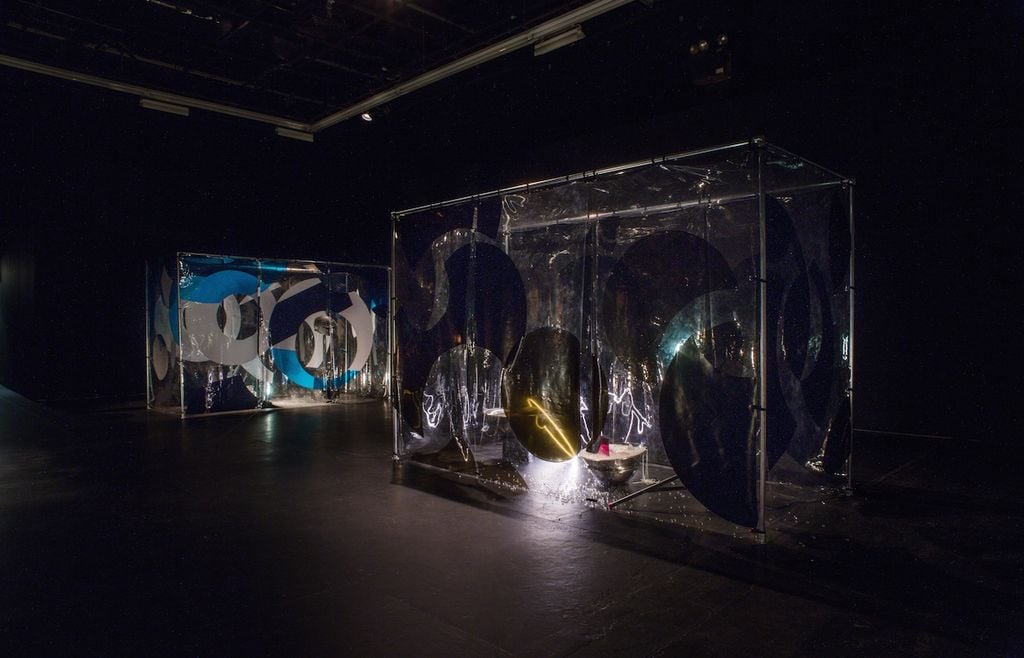
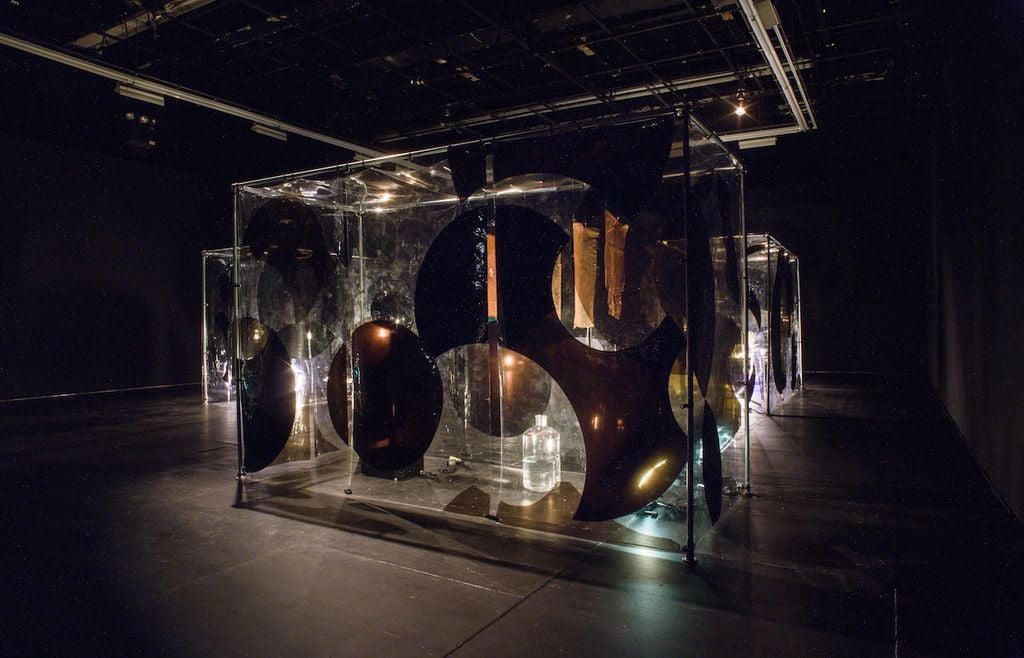
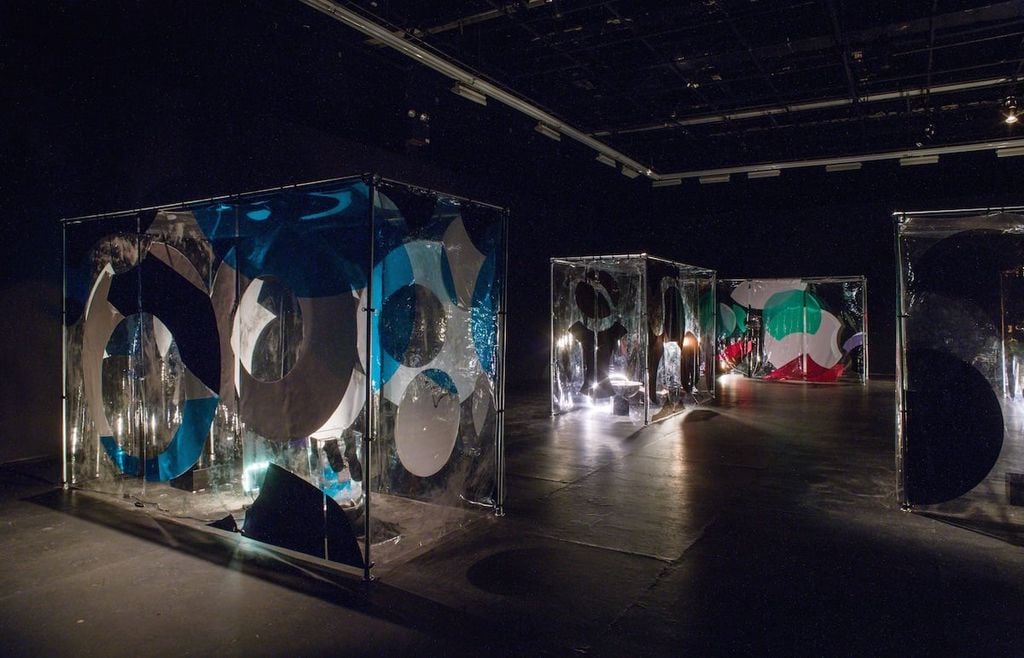
You Can Call Me F opened at The Kitchen in New York and ran from 5 March to 11 April 2015, curated by Lumi Tan. The space was set up like a forensic site, a place where something had just spread.
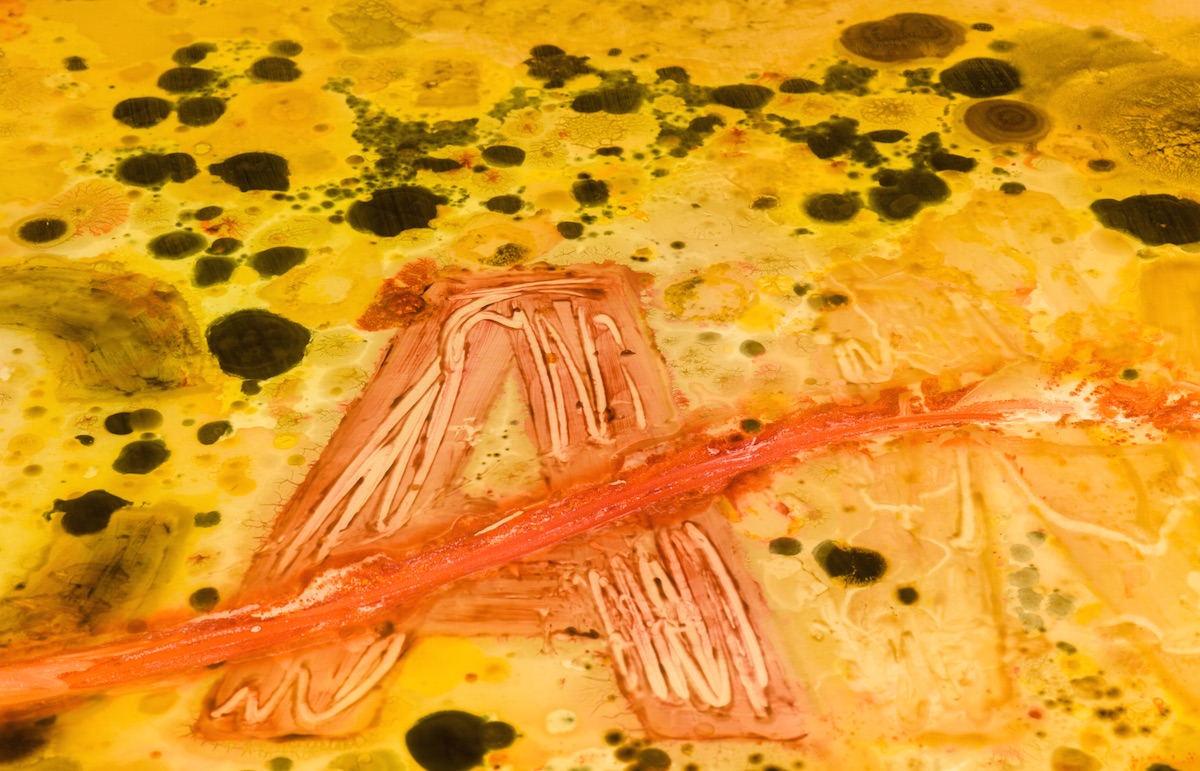
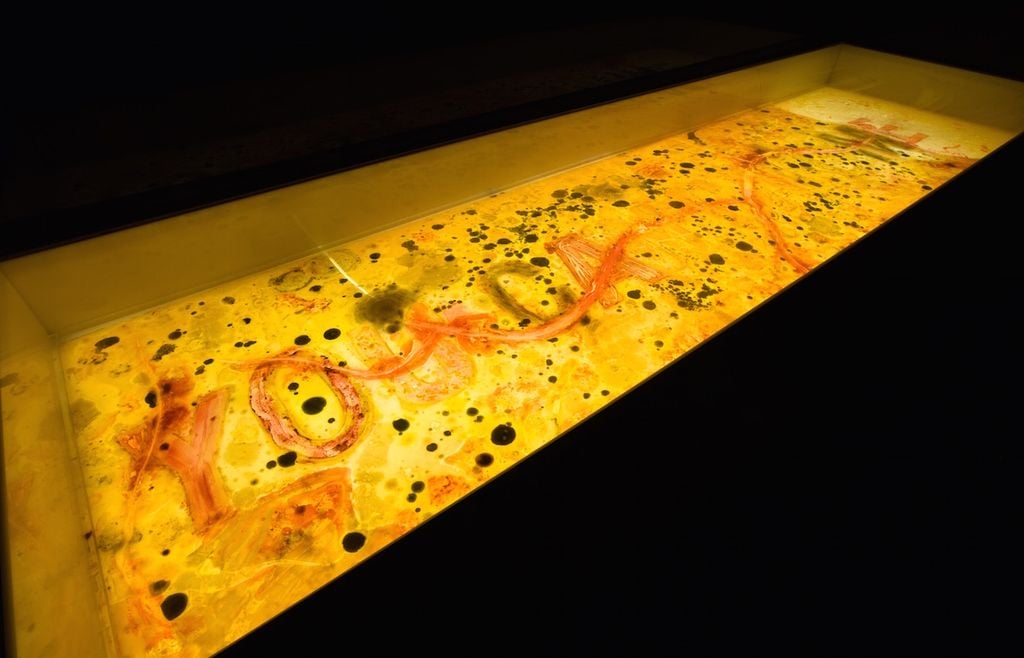
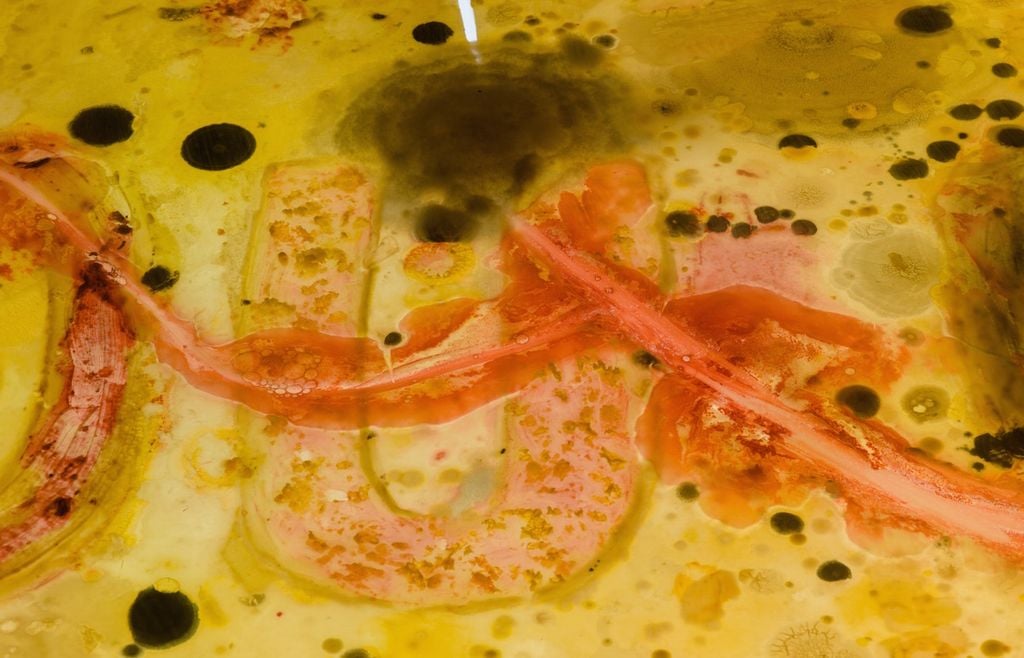
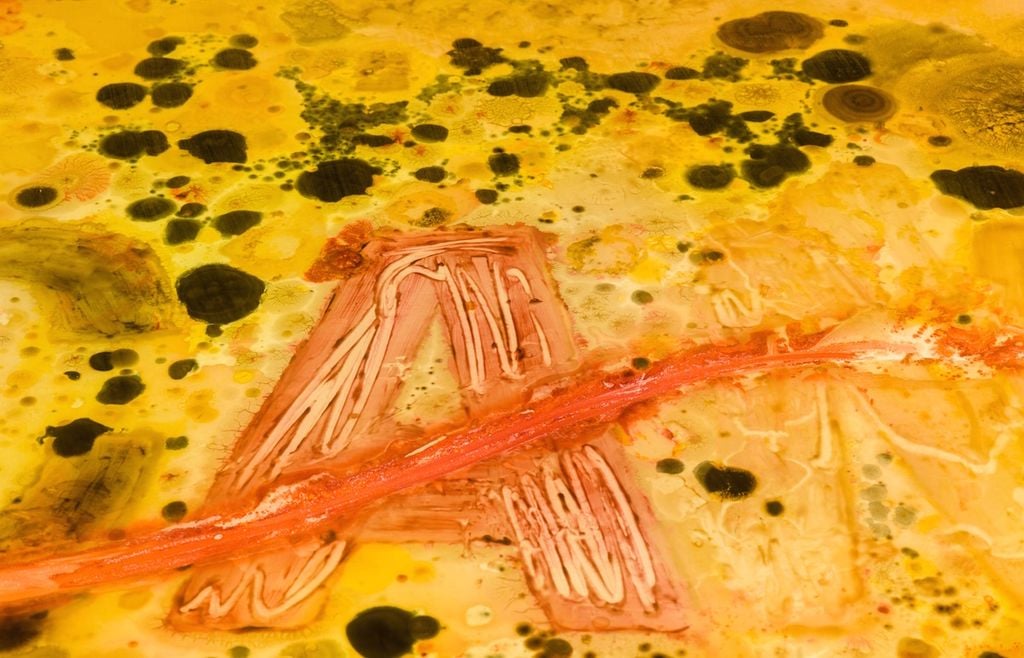
At the entrance stood a large billboard, in fact a giant petri dish holding the collective bacteria. Its form borrowed from a promotional device for Steven Soderbergh's 2011 pandemic film Contagion. The bacteria kept growing throughout the show. Each day the sign looked slightly different.
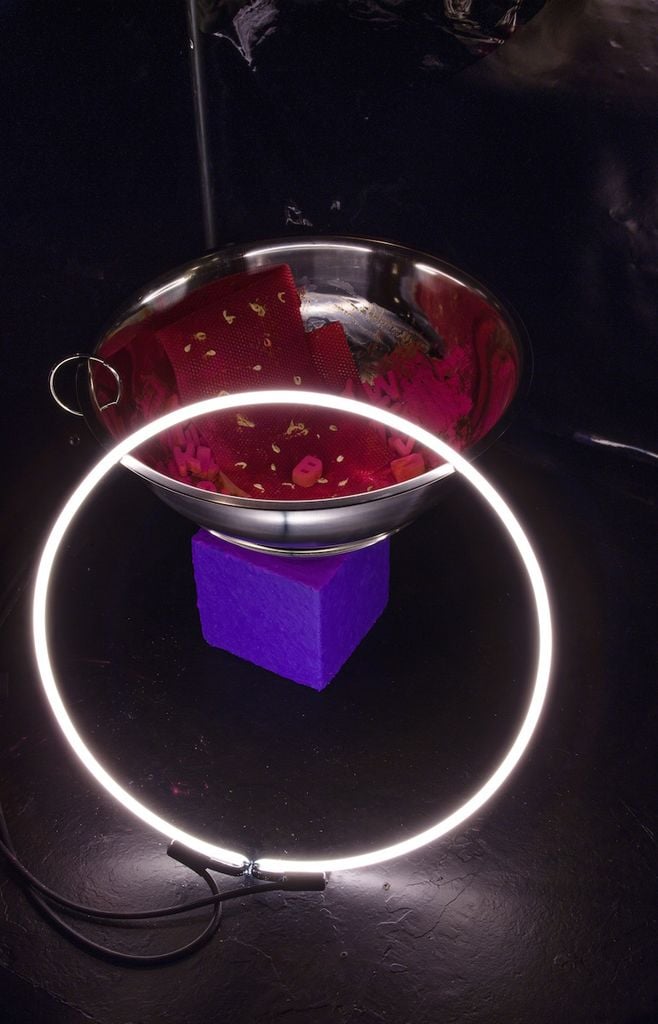
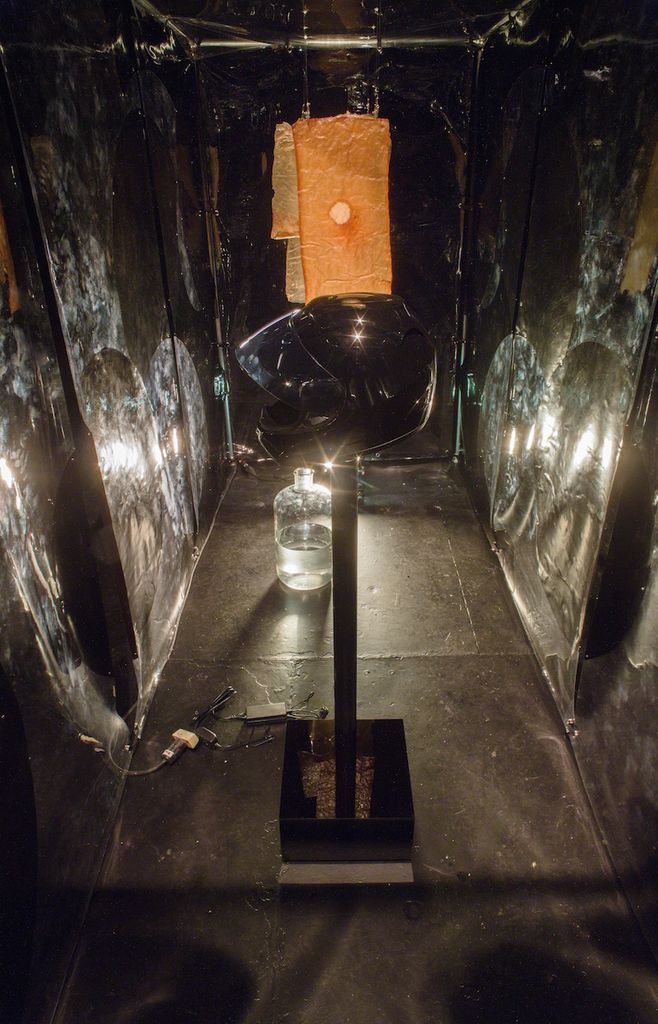
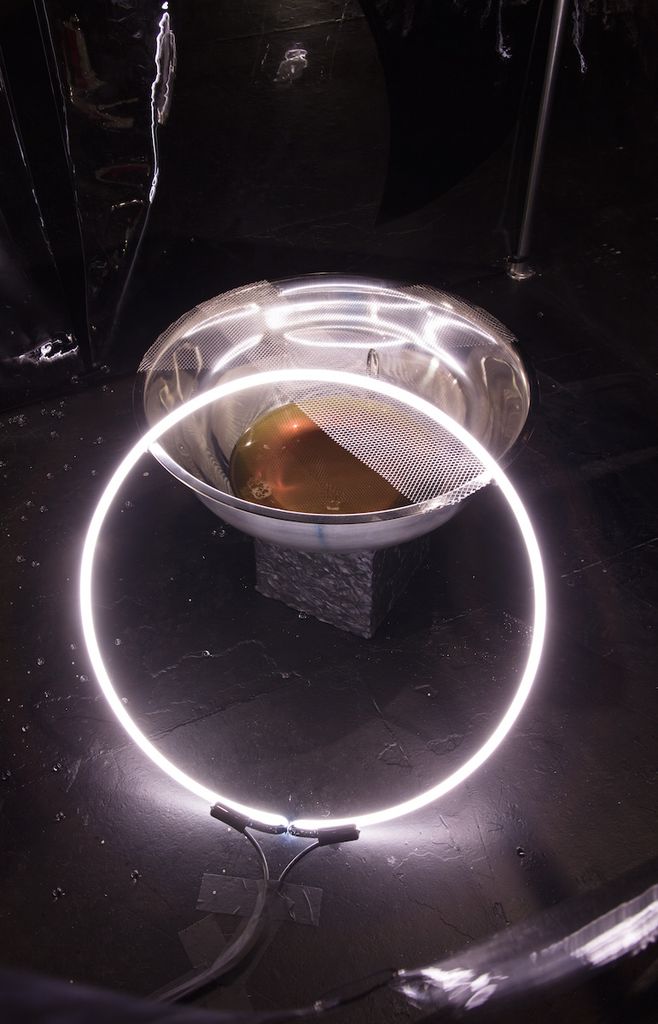
Inside, visitors moved among quarantine tents. Their walls allowed only partial views. In each tent were Yi's sculptures, made of industrial materials and organic matter, like small ecosystems that needed protecting from the outside. Or an outside that needed protecting from them.
The smell of a network
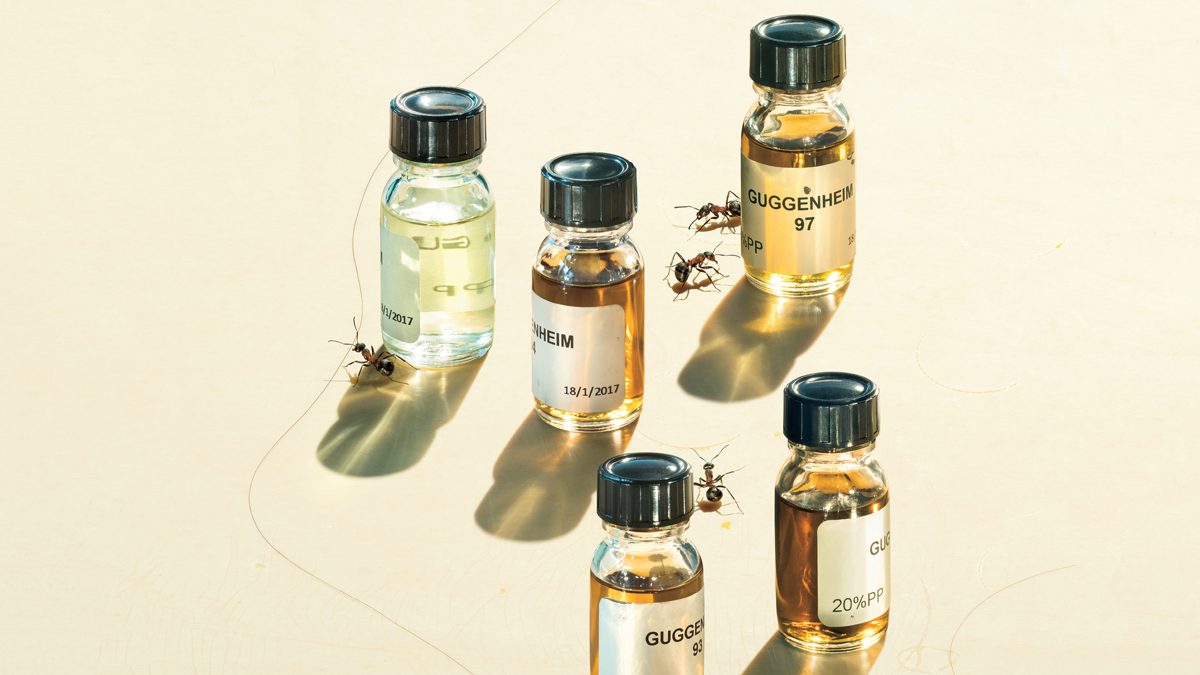
The least visible part of the show was its smell. Diffusers in the room released a scent Yi developed with collaborators including Sean Raspet. It combined two things: the collective bacteria of a hundred women, and the barely perceptible odour of Gagosian, one of the largest and most powerful galleries in the art world.
Putting two networks side by side in one smell is a political gesture. On one side, a network of women, often seen as small and informal. On the other, a gallery model many regard as a symbol of male power in the art world. In the air, they can no longer be told apart.
According to The Kitchen's announcement, Yi wanted to set society's growing anxiety about contagion and hygiene beside an older fear: the fear of feminism and of the strength of women's networks. The collective bacteria became an image of the woman as pathogen, always subject to attempts to contain and neutralise her.
The open F
The title does not explain the F. Visitors fill it in themselves: female, feminism, or something else. That openness mirrors the smell in the room: present, unmistakable, and without a label.
2015 was also a moment when the word feminist had returned to popular culture, often as a marketing tool. And viral named something people both wanted and dreaded. You Can Call Me F stood between those meanings.
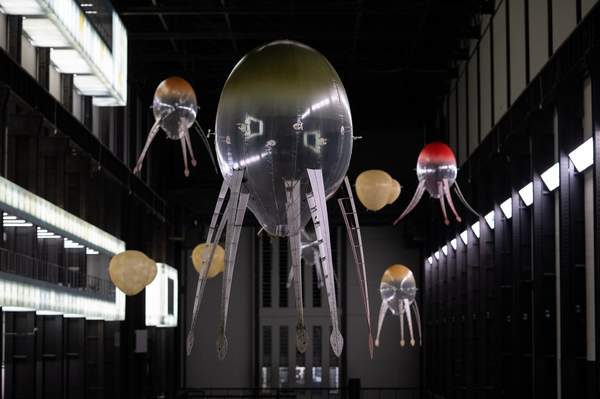
After this show Yi won the Hugo Boss Prize in 2016 and went on to work with microbes, smell and machines on a larger scale. But You Can Call Me F remains a landmark: a white cube of contemporary art that was allowed to live, to grow, and to smell.
Olfactory Art