
Essays · Contemporary Art
Arthur Jafa. APEX.
Images set side by side make their own meaning.
The clipping notebooks
For more than thirty years, Arthur Jafa cut out pictures. From magazines, newspapers, advertisements. He pasted them into notebooks, in an order only he understood. The habit began while he was working as a cinematographer, and many pages served as references for his shots.
Jafa was a cinematographer before he was known as an artist. He shot Julie Dash's Daughters of the Dust in 1991, which earned him the cinematography award at the Sundance Film Festival. His eye was trained in the film frame: light, rhythm, the cut.
Later the clipping habit moved to his computer. Instead of scissors and glue, he gathered digital images into a folder. The folder was called APEX.
Eight minutes, hundreds of images
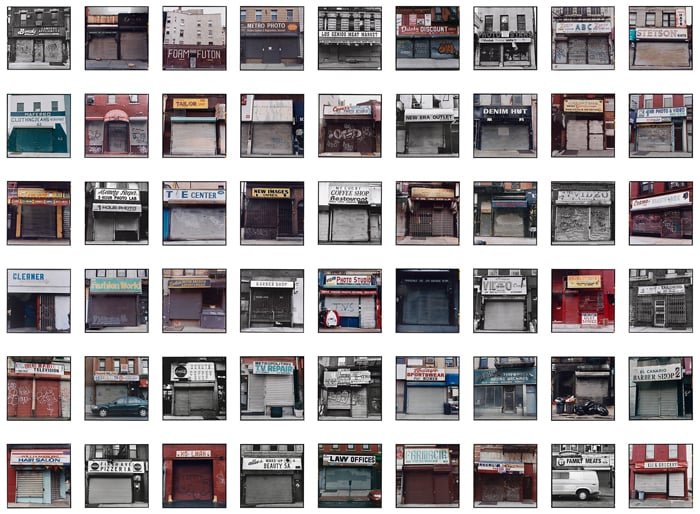
APEX dates from 2013. It exists in several forms: sometimes a grid of images printed on a panel, sometimes a video. The video runs about eight minutes and is now in the collection of the Museum of Modern Art in New York.
In the video, pictures flash past. Each holds the screen for only an instant. The sound is a techno track by Robert Hood, the Detroit electronic producer, cut across by a steady but off beat pulse. The viewer has no time to look closely. Only time to recognise.
What they recognise is a jumble. Mickey Mouse. Frederick Douglass and Sojourner Truth, two faces of American abolition. Insects under an electron microscope. Black athletes, musicians, artists. An eclipse. Stills from science fiction and horror films. Skulls. Damaged bodies.
No voiceover. No captions. Only this picture, then the next.
Spooky entanglements
When images follow each other at that speed, they begin to stick together. A hero stands right behind a villain. A historical photograph sits next to a cartoon. Past and present stop being separate. Jafa has called this spooky entanglements.
The phrase is borrowed from quantum physics, where two distant particles still affect one another. In APEX, two unrelated pictures suddenly become related. The viewer links them, whether they want to or not.
This is how the work questions the image of Black people in American popular culture. The same face can be an idol on a magazine cover, a victim in a newspaper, a monster in a film. APEX does not pull those apart. It runs them through one another until the viewer sees they were always stored in the same archive.
A few years later Jafa used the same editing method for Love Is the Message, The Message Is Death in 2016, a video built from found footage, which reached a much wider audience. But APEX is where the method is plainest: almost nothing but still images, speed and beat.
Why APEX stays
APEX makes no new images. It rearranges ones that already exist. That is what stays: a person can say something very large simply by choosing an order.
Every picture in APEX, alone, is familiar. The viewer has seen them somewhere, in print, on a screen, on a wall. But no one had placed them side by side like this. The place where they overlap is where the work speaks.
Eight minutes pass quickly. The viewer walks out carrying not one particular image but a feeling: that every image sits inside a network, and none is innocent.

Contemporary Art