
Essays · Modern Art
On Kawara. I Got Up.
Each card is a trace.
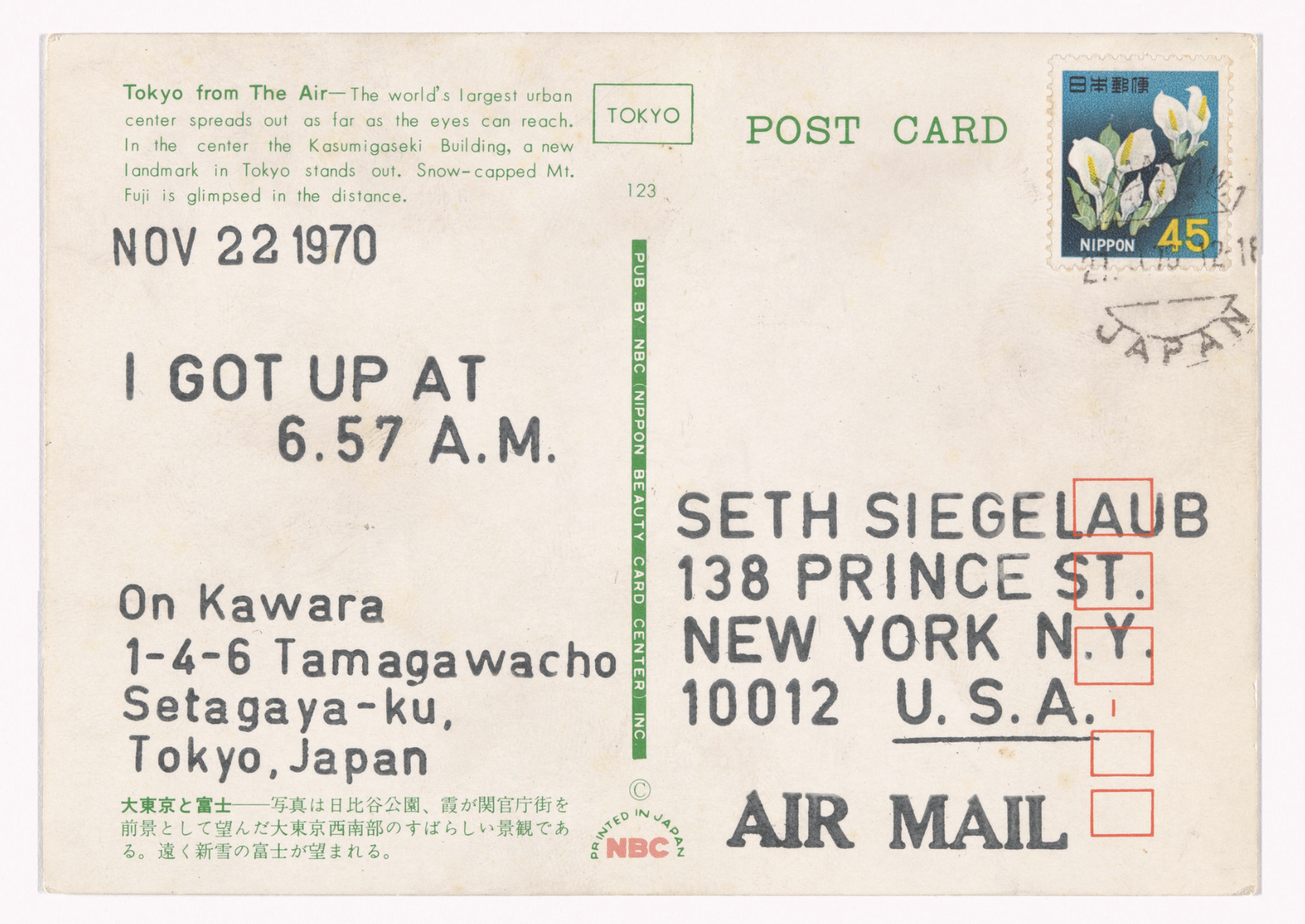
A postcard every morning
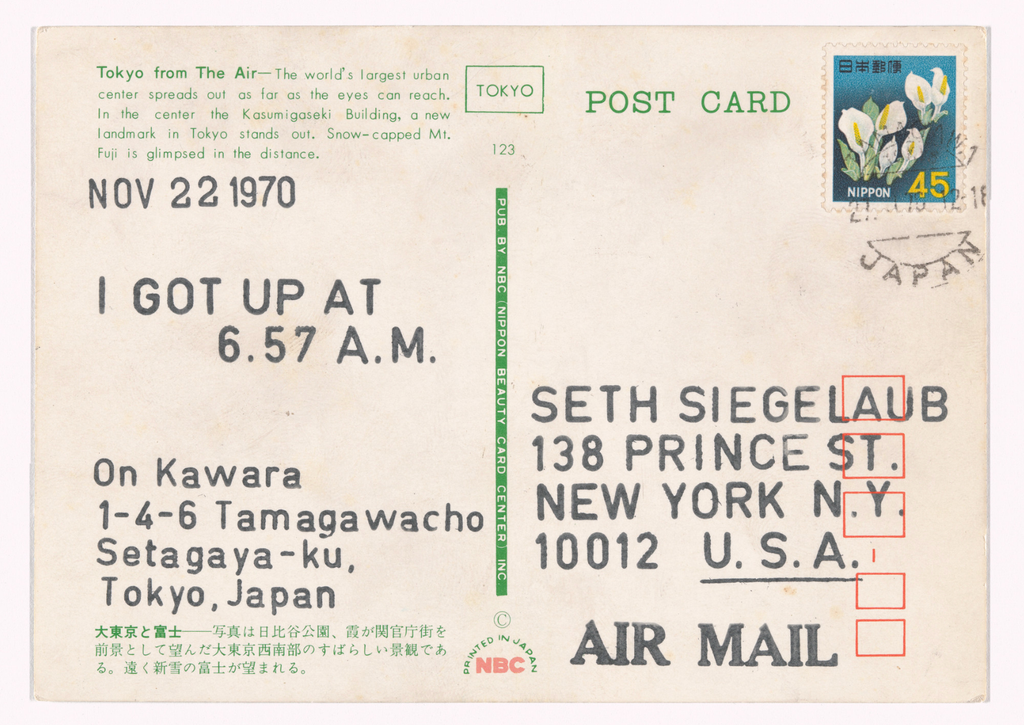
Every morning, On Kawara chose two postcards. Usually a view of the city he was in, the kind sold at newsstands to tourists. On the back he stamped a rubber stamp: I GOT UP AT, followed by the exact minute he woke. Then the address. Then the date. Then he mailed them.
No greeting. No story. No signature.
The recipients were friends and acquaintances from the art world. Some received hundreds in a row. They were not asked to reply. Their part was only to receive.
Kawara did this every day from 1968 to 1979, in whatever city he found himself. Mexico City, New York, Paris, Stockholm, Tokyo. The picture changed; the stamp did not. Together the cards form a map of one person's movements, and at the same time a calendar of mornings.
The work is a habit
What makes I Got Up art is not any single card. One card alone offers almost nothing to look at: an ordinary tourist photo, a line of print. The work lies in the repetition. In not missing a day.
On Kawara belonged to the generation of conceptual artists who held that an idea and a process could be the work, with no beautiful object required. But he differed from many of his peers in that he did not explain. He gave almost no interviews, left no manifestos, allowed no portraits. The work stands on its own.
In the same years he made other series with the same logic. Today, paintings of nothing but the date on which they were made, white on a single colour, destroyed if not finished by midnight. I Went, maps tracing his route each day. I Met, lists of the people he met. I Am Still Alive, telegrams to friends carrying only that sentence.
Side by side, they form a system for recording a life. Got up. Went. Met. Still alive. The simplest verbs there are.
Time as material
Painting is used to colour, stone, wood. Kawara used time. Not time depicted, but real time, passing minute by minute, stamped onto paper.
The number on each card is a small fact. 8:42. 11:15. 6:03. Some days early, some days late. The recipient never learns why. They only know that on that morning, in some city, someone woke up and thought to tell them so.
It is a small, private gesture. Repeated thousands of times, it becomes a large question: what measures a person's existence? The great things they do, or the ordinary mornings that follow one another?
Kawara does not answer. The card only says: I got up. Nothing more.
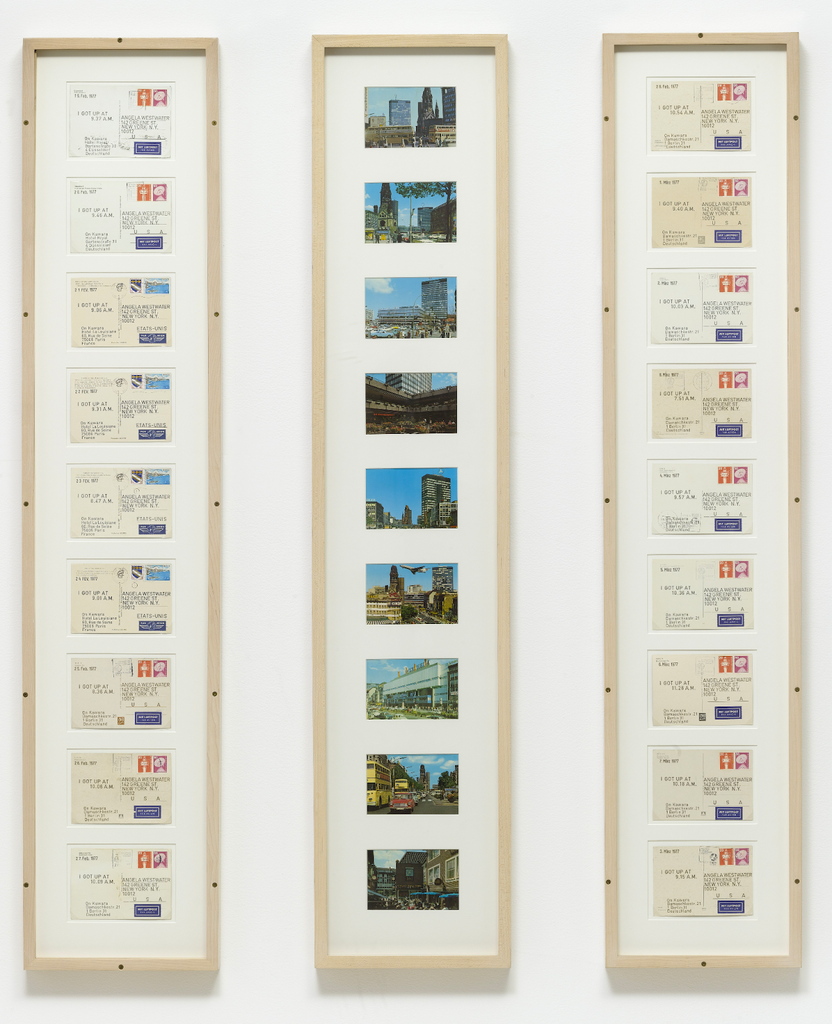
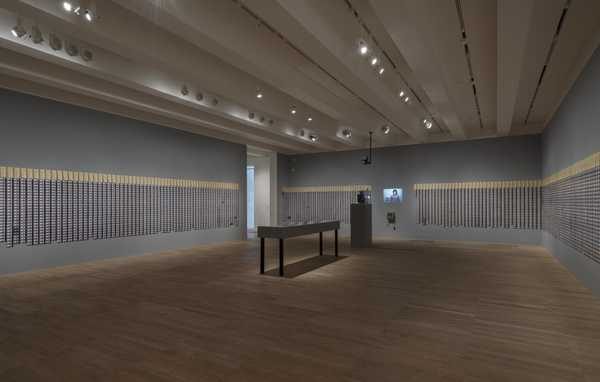
Today the cards sit in museum collections, hung in long rows behind glass. Seen all at once, they show what no single recipient could see: the rhythm of a life. Weeks of early mornings. Months of travel. Silences when the cards stop, then resume. Time is no longer an abstraction. It has a shape, numbers, postmarks.
Modern Art