
Essays · Olfactory Art
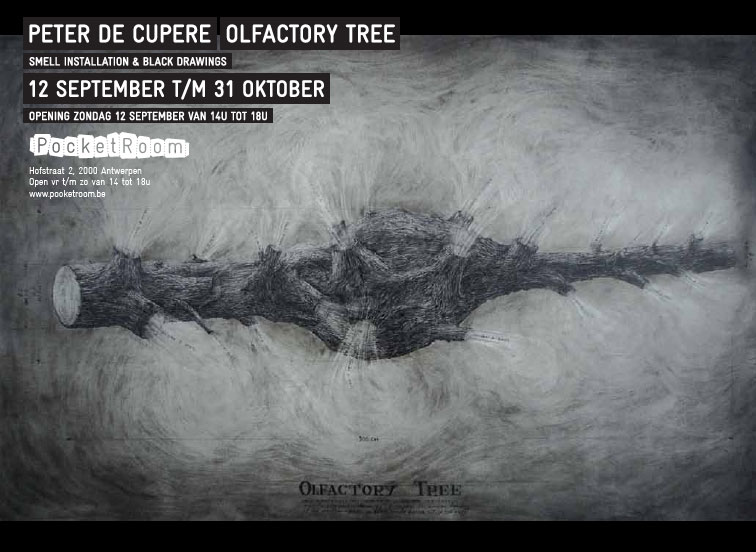
Peter De Cupere. Olfactory Tree.
The eye sees a fake. The nose smells a forest.
A trunk that is not alive
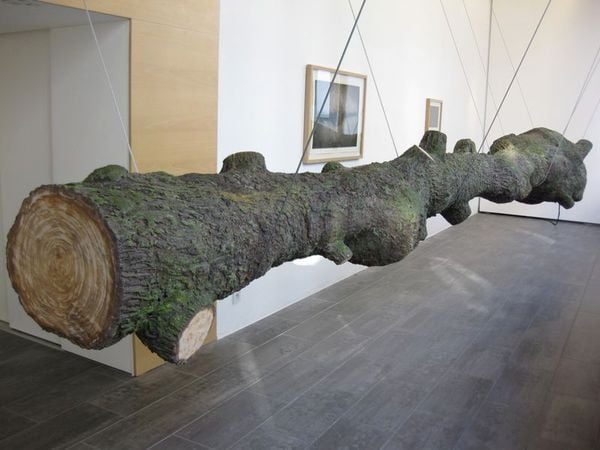
Peter De Cupere's Olfactory Tree looks like a tree trunk. Look again and it is not. It is made of epoxy and other artificial materials. No real wood, no real bark, nothing growing.
What makes the work lies where the eye cannot reach. The fake trunk is charged with the smells of a forest: pine, cedar, mushrooms, grass, and one the artist simply calls forest. From a distance, the viewer sees a sculpture. Up close, they smell a place.
In 2010 the work was shown in a solo presentation at Pocketroom, a non commercial art space in Antwerp, Belgium, from mid September to the end of October. A small room, a fake trunk, and the smell of a forest that was not there.
Some older accounts describe it as a living tree fitted with scent diffusers. Sources close to the artist say otherwise. The tree is not alive. And precisely because it is not alive, the question the work asks becomes sharp.
An artist who works through the nose
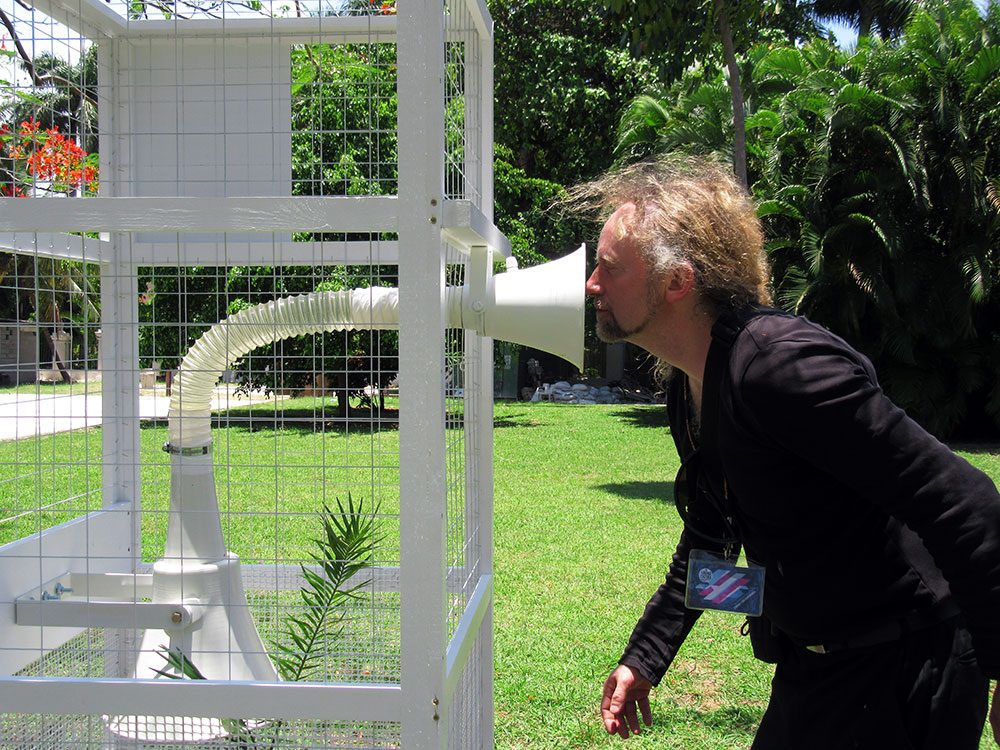
Peter De Cupere is a Belgian artist whose practice centres on smell. He makes smell installations, scented sculptures, olfactory performances, smell films and scented paintings. He built the Olfactiano, an instrument that looks like a piano but releases a scent with each key pressed.
His method often follows one rule: take something familiar to the eye and change the way we recognise it. A keyboard that gives smell instead of sound. A trunk that does not grow yet still gives off the forest. The object stays still; the sense used to read it is replaced.
He often uses odd, discarded or ordinary materials. In his hands, smell is not a layer added to a finished work. Smell is the work, and the form is only a place for it to live.
For Olfactory Tree he chose an image everyone knows. There is no need to explain what a tree is. So the viewer can give all their attention to the rest: where the smell comes from, and why it convinces more than the shape in front of them.
Where is the forest when there is no forest
The work asks a simple question. If a fake object carries a real smell, is it real or fake? The eye answers fast. The nose answers slower, but often deeper. The smell of mushrooms and grass brings back a walk in the woods more readily than a photograph of those woods.
The question lives in daily life too. Cities fill with plastic plants in shopping centres, wood scents in candles and room sprays. We live among forests that are not there every day. Olfactory Tree simply lays this out, plainly, in one room.
One small detail is worth noting: the work does not try to make the fake tree look more real. It lets the material show. The viewer knows at once they are facing a cast object. That honesty about form makes the smell stand out further, since nothing covers for it.
But the work does not judge. It does not say a real tree is better than a fake one, or a natural smell worth more than a made one. It only separates two ways of knowing, so the viewer can see that shape and smell may say different things about the same object.
What stays with you is that Olfactory Tree turns smell into a way of checking. We are used to trusting the eye. Here the eye sees correctly and still falls short. It is the nose that takes the viewer to a forest, even if that forest is only a trace in the air.

Olfactory Art