
Essays · Fashion as Design
Fashion as Design.
What we wear every day is also a designed object.
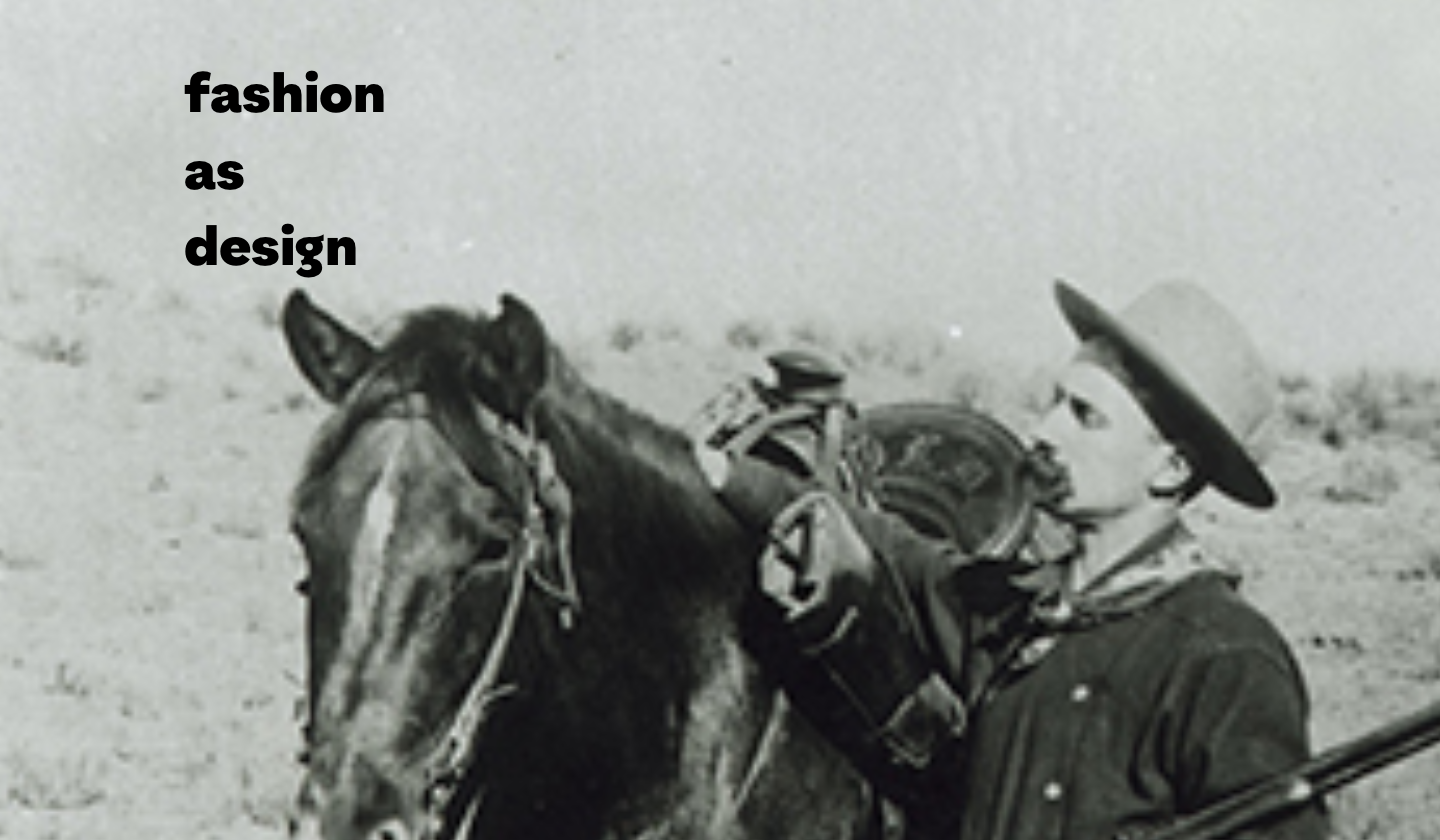
Everyone wears something
Of all forms of design, clothing is the one closest to us. Everyone, everywhere, wears something. Sometimes a full outfit. Sometimes only a mark on the skin, like a tattoo. We can live our whole lives without sitting on a famous chair, but no one spends a day without touching cloth.
Seeing fashion as design means setting aside trends, seasons, runways. In their place come the questions of a maker of objects. What is this made of? Who made it, by machine or by hand? What problem does it solve for the body? What does it say about the wearer, and about the society that produced it?
Like other design fields, clothing always sits between opposing pulls. Function and form. Machines and human hands. Standard sizes and custom fits. Mass appeal and personal identity. Pragmatism and ideals. Each garment is its own way of balancing them.
From Are Clothes Modern? to Items
The question is not new. In 1944 the Museum of Modern Art in New York staged Are Clothes Modern?, organized by the architect Bernard Rudofsky. Rudofsky wanted visitors to reconsider what they wore: why we dress as we do, which conventions are needed and which are only habits.
More than seventy years passed before the museum mounted its next major fashion exhibition. Items: Is Fashion Modern? ran from October 1, 2017 to January 28, 2018, organized by the curator Paola Antonelli with Michelle Millar Fisher of the Department of Architecture and Design. It gathered 111 garments and accessories that had a strong influence across the twentieth and twenty first centuries.
The list included very familiar things, like Levi's 501 jeans, and things that carry a whole culture, like the sari. Each was treated as a designed object, with a history, a technique, a social life.
Fashion as Design extends that conversation in the form of a course. Its focus shifts from the individual to the collective, from what clothing is to what clothing can become.
From kente cloth to a 3D printed dress
The course moves through a selection of garments from around the world. Kente cloth woven in West Africa. Blue jeans. Experimental dresses made on 3D printers. Each piece is a case for asking the same three questions: how it is made, how it is worn, how it is understood.
The answers come from many voices. Designers, tailors, historians, people testing new materials. Learners are taken into studios, hear interviews, and see visual records and historical context for each piece.
What stays is a small shift in how one looks. The white T-shirt in the drawer is no longer anonymous. It has a calculated cut, a chosen fibre, a history that runs from military underwear to everyday wear for everyone. It is a design; it is simply so familiar that we forget.
The reach of clothing does not stop at the surface either. It touches labour, the environment, economics, politics. Who wove the cloth, where, at what price. Where the discarded shirt will end up. Seeing fashion as design means seeing that whole chain, not only the beauty.
Fashion as Design