
Essays · Fashion as Design
The Sports Jersey.
Every jersey carries its wearer.
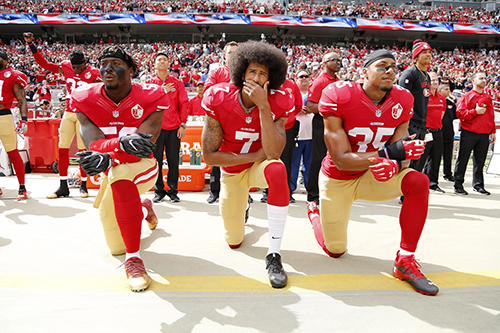
From uniform to the stands
The jersey began as a tool. It told referees, teammates and spectators who stood on which side. A colour, a number, a team name. Nothing more.
For a long time, the people in the stands did not wear it. According to Tim Layden of Sports Illustrated, fans at games in the 1960s often wore suits and ties, as if going to the office. The stadium was a place you dressed up for.
In the 1970s, clothing in general became more casual. Jerseys started to appear in the stands, though rarely. Back then they were mostly made by small local manufacturers supplying high schools, colleges and a few professional teams. They made shirts to play in. No one thought of selling them to the crowd.
The jersey still belonged to the field. It was washed, mended, reused, and replaced when it tore.
1985, and the jersey becomes merchandise
The turn came from Dallas. In 1985 Norm Charney, a sporting goods store owner who had been making jerseys for the Dallas Cowboys, saw that fans wanted a shirt exactly like the players' own. Same colours, same numbers. He made them and sold them.
It soon became a question of ownership, and the NFL stepped in. The league began licensing and working with large apparel companies to control how jerseys were made and sold. Charney was licensed to sell official NFL jerseys, later adding baseball, hockey and basketball.
Champion, Reebok and eventually Nike followed. A shirt once worn by a single player now existed in thousands of copies. Each copy was a way for a fan to stand a little closer to the team.
Something shifted quietly here. The number on the back used to show who was running on the field. Now it showed who was sitting in the stands, and whom they loved.
Hip-hop wears the jersey
In the late 1980s and early 1990s the jersey left the stadium entirely. Hip-hop artists wore it on stage, in videos, in the street. Not necessarily because they supported the team, but because the shirt was loose, the colours strong, the numbers big, and it said something about the wearer.
Tupac Shakur was famously photographed in a Detroit Red Wings jersey. In the video for Juicy, The Notorious B.I.G. wore a custom jersey reading Bad Boy, the name of his record label. That was no team's shirt. It was a jersey for the wearer himself.
From then on the jersey did more than signal loyalty to a team. It became a surface for writing personal identity. People chose teams by colour, by the city tied to the music they listened to, by a name they wanted to carry.
Years later, in 2017, the sports jersey was among the pieces shown in Items: Is Fashion Modern? at MoMA in New York, alongside other garments that shaped how people dressed in the twentieth century.
One shirt, many lives
Today the jersey sits where sport, fashion and popular culture meet. It is worn in the stands, on stage, in cafés, on the morning bus.
Look closely and a jersey holds several times at once. The time of the player named on the back. The time of the person who first bought it. The time of whoever inherits it and wears it long after that player has retired. An old shirt can outlive the career of the name printed on it.
That is why the jersey deserves to be seen as an object, not only as merchandise. It is produced in bulk, but it is worn one person at a time.
Fashion as Design