
Essays · Olfactory Art
Sissel Tolaas. FEAR.
Fear has no shape. But it has a smell.
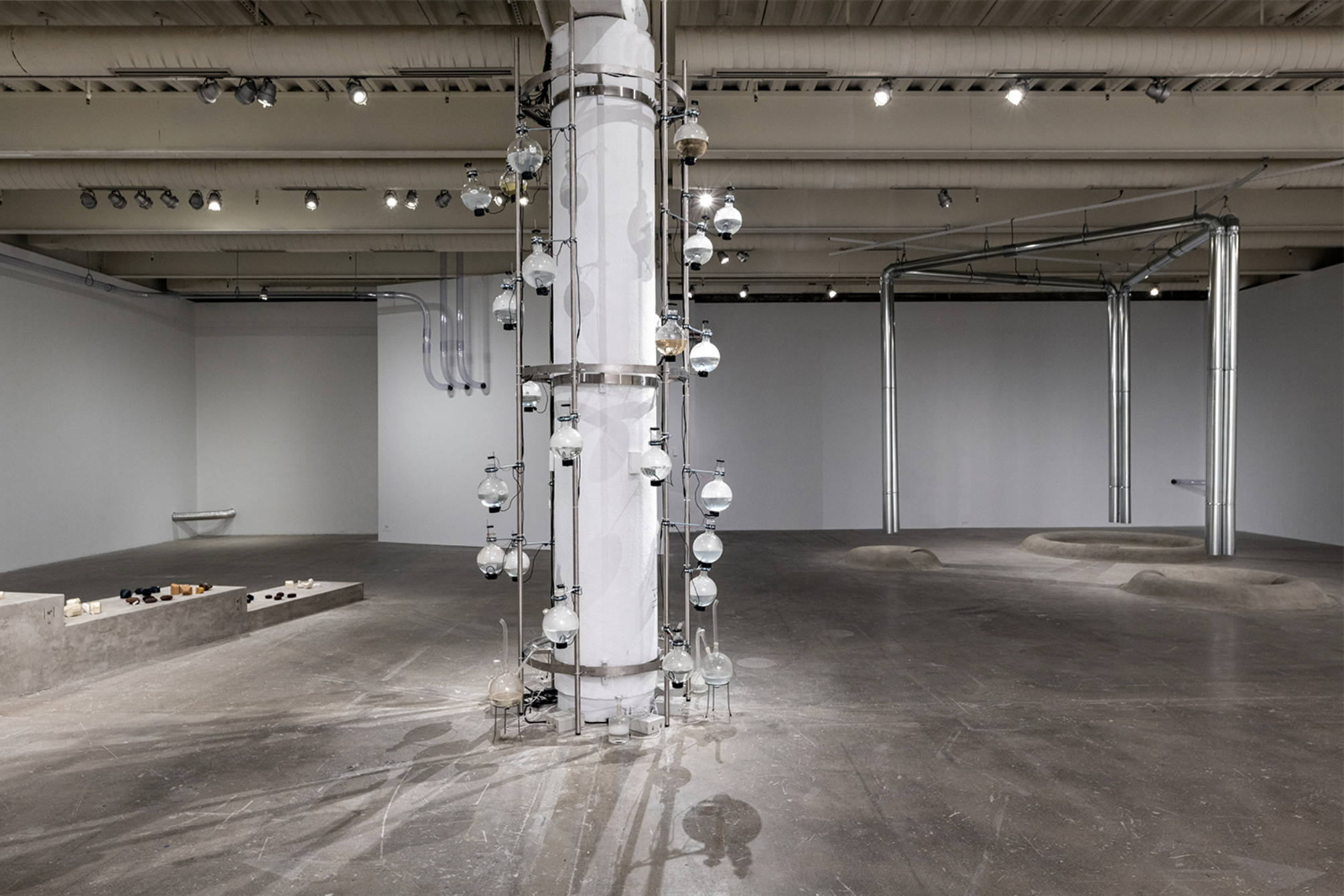
Twenty-one men
From 2005, the Norwegian artist and smell researcher Sissel Tolaas began a series of works on one specific emotion: fear. She called the series The FEAR of Smell, the Smell of FEAR.
She sought out men with severe phobias, each with a fear of his own, from different places. Each was given a small device to hold under the arm whenever an attack came on. No one staged anything to frighten them. The fear came when it came, in the middle of ordinary life.
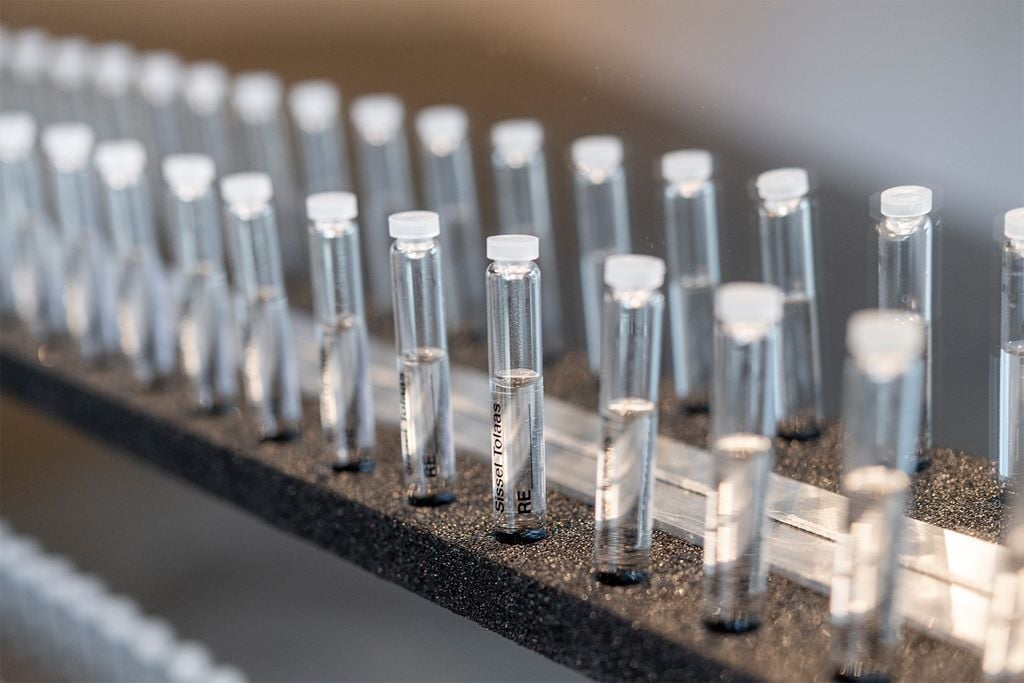
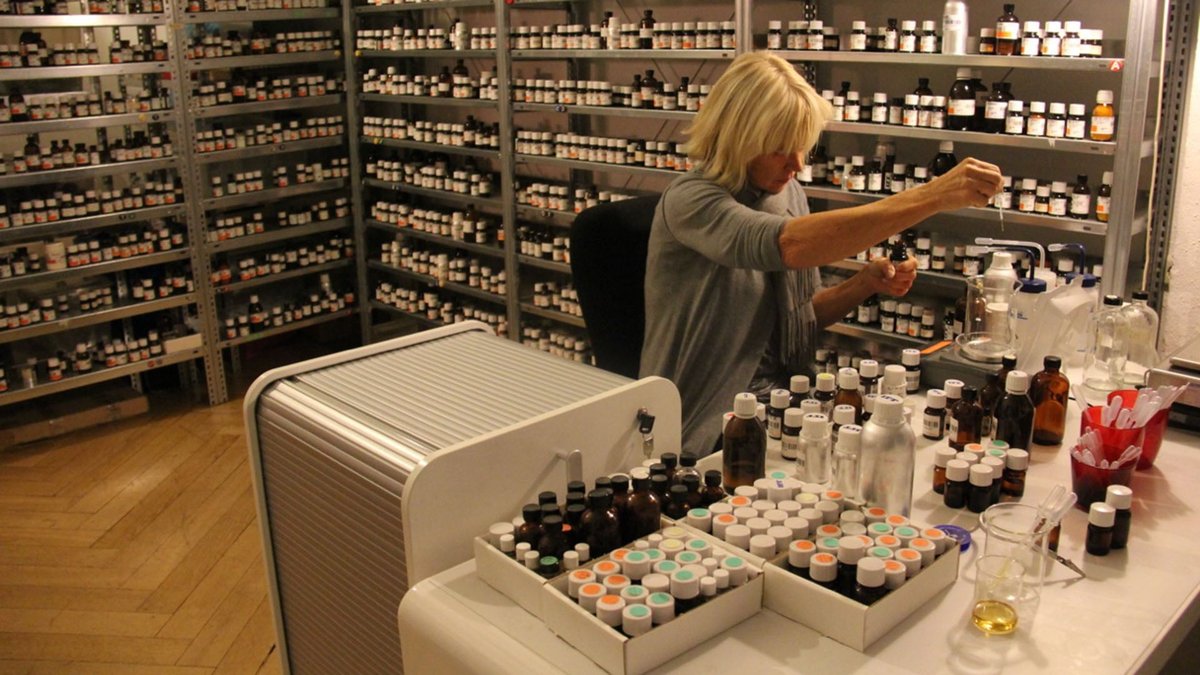
The device absorbed their sweat. Tolaas gathered the samples, analysed their molecular makeup, and rebuilt each smell synthetically. Every man produced a smell of his own. No two fears were alike.
A wall to rub
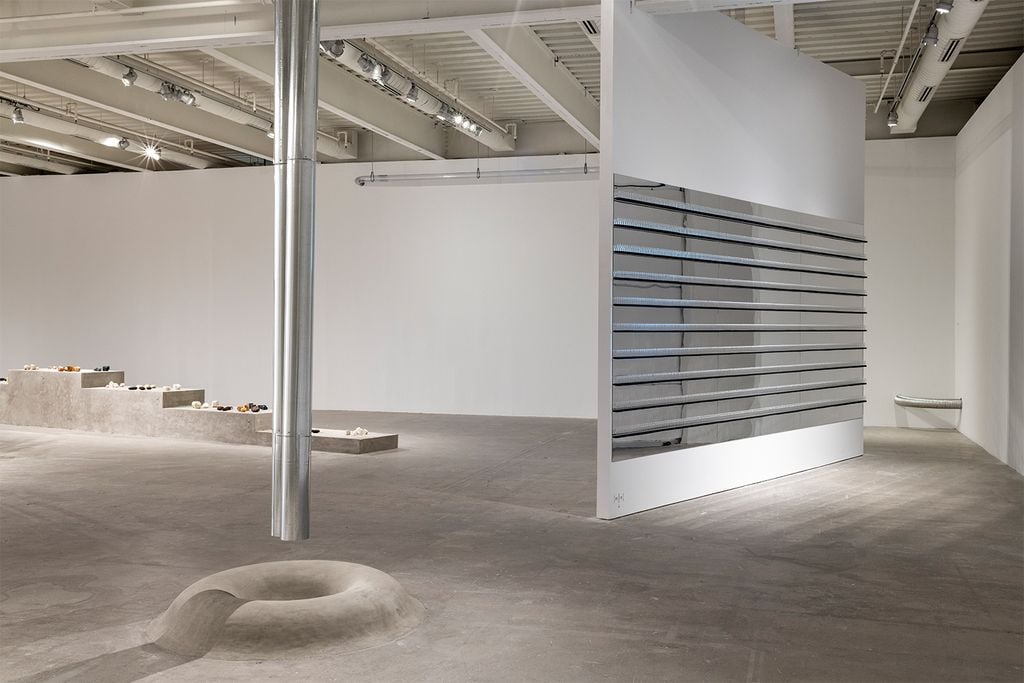
The rebuilt smells were not kept in bottles. Tolaas sealed them in tiny microcapsules, mixed them into paint, and applied the paint to the gallery wall. Dry, the wall looked like any other. Only when a visitor rubbed or brushed the surface did the capsules break and release the smell.
In late 2006 that wall appeared at the MIT List Visual Arts Center in Cambridge, Massachusetts, in the exhibition Sensorium. It carried the sweat of twenty-one men. In early 2007 another version, with the smells of nine men, was shown at the Berkeley Art Museum in California as a run of vertical painted stripes.
The interaction was simple, almost childlike: a scratch-and-sniff card enlarged to the size of a wall. But the gesture put visitors in an odd position. They had to press their nose to the wall and touch the bodily trace of a stranger, at a moment when that stranger was afraid.
What fear smells like
Most visitors expected something heavy, sour, unpleasant. It was otherwise. Descriptions of the work mention buttered and salted popcorn, baby powder and musk, sweet fruit, coriander, dusty meat. Some pleasant, some strange, few what anyone had imagined.
That is precisely the question Tolaas wanted to raise. We are used to dividing smells into good and bad, fragrant and foul. Body odour usually falls on the side of things to be hidden and removed. Standing at the wall without knowing the story, the nose finds no reason for disgust. Disgust comes later, from the label we attach.
Tolaas often spoke about these prejudices in talks alongside the work. She asked what we cover up, and why. Deodorising, for her, is not only hygiene. It is also a way of erasing information that other people's bodies send us.
Between science and art
FEAR stands on the border of two fields. Its method belongs to the chemist: sample, analyse, rebuild, test for accuracy. Tolaas spent years bringing each smell close enough to its source. But the result was not presented as a report. No charts, no conclusions. Only a wall and an invitation to touch it.
The project also raises a question about the individual and the collective. Each smell belongs to one person, with one particular fear. Side by side, they become a map of human emotion, something everyone carries, no one sees, and everyone has at some point given off.
Olfactory Art