
Essays · Olfactory Art
Sissel Tolaas. Smellscapes.
Every street has an address in smell.
A city, read through the nose
Sissel Tolaas was born in Norway and lives in Berlin. She studied mathematics, chemistry, languages and visual art. Those four fields rarely meet in one person. In Tolaas they meet around a single subject: smell.
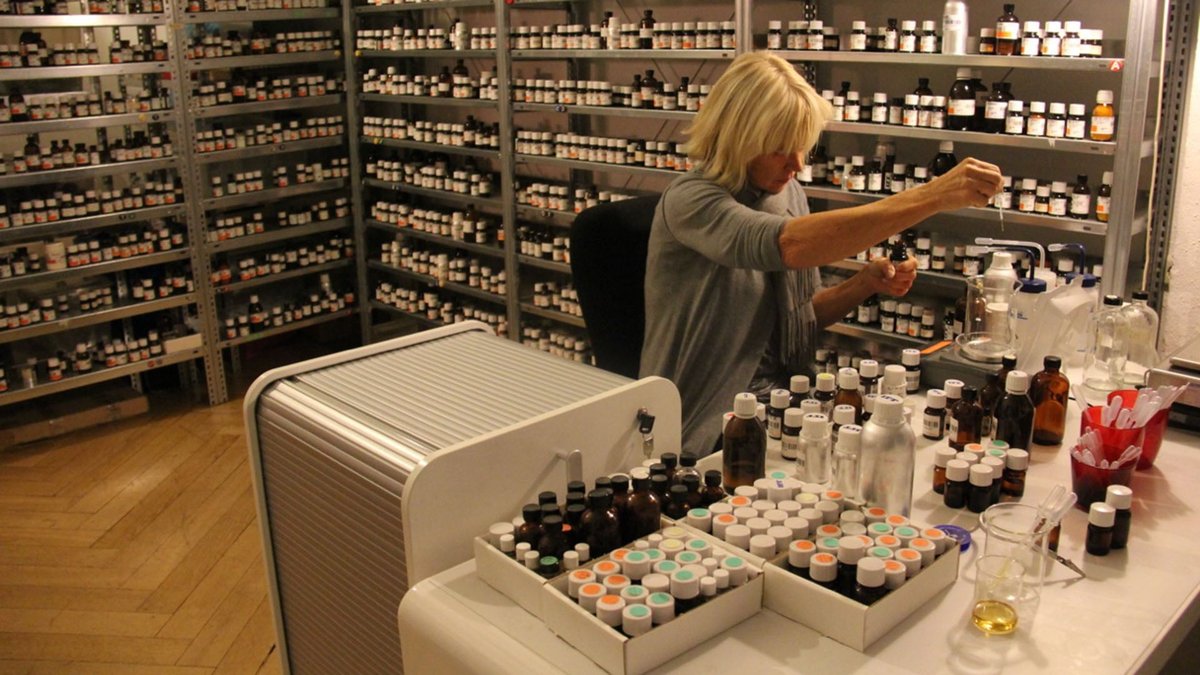
In 2004 she founded SMELL RE_searchLab Berlin, with support from IFF, a large American flavour and scent company. From around that time she began something that continues today: going from city to city, collecting its smells, and rebuilding them in the lab. She calls this line of research SmellScape.
The list of cities now runs past fifty. Berlin, Paris, London, Oslo, Stockholm, Mexico City, Cape Town, Shanghai, Calcutta, Amman, Kansas City, Nuuk in Greenland. Each with its own climate, its own building materials, its own way of eating. Each, therefore, with its own smell.
Collecting smell like soil samples
Tolaas works more like a geologist than a perfumer. She walks. She stops at a street corner, a market, a petrol station, a riverbank. She captures the smell of each spot, notes the place and the time, and brings it back to the lab to analyse its molecules.
From there the smell is rebuilt. Not an evocation, but the closest possible copy of what was actually present. Car exhaust. Rubbish. Concrete after rain. Street food stalls. Sweat on a bus. Sea air.
Over the years these copies have become an archive of around seven thousand real smells from around the world. It is sorted into branches: city, body, ocean, nature, space. It resembles a library, except that the books are read with the nose.
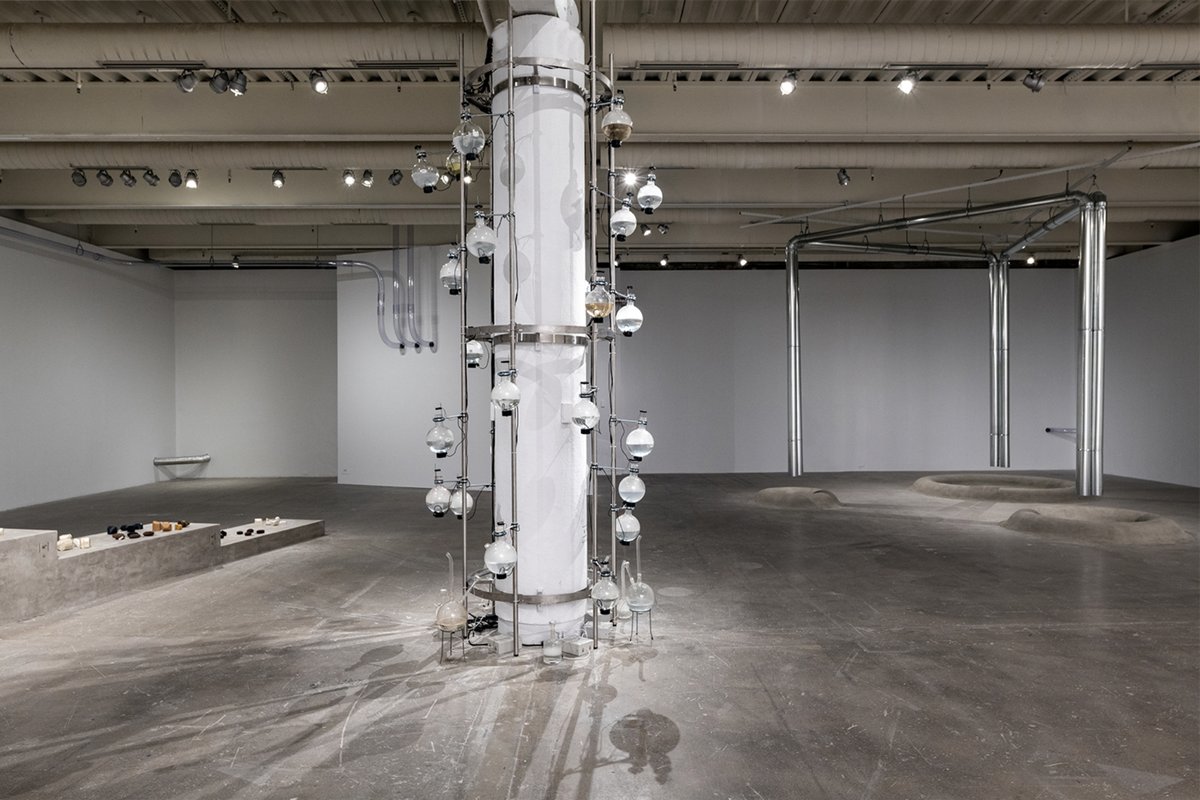
The results reach the public in several forms. Sometimes a map printed with microencapsulated scent that releases its smell when rubbed. Sometimes a wall coated with scented paint. Sometimes a walk, where participants are asked to stop and smell exactly where she did.
A map without lines
A familiar map is something to look at. It has roads, borders, names. Smellscapes has none of these. It records what has no shape: a smell that lasts a few hours and disperses, one that appears only in the rainy season, one that shifts between morning and night.
So each of Tolaas's maps is also a record of a moment. A market does not smell the same this year as next. A factory closes, a canal is filled in, a restaurant moves, and the smell of the whole district moves with it. A smell map is always a map of the recent past.
Tolaas often points out that we live in a culture that favours the eye. We describe cities by their architecture, their photographs, their skylines. The nose is treated as a minor sense, even one to be covered up with deodorant. Smellscapes reverses that order, if only for the moment a visitor bends down to smell a sheet of paper.
Why Smellscapes still matters
Twenty years on, Smellscapes is not finished. Tolaas still takes invitations from cities, museums and universities. In 2016 she was a research fellow in Singapore, studying the smells of its neighbourhoods.
The value of the project does not lie in a single work. It lies in showing that smell can be collected, stored and compared, like any other data about a place. And once stored, smell becomes evidence: that this city was once like this, at that moment, with those people.
Olfactory