
Essays · Fashion as Design
The Jumpsuit.
A garment is a trace of the work its wearer does.
From underwear to overalls
A jumpsuit is a one piece garment, top and trousers sewn together. The name comes from parachutists, who needed clothing that would not slip or catch as they left the aircraft. But its story starts earlier, and on the inside of clothing.
In the mid nineteenth century came the union suit: a knitted one piece undergarment worn by men and women alike. It replaced layer upon layer of underwear, fussy and hard to put on. For women, the union suit was a relief. It removed some of the tight layers under their dresses.
When the one piece form moved to the outside, it brought practicality with it. In 1913 Lee introduced the Union All, a loose, heavy, durable suit for mechanics. Put it on once and you were done, no gap for grease to get in. During the First World War the design was adapted as flight wear for the American military.
At this stage a suit is a tool. It serves the work, not the eye.
A suit for everyone
After the First World War the jumpsuit took on symbolic meaning. Futurist artists in Italy and Constructivists in Russia saw in it a uniform for a new age: simple, equal, easy to produce.
In 1919 the Italian artist Thayaht designed the TuTa, a T shaped one piece suit cut from straight lengths of cloth that anyone could sew at home. He meant it as a rejection of bourgeois fashion, which sorted people by fabric and style.
In Soviet Russia, Varvara Stepanova and Alexander Rodchenko designed one piece work clothes. For them, clothing should be mass produced for the working class, not for the runway.
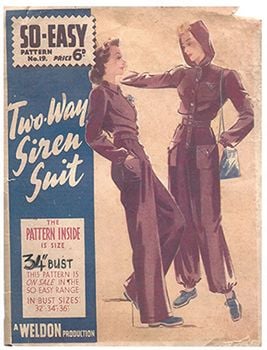
But the jumpsuit had a darker side too. During the Second World War, Britain had the siren suit, pulled on quickly when the air raid siren sounded. A suit for running to the shelter.
Onto the dance floor
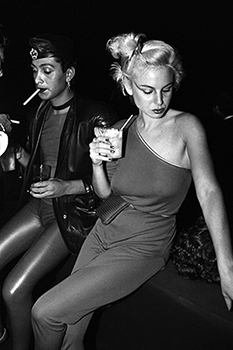
In the 1960s the jumpsuit entered mainstream fashion. In the 1970s it marked a turning point: women could wear trousers to formal occasions without seeming out of place.
Then came disco. Lights, music, long nights. The jumpsuit became clothing for freedom and ease in one's own body. Designers used fabrics that caught the light, sequins, daring cuts.
An often cited example is the gold lamé jumpsuit by the American designer Stephen Burrows: halter neck, open back, wide legs. It was made to move. Every step made the cloth catch the light a different way.
The same shape once meant for mechanics now glittered under the mirror ball.
One cloth, many lives
Looking back, the jumpsuit has passed through nearly every role a garment can play. Underwear. Workwear. Military wear. Political statement. Shelter wear. Evening wear.
The shape barely changed. Still one piece from neck to ankle. What changed was the wearer, and what they did while wearing it. Like the sports jersey, the jumpsuit shows how much meaning an ordinary garment can carry.
That is why it is still here. Not because it is beautiful by some standard. Because it is simple enough to hold any story people bring to it.

Fashion as Design