Essays · Olfactory Art
Sean Raspet. Residuals.
The air of a room, condensed into a thing.
A steel canister, a week of air
In November 2014, Jessica Silverman Gallery in San Francisco opened Residuals, an exhibition by Sean Raspet. It ran into early January 2015. But before any visitor arrived, the room had already spent a week working for the piece.
Raspet placed a SUMMA canister in the gallery. It is a stainless steel vessel used for air sampling, emptied to a vacuum. When the valve opens, the surrounding air drifts in slowly. After seven days, the canister held a sample of the room's own air.
The sample went to a laboratory, where each compound was separated and its proportion measured. From those results Raspet built a liquid with the same composition, only many thousand times stronger than the original background smell.
The liquid was micro-encapsulated into a scratch and sniff coating and applied to the gallery's surfaces. The work is titled Micro-encapsulated Surface Coating. Visitors scratched the wall and smelled. What they smelled was the air of the room they were standing in, only far denser.
What else remained in the room
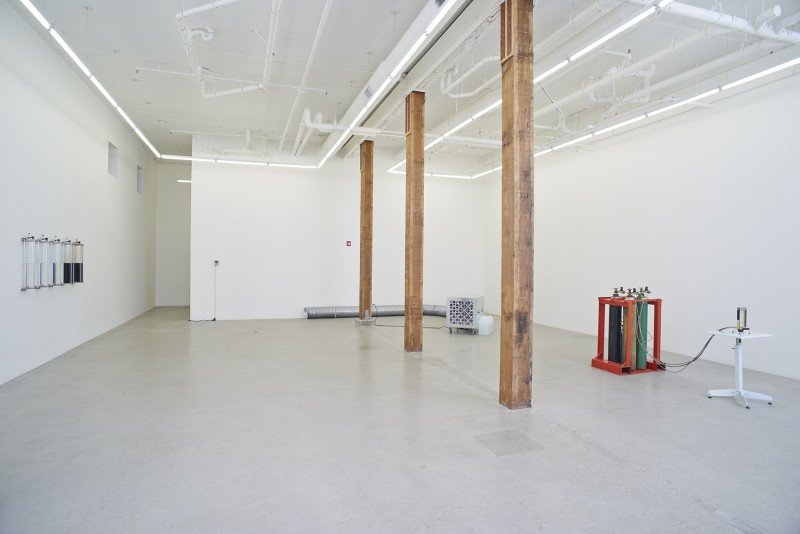
The wall was not the only work. Five clear, industry standard containers held reconstituted crude oil. Three were rebuilt molecule by molecule from purified research grade chemicals. The other two were black, mixed from things anyone can buy: gasoline, asphalt, petroleum coke. The same crude oil, at different resolutions.
Four gas cylinders released nitrogen, oxygen, argon and carbon dioxide into the room, in the same ratio as the room's own atmosphere. Raspet added to the air exactly what the air already was.
In one corner, a negative air machine ran continuously. Its carbon filter caught odour compounds, which were then extracted into a solvent. That solvent went into an odourless cleaning product formulated by the artist. When the exhibition ended, it was used to wipe down the walls.
The circle closed. The smell of the room was taken out, condensed, painted on the wall, filtered from the air, and returned to clean that same wall.
Matter, not symbol
Residuals means what is left over. Each work in the room is a remainder after a subtraction. Air minus the part we ignore. Crude oil minus the industry around it. A cleaning product minus the very smell it was made to erase.
Raspet does not use smell to call up a memory or tell a story. He treats it as chemical data: measurable, copyable, multipliable. The method belongs more to the laboratory than to the easel. Yet the result is very concrete for the person in the room: a scratch on a wall, a faintly sharp smell of paint, cleaner and building material.
What stays with you is that Residuals gives the invisible a shape. A gallery's background smell is arranged so that no one notices it. White walls, clean floors, neutral air. Raspet shows that this neutrality is also an ingredient, with a formula, a concentration, a canister to hold it.
Visitors leave with a small habit disturbed. Walking into another room, they may ask: what is the air here made of? The question needs no laboratory. Only a pause, and a slower breath.
Hình ảnh: Sean Raspet, Residuals, installation view, Jessica Silverman Gallery, San Francisco (2014). Trích dẫn cho mục đích phê bình nghệ thuật phi thương mại theo nguyên tắc fair use học thuật. Nguồn gallery: jessicasilvermangallery.com.
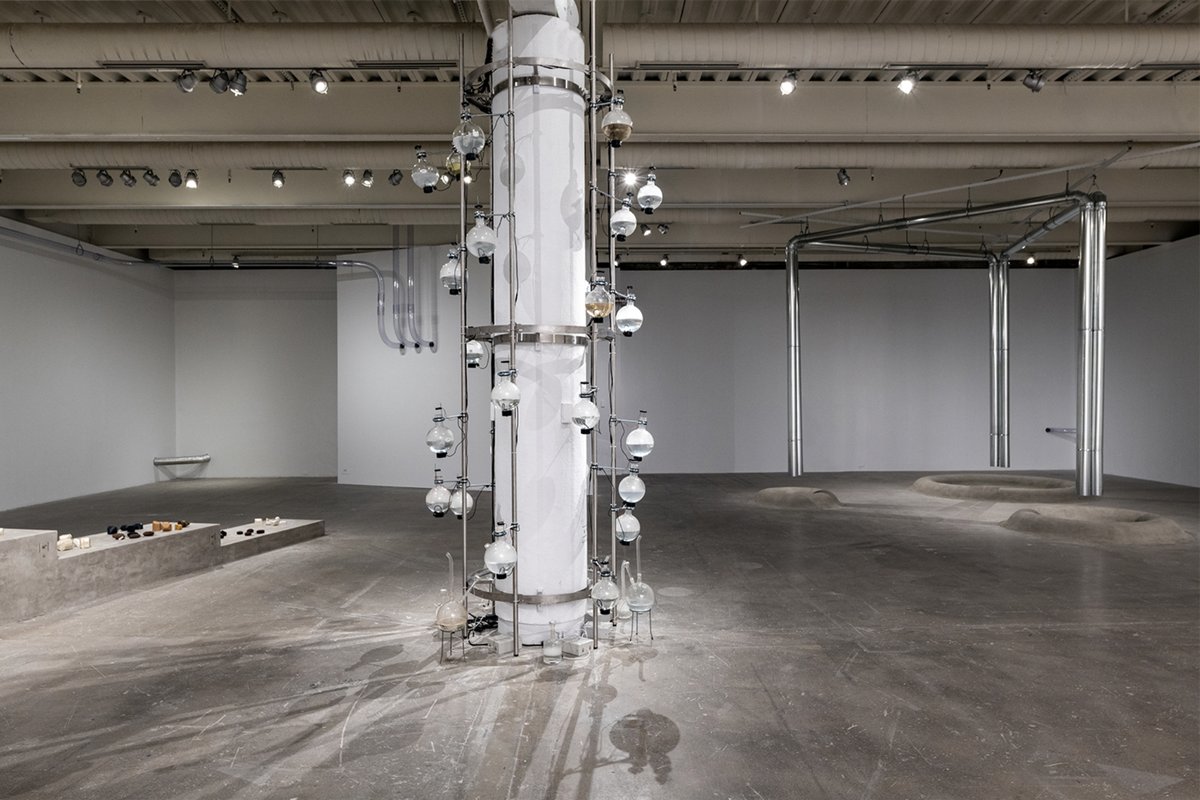
Image: Sean Raspet, Residuals, installation view, Jessica Silverman Gallery, San Francisco (2014). Reproduced for non-commercial art criticism under principles of academic fair use. Gallery source: jessicasilvermangallery.com.
Olfactory Art