
Essays · Fashion as Design
Guy Baldwin. On Leather Pants.
Tấm da giữ lại hình của người mặc.
Leather keeps the shape of the one who wears it.
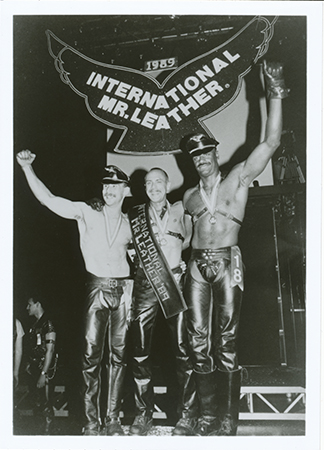
Một danh hiệu năm 1989
International Mr. Leather là một cuộc thi thường niên tổ chức ở Chicago. Mỗi năm, nó chọn một người đại diện cho cộng đồng leather trong một năm, một cộng đồng rộng và đa dạng, lấy trang phục da làm dấu hiệu nhận diện chung.
Năm 1989, Guy Baldwin giành danh hiệu này. Cùng năm, ông cũng là Mr. National Leather Association. Ông là người duy nhất từng giữ cả hai danh hiệu cùng một lúc.
Baldwin không chỉ là một gương mặt trên sân khấu. Từ đầu thập niên 1970, ông làm tư vấn tâm lý và giảng dạy, viết nhiều bài báo và sách cho cộng đồng của mình. Cuốn Ties That Bind, xuất bản năm 1993, là một tập tiểu luận về các mối quan hệ trong văn hoá leather. Năm 2012, ông được đưa vào Leather Hall of Fame.
Vì thế, khi Baldwin nói về một chiếc quần da, ông nói với tư cách của một người đã sống trong ngôn ngữ ấy nhiều thập kỷ.
Da như một vật liệu
Trước khi là biểu tượng, quần da là một vật. Da thuộc dày, nặng, không co giãn như vải. Mặc ôm sát, nó bám theo từng đường của cơ thể. Khi di chuyển, nó phát ra tiếng khẽ. Dưới đèn, nó bắt sáng thành những vệt dài.
Da đen là màu phổ biến nhất. Nó hút ánh sáng ở chỗ phẳng và phản chiếu ở chỗ gấp, nên hình dáng người mặc hiện ra rõ hơn bất kỳ chất liệu nào khác. Một chiếc quần da nhìn từ xa là một đường viền. Nhìn gần là một bề mặt đầy nếp.
Da cũng thay đổi theo người. Nó giãn ở chỗ này, mòn ở chỗ kia, sẫm lại vì mồ hôi và dầu tay. Không có hai chiếc quần da cũ nào giống nhau. Đó là điều Baldwin chạm tới khi nói rằng mặc da là một cách tách mình khỏi số đông: vật liệu này tự nó đã không chịu đồng phục hoá.
Một ngôn ngữ riêng
Với Baldwin, quần da không đơn thuần là thời trang. Nó là tuyên bố rằng mình đứng cùng một cộng đồng. Nó là một mã nhận diện, một dấu hiệu thuộc về, mà người trong cuộc đọc được ngay, còn người ngoài thì có thể không.
Ông gọi nó là một lớp giáp. Một lớp giáp mang tính gợi cảm, nhưng cũng là giáp theo nghĩa bảo vệ. Được mặc với sự tự tin, nó nói về nam tính, về thách thức, về sự gần gũi và về niềm tự hào.
Baldwin nhắc rằng trong những năm khủng hoảng AIDS dữ dội nhất, văn hoá leather trở thành một cách để nhiều người đồng tính nam hiện diện công khai. Khi cộng đồng đang mất mát, việc đứng giữa phố trong một bộ đồ da là một cách nói rằng mình vẫn ở đây. Cùng một lúc, nó chứa cả sự dễ tổn thương lẫn sức mạnh.
Vì sao một chiếc quần vào bảo tàng
Năm 2017, Bảo tàng Nghệ thuật Hiện đại New York mở triển lãm Items: Is Fashion Modern?, gồm 111 món đồ đã định hình thế kỷ 20 và 21. Quần da là một trong số đó, bên cạnh những món quen thuộc như quần jeans hay áo phông trắng. Baldwin là một trong những giọng nói được mời kể về nó.
Đặt một chiếc quần da trong bảo tàng thiết kế là thừa nhận rằng trang phục không chỉ để che cơ thể. Nó mang theo cảm xúc, chính trị, và lịch sử của những nhóm người từng phải sống bên lề. Thiết kế của một món đồ không chỉ nằm ở đường may, mà ở những gì người ta dùng nó để nói.
Góc nhìn của Baldwin nhắc điều ấy bằng một ví dụ rất cụ thể. Một tấm da, cắt thành hình một chiếc quần, mặc lên người. Và từ đó, một câu trả lời cho câu hỏi: tôi là ai.
A title in 1989
International Mr. Leather is an annual contest held in Chicago. Each year it chooses someone to represent the leather community for the coming year, a wide and diverse community that shares leather clothing as a common sign.
In 1989, Guy Baldwin won the title. The same year he was also Mr. National Leather Association. He is the only person ever to hold both titles at once.
Baldwin was more than a face on a stage. From the early 1970s he worked as a counsellor and educator, and wrote widely for his community. His book Ties That Bind, published in 1993, is a collection of essays on relationships within leather culture. In 2012 he was inducted into the Leather Hall of Fame.
So when Baldwin talks about a pair of leather pants, he speaks as someone who had lived inside that language for decades.
Leather as material
Before it is a symbol, a pair of leather pants is an object. Tanned hide is thick and heavy, and does not stretch the way cloth does. Worn tight, it follows every line of the body. It makes a faint sound as you move. Under lights, it catches long streaks of shine.
Black is the most common colour. It absorbs light on flat planes and reflects it at the folds, so the wearer's shape reads more clearly than in any other material. From a distance, leather pants are an outline. Up close, a surface full of creases.
Leather also changes with its wearer. It stretches here, wears there, darkens with sweat and the oil of hands. No two old pairs are alike. This is what Baldwin touches on when he says wearing leather sets you apart from the crowd: the material itself refuses to be a uniform.
A language of its own
For Baldwin, leather pants are more than fashion. They declare that you stand with a community. They are a code, a sign of belonging that insiders read at once and outsiders may not read at all.
He calls them a kind of armour. Erotic armour, but armour in the protective sense too. Worn with confidence, they speak of masculinity, defiance, closeness and pride.
Baldwin points out that during the worst years of the AIDS crisis, leather culture became a way for many gay men to be visible. While the community was losing so much, standing in the street in leather was a way of saying: we are still here. It held vulnerability and strength at the same time.
Why a pair of pants belongs in a museum
In 2017 the Museum of Modern Art in New York opened Items: Is Fashion Modern?, an exhibition of 111 garments and accessories that shaped the twentieth and twenty first centuries. Leather pants were among them, beside familiar things like jeans and the white T shirt. Baldwin was one of the voices invited to speak about them.
Putting leather pants in a design museum admits that clothing does more than cover the body. It carries feeling, politics, and the history of people who had to live at the margins. The design of a garment lies not only in its seams but in what people use it to say.
Baldwin's view makes that point with a very concrete example. A hide, cut into the shape of a pair of pants, worn on a body. And from it, an answer to the question: who am I.
Fashion as Design