
Essays · Olfactory Art
Sissel Tolaas. Smellscapes.
Mỗi con phố có một địa chỉ bằng mùi.
Every street has an address in smell.
Một thành phố, đọc bằng mũi
Sissel Tolaas sinh ra ở Na Uy và sống ở Berlin. Bà học toán, hoá học, ngôn ngữ và mỹ thuật. Bốn ngành ấy ít khi gặp nhau trong một người. Ở Tolaas, chúng gặp nhau quanh một đối tượng: mùi.
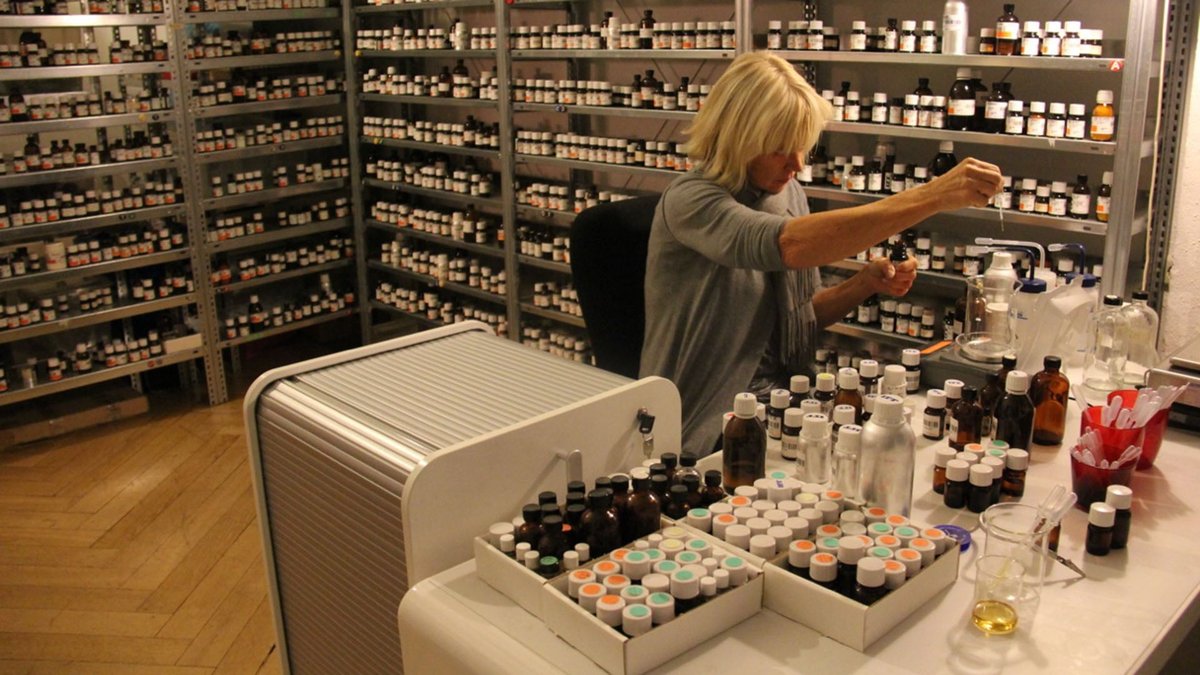
Năm 2004, bà lập SMELL RE_searchLab Berlin, với sự hỗ trợ của IFF, một tập đoàn hương liệu lớn của Mỹ. Cũng từ khoảng thời gian đó, bà bắt đầu một việc kéo dài đến nay: đi từng thành phố, thu mùi của nó, rồi dựng lại những mùi ấy trong phòng thí nghiệm. Bà gọi chuỗi nghiên cứu này là SmellScape.
Danh sách thành phố đã lên tới hơn năm mươi. Berlin, Paris, London, Oslo, Stockholm, Mexico City, Cape Town, Thượng Hải, Calcutta, Amman, Kansas City, Nuuk ở Greenland. Mỗi nơi một khí hậu, một loại vật liệu xây dựng, một thói quen ăn uống. Mỗi nơi, vì vậy, một mùi.
Thu mùi như thu mẫu đất
Cách Tolaas làm giống một nhà địa chất hơn một nhà làm nước hoa. Bà đi bộ. Bà dừng ở góc phố, ở chợ, ở trạm xăng, ở bờ sông. Bà thu lấy mùi của từng điểm, ghi lại nơi chốn và thời điểm, rồi mang về phòng thí nghiệm để phân tích thành phần phân tử.
Từ đó, mùi được dựng lại. Không phải một mùi gợi nhớ, mà một bản sao gần nhất có thể của cái đã có mặt ở đó. Khí thải xe. Rác. Bê tông sau mưa. Quầy thức ăn đường phố. Mồ hôi người trên xe buýt. Gió biển.
Qua nhiều năm, những bản sao ấy thành một kho lưu trữ khoảng bảy nghìn mùi thật, thu từ khắp nơi trên thế giới. Kho được chia thành nhiều nhánh: mùi thành phố, mùi cơ thể, mùi đại dương, mùi thiên nhiên, mùi không gian. Nó giống một thư viện, chỉ khác là sách được đọc bằng mũi.
Kết quả cuối cùng đến với người xem theo nhiều dạng. Có khi là bản đồ in bằng mực có vi nang mùi, chà tay lên thì mùi toả ra. Có khi là một bức tường sơn mùi. Có khi là một cuộc đi bộ, trong đó người tham gia được mời dừng lại và ngửi đúng những điểm bà đã ngửi.
Tấm bản đồ không có đường kẻ
Bản đồ quen thuộc là một thứ để nhìn. Nó có đường, có ranh giới, có tên. Smellscapes không có những thứ ấy. Nó ghi lại cái không có hình: một mùi tồn tại vài giờ rồi tan, một mùi chỉ xuất hiện vào mùa mưa, một mùi đổi khác giữa sáng và tối.
Vì vậy, mỗi bản đồ của Tolaas cũng là một bản ghi thời điểm. Mùi của một khu chợ năm nay không giống năm sau. Một nhà máy đóng cửa, một con kênh bị lấp, một quán ăn chuyển đi, và mùi của cả khu phố đổi theo. Bản đồ mùi vì thế luôn là bản đồ của quá khứ gần.
Tolaas thường nhắc rằng ta sống trong một nền văn hoá ưu tiên con mắt. Ta mô tả thành phố bằng kiến trúc, bằng ảnh, bằng đường chân trời. Mũi bị xem là giác quan phụ, thậm chí là giác quan cần được che đi bằng khử mùi. Smellscapes đảo lại trật tự đó, dù chỉ trong khoảnh khắc người xem cúi xuống ngửi một tờ giấy.
Vì sao Smellscapes còn quan trọng
Hai mươi năm sau khi bắt đầu, Smellscapes vẫn chưa kết thúc. Tolaas vẫn nhận lời mời từ các thành phố, bảo tàng, trường đại học. Năm 2016, bà làm nghiên cứu viên tại Singapore, tìm hiểu mùi của các khu dân cư ở đó.
Giá trị của dự án không nằm ở một tác phẩm đơn lẻ. Nó nằm ở chỗ nó cho thấy mùi có thể được thu, được lưu, được so sánh, như bất kỳ dữ liệu nào khác về một nơi. Và khi được lưu lại, mùi trở thành bằng chứng: rằng thành phố này đã từng như thế, vào lúc ấy, với những người ấy.
A city, read through the nose
Sissel Tolaas was born in Norway and lives in Berlin. She studied mathematics, chemistry, languages and visual art. Those four fields rarely meet in one person. In Tolaas they meet around a single subject: smell.
In 2004 she founded SMELL RE_searchLab Berlin, with support from IFF, a large American flavour and scent company. From around that time she began something that continues today: going from city to city, collecting its smells, and rebuilding them in the lab. She calls this line of research SmellScape.
The list of cities now runs past fifty. Berlin, Paris, London, Oslo, Stockholm, Mexico City, Cape Town, Shanghai, Calcutta, Amman, Kansas City, Nuuk in Greenland. Each with its own climate, its own building materials, its own way of eating. Each, therefore, with its own smell.
Collecting smell like soil samples
Tolaas works more like a geologist than a perfumer. She walks. She stops at a street corner, a market, a petrol station, a riverbank. She captures the smell of each spot, notes the place and the time, and brings it back to the lab to analyse its molecules.
From there the smell is rebuilt. Not an evocation, but the closest possible copy of what was actually present. Car exhaust. Rubbish. Concrete after rain. Street food stalls. Sweat on a bus. Sea air.
Over the years these copies have become an archive of around seven thousand real smells from around the world. It is sorted into branches: city, body, ocean, nature, space. It resembles a library, except that the books are read with the nose.
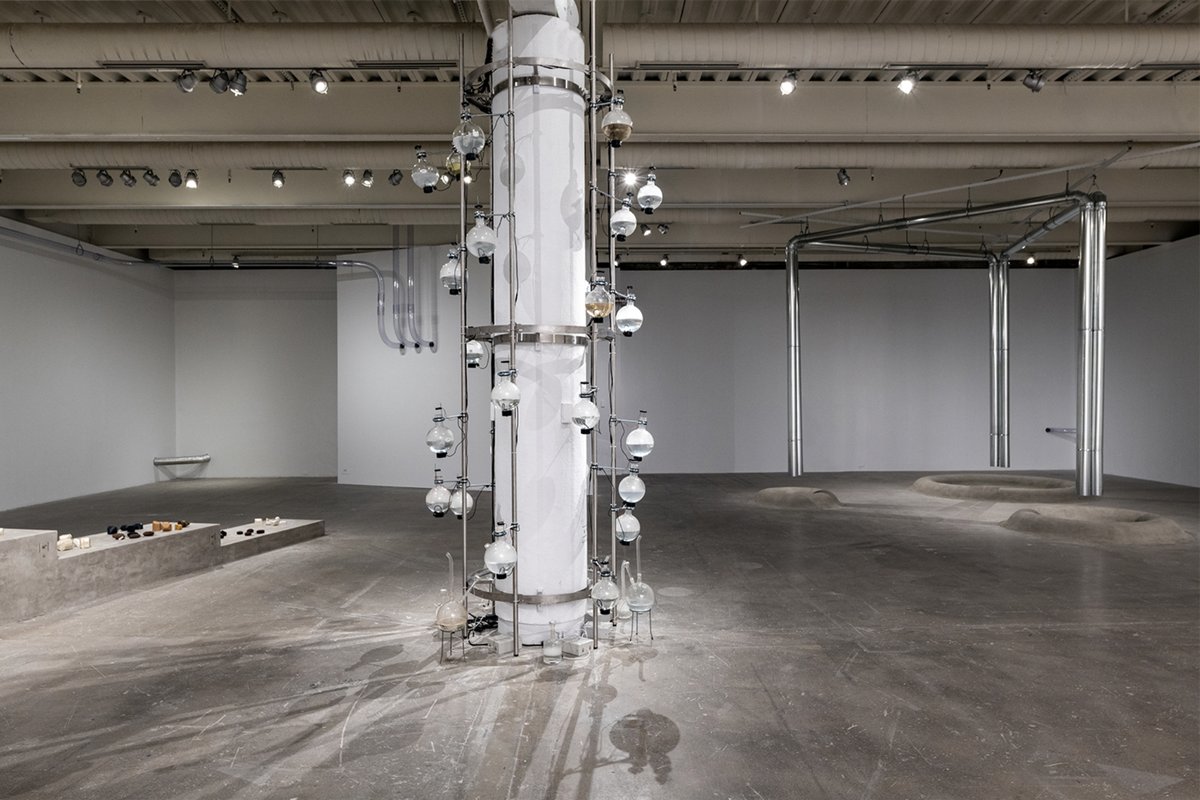
The results reach the public in several forms. Sometimes a map printed with microencapsulated scent that releases its smell when rubbed. Sometimes a wall coated with scented paint. Sometimes a walk, where participants are asked to stop and smell exactly where she did.
A map without lines
A familiar map is something to look at. It has roads, borders, names. Smellscapes has none of these. It records what has no shape: a smell that lasts a few hours and disperses, one that appears only in the rainy season, one that shifts between morning and night.
So each of Tolaas's maps is also a record of a moment. A market does not smell the same this year as next. A factory closes, a canal is filled in, a restaurant moves, and the smell of the whole district moves with it. A smell map is always a map of the recent past.
Tolaas often points out that we live in a culture that favours the eye. We describe cities by their architecture, their photographs, their skylines. The nose is treated as a minor sense, even one to be covered up with deodorant. Smellscapes reverses that order, if only for the moment a visitor bends down to smell a sheet of paper.
Why Smellscapes still matters
Twenty years on, Smellscapes is not finished. Tolaas still takes invitations from cities, museums and universities. In 2016 she was a research fellow in Singapore, studying the smells of its neighbourhoods.
The value of the project does not lie in a single work. It lies in showing that smell can be collected, stored and compared, like any other data about a place. And once stored, smell becomes evidence: that this city was once like this, at that moment, with those people.
Olfactory · Nghệ thuật khứu giác