
Essays · Olfactory Art
Brian Goeltzenleuchter. Smelling the City.
Một căn nhà cũng có mùi của điều nó cần.
A house smells of what it needs.
Một câu hỏi từ bảo tàng
Năm 2011, Bảo tàng Nghệ thuật San Diego mở một loạt buổi Summer Salon đi kèm triển lãm lưu động về Gustav Stickley và phong trào Arts and Crafts ở Mỹ. Bảo tàng đặt cho các nghệ sĩ khách mời một câu hỏi: một thành phố cần gì?
Nghệ sĩ Brian Goeltzenleuchter và nhà thơ Katharine Whitcomb nhận câu hỏi ấy. Họ không trả lời bằng một bản quy hoạch hay một bài diễn thuyết. Họ trả lời bằng hai bài thơ và hai mùi.
Stickley là nhà thiết kế nội thất đầu thế kỷ 20. Đồ của ông nổi tiếng vì đường nét thẳng, bề mặt mộc, gỗ sồi để lộ vân. Với ông, một căn nhà tốt là căn nhà giản dị, làm từ vật liệu địa phương, không trang trí thừa. Đó là một lý tưởng về cách sống, không chỉ là một kiểu bàn ghế.
Goeltzenleuchter và Whitcomb đặt lý tưởng ấy cạnh một hiện tượng của thời họ: những căn nhà nhỏ, lắp ghép sẵn, dựng từ container chở hàng đã qua sử dụng. Hai cách nghĩ về chỗ ở, cách nhau gần một thế kỷ.
Hai bài thơ, hai mùi, một tờ giấy
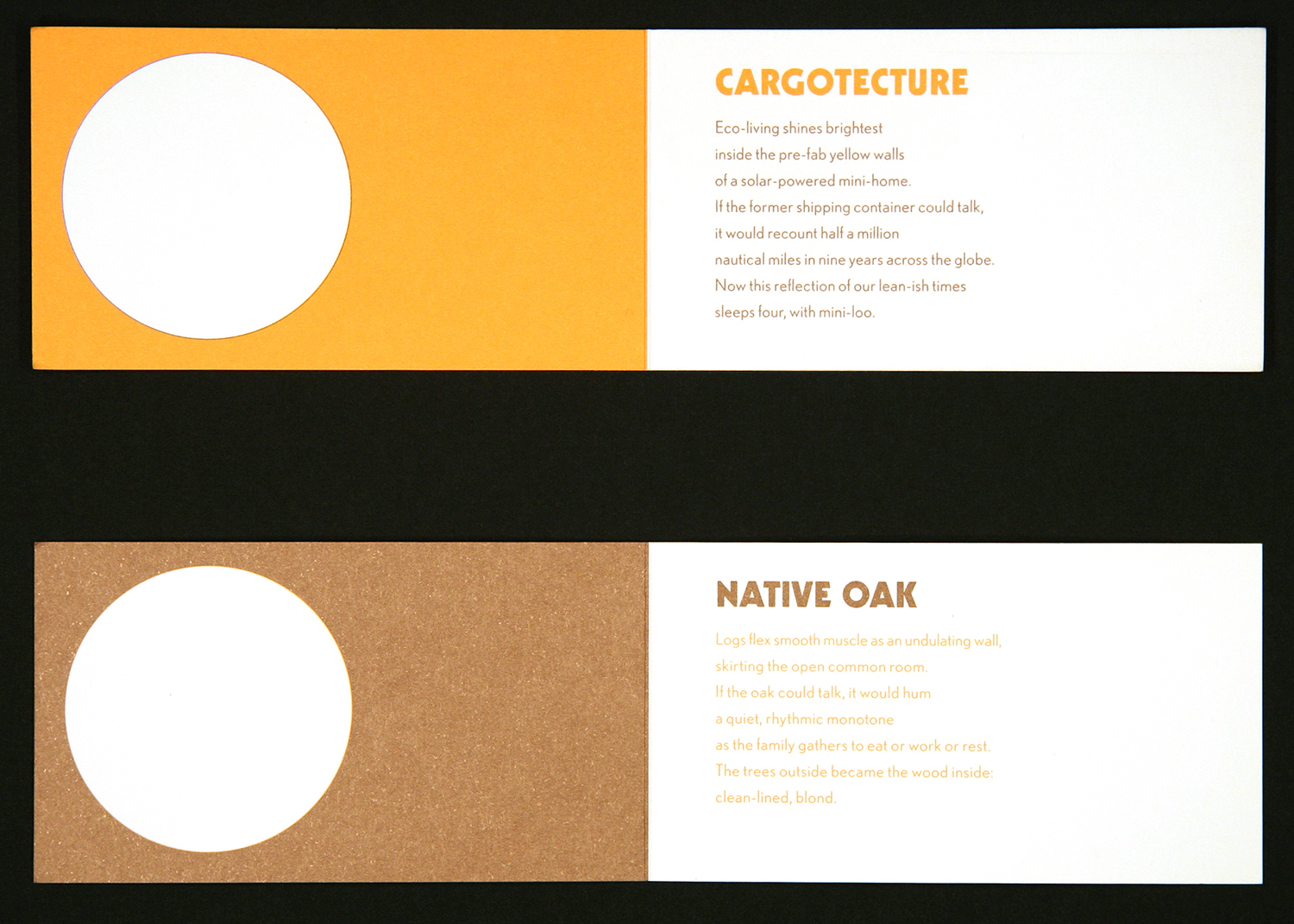
Bài thơ thứ nhất tên Native Oak. Whitcomb viết về một nội thất Stickley, về thiết kế thoáng, sạch, dùng vật liệu bản địa. Bài thứ hai tên Cargotecture, ghép từ cargo và architecture. Bài này nhắc tới Idea House năm 2011 của tạp chí Sunset, một căn nhà rộng chừng 18 mét vuông làm từ một container.
Với mỗi bài thơ, Goeltzenleuchter làm một mùi riêng. Cả hai được xịt lên giấy thử mùi, loại giấy thấm mà người bán nước hoa vẫn đưa cho khách. Trên mỗi tờ giấy in cả hai bài thơ, bằng kỹ thuật in thạch bản hai màu.
Người cầm tờ giấy có hai cách đọc. Ngửi từng mùi, đọc từng bài, như hai căn nhà riêng biệt. Hoặc gấp tờ giấy lại cho hai mùi chạm nhau. Khi ấy gỗ và thép cùng có mặt trong một hơi thở, và câu hỏi về những gì một chỗ ở thật sự cần trở nên mờ và mềm hơn.
Tác phẩm hoàn chỉnh được làm thành hai bộ. Mỗi bộ gồm 50 tờ giấy in thạch bản, một cuốn sách nghệ sĩ và hai chai mùi do nghệ sĩ tự làm. Theo trang của nghệ sĩ, bộ tác phẩm ghi năm 2013. Năm 2014, nó được trưng bày trong triển lãm nhóm Past Tense Future Imperfect tại Art Share ở Los Angeles.
Khi thành phố được đọc bằng mũi
Goeltzenleuchter là một trong những nghệ sĩ Mỹ làm việc thường xuyên với mùi. Anh từng là nghệ sĩ lưu trú tại Institute for Art and Olfaction ở Los Angeles. Trong nhiều dự án khác, anh hỏi cư dân một thành phố về mùi của từng khu vực, rồi chuyển câu trả lời thành những mùi đóng chai. Smelling the City khác ở chỗ nó nhỏ và riêng: không phải bản đồ cả một thành phố, mà là hai căn nhà trên một tờ giấy.
Mùi ở đây không minh hoạ cho thơ. Nó đứng cạnh thơ, như một dòng thứ hai. Chữ nói về gỗ, mùi đưa gỗ tới gần. Chữ nói về container, mùi cho biết thép và hàng hoá ở gần đến mức nào. Người đọc phải dùng cả hai giác quan để hiểu một bài thơ.
Điều đáng nhớ ở tác phẩm là cách nó đặt một câu hỏi lớn vào một vật nhỏ. Một thành phố cần gì? Nhà to hay nhà nhỏ, gỗ mới hay thép tái dùng, truyền thống hay tạm bợ? Tờ giấy thử mùi không chọn giùm ai. Nó chỉ để hai mùi nằm cạnh nhau, rồi phai dần.
Chính sự phai ấy cũng là một câu trả lời. Những gì ta cho là cần cho chỗ ở thay đổi theo thời gian, như một mùi trên giấy. Hôm nay rõ. Tuần sau nhạt. Năm sau chỉ còn chữ.
A question from a museum
In 2011, the San Diego Museum of Art ran a Summer Salon Series alongside a travelling exhibition on Gustav Stickley and the American Arts and Crafts movement. The museum put a question to its guest artists: what does a city need?
Artist Brian Goeltzenleuchter and poet Katharine Whitcomb took up the question. They did not answer with a plan or a lecture. They answered with two poems and two smells.
Stickley was a furniture designer of the early twentieth century. His pieces are known for straight lines, plain surfaces and oak with its grain left visible. For him a good house was a simple one, made of local materials, with nothing added for show. It was an ideal of living, not just a style of chair.
Goeltzenleuchter and Whitcomb set that ideal beside something of their own time: small prefabricated houses built from used shipping containers. Two ways of thinking about a home, nearly a century apart.
Two poems, two smells, one sheet
The first poem is Native Oak. Whitcomb writes about a Stickley interior, its open, clean design and native materials. The second is Cargotecture, a blend of cargo and architecture. It refers to Sunset magazine's 2011 Idea House, a home of about 192 square feet made from a single container.
For each poem Goeltzenleuchter made a scent. Both were sprayed onto blotter paper, the absorbent strips perfume sellers hand to customers. Each blotter carries both poems, printed as a two colour lithograph.
The reader can hold the sheet in two ways. Smell each scent with its poem, as two separate houses. Or fold the blotter so the two smells meet. Then wood and steel arrive in the same breath, and the question of what a dwelling really needs becomes softer and less certain.
The finished work exists in an edition of two. Each contains 50 lithographs on blotter paper, an artist's book and two bottles of artist made scent. The artist's own site dates the edition to 2013. In 2014 it was shown in the group exhibition Past Tense Future Imperfect at Art Share in Los Angeles.
Reading a city through the nose
Goeltzenleuchter is one of the American artists who work with smell most consistently. He has been an artist in residence at the Institute for Art and Olfaction in Los Angeles. In other projects he asks a city's residents about the smells of their neighbourhoods and turns their answers into bottled scents. Smelling the City is different in being small and private: not a map of a whole city, but two houses on one sheet of paper.
The smell does not illustrate the poem. It stands beside it, like a second line. The words speak of wood; the scent brings the wood close. The words speak of a container; the scent tells you how near steel and freight really are. The reader needs two senses to take in one poem.
What stays with you is how the work places a large question inside a small object. What does a city need? Big houses or small ones, new wood or reused steel, tradition or something temporary? The blotter does not choose for anyone. It lets two smells lie side by side, and then fade.
That fading is also an answer. What we think a home needs shifts over time, like a scent on paper. Clear today. Faint next week. Next year, only the words remain.


Olfactory Art