
Essays · Olfactory Art
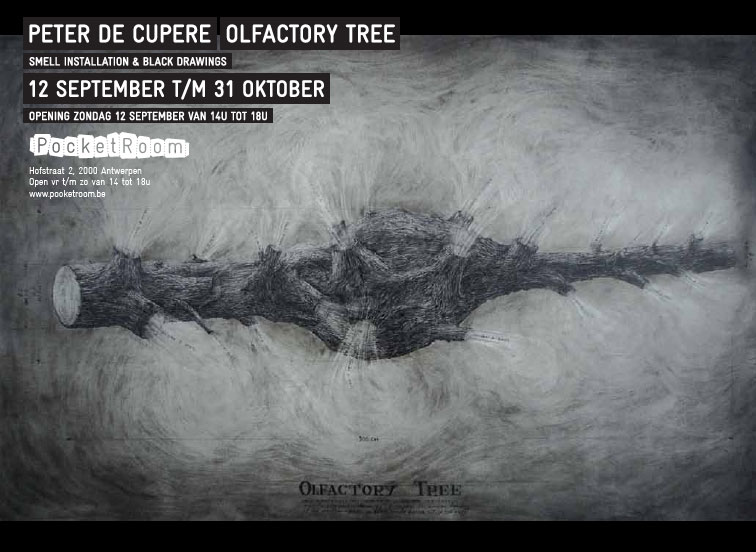
Peter De Cupere. Olfactory Tree.
Mắt thấy một vật giả. Mũi ngửi thấy một khu rừng.
The eye sees a fake. The nose smells a forest.
Một thân cây không sống
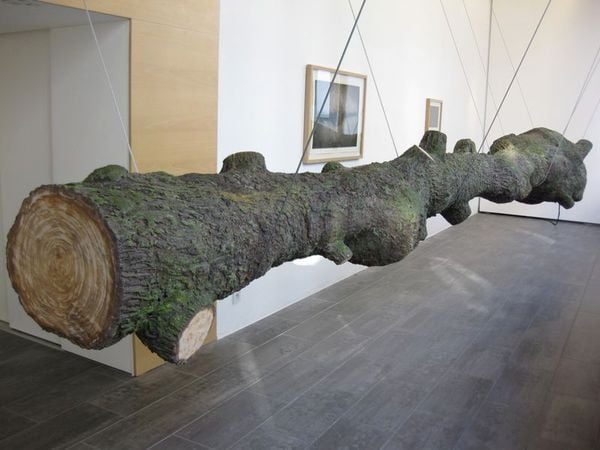
Olfactory Tree của Peter De Cupere trông giống một thân cây. Nhìn kỹ thì không phải. Nó được làm từ nhựa epoxy và những vật liệu giả khác. Không có gỗ thật, không có vỏ cây thật, không có gì đang lớn.
Điều làm nên tác phẩm nằm ở chỗ mắt không thấy được. Thân cây giả được cài mùi của rừng: thông, tuyết tùng, nấm, cỏ, và một mùi mà nghệ sĩ gọi chung là rừng. Đứng xa, người xem thấy một vật điêu khắc. Đứng gần, họ ngửi thấy một nơi chốn.
Năm 2010, tác phẩm được trưng bày trong một triển lãm riêng tại Pocketroom, một không gian nghệ thuật phi thương mại ở Antwerp, Bỉ, từ giữa tháng 9 tới cuối tháng 10. Một căn phòng nhỏ, một thân cây giả, và mùi của một khu rừng không có mặt ở đó.
Có những mô tả cũ cho rằng đây là một cây thật gắn máy khuếch tán mùi. Các nguồn từ phía nghệ sĩ cho thấy điều ngược lại. Cây không sống. Chính vì cây không sống mà câu hỏi của tác phẩm mới sắc.
Nghệ sĩ làm việc bằng mũi
Peter De Cupere là nghệ sĩ người Bỉ. Phần lớn thực hành của ông xoay quanh mùi. Ông làm sắp đặt mùi, điêu khắc có mùi, trình diễn khứu giác, phim có mùi, tranh có mùi. Ông từng chế tạo Olfactiano, một nhạc cụ trông như chiếc đàn piano nhưng mỗi phím nhấn xuống thì thả ra một mùi.
Cách làm của ông thường đi theo một nguyên tắc: lấy một vật quen thuộc với mắt, rồi đổi cách ta nhận ra nó. Một cây đàn không cho âm thanh mà cho mùi. Một thân cây không lớn lên mà vẫn toả mùi rừng. Vật đứng yên, nhưng giác quan dùng để đọc nó bị thay đổi.
Ông cũng hay dùng những vật liệu lạ, bỏ đi, hoặc bị coi là tầm thường. Trong tay ông, mùi không phải lớp trang trí thêm vào một tác phẩm đã xong. Mùi là chính tác phẩm, còn hình khối chỉ là nơi để mùi cư trú.
Với Olfactory Tree, ông chọn một hình ảnh mà ai cũng biết. Không cần giải thích cây là gì. Vì thế người xem có thể dồn toàn bộ chú ý vào phần còn lại: mùi đến từ đâu, và vì sao nó thuyết phục hơn cái hình trước mắt.
Rừng ở đâu khi không có rừng
Tác phẩm đặt ra một câu hỏi đơn giản. Nếu một vật giả có mùi thật, nó thật hay giả? Mắt trả lời nhanh. Mũi trả lời chậm hơn, nhưng thường sâu hơn. Mùi nấm và cỏ dễ gợi lại một buổi đi bộ trong rừng hơn là một tấm ảnh chụp khu rừng ấy.
Câu hỏi ấy cũng có mặt trong đời thường. Thành phố ngày càng nhiều cây nhựa trong trung tâm thương mại, nhiều mùi gỗ trong nến và xịt phòng. Ta sống giữa những khu rừng không có thật mỗi ngày. Olfactory Tree chỉ phơi cái điều đó ra, gọn và thẳng, trong một căn phòng.
Có một chi tiết nhỏ đáng để ý: tác phẩm không cố làm cây giả trông thật hơn. Nó để lộ chất liệu. Người xem biết ngay mình đang đứng trước một vật đúc. Sự thành thật về hình ấy khiến phần mùi càng nổi rõ, vì không có gì che cho nó.
Nhưng tác phẩm không phán xét. Nó không nói cây thật tốt hơn cây giả, hay mùi tự nhiên quý hơn mùi làm ra. Nó chỉ tách hai lớp nhận biết ra khỏi nhau, để người xem thấy rằng hình và mùi có thể nói hai điều khác nhau về cùng một vật.
Điều đáng nhớ ở Olfactory Tree là nó biến khứu giác thành một cách kiểm chứng. Ta quen tin vào mắt. Ở đây, mắt nhìn đúng mà vẫn thiếu. Chính mũi mới đưa người xem tới một khu rừng, dù khu rừng ấy chỉ còn là dấu vết trong không khí.
A trunk that is not alive
Peter De Cupere's Olfactory Tree looks like a tree trunk. Look again and it is not. It is made of epoxy and other artificial materials. No real wood, no real bark, nothing growing.
What makes the work lies where the eye cannot reach. The fake trunk is charged with the smells of a forest: pine, cedar, mushrooms, grass, and one the artist simply calls forest. From a distance, the viewer sees a sculpture. Up close, they smell a place.
In 2010 the work was shown in a solo presentation at Pocketroom, a non commercial art space in Antwerp, Belgium, from mid September to the end of October. A small room, a fake trunk, and the smell of a forest that was not there.
Some older accounts describe it as a living tree fitted with scent diffusers. Sources close to the artist say otherwise. The tree is not alive. And precisely because it is not alive, the question the work asks becomes sharp.
An artist who works through the nose
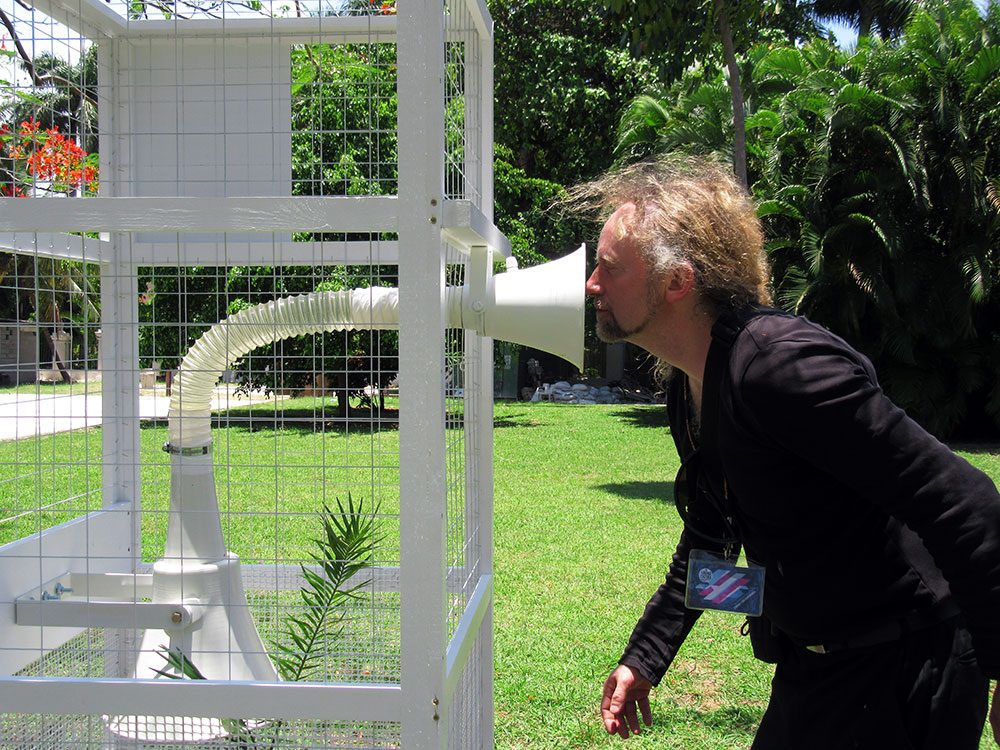
Peter De Cupere is a Belgian artist whose practice centres on smell. He makes smell installations, scented sculptures, olfactory performances, smell films and scented paintings. He built the Olfactiano, an instrument that looks like a piano but releases a scent with each key pressed.
His method often follows one rule: take something familiar to the eye and change the way we recognise it. A keyboard that gives smell instead of sound. A trunk that does not grow yet still gives off the forest. The object stays still; the sense used to read it is replaced.
He often uses odd, discarded or ordinary materials. In his hands, smell is not a layer added to a finished work. Smell is the work, and the form is only a place for it to live.
For Olfactory Tree he chose an image everyone knows. There is no need to explain what a tree is. So the viewer can give all their attention to the rest: where the smell comes from, and why it convinces more than the shape in front of them.
Where is the forest when there is no forest
The work asks a simple question. If a fake object carries a real smell, is it real or fake? The eye answers fast. The nose answers slower, but often deeper. The smell of mushrooms and grass brings back a walk in the woods more readily than a photograph of those woods.
The question lives in daily life too. Cities fill with plastic plants in shopping centres, wood scents in candles and room sprays. We live among forests that are not there every day. Olfactory Tree simply lays this out, plainly, in one room.
One small detail is worth noting: the work does not try to make the fake tree look more real. It lets the material show. The viewer knows at once they are facing a cast object. That honesty about form makes the smell stand out further, since nothing covers for it.
But the work does not judge. It does not say a real tree is better than a fake one, or a natural smell worth more than a made one. It only separates two ways of knowing, so the viewer can see that shape and smell may say different things about the same object.
What stays with you is that Olfactory Tree turns smell into a way of checking. We are used to trusting the eye. Here the eye sees correctly and still falls short. It is the nose that takes the viewer to a forest, even if that forest is only a trace in the air.

Olfactory Art