Essays · Olfactory Art
Sean Raspet. Residuals.
Không khí của một căn phòng, cô đặc thành một vật.
The air of a room, condensed into a thing.
Một bình thép, một tuần không khí
Tháng 11 năm 2014, Jessica Silverman Gallery ở San Francisco mở triển lãm Residuals của Sean Raspet. Triển lãm kéo dài tới đầu tháng 1 năm 2015. Nhưng trước khi khách đến, căn phòng đã làm việc cho tác phẩm được một tuần.
Raspet đặt trong gallery một bình SUMMA. Đó là loại bình thép không gỉ dùng để lấy mẫu khí, bên trong được rút chân không. Van mở ra, không khí xung quanh chảy vào từ từ. Sau bảy ngày, bình giữ một mẫu không khí của chính căn phòng.
Mẫu khí được gửi tới phòng thí nghiệm. Ở đó, người ta tách ra từng hợp chất và đo tỷ lệ của chúng. Từ bảng kết quả, Raspet dựng lại một dung dịch lỏng có cùng thành phần, nhưng đậm hơn mùi nền ban đầu hàng nghìn lần.
Dung dịch ấy được vi nang hoá, đưa vào một lớp phủ kiểu scratch and sniff, rồi phủ lên các bề mặt của gallery. Tác phẩm có tên Micro-encapsulated Surface Coating. Khách cào nhẹ lên tường và ngửi. Cái họ ngửi là không khí của căn phòng họ đang đứng, chỉ là đậm hơn rất nhiều lần.
Những thứ còn lại trong phòng
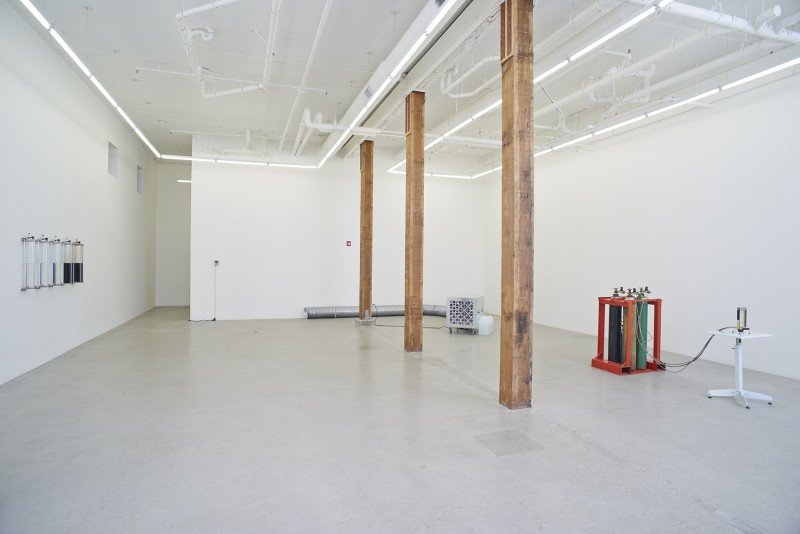
Bức tường không phải tác phẩm duy nhất. Năm bình trong suốt, loại bình tiêu chuẩn của ngành công nghiệp, đựng dầu thô được tái tạo. Ba bình được dựng lại từng phân tử bằng hoá chất tinh khiết dùng cho nghiên cứu. Hai bình còn lại màu đen, pha từ những thứ mua được ngoài cửa hàng: xăng, nhựa đường, than cốc dầu mỏ. Cùng là dầu thô, nhưng ở những độ phân giải khác nhau.
Bốn bình khí nén thả vào phòng nitơ, oxy, argon và carbon dioxide, theo đúng tỷ lệ của bầu khí quyển trong phòng. Nói cách khác, Raspet bổ sung vào không khí đúng thứ không khí vốn đã có.
Ở một góc, máy hút khí chạy liên tục. Lớp than lọc trong máy giữ lại các hợp chất có mùi, rồi chúng được chiết vào một dung môi. Dung môi ấy đi vào một sản phẩm lau rửa không mùi do nghệ sĩ tự pha. Khi triển lãm kết thúc, sản phẩm này được dùng để lau tường.
Vòng tròn khép lại. Mùi của căn phòng được lấy ra, cô đặc, phủ lên tường, lọc khỏi không khí, rồi quay về để làm sạch chính bức tường ấy.
Vật chất, không phải biểu tượng
Tên triển lãm là Residuals, nghĩa là phần còn lại. Mỗi tác phẩm trong phòng là thứ còn lại sau một phép trừ. Không khí trừ đi phần ta không để ý. Dầu thô trừ đi cả ngành công nghiệp quanh nó. Sản phẩm lau rửa trừ đi chính mùi mà nó được pha ra để xoá.
Raspet không dùng mùi để gợi một kỷ niệm hay kể một câu chuyện. Ông xử lý mùi như một dữ liệu hoá học: đo được, chép lại được, nhân lên được. Cách làm này gần với phòng thí nghiệm hơn là với giá vẽ. Nhưng kết quả lại rất cụ thể với người đứng trong phòng: một vết cào trên tường, một mùi hơi hắc của sơn, chất tẩy và vật liệu xây dựng.
Điều đáng nhớ ở Residuals là nó cho cái vô hình một hình dạng. Mùi nền của một gallery là thứ được sắp đặt để không ai nhận ra. Tường trắng, sàn sạch, không khí trung tính. Raspet cho thấy sự trung tính ấy cũng là một thành phần, có công thức, có nồng độ, có thể đóng vào bình.
Người xem rời triển lãm với một thói quen nhỏ bị xáo trộn. Bước vào một căn phòng khác, họ có thể tự hỏi: không khí ở đây được làm từ những gì? Câu hỏi ấy không cần phòng thí nghiệm. Chỉ cần dừng lại và thở chậm hơn một chút.
A steel canister, a week of air
In November 2014, Jessica Silverman Gallery in San Francisco opened Residuals, an exhibition by Sean Raspet. It ran into early January 2015. But before any visitor arrived, the room had already spent a week working for the piece.
Raspet placed a SUMMA canister in the gallery. It is a stainless steel vessel used for air sampling, emptied to a vacuum. When the valve opens, the surrounding air drifts in slowly. After seven days, the canister held a sample of the room's own air.
The sample went to a laboratory, where each compound was separated and its proportion measured. From those results Raspet built a liquid with the same composition, only many thousand times stronger than the original background smell.
The liquid was micro-encapsulated into a scratch and sniff coating and applied to the gallery's surfaces. The work is titled Micro-encapsulated Surface Coating. Visitors scratched the wall and smelled. What they smelled was the air of the room they were standing in, only far denser.
What else remained in the room
The wall was not the only work. Five clear, industry standard containers held reconstituted crude oil. Three were rebuilt molecule by molecule from purified research grade chemicals. The other two were black, mixed from things anyone can buy: gasoline, asphalt, petroleum coke. The same crude oil, at different resolutions.
Four gas cylinders released nitrogen, oxygen, argon and carbon dioxide into the room, in the same ratio as the room's own atmosphere. Raspet added to the air exactly what the air already was.
In one corner, a negative air machine ran continuously. Its carbon filter caught odour compounds, which were then extracted into a solvent. That solvent went into an odourless cleaning product formulated by the artist. When the exhibition ended, it was used to wipe down the walls.
The circle closed. The smell of the room was taken out, condensed, painted on the wall, filtered from the air, and returned to clean that same wall.
Matter, not symbol
Residuals means what is left over. Each work in the room is a remainder after a subtraction. Air minus the part we ignore. Crude oil minus the industry around it. A cleaning product minus the very smell it was made to erase.
Raspet does not use smell to call up a memory or tell a story. He treats it as chemical data: measurable, copyable, multipliable. The method belongs more to the laboratory than to the easel. Yet the result is very concrete for the person in the room: a scratch on a wall, a faintly sharp smell of paint, cleaner and building material.
What stays with you is that Residuals gives the invisible a shape. A gallery's background smell is arranged so that no one notices it. White walls, clean floors, neutral air. Raspet shows that this neutrality is also an ingredient, with a formula, a concentration, a canister to hold it.
Visitors leave with a small habit disturbed. Walking into another room, they may ask: what is the air here made of? The question needs no laboratory. Only a pause, and a slower breath.
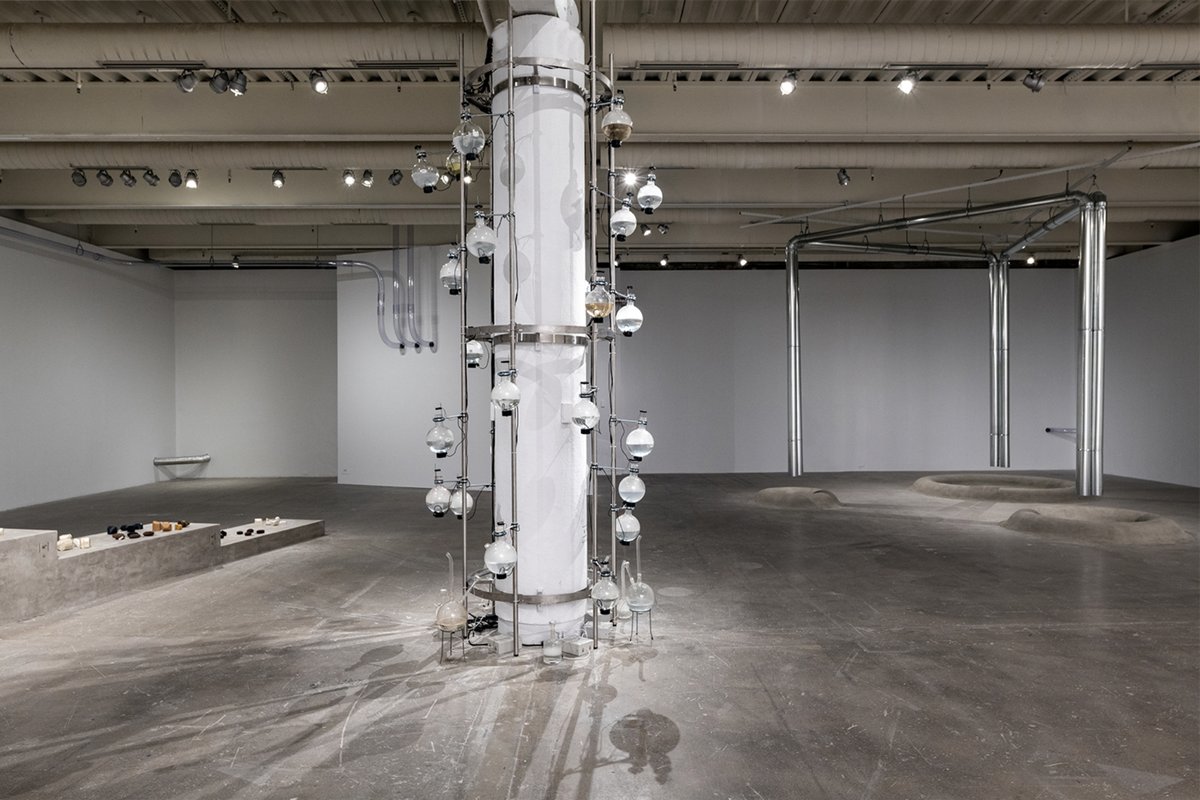
Hình ảnh: Sean Raspet, Residuals, installation view, Jessica Silverman Gallery, San Francisco (2014). Trích dẫn cho mục đích phê bình nghệ thuật phi thương mại theo nguyên tắc fair use học thuật. Nguồn gallery: jessicasilvermangallery.com.
Image: Sean Raspet, Residuals, installation view, Jessica Silverman Gallery, San Francisco (2014). Reproduced for non-commercial art criticism under principles of academic fair use. Gallery source: jessicasilvermangallery.com.
Olfactory Art