← Essays · 54 essays
Modern Art.
Modern art is a period, not a style. From around the late 19th century to around the 1960s, cities swelled and factories rose. Each movement was an answer to the same question: what should art do in a world that is changing?
A field of colour. A block of bronze. A breath in a balloon. Here, objects are looked at again from the start.
Start with: What is modern art.
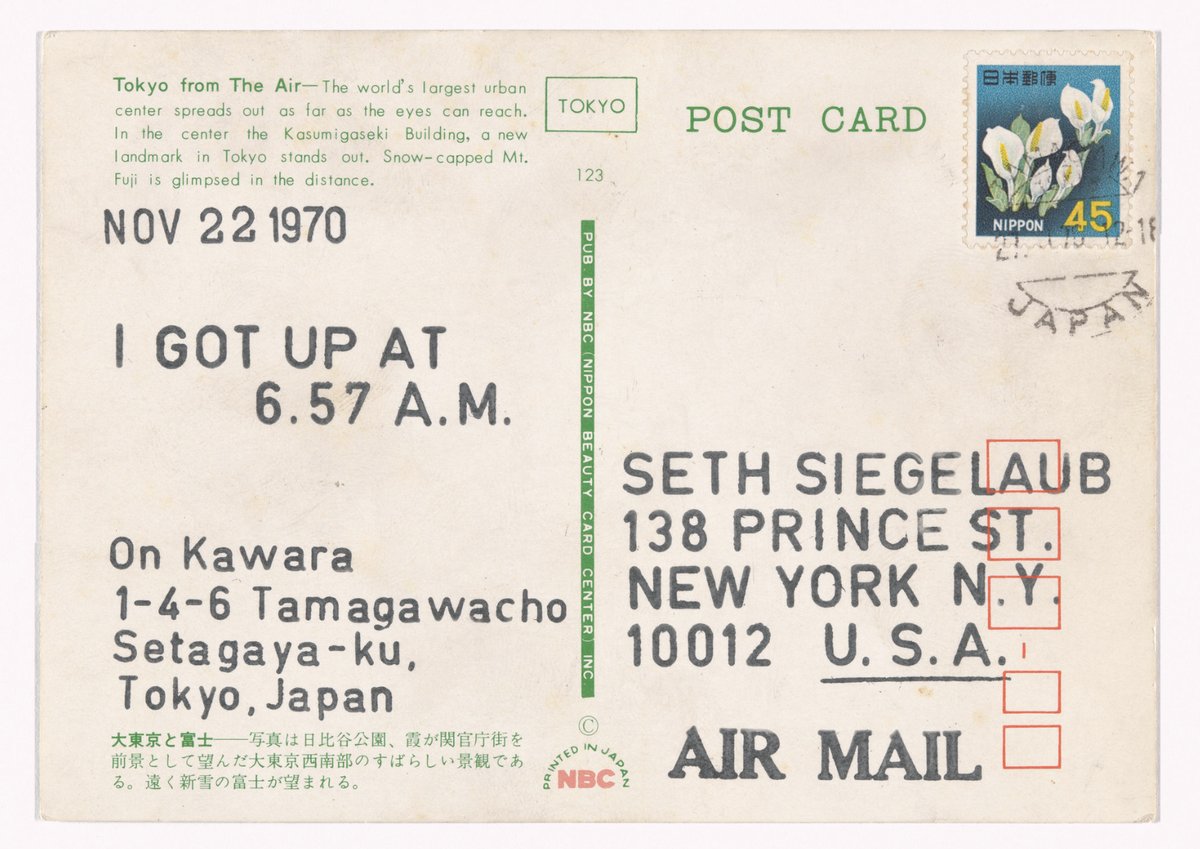
On Kawara. I Got Up.
A postcard a day, a stamp, a time of waking. Nothing more. And that is the work.
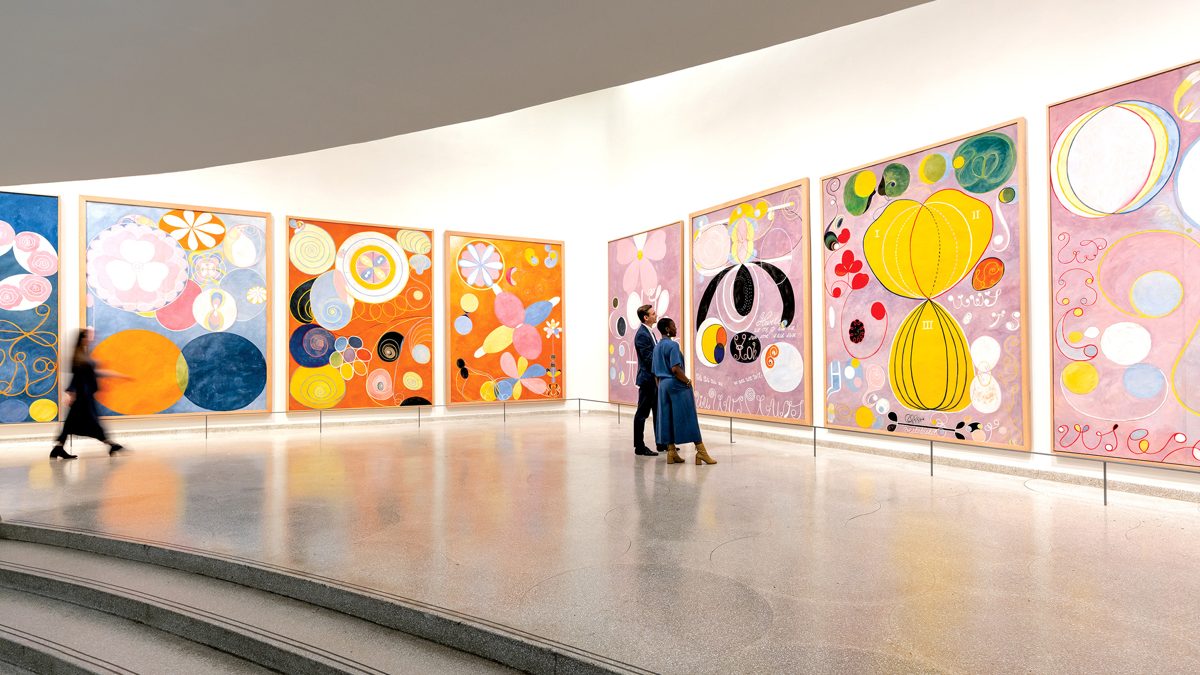
Hilma af Klint: Paintings for the Future.
More than 170 works on the Guggenheim's spiral ramp. Paintings for a temple that was never built, and for a time their painter knew she would not see.
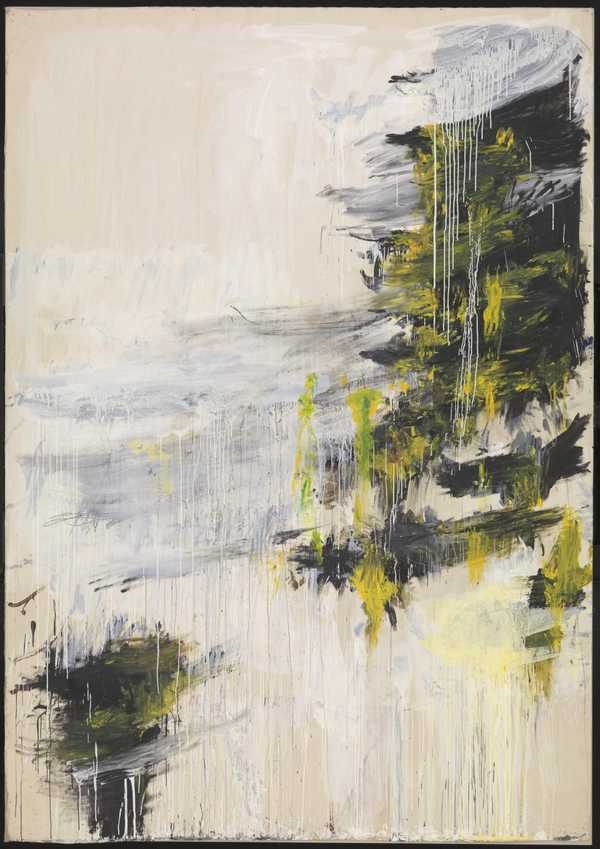
Cy Twombly. Quattro Stagioni (A Painting in Four Parts).
Spring, summer, autumn and winter on four canvases side by side. Running paint, handwriting, marks that still look wet. Twombly paints time passing through a year and a life.
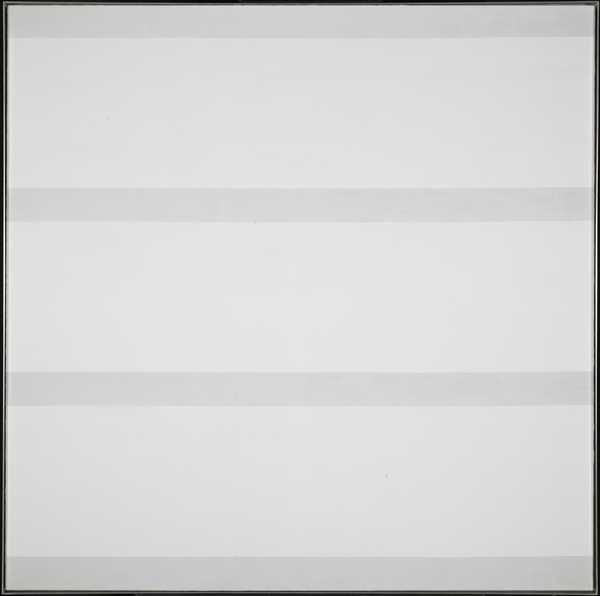
Agnes Martin. Untitled #5.
A six foot square canvas, four dark grey bands, edges that waver slightly. One of the last grey paintings Agnes Martin made in Galisteo.
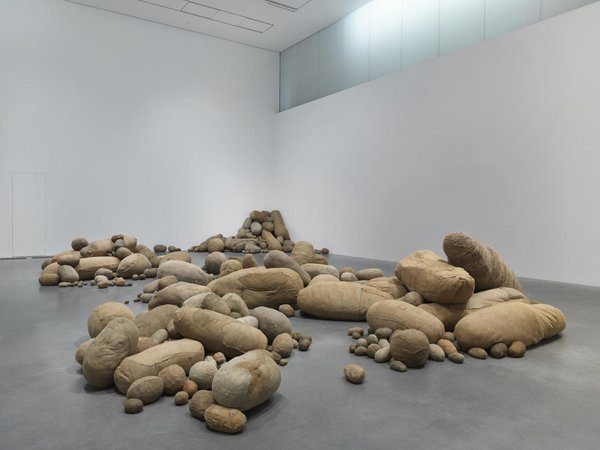
Magdalena Abakanowicz. Embryology.
Burlap bundled, bound and stitched into soft rounded forms, lying on the floor like cocoons, eggs, organs of an unnamed body.
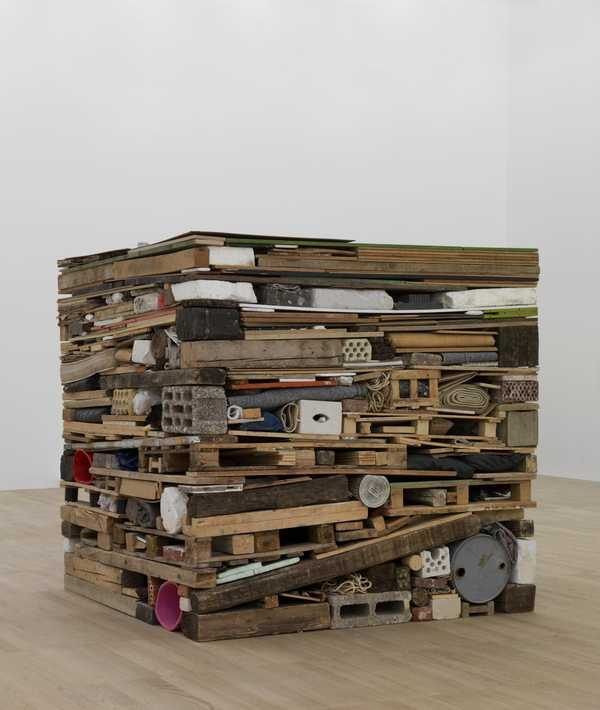
Tony Cragg. Stack.
A cube stacked from broken brick, spare wood and old magazines. Look at its edge and you see strata, like the wall of an excavation.
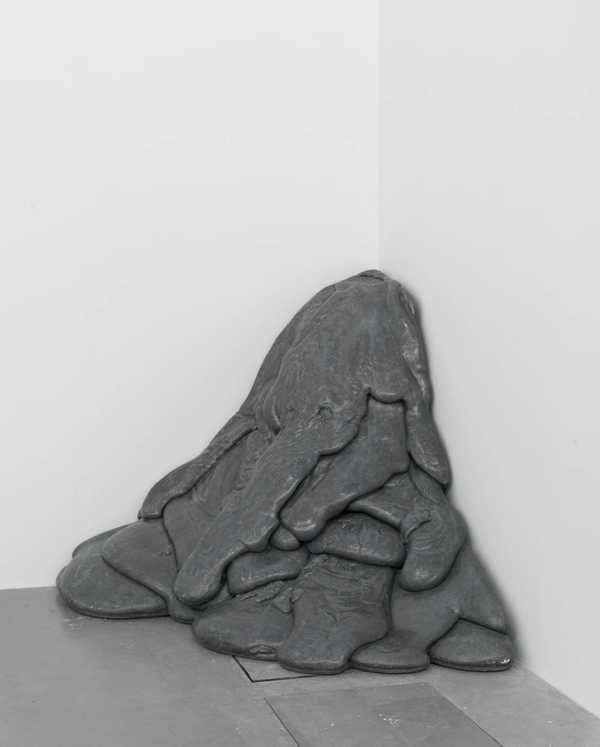
Lynda Benglis. Quartered Meteor.
A flow of material from 1969, cast in lead six years later. What was moving is held, heavy and still.
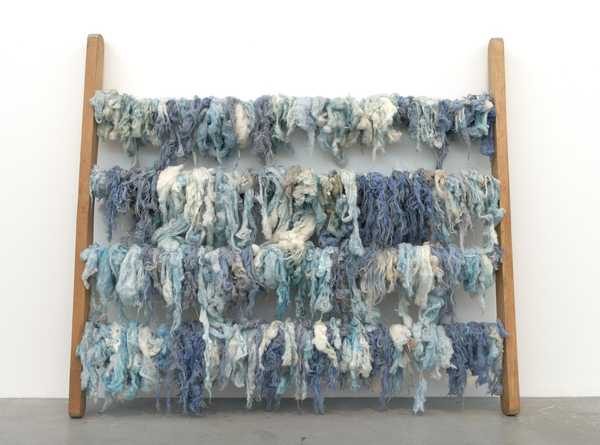
Jannis Kounellis. Untitled.
Two posts lean on the wall, raw wool draped over four bars. Kounellis had given up painting, yet he made a painting anyway, in sheep's wool.
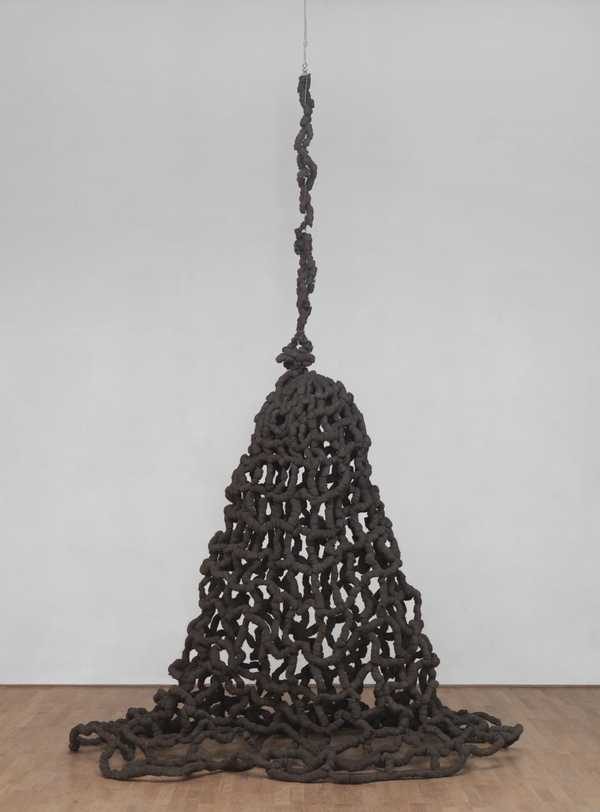
Pino Pascali. Trappola.
In 1968 Pino Pascali took the steel wool used to scrub pots and made a trap four metres high. It hangs in the air and spreads across the floor, part fishing net, part dress.
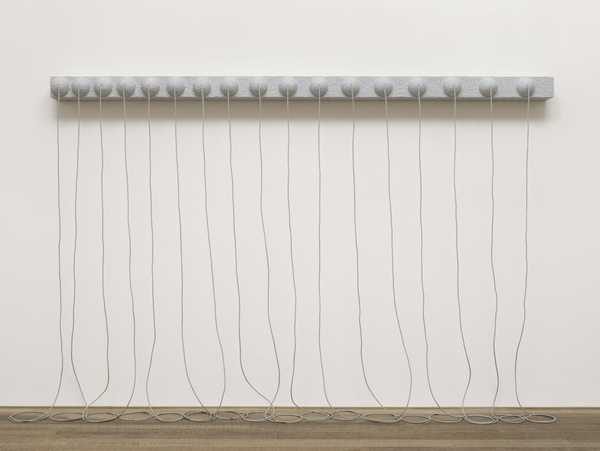
Eva Hesse. Addendum.
Above, a carefully counted series. Below, cords falling freely and coiling together on the floor. Hesse put both into one work.
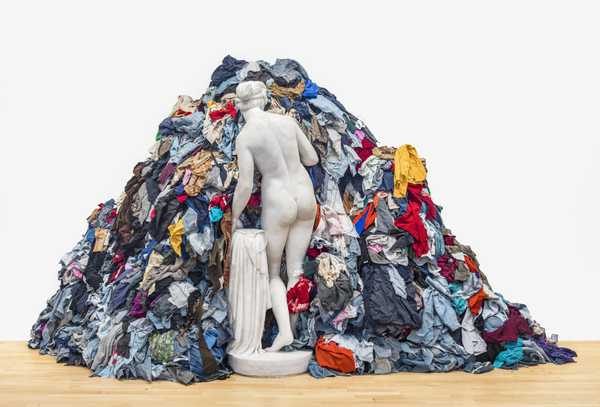
Michelangelo Pistoletto. Venus of the Rags.
Venus turns her back to us and presses her face into a heap of old, colourful clothes. The lasting stands against the discarded.
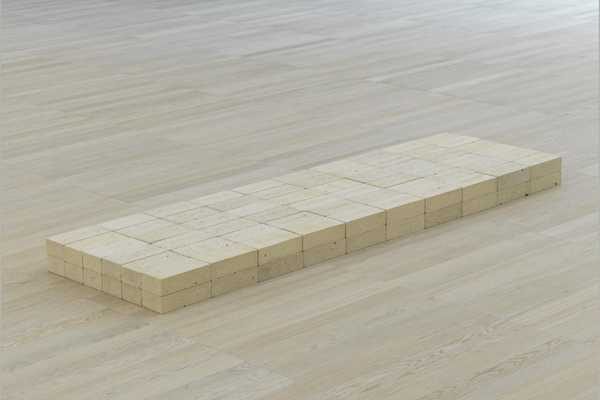
Carl Andre. Equivalent VIII.
A hundred and twenty firebricks, two layers, flat on the floor. No plinth, no carving. The question is: what do we see there?
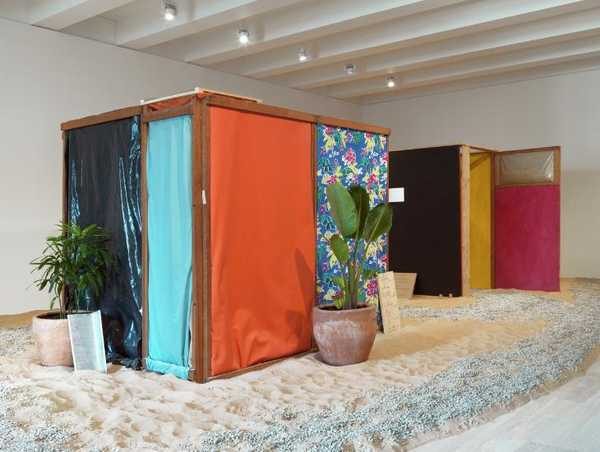
Hélio Oiticica. Tropicália, Penetrables PN 2 'Purity is a myth' and PN 3 'Imagetical'.
A path of sand, gravel, plants and fabric huts, entered barefoot. Oiticica's Tropicália asks for feet, hands and nose, and gave its name to a movement in Brazil.
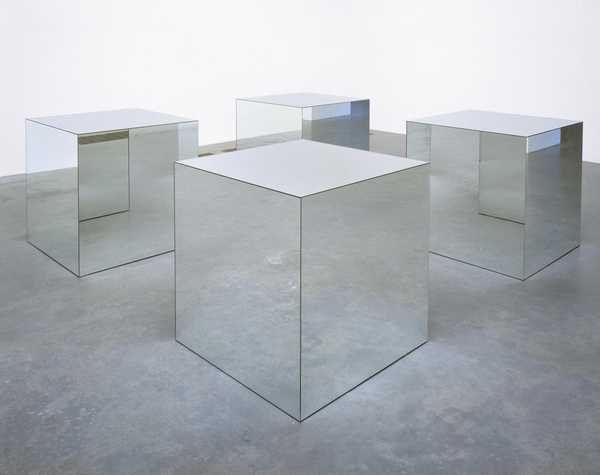
Robert Morris. Untitled.
Four mirrored cubes, each almost a metre high. They have no colour of their own. They take the colour of the floor, the walls, the person walking around them.
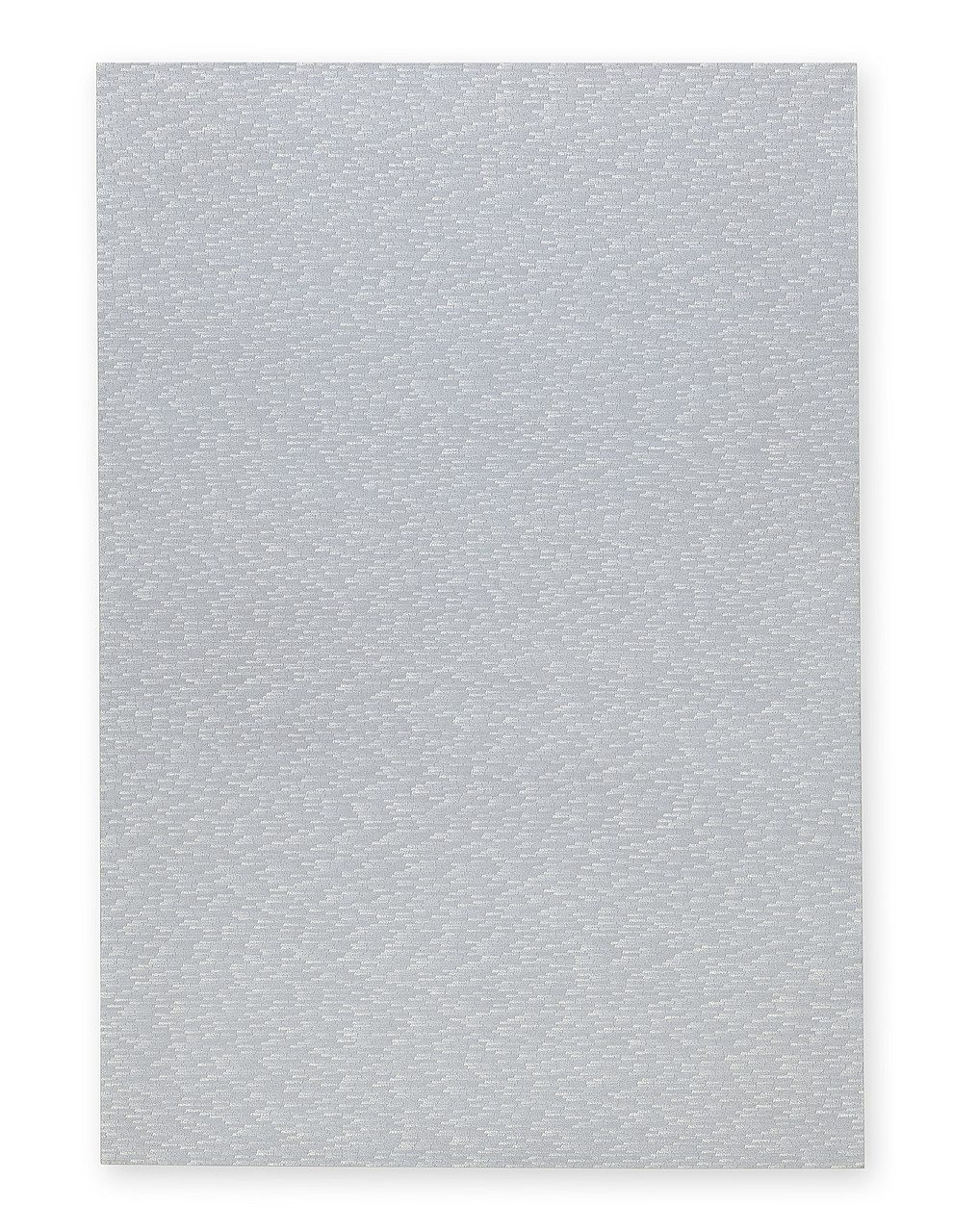
Roman Opałka. Détail 1520432 to 1537871.
A canvas covered in small white numbers, from 1520432 to 1537871. No image, no other colour. Only one stretch of a count as long as a life.
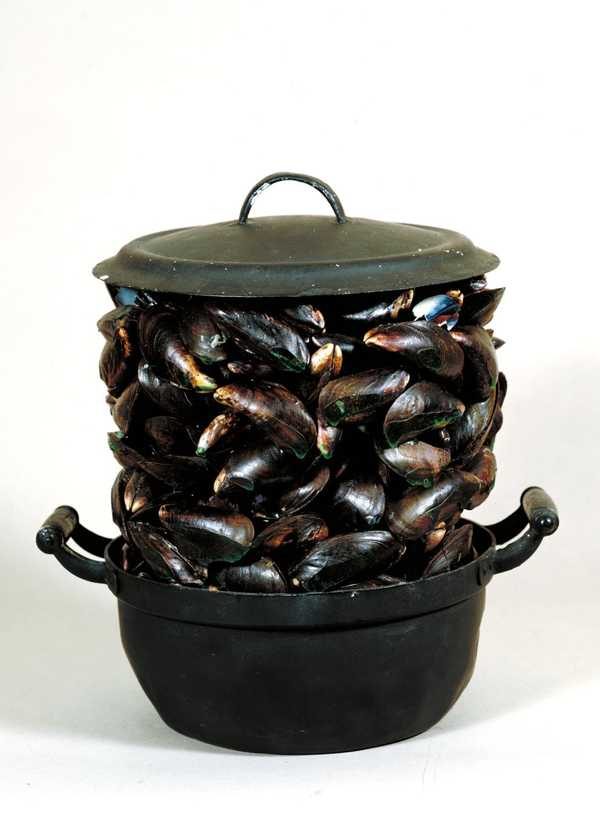
Marcel Broodthaers. Casserole and Closed Mussels.
An iron pot with wooden handles. Shells piled so high the lid is lifted. Nothing to eat, only shells, and a question about what we call a work of art.
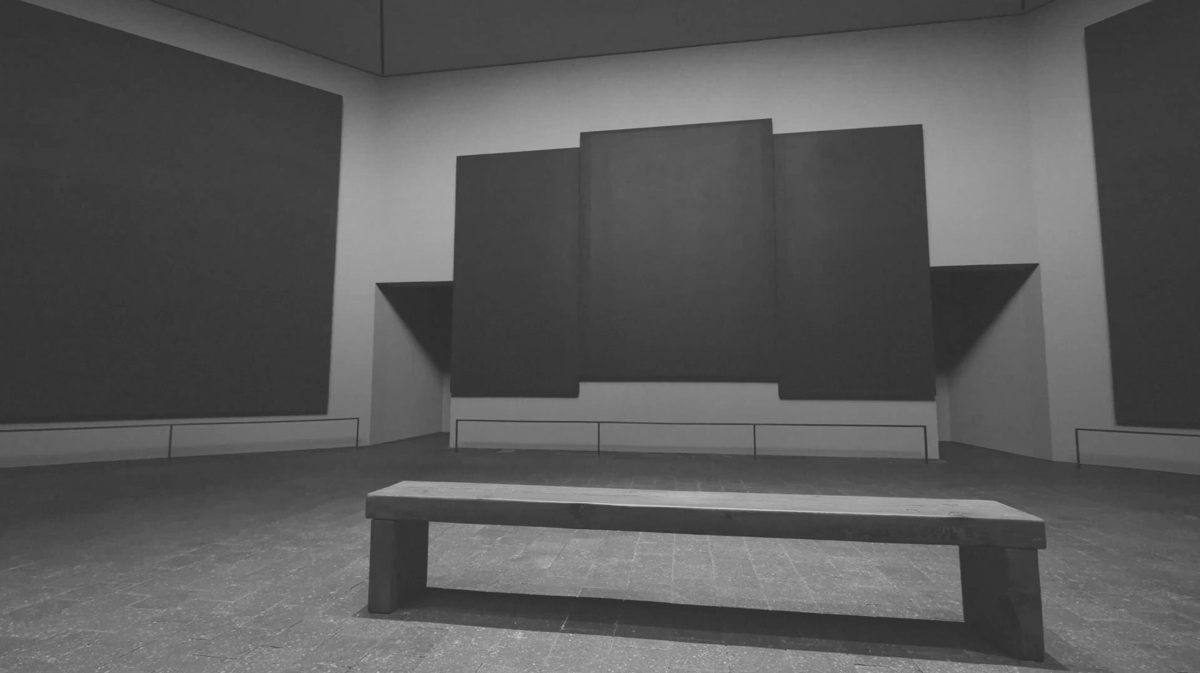
Mark Rothko. Rothko Chapel.
A room in Houston with fourteen near black paintings lit by the sky. Rothko finished them in 1967 but did not live to see them hung.
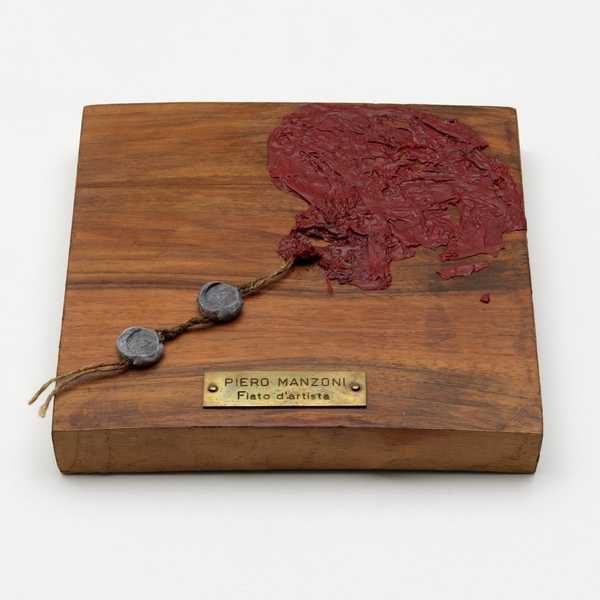
Piero Manzoni. Artist's Breath.
Manzoni blew into a balloon and mounted it on wood. The breath has gone. What remains is a wrinkled scrap of rubber, stuck fast.
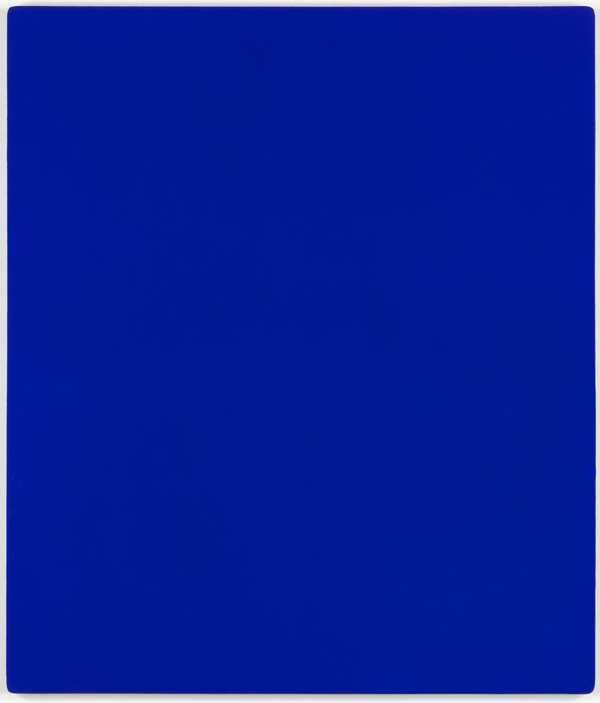
Yves Klein. IKB 79.
No image, no line, no title. Only a blue covering the whole surface. Klein wanted viewers to stand before it as before an open space.
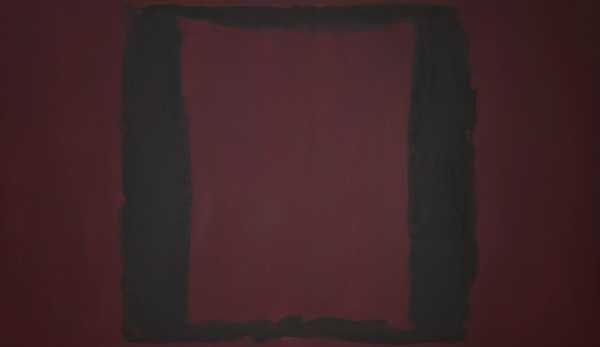
Mark Rothko. Black on Maroon.
A horizontal canvas over four and a half metres long, black on deep maroon. Rothko painted it for the Four Seasons, then decided it did not belong there.
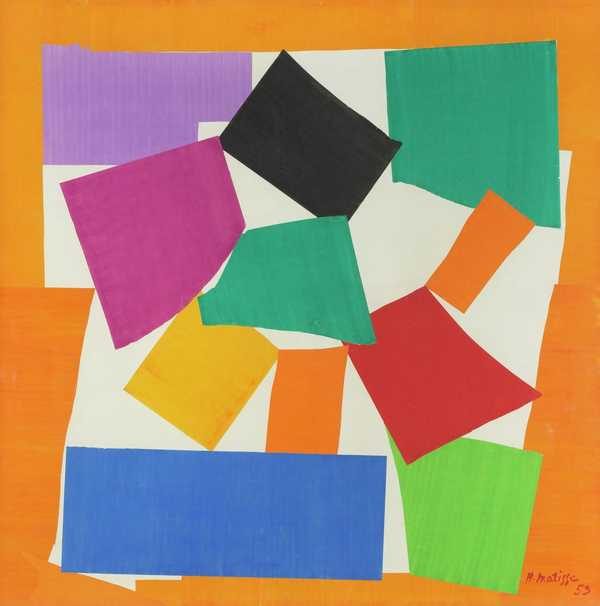
Henri Matisse. The Snail.
Matisse held the snail between two fingers and drew it again and again. Then he dropped the shell, kept the spiral, and took up the scissors.
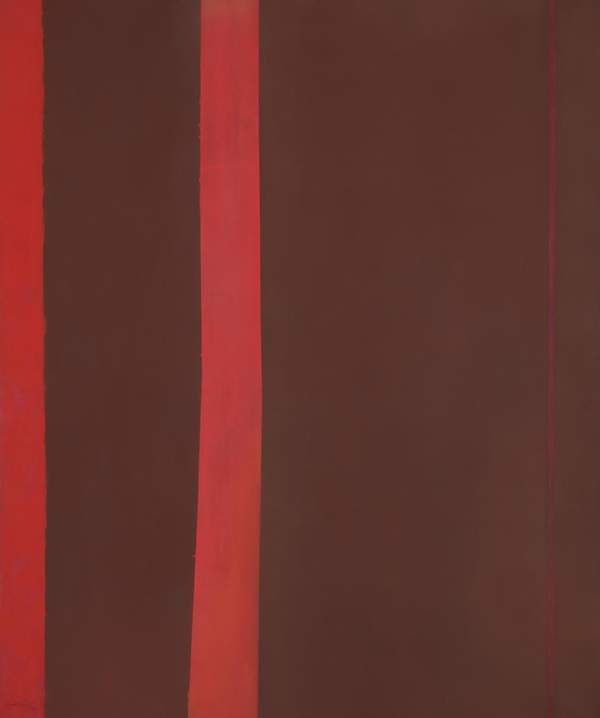
Barnett Newman. Adam.
An earth brown field over two metres high, three red bands running down. Newman called it Adam, a Hebrew name close to earth and to red.

Jackson Pollock. Summertime: Number 9A.
A canvas over five metres long, laid on the floor. Paint dripped, poured, flicked. Summertime does not depict summer; it keeps the rhythm of a body.
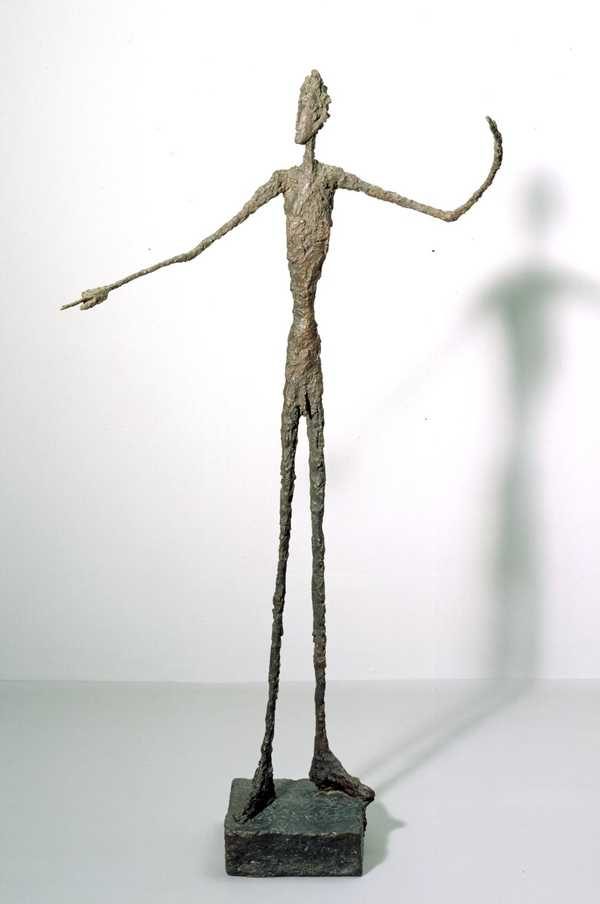
Alberto Giacometti. Man Pointing.
Giacometti remade Man Pointing in one night, from midnight to nine in the morning. When the foundry men came, the plaster was still wet. Where the man points, no one knows.
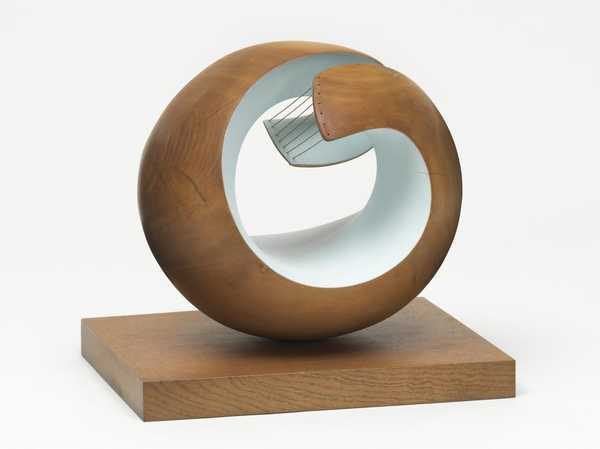
Barbara Hepworth. Pelagos.
A block of elm hollowed into two arms curling into each other, pale blue inside, strung with taut cords. Hepworth called it the sea.
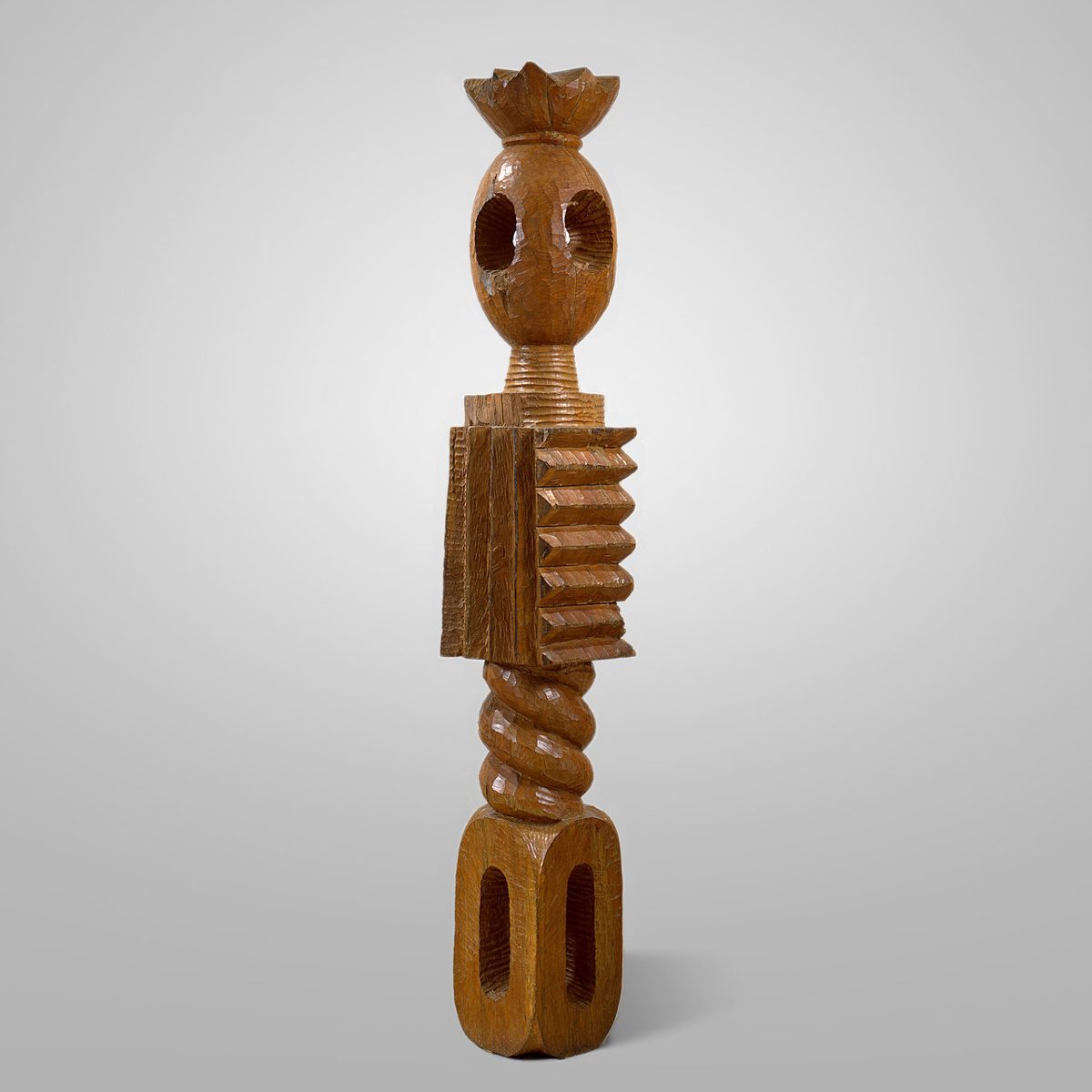
Constantin Brâncuși. Le roi des rois.
An oak sculpture over three metres tall, made for a temple that was never built. The temple is gone; the sculpture remains and carries the room with it.
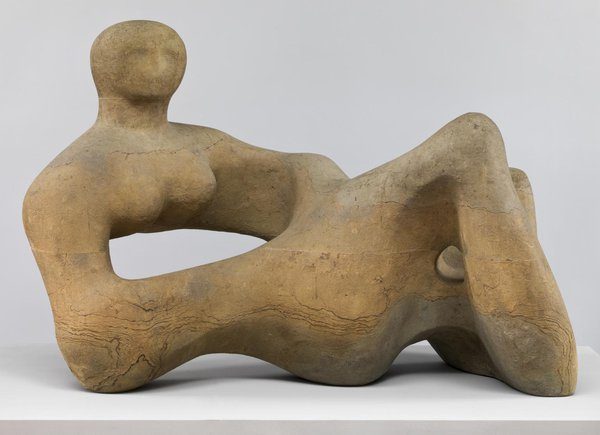
Henry Moore. Recumbent Figure.
Moore was asked to place a sculpture before a long, low house. He did not raise a standing figure. He carved one lying down, to look toward the horizon.
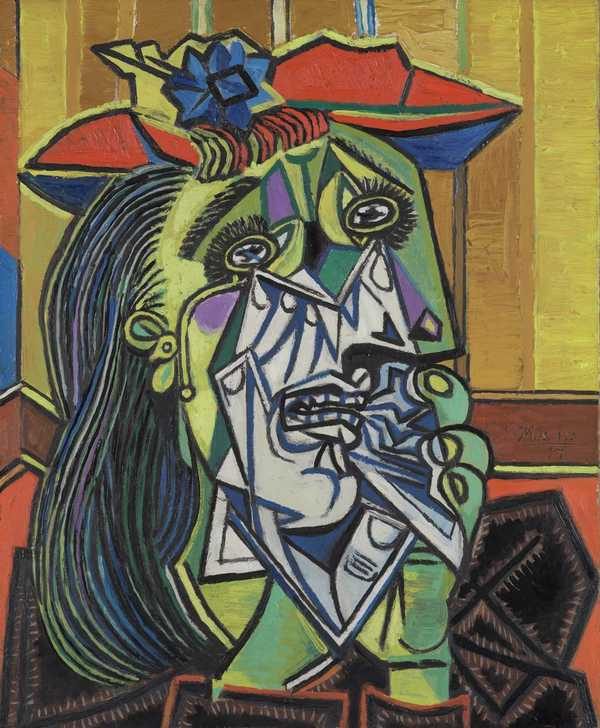
Pablo Picasso. Femme en pleurs.
A woman weeping, painted in the brightest colours on the palette. Picasso did not darken grief. He made it glare.
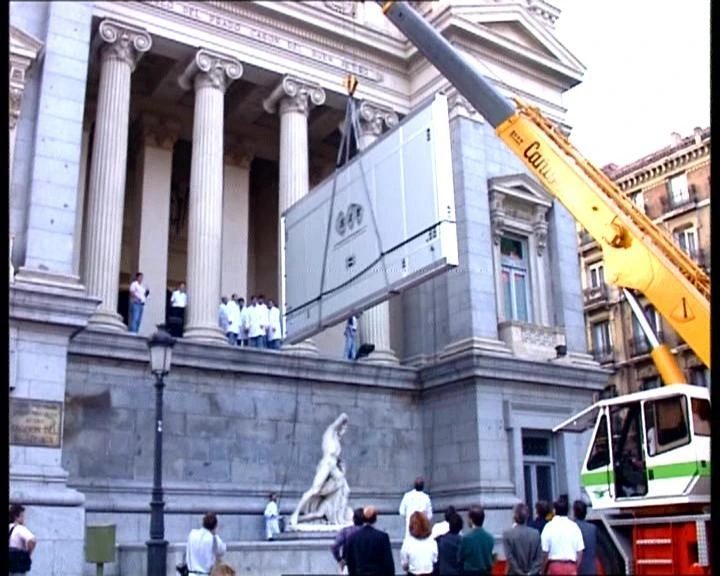
Pablo Picasso. Guernica.
Nearly eight metres of canvas, not a patch of colour. Guernica was painted in just over a month, then waited more than forty years to reach where it belonged.
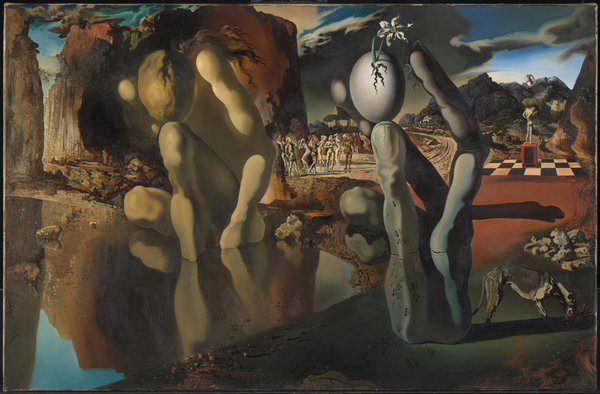
Salvador Dalí. Métamorphose de Narcisse.
Two matching shapes side by side: a man bent over his reflection, a stone hand holding an egg. Look long enough and the man turns into the hand, and a flower grows from the egg.
Piet Mondrian. Composition C (No.III) with Red, Yellow and Blue.
A nearly square canvas, a few black lines, some white, a little red, yellow and blue. Mondrian used so little that every element had to carry its share.
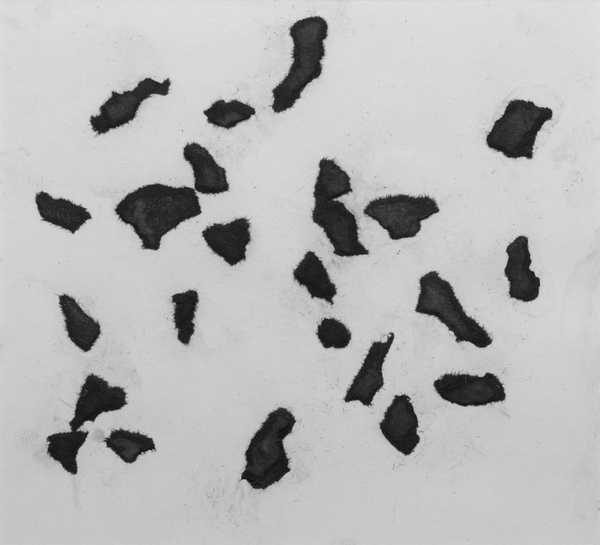
Jean Arp. According to the Laws of Chance.
Arp once cut paper with scissors and sanded every edge smooth. Then he found his old collages mouldy in the attic, and began to tear.
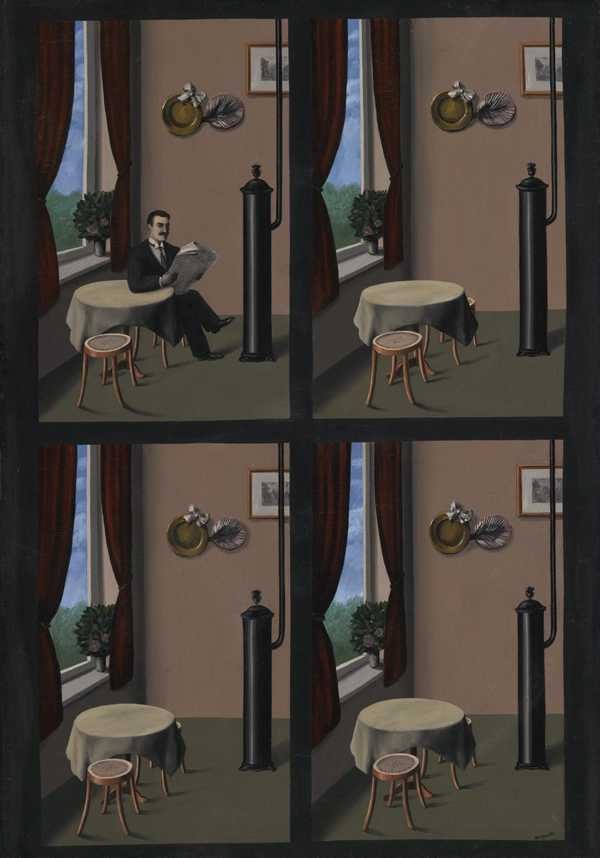
René Magritte. L'Homme au journal.
The same room, four times over. In the first a man reads a newspaper. In the next three he is gone. Nothing else changes.
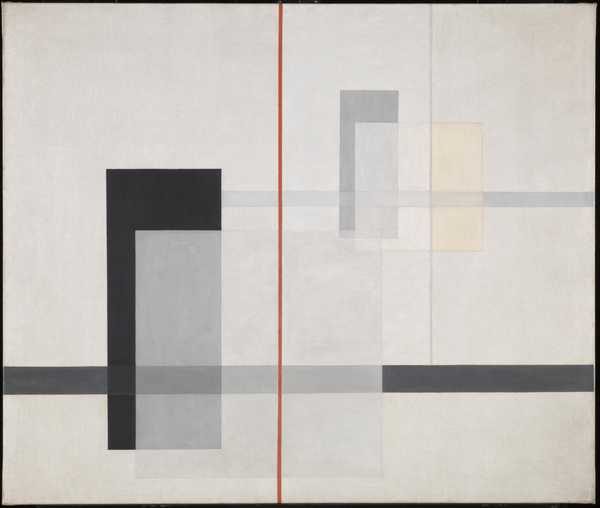
László Moholy-Nagy. K VII.
Black bars, transparent grey planes, a pale ground. K VII depicts no object. It builds light the way one builds a structure.
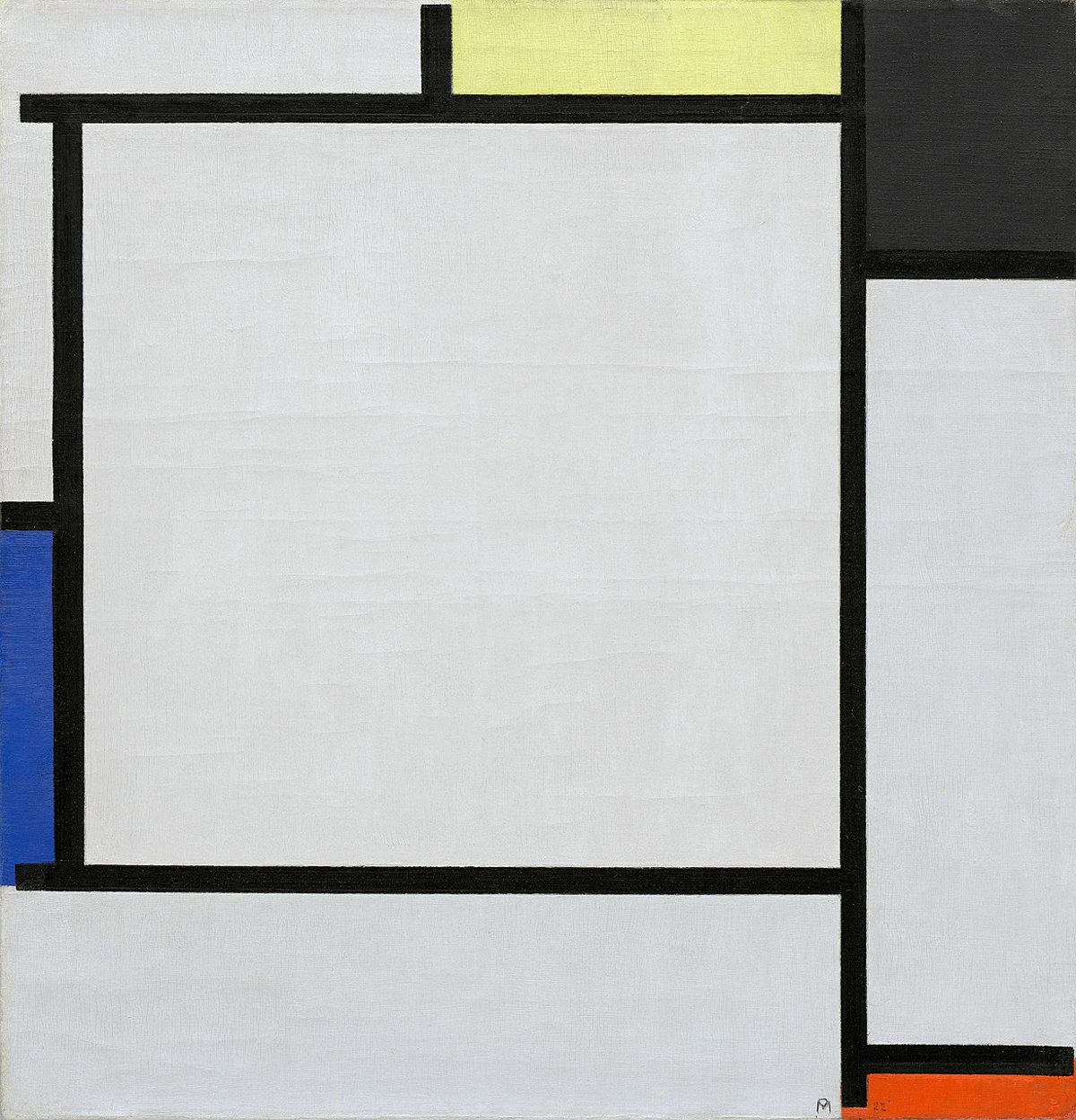
Piet Mondrian. Tableau 2.
An almost square canvas, a black grid, a few primary colours. By 1922 Mondrian had pared the world down to straight lines, right angles and balance.
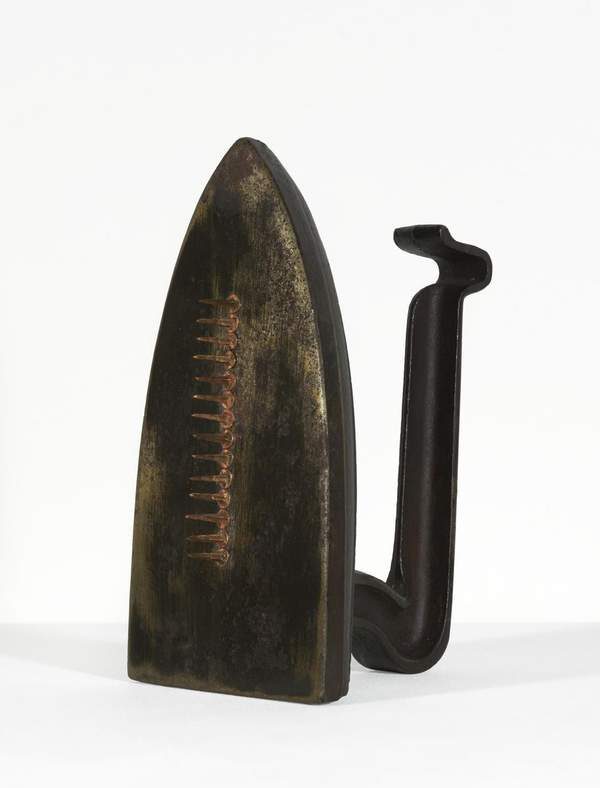
Man Ray. Cadeau.
The iron is still heavy, still cold, still has its handle. Add one row of nails and it is no longer a household tool.
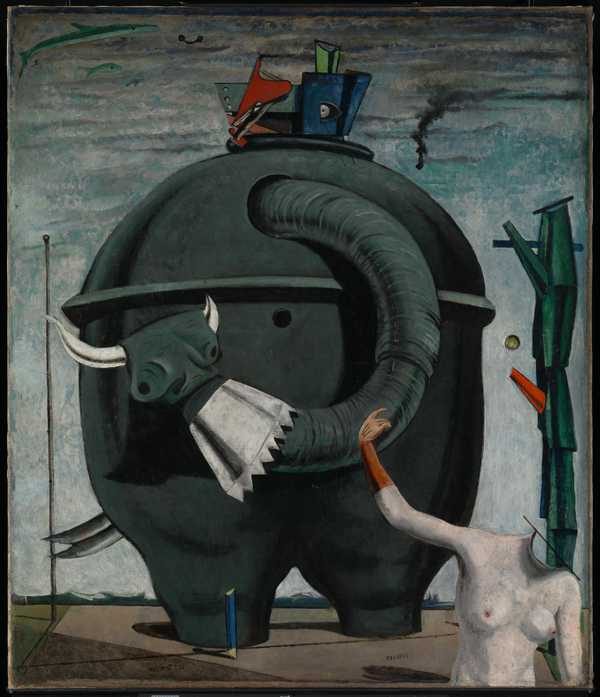
Max Ernst. Celebes.
A clay corn bin, photographed in an anthropology journal. Max Ernst added a trunk, horns and an eye, and it became a monster.
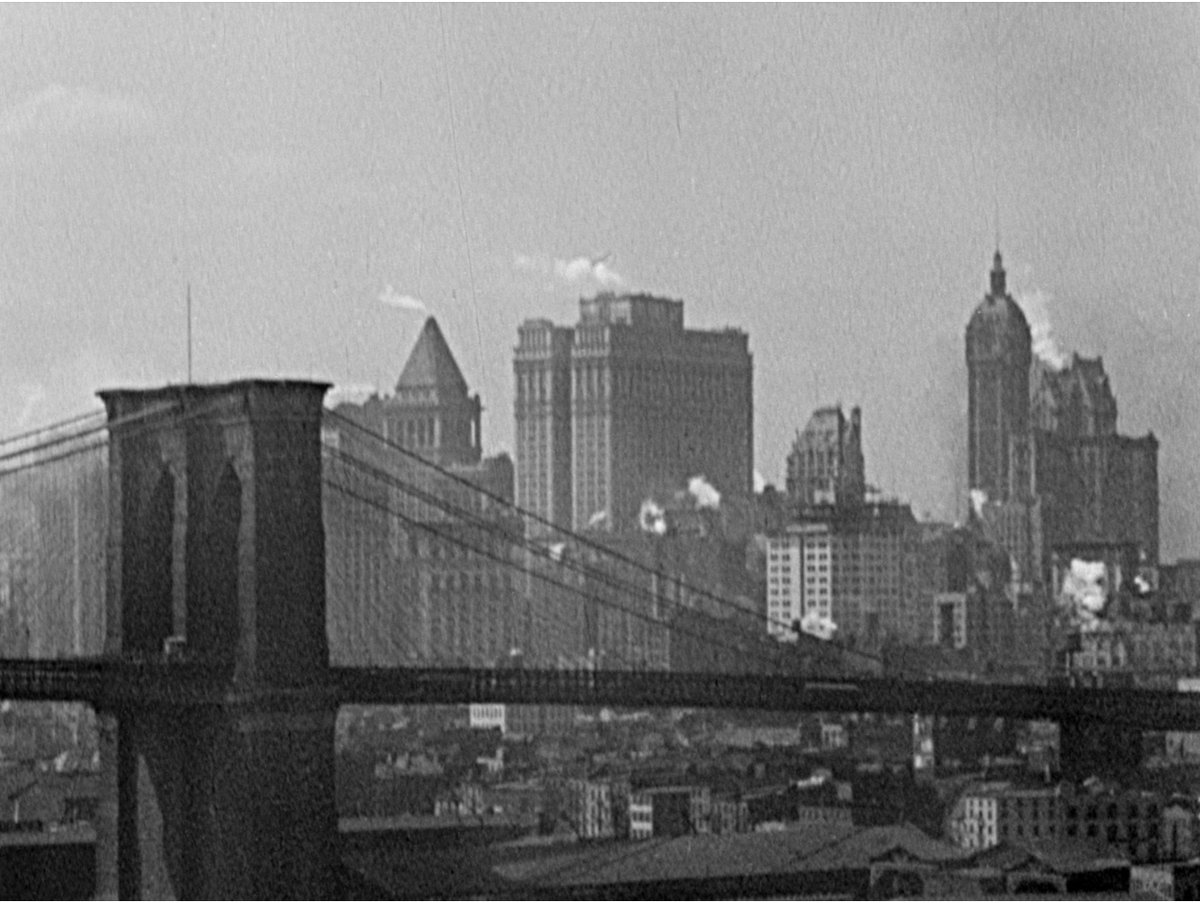
Paul Strand, Charles Sheeler. Manhatta.
A morning ferry, smoke and steam between buildings, a sunset seen from a rooftop. Manhatta records one day of a city without a single spoken word.
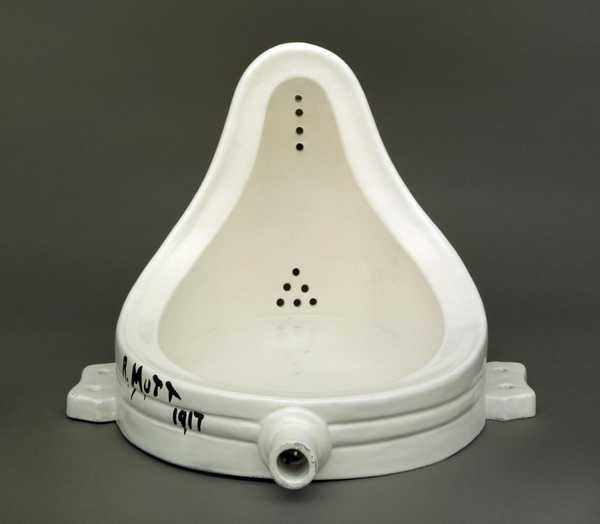
Marcel Duchamp. Fountain.
Duchamp did not make the urinal. He chose it, turned it, signed a false name. The original is lost. What remains is a photograph and replicas.
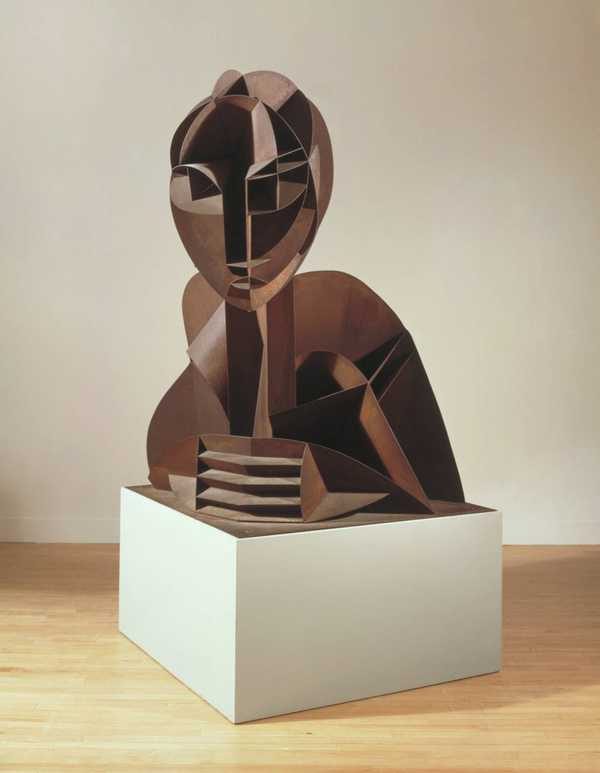
Naum Gabo. Head No. 2.
No carving into a block, no modelling clay. Gabo built a head from thin planes and let the space inside become the material.
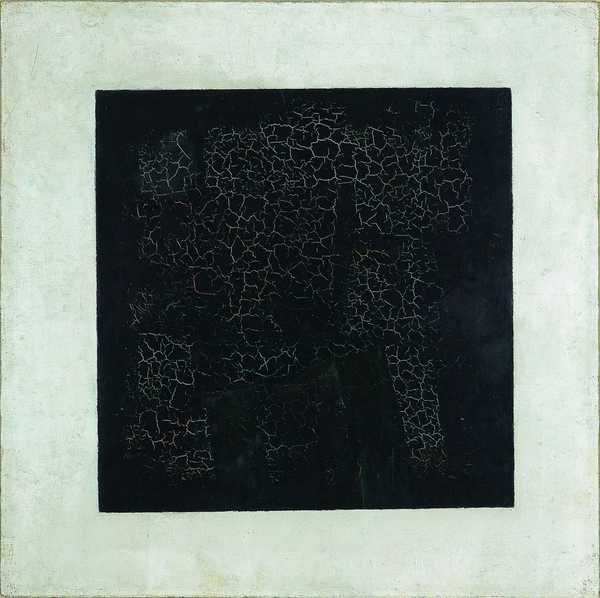
Kazimir Malevich. Black Square.
A black square hung across a corner. Malevich called it a beginning. X rays show another painting beneath the black.
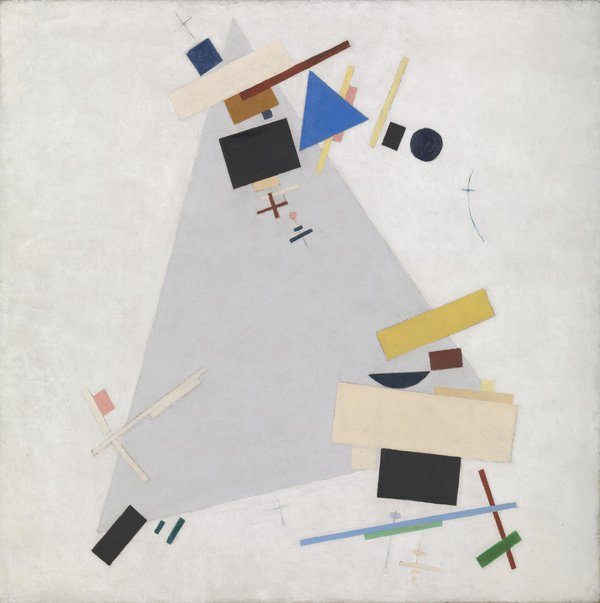
Kazimir Malevich. Dynamic Suprematism.
There is no object in the picture. Only colour, form, and white space to move in. Malevich painted straight onto canvas, with no sketch beneath.
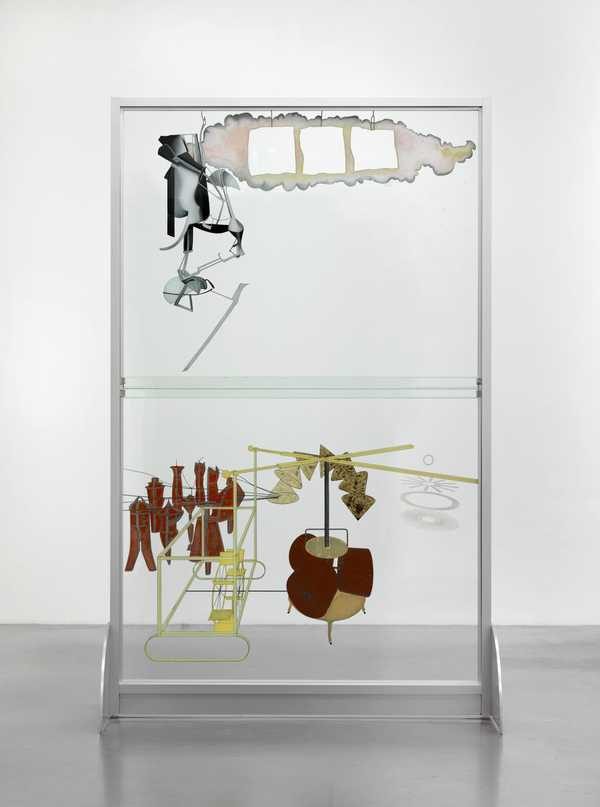
Marcel Duchamp, Richard Hamilton. The Bride Stripped Bare by Her Bachelors, Even (The Large Glass).
The cracked original is in Philadelphia. The Tate version was rebuilt from scraps of notes, in oil, lead, dust and varnish on glass.
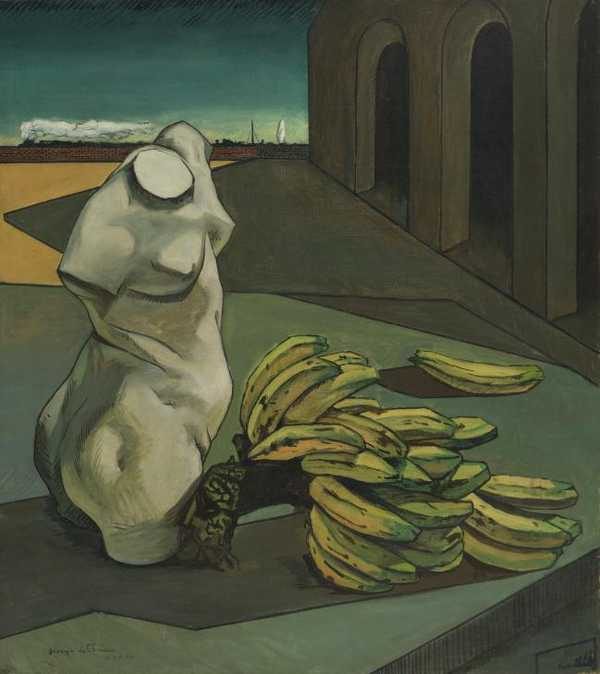
Giorgio de Chirico. The Uncertainty of the Poet.
A headless plaster torso, a bunch of yellow bananas, an arcade throwing shadow and a distant train. De Chirico set them side by side in 1913 and left us to ask why.
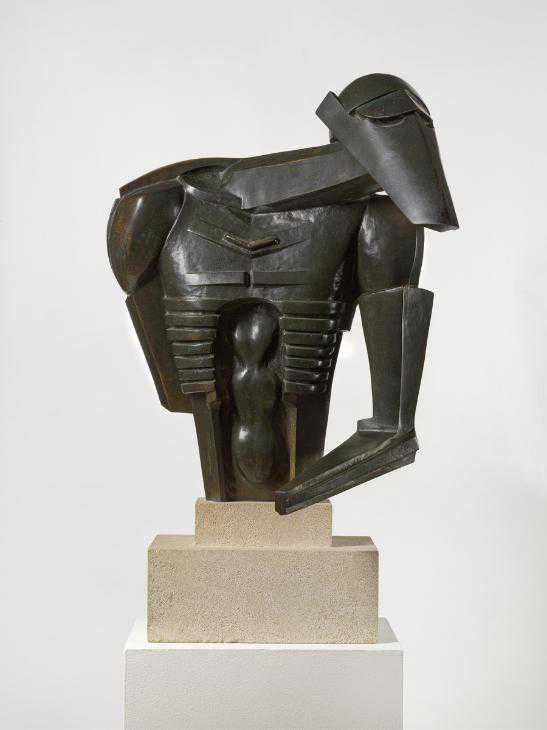
Jacob Epstein. Torso in Metal from 'The Rock Drill'.
In 1915 a plaster robot rode a real rock drill. After the war Epstein discarded the drill, cut the figure at the waist and cast what remained in bronze.
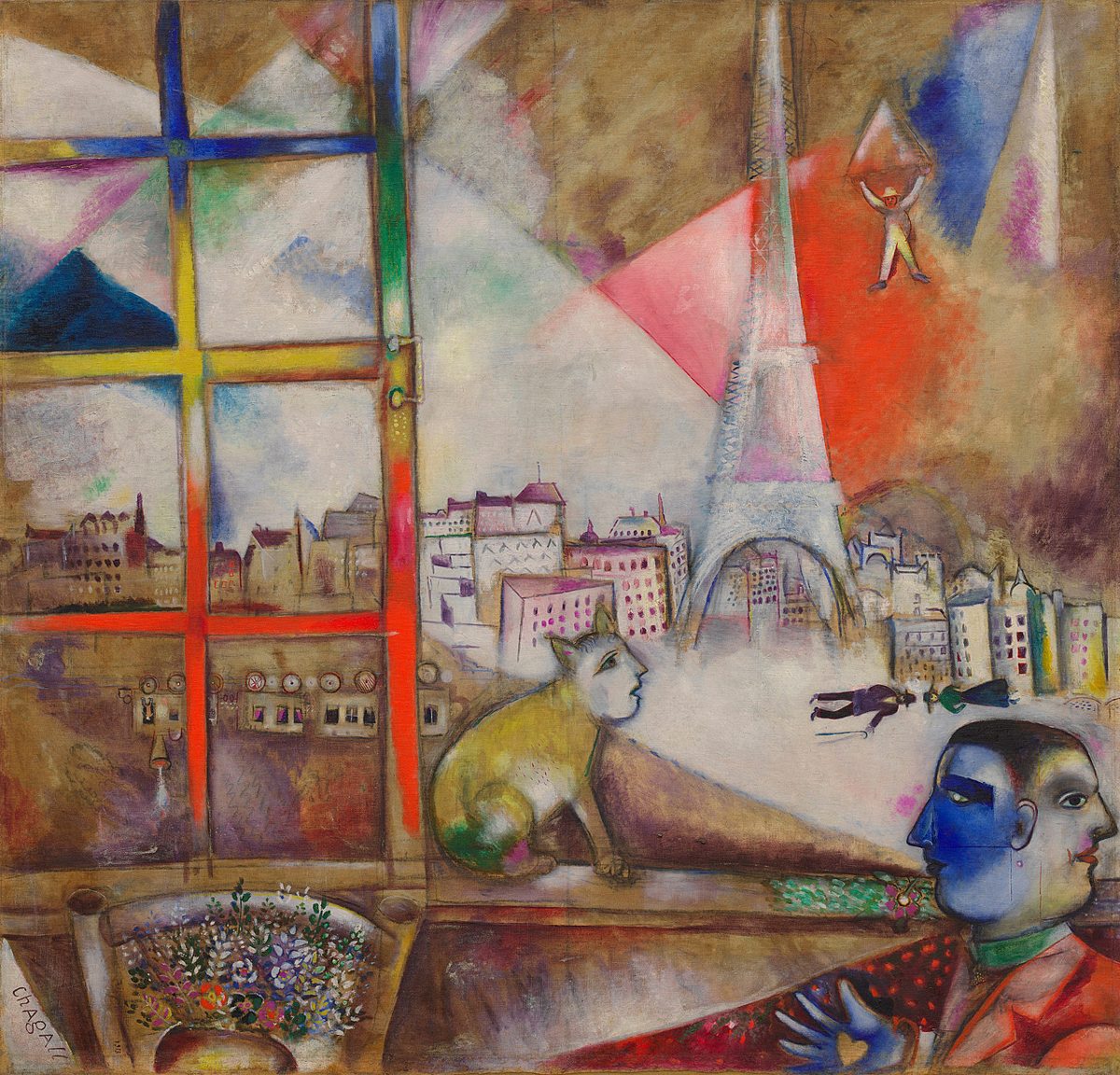
Marc Chagall. Paris through the Window.
An eight-pane window, a human-faced cat, a man with two faces. Chagall painted Paris in 1913 and brought his hometown Vitebsk into the picture with him.
Sonia Delaunay, Blaise Cendrars. La Prose du Transsibérien et de la petite Jehanne de France.
Twenty two folds, a poem about a train across Siberia, and colour that does not illustrate but travels with the words. The book can only be read fully open.
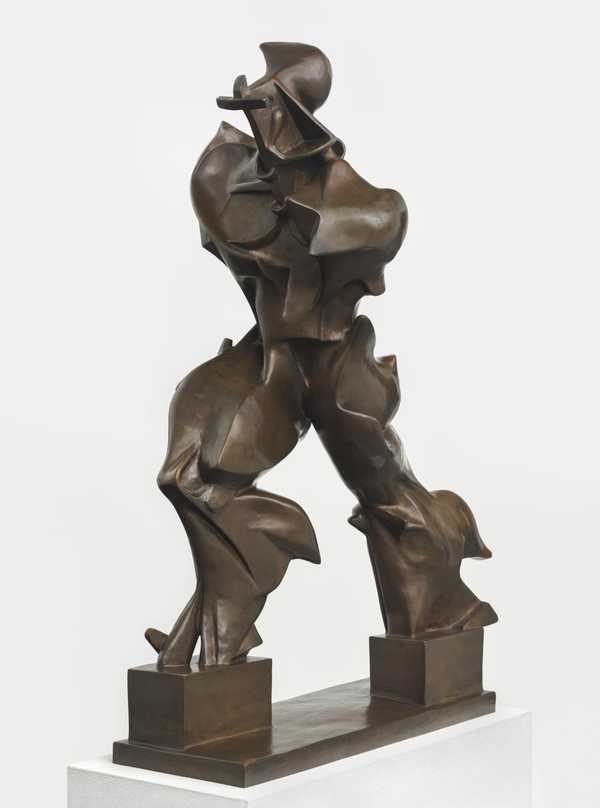
Umberto Boccioni. Unique Forms of Continuity in Space.
Boccioni modelled it in plaster in 1913. He did not live to see it in bronze. It exists because someone gathered the broken pieces and glued them.
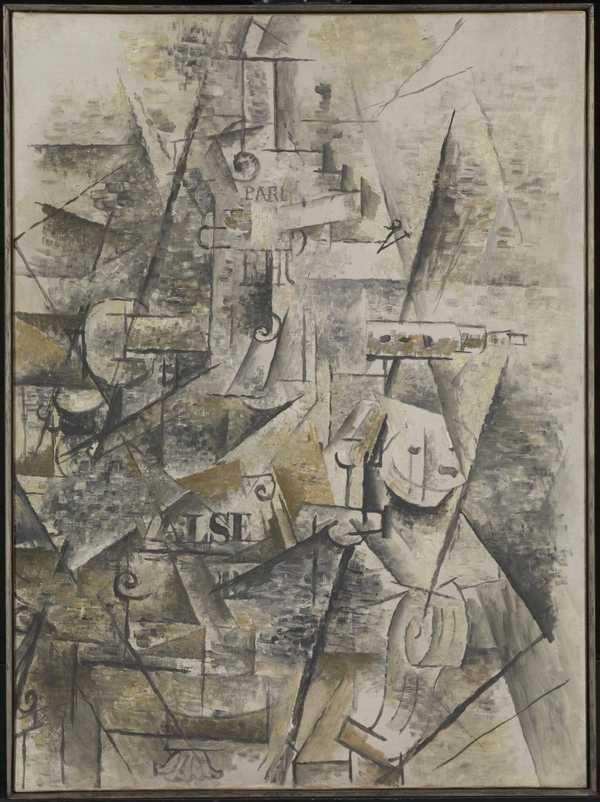
Georges Braque. Clarinet and Bottle of Rum on a Mantelpiece.
A clarinet lying flat, the letters RHU on a bottle, the word VALSE below. Braque painted the objects, and the space between them.
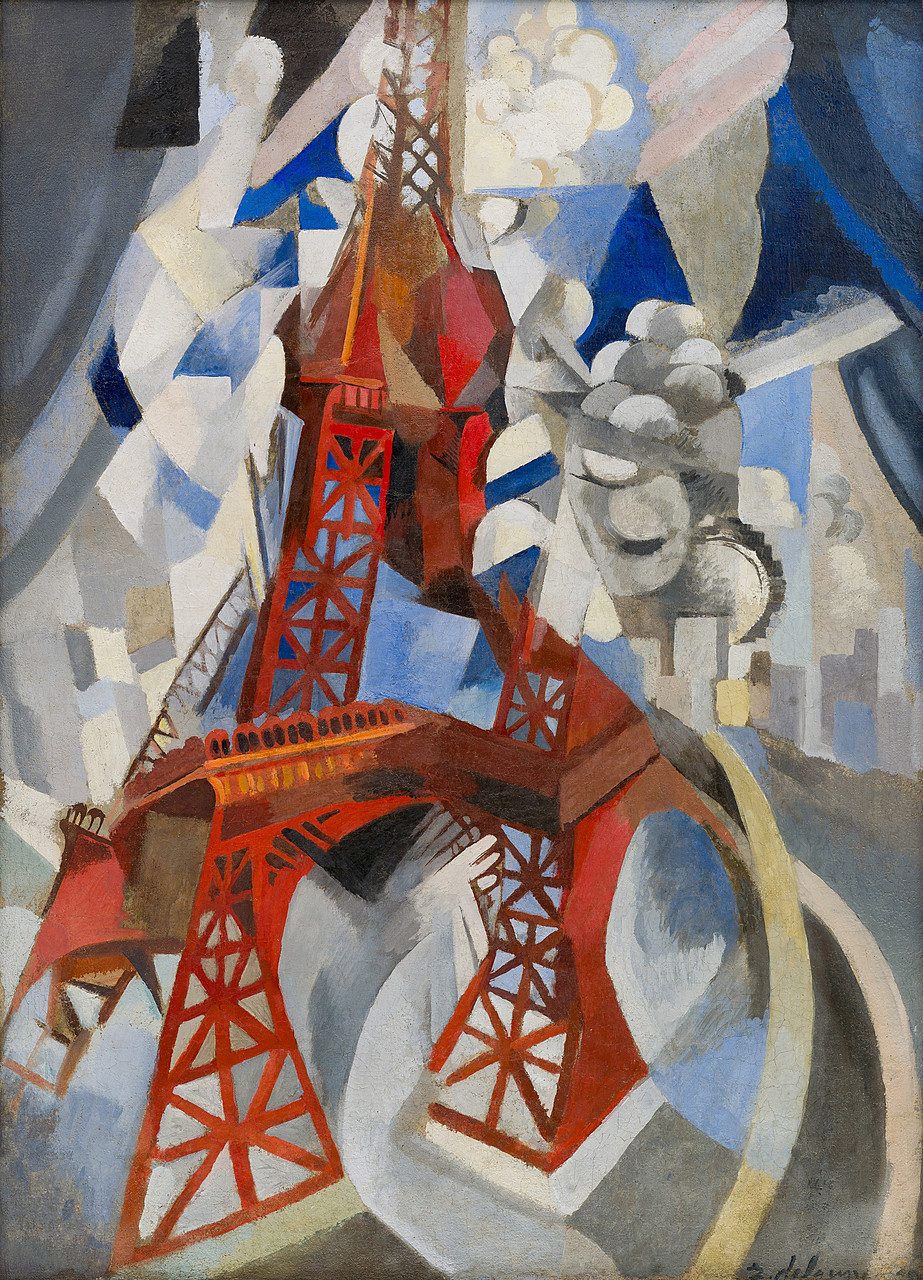
Robert Delaunay. Red Eiffel Tower.
A red tower rising past the edge of the canvas, its legs seeming to walk. Delaunay took the Eiffel Tower apart to see it from every side at once.
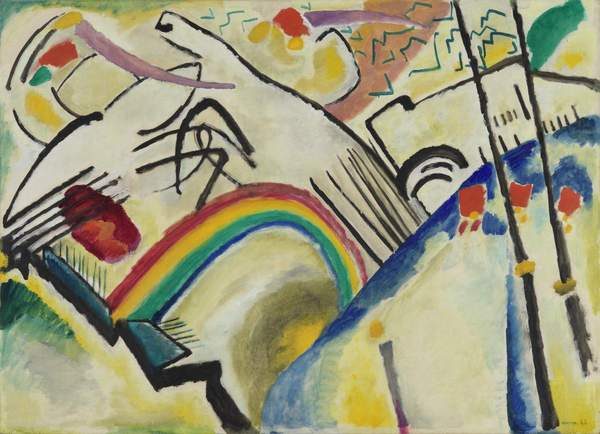
Wassily Kandinsky. Cosaques.
Red hats, lances, a rainbow are still there. But they are dissolving. Cossacks is a painting standing at the edge of abstraction.
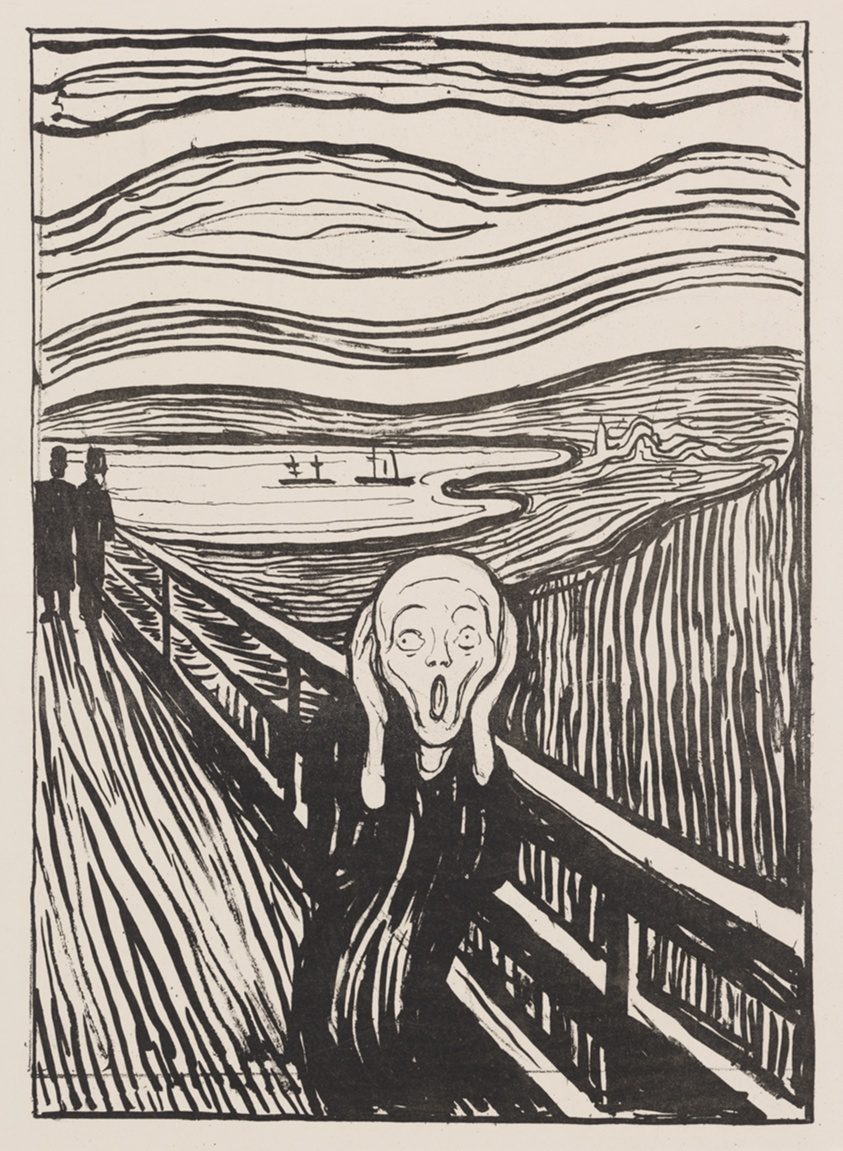
Edvard Munch. The Scream.
Tempera, crayon, a sheet of board. A figure holding its face on a road by the fjord. No one can hear the scream, yet everyone who looks knows it is real.
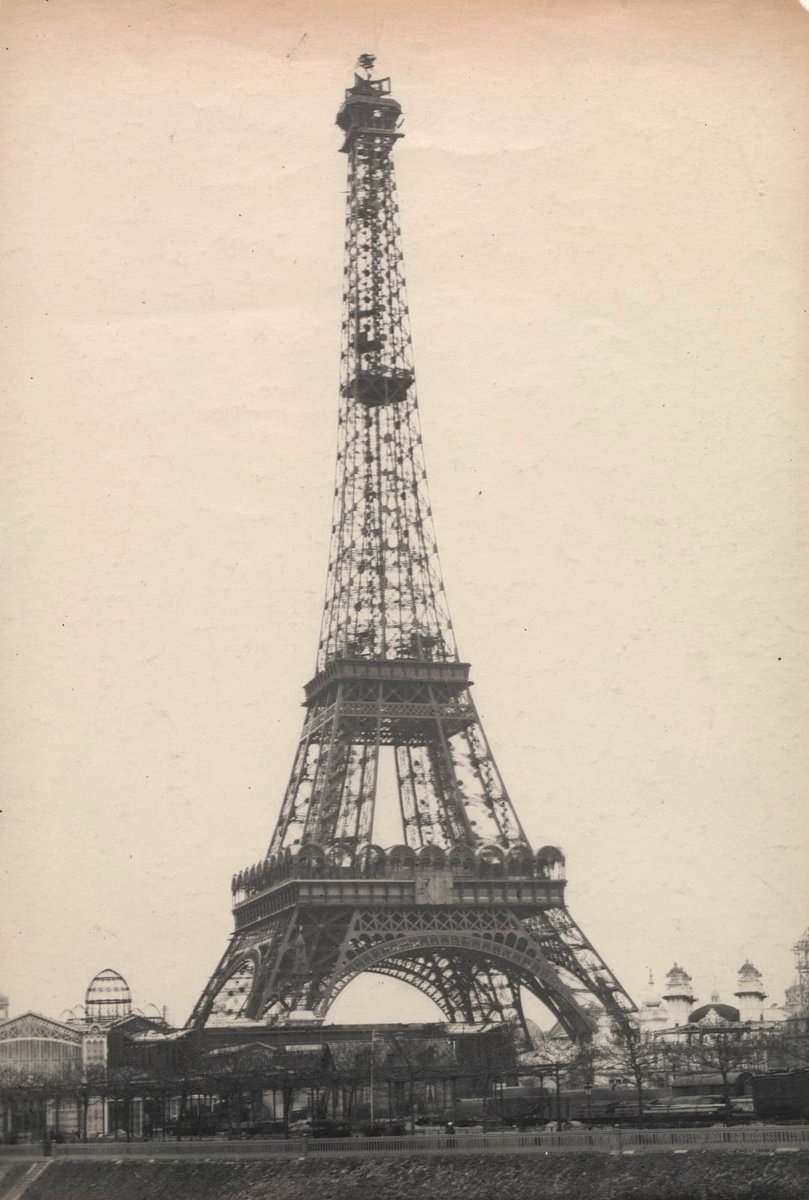
Hippolyte Blancard. The Platinum Print.
From 1887 to 1889 the pharmacist Hippolyte Blancard photographed the Eiffel Tower under construction, month after month, and printed in platinum, a print that barely fades.
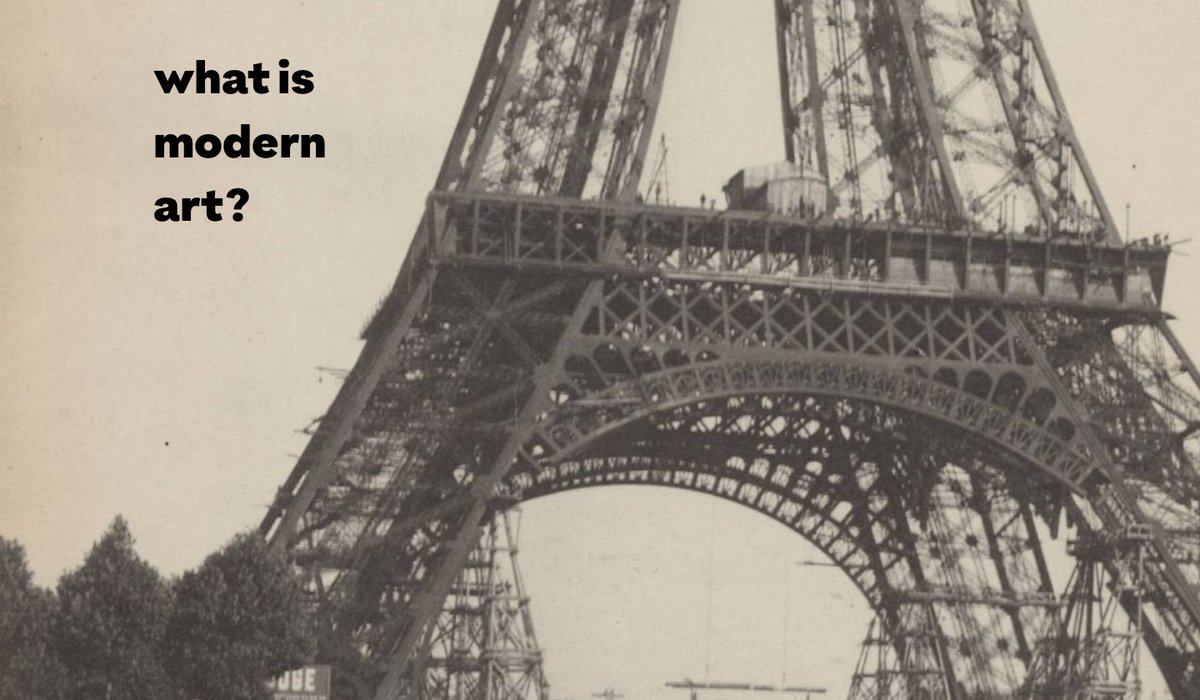
What Is Modern Art.
Cities grew, factories rose, the camera arrived. Artists stopped copying the world. They began painting the way they saw it.