
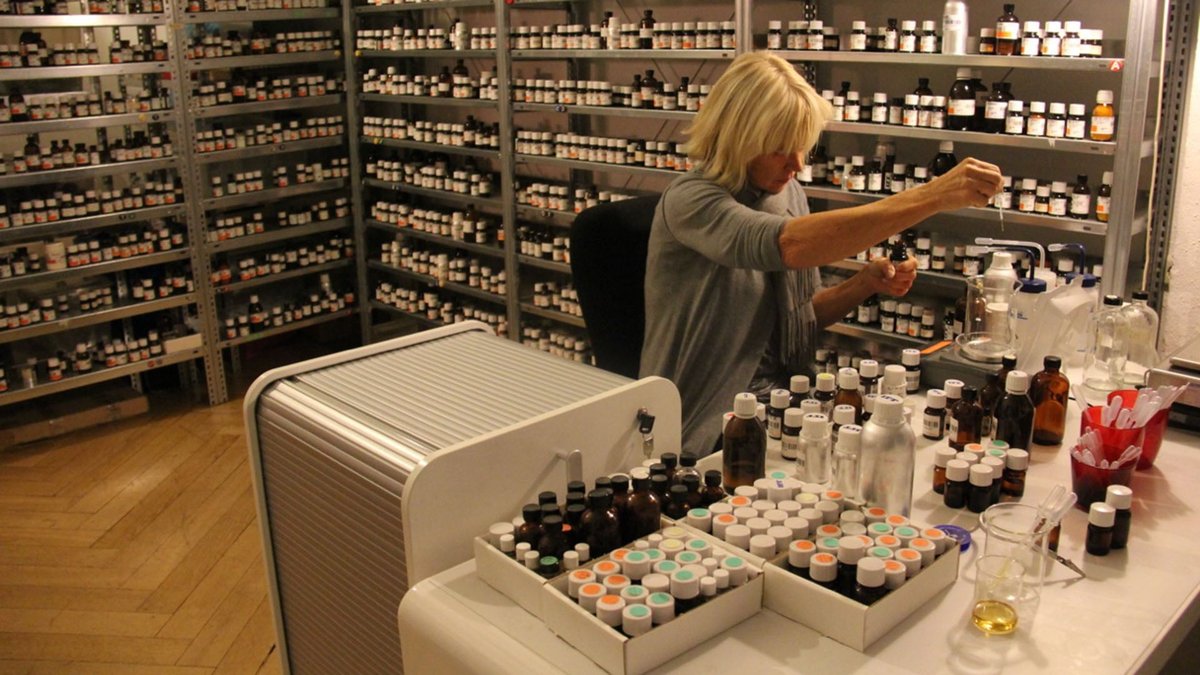
Sissel Tolaas. Smellscapes.
A city can be redrawn in smell. Sissel Tolaas walks each street, collects each smell, and returns them to walls, paper and maps.
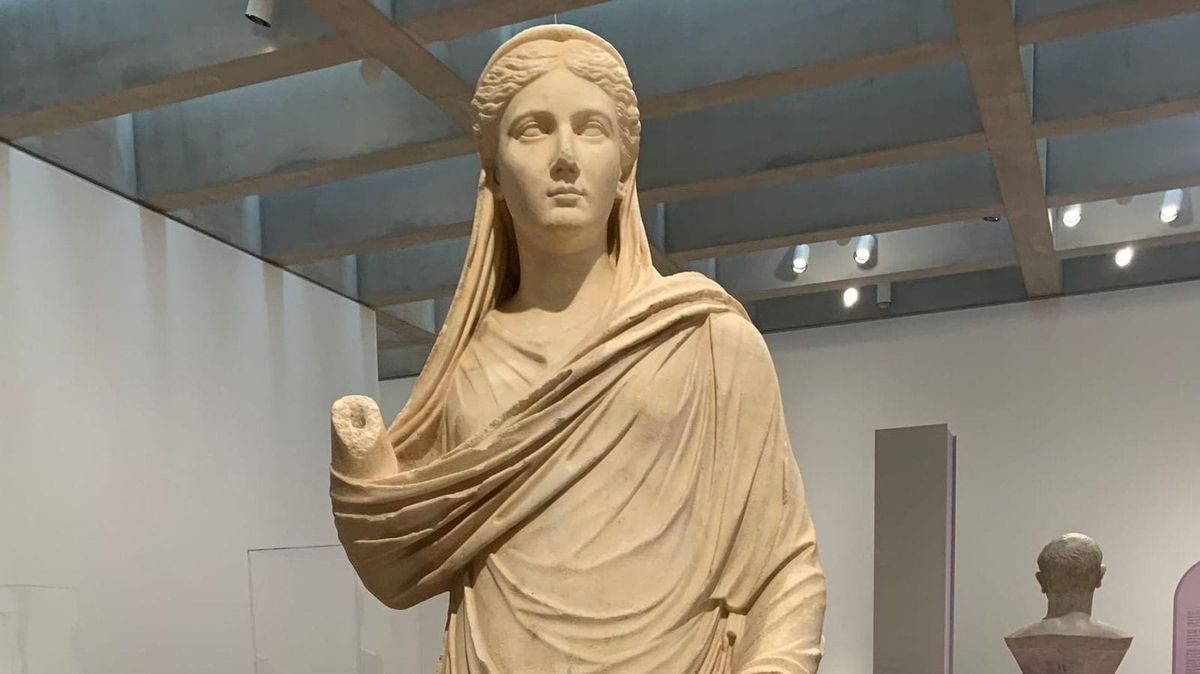
Ancient Splendor: Roman Art in the Time of Trajan.
Marble statues are now white and cold. Trajan's Rome was not. An exhibition in St. Louis opens scent boxes to remind us.
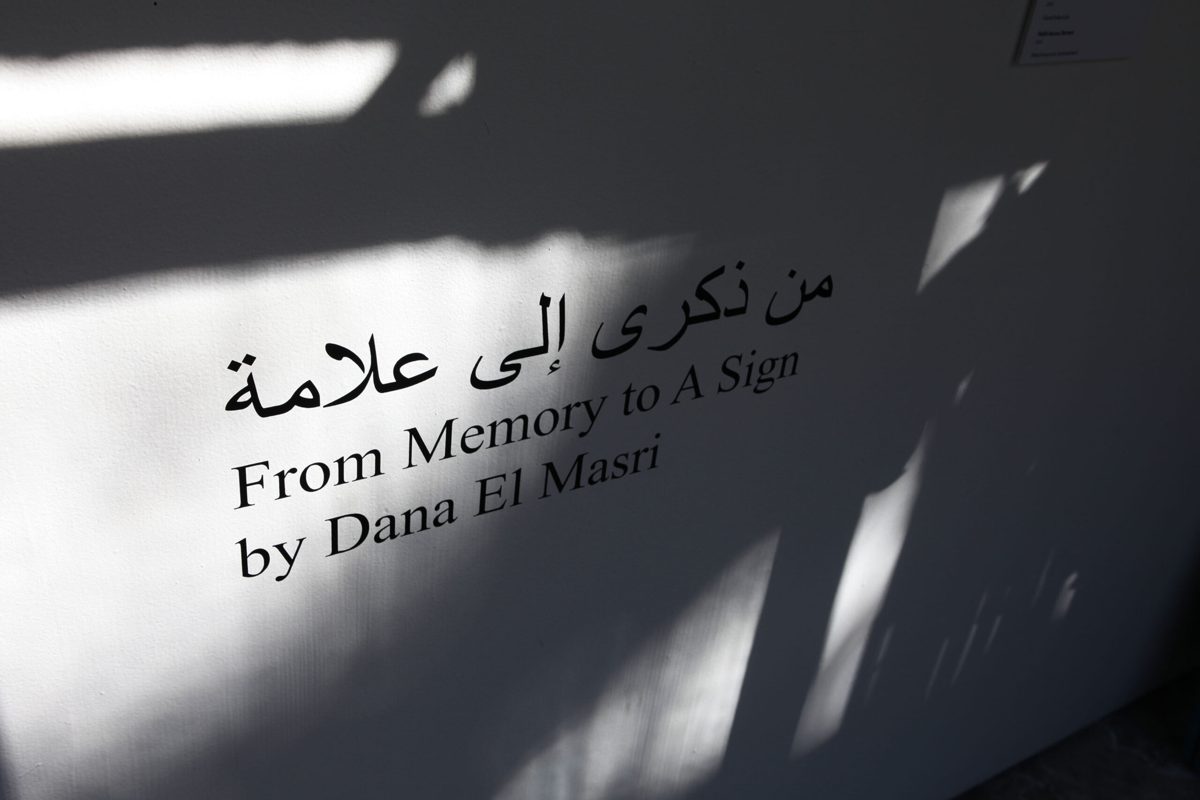
Dana El Masri. From Memory to A Sign.
Works from 2009 to 2026, fragments of nature gathered in many countries. Dana El Masri arranges them to find where home still lingers.
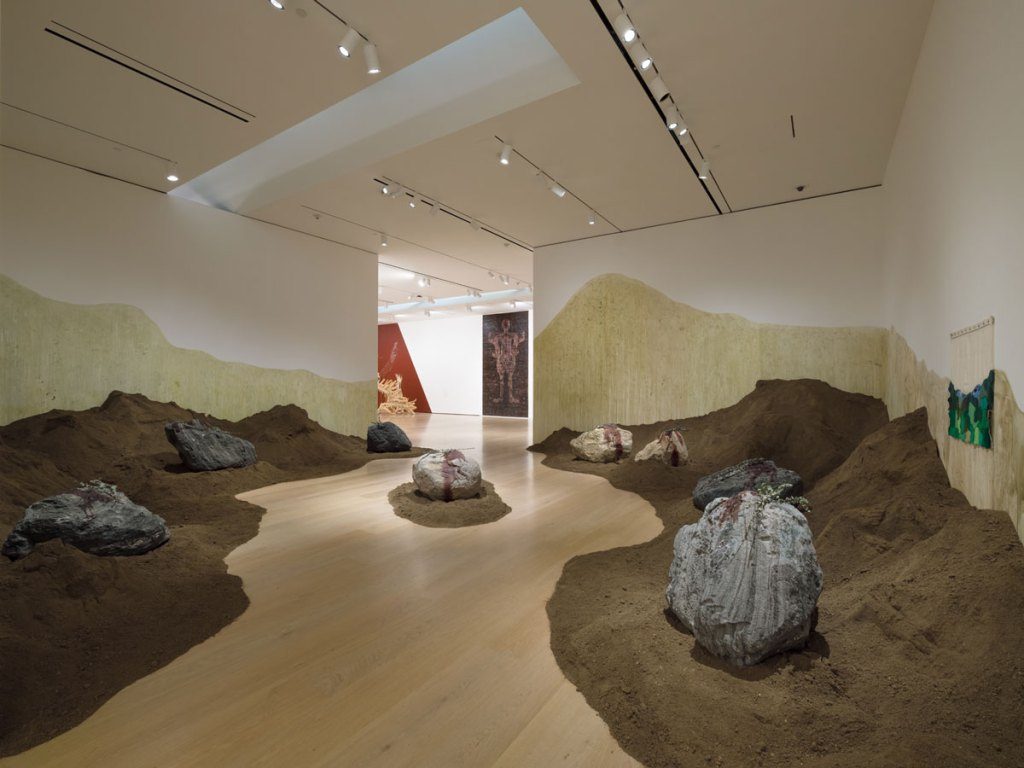
Edgar Calel. Ch'ablin nu rayb'el Chua taj ab'ej.
In the Hammer Museum's first gallery, Edgar Calel piled humus, placed boulders and left offerings. The room smells of his home mountains after rain.
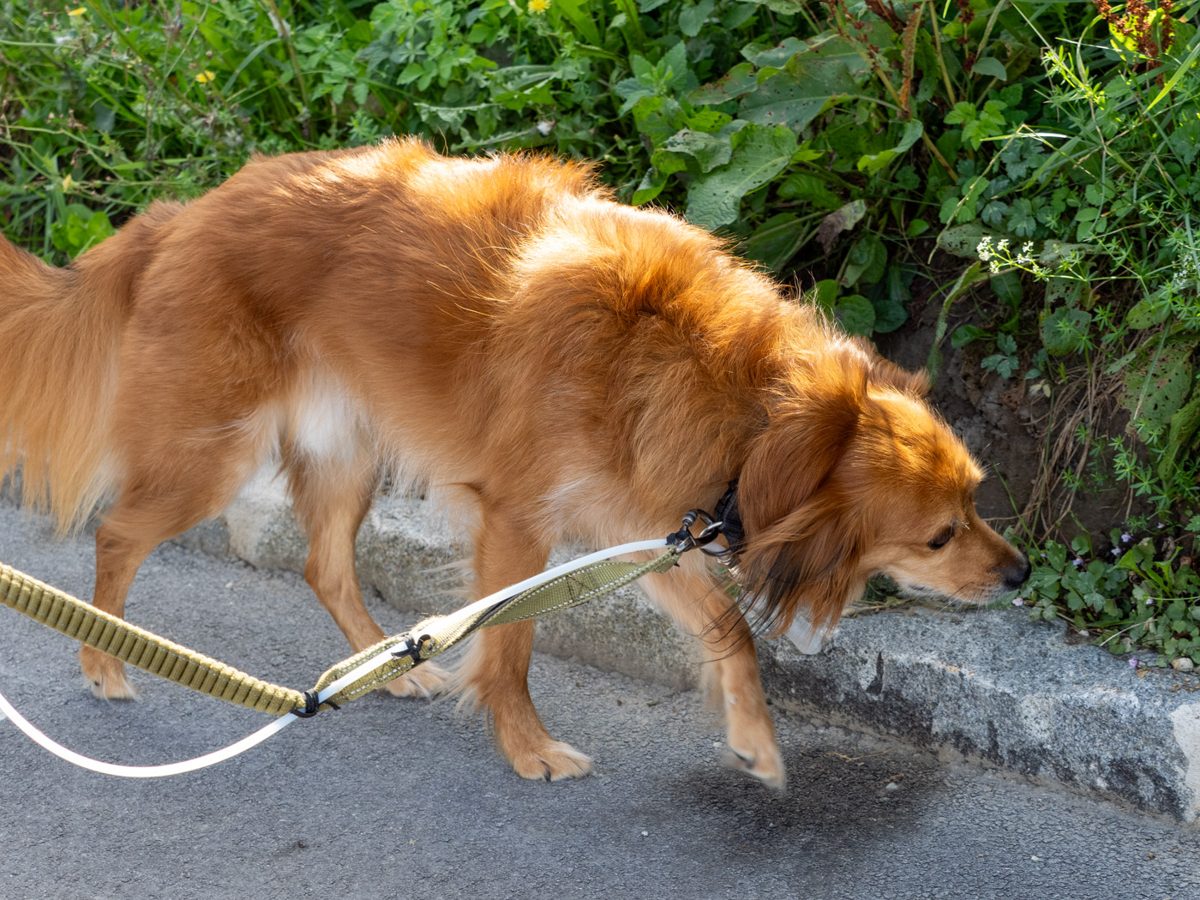
Maki Ueda. Dog's Nose (Ars Electronica Version).
A dog named Wim, a scent sensor, an hour's walk in Linz. Maki Ueda redraws the city from the height of a nose.
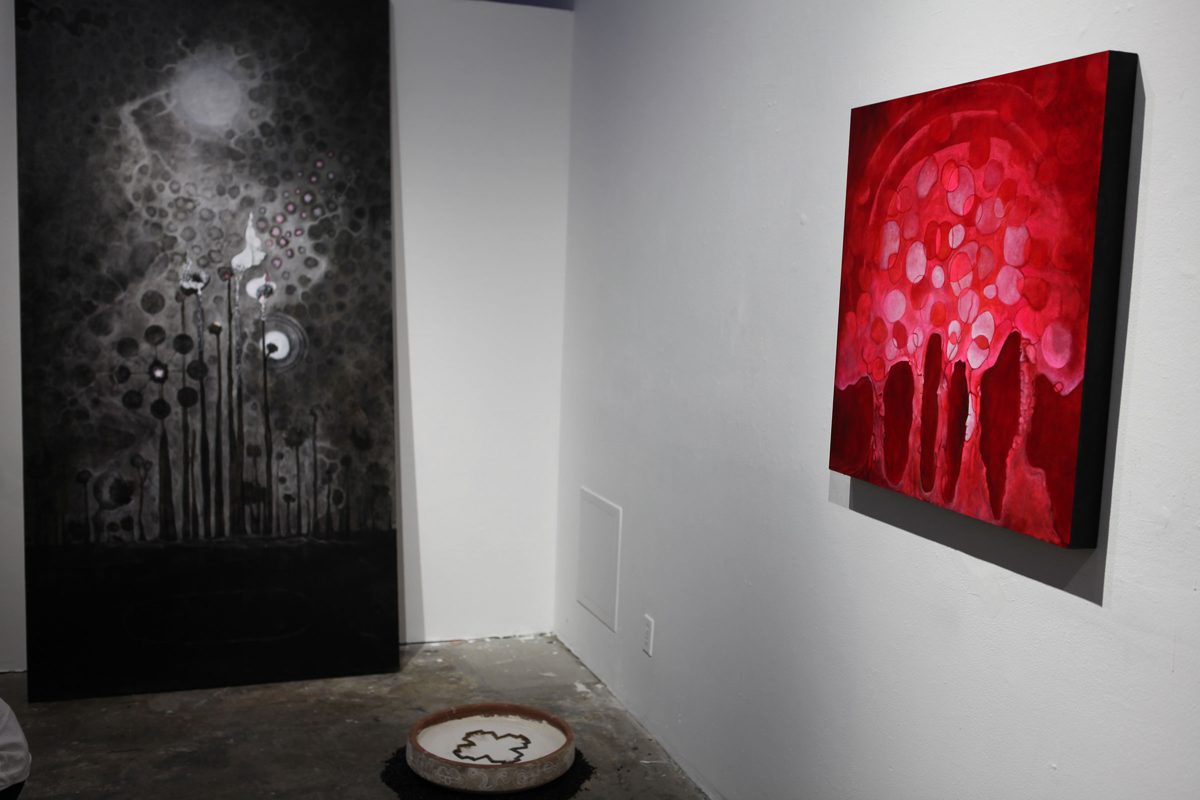
Persephenie. Praying to the Gods.
Persephenie sets plants, scent and incense close to the ground. To smell them, visitors must bend and kneel. Reverence begins at the knees.
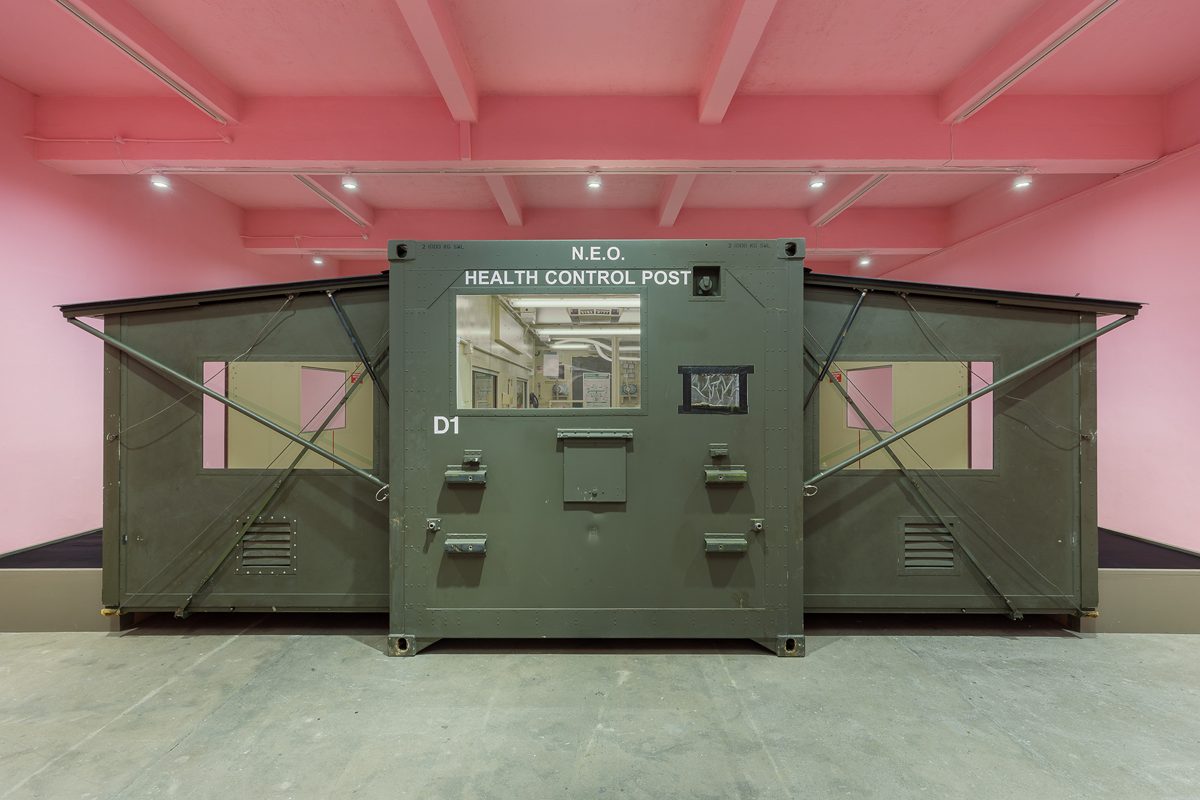
Racheal Crowther. HS Code 04022911.
Pink walls, boarded windows, a former military medical unit. And in the air, a sweet smell recalling a newborn's scalp, released from somewhere no one can see.
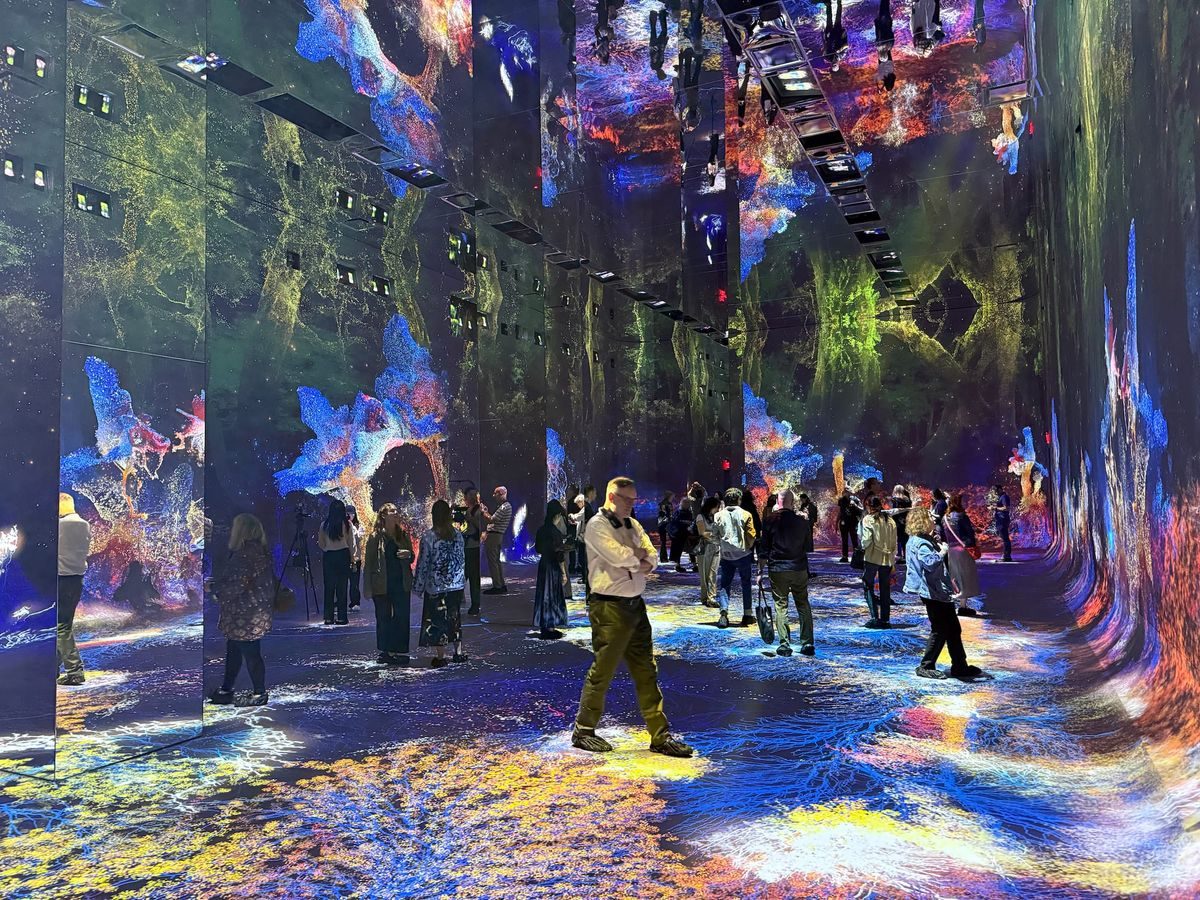
Refik Anadol. Machine Dreams: Rainforest.
Not one real tree. Only projections, mirrors, sound, and the smell of damp forest floor released from a device around each visitor's neck.
Andrew O'Brien. Stringer's Ridge.
A forest with no horizon, smothered in honeysuckle. The lens cannot hold it. Andrew O'Brien tries to keep it through smell.
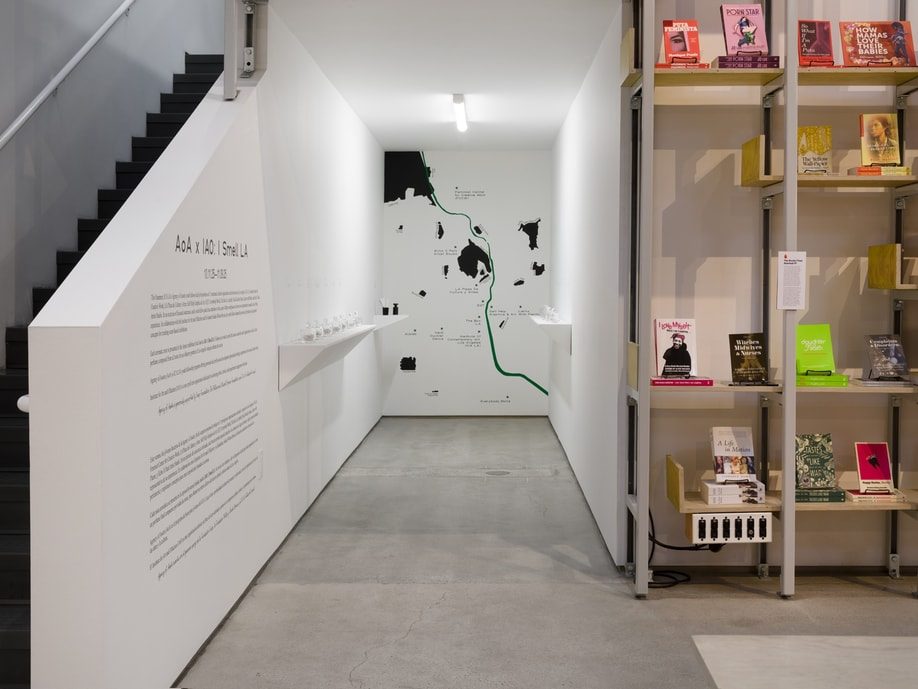
AoA x IAO: I Smell LA.
A summer internship condensed into one aromatic note. Eleven notes stand alone, then join into one scent for the Los Angeles art world.
Candice Lin. Vomit Clock.
A ceramic gargoyle endlessly pumps a herbal tincture through its mouth. Sweet, earthy, the smell of cleansing rituals.
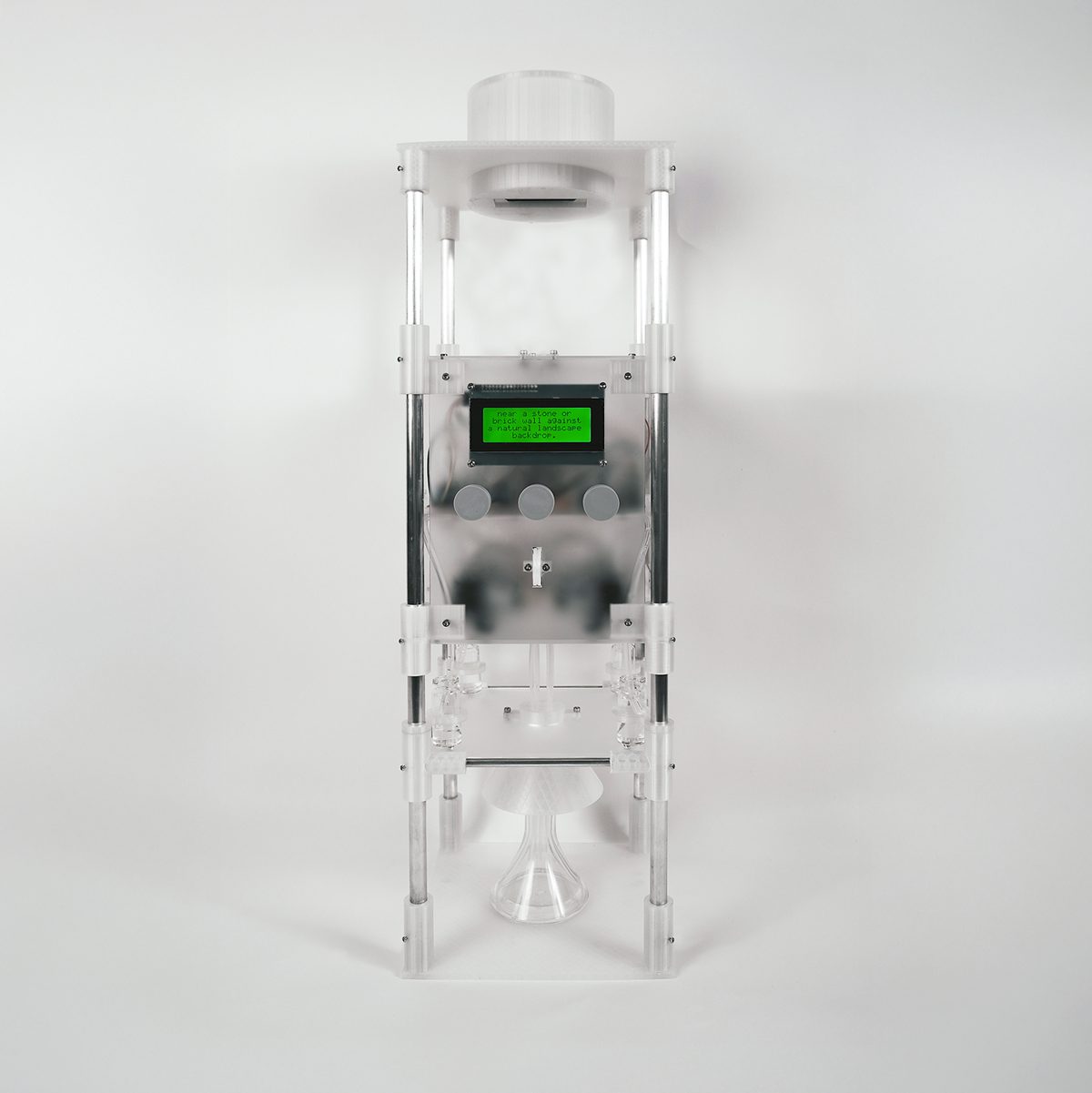
Cyrus Clarke. The Anemoia Device.
Feed in an old film photograph. Turn three dials: perspective, time, mood. The machine returns a smell for a memory that is not yours.
Delcy Morelos. El espacio vientre.
A room made of maize field soil. Visitors enter as if entering a womb, and the first thing they notice is the smell.
Die geheime Macht der Düfte.
The Kunstpalast in Düsseldorf staged its first major exhibition on the history of scent, with around thirty scent stations set within its art collection.
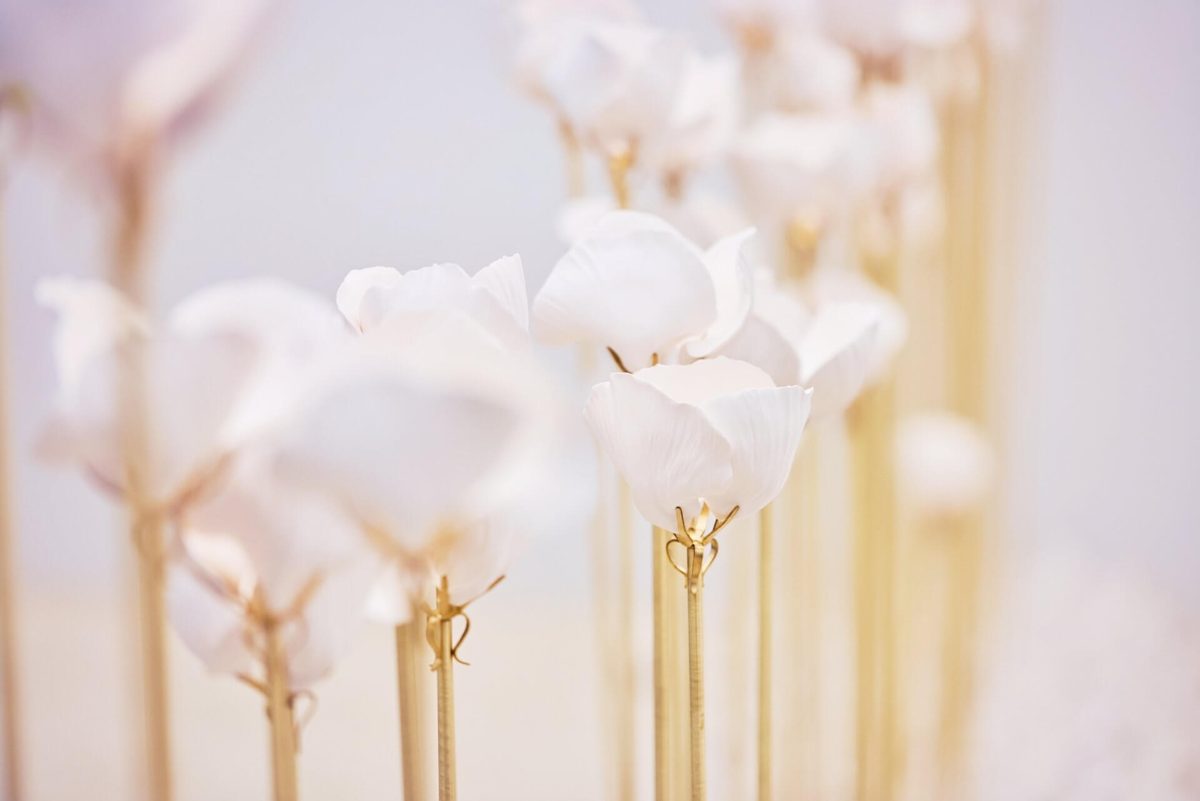
Francis Kurkdjian. Parfum, sculpture de l'invisible.
Porcelain roses that give off scent, a fountain of drinkable perfume, a room built around one bottle. Kurkdjian tries to place smell in space the way one places a sculpture.
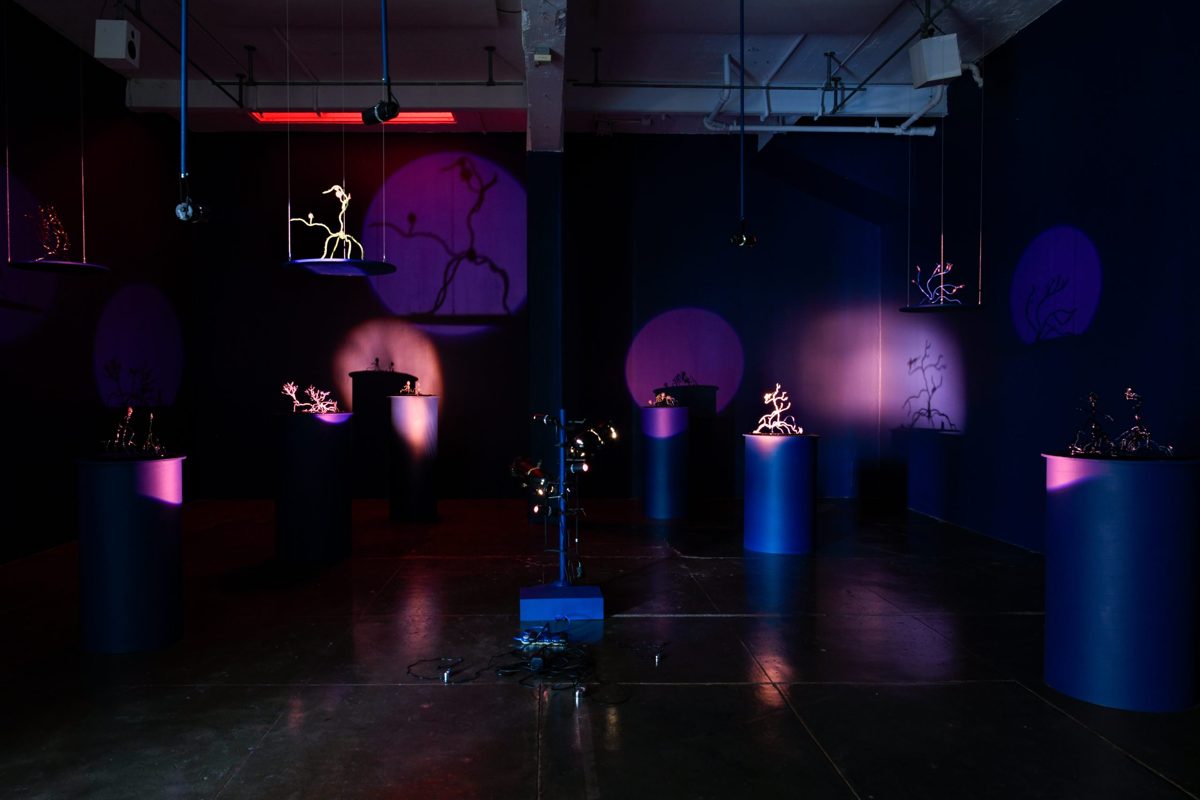
Goldie Poblador. The Rise of Medusa.
Goldie Poblador hangs nine glass forms recalling jellyfish and coral in a room the colour of deep water, then walks visitors through three smells of the sea: oil, dead coral, and a place still green.
Haegue Yang. Lost Lands and Sunken Fields.
Pinecones, hanji paper, metal bells and waves from a distant island. Haegue Yang calls up lands that no longer stand on any map.
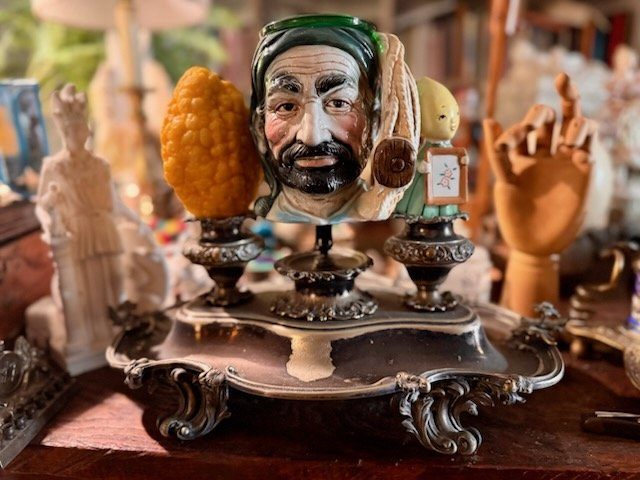
Hannah Marie Marcus. Commodity Exchange.
After her mother and stepfather died in 2024, Hannah Marie Marcus turned the contents of their home into a citron scented estate sale.
Lucy Chinen, Sean Raspet. Chloroform Scopolamine.
A drugged rag, a trumpet shaped flower, imaginary cigarettes. Chinen and Raspet made a faintly suspicious scent, and had performers carry it in loops around the room.
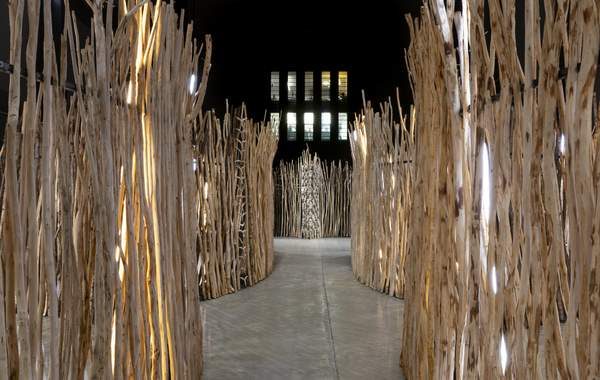
Máret Ánne Sara. Hyundai Commission: Goavve-Geabbil.
Reindeer hide bound with power cables, rising the full height of the Turbine Hall. Then a winding passage shaped like a nose. Visitors walk into an animal's breath.
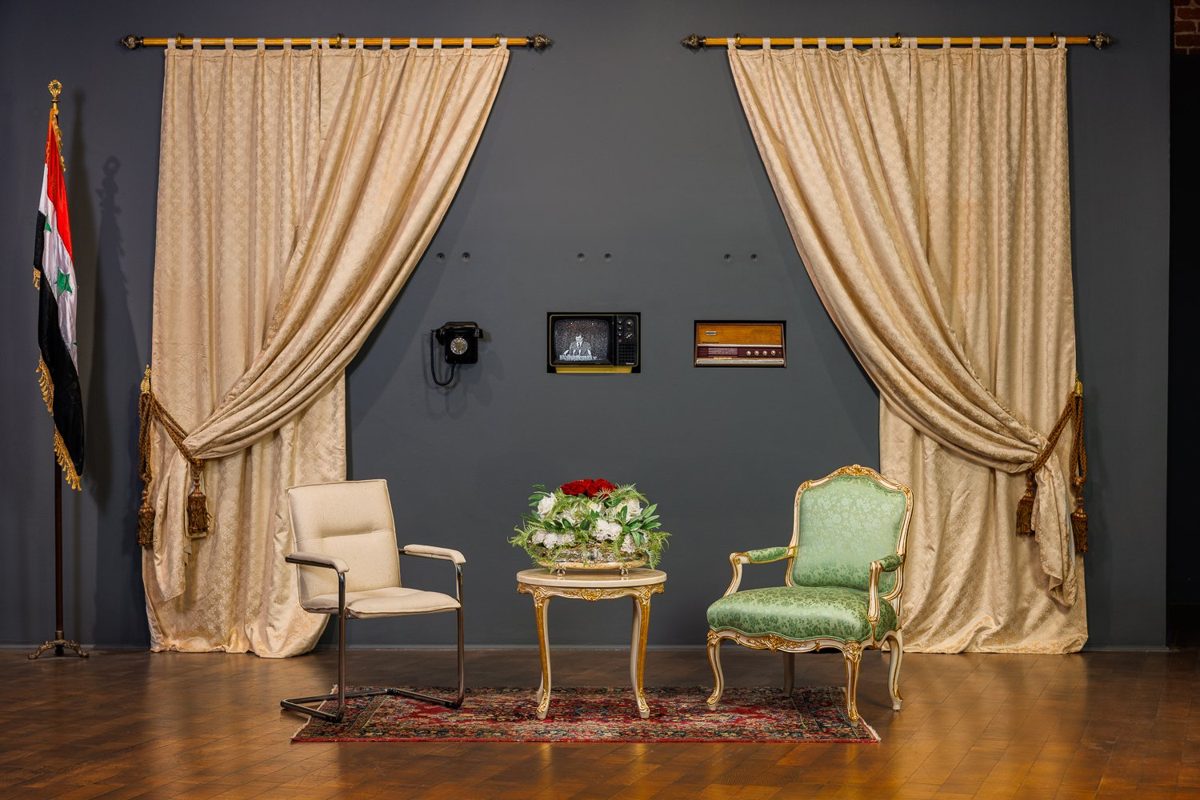
Regina Mamou. Hang Our Gods.
Bitumen, gypsum, wood ash. Each gives two smells: one of ancient Mesopotamia, one of Saddam Hussein's Iraq. Regina Mamou hides them behind the wall.
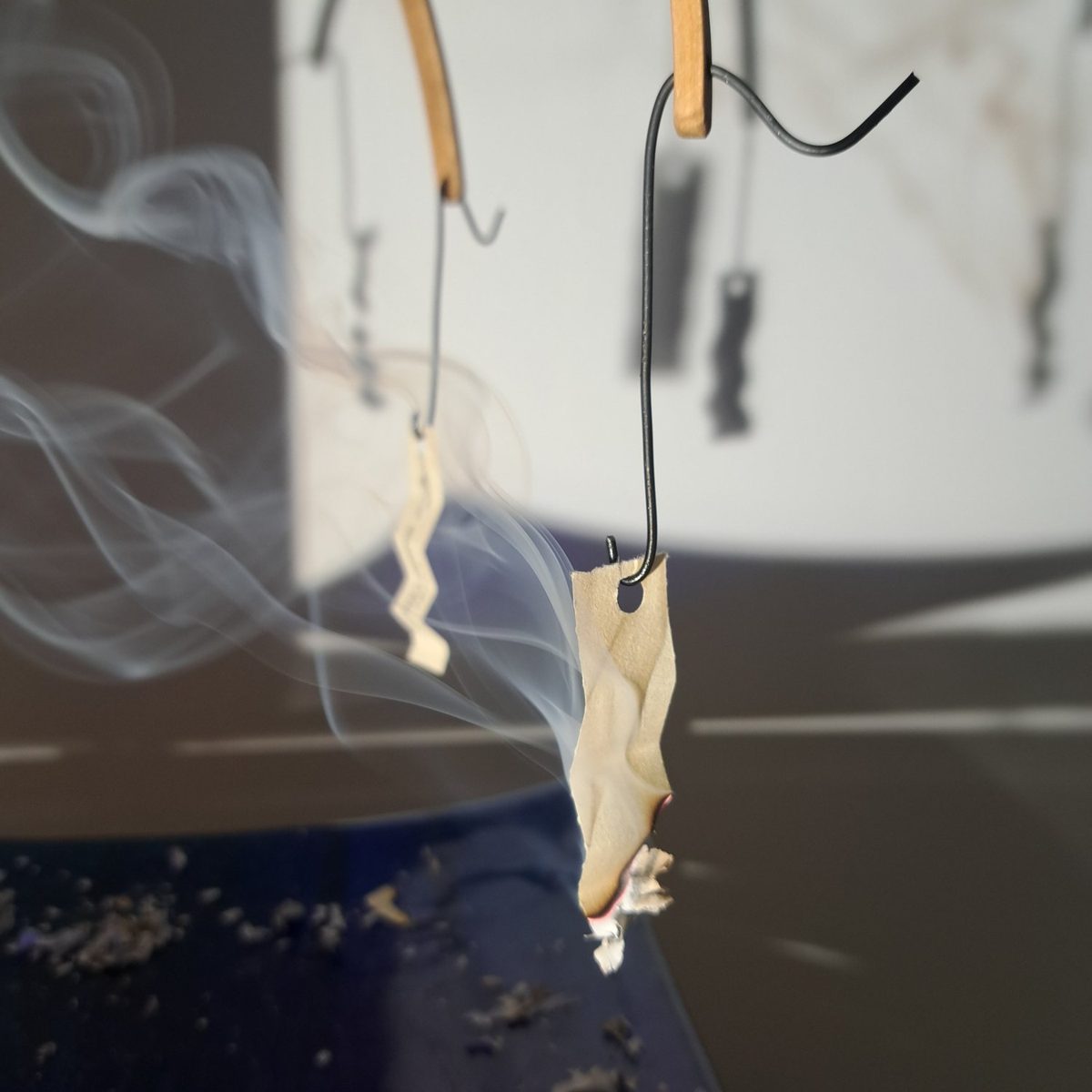
Ro Miller. Soft Time.
Ro Miller's first solo exhibition proposes ways of bringing scent into the home to measure time differently: slow, soft, never exact.
Storycraft: Twelve Olfactory Narratives.
One perfumer each Saturday, six hours, a set of materials and a story. Then, beside each scent, an image or small object to point the nose.
Tavares Strachan. The Barber Shop.
Barber chairs, tall mirrors, bronze busts, and a clean vanilla smell drifting to the door. Strachan's barbershop is remembered by nose first.
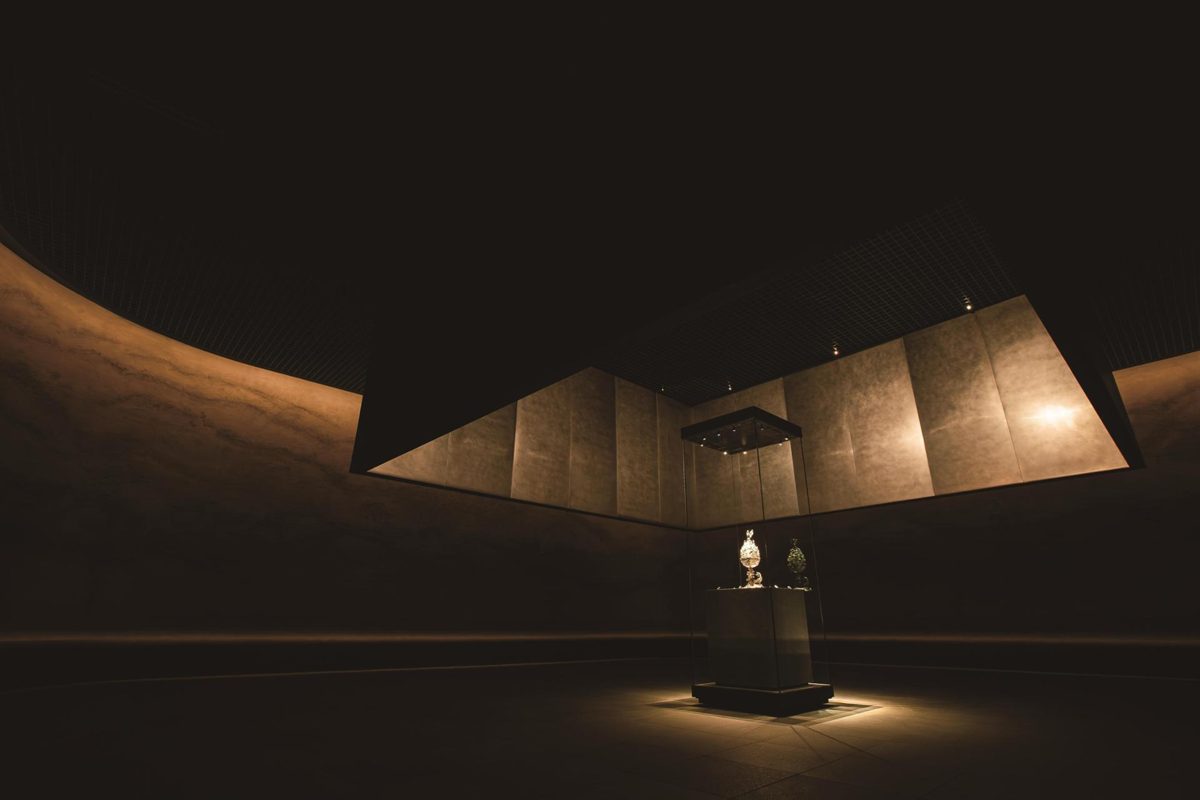
Baekje Kingdom. Gilt-bronze Incense Burner of Baekje.
A gilt bronze mountain over sixty centimetres tall, with musicians, strange beasts and twelve small vents for smoke. Fifteen centuries on, it has a house of its own.
agustine zegers. A toxin threatens, but it also beckons.
Plastic both frightens and attracts. agustine zegers uses polymer fragments, microplastics and a smell of oil extraction to ask what our bodies absorb.
Ade Darmawan. Santalum Album Family.
A state oil drum, an orange gas stove, and the smell of burning sandalwood. Ade Darmawan names a powerful family with the smell of wood.
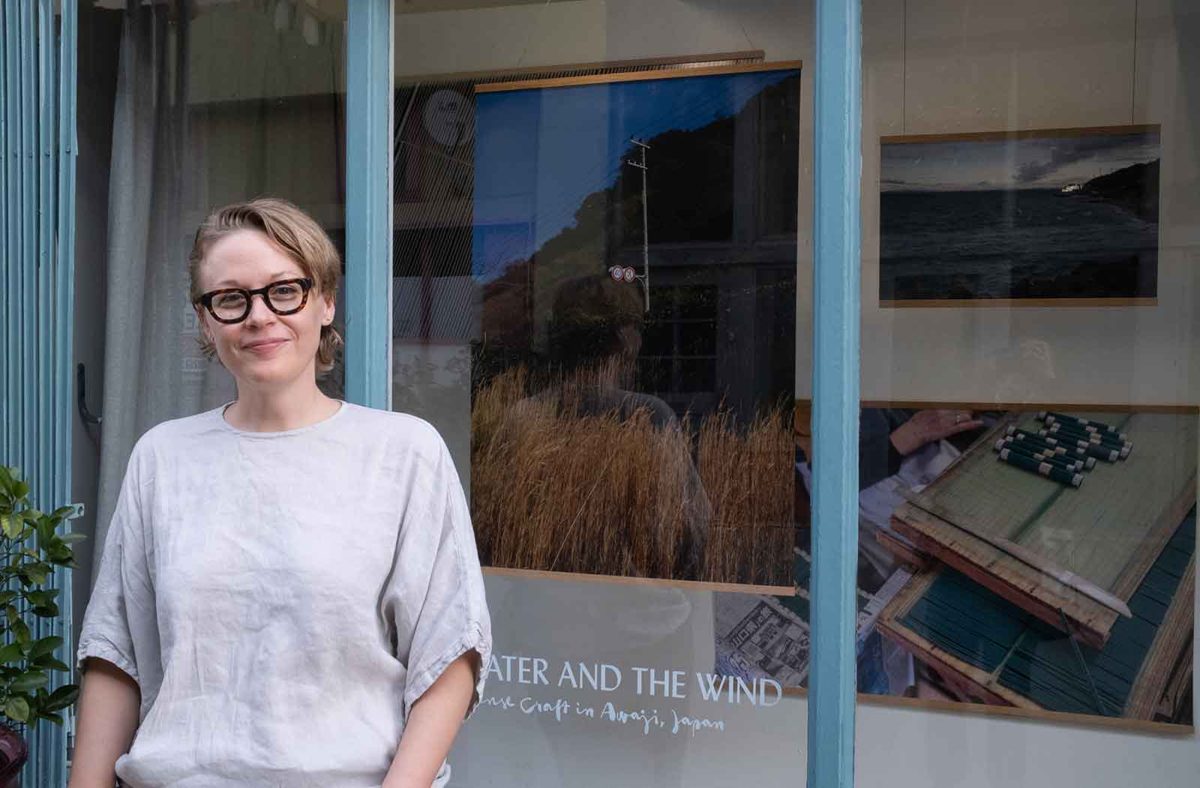
Arianna Petrich. The Water and the Wind: Incense Craft in Awaji, Japan.
Asked about local ingredients, an Awaji incense master answered: the water and the wind. Arianna Petrich records the incense trade of that island.
Azza El Siddique. Echoes to Omega.
Water drips, rises, gathers, falls. Within that cycle, the warm woody smell of Sandaliya, an oil from Sudanese Muslim funerals, fills the cellar.
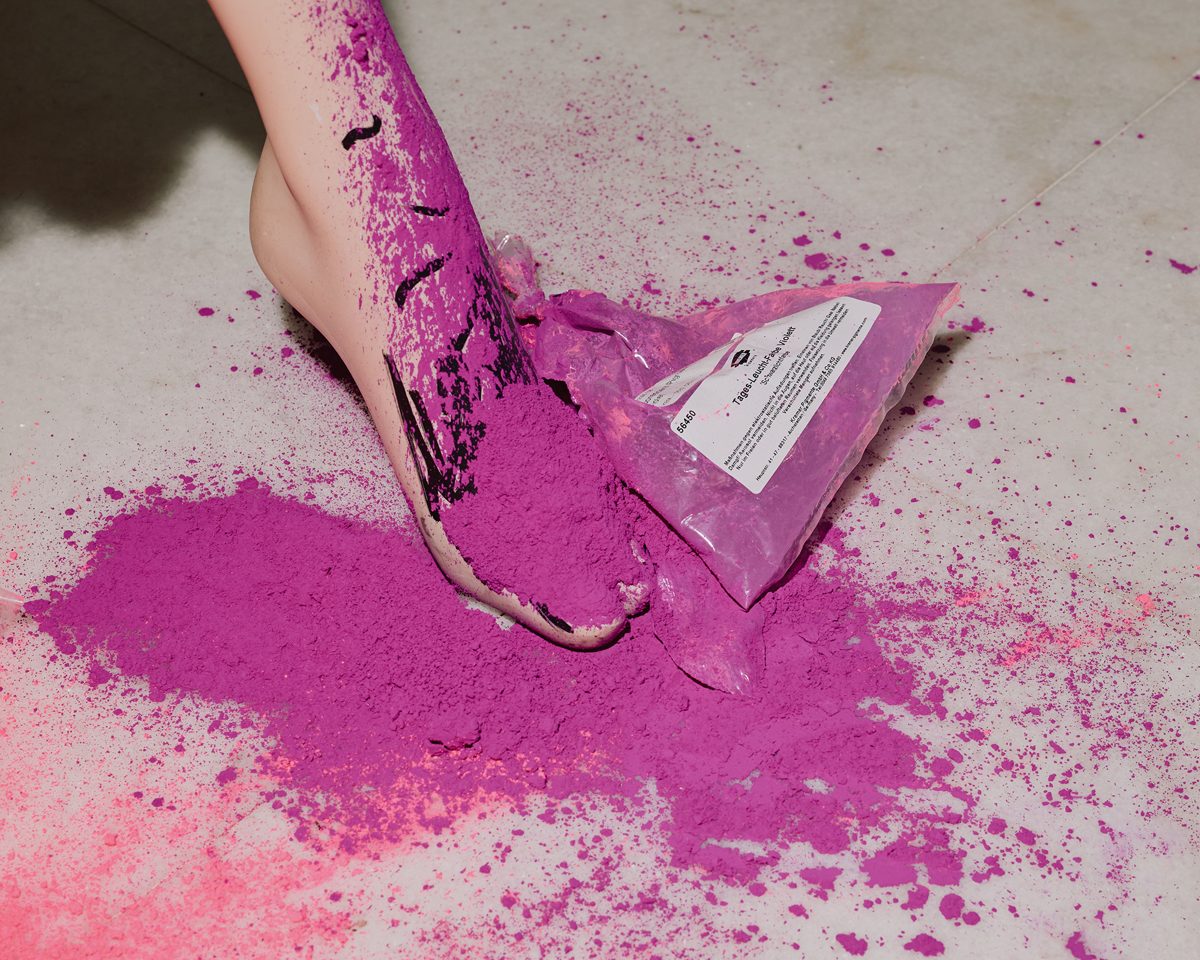
Bjarne Melgaard, Bjørn Kristian Hilberg. Abuse Is the Beauty of the Working Class.
A perfume launch posing as an exhibition, or an exhibition posing as a launch. Beakers, filling machines, broken vials on the floor, and four scents named after people.
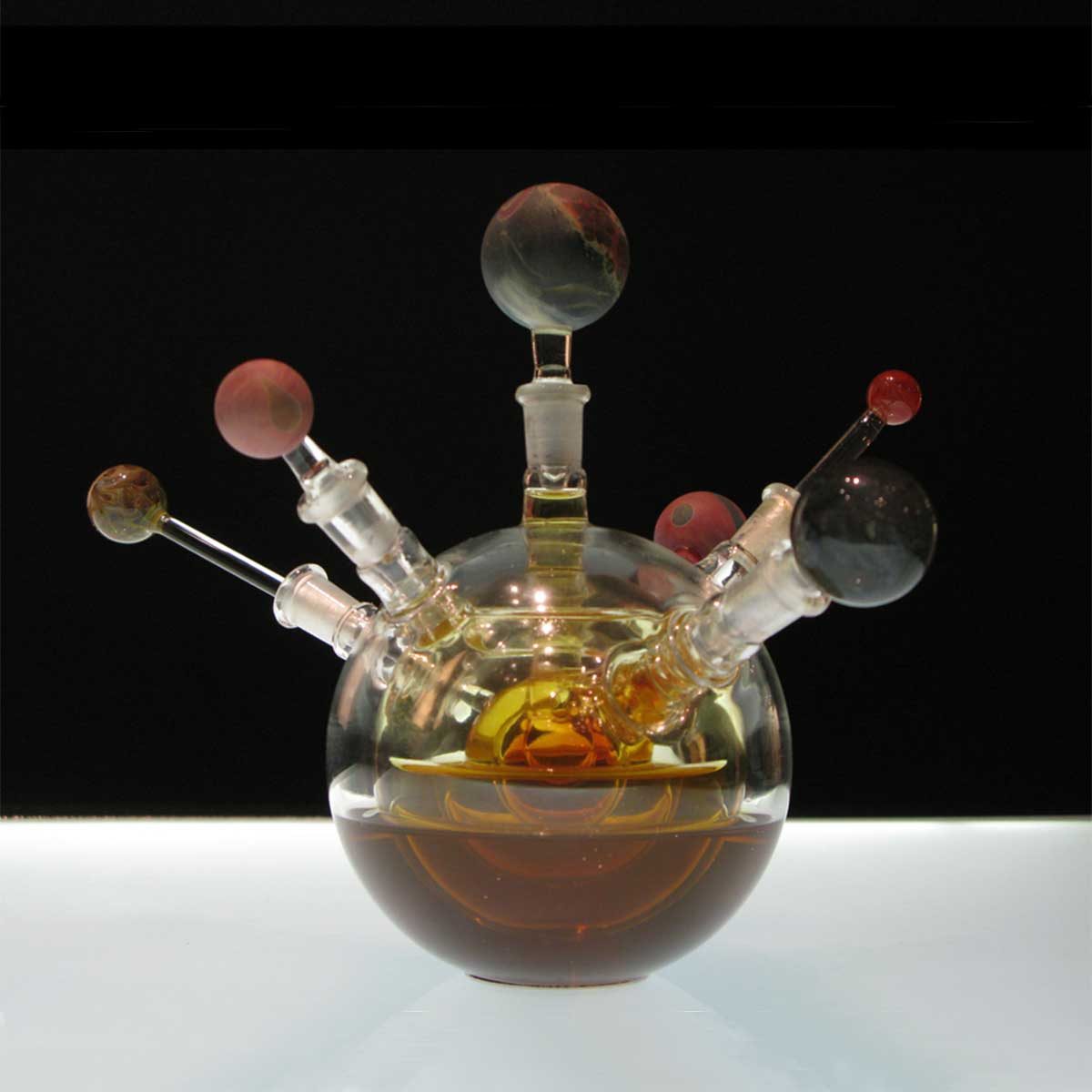
Carrie Paterson. Beneath the Earth, the Sky.
A small tree in a pot, a stone, a stick of incense. Carrie Paterson turns earth and sky upside down to speak of memory and migration.
Cauleen Smith. The Wanda Coleman Songbook.
Four projections covering the walls, a vinyl record, sofas and rugs, and the smell of dry Los Angeles hills. Cauleen Smith reads Wanda Coleman with every sense.
Chakaia Booker. Empty Seat.
Open the door and there is rubber, the smell of garages and factories. Only then the twisted black tyre forms, like beings trying to leave the wall.
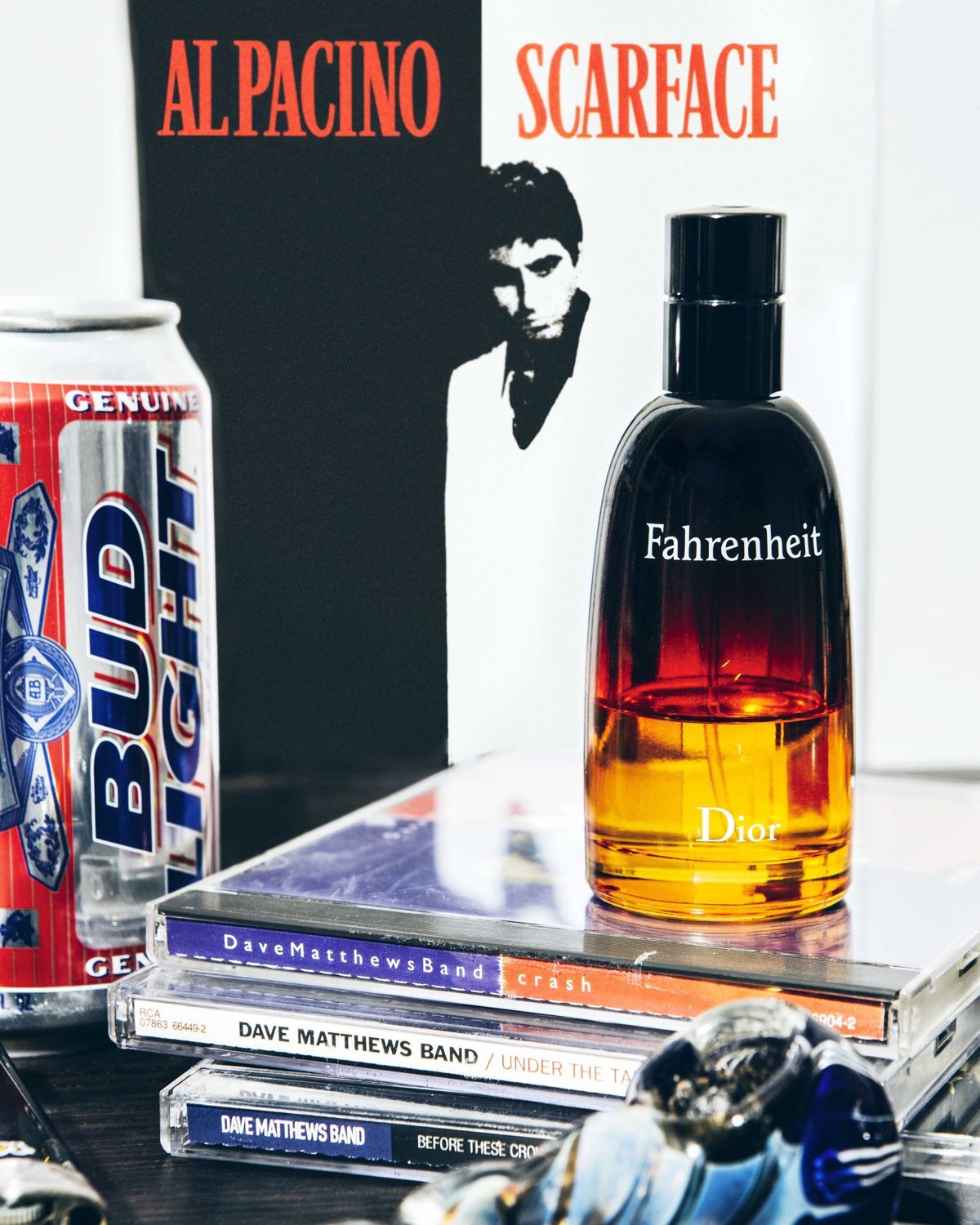
Elizabeth Renstrom. Basenote Bitch.
In New York in 2024, Elizabeth Renstrom photographed the perfumes teenagers loved, then let visitors spray and smell them again.
Gala Porras-Kim. The motion of an alluvial record.
Humidity at 84 percent, heavy air on the skin. In the middle, a long trough of Yucatán swamp clay, wet and fragrant, an archive still in motion.
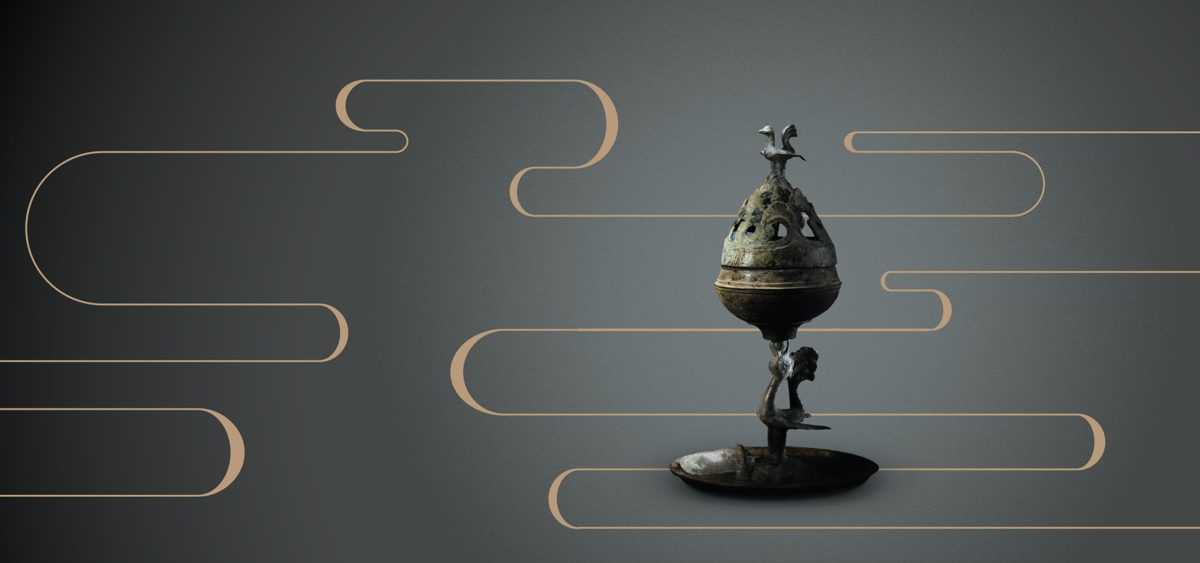
In Search of Chinese Art of Scent.
A hundred and sixty sets of objects about scent, from a Han bronze censer to Qing carved lacquer, and three Hong Kong artists making scent for today.
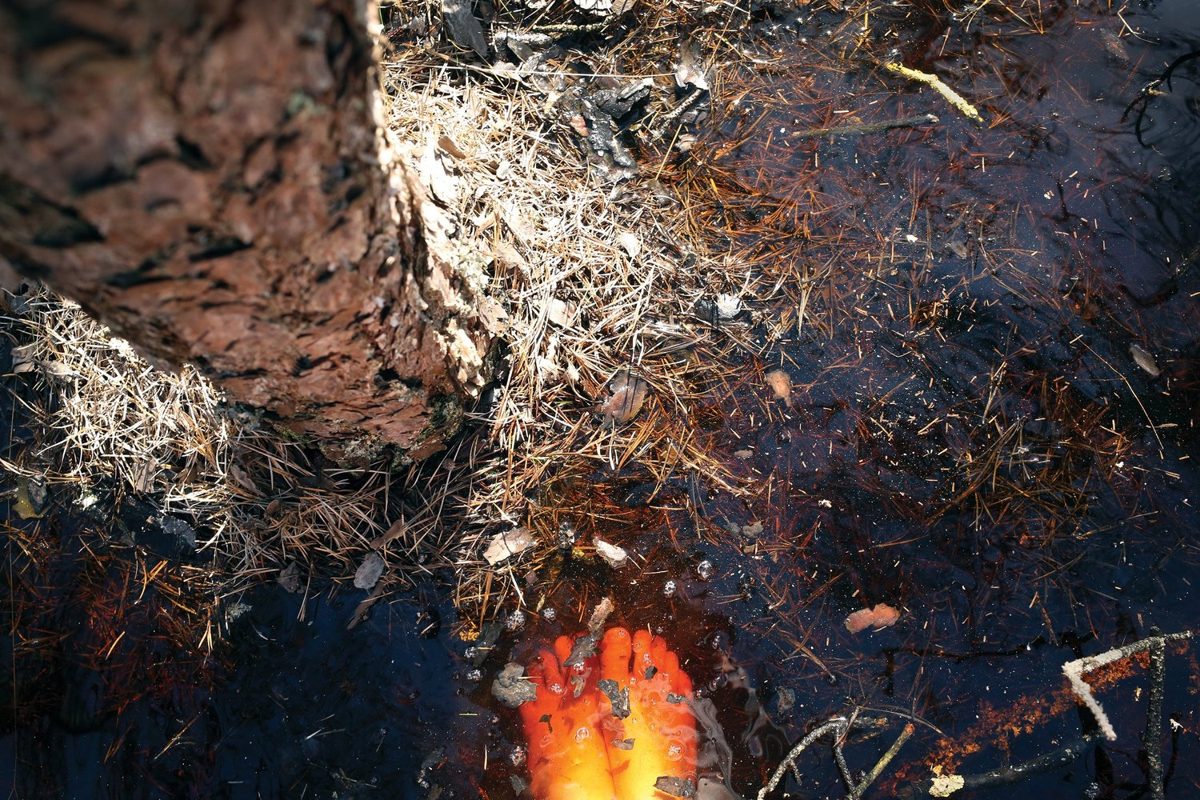
Irina Adam. Pitch Pine Pollen: A Transforming Forest.
Irina Adam drew scent from the Long Island Pine Barrens, where beetles are turning the pines red, and set it beside photographs of the same forest.
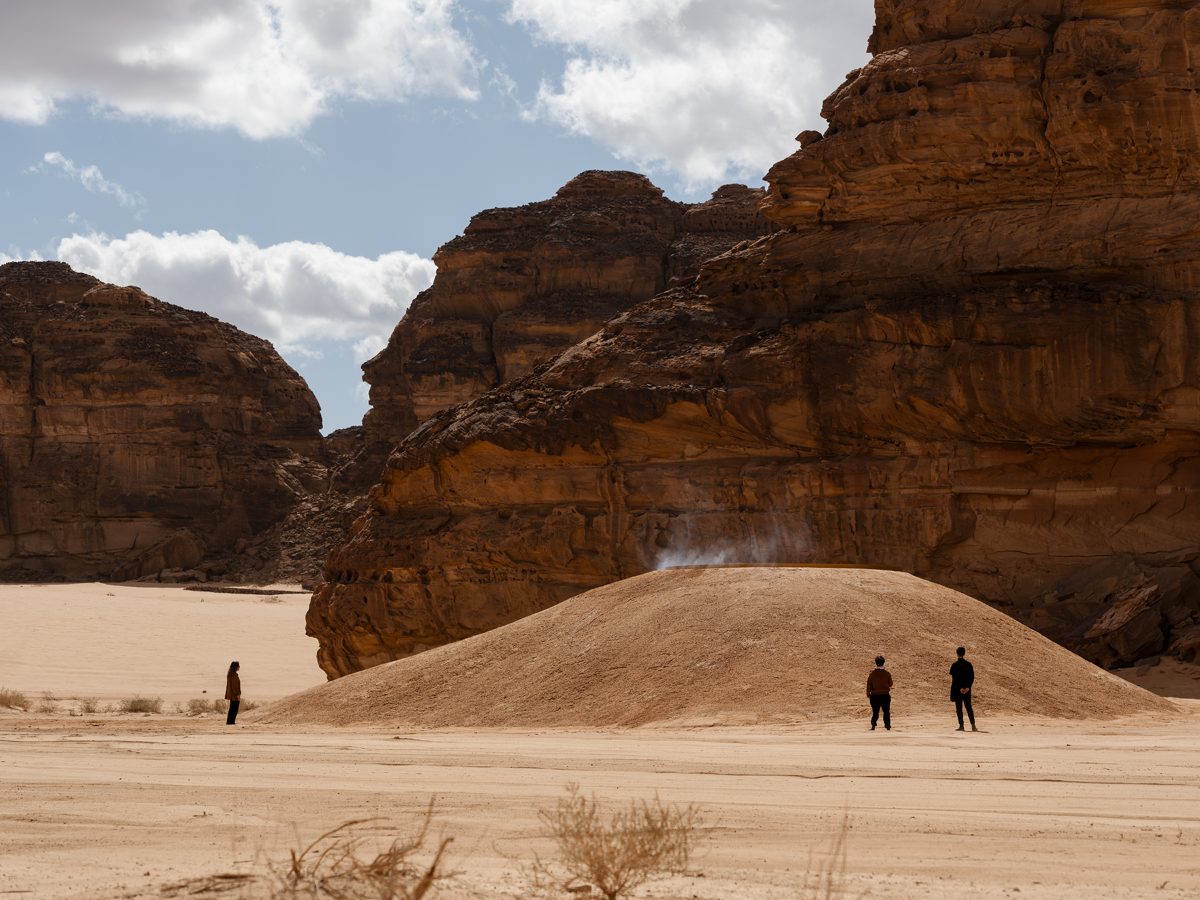
Karola Braga. Sfumato.
A temporary sand structure, eleven thousand incense cones, and wind. Sfumato lets the desert carry the smell away, then leaves nothing behind.
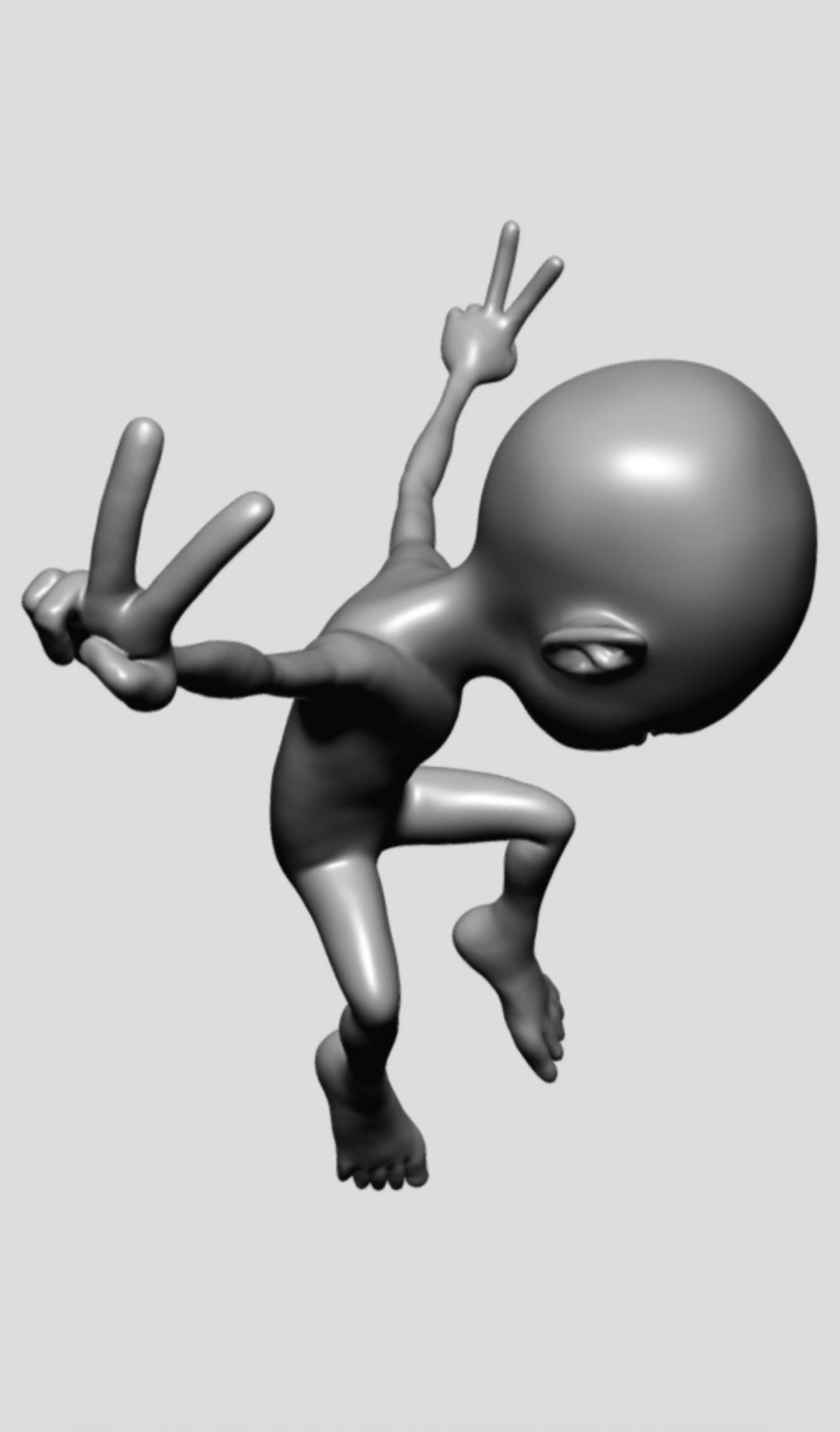
Koo Jeong A. ODORAMA CITIES.
A country retold through rice, fog and a public bath. No map. No borders.
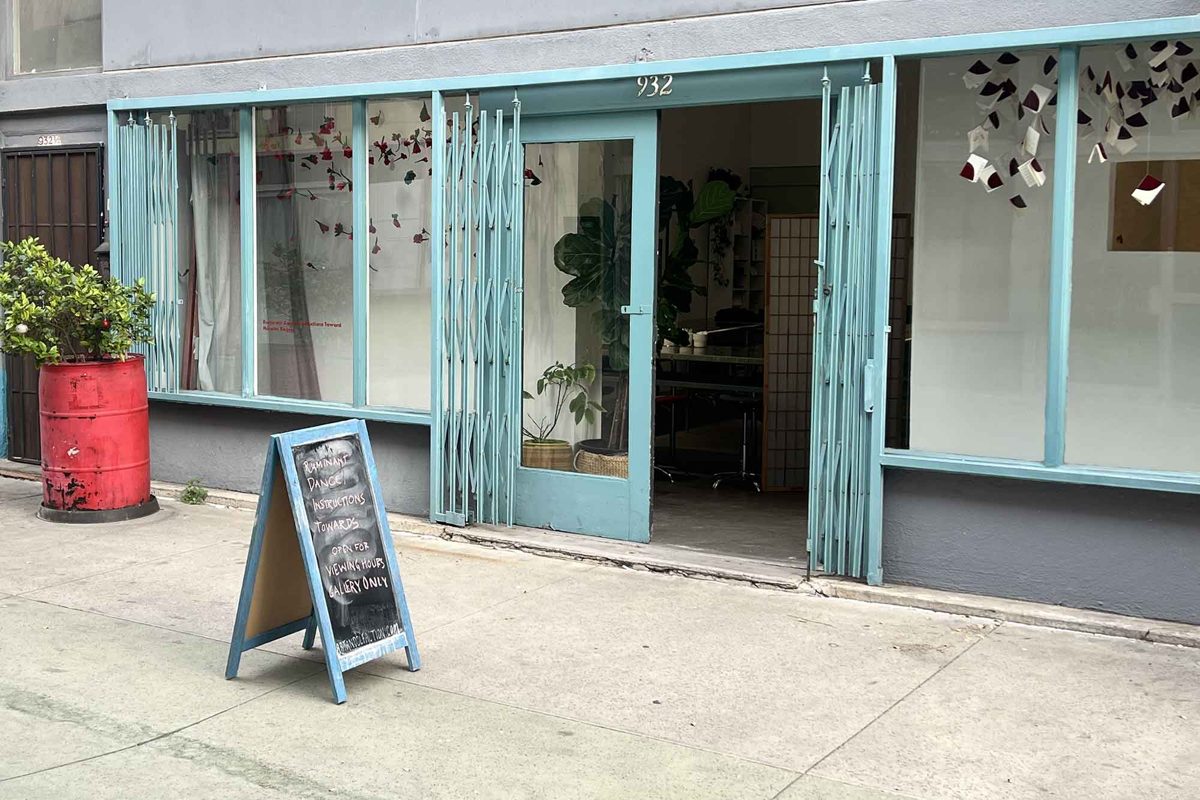
Minetta Rogers. Ruminant Dance, Instructions Towards.
A century after the dance where M.F.K. Fisher first ate raw oysters, Minetta Rogers rebuilds that night in jelly, paper and scent.
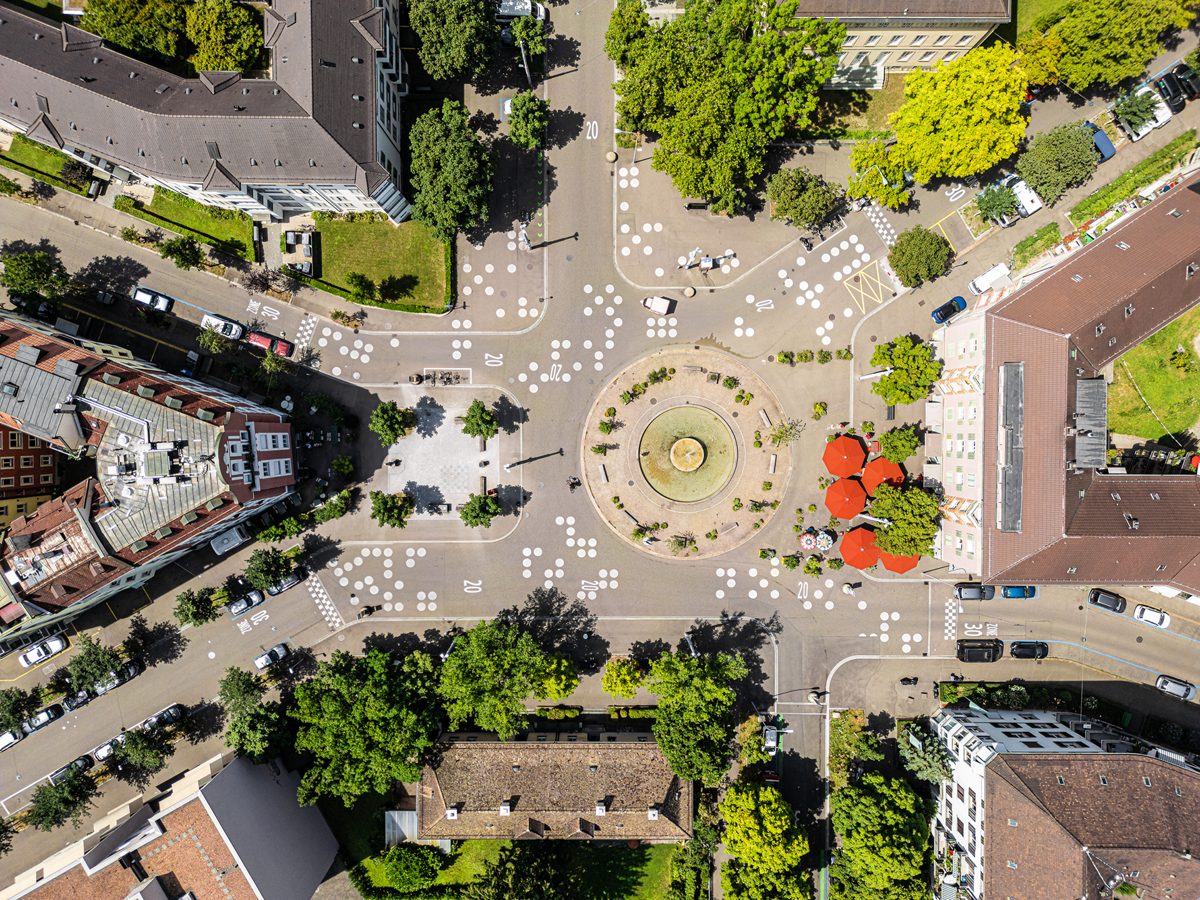
Olivia Wiederkehr, Andreas Wilhelm. Schmerzh.
Six squares, six scent vents, three weeks in September. Zürich speaks of the pain it has witnessed, through the noses of passers by.
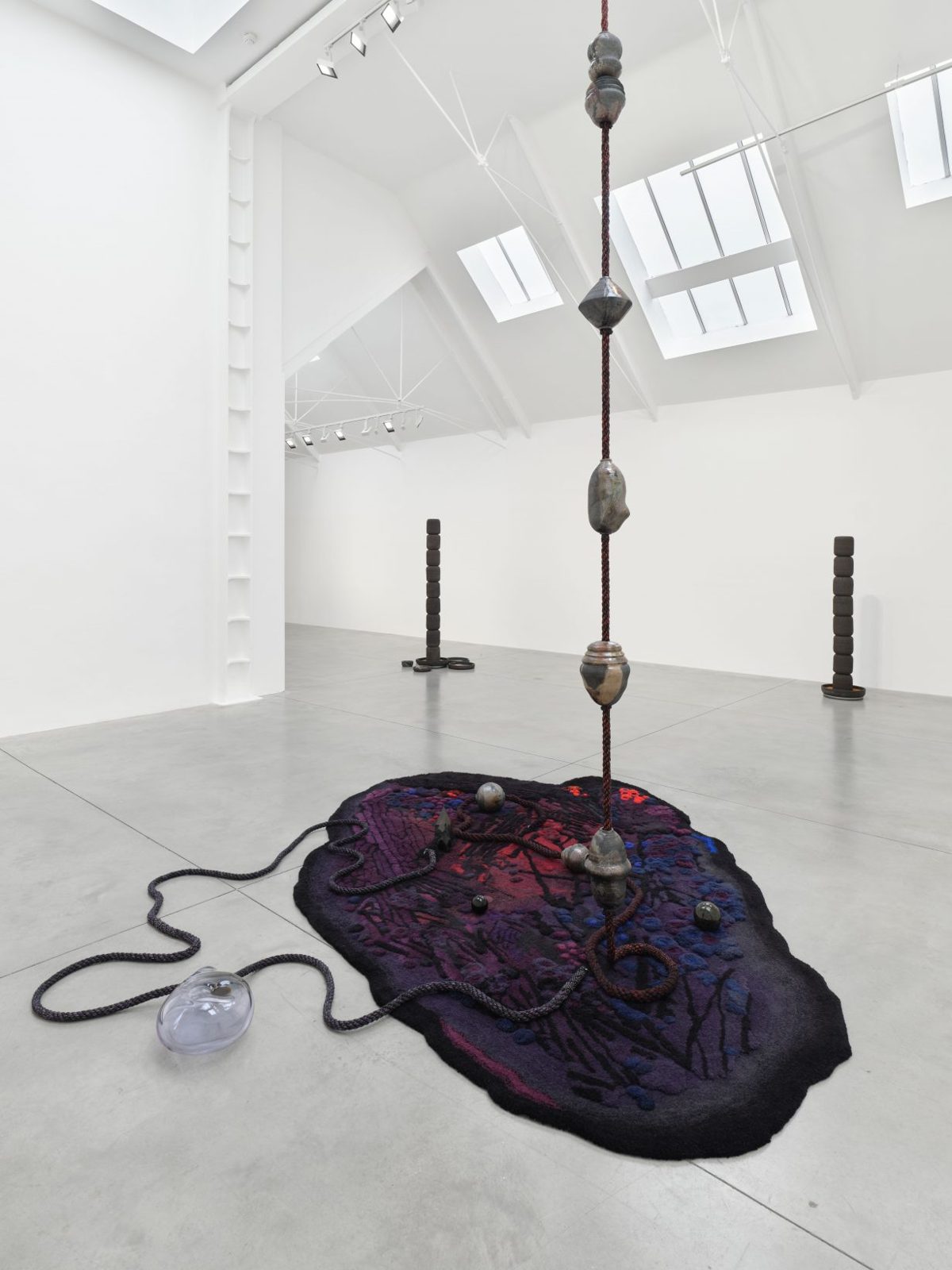
Otobong Nkanga. Beacon: Prominence.
A burnt trunk in ceramic, vessels of dried plants at its foot. Come close and there is lavender. Fire passes; the smell remains.
Sara Siestreem (Hanis Coos). milk and honey.
Baskets of cedar bark, sweetgrass and spruce root in a New York gallery. Up close, you smell them before you understand them.
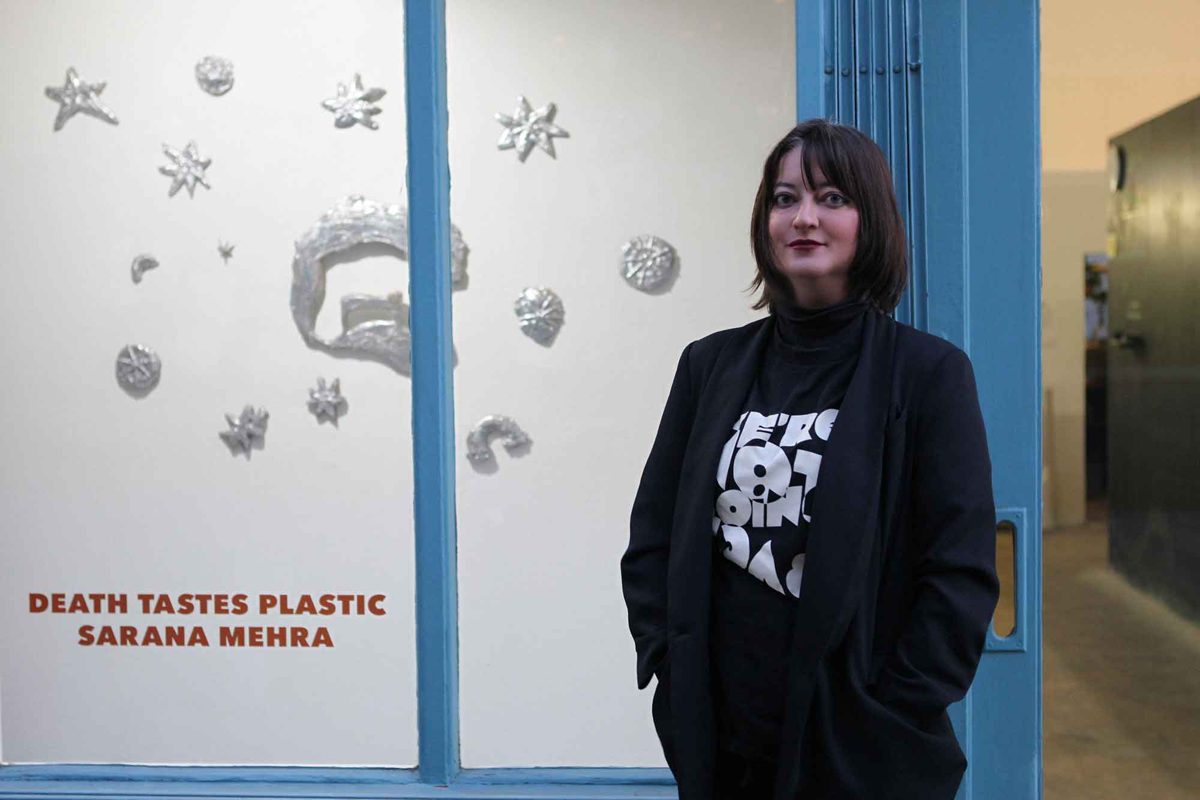
Sarana Mehra. Death Tastes Plastic.
After private losses, Sarana Mehra set votives beside machines, belief beside science, and added the smell of a hospital room.
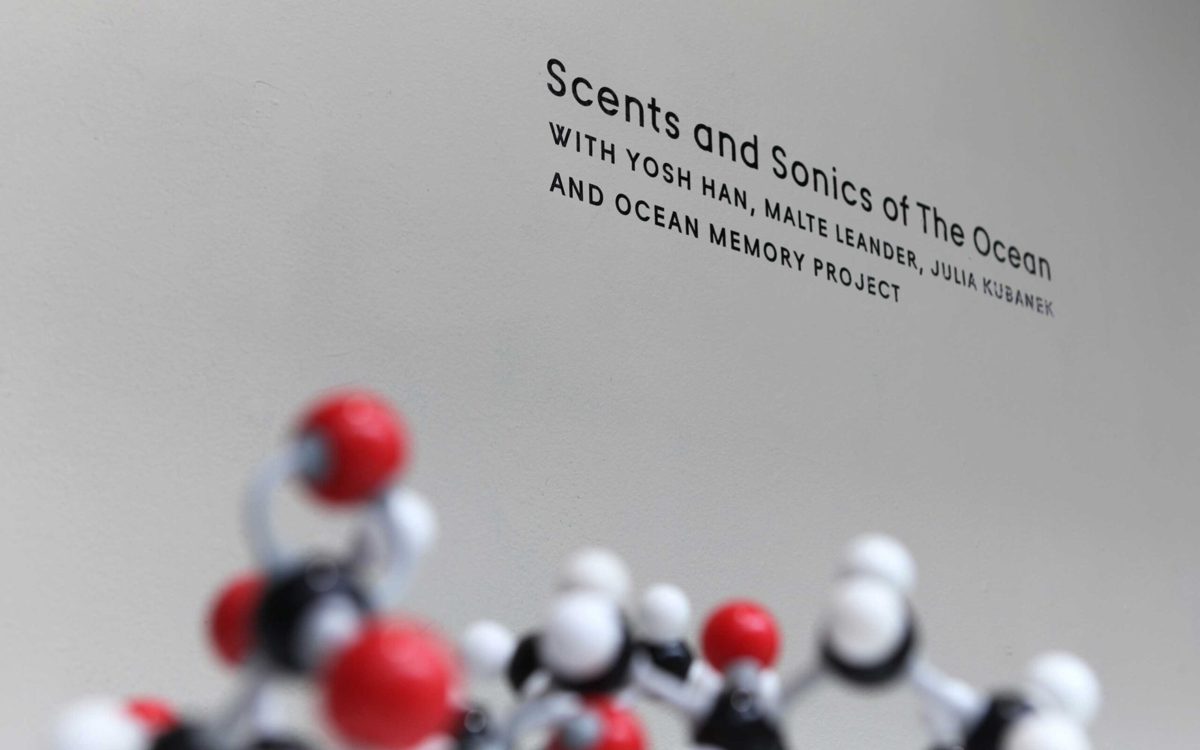
Scents and Sonics of The Ocean.
Scent molecules from an island off the Georgia coast are read by a spectrometer, then heard as sound. The ocean's memory passes through three languages.
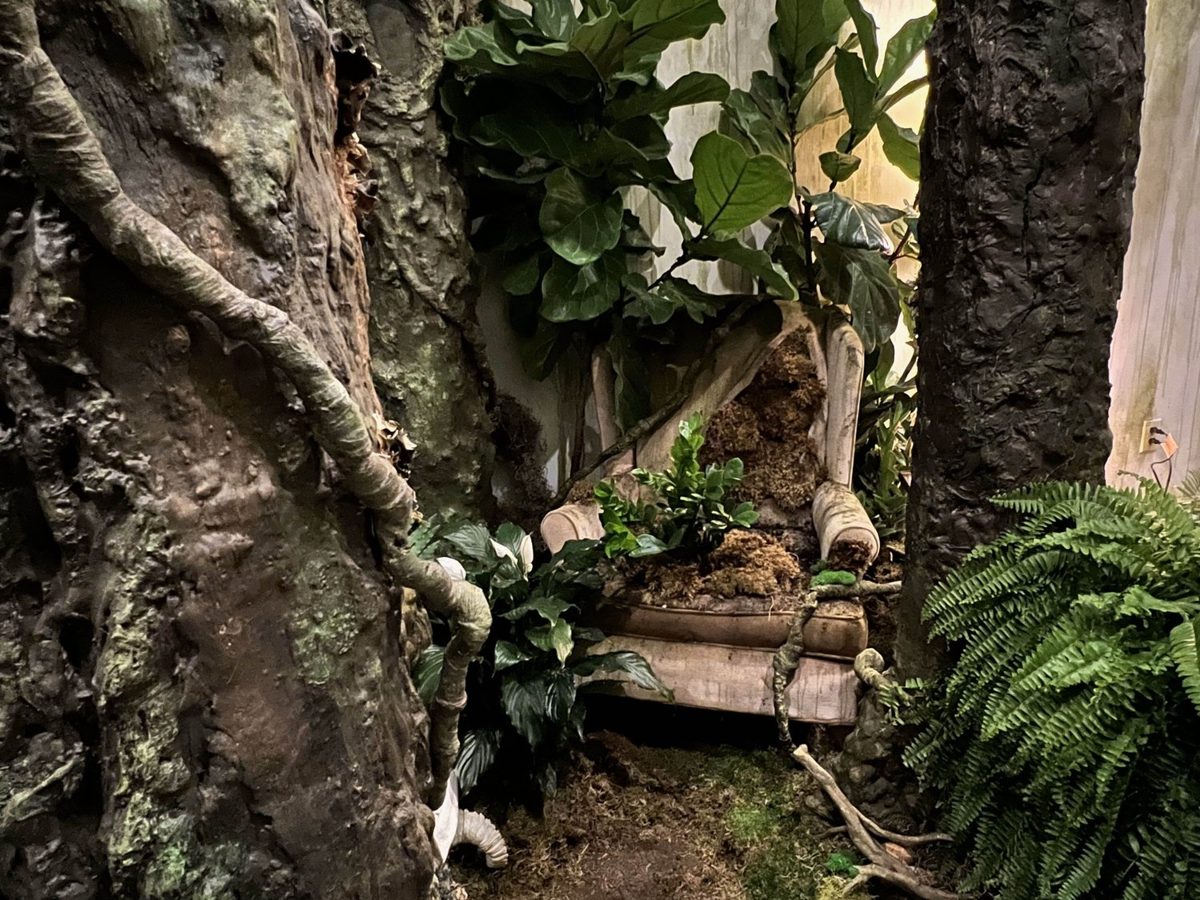
Alexis Karl. The Exquisite Inevitable.
From the set of a folk horror film, Alexis Karl built a forest swallowing furniture in the gallery, with moss, soil and the smell of decay.
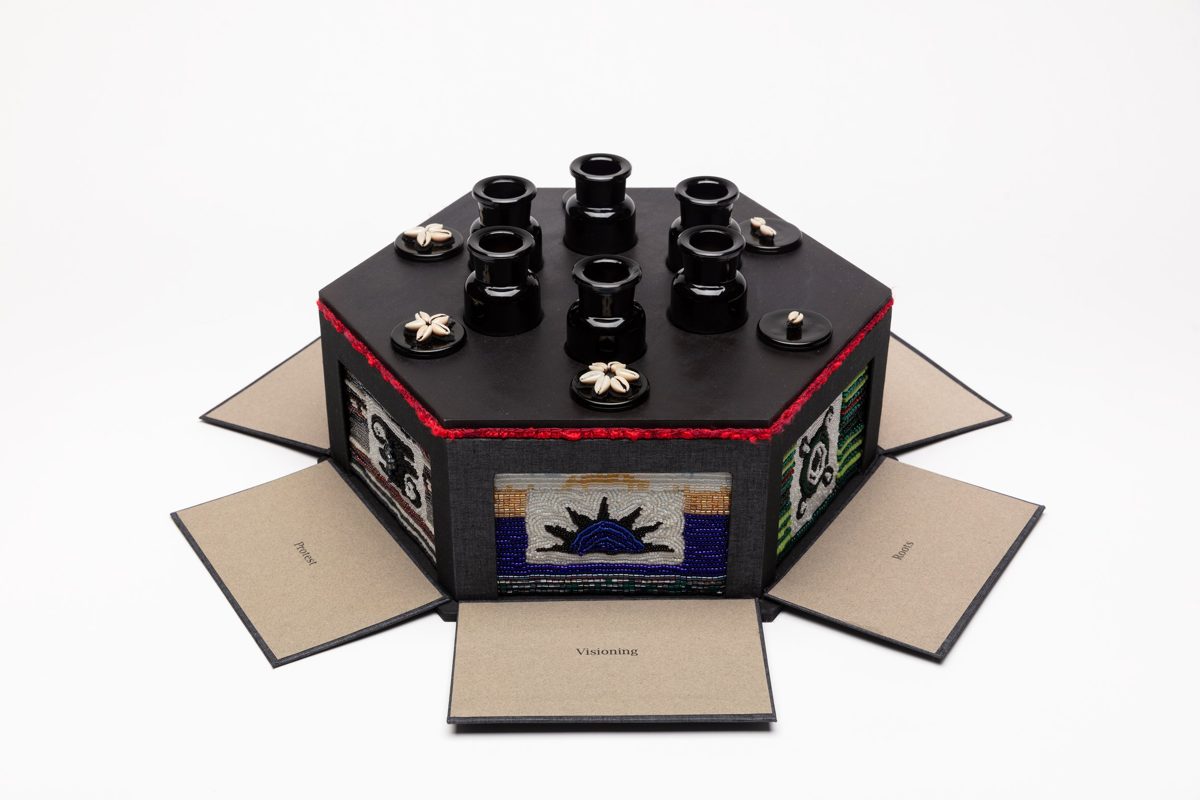
Alisa Banks. History of a People.
A folding book opens into six glass jars. Each holds a scent blended for one period of African American history, from Roots to Visioning.
Anicka Yi. Walking on Two Paths at Once.
A work made only of smell. Familiar and strange, like the deep sea and a place beyond Earth.
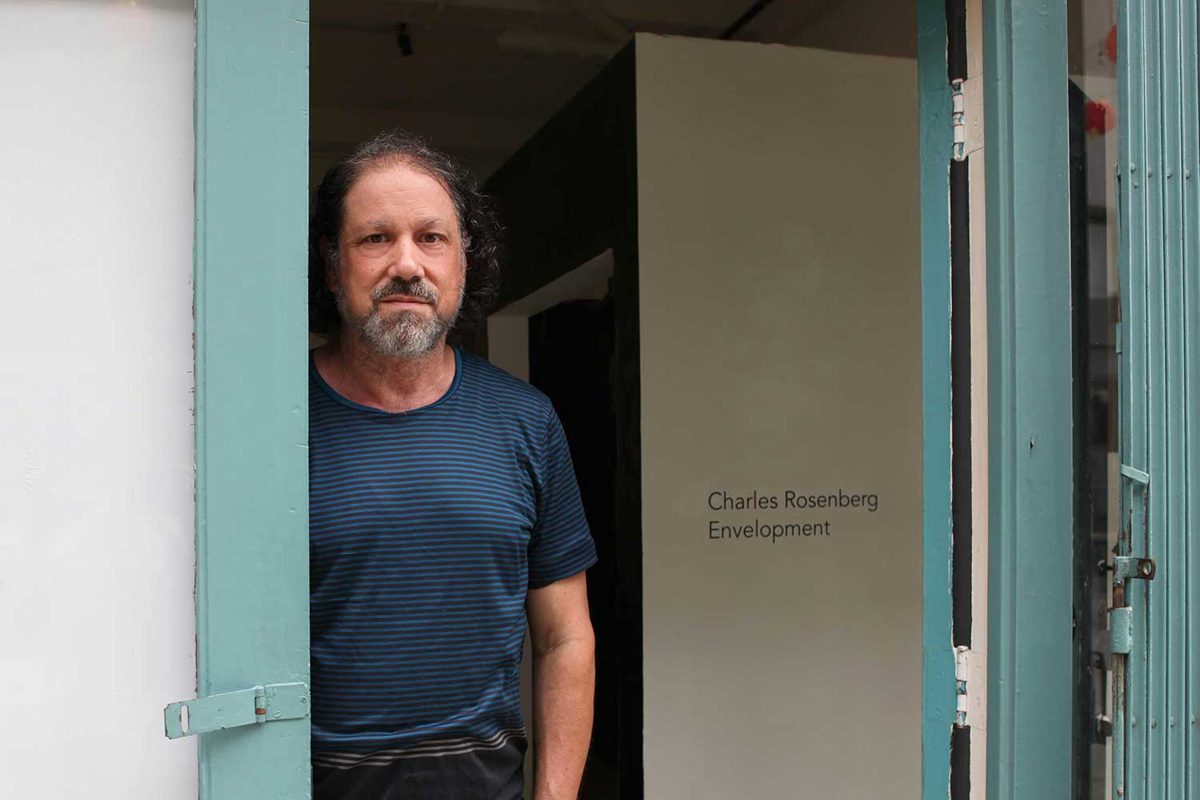
Charles Rosenberg. Envelopment.
Four quilts are not hung on the wall but stood up as spaces to walk into. Three carry scents drawn from their colours. The fourth is deliberately scentless.
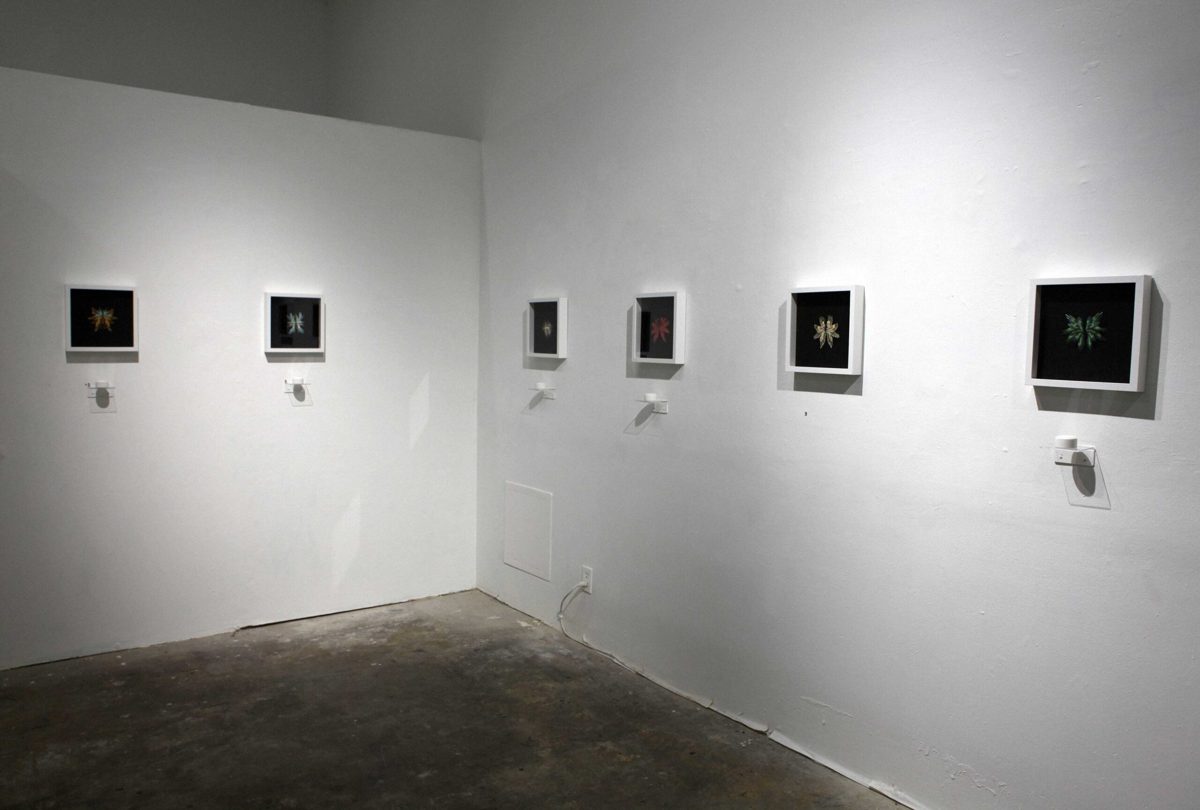
Cristian Marianciuc. Olfactory Peregrinations.
Romanian paper artist Cristian Marianciuc folds jewel-like cranes, each recording how he felt about a perfume at one moment.
Jas Brooks, Pedro Lopes. Smell & Paste.
A roll of paper tape, a few scratch and sniff stickers, a cardboard cassette. Enough to sketch a sequence of smells before building it for real.
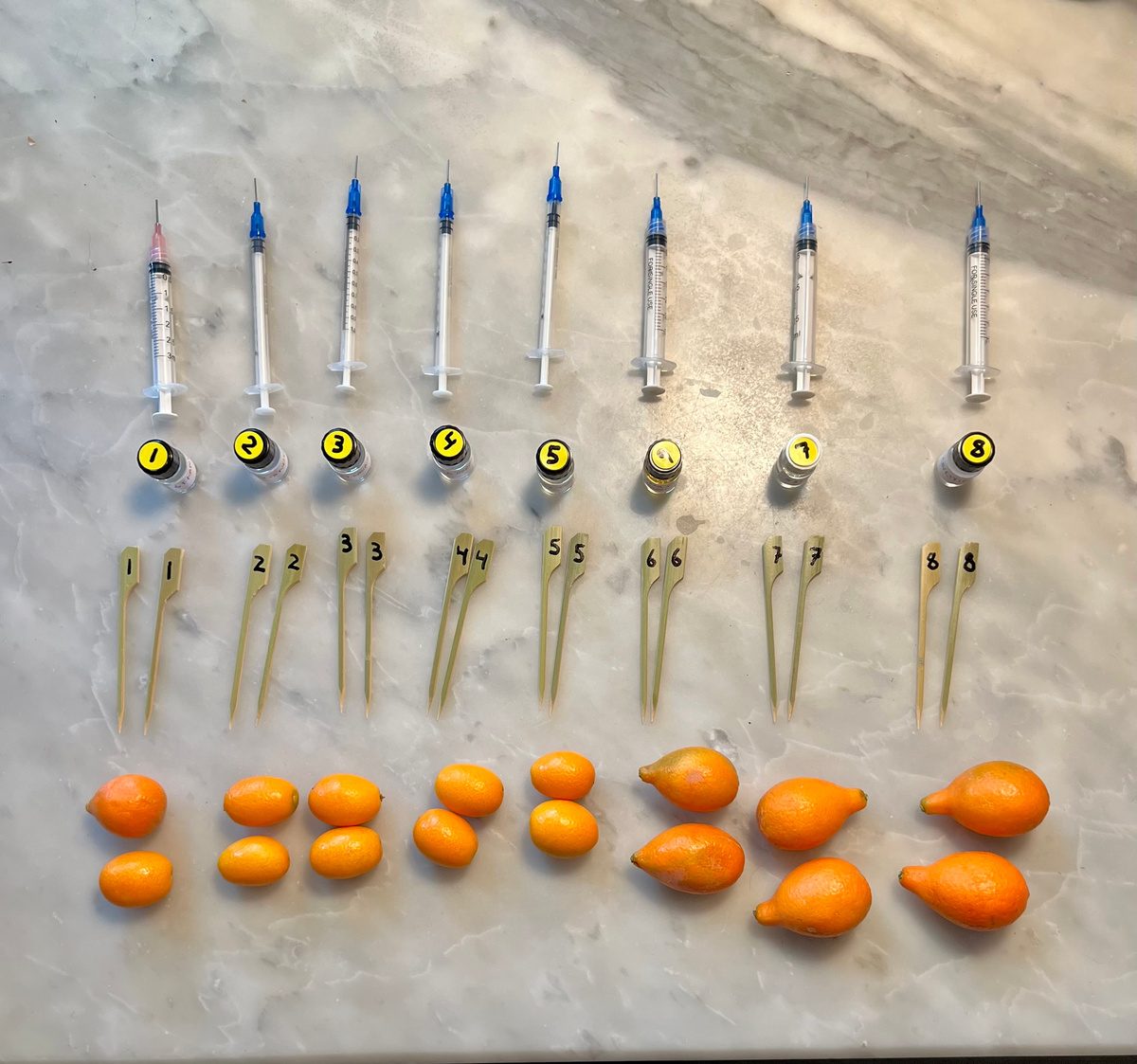
Lion Wintersea / Hannah Marie Marcus. Citromancy.
In 2023, in New York and Los Angeles, Hannah Marie Marcus injected scents into citrus fruit, then read fortunes through smell, sound and poetry.
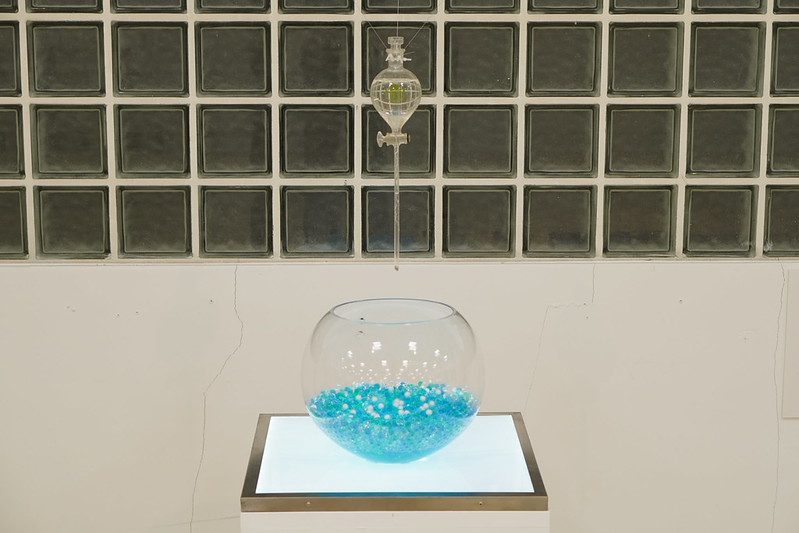
Maki Ueda. That Microplastics Smell Delicious!
Blue balls are the sea, white balls are plastic. About twenty drops a day of a smell that makes plastic seem like food to sea creatures.
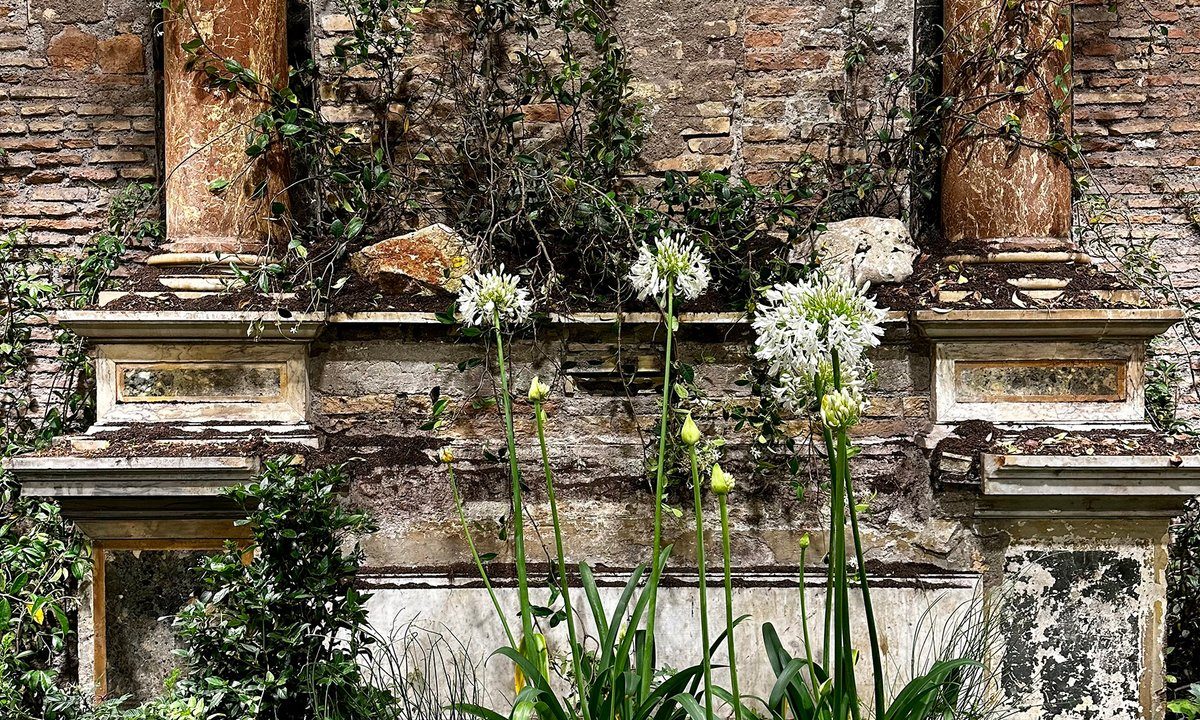
Precious Okoyomon. the sun eats her children.
Jasmine, honeysuckle, lilies and poisonous plants grow in a ninth century chapel. In the middle, an animatronic bear lies on its side.
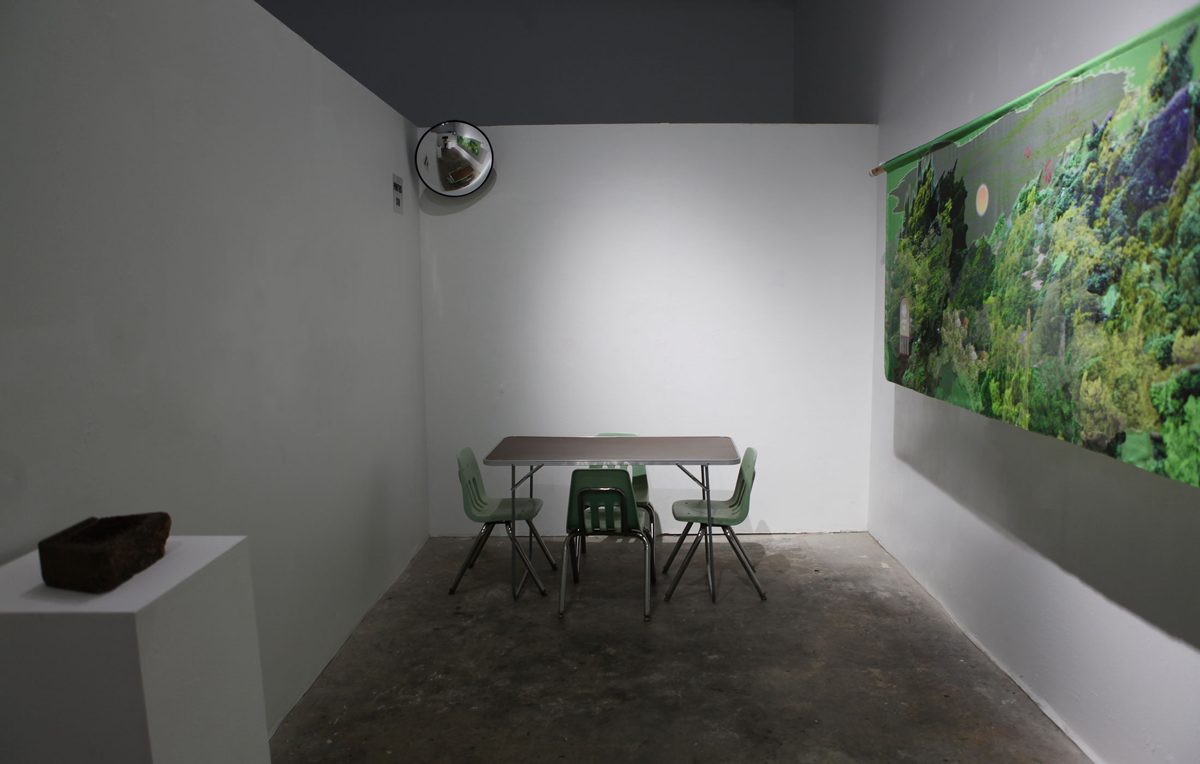
Se Young Au. A Clearing.
In prison visiting rooms, people pose for photos before a painted forest. Se Young Au took that backdrop and gave it a smell.
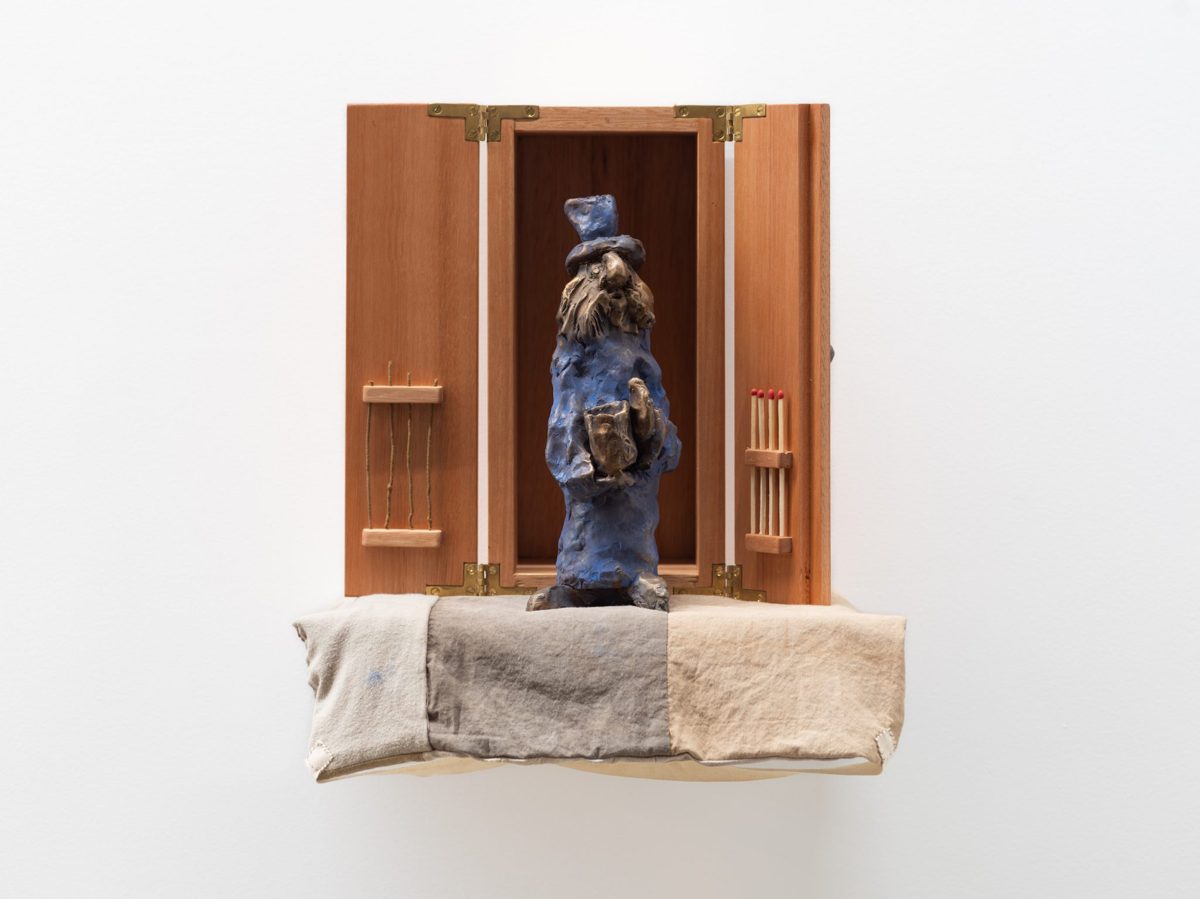
Tamara Henderson. Continuity the bronze wizard approves.
A bronze figure 28 cm tall, with a eucalyptus wood box, eucalyptus-dyed cloth, incense and matches. A small work whose smell fills the room.
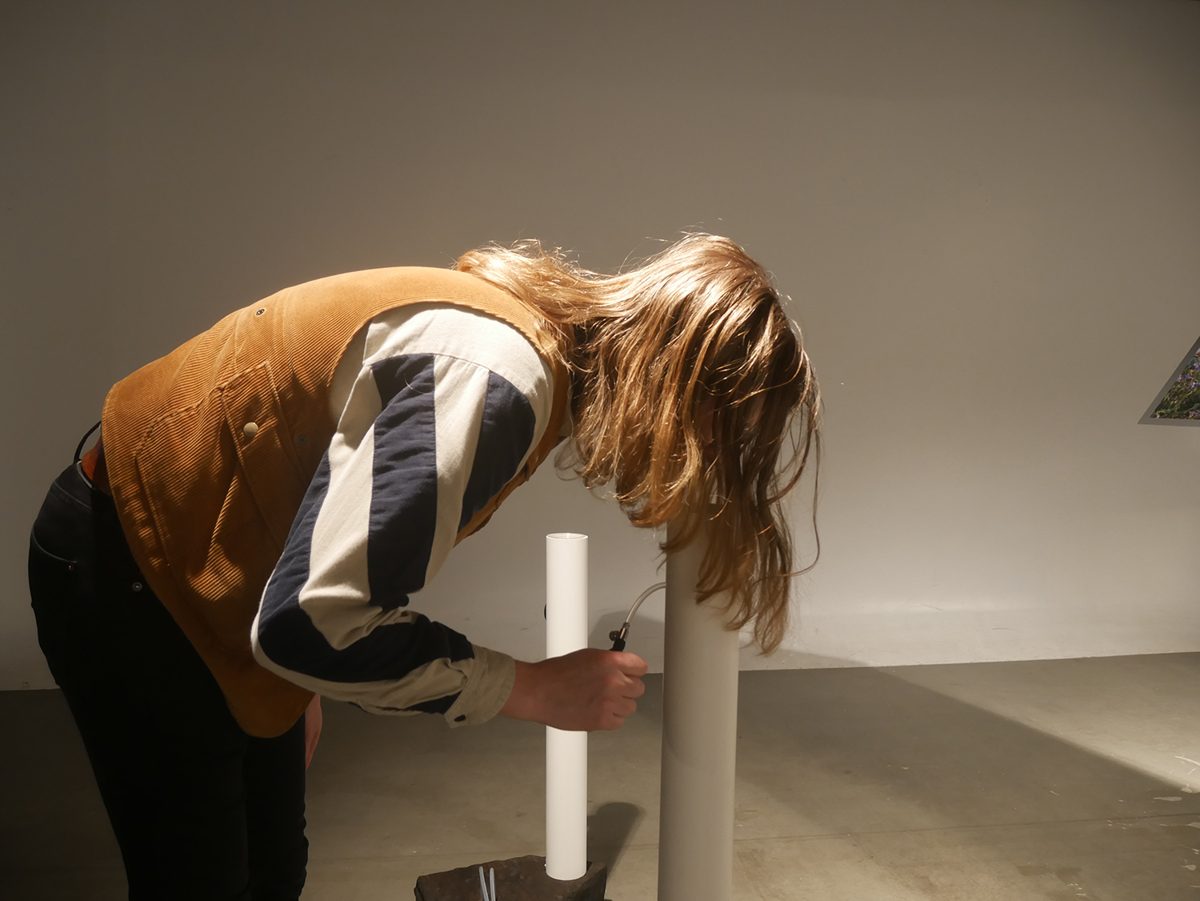
lindsey french, Alex Young. Scent Poems for Pipeline Plants.
Along more than 1,600 km of pipeline from Edmonton to Superior, lindsey french and Alex Young left ceramic vessels of scented oil, written in the language of plants.
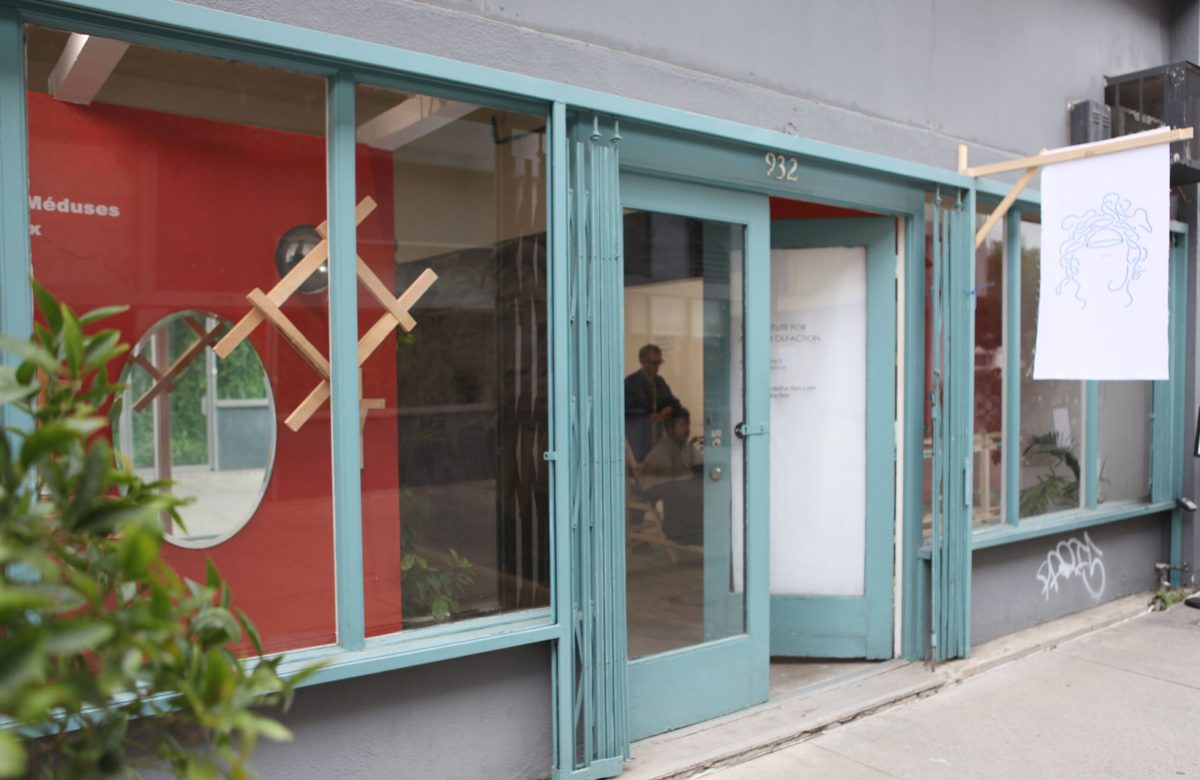
Boris Raux. La Fabrique des Méduses.
An artist washes visitors' hair. The water is kept, set into gel, and slowly evaporates in the room. The smell of a person stays longer than the person.
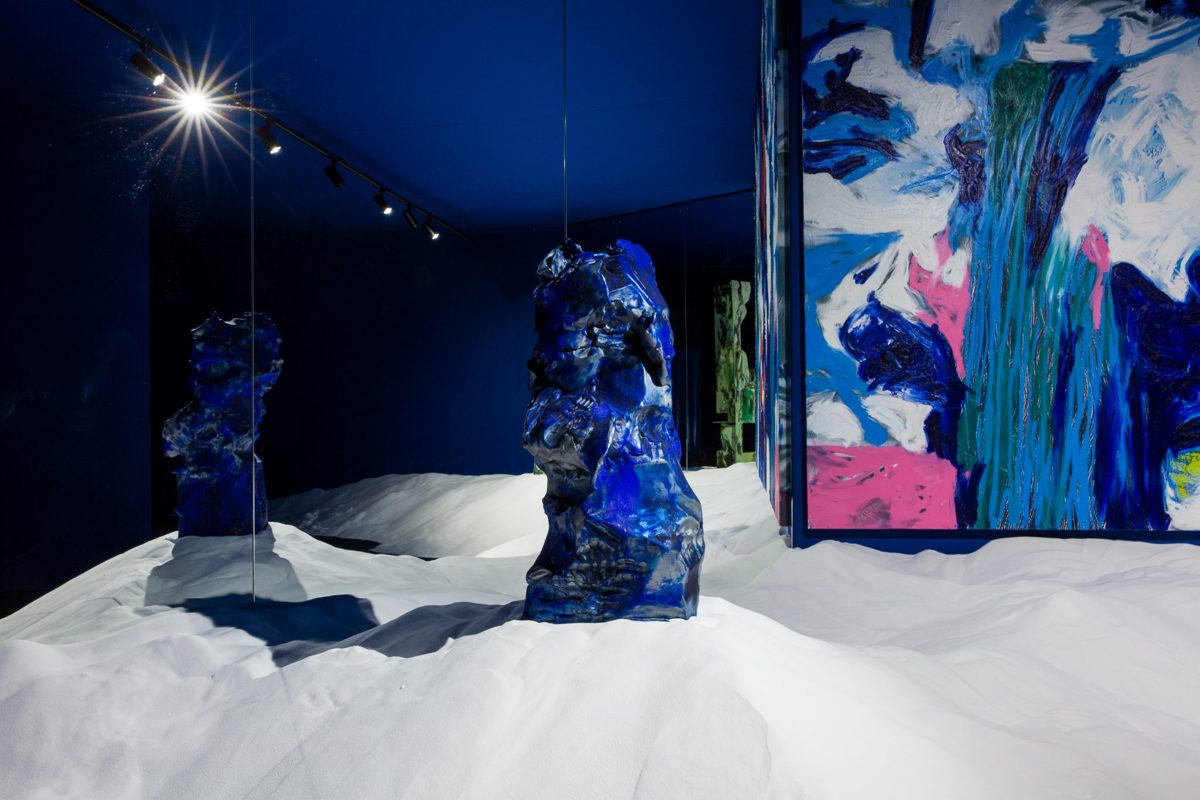
Donna Huanca. CUEVA DE COPAL.
A triangular room covered in white sand, four paintings in oil and sand, water, wind and a woody scent made by the artist.
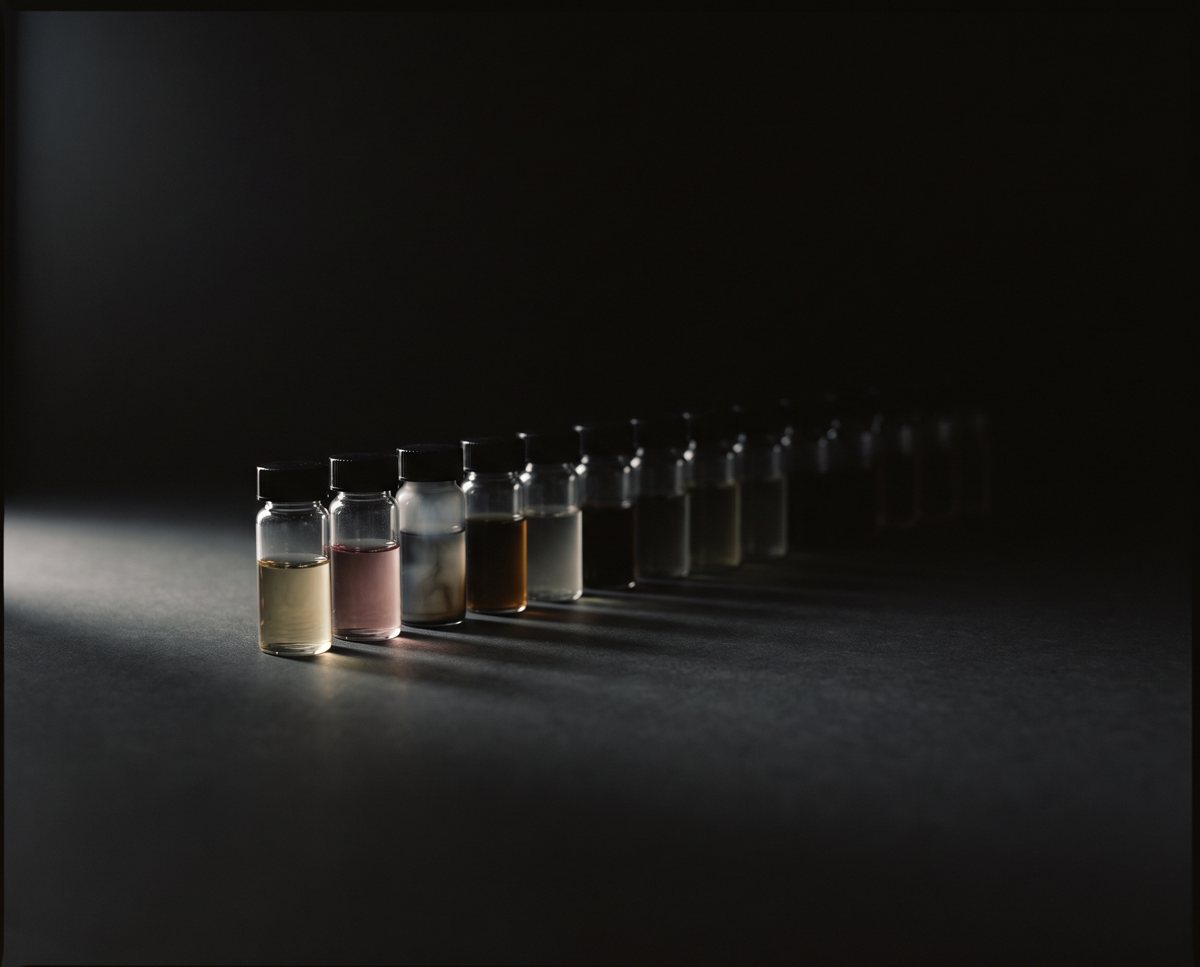
Flankers. A scent and its copies.
A familiar bottle, then a stronger one, a lighter one, a summer one. Flankers stretch a name. Penta asks: how many variations before an object is no longer itself?
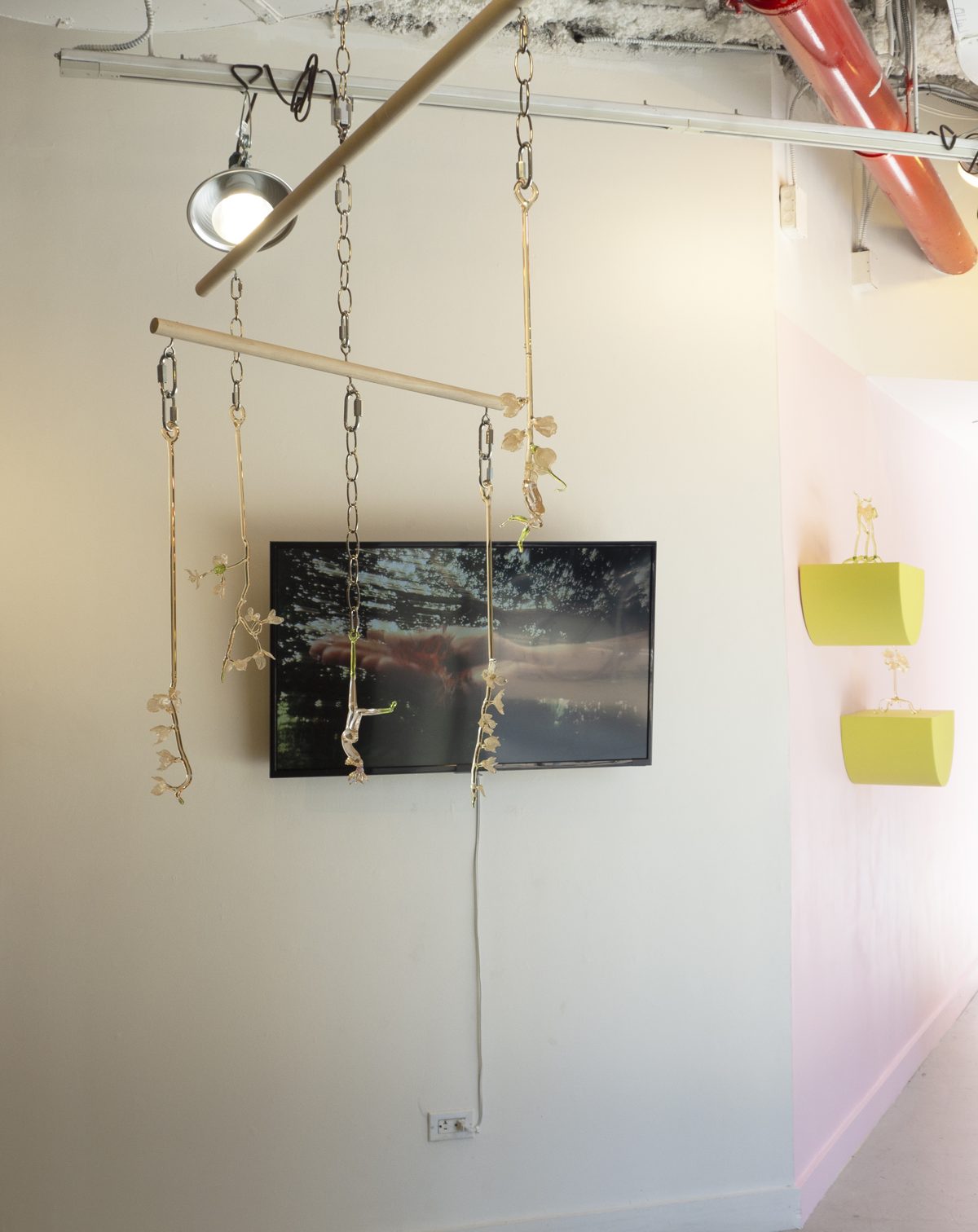
Goldie Poblador. Fertility Flowers.
Female figures rise from glass petals as the smell of night flowers fills the room. Goldie Poblador rewrites the flower legends of the Philippines.
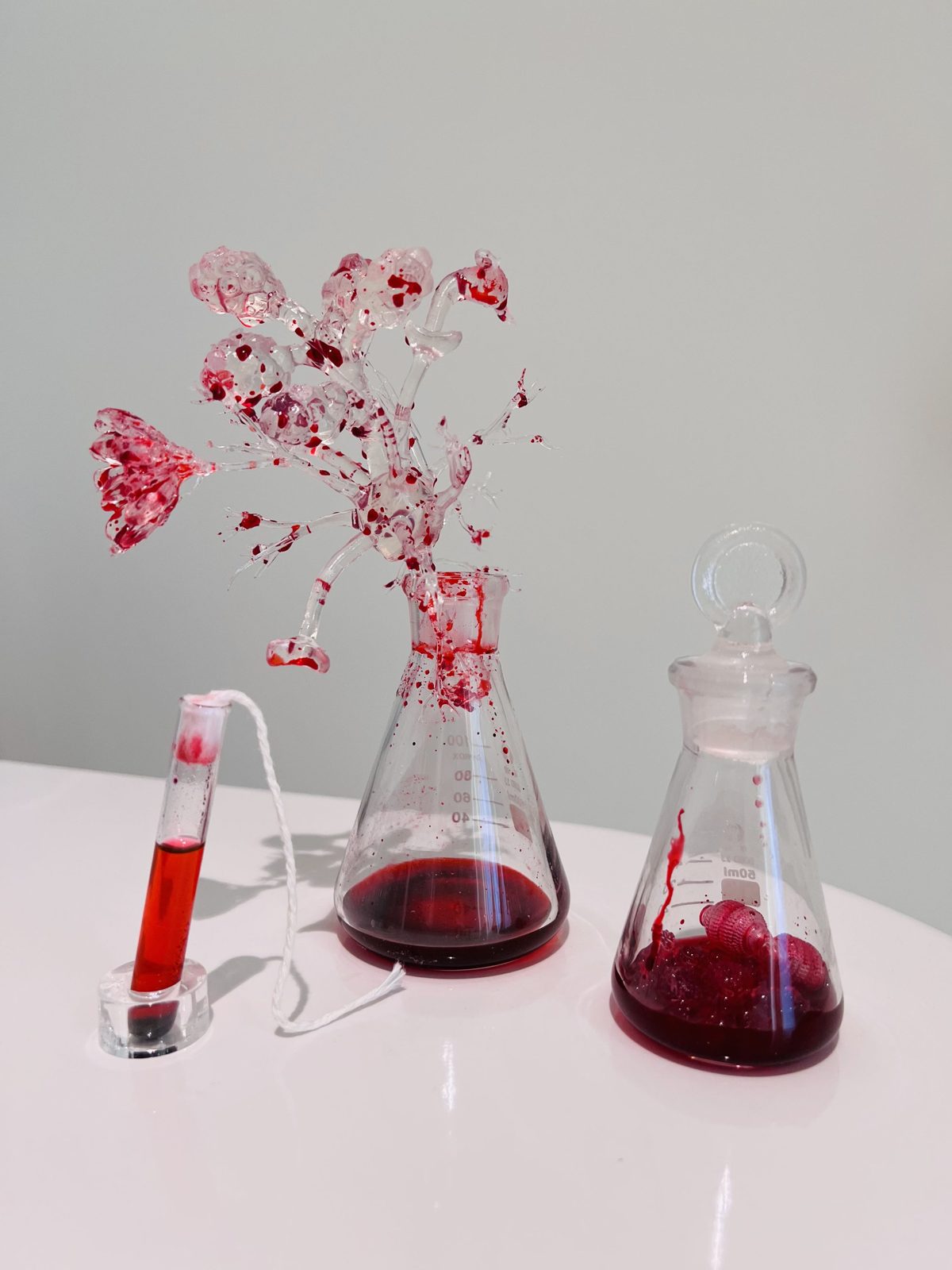
Jiabao Li. Menstrual Garden.
The smell of fresh menstrual blood, of stagnant blood, of cramps. Jiabao Li brings all three into a gallery, beside ten 3D printed proteins.
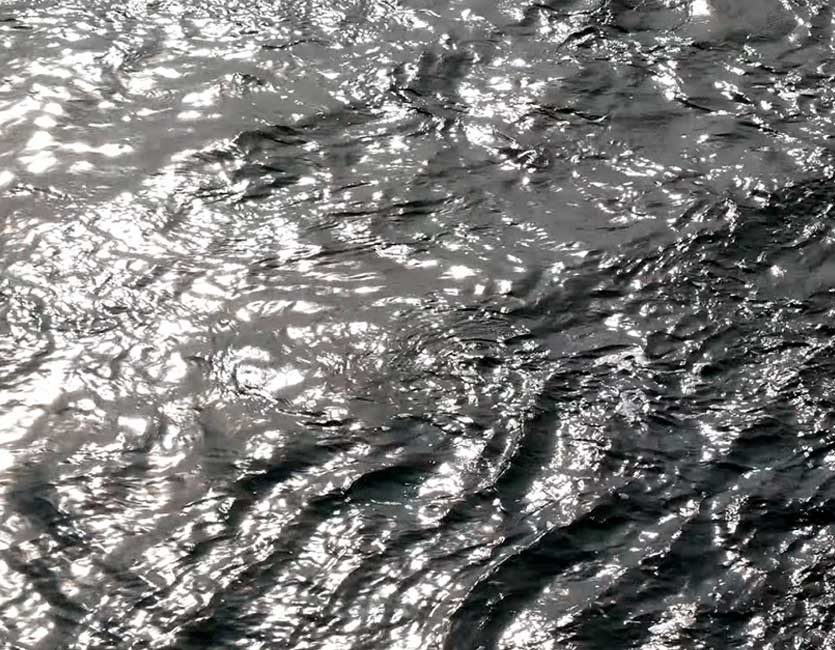
Joe Merrell. The Fragility of Complex Things.
Over two pandemic years, Joe Merrell turned inward. The result: video, prints, a gumball machine holding gardenias, and two perfumes.
Jonathan Baldock. Grave Goods.
Nine ceramic vessels with fingers and feet, holding funerary herbs. Weeks after opening, the smell was nearly gone. That too is part of the work.
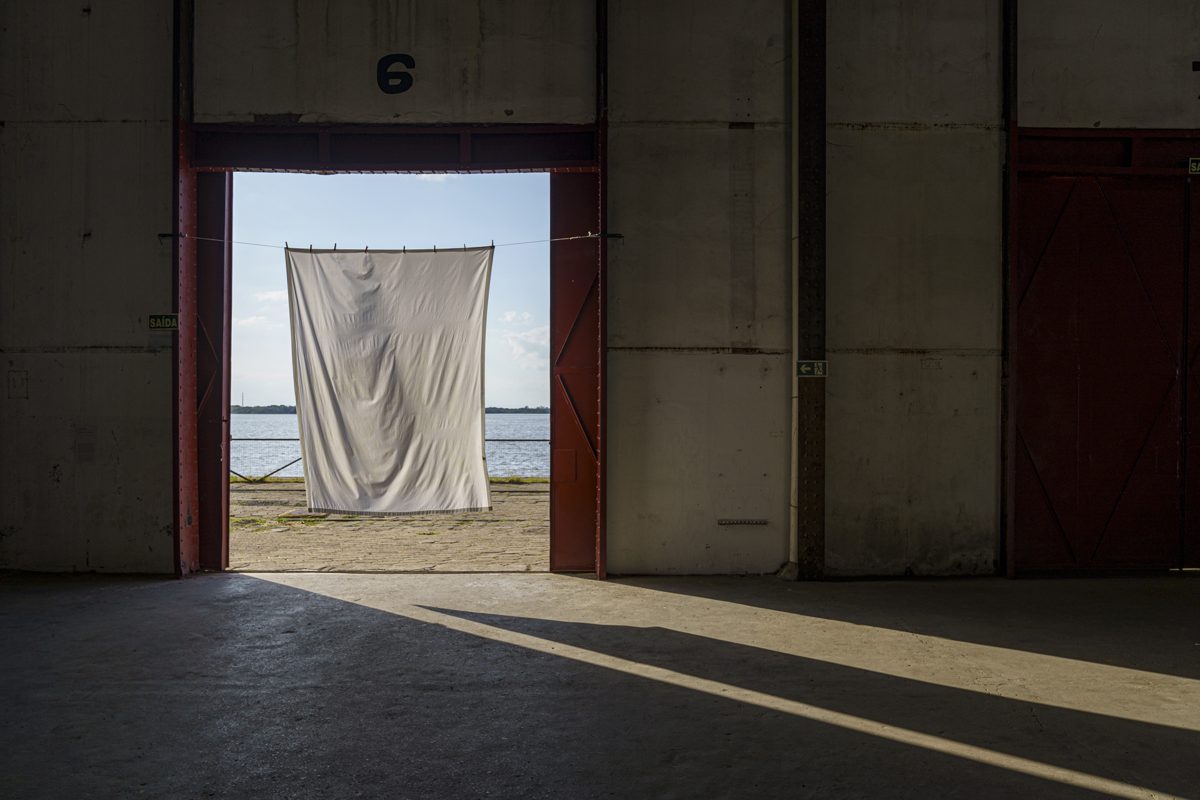
Karola Braga. Lágrimas, Terra e Crisântemo.
At the 13th Bienal do Mercosul, Karola Braga hung a white sheet soaked in tears, earth and chrysanthemum. The wind moved it, and the smell of mourning spread.
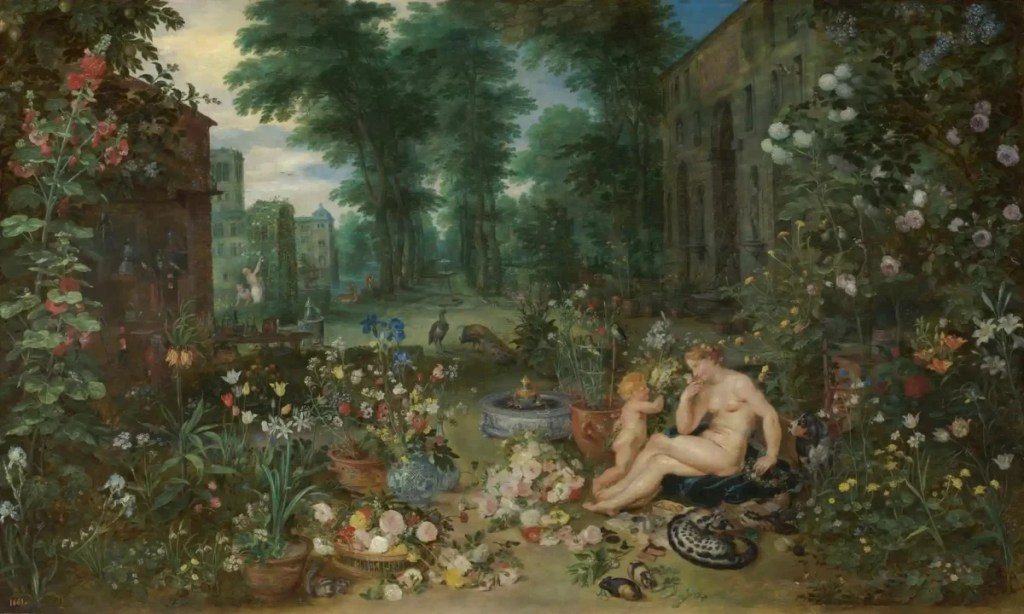
The Essence of a Painting. An Olfactory Exhibition.
A painting full of flowers, gloves, vessels. The Prado asked a perfumer to remake ten of its smells, so visitors could breathe them beside the frame.
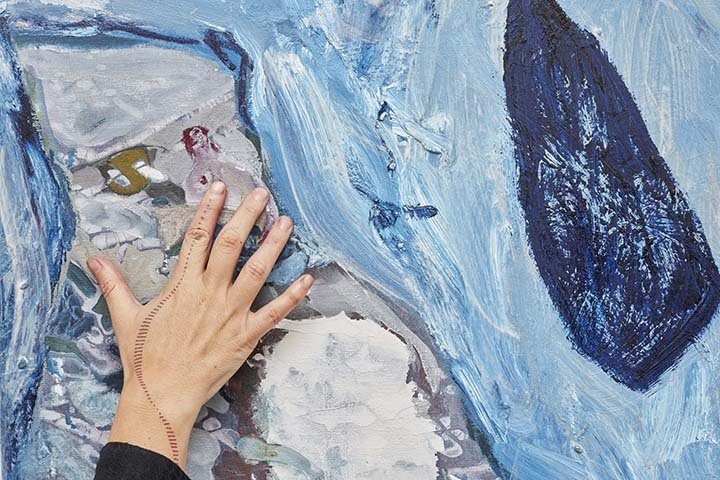
Luiza Gottschalk. Glade: To Touch Painting.
In museums we are told not to touch the paintings. Luiza Gottschalk says the opposite: touch, and the forest will smell.
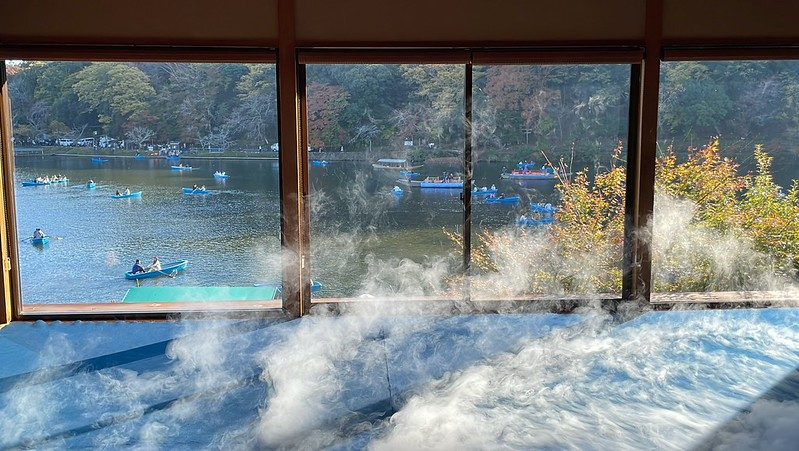
Maki Ueda. Aerosculpture: Sea of Fragrant Cloud.
In November 2022, in Arashiyama, Maki Ueda used dry ice to make the smell of temple incense visible as cloud, with Tibetan gongs. Scent became something to see.
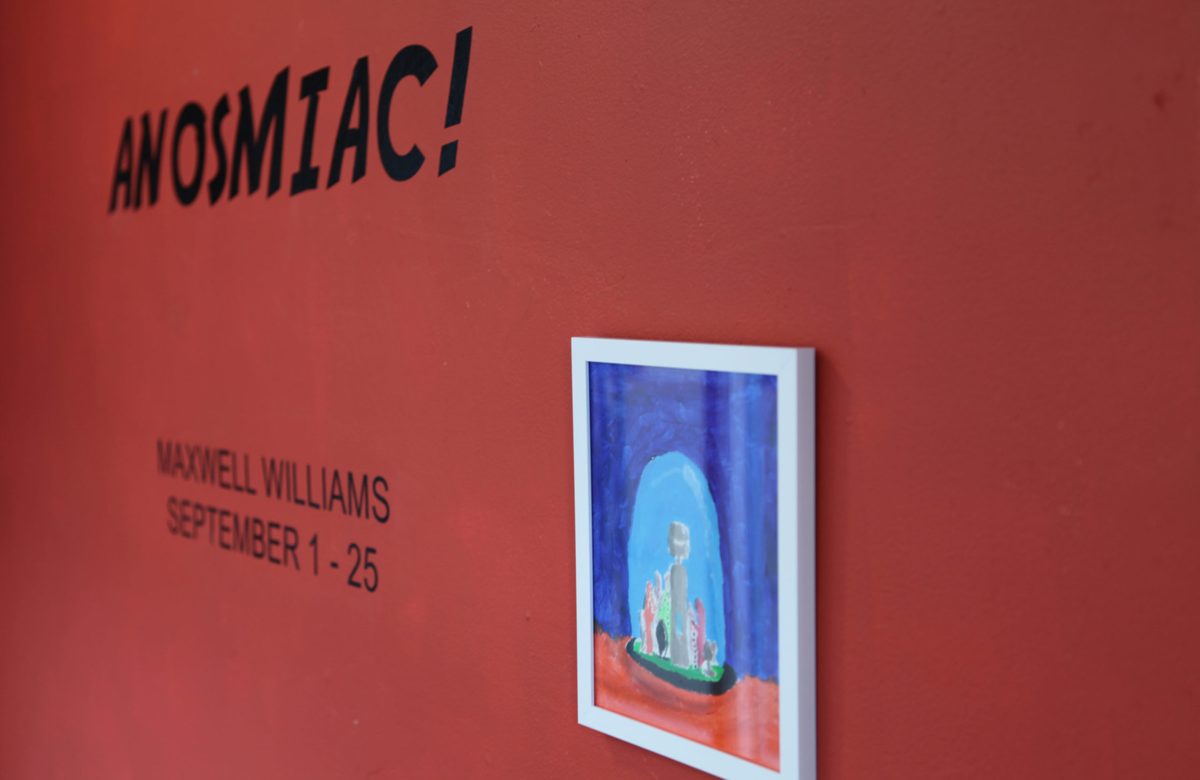
Maxwell Williams. Anosmiac!
A wax city waits under a bell jar to be lit. A villain smells it from afar. Maxwell Williams continues Mike Kelley in scent.
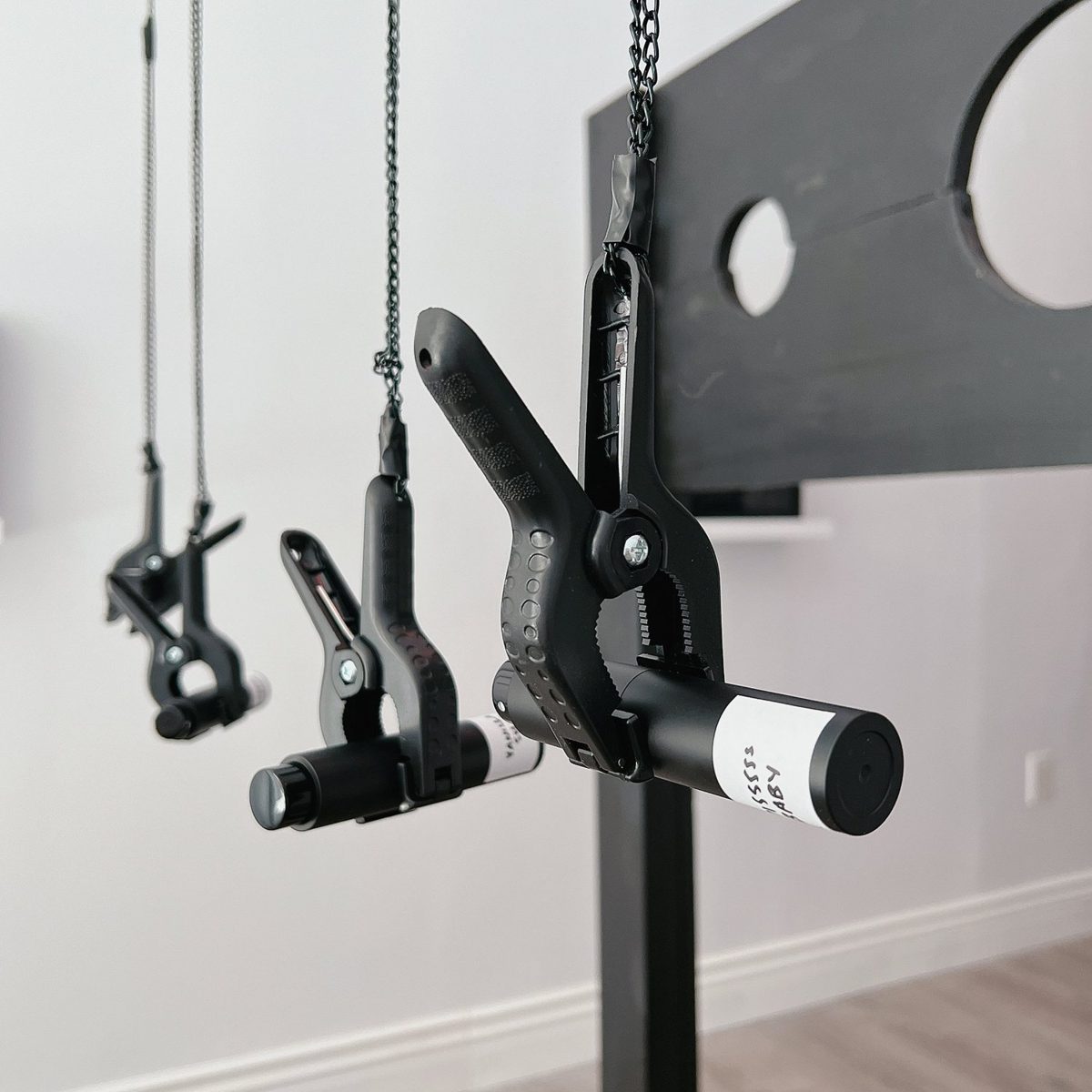
Maxwell Williams. CNC Musk Factory.
We can close our eyes and cover our ears. We cannot stop breathing. CNC Musk Factory turns that into a question about power and consent.
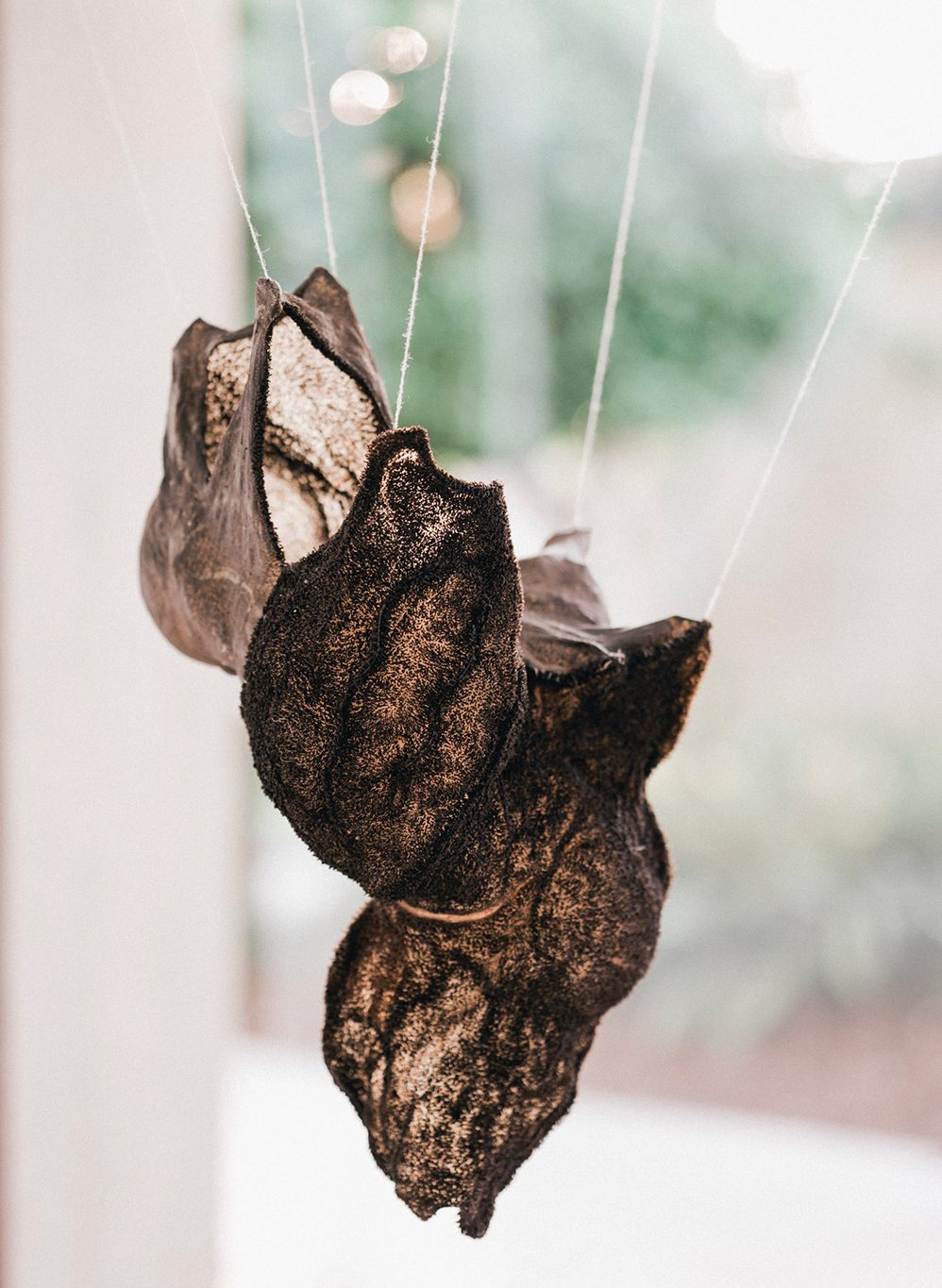
Máret Ánne Sara. Gutted / Gávogálši.
Dried reindeer stomachs hang in the air. A smell gets through the masks. The body knows before the mind catches up.
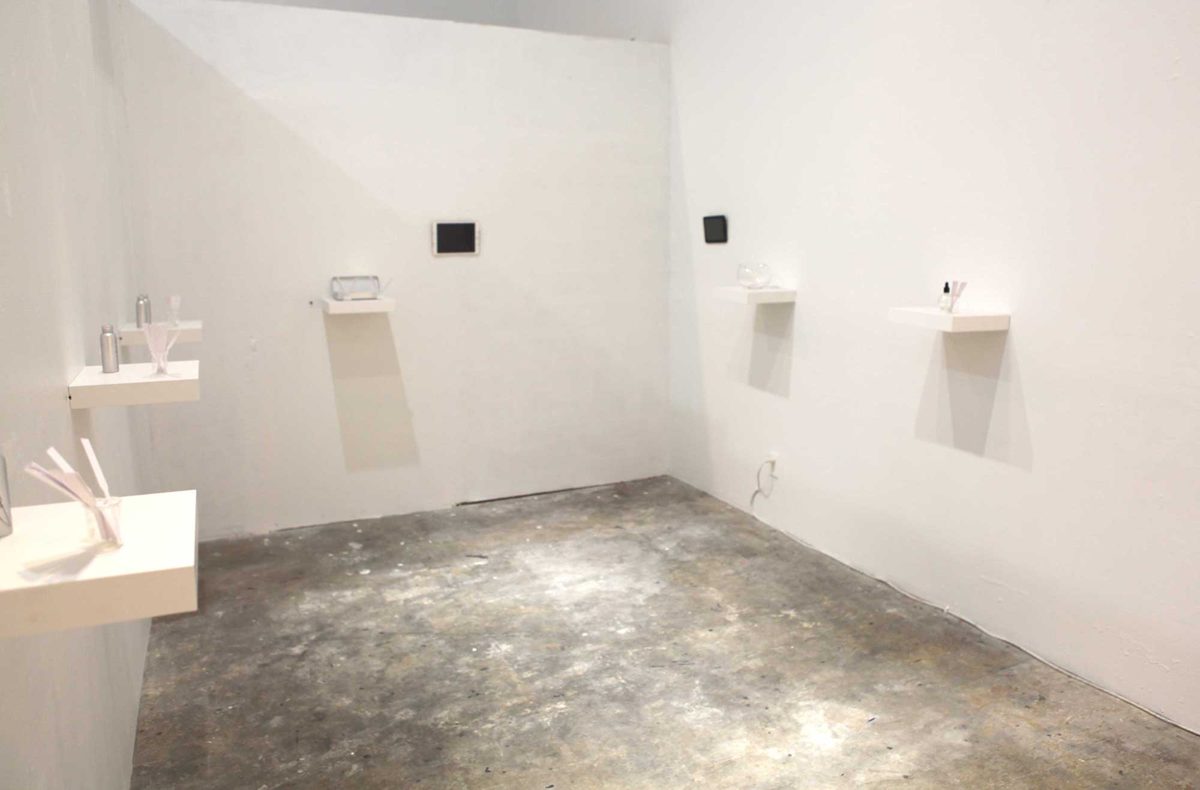
OAK@IAO.
A year of scent exhibitions in New York, packed up and sent to Los Angeles for a month. Young banana, old banana, blown glass and hand washing stations.
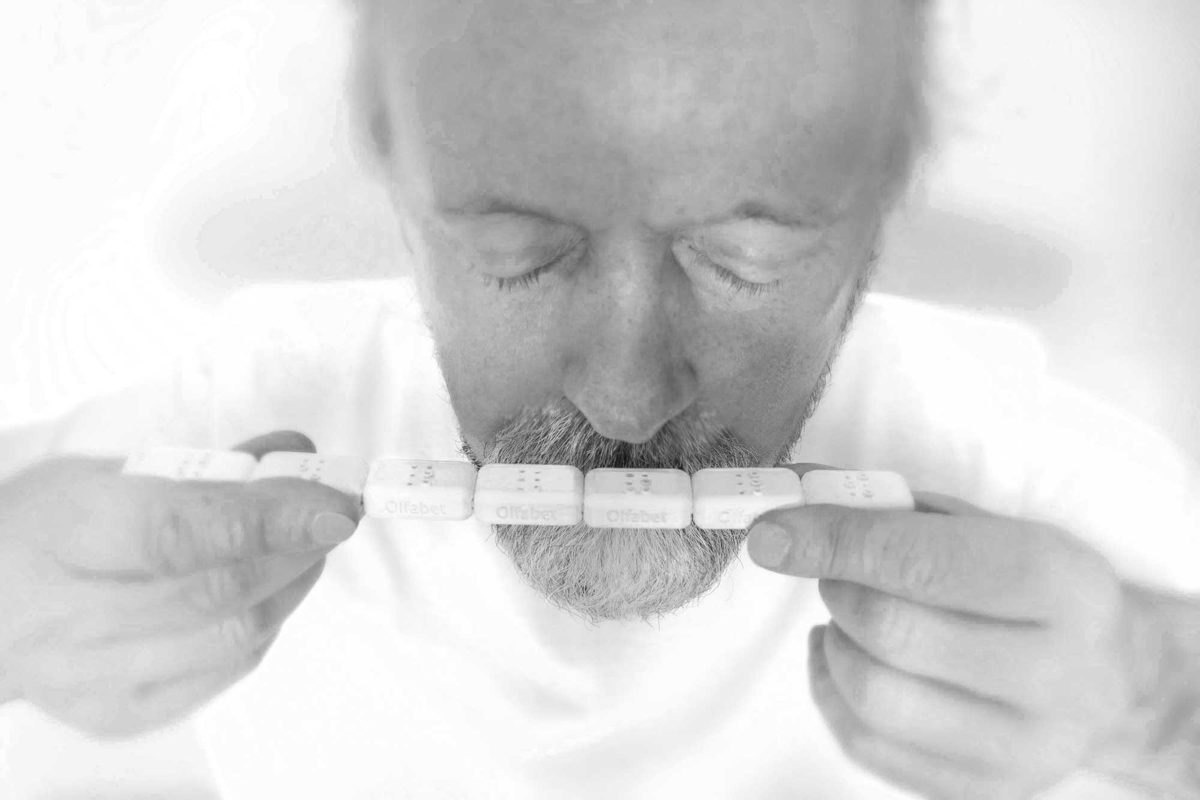
Peter de Cupere. Olfabet.
Each letter a smell. A few smells together, a word. Olfabet asks whether people can learn to read with the nose as they learned with the eyes.
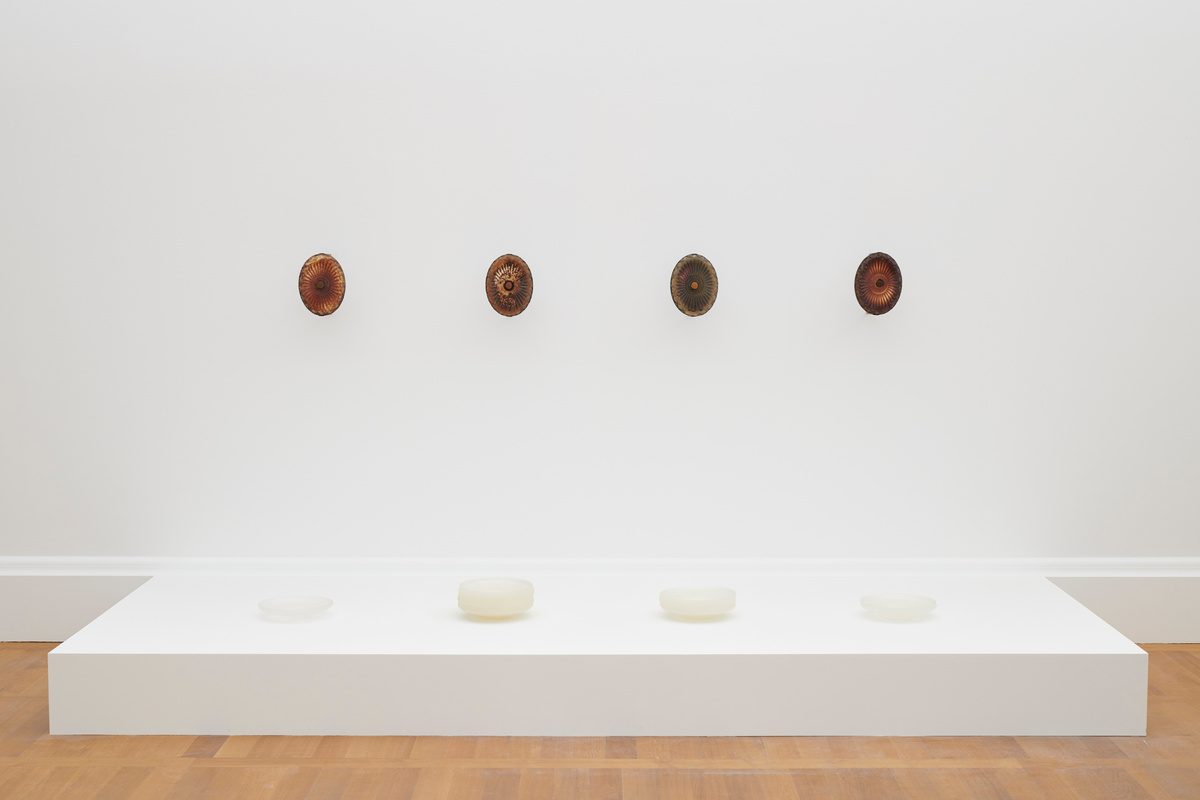
Rhea Dillon. NEGR-OID.
A television remark assigned a smell to a woman. Rhea Dillon answered with a scent that deliberately resembles nothing in particular.
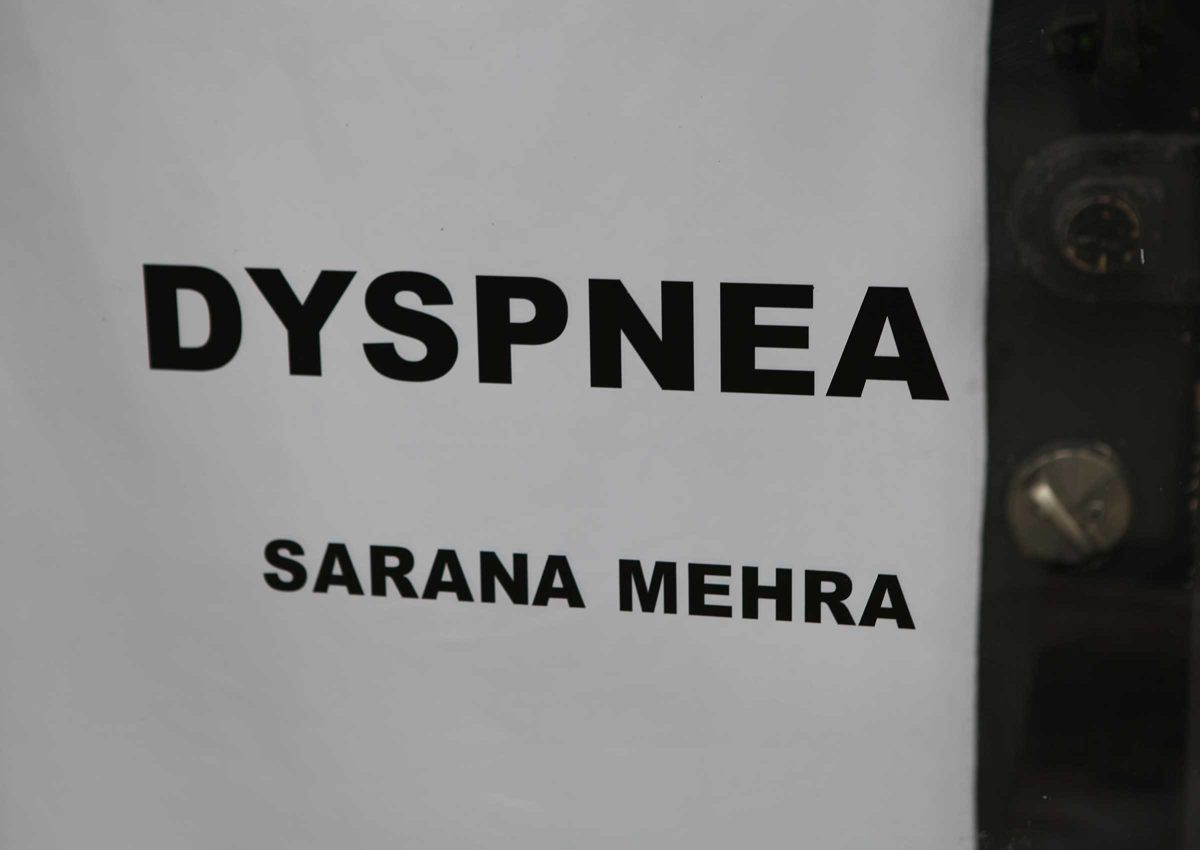
Sarana Mehra. Dyspnea.
In 2022, when breathing in still carried fear, Sarana Mehra built a scented room to ask what a breath carries with it.
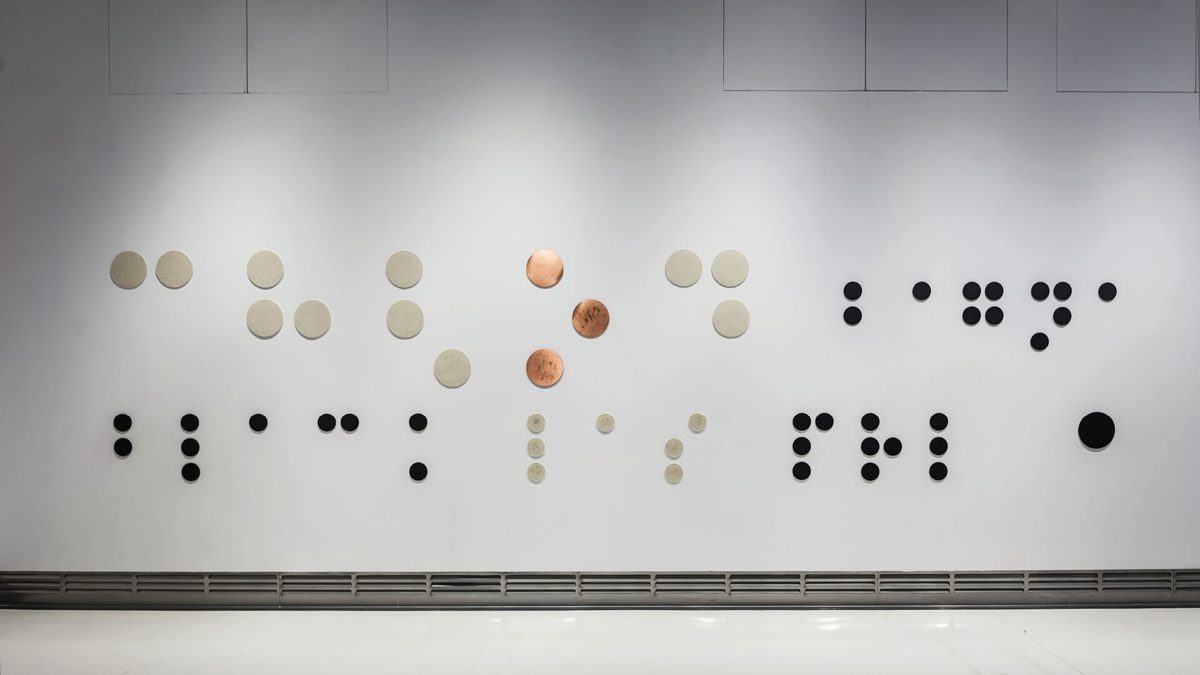
Sensoria: The Art and Science of our Senses.
After the years of isolation, an exhibition in Gdańsk and Toronto asks: do our senses still talk to each other? One tree answers in smell.
Turba Tol Hol-Hol Tol.
Eight at a time, into the dark, moss underfoot, water dripping all around. Chile's pavilion in Venice brought a bog from the far south of the Americas.
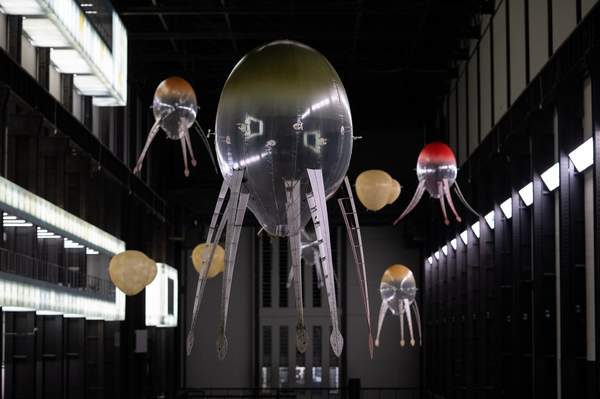
Anicka Yi. In Love With The World.
Flying machines drift in the Turbine Hall. Each week the air around them changes: ancient sea, ancient plants, coal, plague spices.
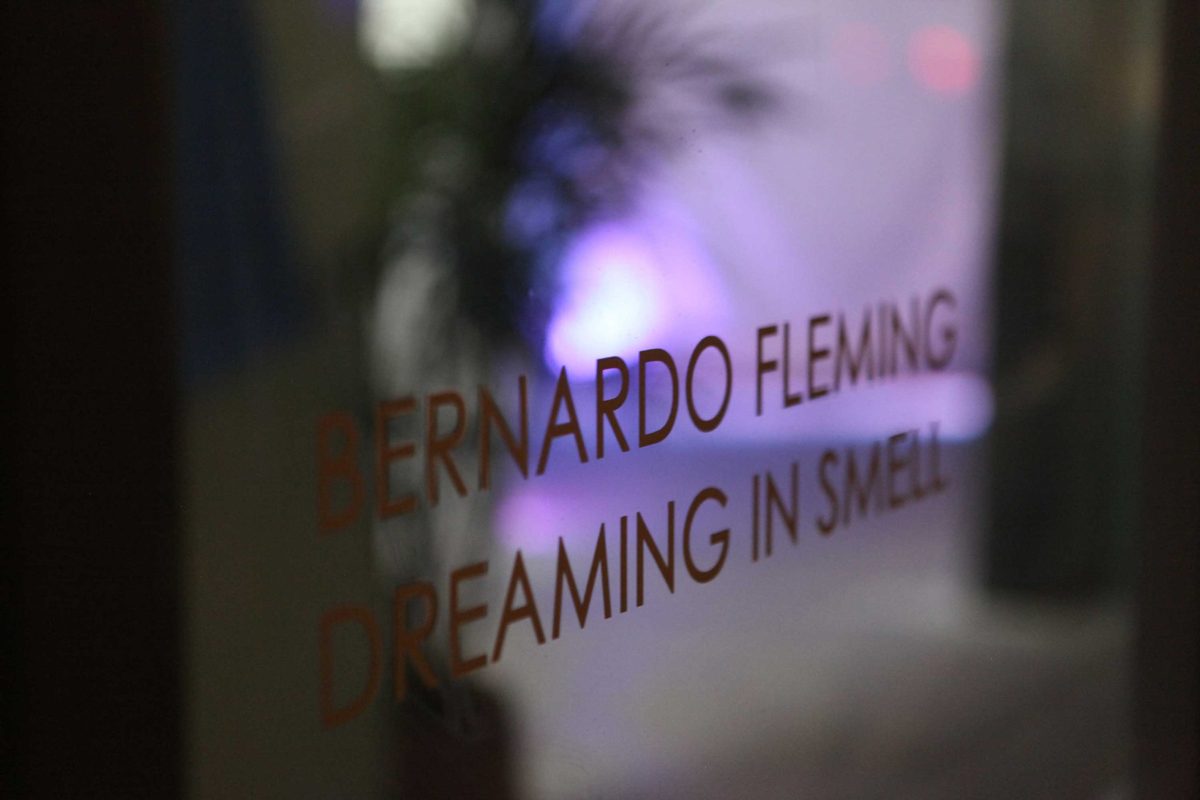
Bernardo Fleming. Dreaming in Smell.
Few people smell anything in their dreams. Bernardo Fleming does. Four of his dreams were carried out of sleep, onto sheets and pillows.
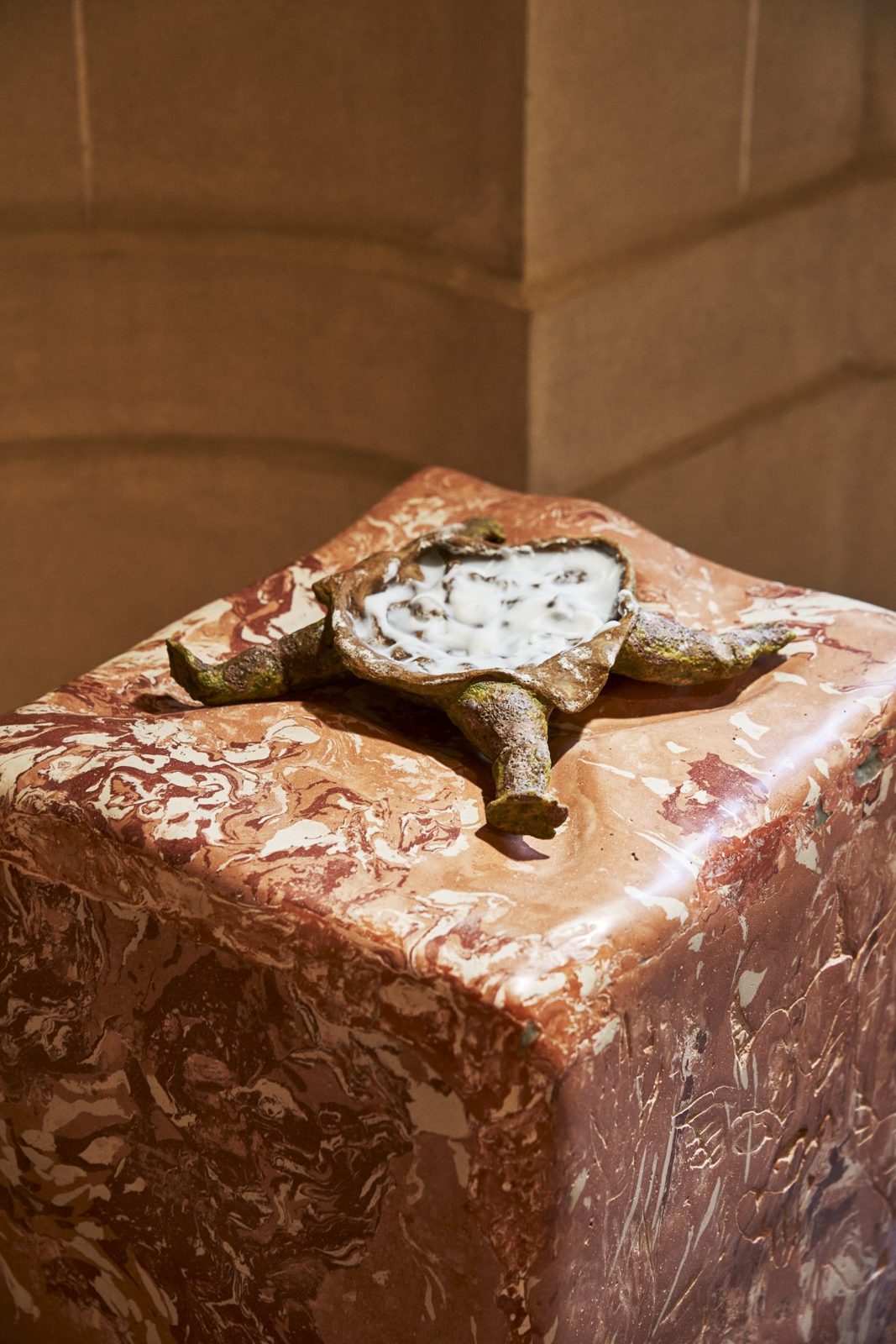
Candice Lin. Swamp Fat.
A block of lard steeped in the smell of shrimp and rotting flesh. Visitors rub it on their skin and carry the smell out of the gallery.
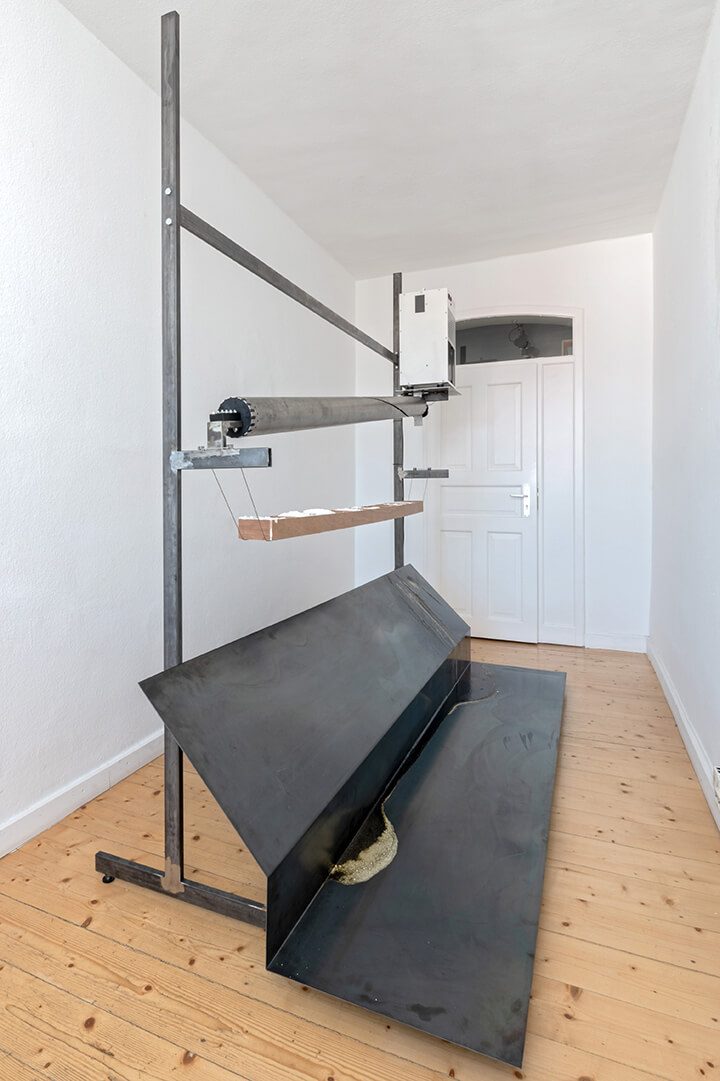
Charlotte Eta Mumm. Pulse.
A dehumidifier, a circle of tubing, eighteen smells of the city. Pulse is a sculpture whose scent shifts with every drop of water.
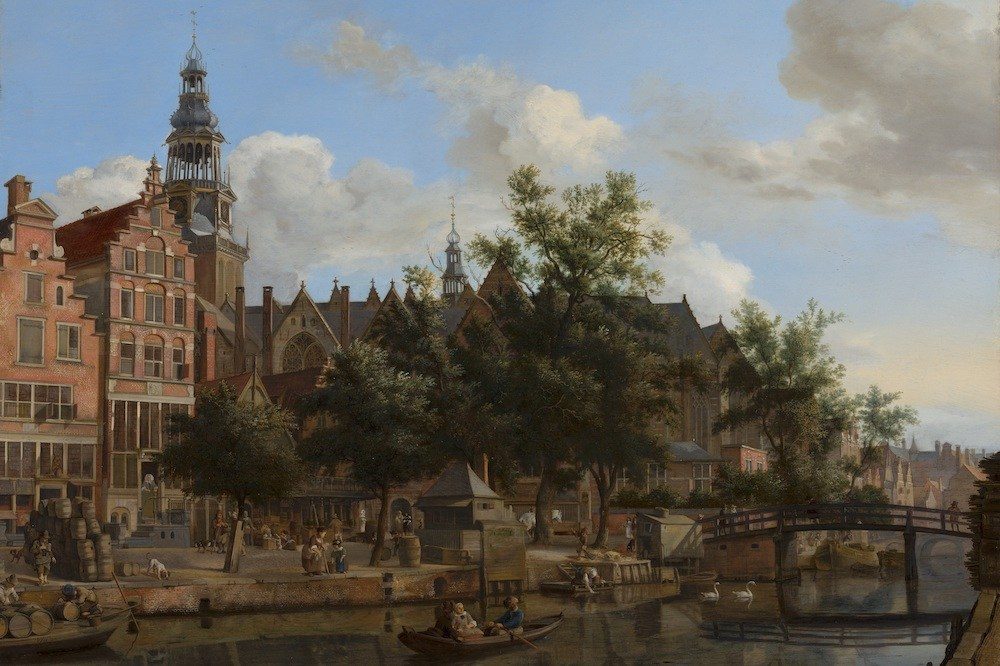
Fleeting. Scents in Colour.
A grocer's shop, a bleaching field, an Amsterdam canal. The Mauritshuis let visitors smell what seventeenth century painting could only depict.
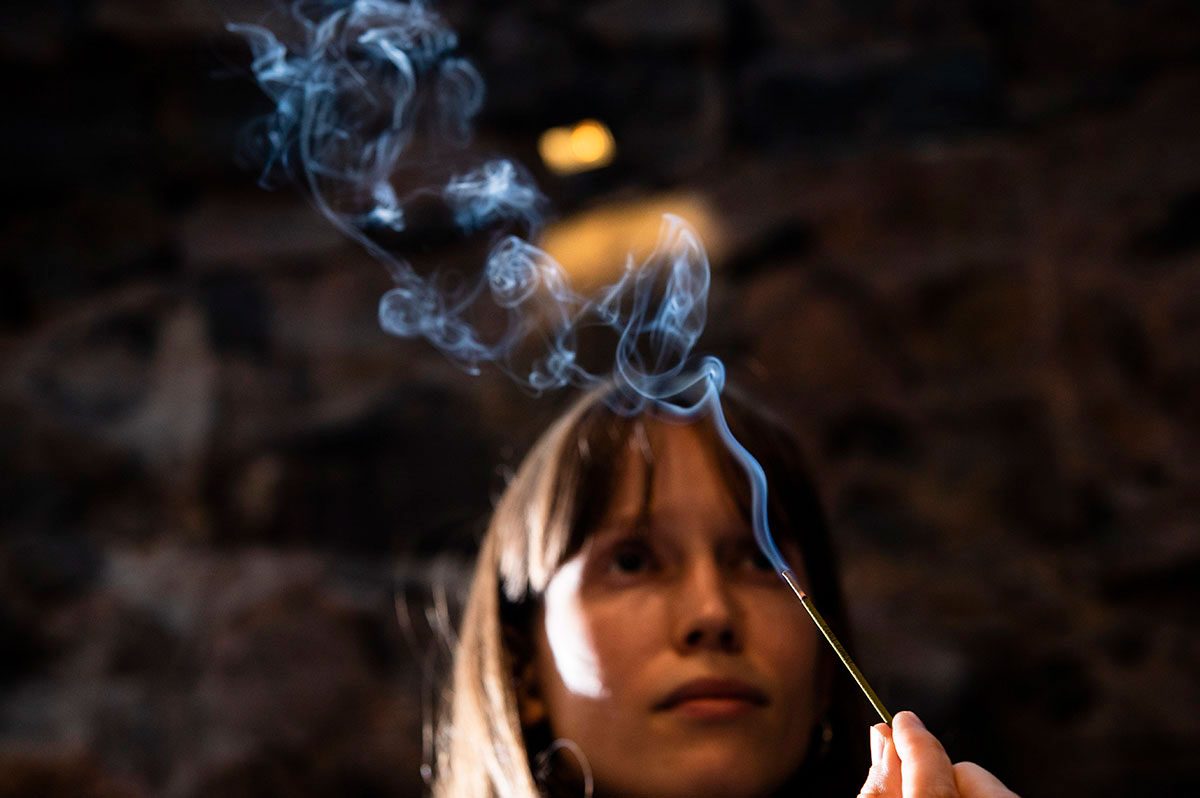
Katie Paterson. To Burn, Forest, Fire.
Two incenses: one carries the planet's first forest, the other a forest that may be the last. Each stick burns for fifteen minutes.
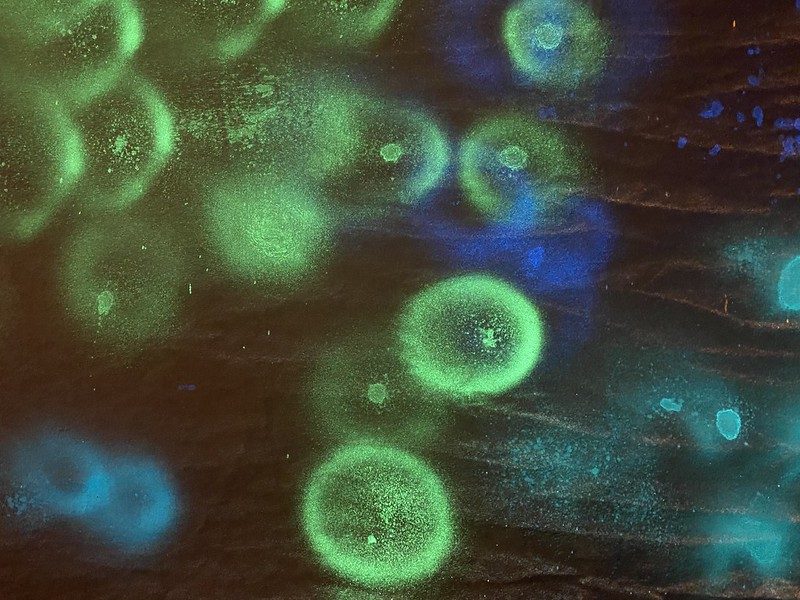
Maki Ueda. Viral Parfum.
Visitors spray scent on walls, floor and objects. Others use their noses and ultraviolet light to find where the virus has clung. Six smells merge into white lily.
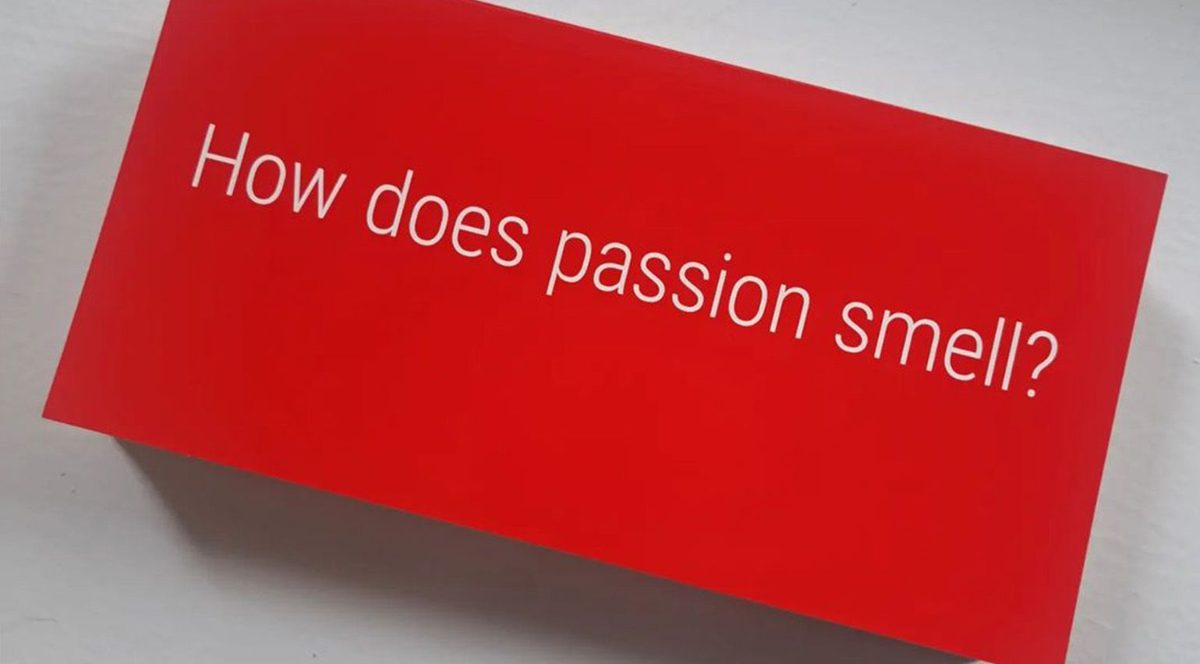
Olfactory Art Keller.
A room in Chinatown, New York, where the works cannot be seen, only smelled. It was opened by a scientist who has studied the nose for twenty years.
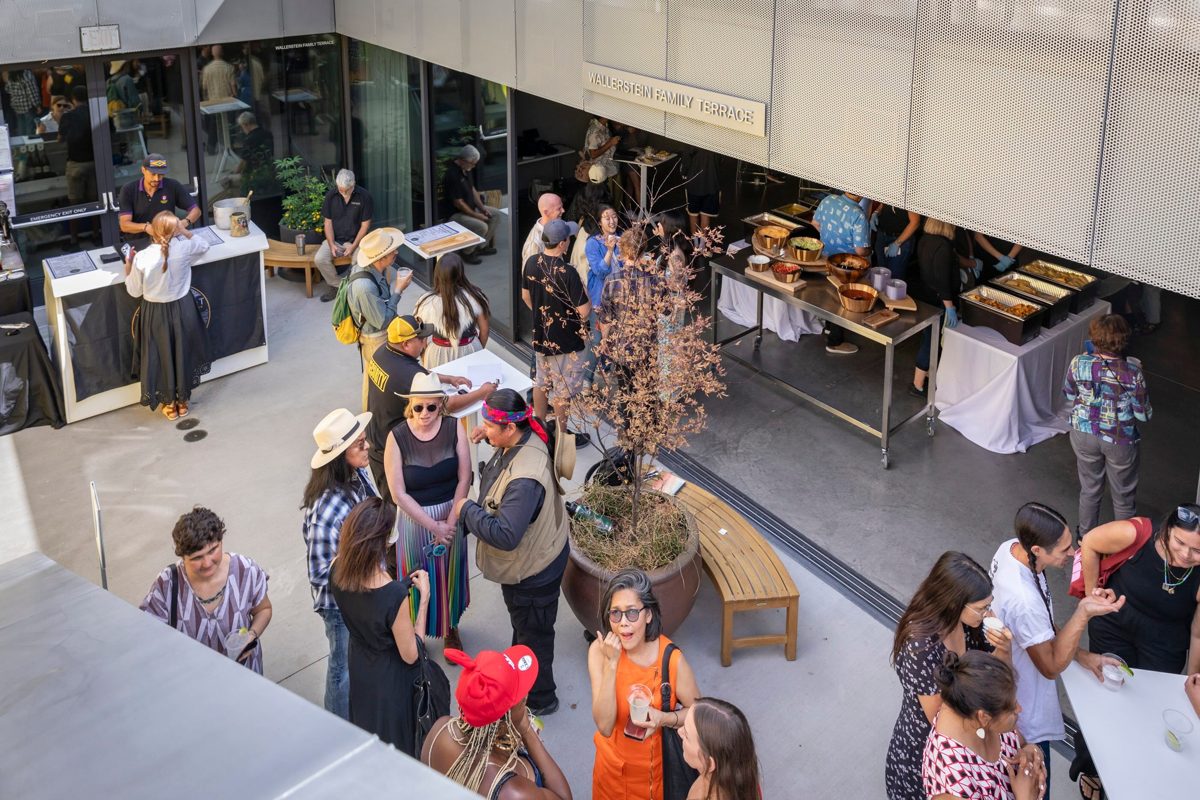
Oswaldo Maciá. New Cartographies of Smell Migration | Santa Fe.
Smell needs no passport. It travels with wind, insects and trading ships. Maciá draws maps for those journeys.
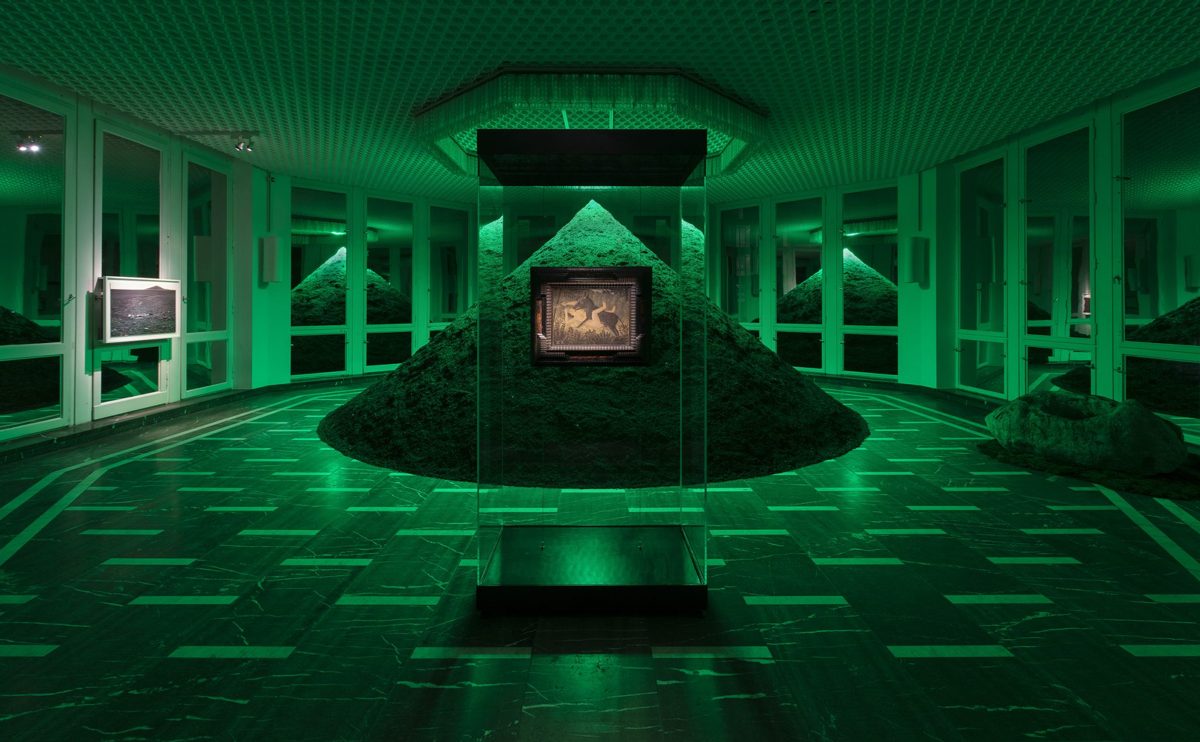
Pamela Rosenkranz. Infection (Calvin Klein Obsession for Men).
Charcoal, human waste and animal bone heaped into a cone and soaked in a famous men's perfume. The peak glows green.
Projects: Gabrielle L'Hirondelle Hill.
Flags sewn from Perique and Virginia tobacco, rabbits stuffed with shredded leaf, a wall rubbed with fresh tobacco. At MoMA, tobacco becomes a plant again.
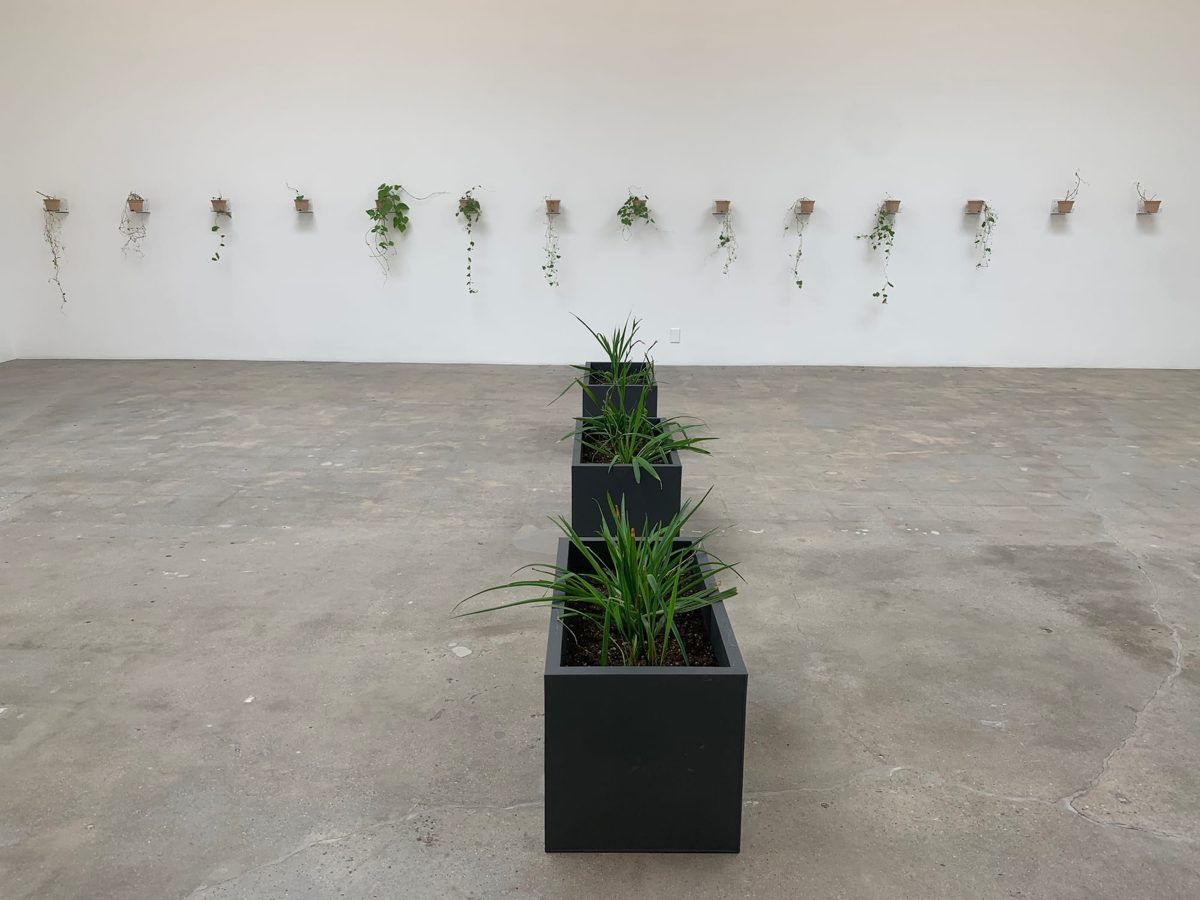
Sean Raspet at Various Small Fires.
A moss given patchouli genes quietly breathes a forest floor smell into the gallery. Sean Raspet asks what it means to exhibit nature.

Sissel Tolaas. RE_________.
The title is two letters and a blank. Tolaas lets the visitor's nose write the rest.
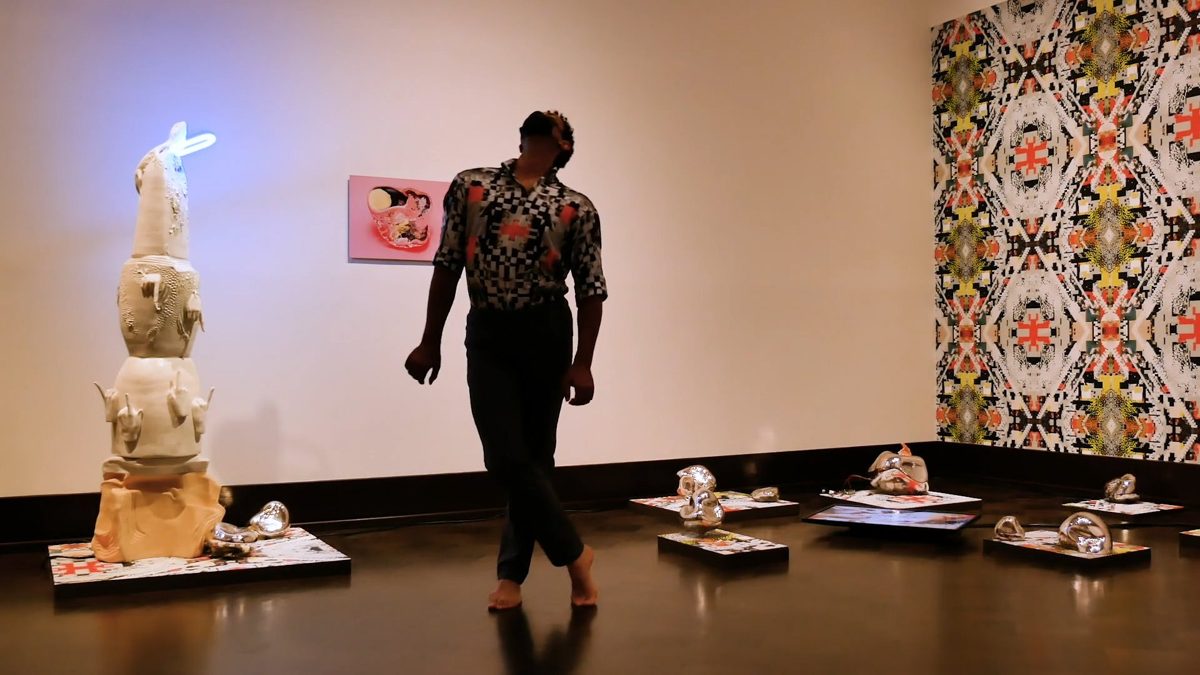
Carla Bengtson. Every Word Was Once an Animal.
Lizards speak in nods and in smell. Carla Bengtson built an exhibition so that people could try to listen.
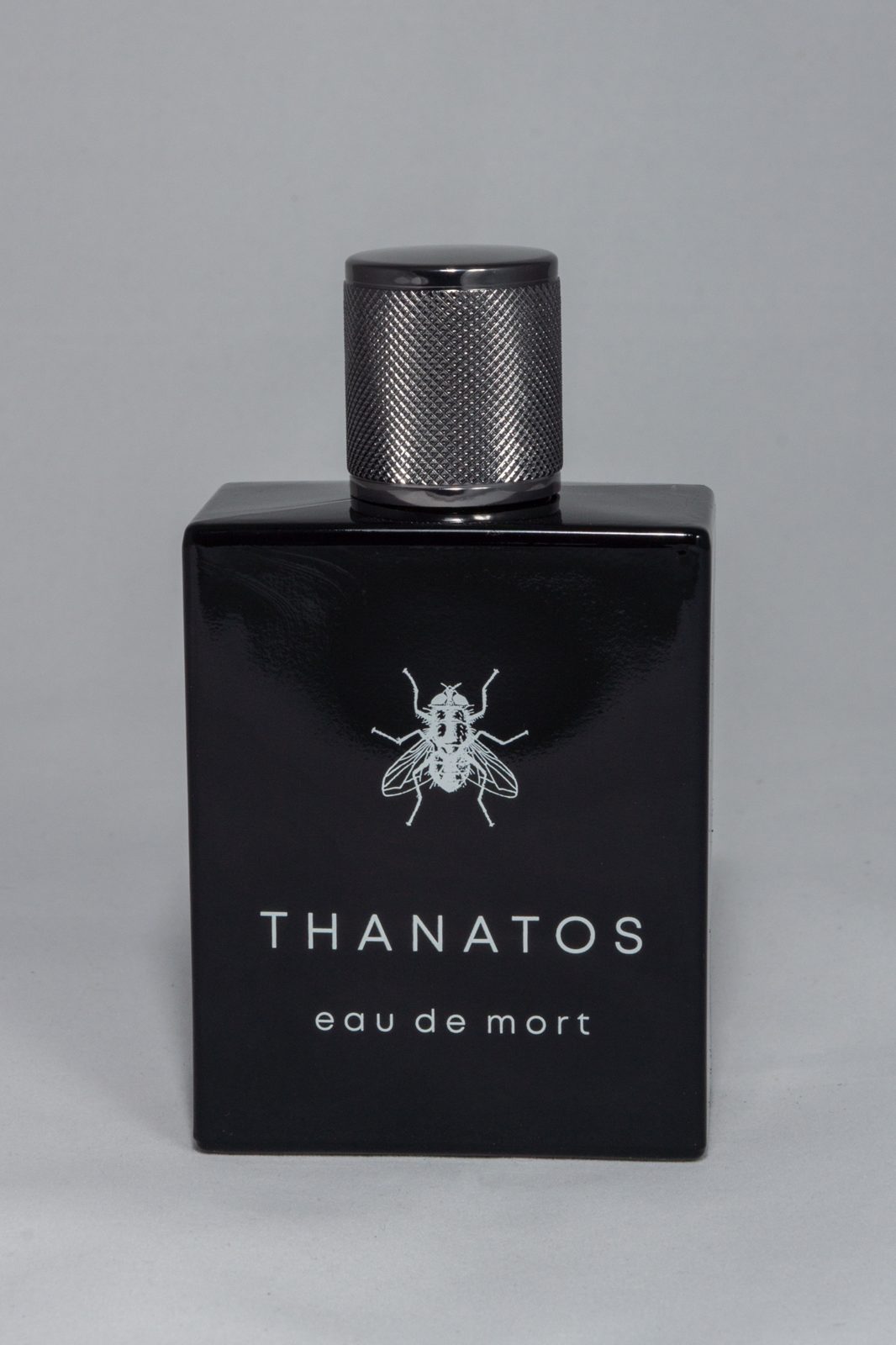
Eric Fong. Thanatos: Scent of Death Perfume.
A perfume that leads the nose from a meadow into the forest, where a body lies. Eric Fong uses forensic science to ask: what does death smell like?
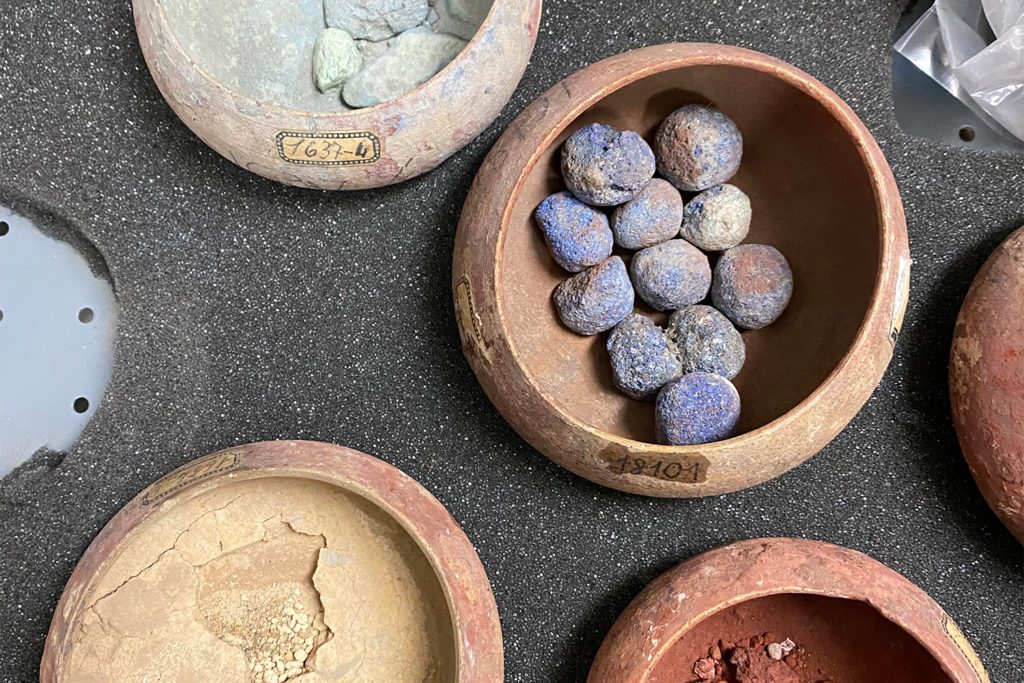
Sissel Tolaas. Invisible Pompeii.
At Pompeii, Sissel Tolaas did not take soil back to the lab. She brought her nose and her instruments to the dig, recording each newly opened layer.
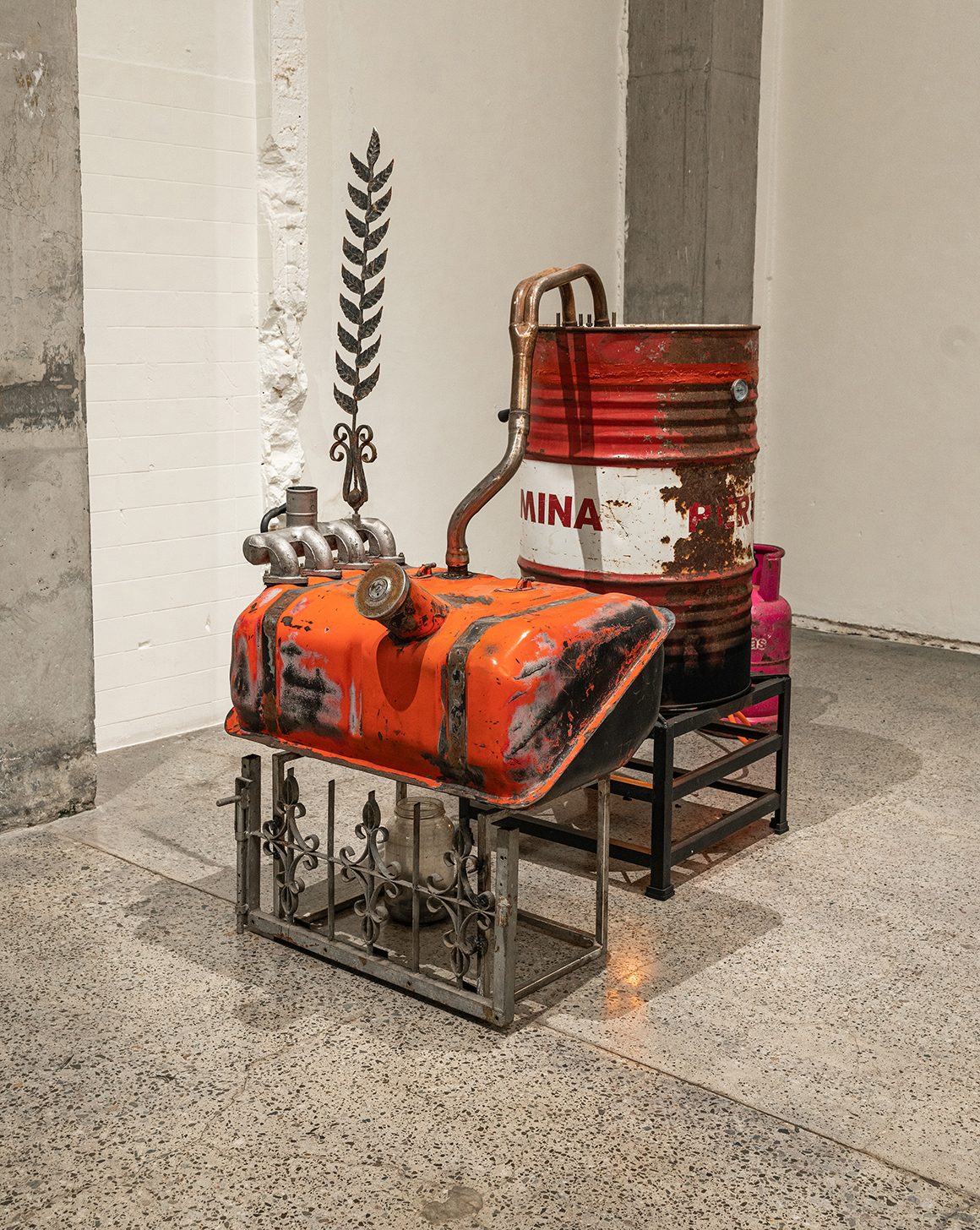
Ade Darmawan. Tuban.
Hot plates on a dining table, stills quietly boiling, spice oil dripping onto biographies of Suharto. The room smells sweet, and sharp.
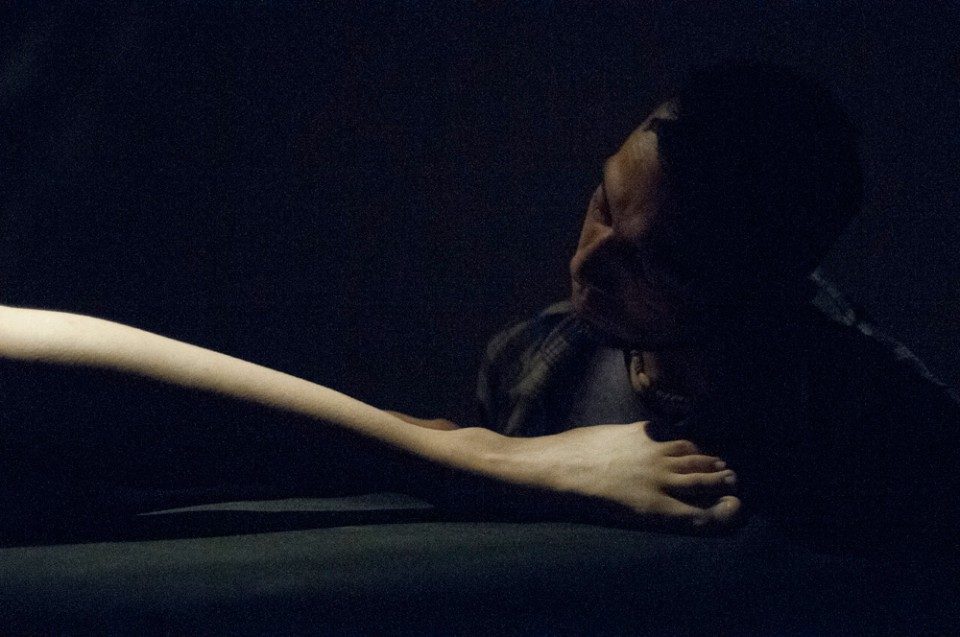
Alejandro Ros, Pablo Schanton. Cerca.
Four naked people asleep in the dark, scent on their skin. To smell it, visitors must come closer than they would ever come to a stranger.
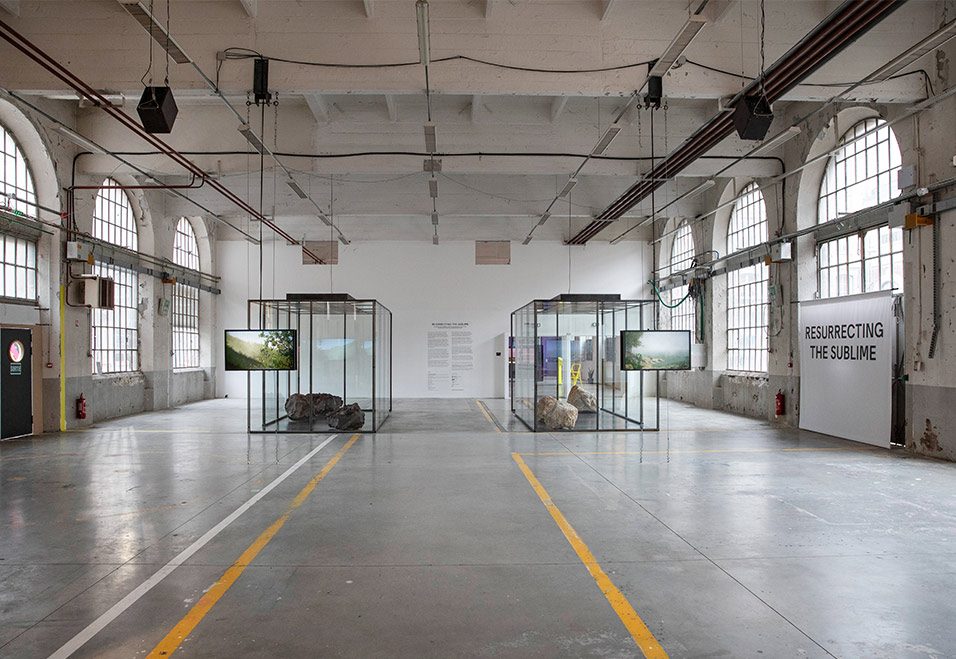
Alexandra Daisy Ginsberg. Resurrecting the Sublime.
Three flowers vanished to cattle ranching, a dam and colonial vineyards. More than a century later, people stand among stones and smell them again, incompletely.
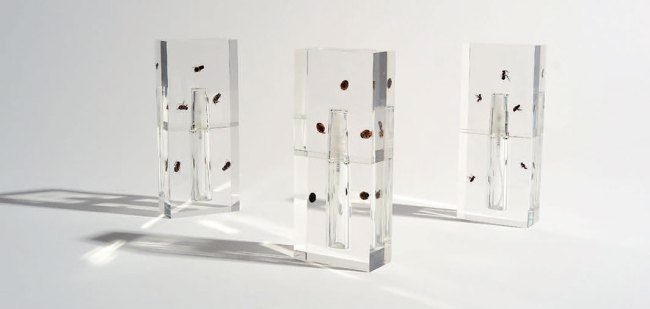
Anicka Yi. Biography.
Anicka Yi borrows the form of the perfume bottle to write biographies of three women history tends to forget. Each scent retells a life.
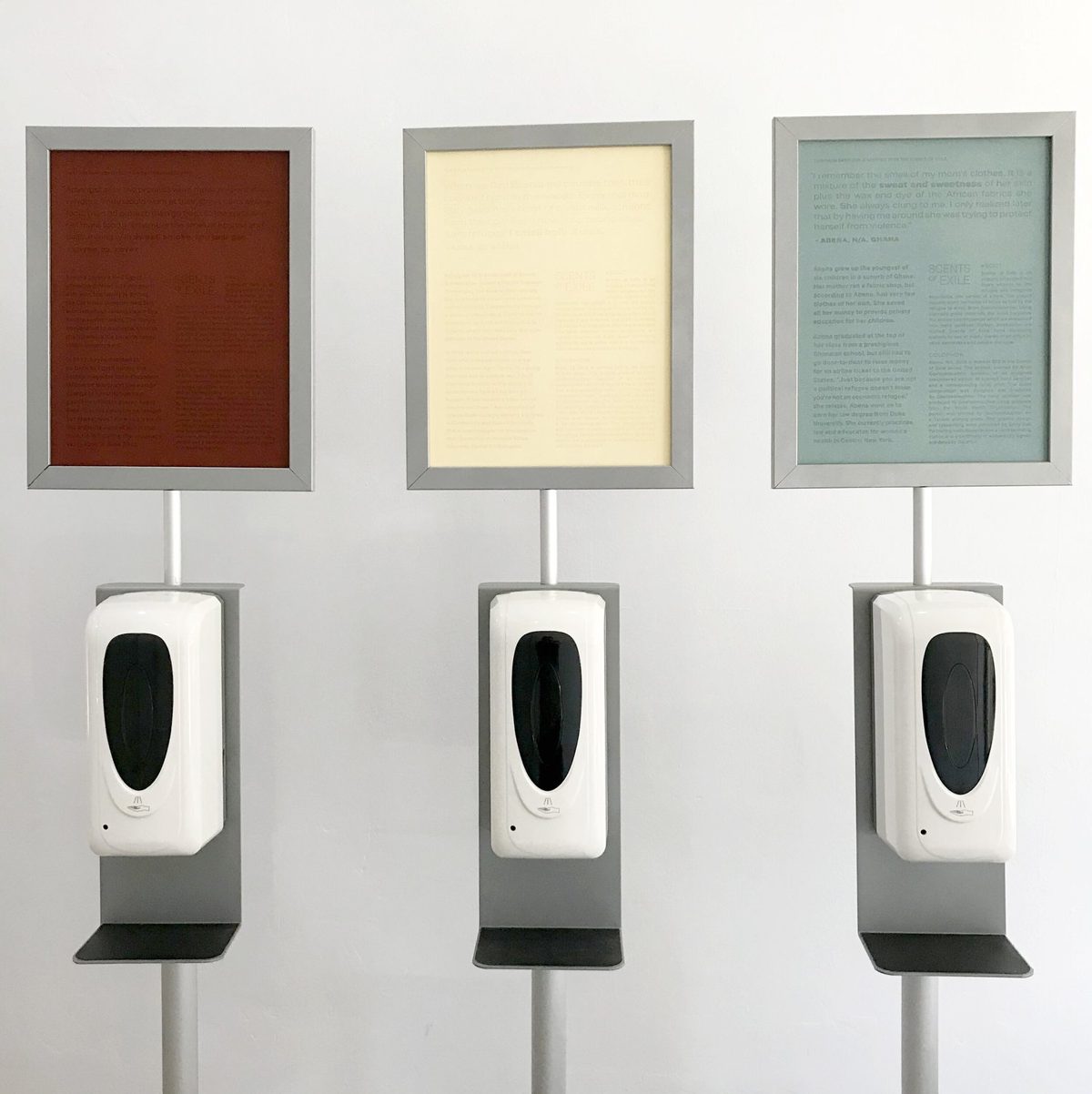
Brian Goeltzenleuchter. Scents of Exile.
A sanitiser dispenser, a printed story. Visitors clean their hands and walk away with the smell of someone else's home.
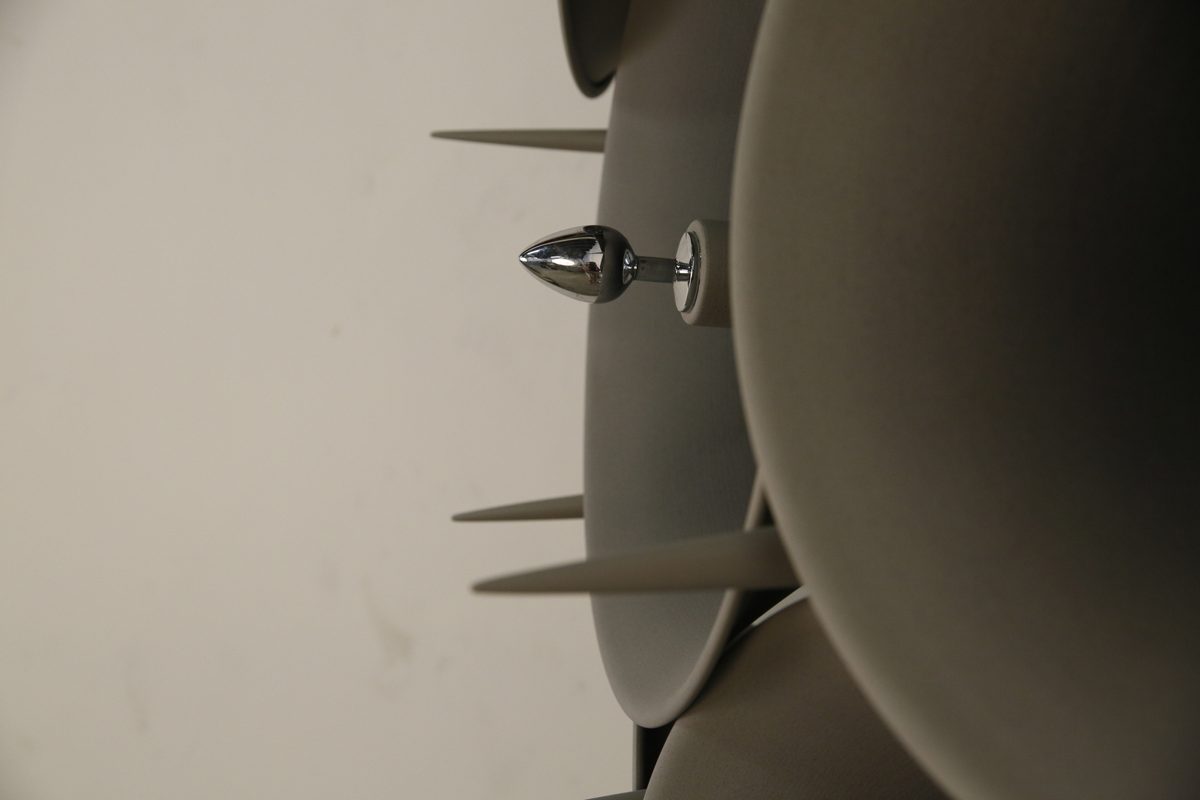
Jónsi. Í blóma, Hvítblinda, Svartalda.
At Tanya Bonakdar Gallery, Los Angeles, Jónsi built three sound works, each with its own smell: cadaverine, ozone before rain, seaweed.
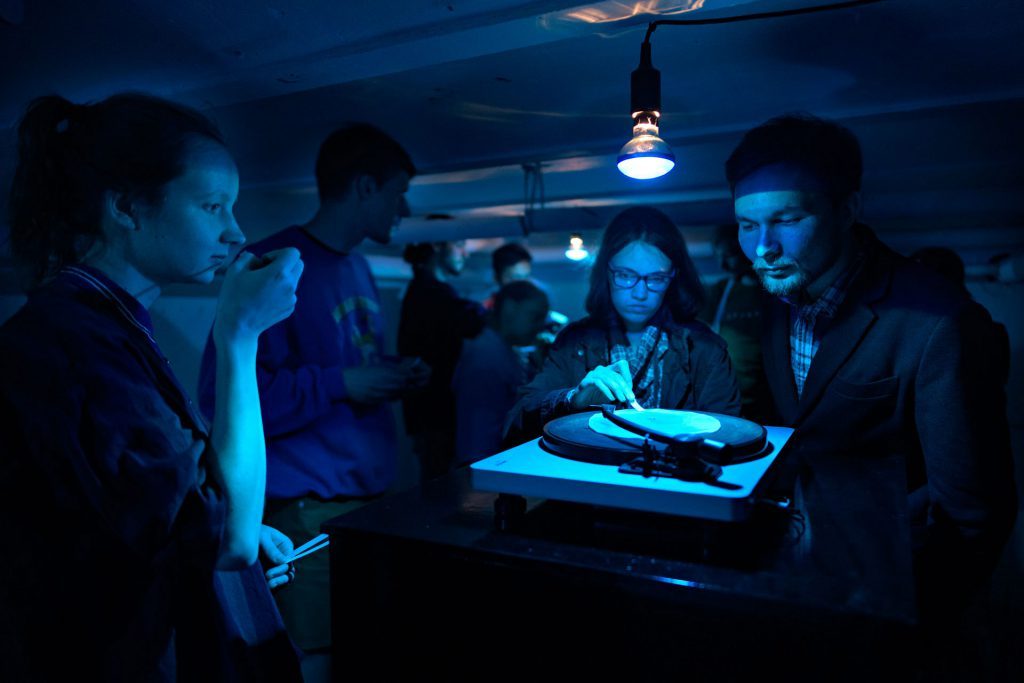
Lauren Jetty. Notes.
Three records of ice. As they turn and melt, the voice fades, the cracking ice becomes a heartbeat, and the smell of a storm rises from the water.
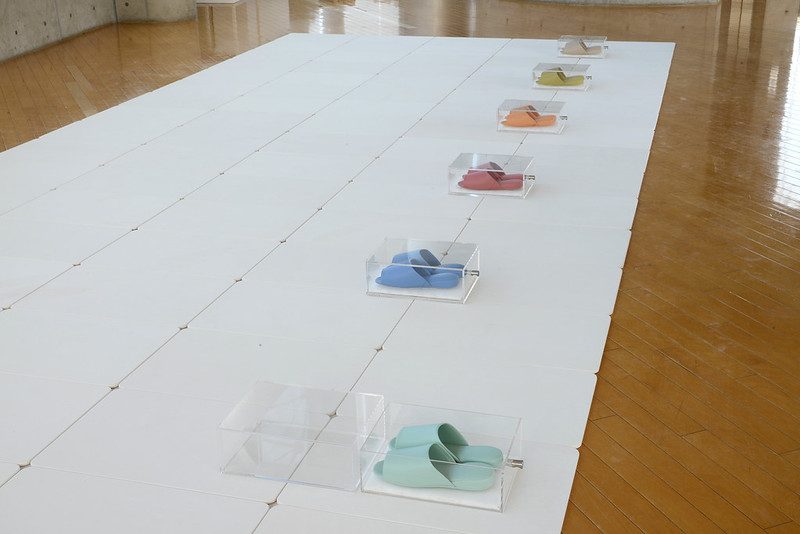
Maki Ueda. Olfactory Labyrinth ver. 5: Invisible Footprints.
Seven colours of slippers, seven scents, an empty floor. Every step leaves a trace only the nose can read.
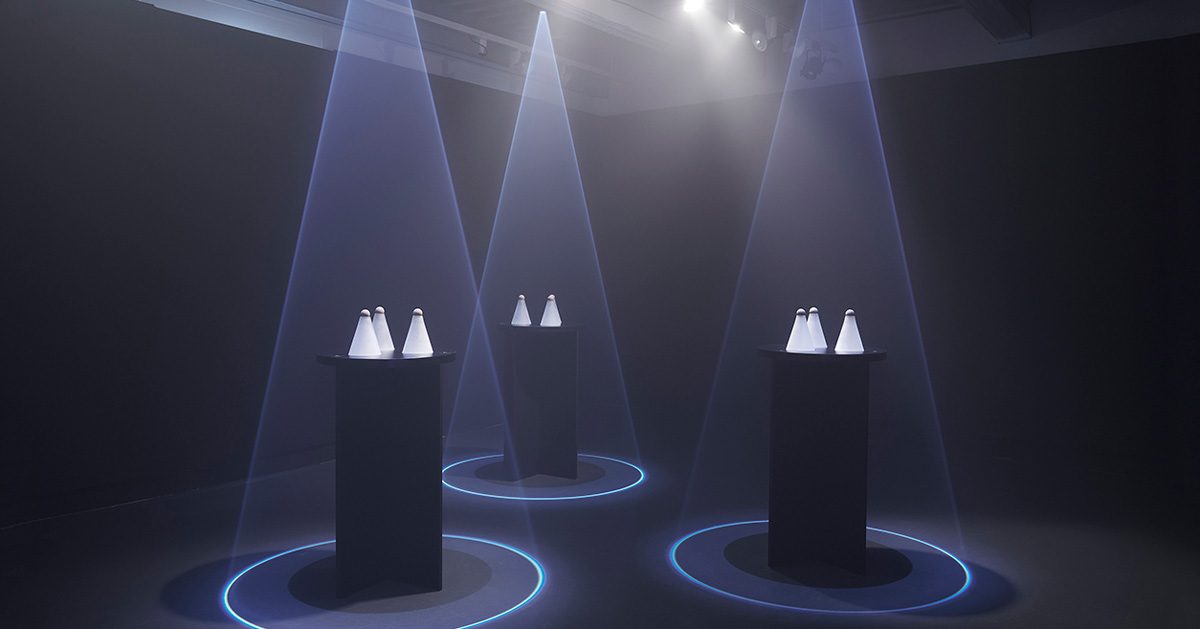
Nose to Nose. Contemporary Perfumers.
Scented fans rising from tables, glass vessels tied to balloons, a stained glass window. In Lausanne, objects were designed for something with no shape.
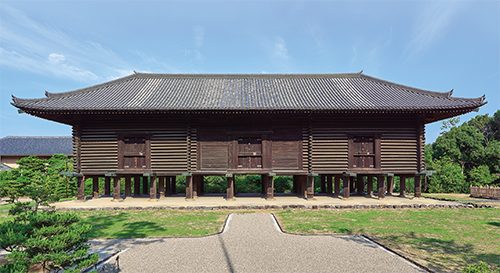
Ōjukukō (Ranjatai).
A block of agarwood more than a metre and a half long, kept in the treasury of Tōdai-ji. With each new holder of power, another cut.
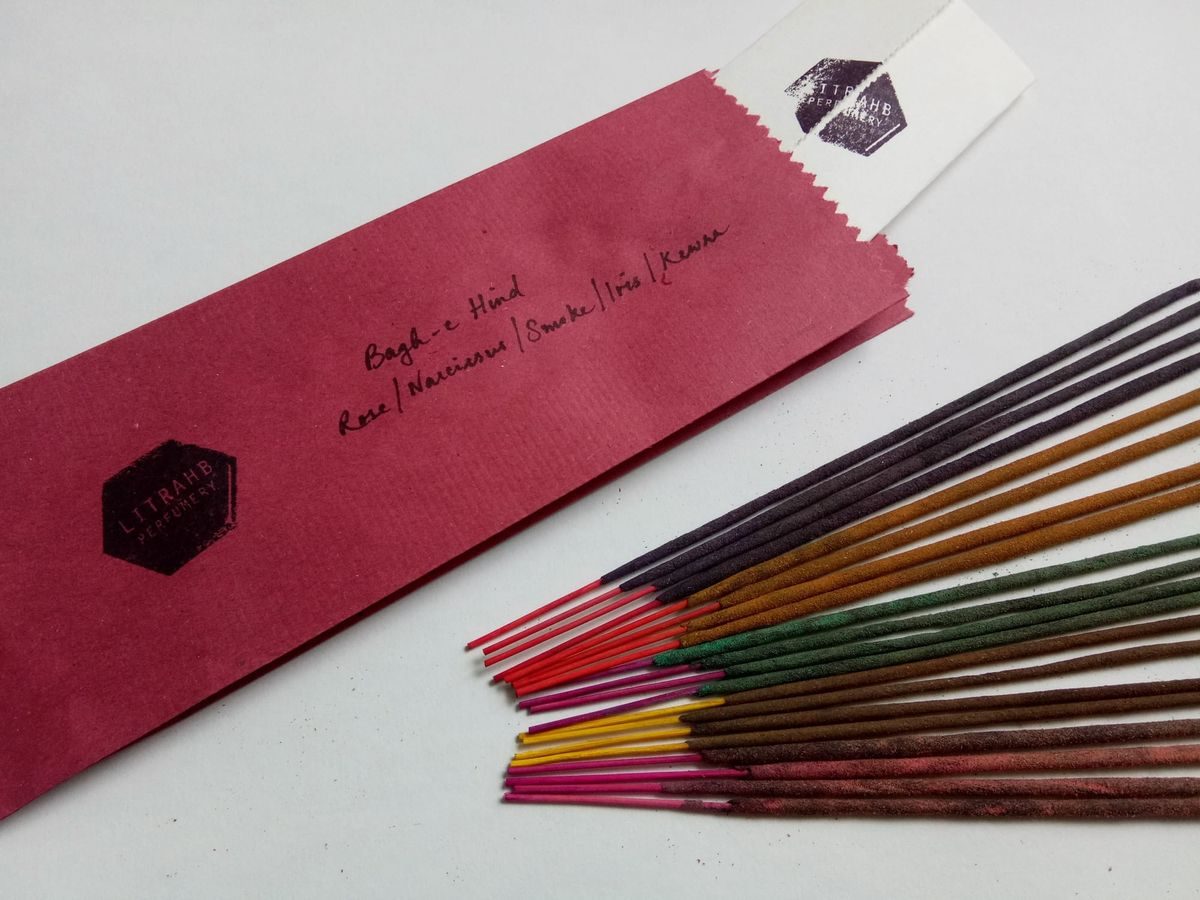
Bharti Lalwani. Bagh-e Hind: Scent Translations of Mughal and Rajput Garden Paintings.
Mughal and Rajput gardens sit in Western museums, far from South Asia. Bharti Lalwani brings them back through the nose: rose, narcissus, smoke, iris, kewra.
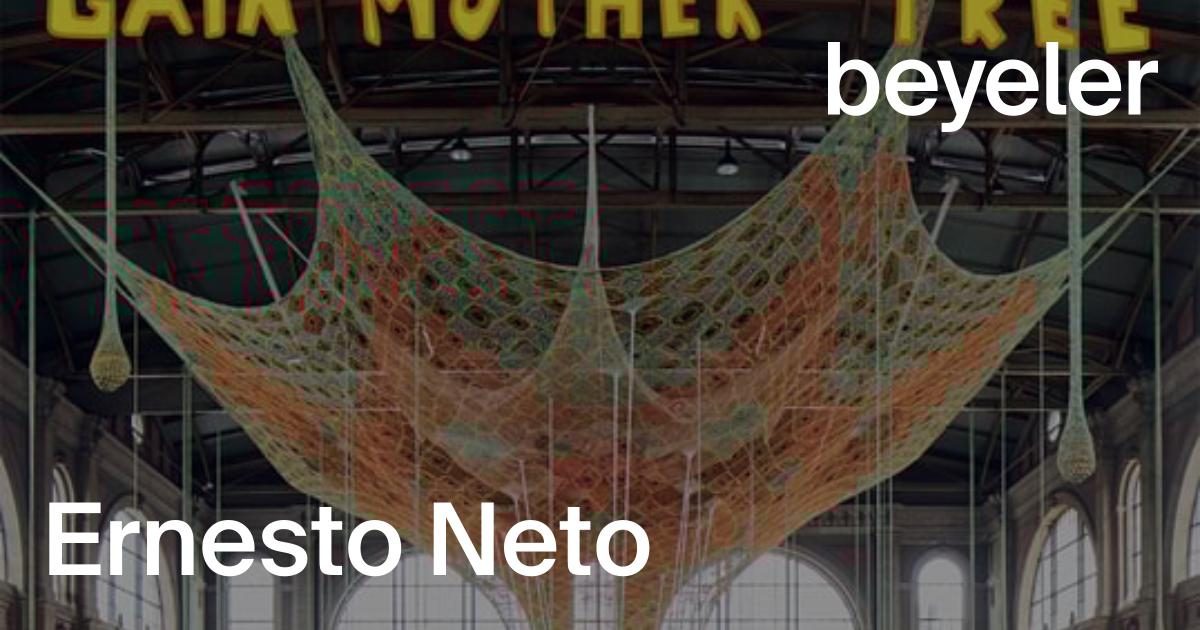
Ernesto Neto. GaiaMotherTree.
A cotton tree reaching the ceiling of Zurich's station hall. Seats around its base. Spices hanging from its branches. Travellers stop, sit, and smell.
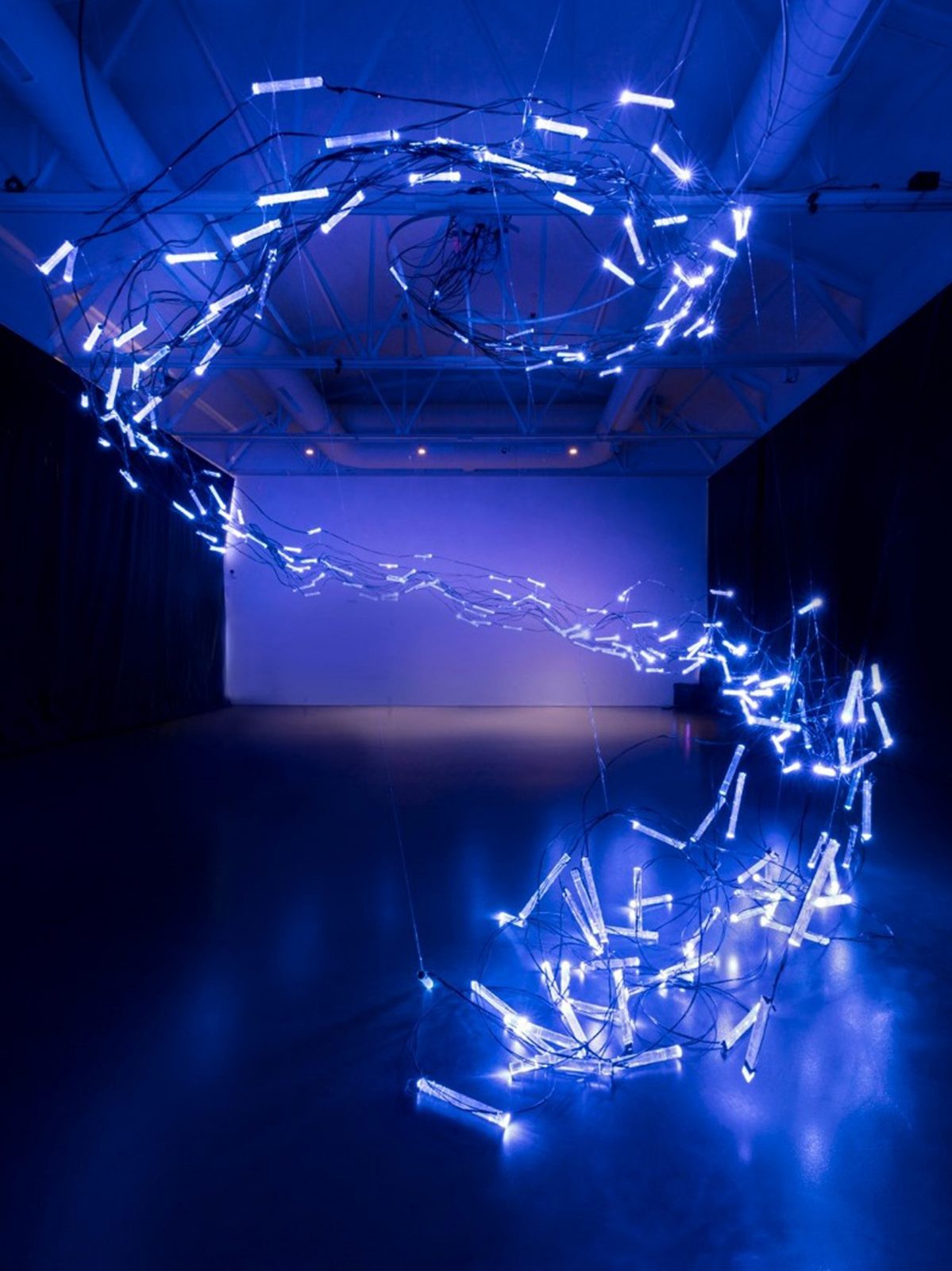
Helga Griffiths. Essence of Coal.
Coal distilled into an essence, a perfume, then a diamond. Helga Griffiths follows carbon through its forms, in the year an old trade came to an end.
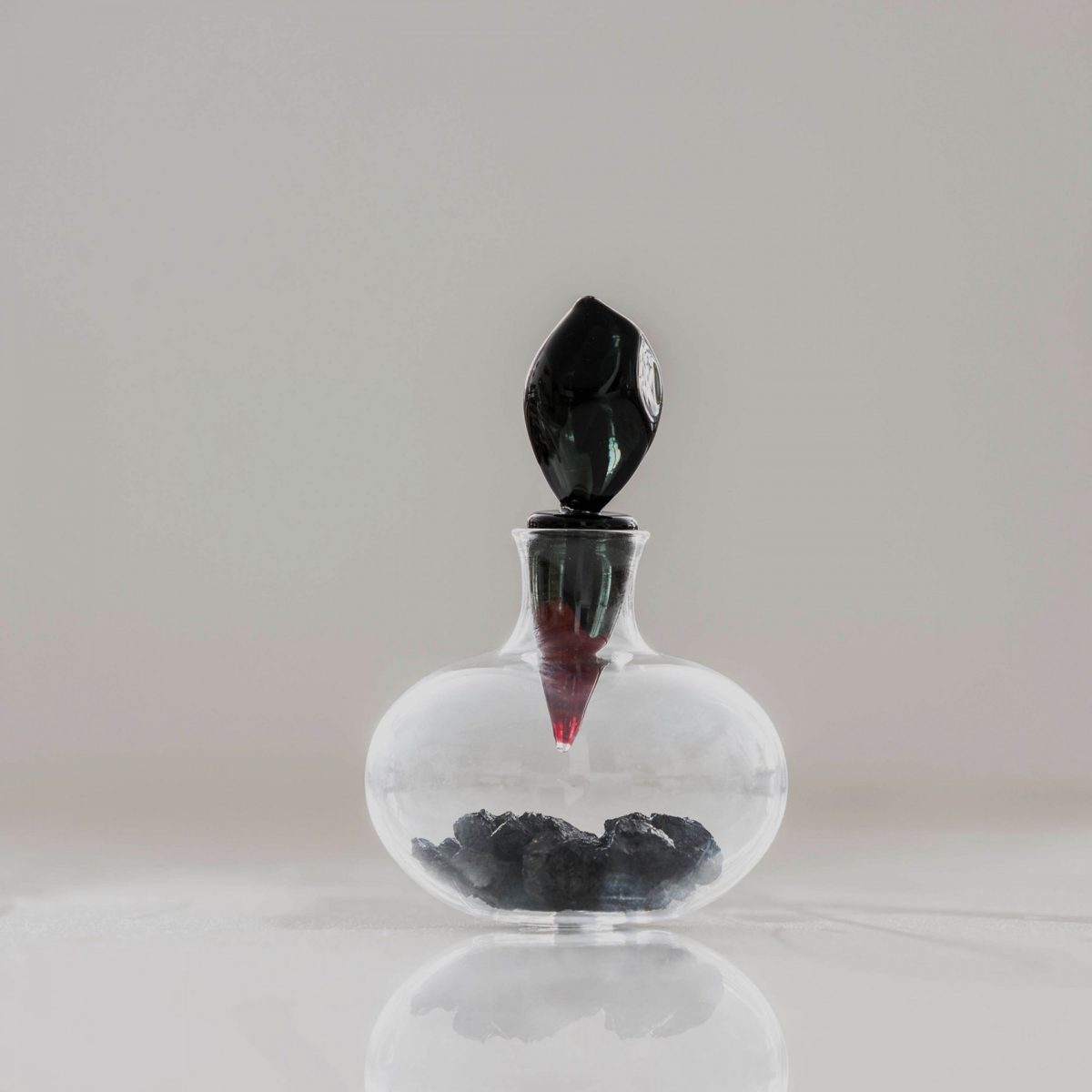
Helga Griffiths. L'Air du Charbon.
Ninety nine years after Duchamp sealed Paris air in a glass ampoule, Helga Griffiths did the same with the air of Germany's last coal mine.
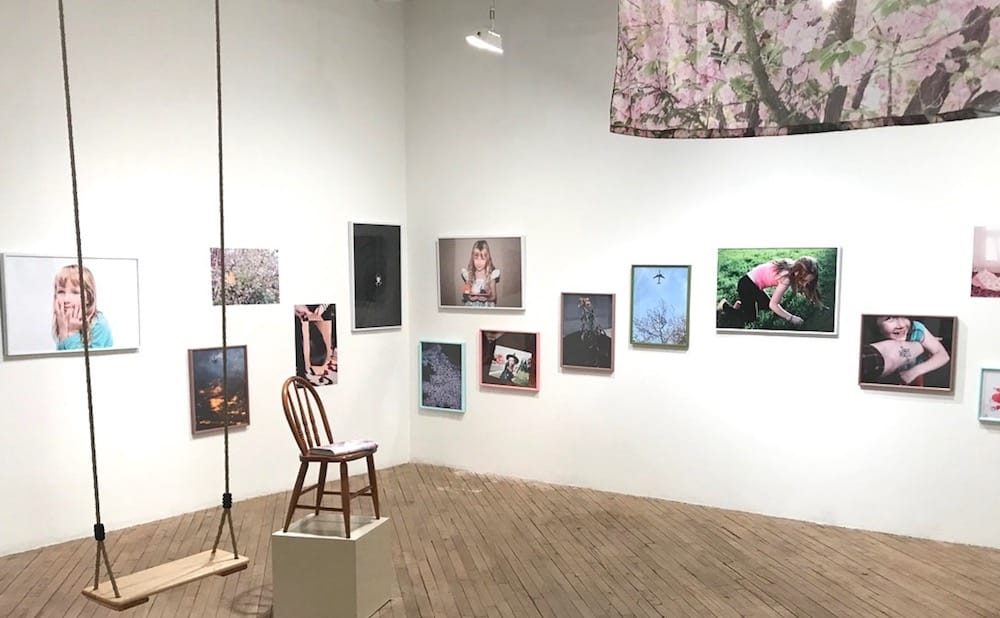
Jay Muhlin. Kid.
A girl, a cat, gardens and snow. The prints hang in a room that smells of flowers and forest. That smell is not neutral, and neither are the pictures.
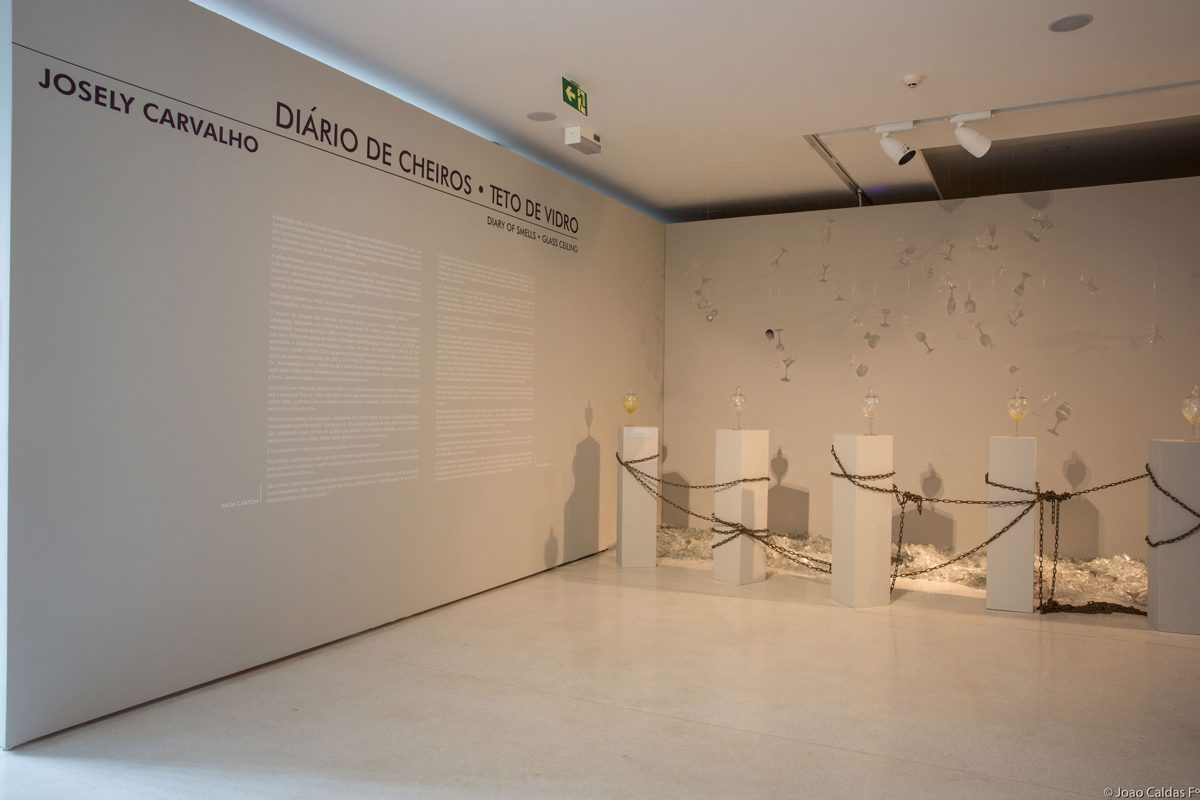
Josely Carvalho. Diary of Smells: Glass Ceiling (Teto de Vidro).
At MAC USP in 2018, Josely Carvalho showed vessels made from broken glass. From their mouths came tear gas, burning forest, a flower that opens at night.
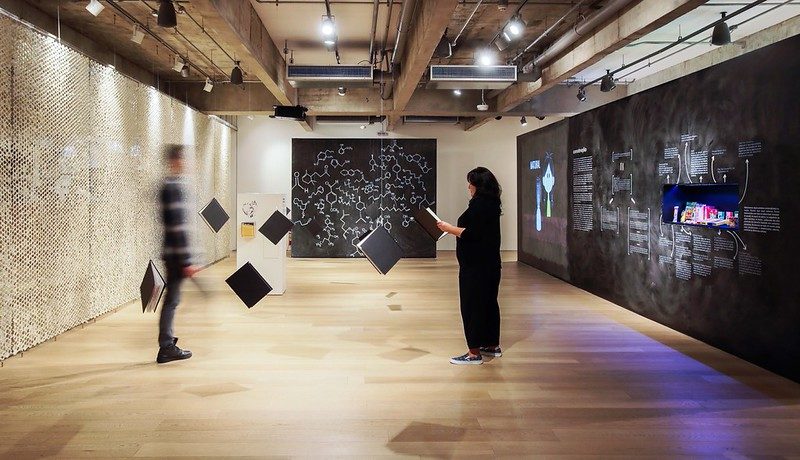
Maki Ueda. Olfactory Labyrinth Ver. 4.
At Japan House São Paulo, Maki Ueda hung 81 scent bottles in a grid. Walkers use their noses to find cherry trees no one can see.
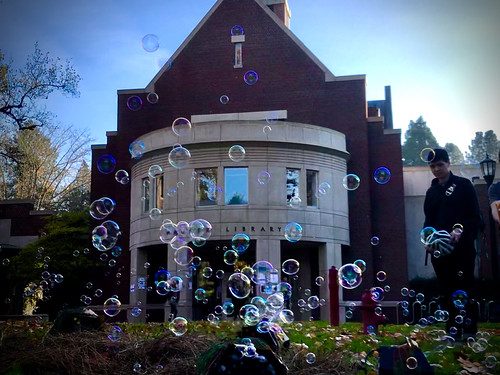
Maki Ueda. Tangible Scents: Composition of Rose in the Air.
Five bubble machines, five molecules of rose. The bubbles burst and the rose falls out in pieces.
Marguerite Humeau. Birth Canal (Venus body odour), The scent of the birth of humankind.
Twelve Venus figures, a sound piece and a synthetic smell of birth. Humeau lets visitors smell a beginning no one remembers.
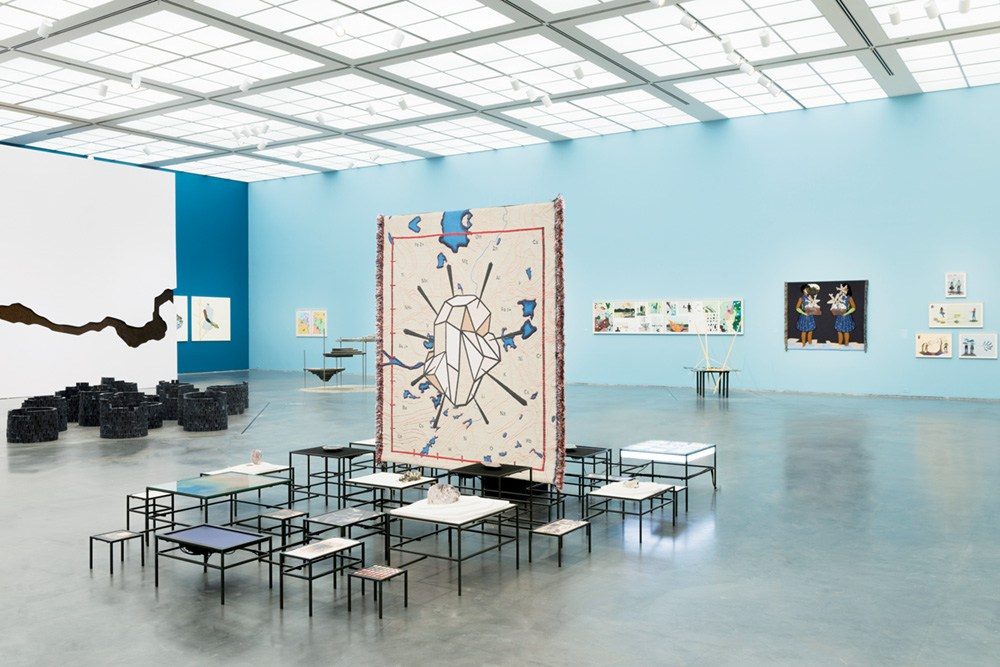
Otobong Nkanga. Anamnesis.
A fissure runs across a white wall, filled with coffee, tea, tobacco, cacao, peat and spice. The wall remembers what history would rather forget.
Pierre Huyghe. UUmwelt.
Images rebuilt from brain waves, a colony of flies and smells drawn from the same data. At the Serpentine, the room had a world of its own.
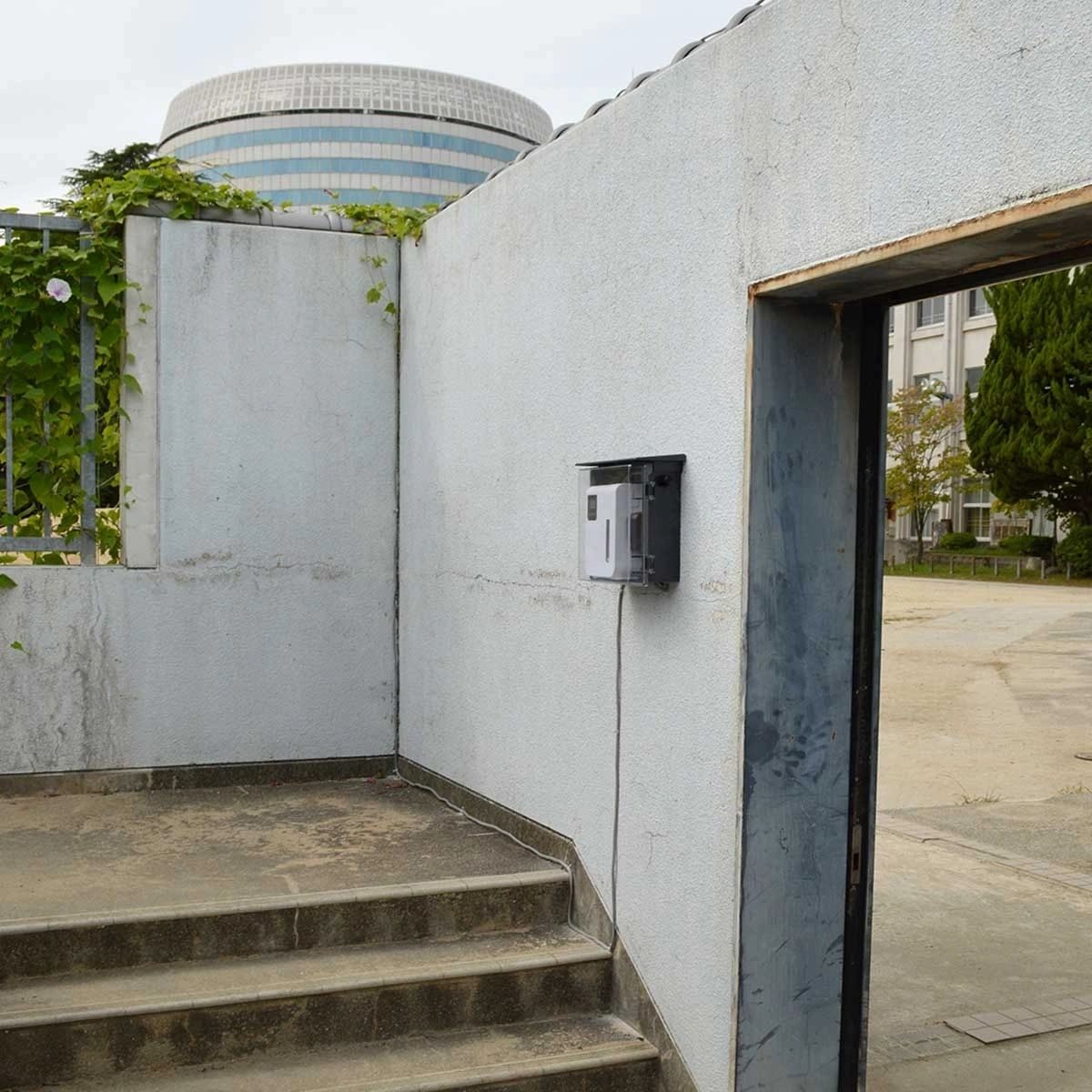
Sean Raspet. New Olfactory Molecules.
A floral molecule that did not exist before 2018. No flower stands behind it. The work is the molecule itself.
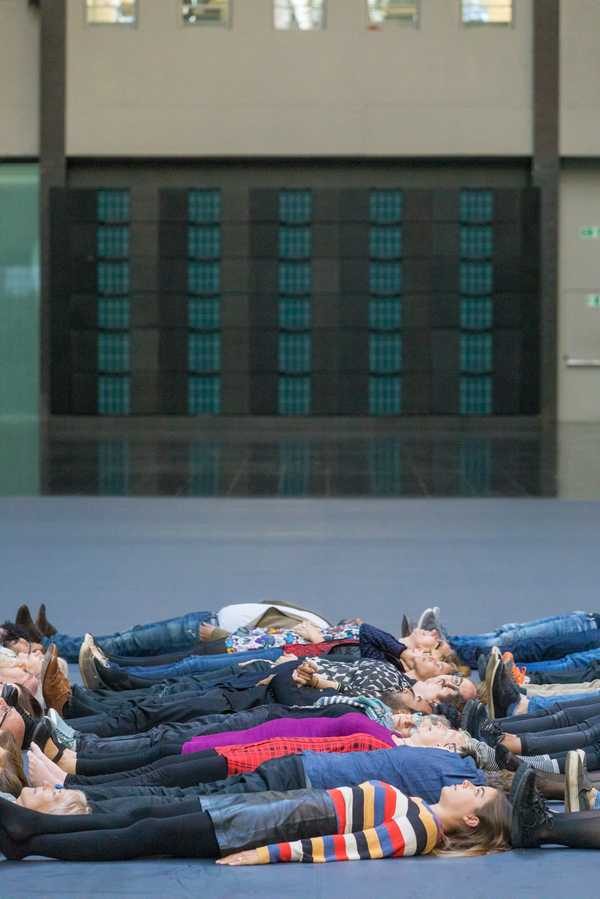
Tania Bruguera. 10,148,451.
In the Turbine Hall, visitors lay on the floor together so a face could appear. Nearby, a small room made them cry without telling them a story.
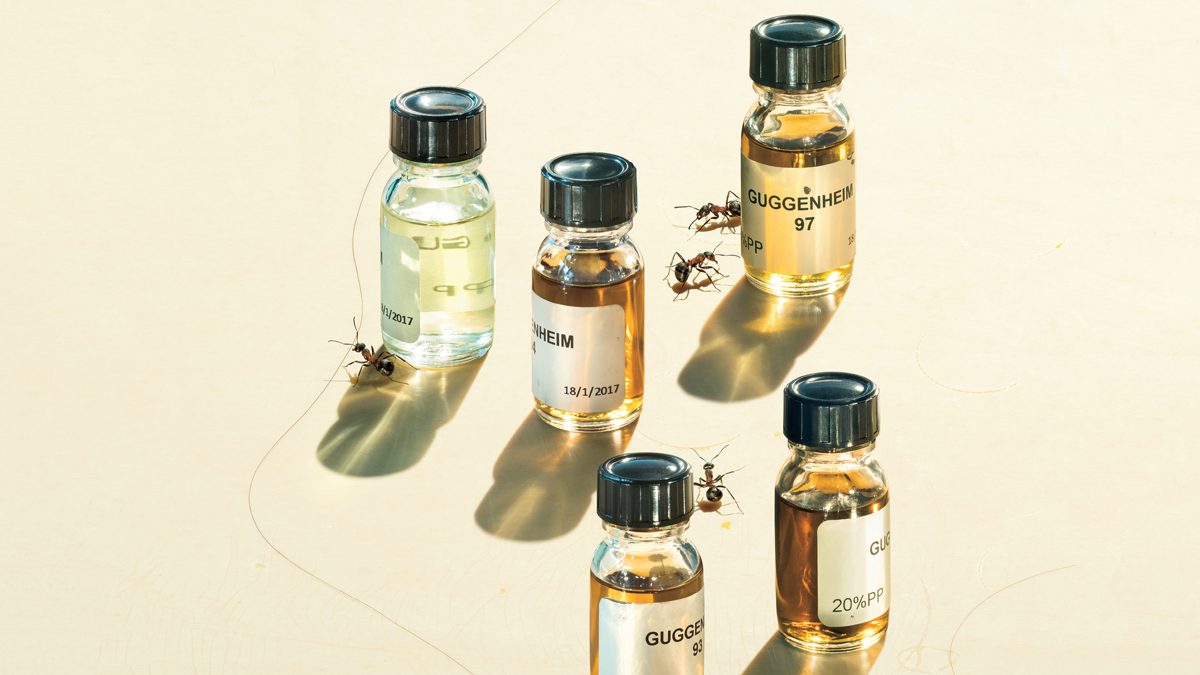
Anicka Yi. Life Is Cheap.
The entrance is a holding pen. Metal canisters release a smell made from human sweat and ant emissions. Visitors pass through it before they see anything.
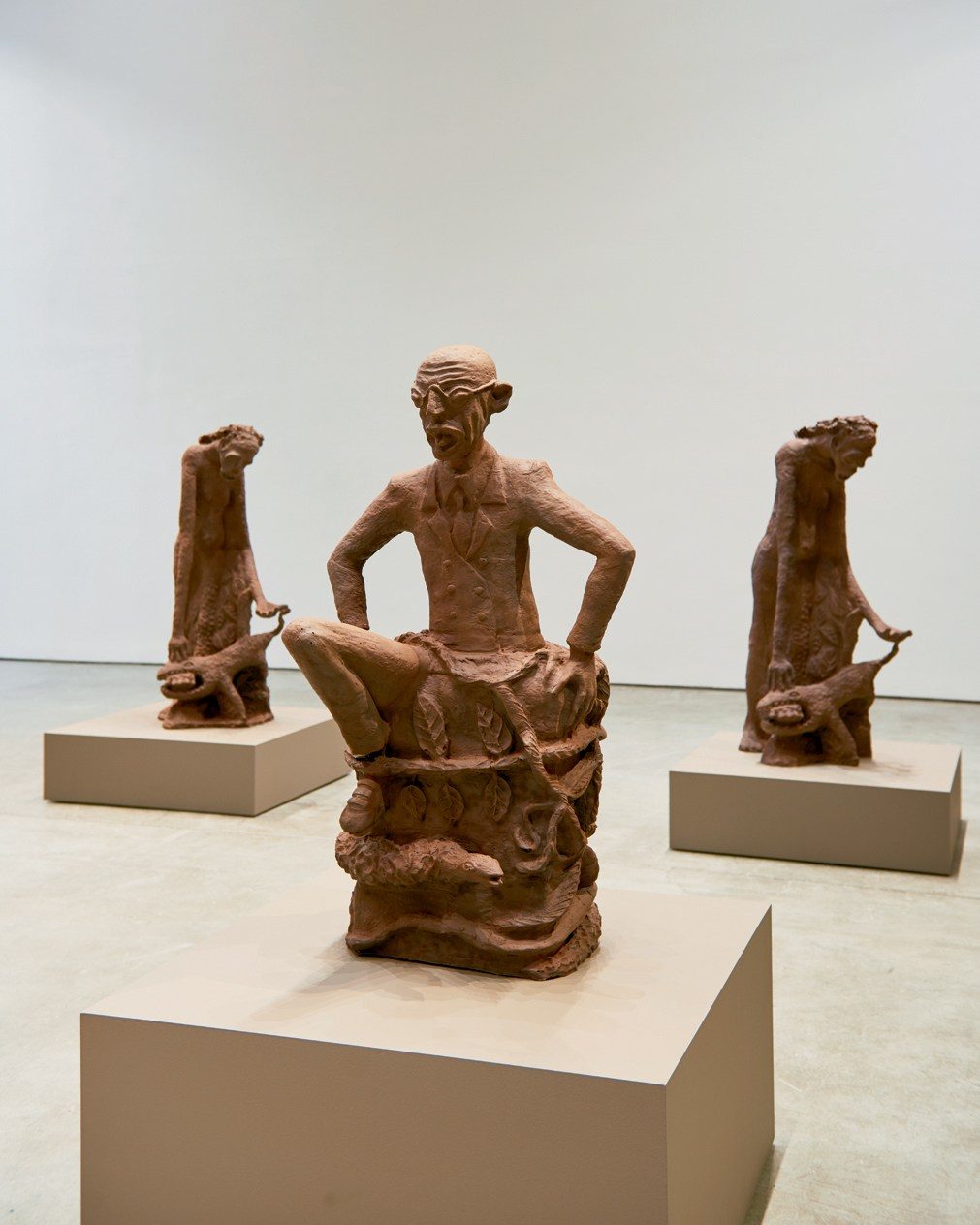
Cercle d'Art des Travailleurs de Plantation Congolaise.
Plantation workers in Lusanga model figures in clay, then the figures are cast in chocolate. The cocoa smell in the gallery is the smell of a supply chain.
Elaine Cameron-Weir. Who you are what looks out from behind you are is the thing that names what transforms…now, look what calms the captive by letting him sniff the perfume, like smell what smells like your masters crotch.
A lump of resin kept warm on a laboratory heater, a leather mask nearby. No one is in the room, but the smell is as if someone were.
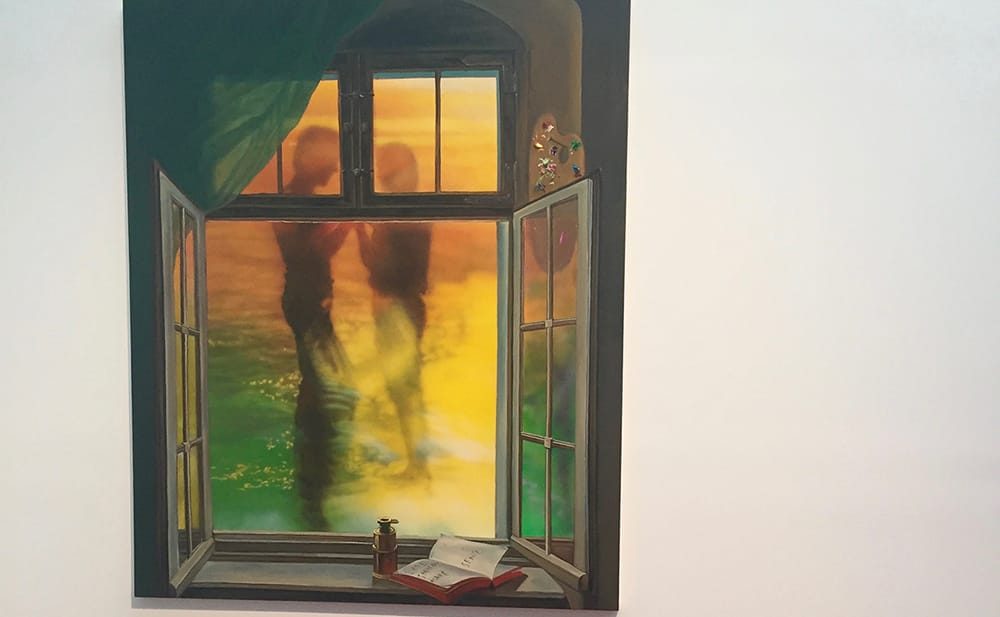
Friedrich Kunath. Frutti di Mare.
An exhibition like a romance novel about an artist and his work. Paintings, a film, stray socks, and a very light floral smell that everyone walks through.
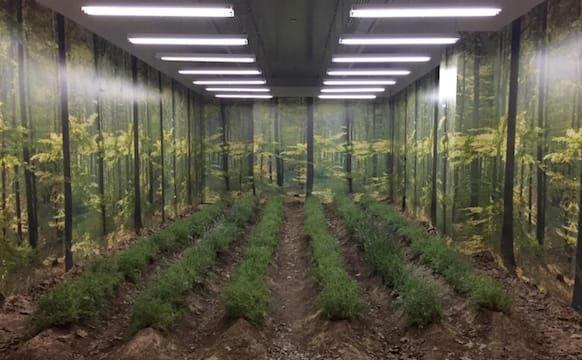
Martin Roth. I cultivated a piece of land in Midtown Manhattan nurtured by tweets.
Two hundred lavender plants in a Midtown basement. The grow lights brighten whenever accounts around the White House are heavily retweeted.
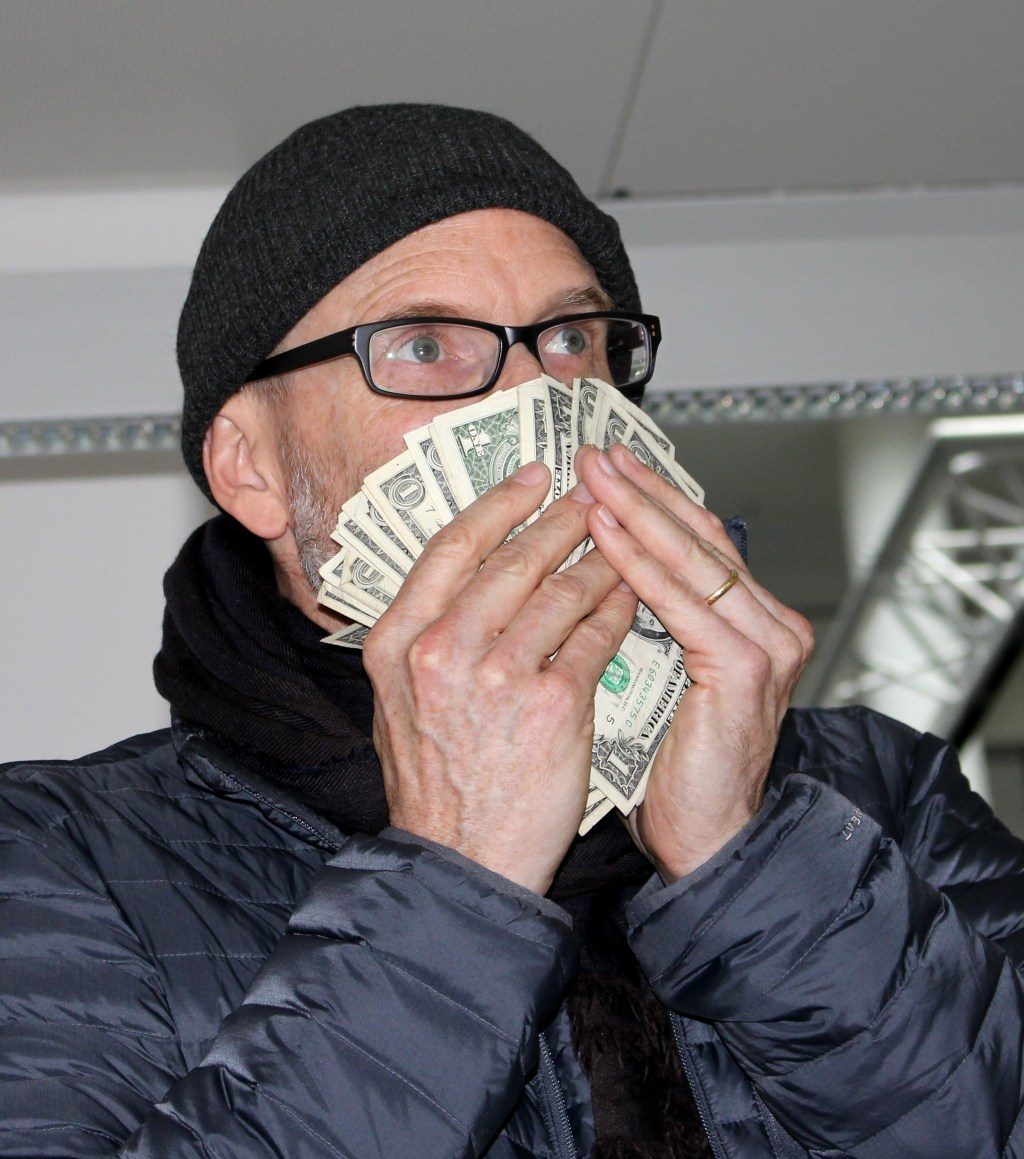
Mike Bouchet. Tender.
An empty gallery. No paintings, no statues. Only the smell of handled dollar bills, rebuilt by a perfumer from over 100 components.
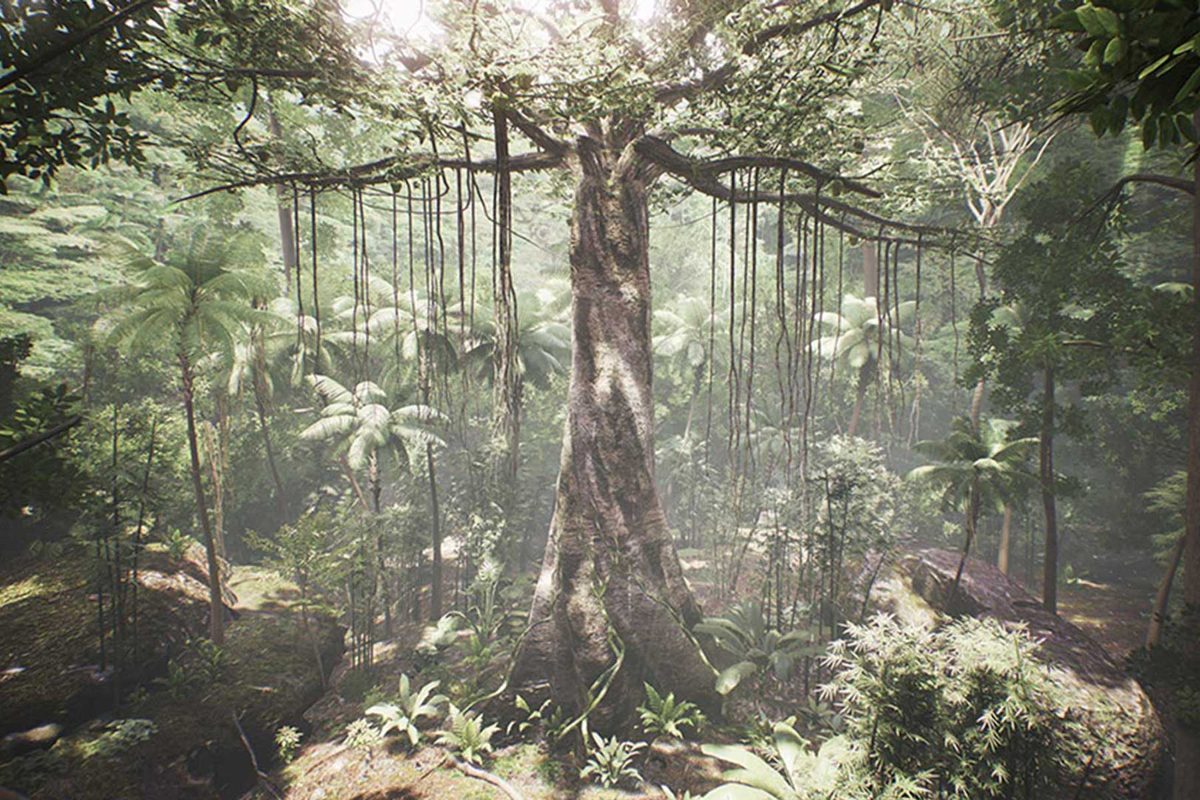
Milica Zec, Winslow Porter. Tree VR.
Arms become branches, the body becomes a trunk. The smell of earth arrives before the eyes know where they are.
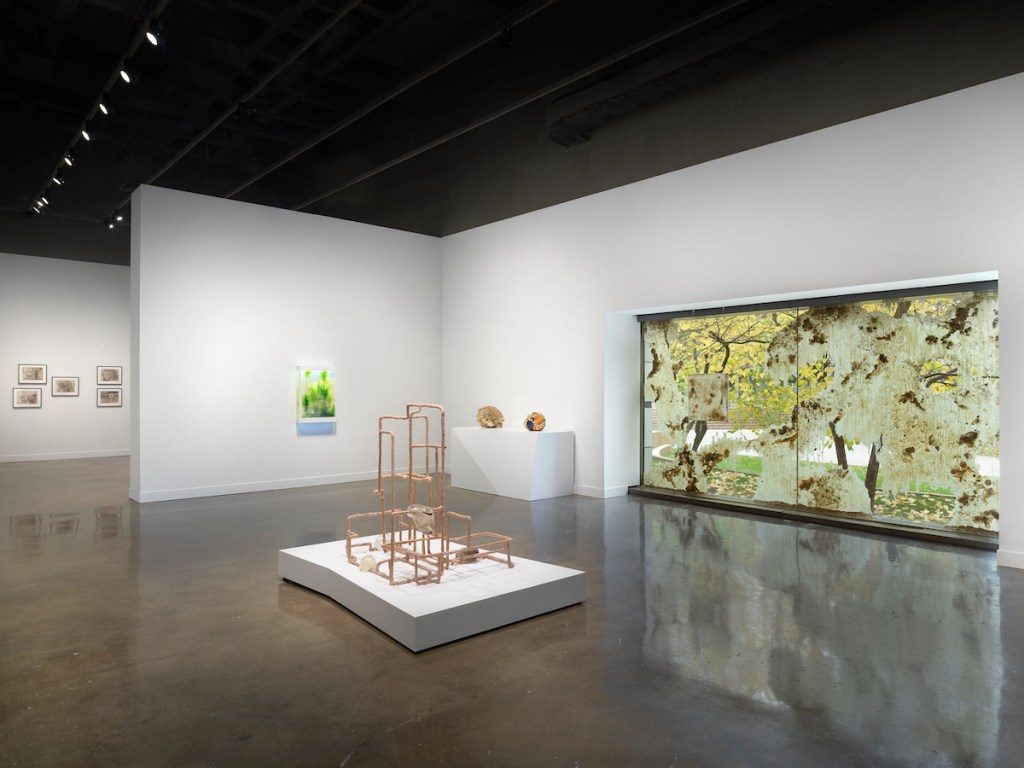
Pamela Rosenkranz. She Has No Mouth.
Pink sand on the floor like cat litter, giving off a heavy musk. A character with no mouth, and desires that need no words.
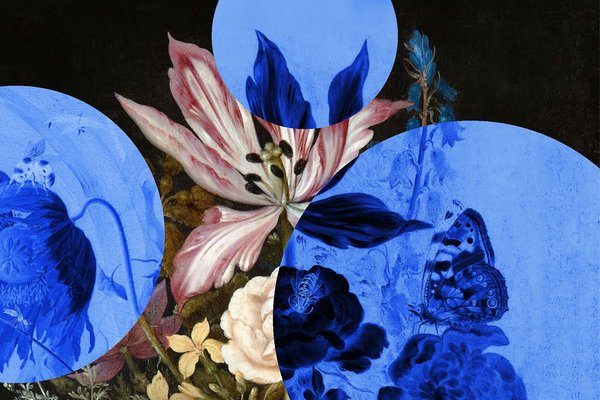
Perfume: A Sensory Journey Through Contemporary Scent.
Ten perfumers, ten scents, ten rooms. A Moroccan desert, a confessional, a water park. Each smell was given a place to live.
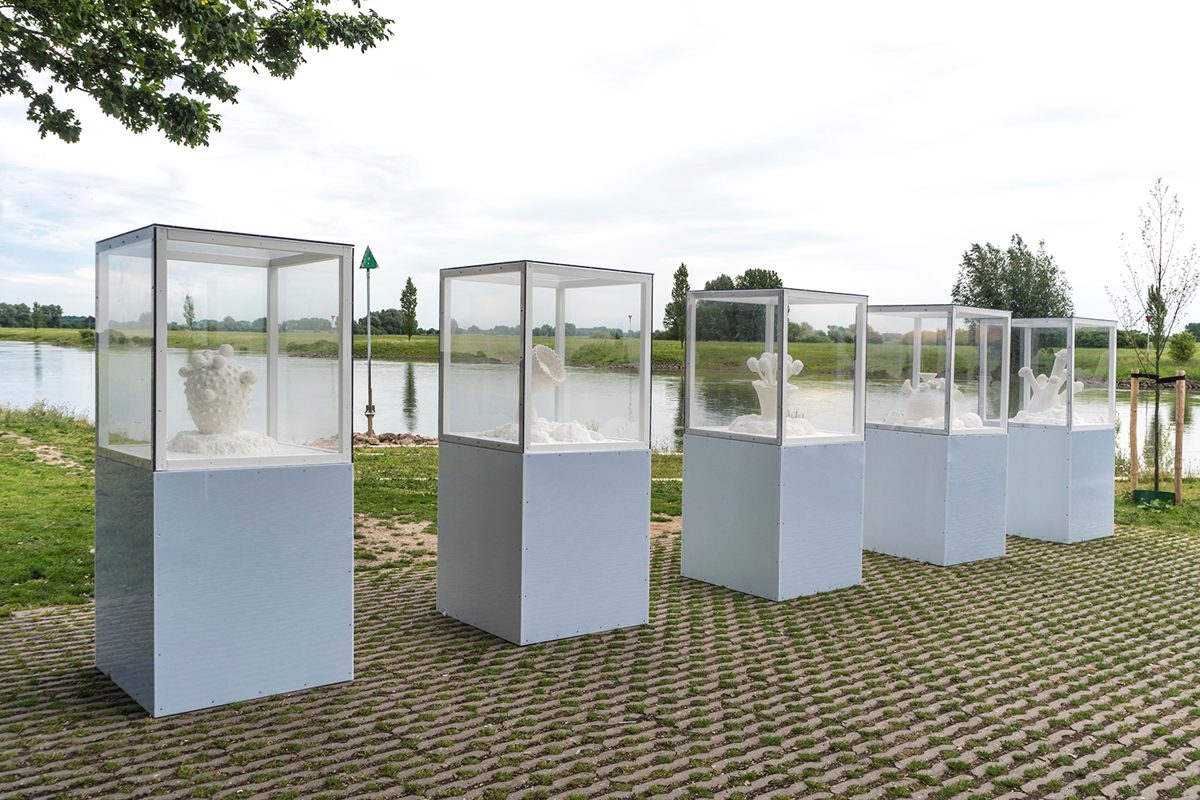
Peter de Cupere. Salt Flowers.
Five flowers glittering white like salt, each with its own smell. Look closer: none of it is salt, and the floral smell does not come from flowers.
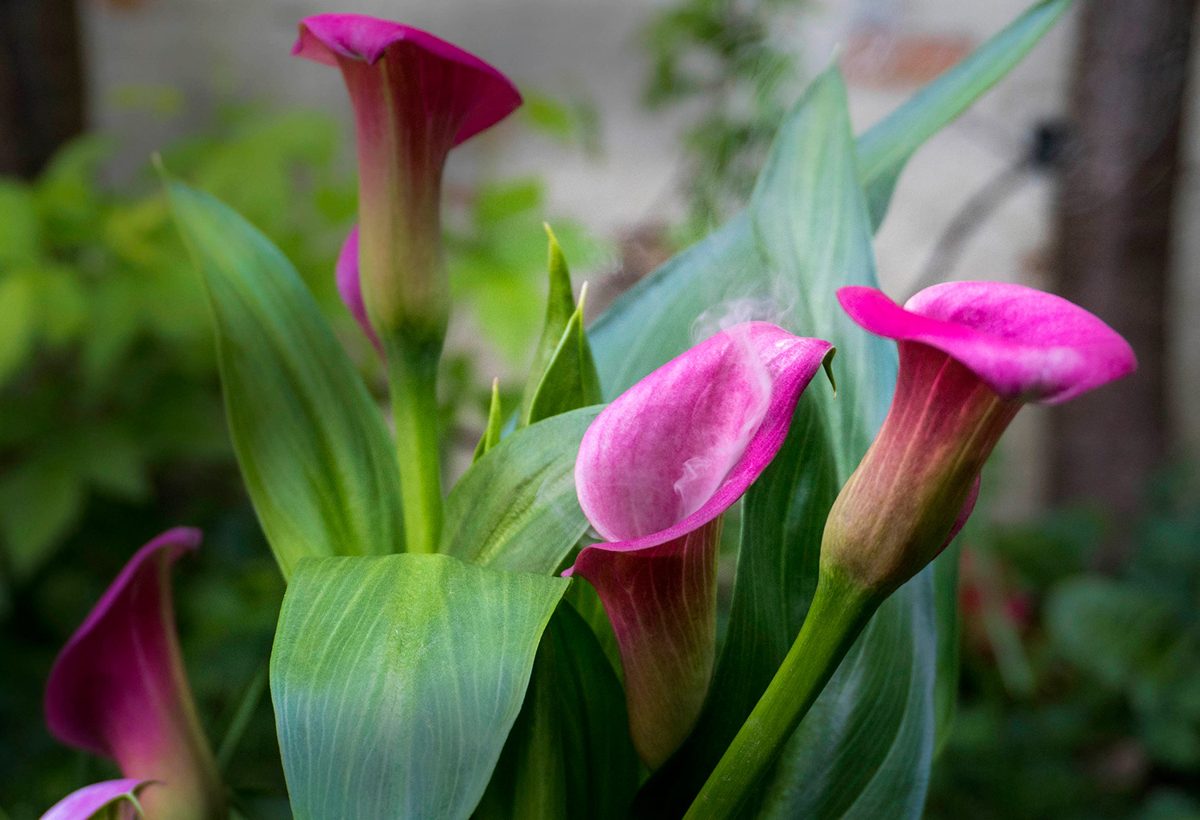
Peter de Cupere. Smoke Flowers.
A visitor leans in to smell a flower. The flower answers with a puff of smoke that smells of the city.
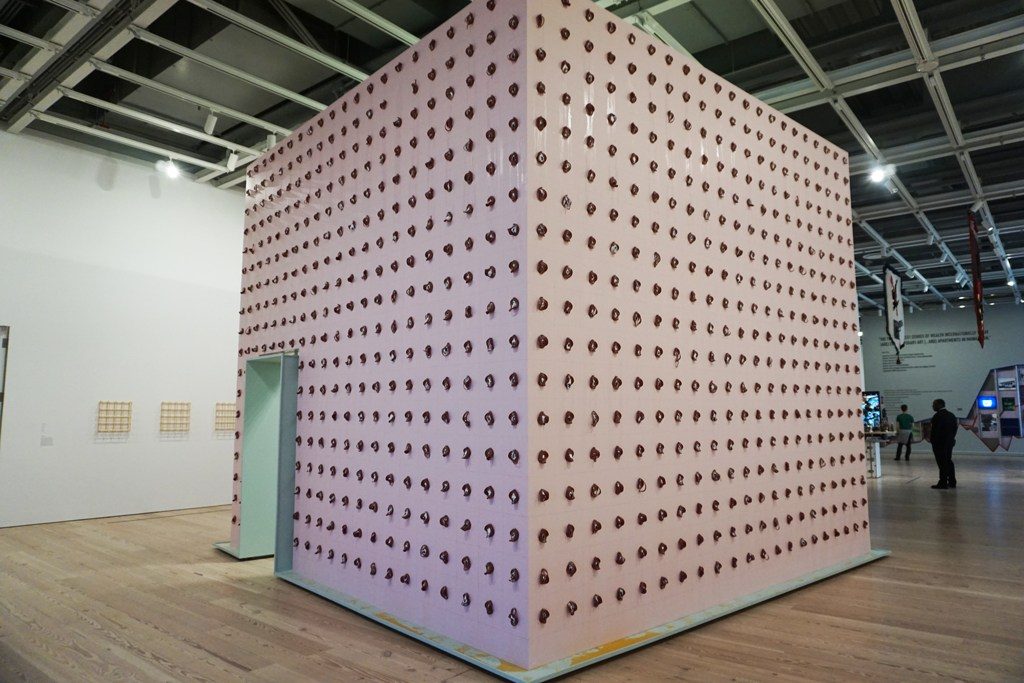
Pope.L. Claim (Whitney Version).
Thousands of bologna slices, each with a stranger's photo, pinned in a grid. Over the show the meat dried, curled, and the smell changed.
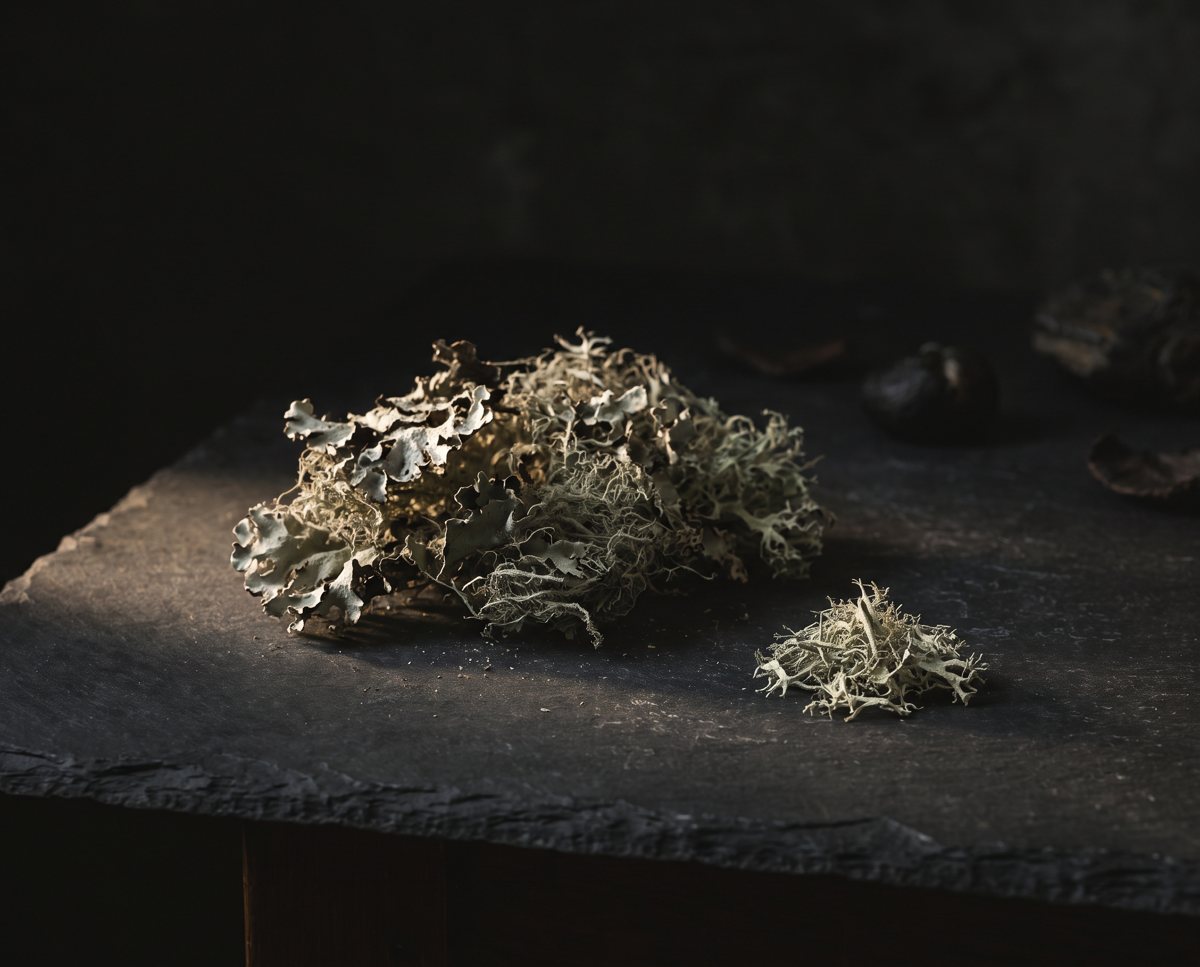
Reformulation. Is it still the same smell?
Same name, same bottle, yet different inside. Reformulation is ordinary in perfume. Penta asks: plank by plank replaced, is the ship still the old one?
AIX Scent Fair.
A free scent fair inside a museum, where visitors could smell, ask and blend for themselves. AIX Scent Fair set independent perfumers beside artists.
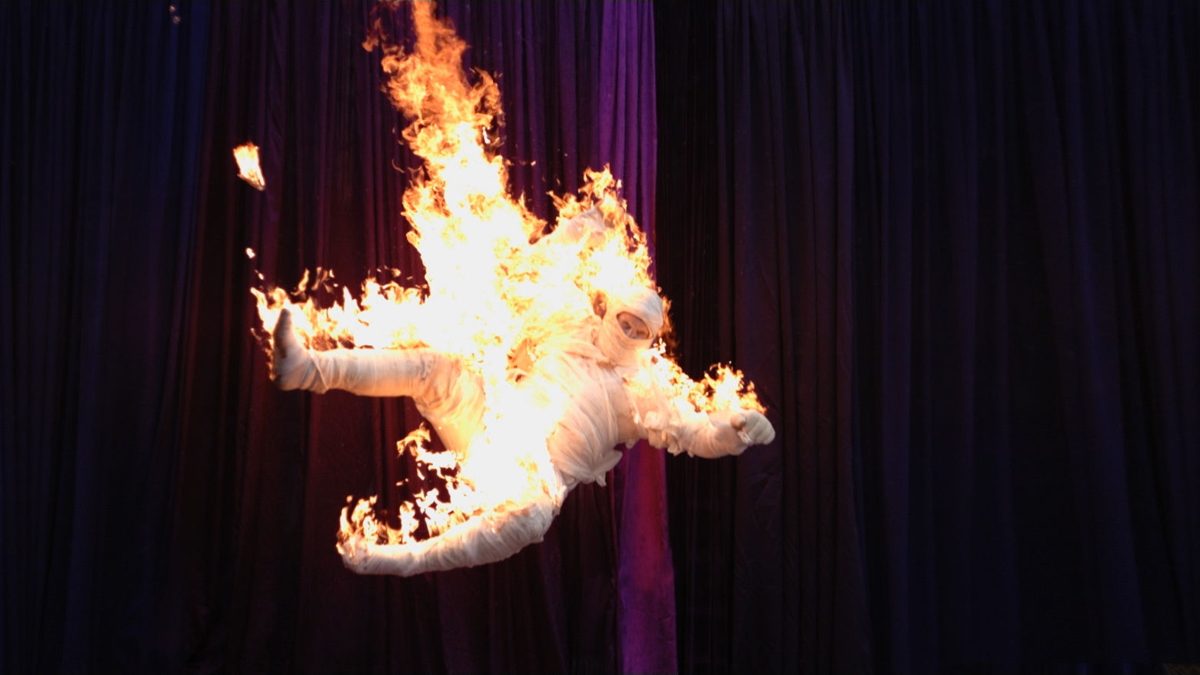
Alex Da Corte. A Season in He'll.
A rose stained glass window, chain link curtains, an oversized witch hat, and a room where even the air is staged.
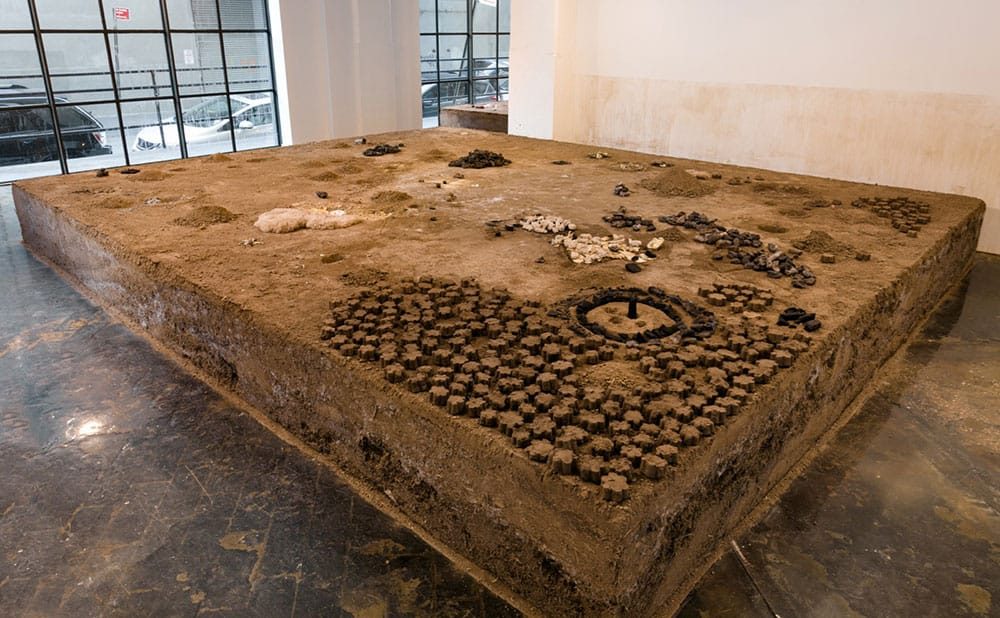
Dineo Seshee Bopape. sa ____ ke lerole, (sa lerole ke ___).
Compacted soil, half burnt sage, petals scattered on the earth. A room that smells of land and of rituals left behind.
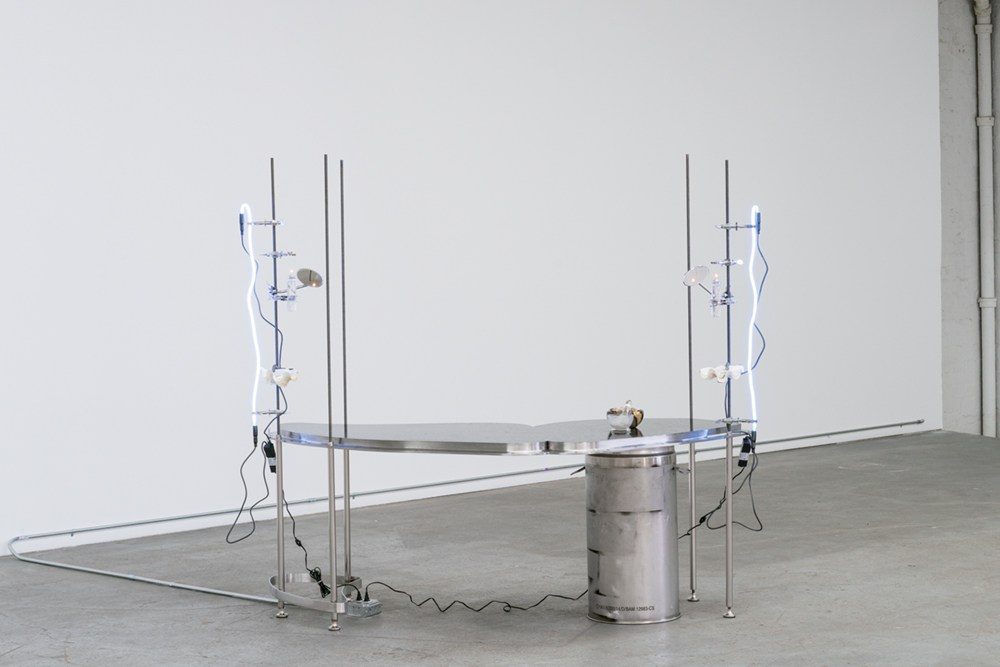
Elaine Cameron-Weir. Sentry Tactical Like Prey with Evolutionary Eyes of a Predator on the Wing 2.
A sculpture of steel and stone, with motorcycle mirrors looking back and a small flame warming frankincense. The work stands still. The smell does not.
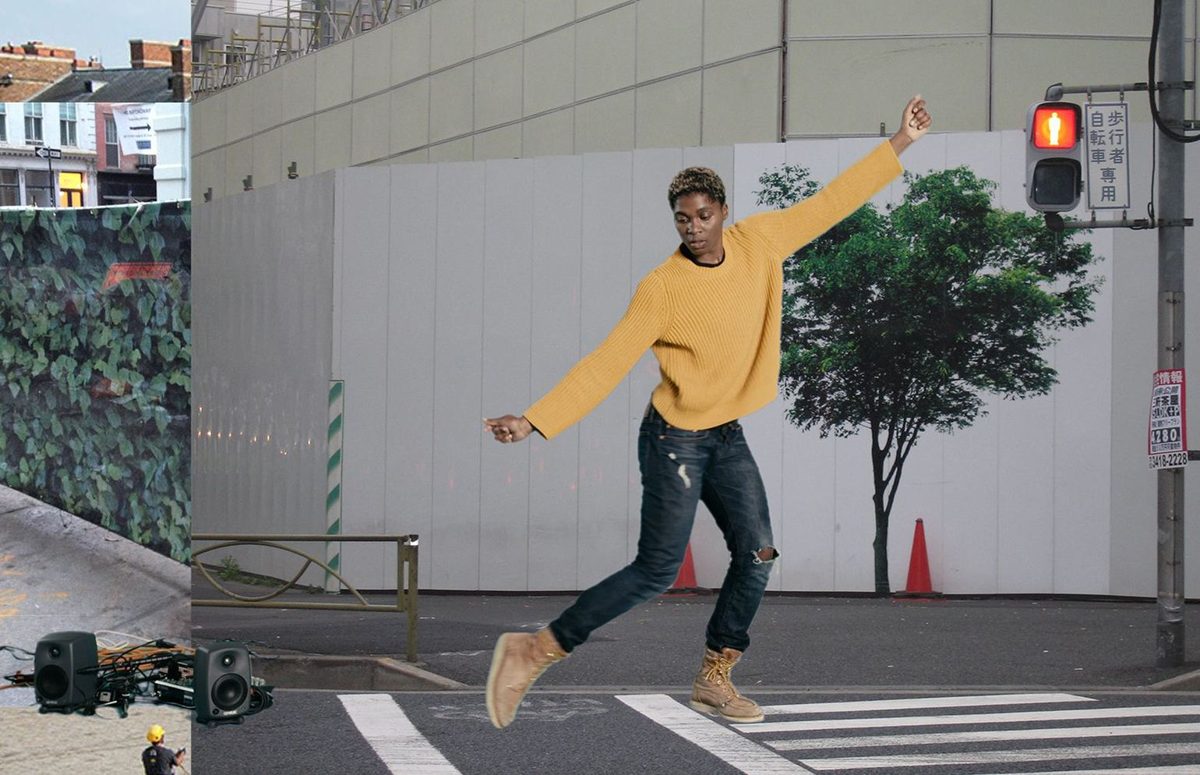
Elodie Pong. Paradise Paradoxe.
Two perfume names that happened to sit side by side on a screen became an exhibition title. Elodie Pong looks at the gap between smell and words.
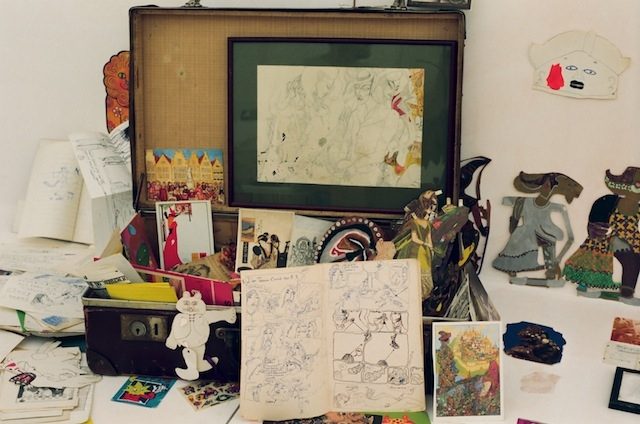
Kai Althoff. and then leave me to the common swifts (und dann überlasst mich den Mauerseglern).
Kai Althoff turned a suite of MoMA galleries into one continuous space under white tents, with his own music and a sweet smell throughout.
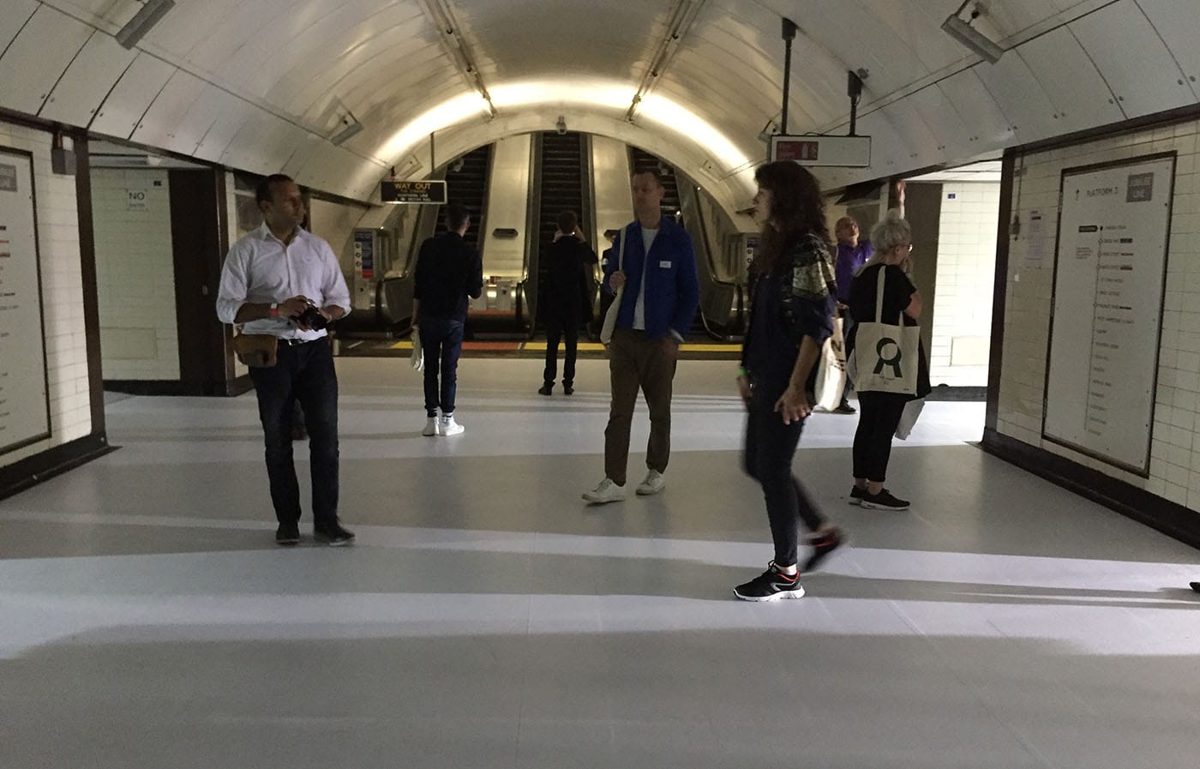
Koo Jeong A. Odorama (Charing Cross).
No sculpture, no painting, no screen. Koo Jeong A used light and the smell of agarwood to turn an abandoned platform into somewhere else.
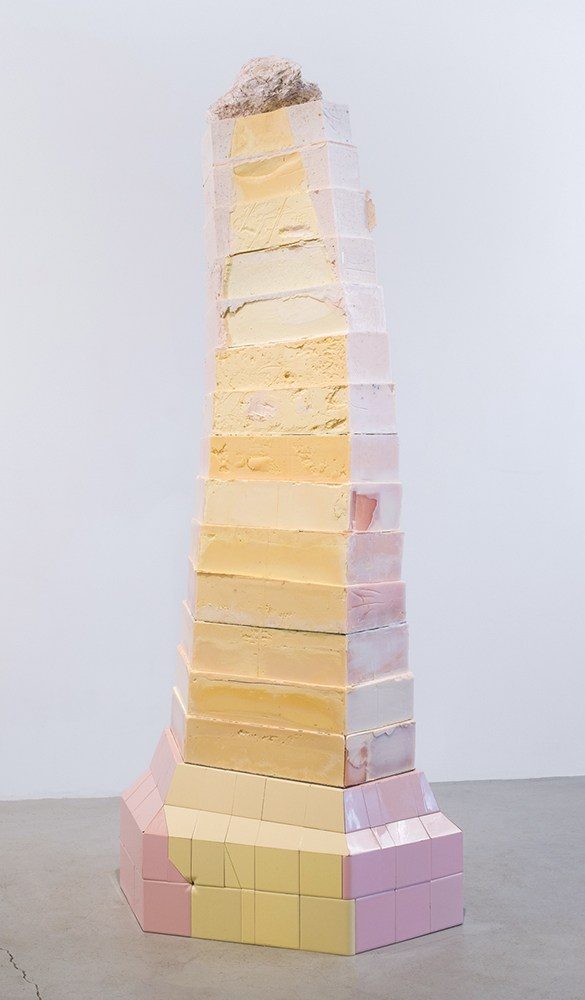
Larry Bamburg. TalctoTile.
Raw talc, bathroom tile and homemade tallow soap stacked into towers. The gallery smelled like a bathroom.
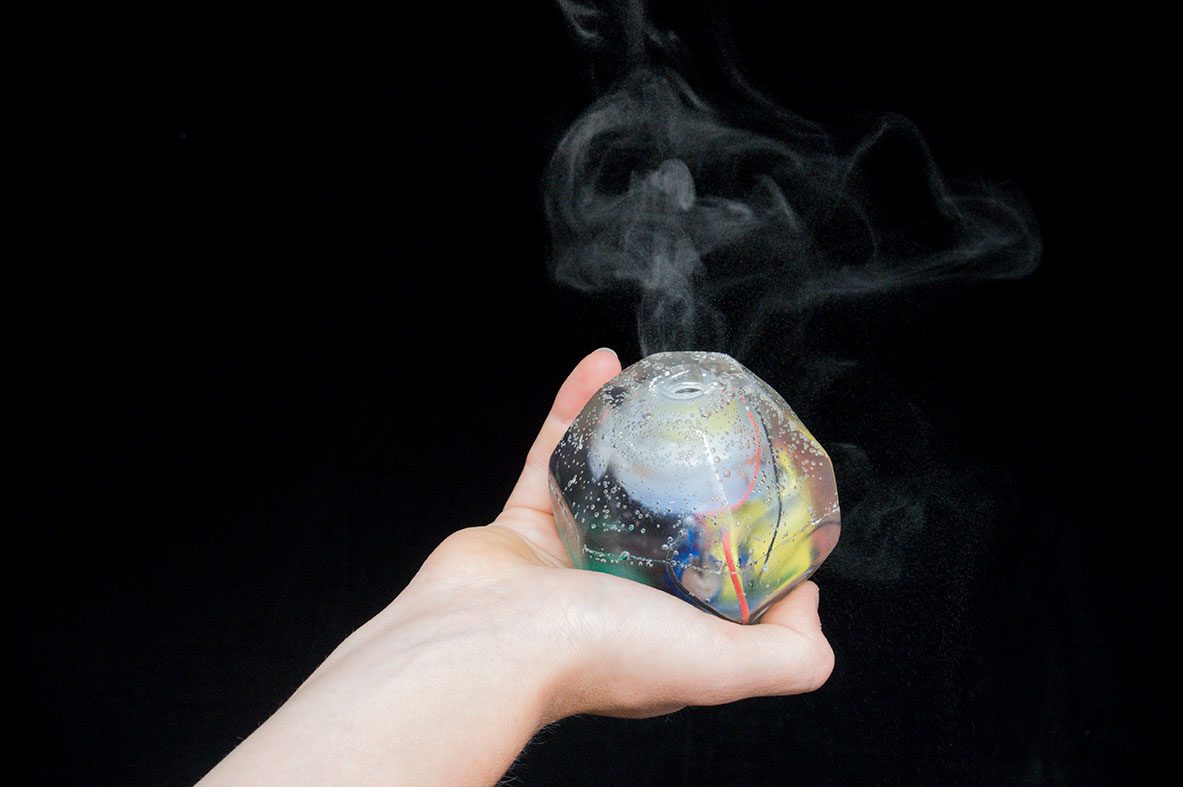
Leanne Wijnsma, Froukje Tan. Smell of Data.
Gas has no smell, so a smell was added to warn us. Smell of Data does the same for your data.
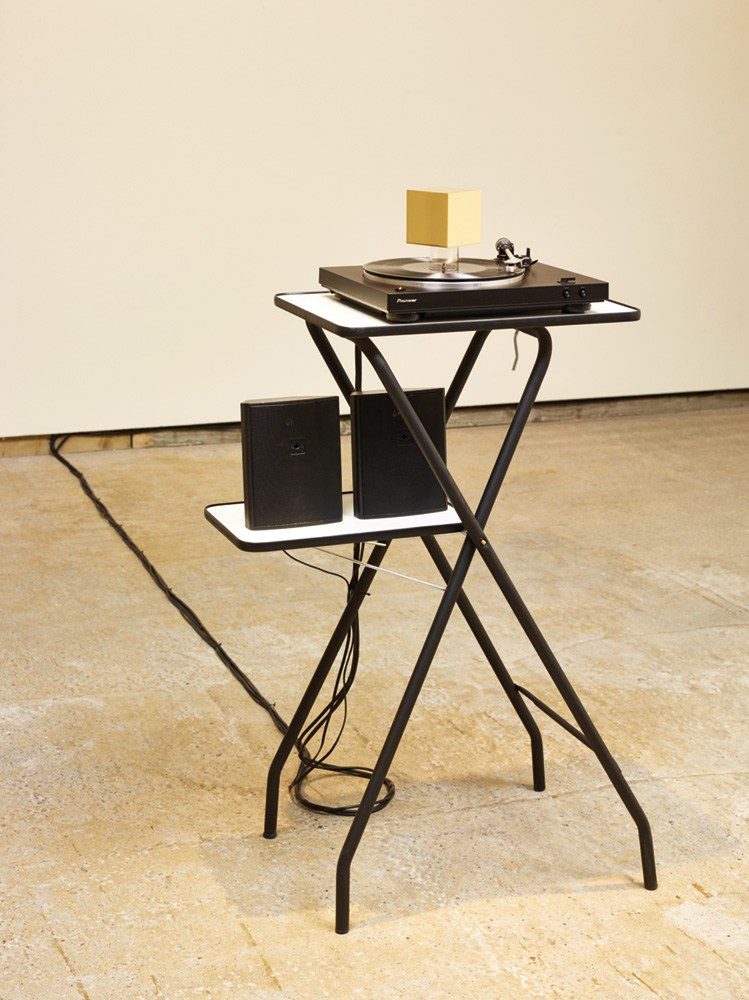
Massimo Bartolini. Toscano.
A small machine smokes a real cigar. No smoker. Only the smell of tobacco spreading through the gallery.
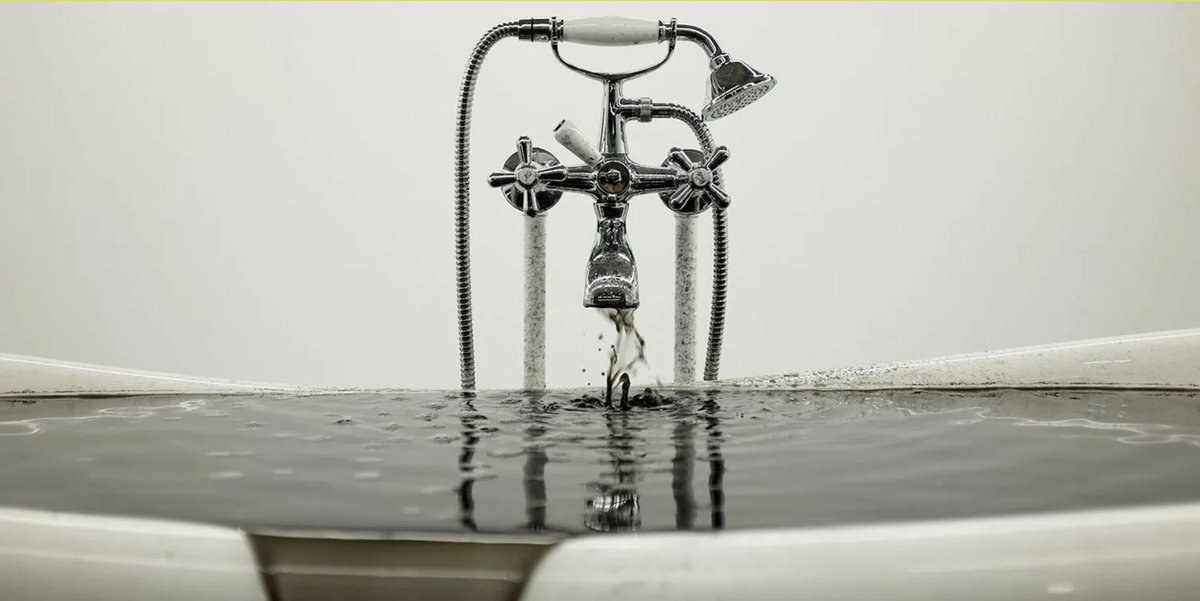
Oswaldo Maciá. Under the Horizon.
Nothing to look at but a bath and a black stream that never stops running. The rest of the work lives in the visitor's nose and ears.
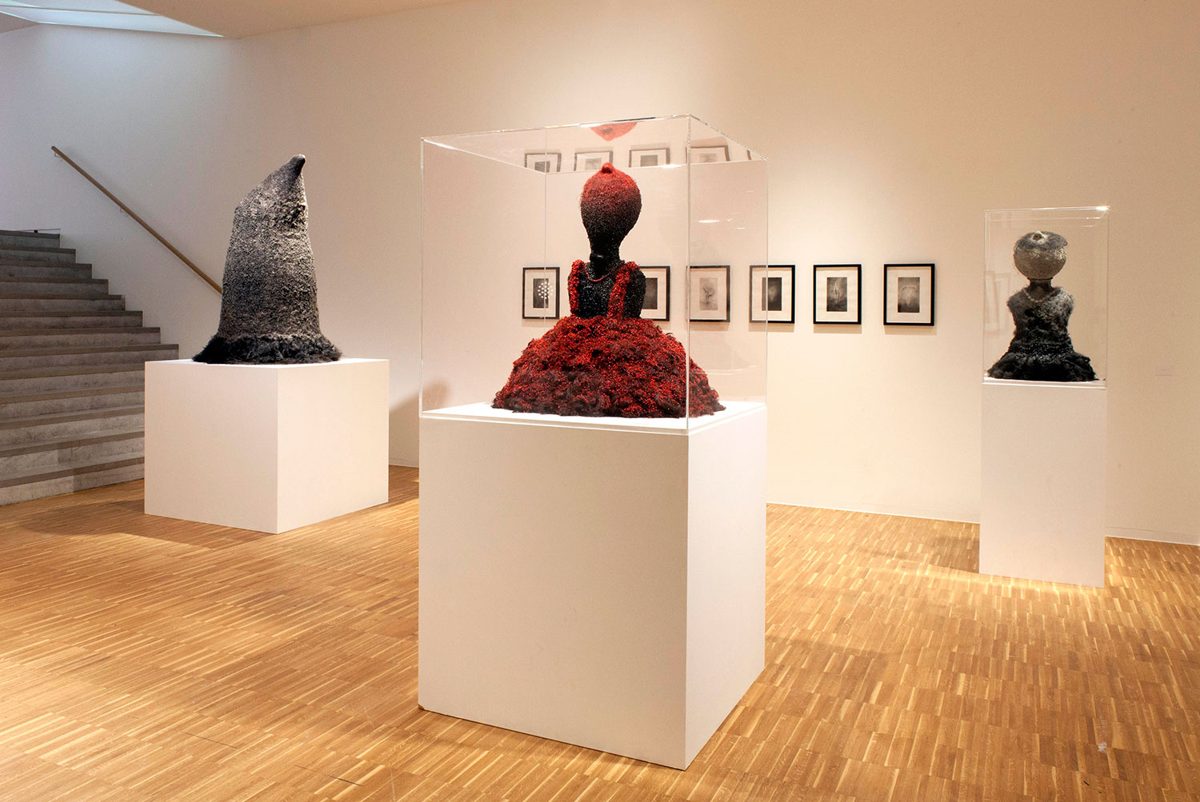
Peter de Cupere. Is This Mankind?
Three olfactory spaces, a forest of hair, and the testimony of people who lost their hair without choosing to. Smell keeps what a photograph cannot.
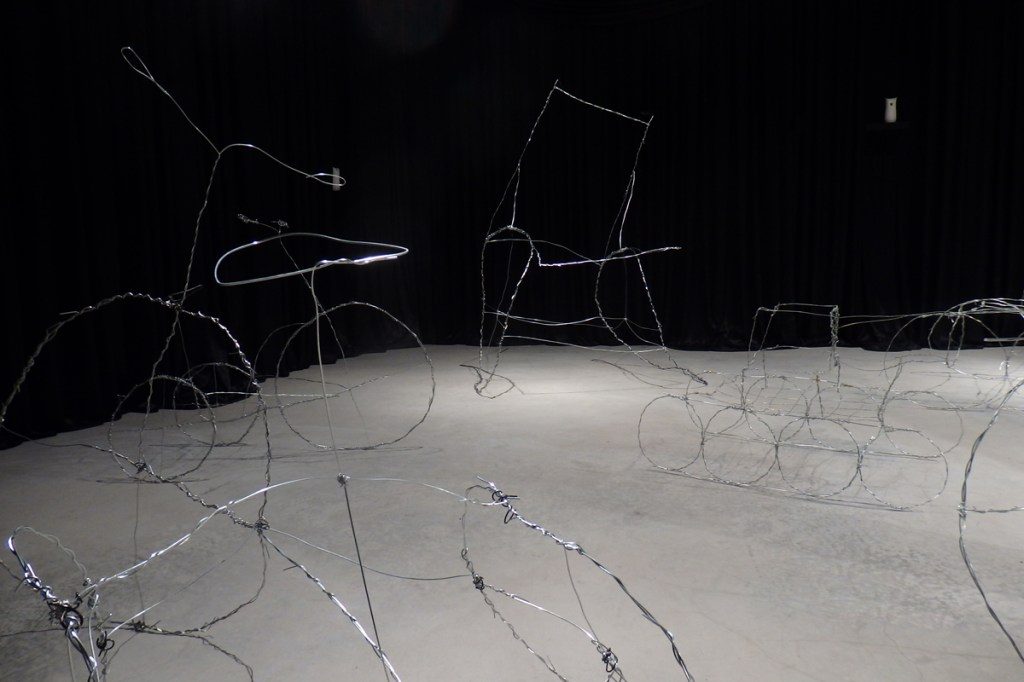
Amalia Ulman. Stock Images of War.
Behind black curtains: tanks, wheelchairs and bicycles in thin wire. Air fresheners puff apple cinnamon on a timer. War smells like a living room.
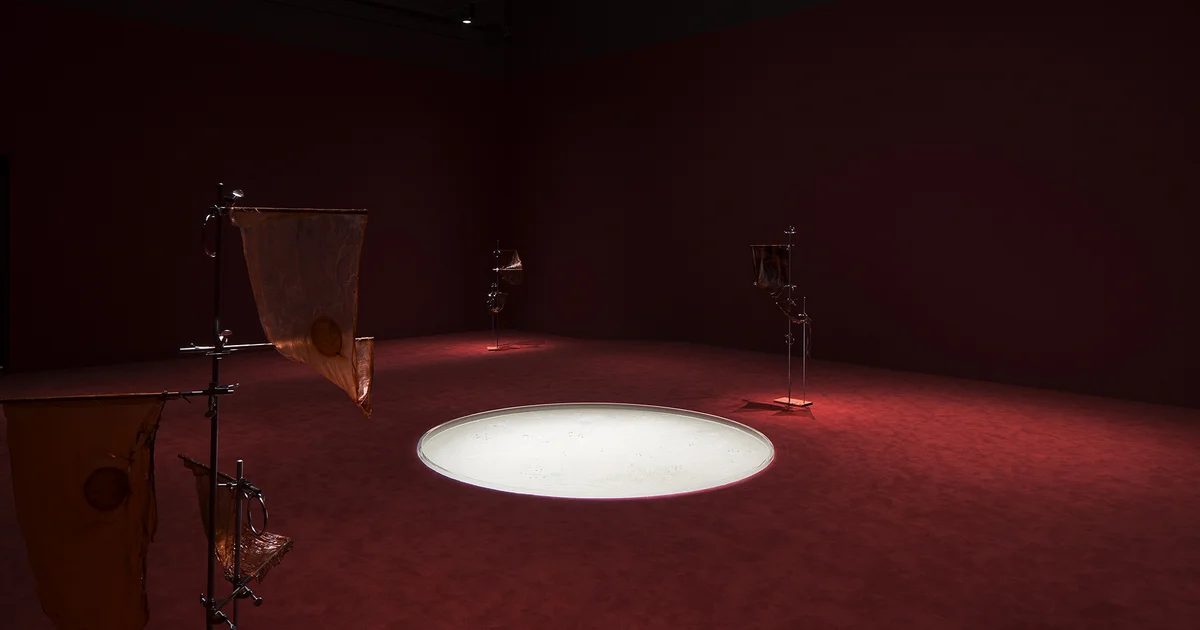
Anicka Yi. 6,070,430K of Digital Spit.
A gallery at MIT smells of mint. Anicka Yi uses perishable materials to ask how taste remembers.
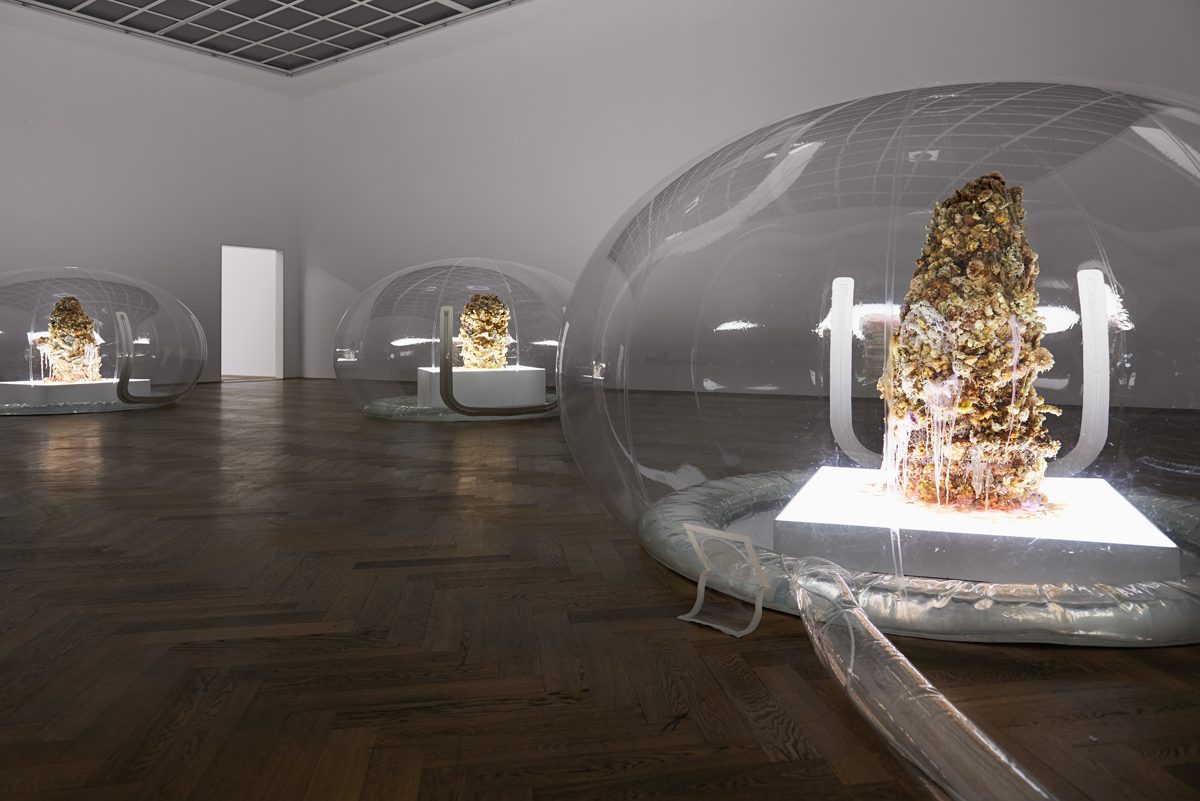
Anicka Yi. 7,070,430K of Digital Spit.
A show that closed five years of work. A scent named forgetting. A book printed on incense paper, to be burned after reading.
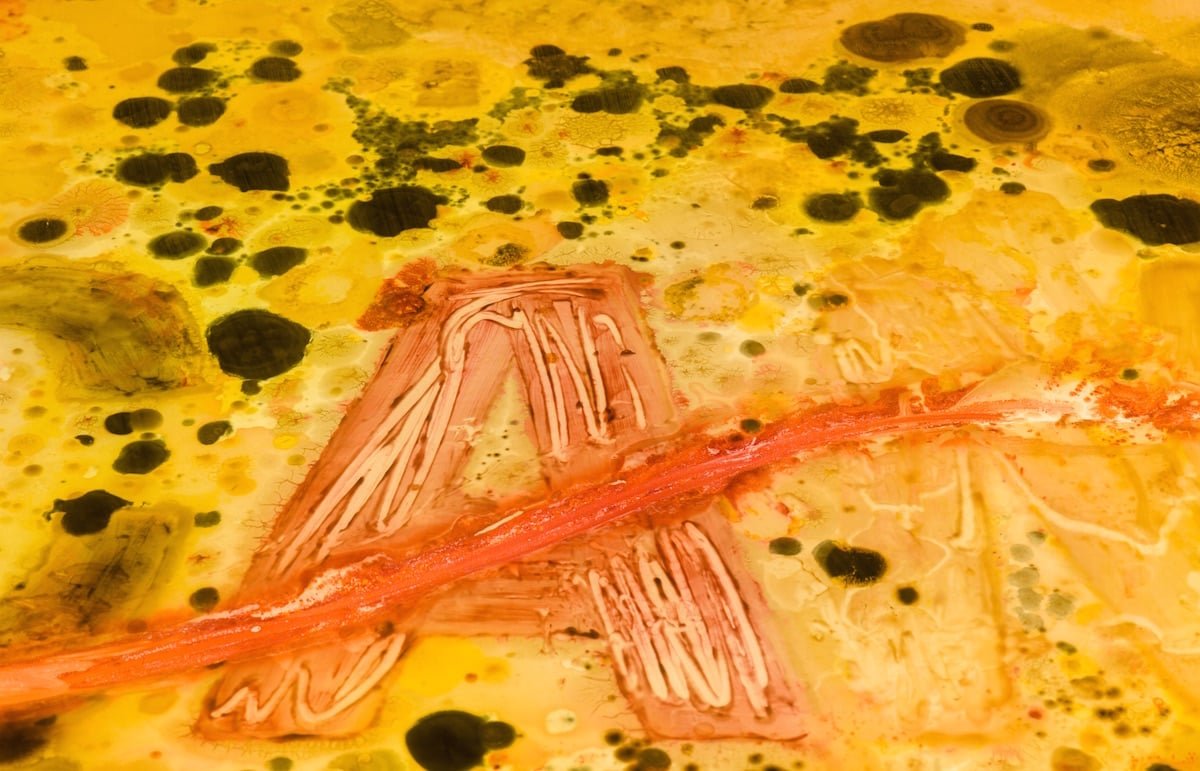
Anicka Yi. You Can Call Me F.
One hundred women sent samples from their bodies. Their bacteria grew on a sign at the entrance, and their smell filled the room.
Belle Haleine, The Scent of Art.
Breath sealed in balloons, talcum underfoot, eucalyptus vapour in a video room. A Basel museum asked: what if the nose took the lead?
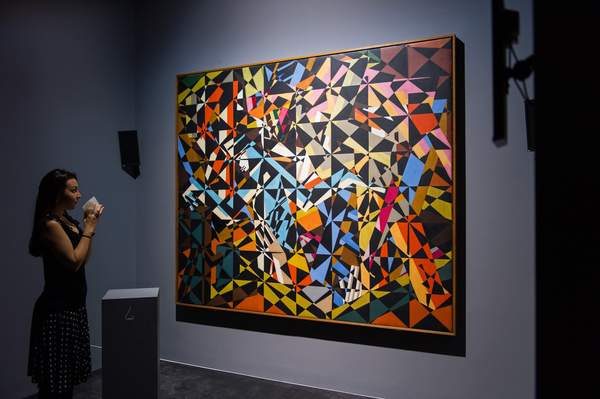
Flying Object. Tate Sensorium.
Grass and earth for Francis Bacon, hairspray for Richard Hamilton, paint for David Bomberg's dockyard. Four paintings, each read through the nose.
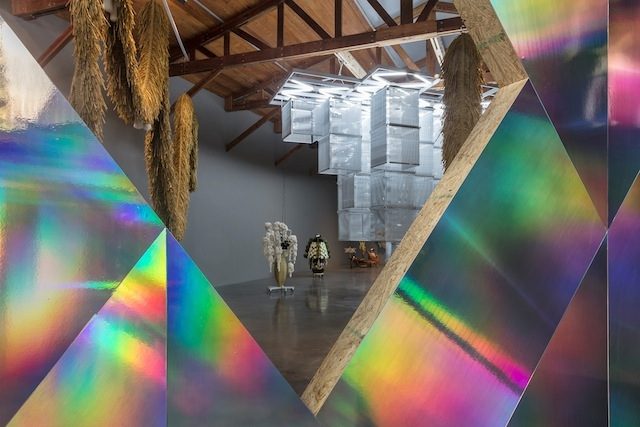
Haegue Yang. Sol LeWitt Upside Down: K123456, Expanded 1078 Times, Doubled and Mirrored.
A Sol LeWitt cube, enlarged, doubled, mirrored and hung upside down in Venetian blinds. Walk through it, and there are scents.
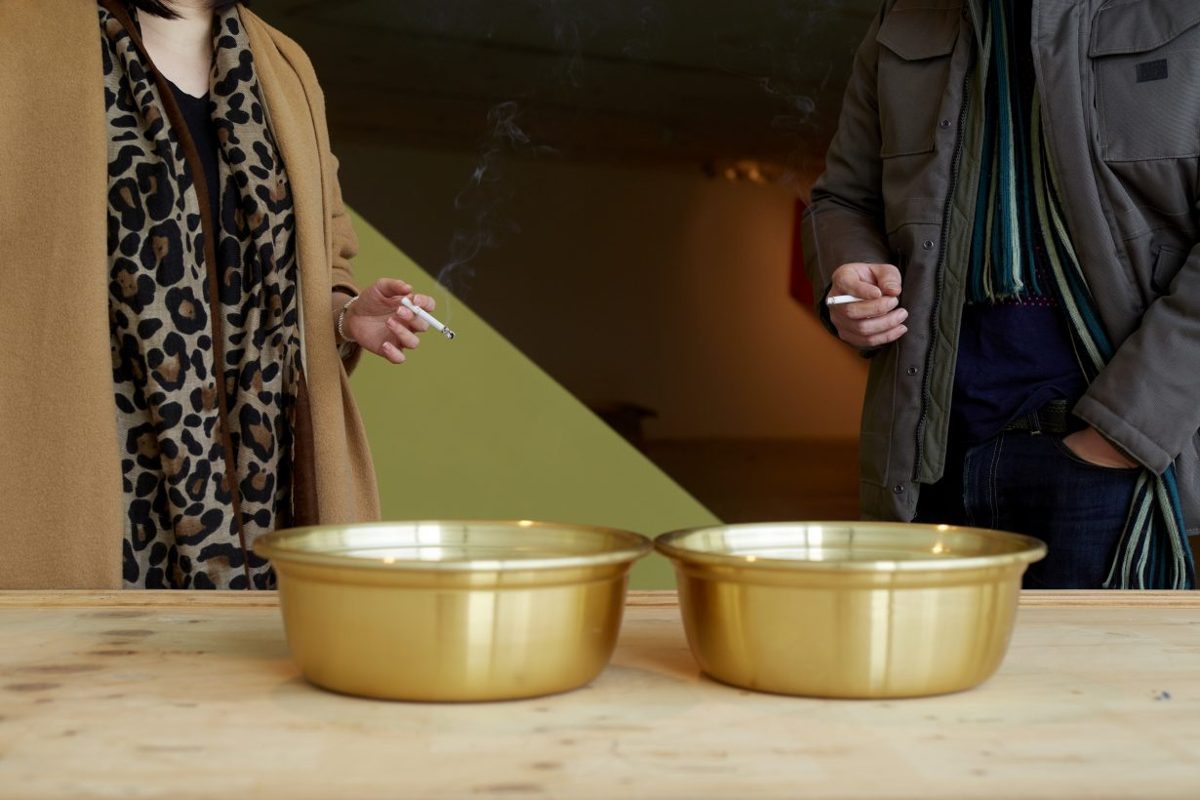
Heman Chong. Smoke Gets In (Your Eyes).
Two ashtrays, a table, a smoking corner inside a museum. A smell no machine produced, piling up day by day through the exhibition.
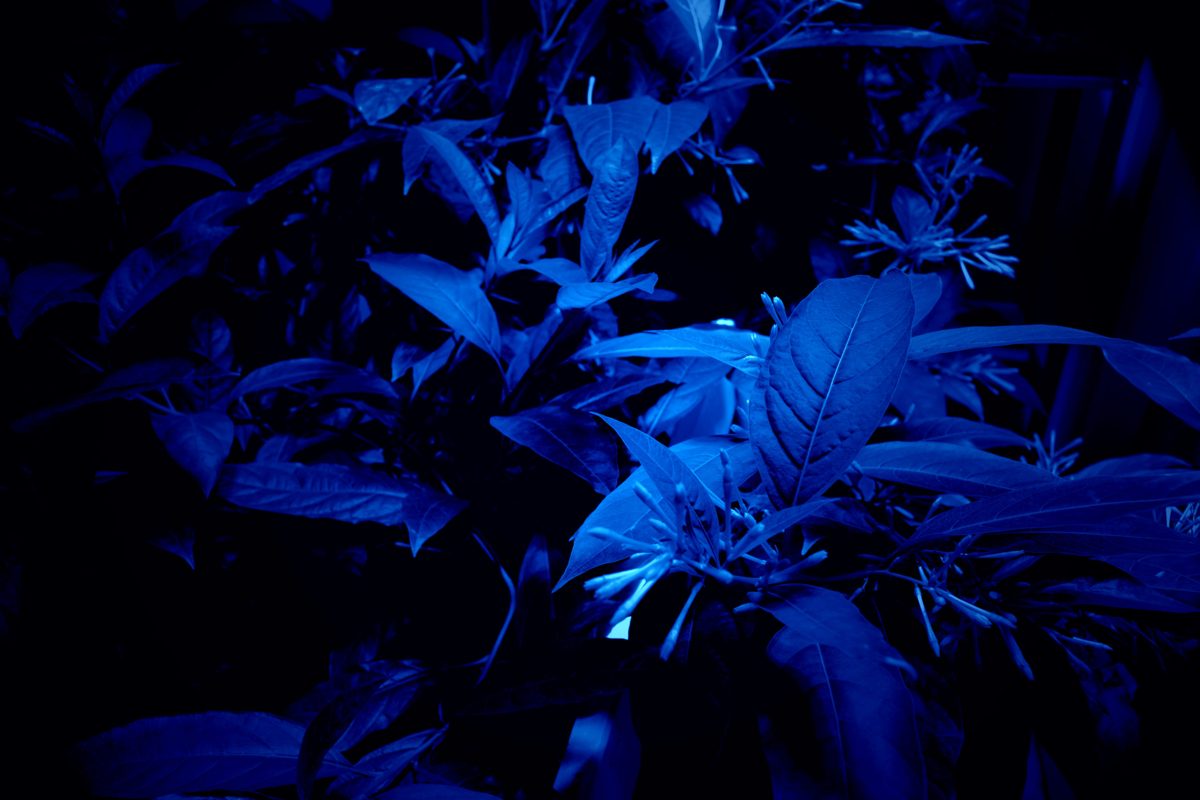
Hicham Berrada. Mesk-ellil.
Seven vitrines, a flower that smells only at night, and lamps that swap day and night. Visitors walk in at noon and smell midnight.
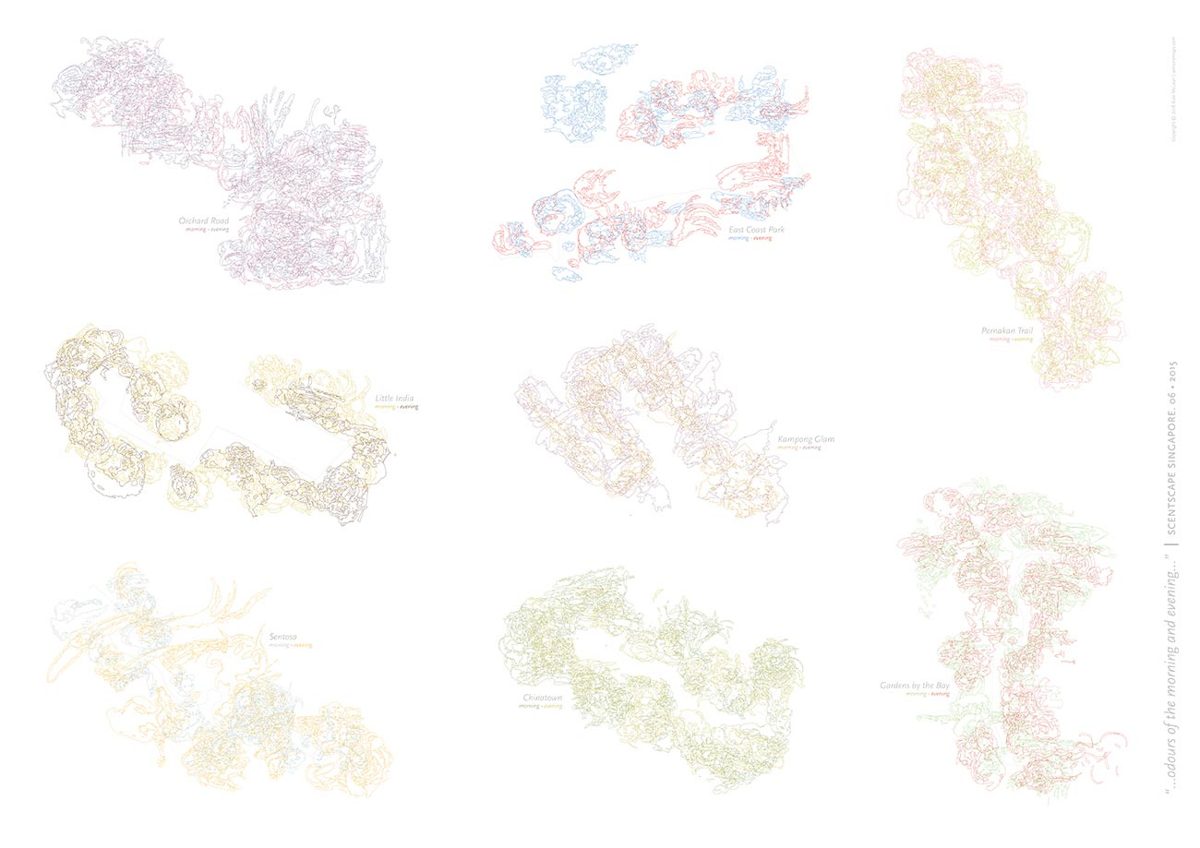
Kate McLean. Odours of the Morning and the Evening: Singapore.
Kate McLean hand painted every smell the walkers noticed, one layer for morning, one for evening, then laid them over each other. Where they differ, time appears.
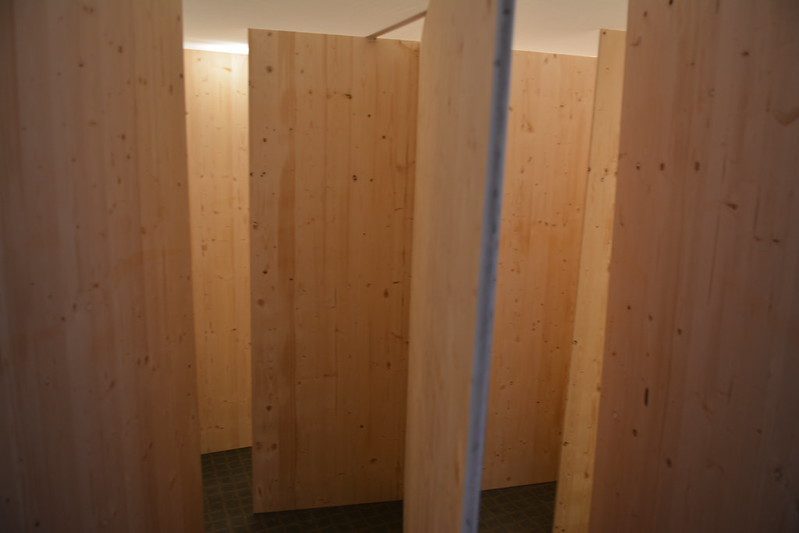
Maki Ueda. Olfactory Labyrinth Ver. 2.
Four woods and resins, one maze, one rule: choose a smell at the entrance and follow it to the exit.
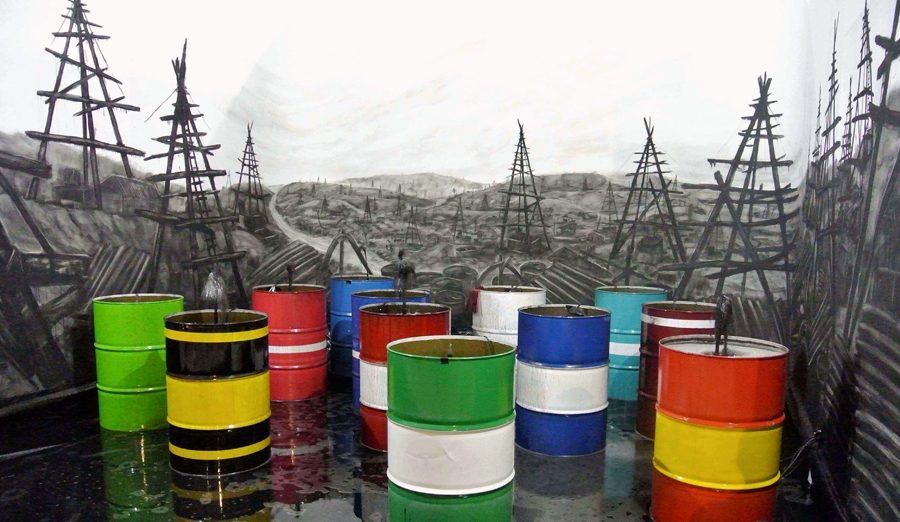
Maryanto. Brimming in Wonocolo.
In front of a field of derricks painted on the wall, drums spray crude oil in rhythm. The smell comes first; the history follows.
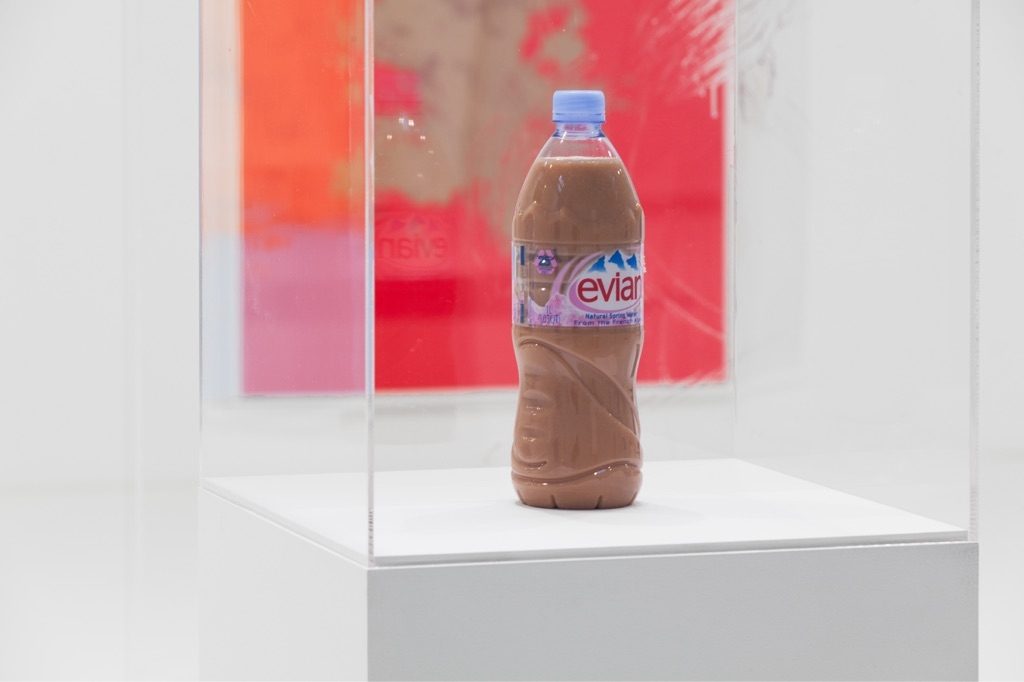
Pamela Rosenkranz. Our Product.
The Swiss Pavilion filled with a skin-coloured liquid. It flows, smells, shines, sounds. It seems alive.
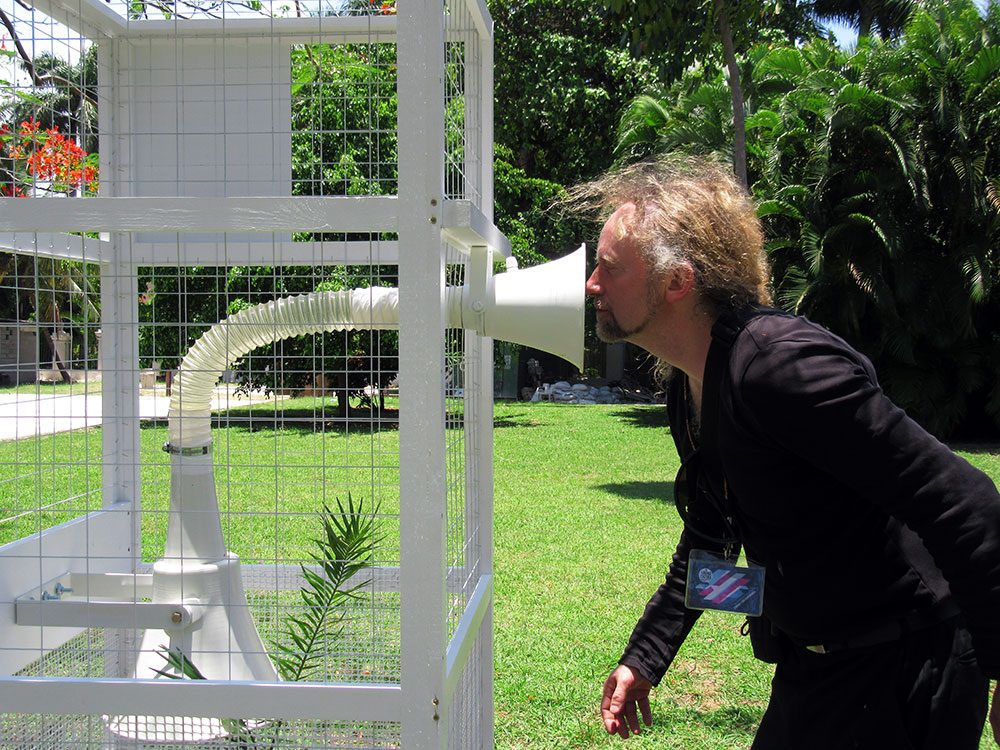
Peter de Cupere. The Smell of a Stranger.
Nine Cuban plants, each carrying a smell not its own: sweat, blood, money, gunpowder. A work asking what happens once smell can be assembled.
Alessandro Piangiamore. Primavera Piangiamore.
Strangers give away their smell. The artist locks it in glass so tightly that no one can smell it again. Beside it, votive wax from the churches of Rome.
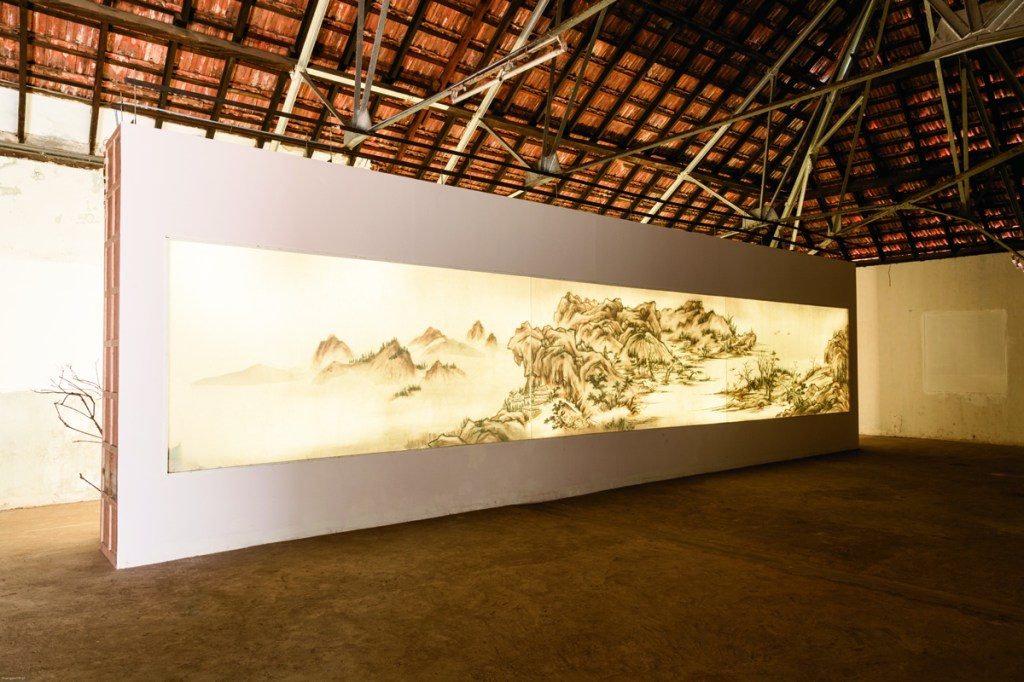
Benitha Perciyal. The Fires of Faith.
Statues cast in incense, cinnamon, cloves and resin. Over time they crack and their smell fades, and the artist mends them.
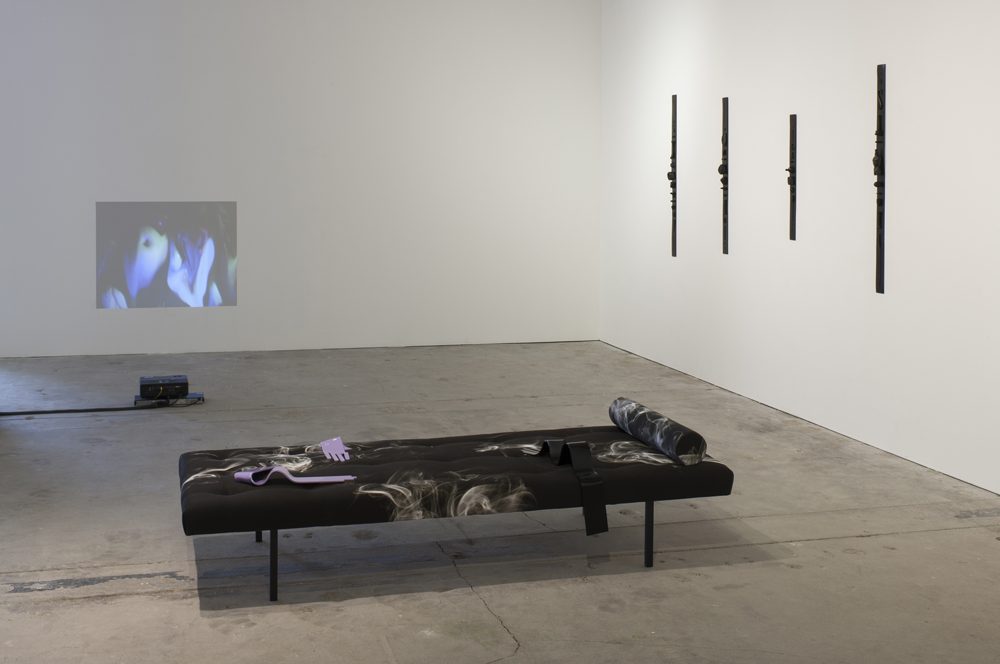
Clara Ursitti. Invader.
No object to look at, no corner of its own. At set times, Ursitti's scent floods the shared room and takes over the air around every work.
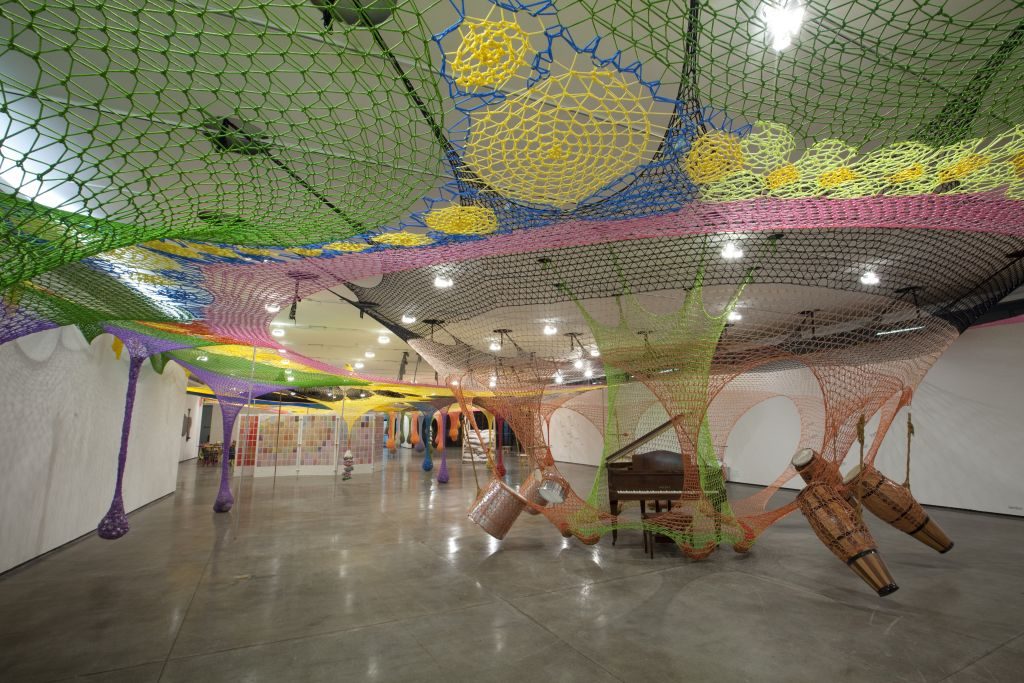
Ernesto Neto: the body that carries me.
Neto built nine soft spaces inside the Guggenheim Bilbao. Visitors walked in, lay down, and smelled turmeric, cumin, clove.
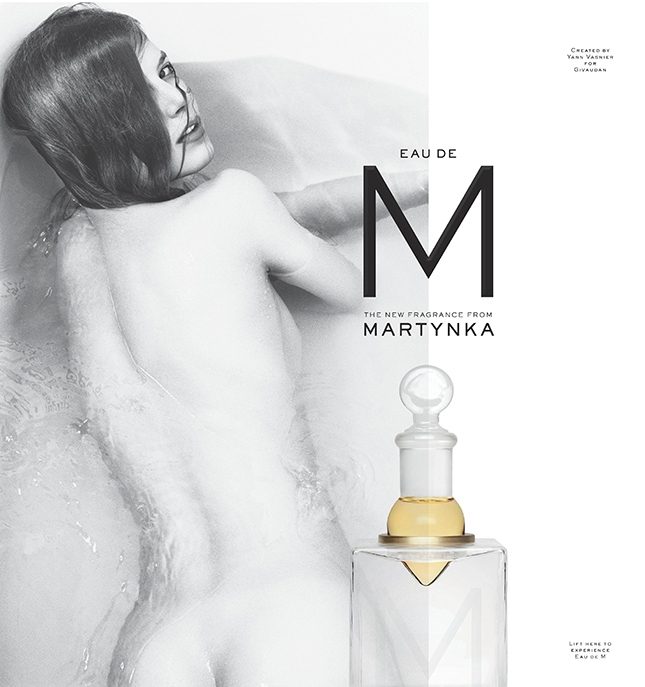
Martynka Wawrzyniak. Eau de M.
Martynka Wawrzyniak slipped a fake perfume ad into a fashion magazine. The test strip carried the smell of her sweat. Then people went to a store to ask for it.
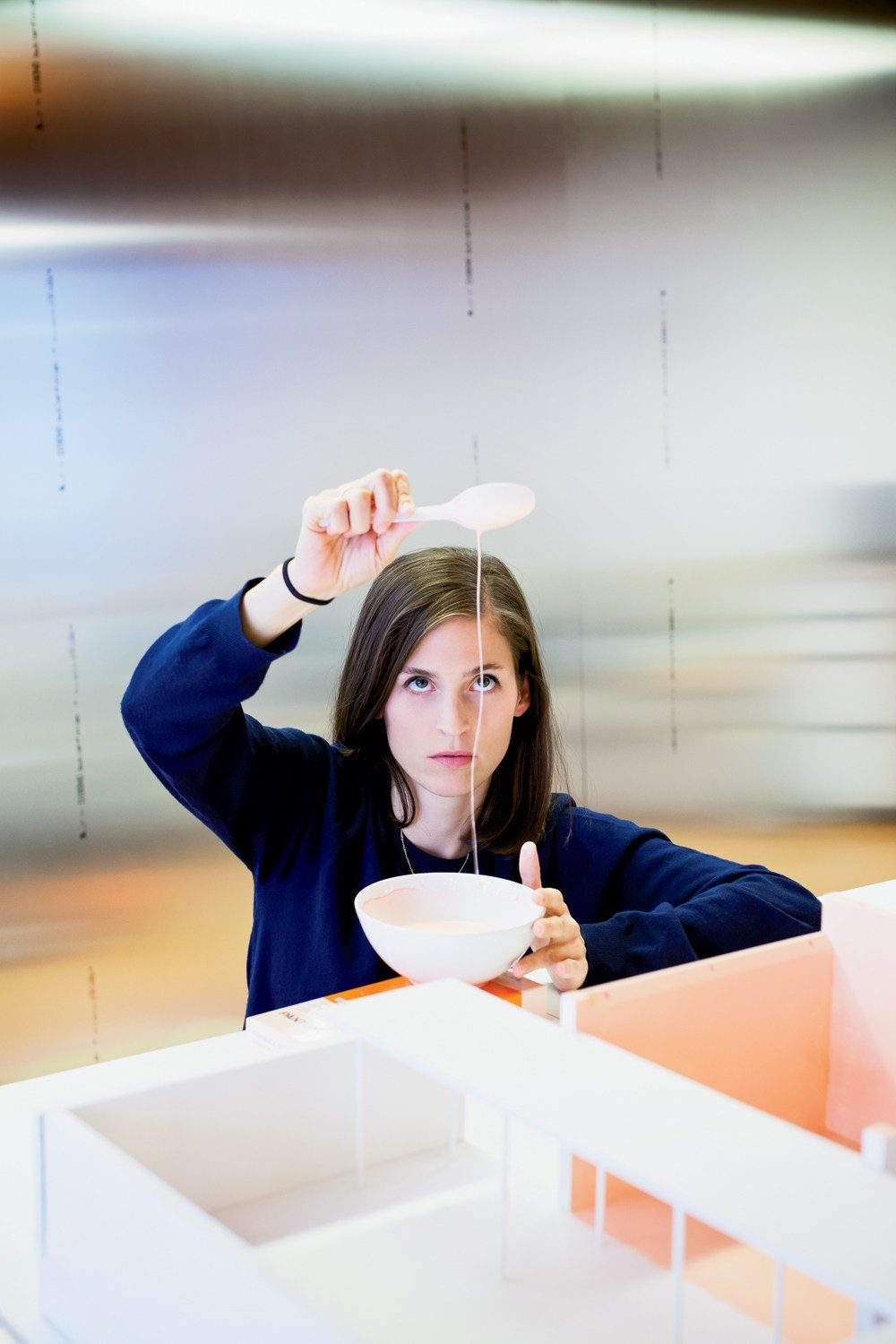
Pamela Rosenkranz. Attraction (Red and Blue).
Red light, blue light, and a pheromone smell visitors barely notice. Rosenkranz asks whether our desire is really our own.
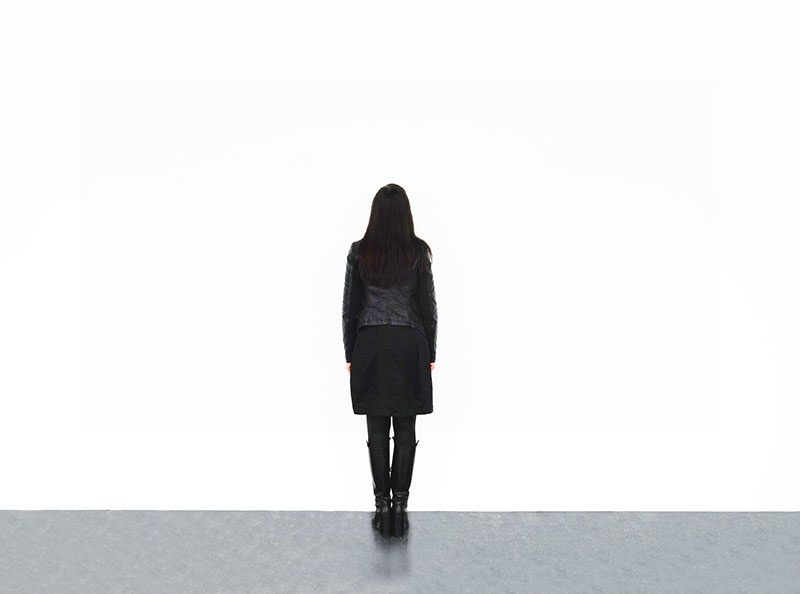
Peter de Cupere. Invisible (Scent) Paintings.
A painting on a wall, a puzzling title. Only after scratching the surface and raising a finger to the nose does the viewer learn what it says.
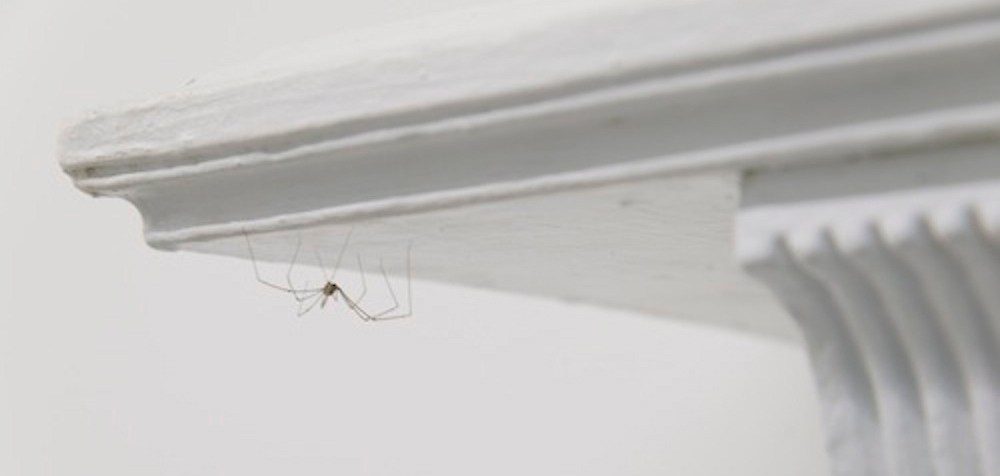
Pierre Huyghe. Hole for Rat.
Huyghe dug a hole through the floor so rats could come and go, then put rat pheromone on the surfaces. The smell is an invitation, but not to people.
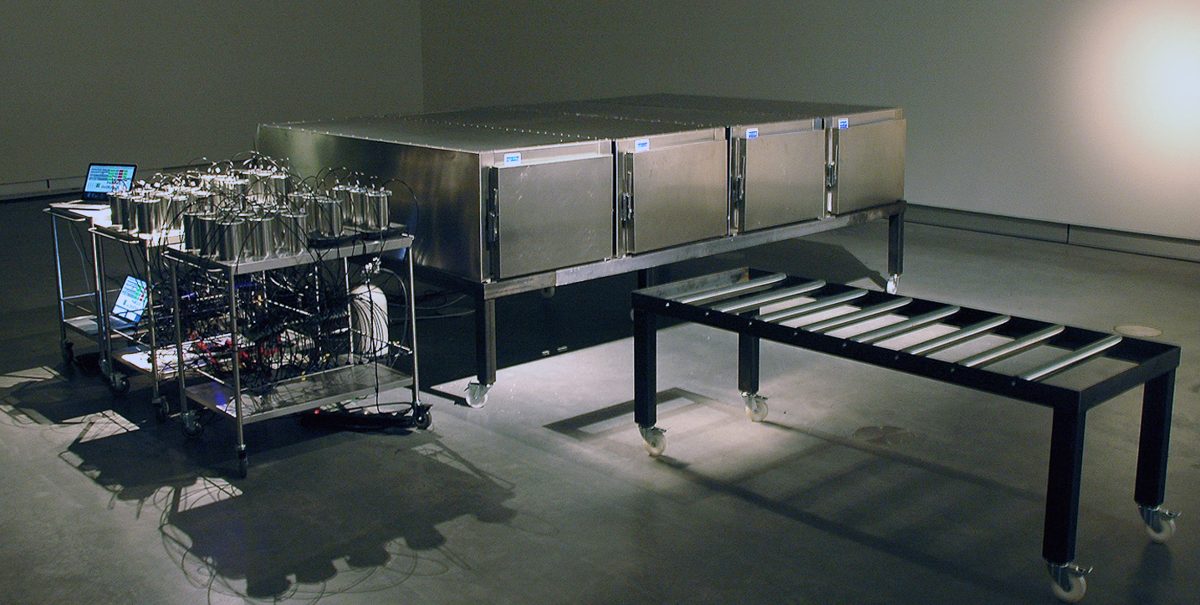
Polymorf. Famous Deaths.
Visitors lie in a mortuary freezer, in the dark. About four minutes of sound and smell retell the final seconds of a famous life.

Sean Raspet. Residuals.
A steel canister collected a gallery's air for seven days. That background smell was condensed thousands of times and coated on the walls, waiting to be scratched.
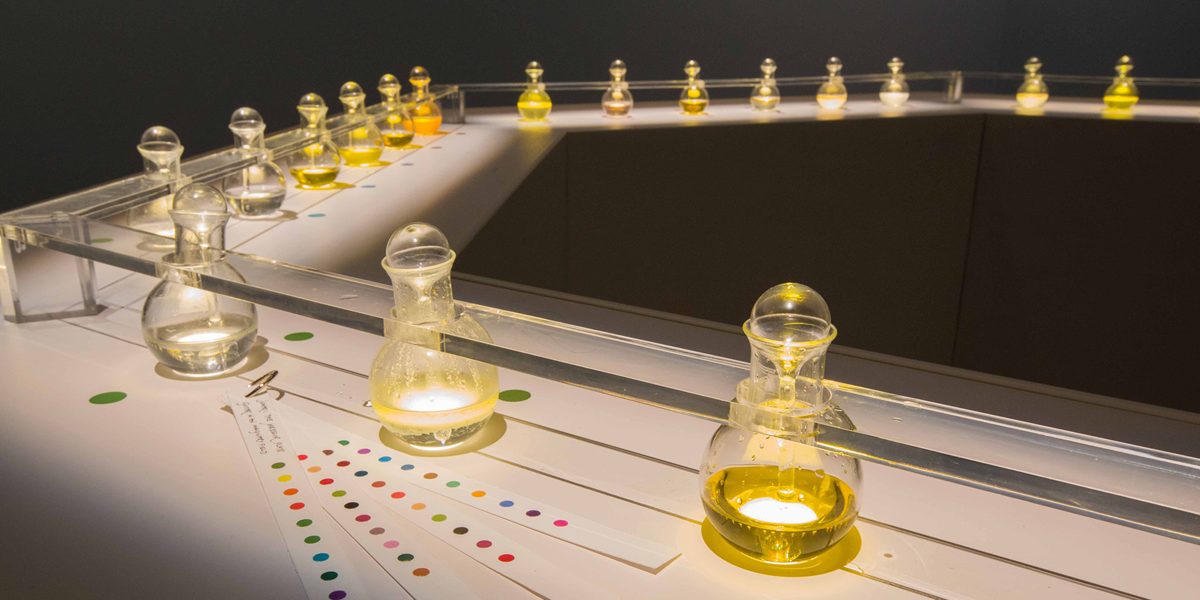
Sensorium 360°.
Green lasers build cages without bars. A four metre pole pressed to the chest. A keyboard made of scent. Sensorium 360° asks which senses we use to know the world.
Thomas Hirschhorn. Flamme éternelle.
In spring 2014 Thomas Hirschhorn stacked tyres into barricades inside the Palais de Tokyo, with a library, a bar and forums around a flame. Rubber greeted everyone.
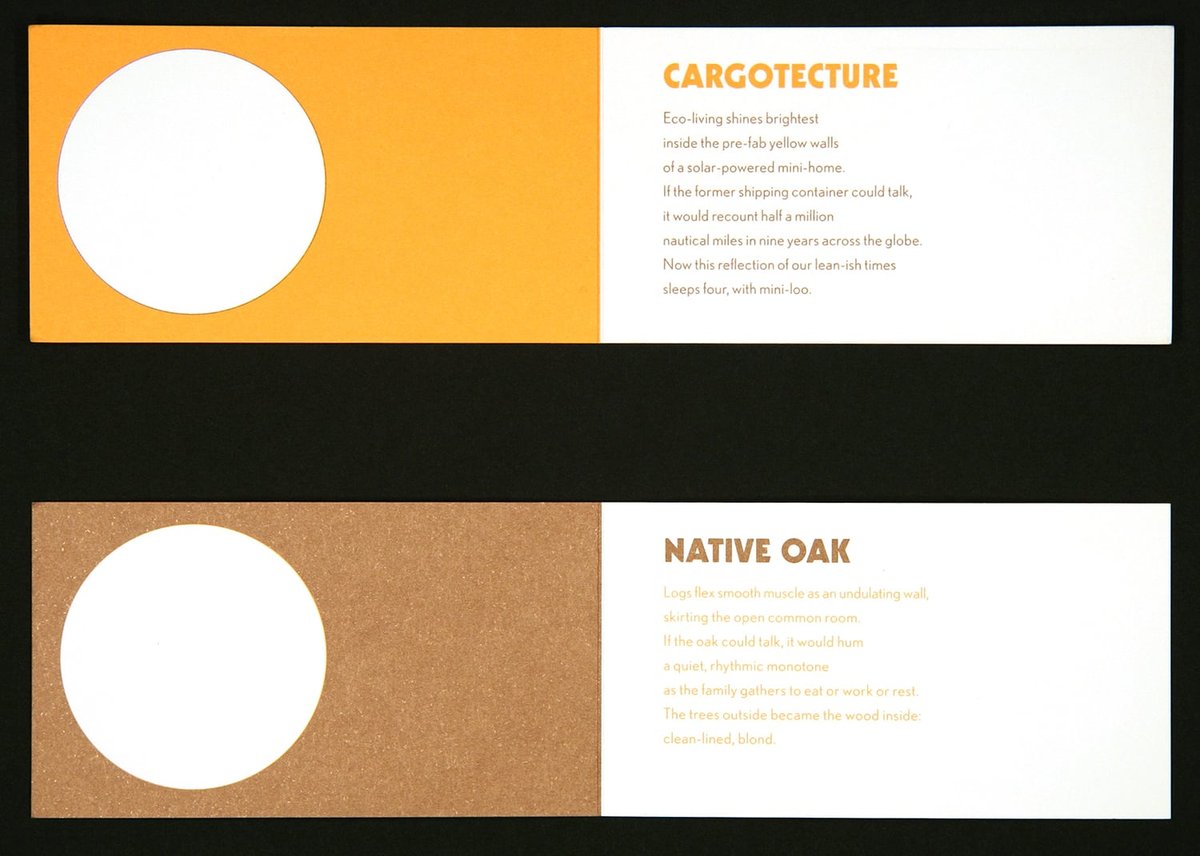
Brian Goeltzenleuchter. Smelling the City.
One scent blotter, two poems, two smells. The oak of an old house and the steel of a container. Folded together, they become a question about home.
Carsten Höller, Ben Gorham. Insensatus Vol. 1 Fig. 1.
Three scented tubes, one base, a walnut box. Brush before sleep, and the work promises to shift your dreams by the dose.
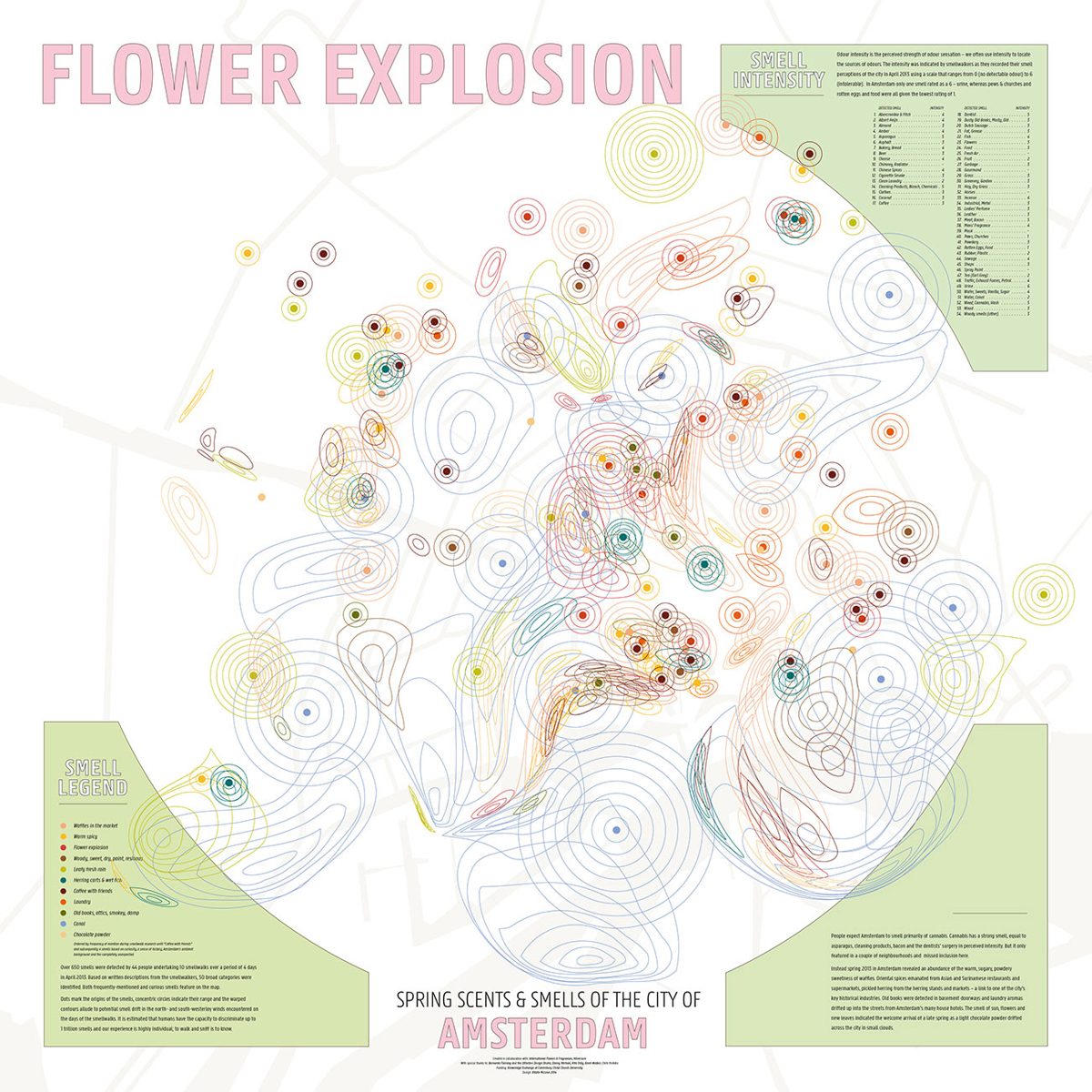
Kate McLean. Smellmap: Amsterdam.
People expect Amsterdam to smell of cannabis. The smellwalkers found waffles, herring, old books and fresh laundry instead.
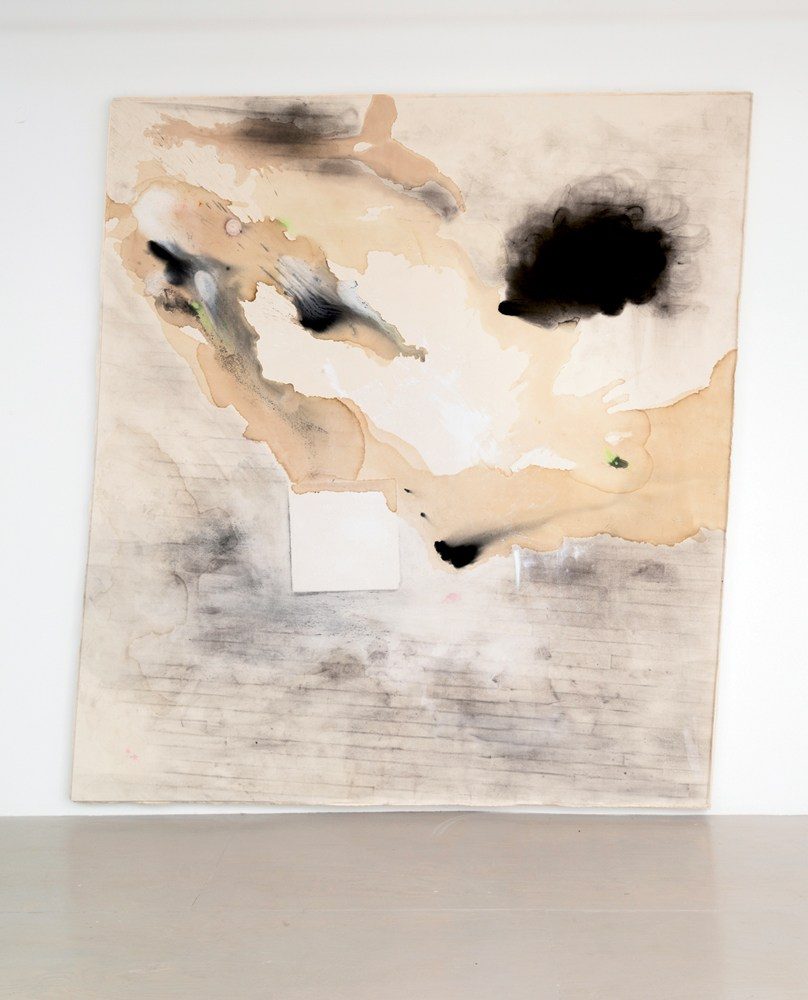
Lucy Dodd. Cake 4 Catfish.
Huge canvases laid on the floor and smeared with nettles, iron oxide, lichen and fermented tea. On the wall they still smell unfinished.
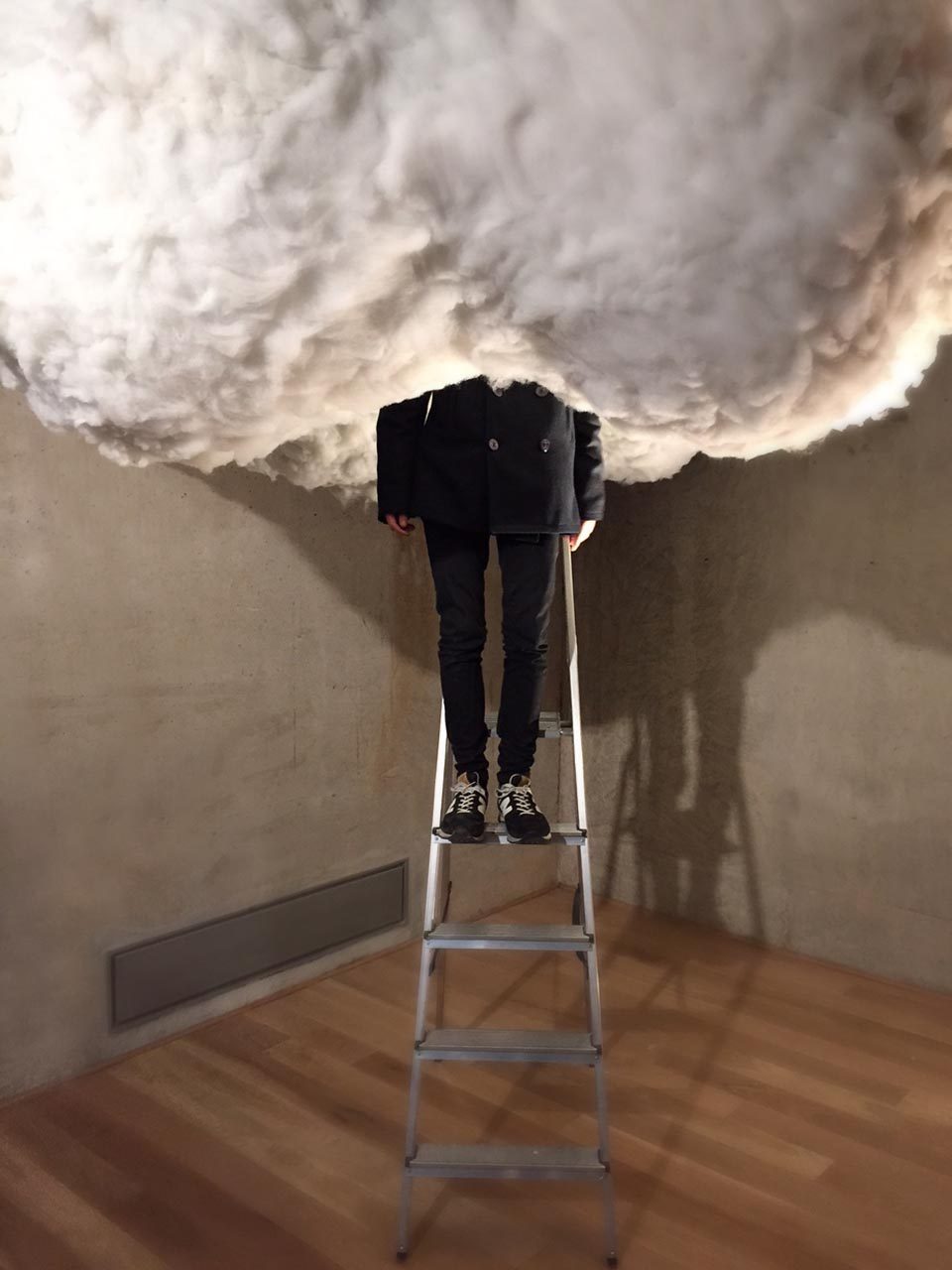
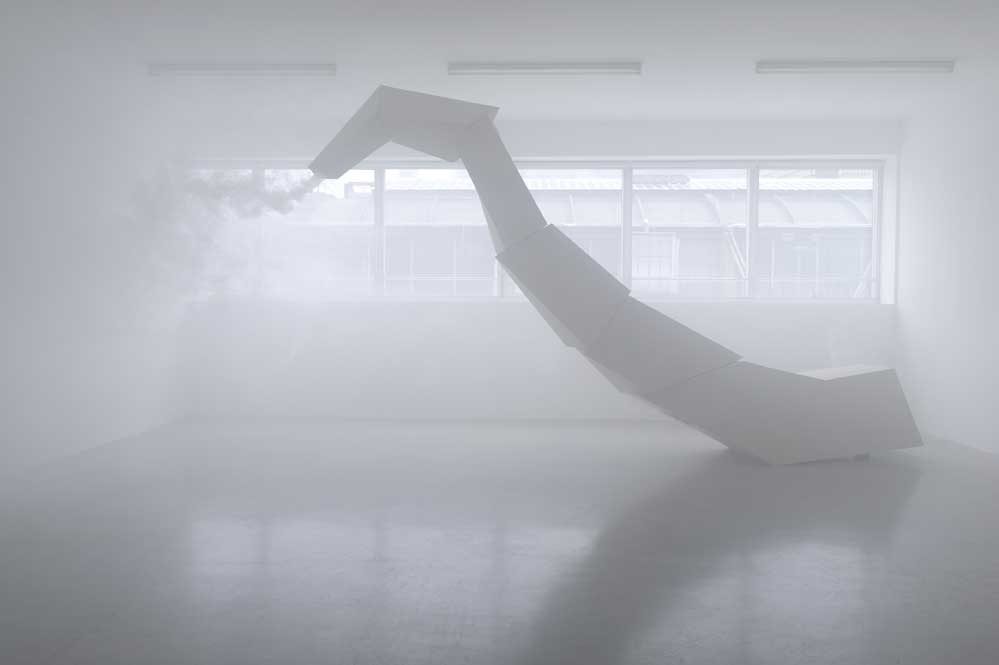
Peter de Cupere. Smoke Cloud.
A white cloud hangs in a gallery. Climb the ladder, put your head inside, and you meet the smell of car exhaust and polluted air.
Sissel Tolaas, Christina Agapakis. Selfmade.
A cotton swab on skin, a batch of milk, weeks of waiting. Tolaas and Agapakis made cheeses that smell like the people who gave the samples.
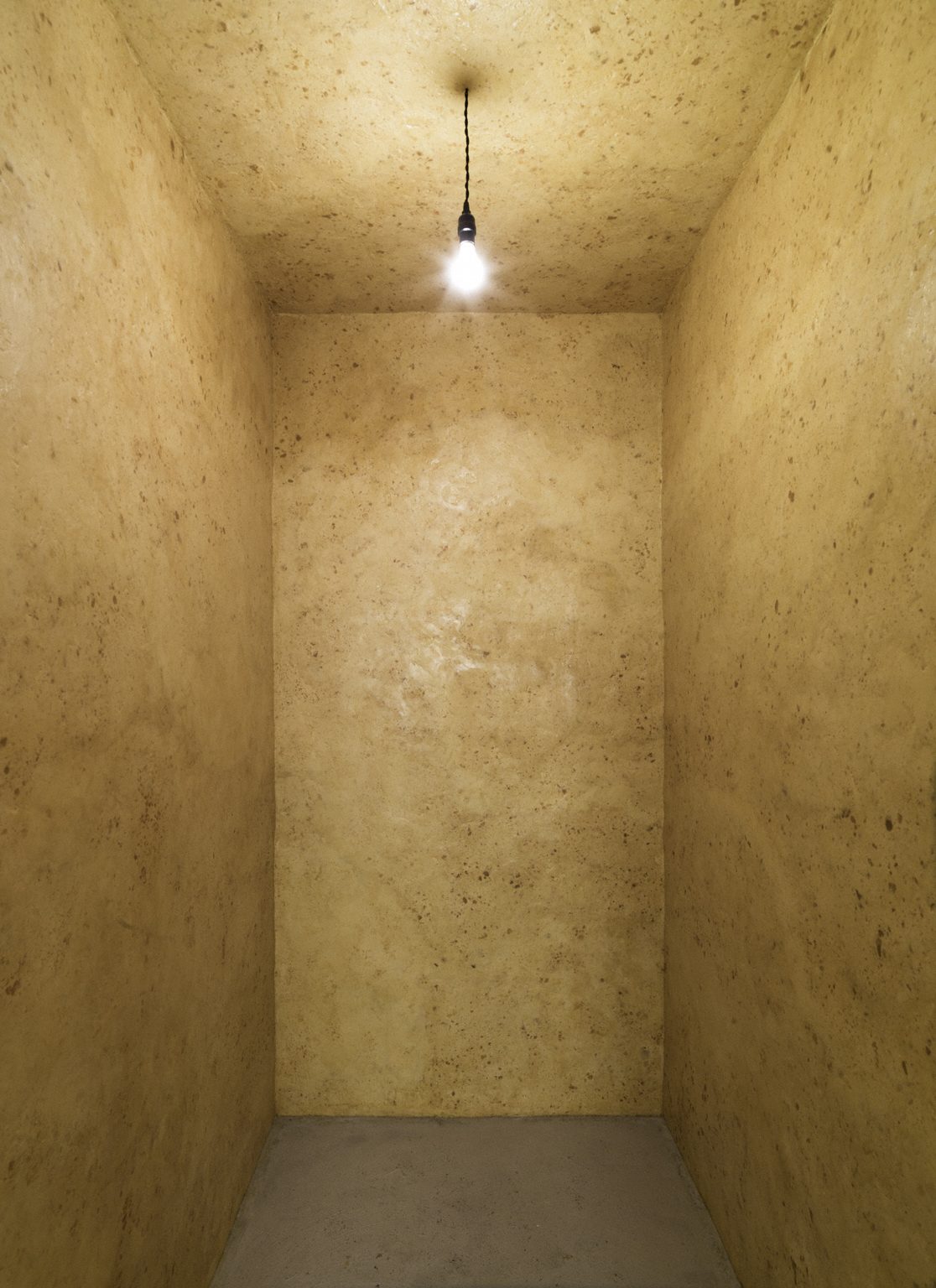
Wolfgang Laib. Wax Room.
A small chamber, walls of beeswax, one bare bulb. You smell it before you see its colour. Laib's first permanent wax room in a museum.
Christophe Laudamiel. Phantosmia.
Six plastic tents, one scent loose in the room, and seven formulas printed on paper. A perfumer claiming for smell the right to be a work.
Martynka Wawrzyniak. Smell Me.
No photograph, no painting, no face. Smell Me is a portrait of a woman rebuilt from sweat, tears and hair, for visitors to step into and smell.
The Art of Scent.
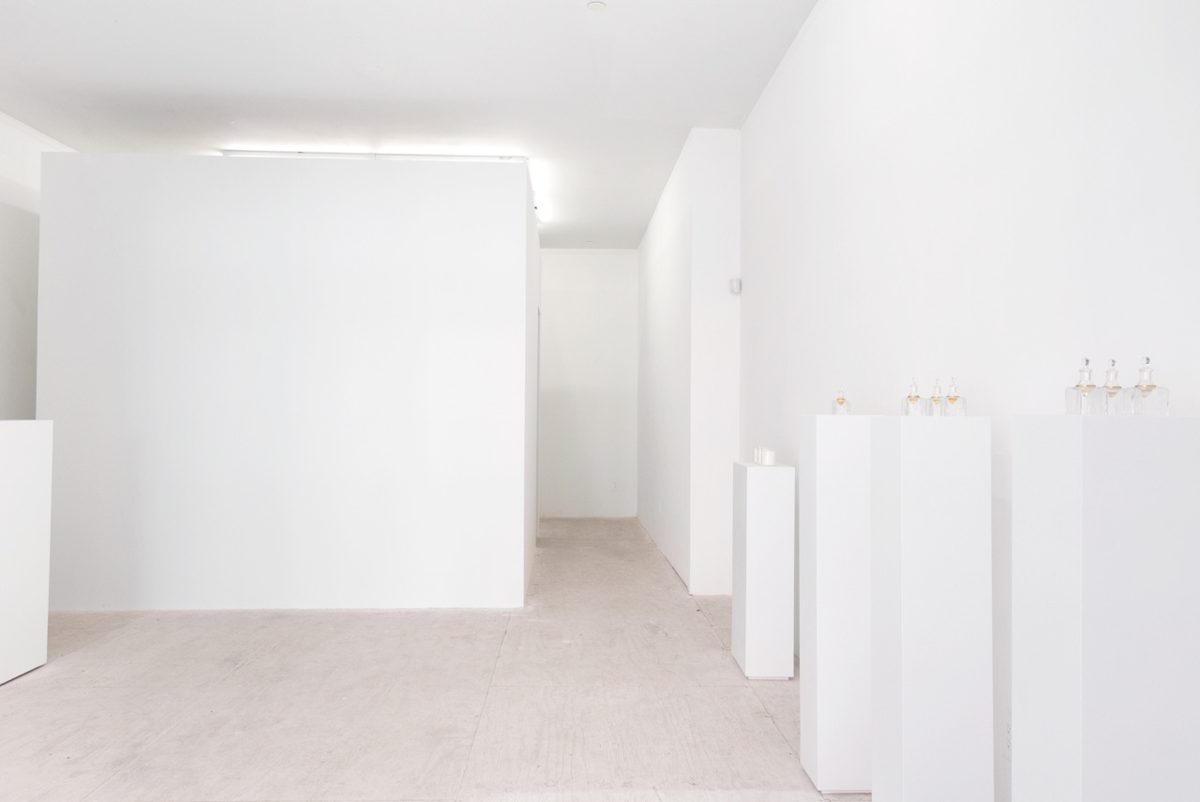
A nearly empty gallery. Three walls lined with dimples the size of a head. Lean in and a perfume is released. Nothing to look at.
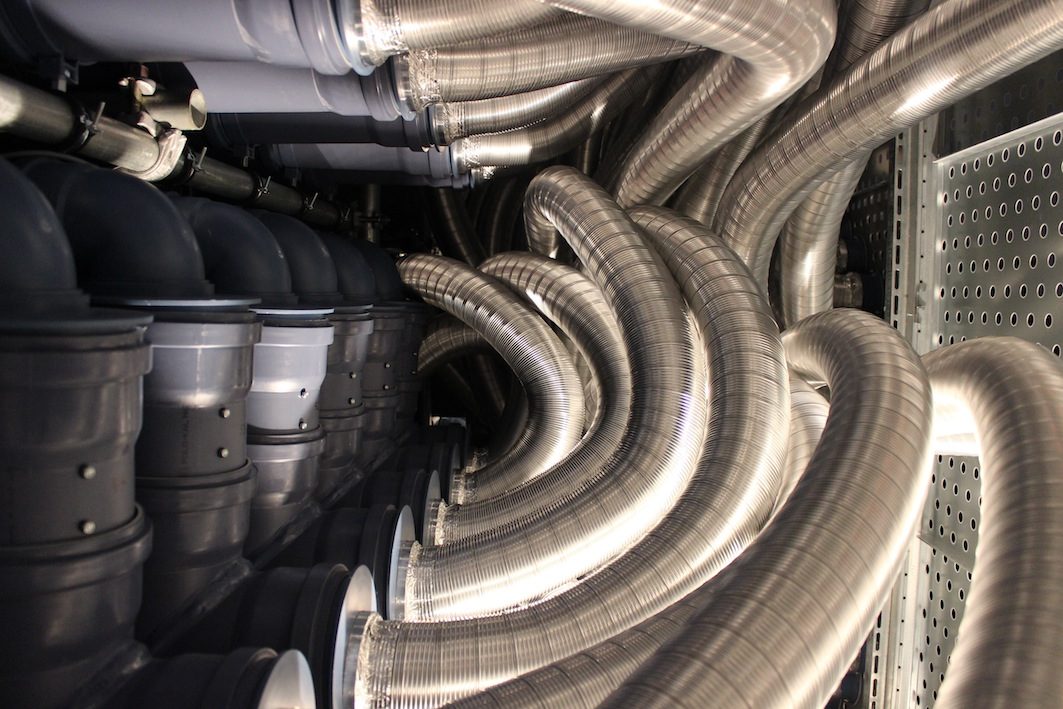
Wolfgang Georgsdorf. Osmodrama / Smeller 2.0.
Smeller 2.0 sends each smell into the room on an air stream moving at walking pace, then carries it out for the next. Smells become scenes, scenes become stories.
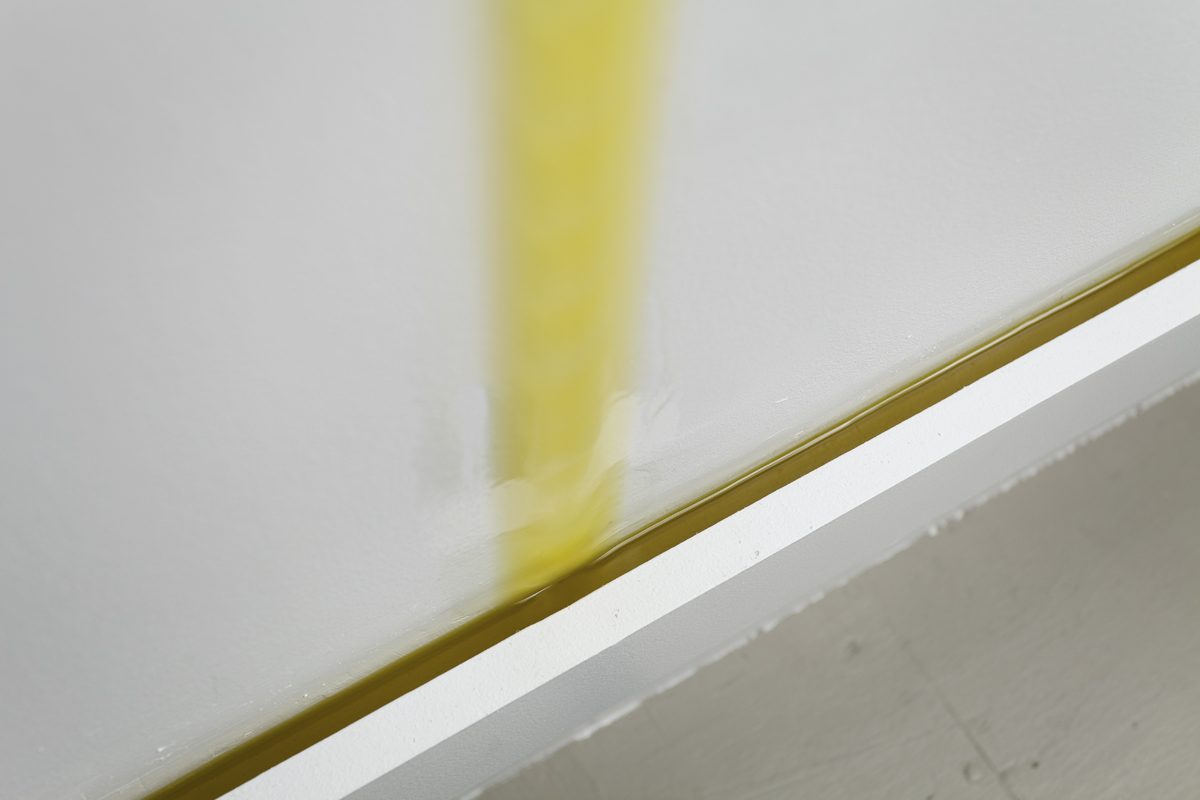
Anicka Yi. Sous-Vide.
At 47 Canal in 2011, the smell of fried flowers arrived before any image. Then it faded and oil took its place. The show had a sequence, and the sequence was smell.

Maki Ueda. Olfactoscape Ver. 1.
A curtained ring three metres across, walked with eyes closed. Hinoki, cherry blossom and fallen leaves wait at different points. The landscape forms in the walker.
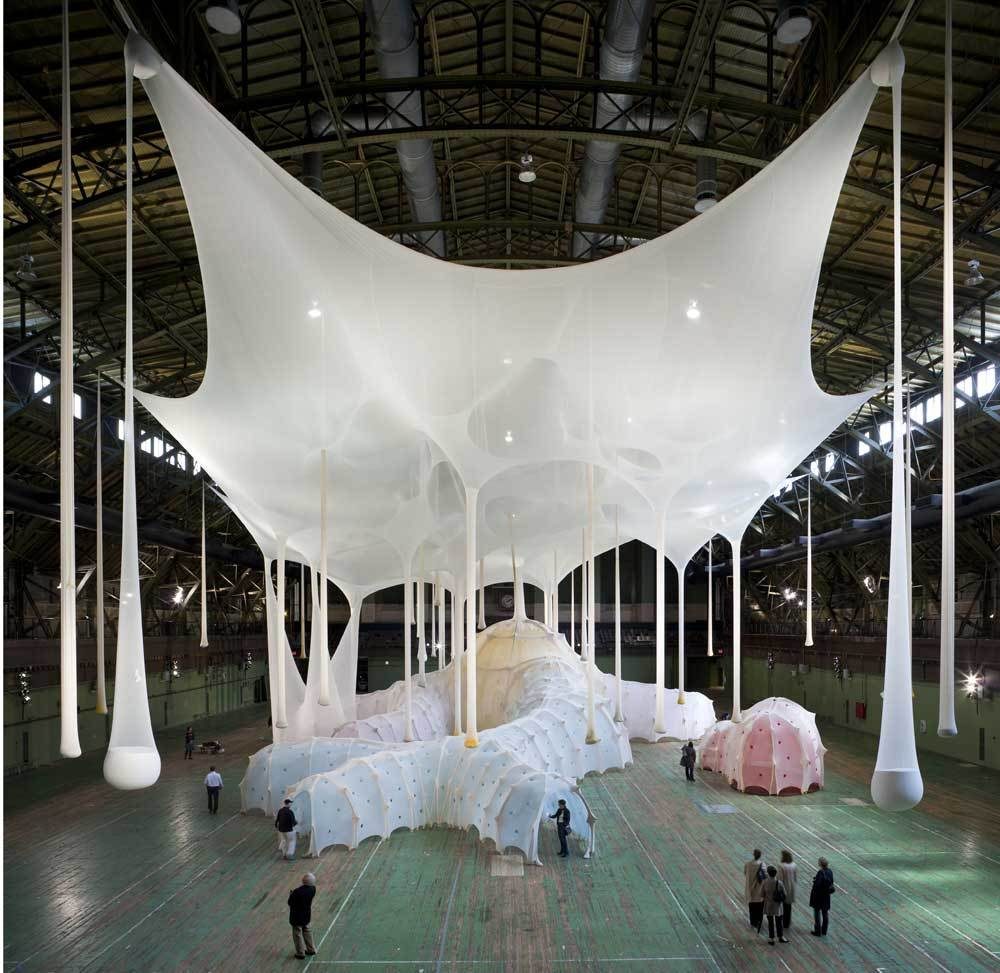
Ernesto Neto. anthropodino.
A vast Lycra canopy, spice pouches within arm's reach, and a hall too large for the smell to fill. anthropodino is about the distance between nose and thing.
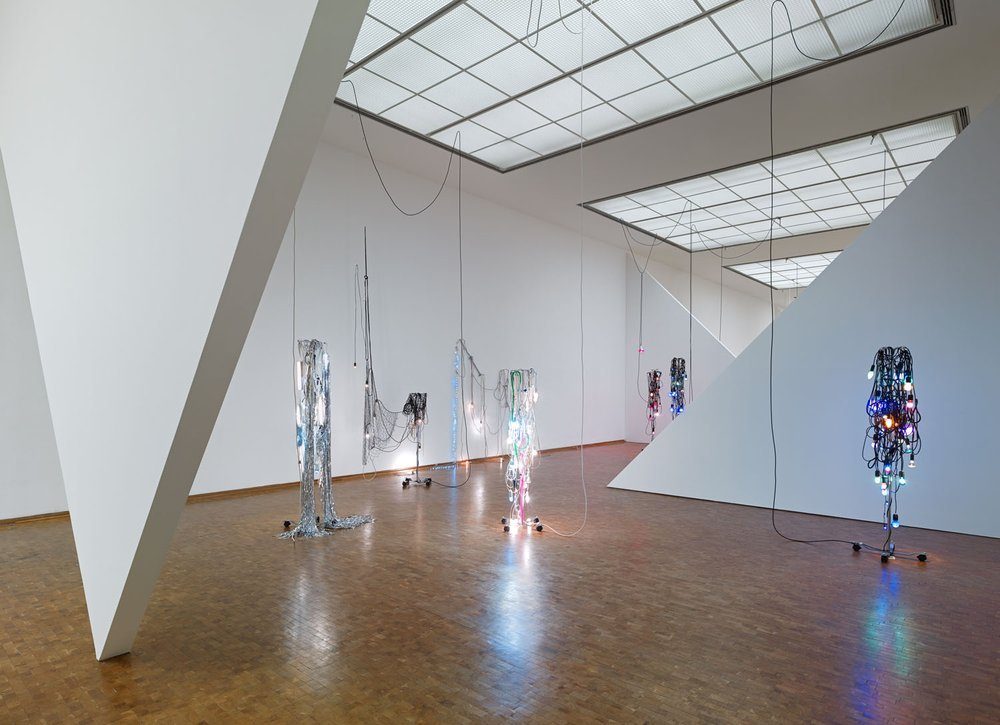
Haegue Yang. Sallim.
A kitchen built of steel frames, no walls, no pot on the boil. Only light, a fan, and the smell of food from a machine. Sallim is the smell of keeping house.
Scent criticism. Writing about the invisible.
Film has images, music has recordings, painting has photographs. Smell leaves nothing but words. Penta reads scent criticism as words doing the work of the eye.
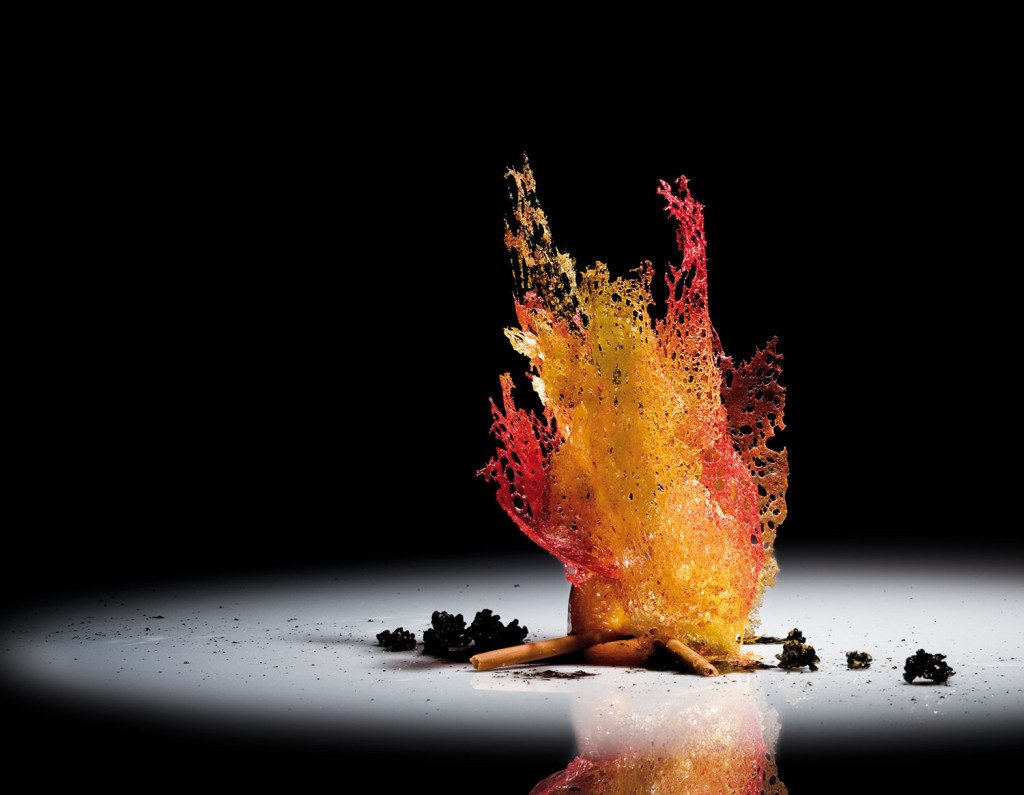
Ferran Adrià. elBulli, Pavilion G at documenta 12.
The exhibition was in Kassel; its Pavilion G lay more than a thousand kilometres away on the Catalan coast. To see the work, you had to sit down to dinner.
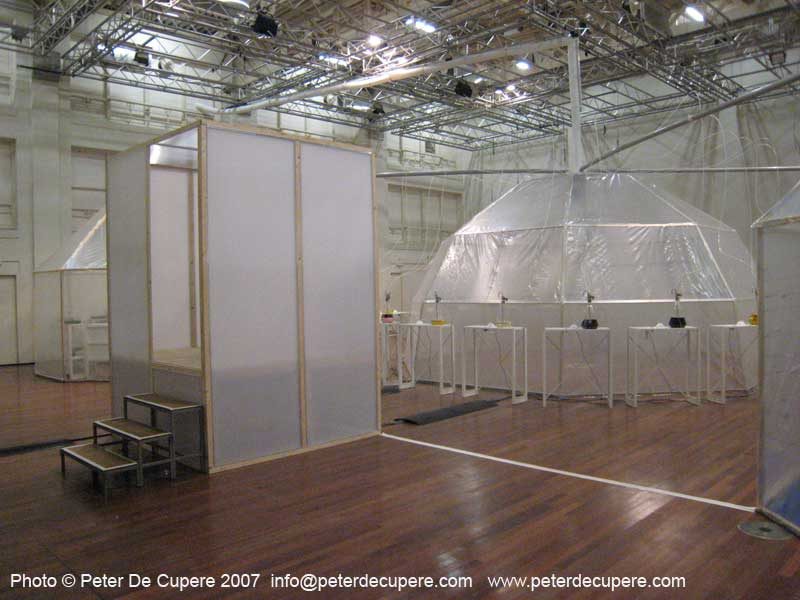
Peter de Cupere. Air Polluter.
A control panel, two smell fields, an empty container. Visitors choose clean or dirty smells, but the final air is made by everyone in the room.
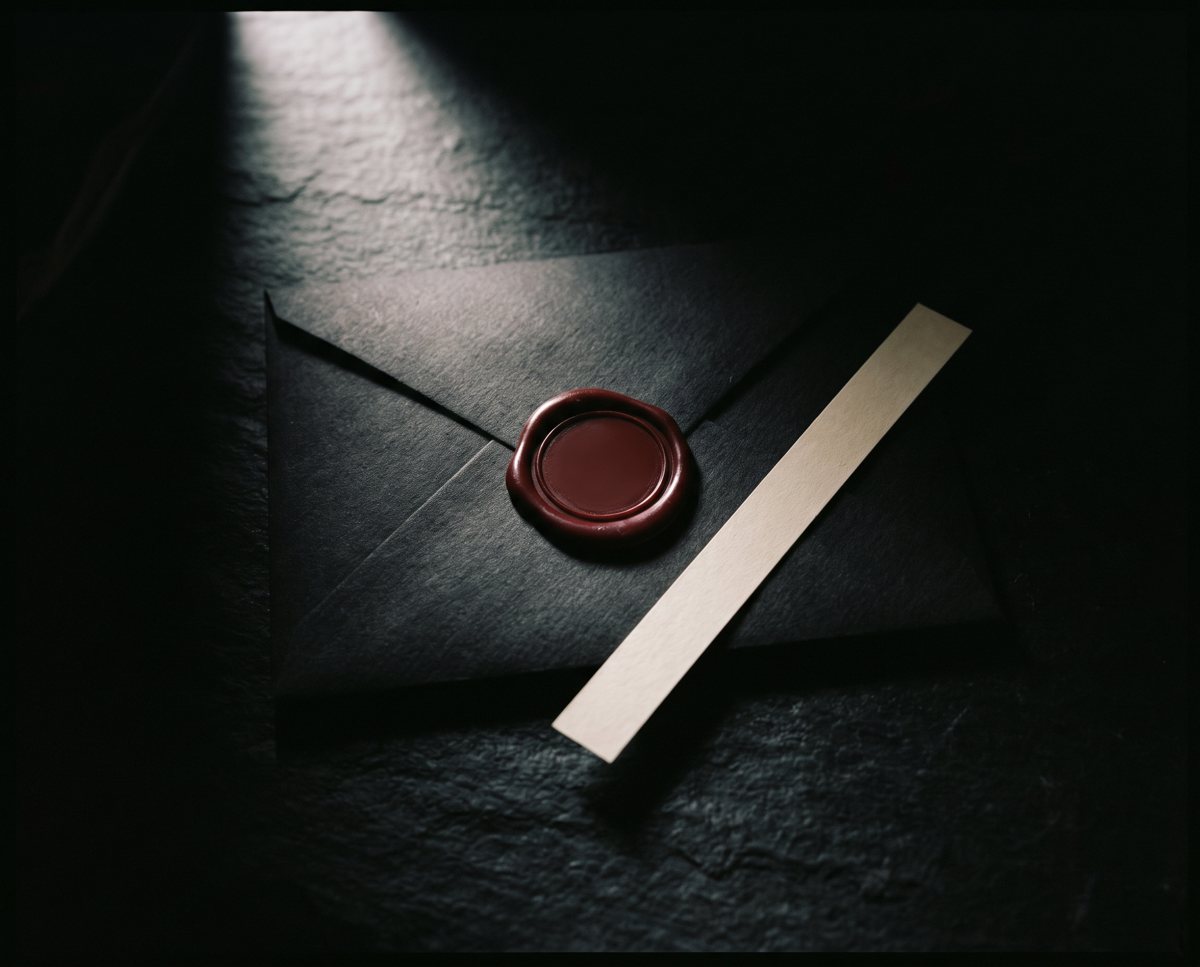
Copyright. Can a smell belong to someone?
A perfume and a copy that smell almost the same. The Dutch Supreme Court had to answer: can a scent be a work? Penta reads that answer.
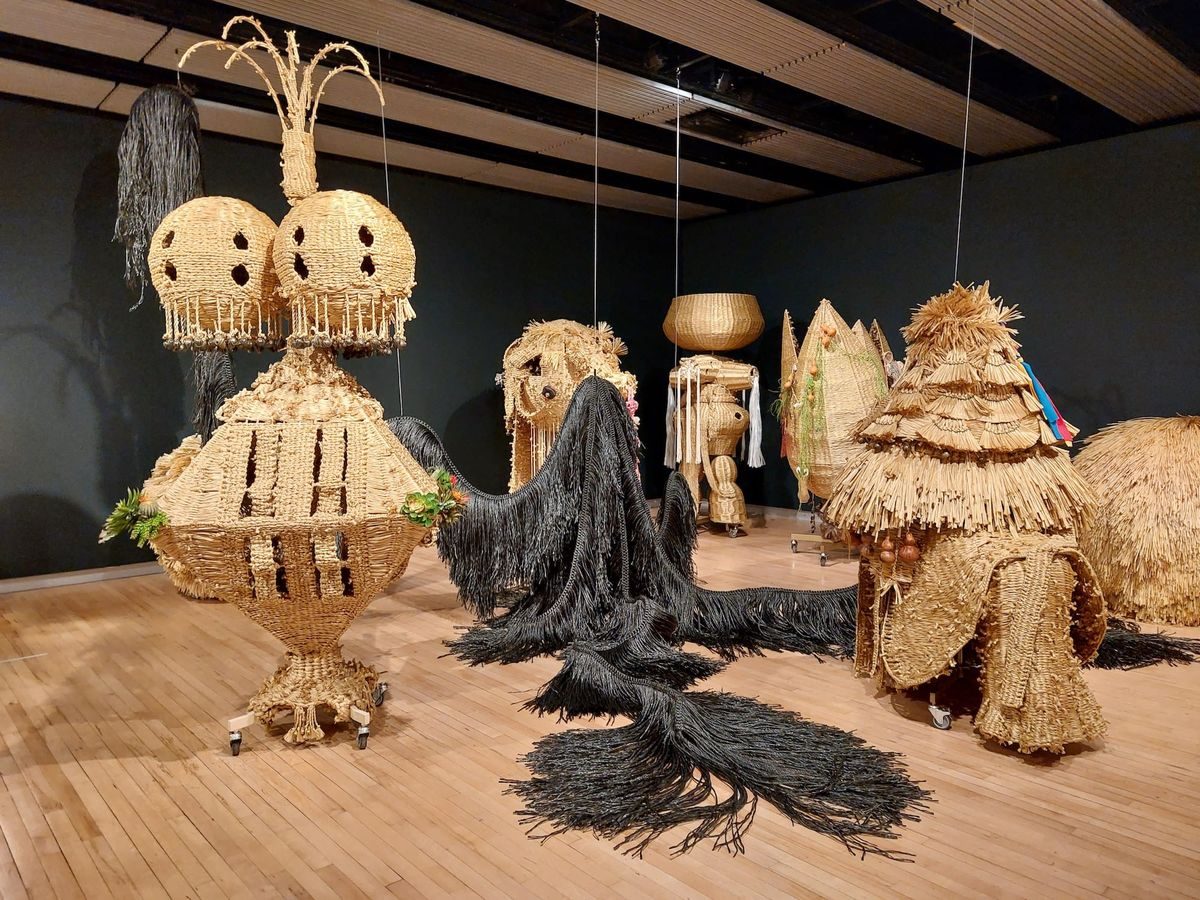
Haegue Yang. Series of Vulnerable Arrangements, Version Utrecht.
Nothing hangs on the wall to look at. There is heat, there is wind, there is a passing smell. The work is the air of the room.
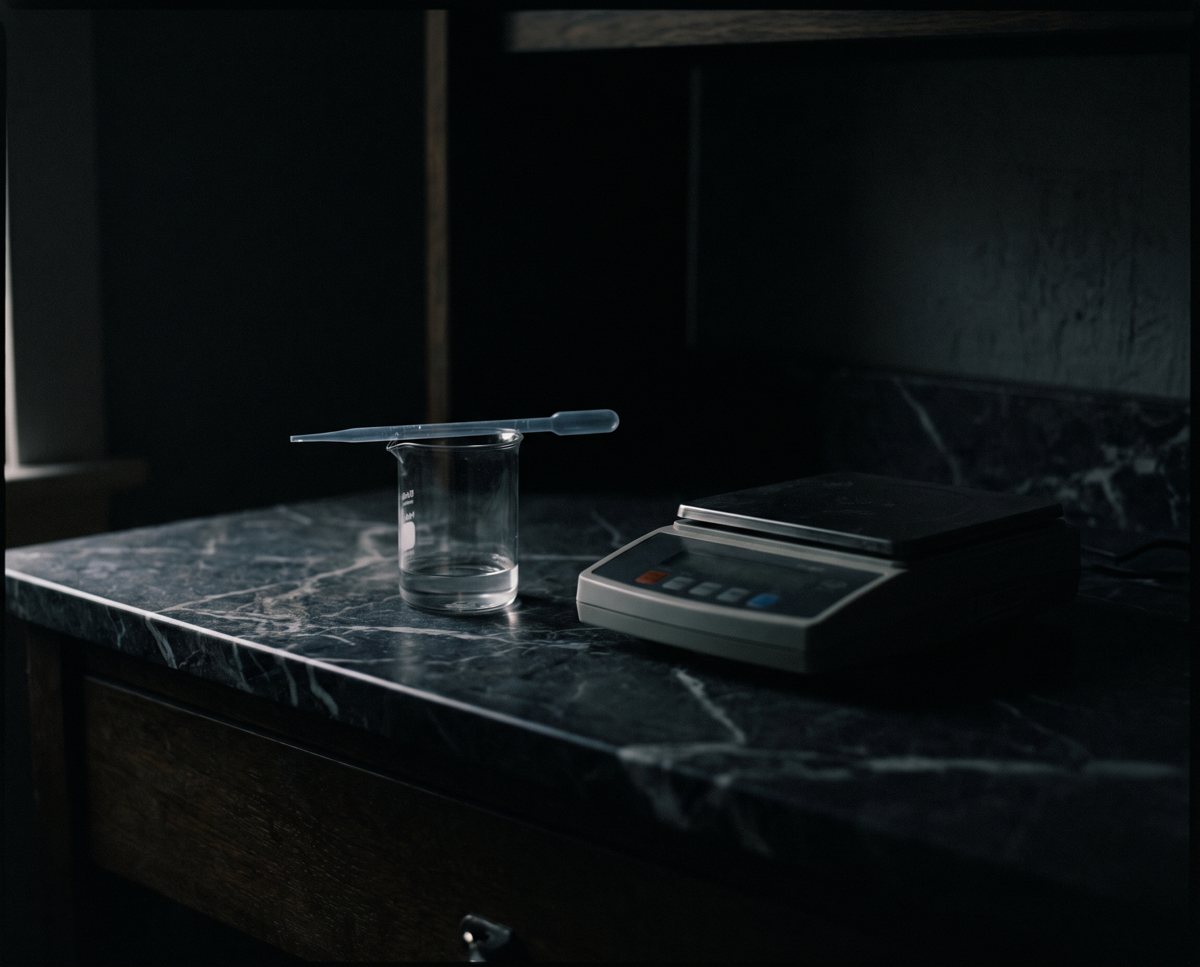
Mathilde Laurent. The in-house nose.
In a jewellery house, things are measured in carats and cuts. A perfumer there must make something that cannot be held or weighed.
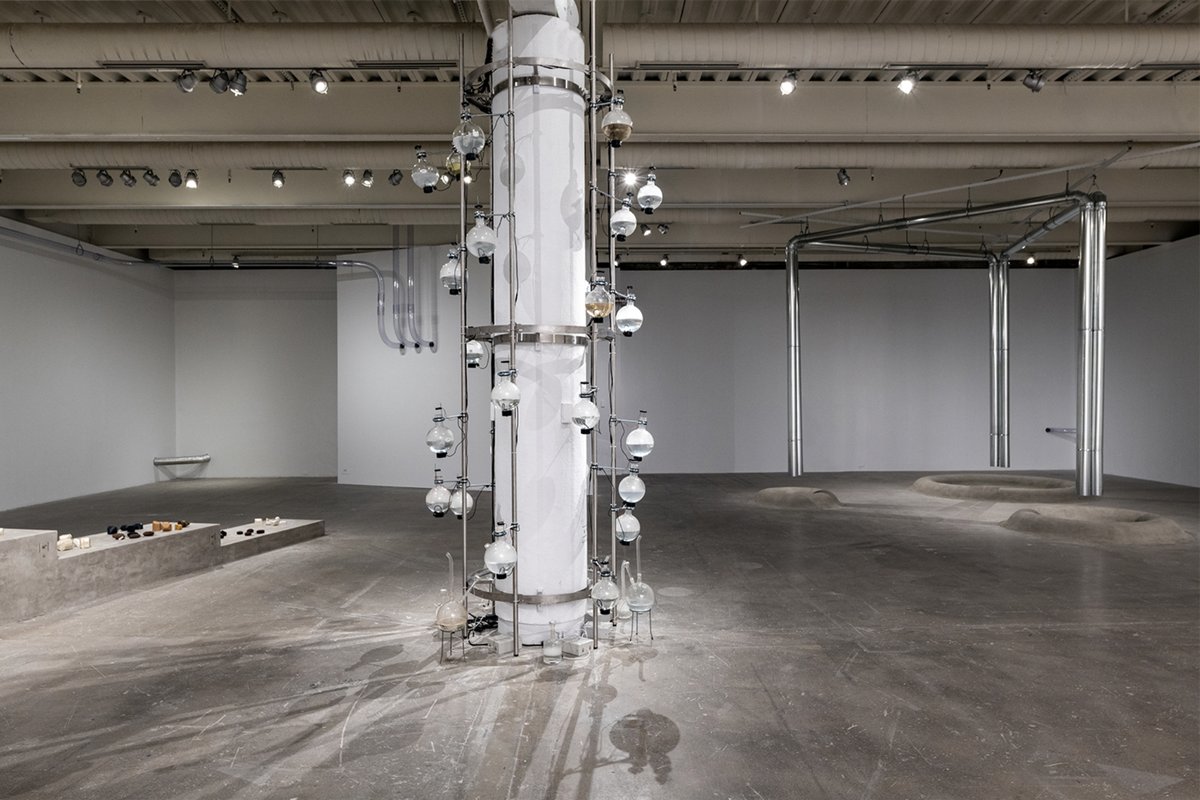
Sissel Tolaas. FEAR.
Twenty-one men, twenty-one fears, twenty-one smells on one wall. Visitors rub the paint and smell a stranger’s fear.
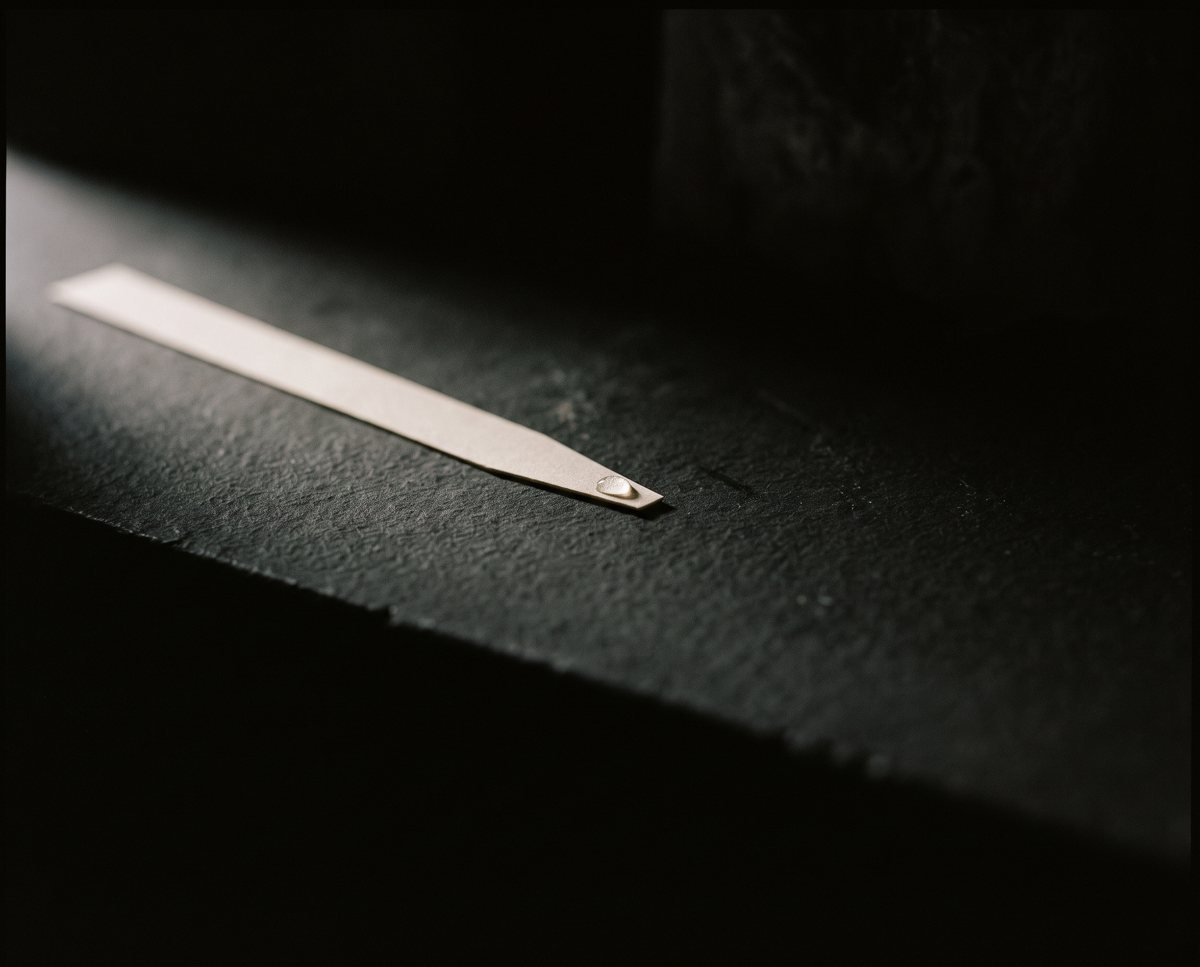
Jean-Claude Ellena. Less, and more.
A perfumer born in Grasse who learned to take away from someone else's formula, then kept a diary of his craft.
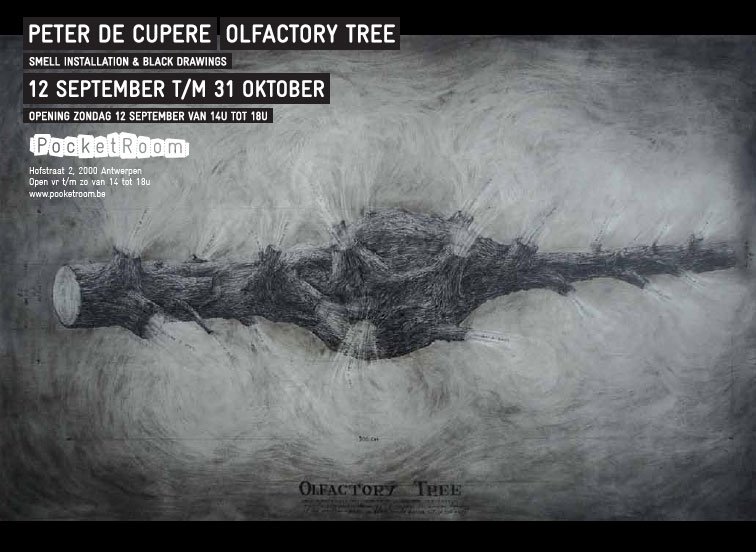
Peter De Cupere. Olfactory Tree.
A fake trunk cast in synthetic material. The eye knows it is not real. The nose smells pine, cedar, mushrooms, grass and a whole forest.
Pope.L. The Beginning of the World (with Inter-continental Missiles and Chipmunks).
At Artists Space in 2004, Pope.L spread peanut butter across a whole painted wall and let it age. A childhood food became a hard surface to smell.
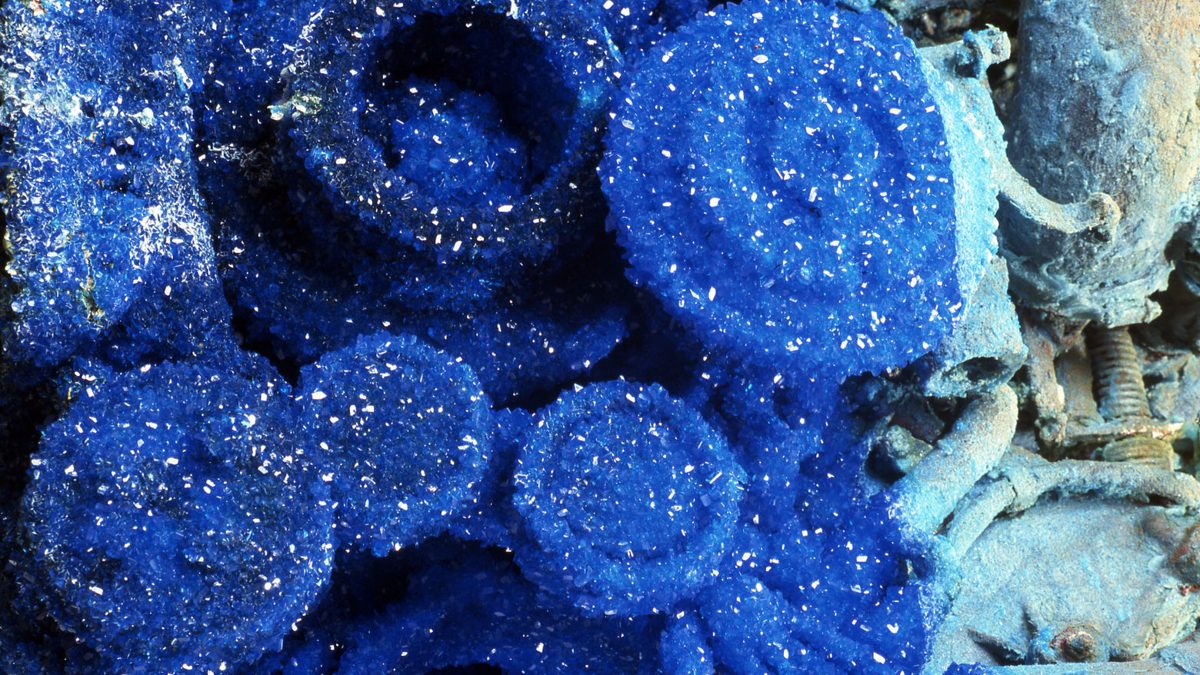
Hammer Projects: Roger Hiorns.
A flame rising from a drain grate. Foam spilling from ceramic pots. Perfumed steel. Hiorns lets materials do the artist's work.
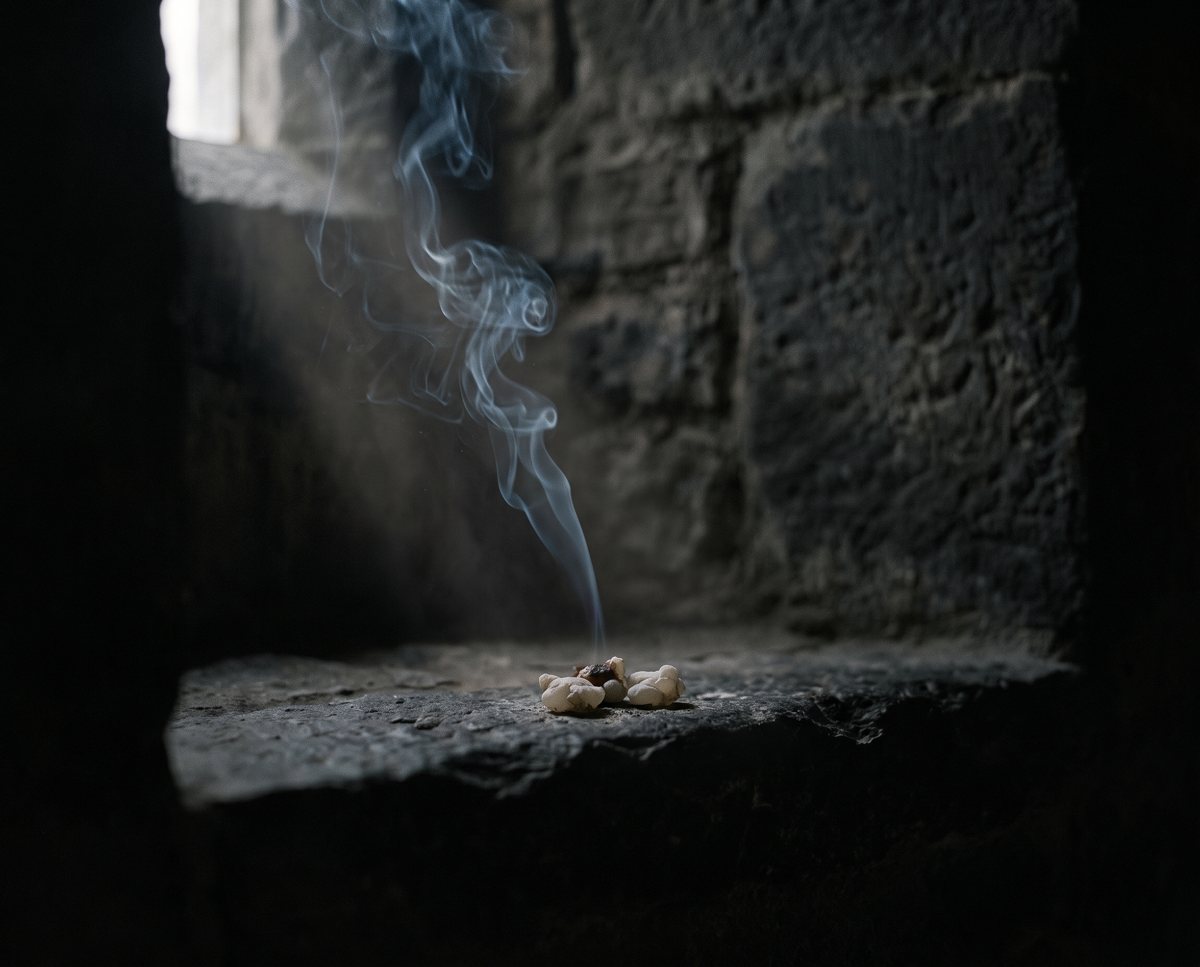
Bertrand Duchaufour. The smell of places.
An old city, a night under an orange tree, a black painting. Duchaufour does not depict these places. He leaves their smell behind.
Sergio Vega. Tropicalounge.
A tropical lounge at the 2005 Venice Biennale, soft as a hotel lobby, scented with dried flowers. Sergio Vega asks who the paradise was built for.
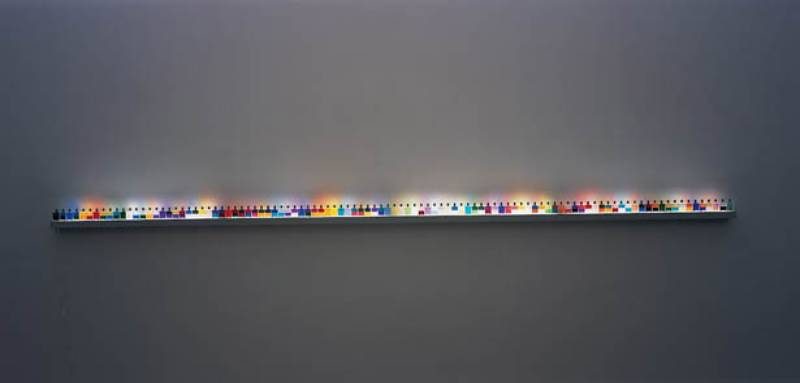
Sylvie Fleury. Aura Soma.
A wall of coloured bottles, lit like a shop shelf. Sylvie Fleury sets a fashionable spiritual trend inside the language of minimal art.
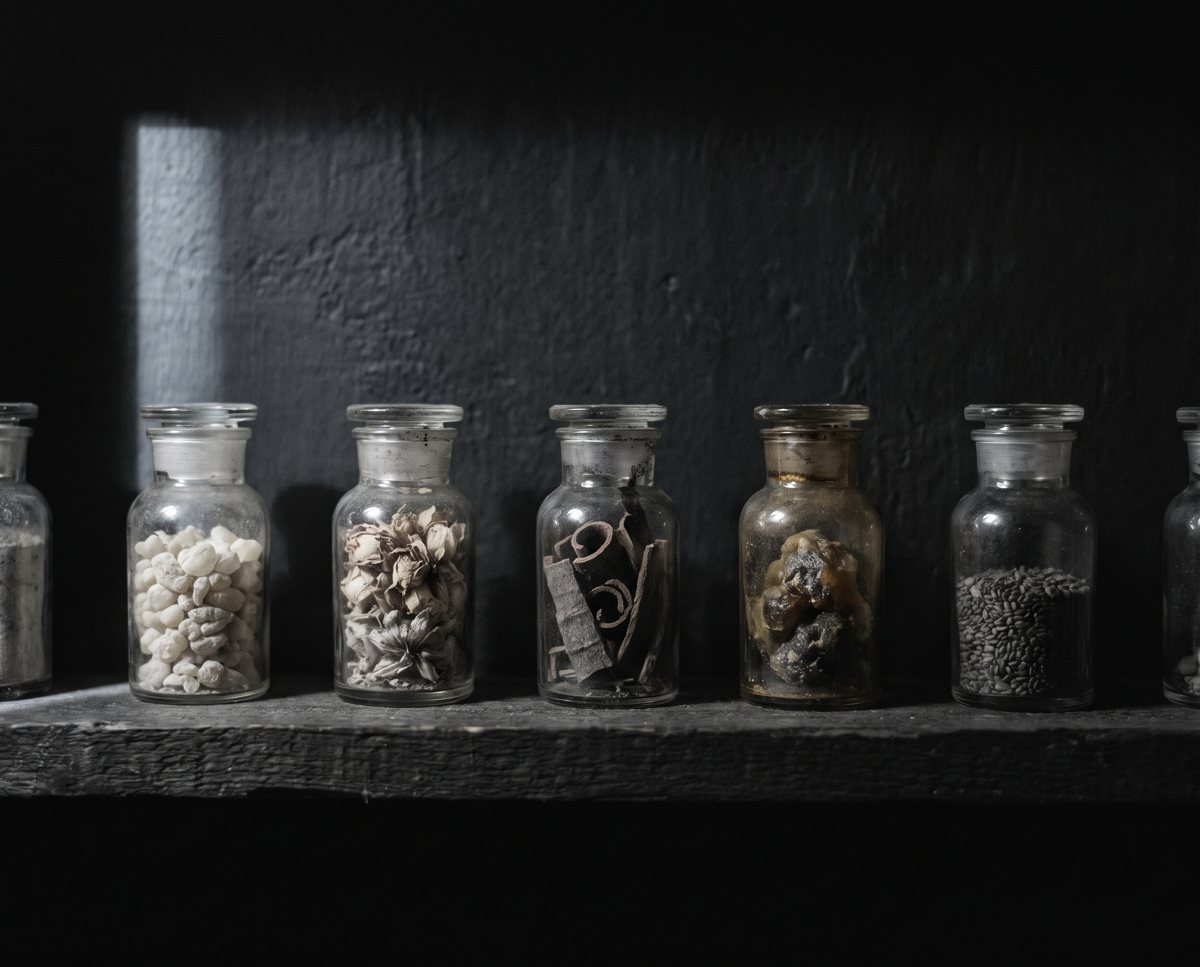
Mandy Aftel. A museum of curious smells.
A small cottage at the end of a brick drive in Berkeley, full of wooden drawers, old books and resins. People come to smell materials before they become perfume.
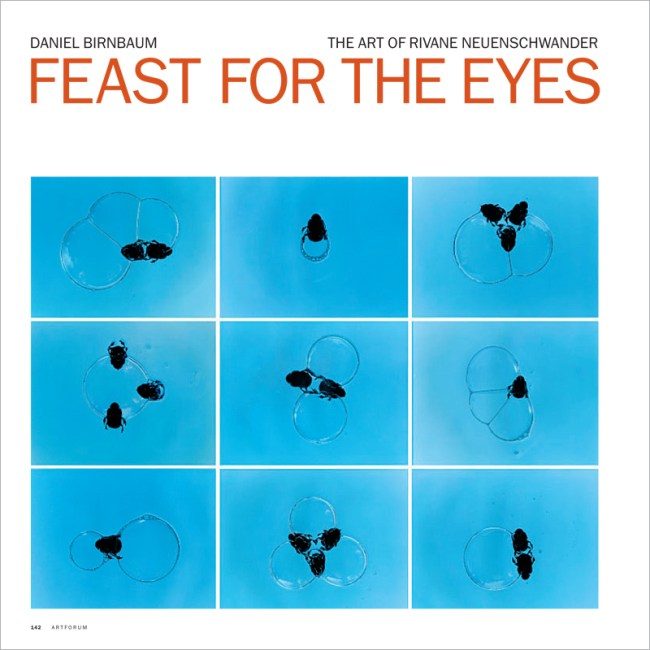
Rivane Neuenschwander. Eatable Alphabet.
Twenty six striped panels, one per letter, coloured with açafrão, black pepper, curry and sesame. An alphabet written in spice.
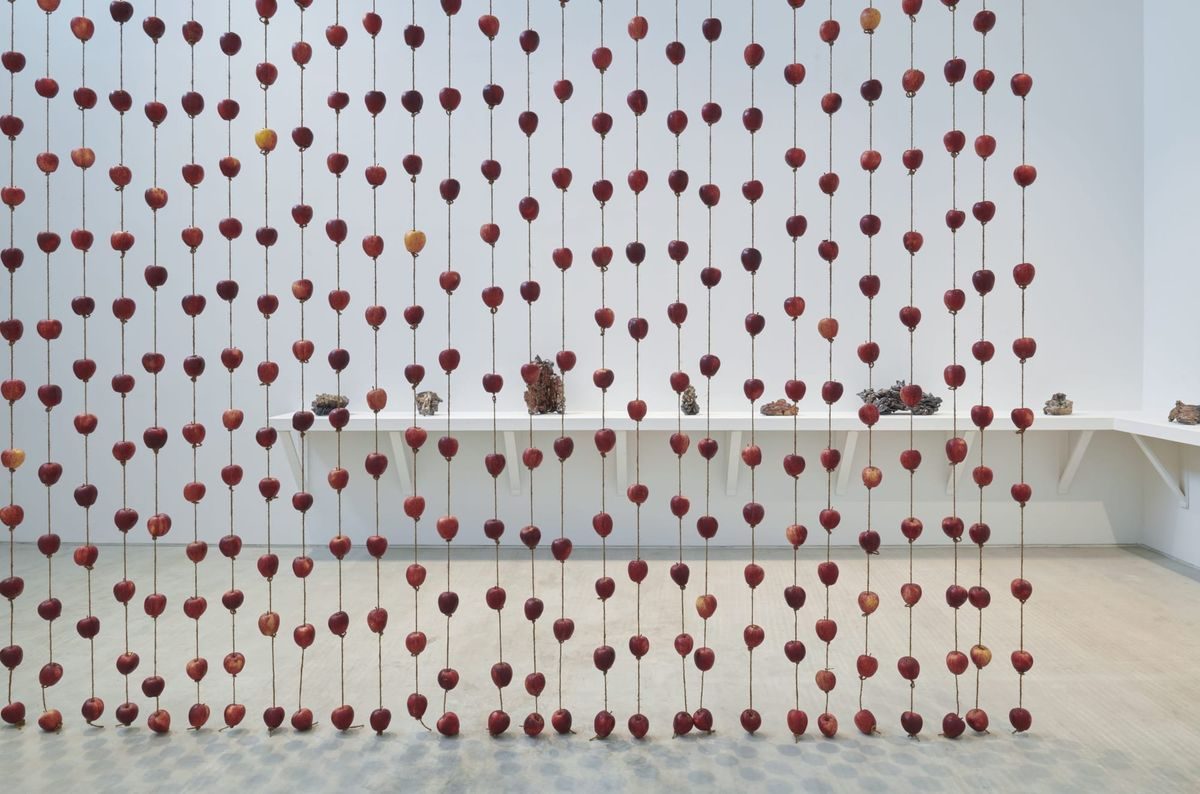
Anya Gallaccio. Falling from grace.
Thousands of apples hang in the air. The first week smells of autumn cider; later weeks ferment, then rot. Anya Gallaccio lets smell count the time.
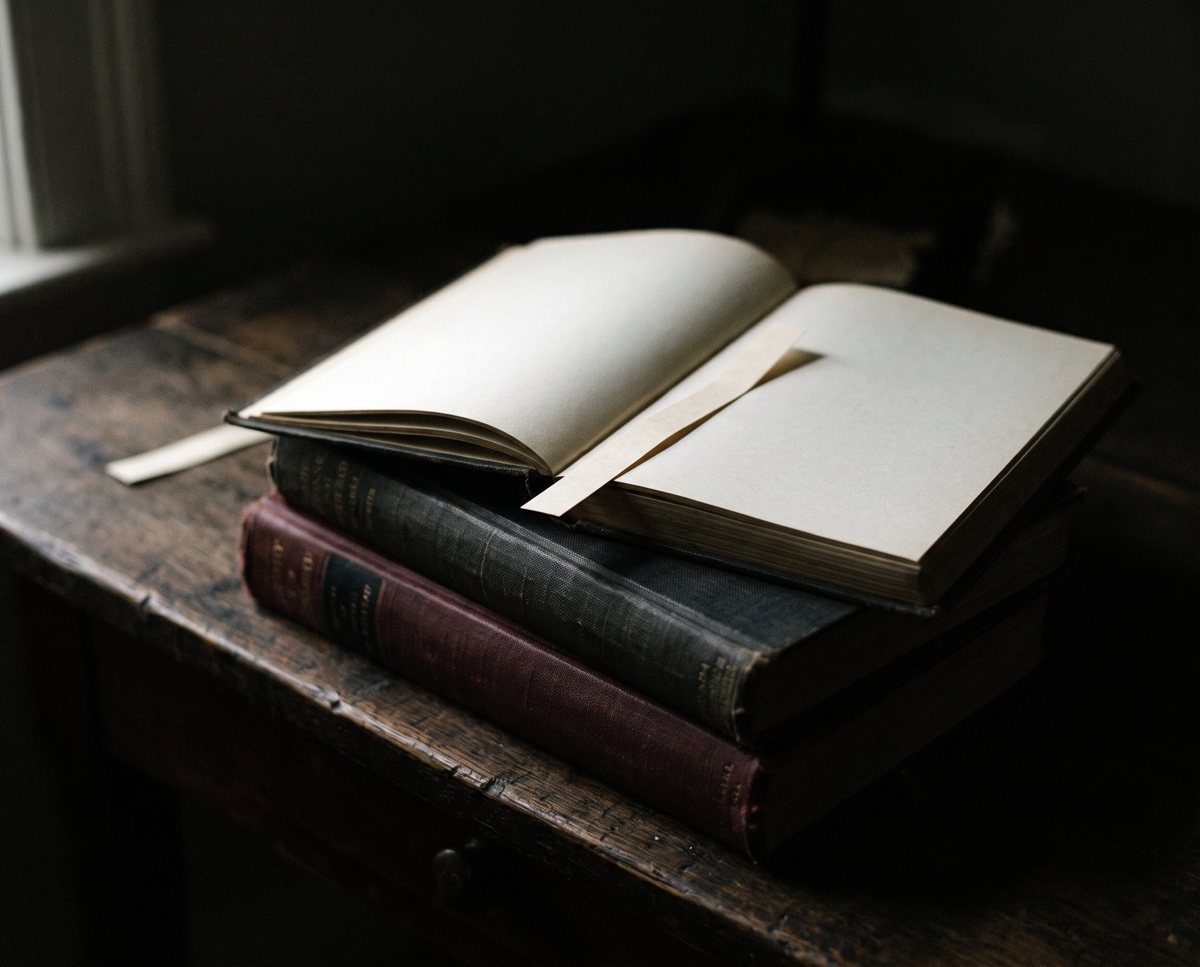
Frédéric Malle. A publisher of perfumers.
A perfume house named after the book trade. On each bottle, the name of the person who wrote the smell, like an author on a cover.
Gayil Nalls. World Sensorium.
A scent made from each country's aromatic plant, measured by population. Everyone is counted, even those who will never smell it.
Wim Delvoye. Cloaca.
A machine of glass, pumps and bacteria, fed like a person. Once a day it expels, and the room knows it by the nose.
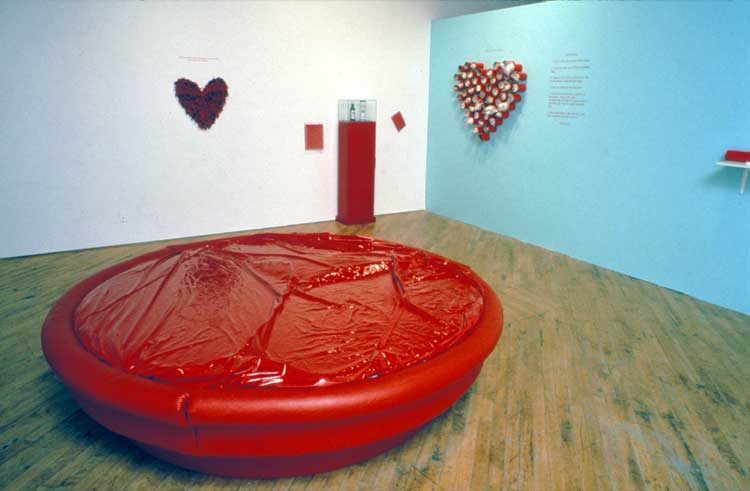
Clara Ursitti. Pheromone Link TM.
No photo, no profile, no messages. Only a worn T shirt and a number. Ursitti set up a matchmaking agency run on smell.
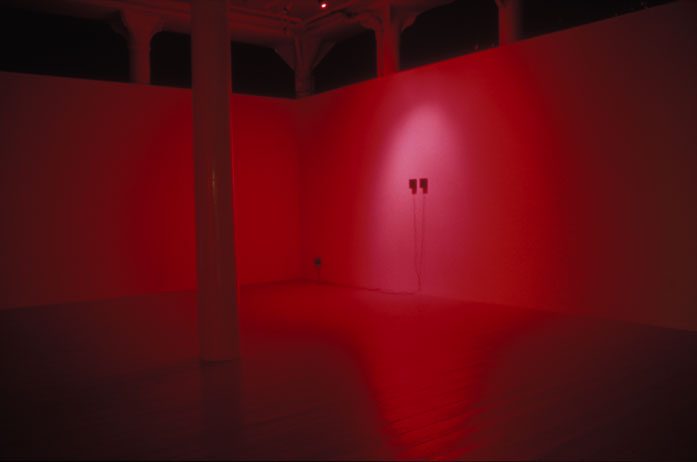
Clara Ursitti. The Smell of Fear.
Scent dispensers shaped like speakers, pink light, and the smell of a star trying to hide her own body. Ursitti rebuilt what audiences never smelled.
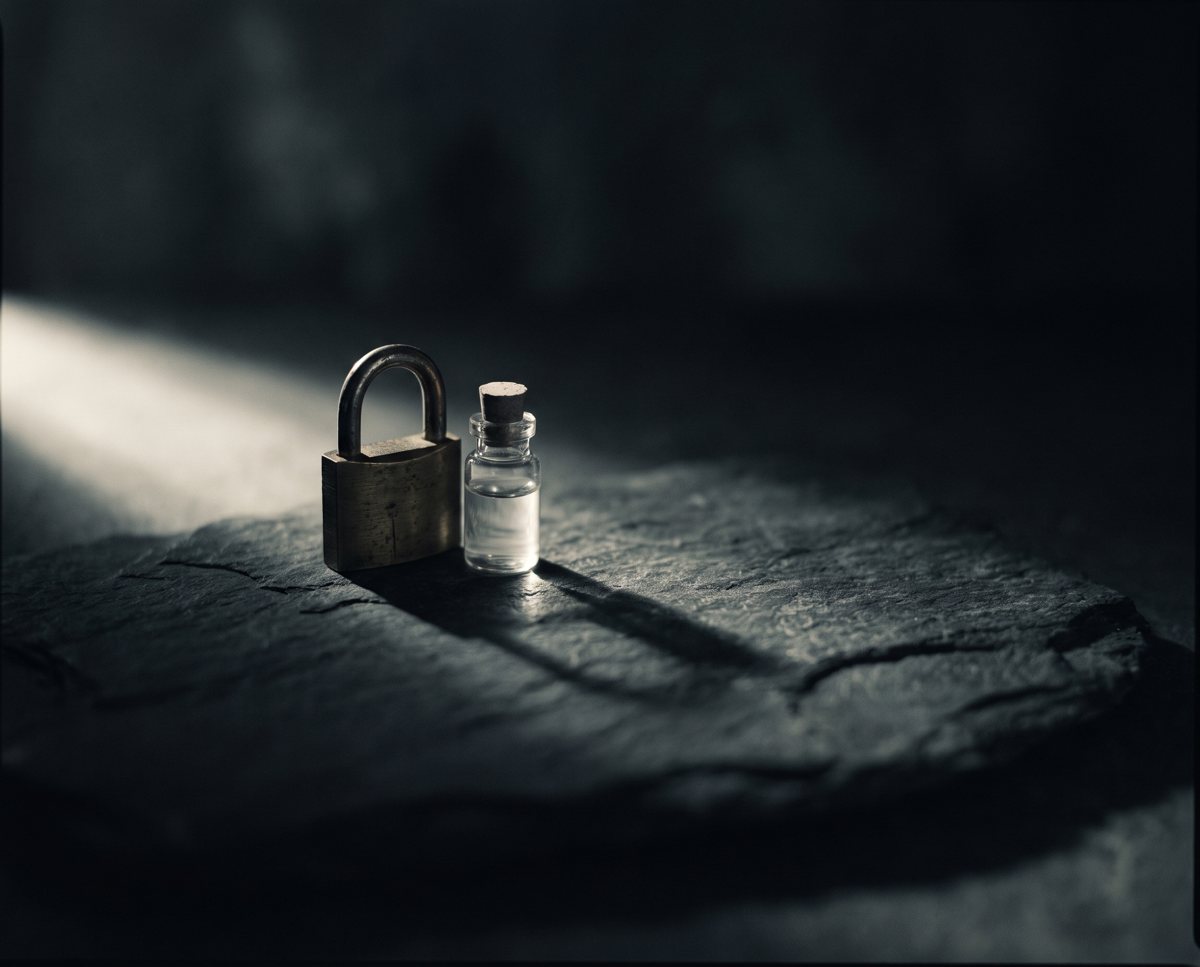
Captive molecules. Owning a smell.
Some smells have an owner before anyone has smelled them. They wait in one company's laboratory until the patent runs out.
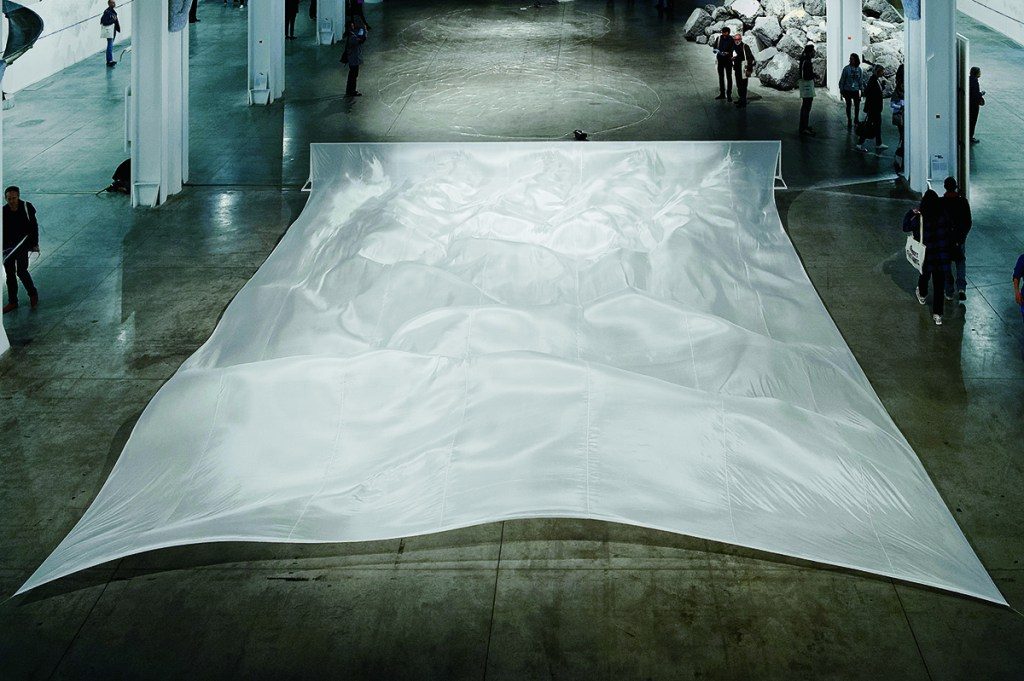
Lygia Pape. Luar do Sertão.
Popcorn spread across the floor, glowing under ultraviolet light like land under the moon. A country song rebuilt from a cinema snack.
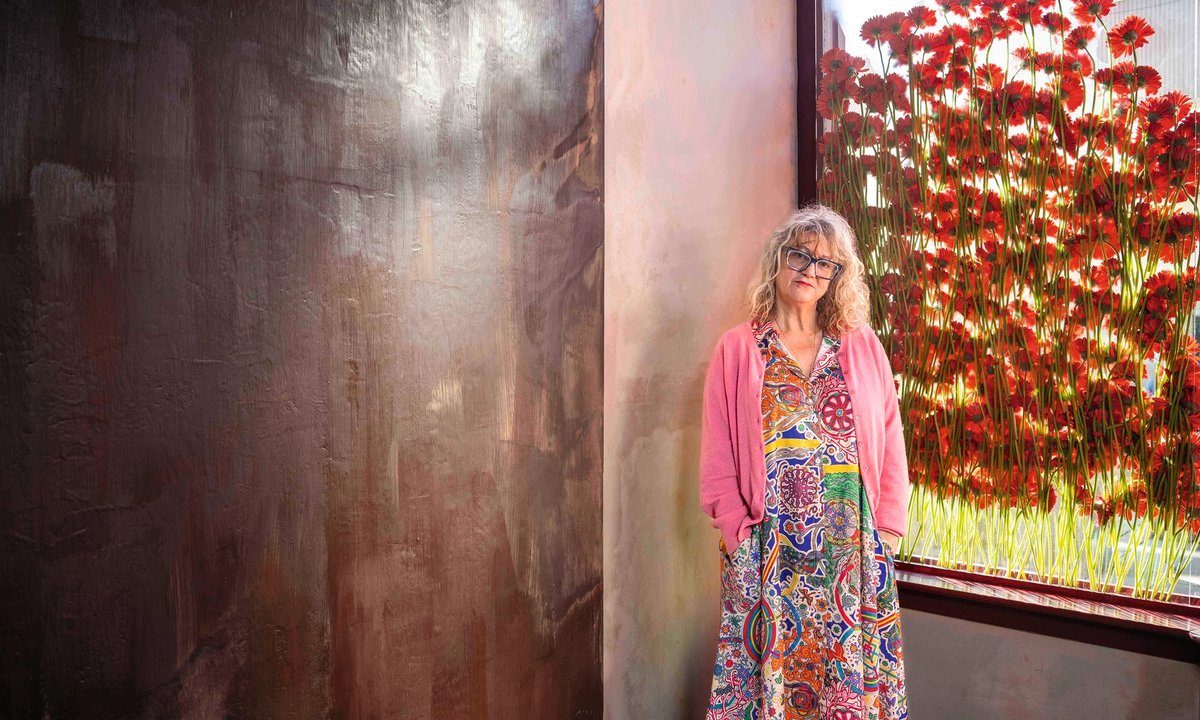
Anya Gallaccio. Stroke.
Walls coated in dark chocolate with the smallest possible gesture. Then visitors scratch their names, taste it, and the surface begins to change.
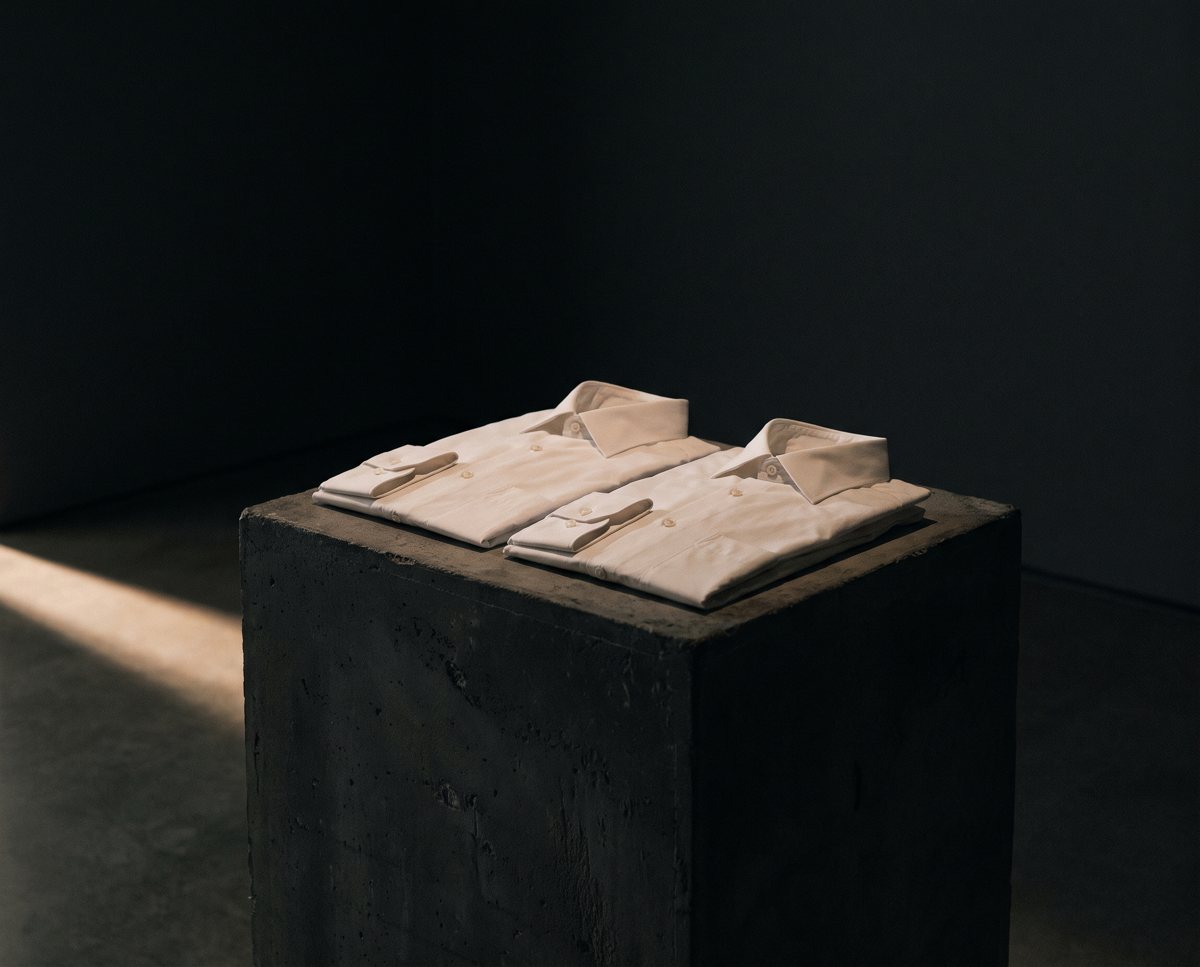
CK One. One bottle for two.
In 1994 a scent was made for anyone. CK One did not ask whether its wearer was a man or a woman. It had only tea, citrus peel and a trace of clean musk.
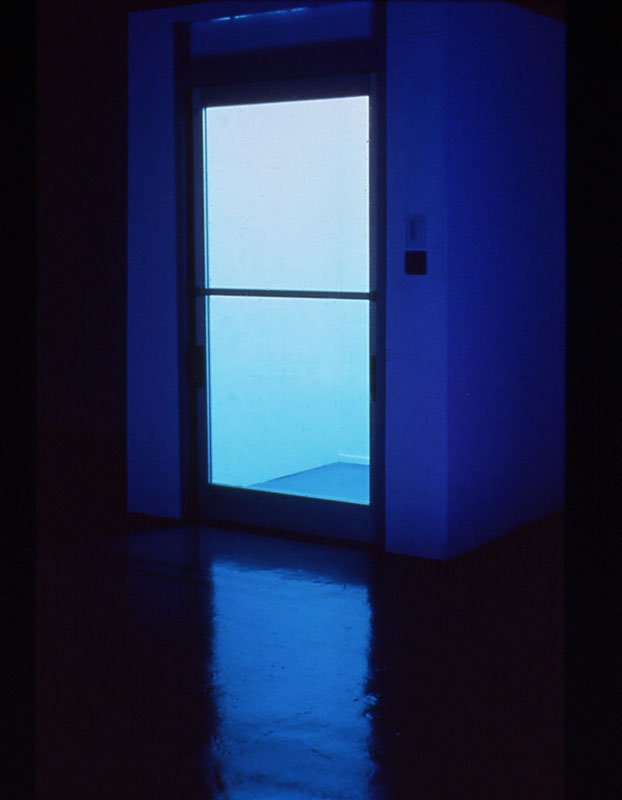
Clara Ursitti. Self-Portrait in Scent, Sketch no. 1.
No image, no text, no face. Only a closed room and a scent. Clara Ursitti called it a self-portrait.
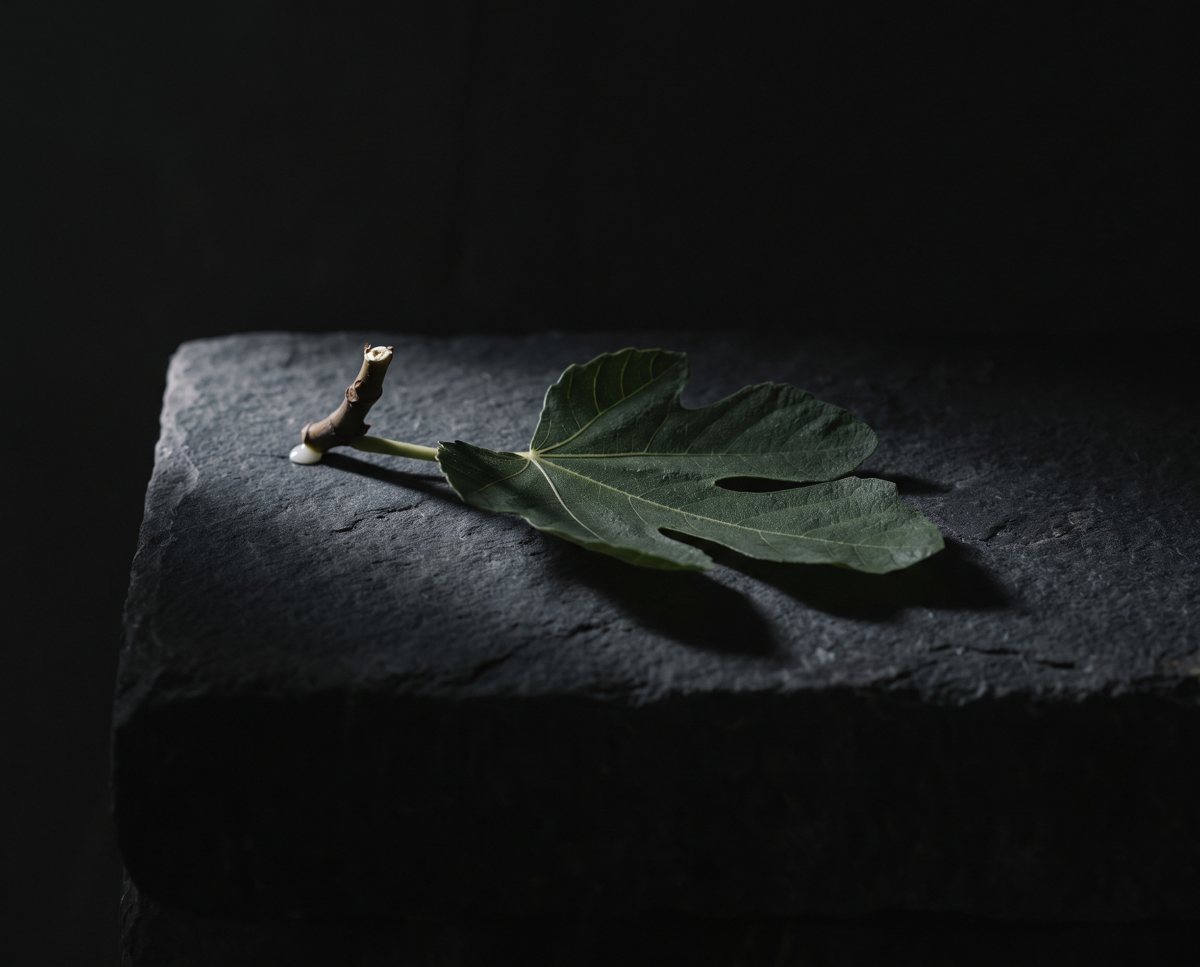
Olivia Giacobetti. A tree and its shade.
Premier Figuier is not about a fig. It builds the whole tree: leaf, sap, branch and the shade beneath. Giacobetti makes scents that leave room.
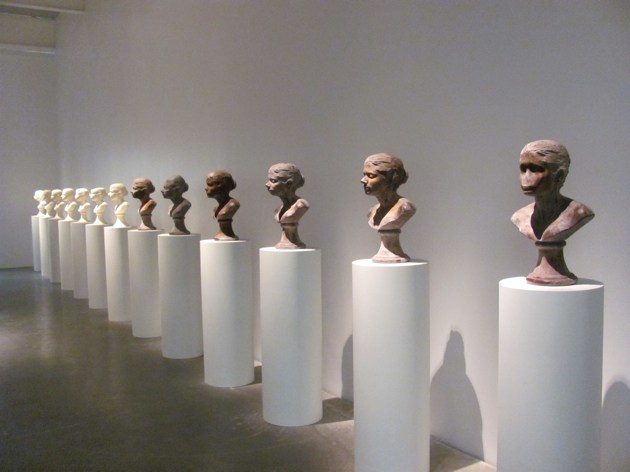
Janine Antoni. Lick and Lather.
Fourteen busts, seven in chocolate, seven in soap. The artist recarved her own face with her tongue and her bathwater.
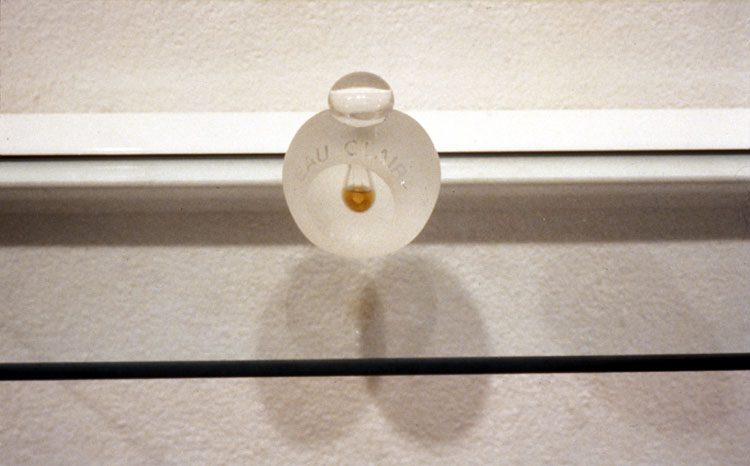
Clara Ursitti. Eau Claire.
Perfume is usually made to cover the smell of a person. Eau Claire does the opposite: it bottles that very smell.
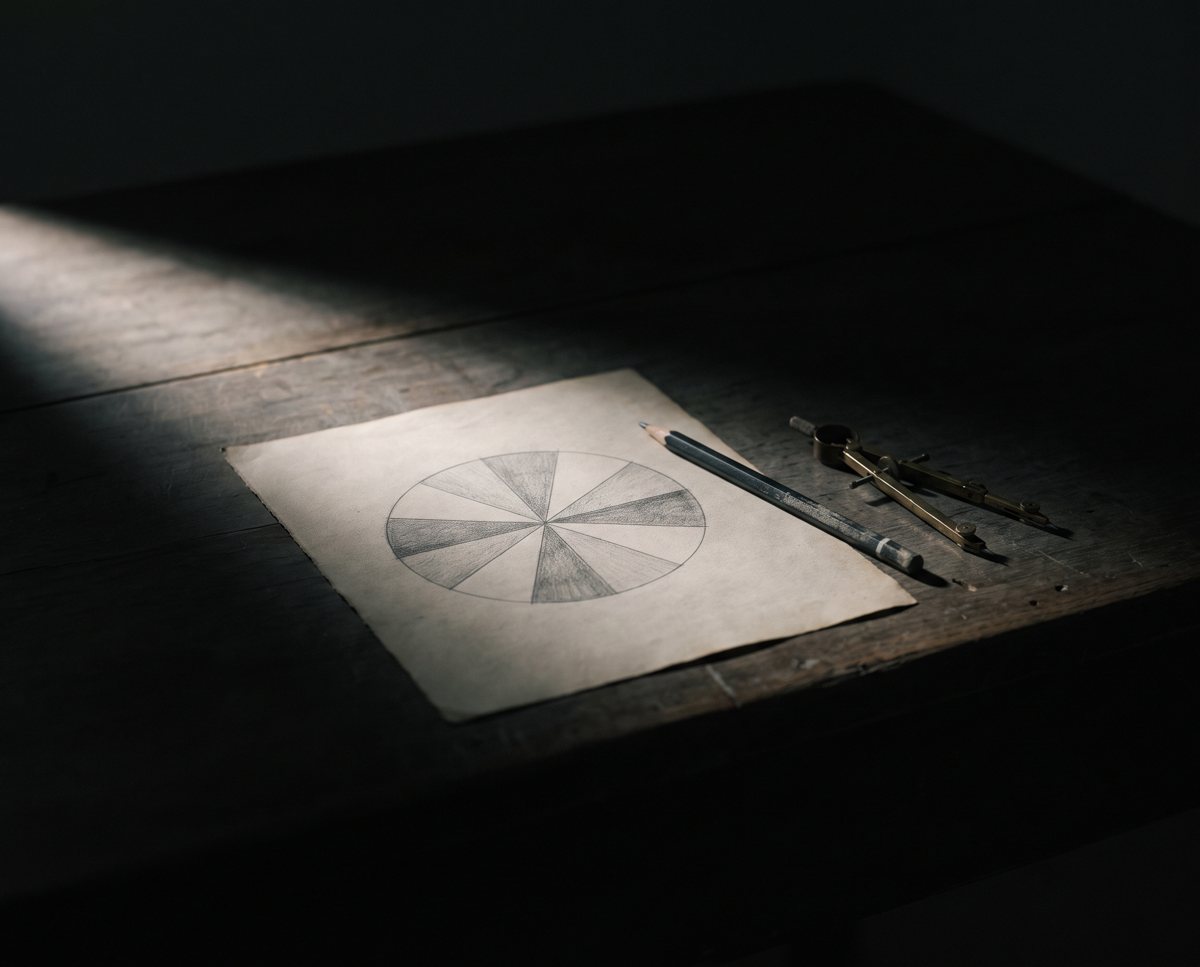
The scent wheel. Rereading a map.
A circle divided into families, each sliding into the next. It helps sellers and buyers talk. It is not the smell itself.
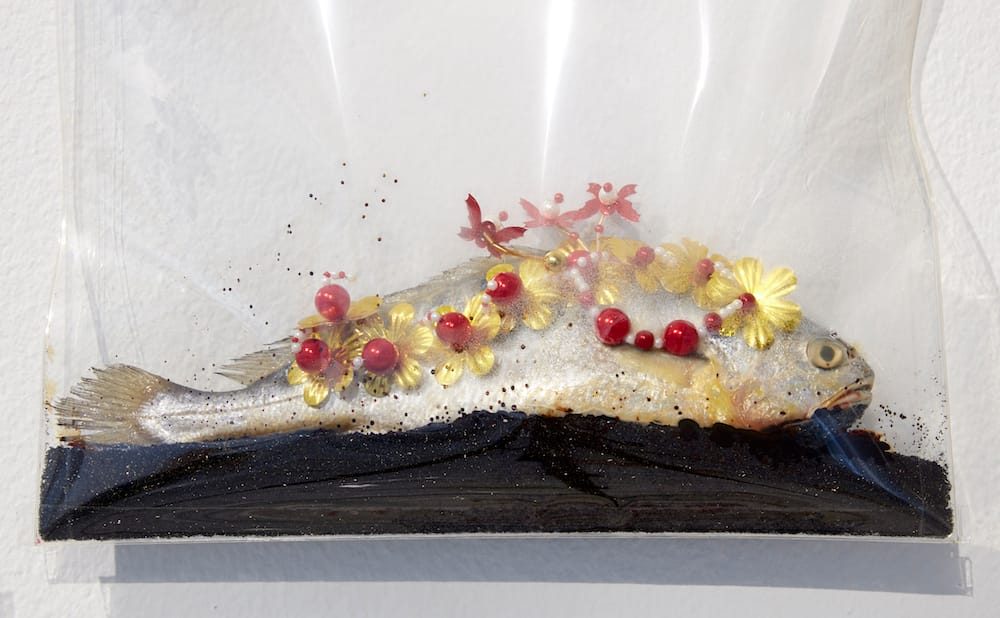
Lee Bul. Majestic Splendor.
The sequins keep shining; the fish underneath do not. Lee Bul's work was pulled from MoMA for its smell, and from the Hayward over a chemical reaction.
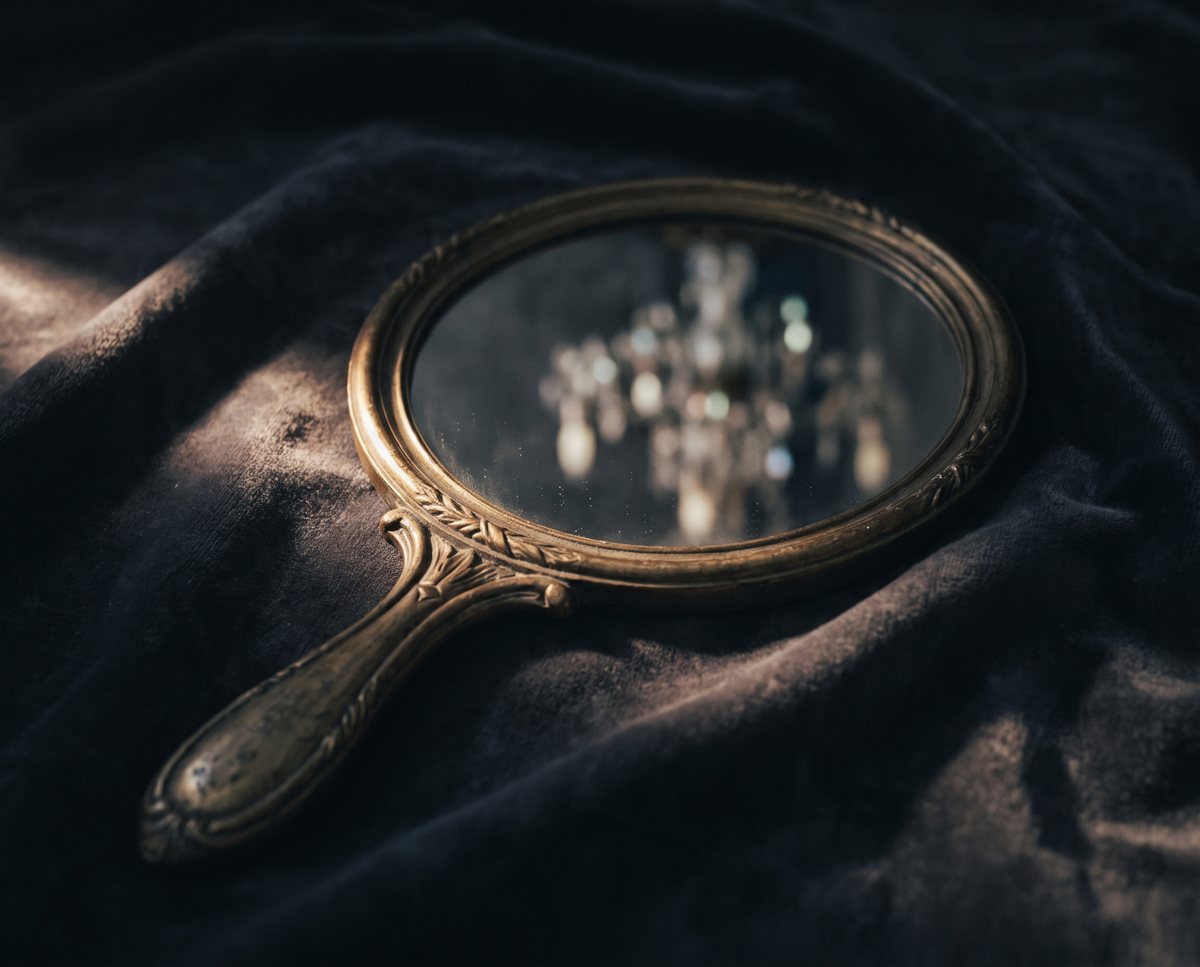
Celebrity perfume. A face on a bottle.
A familiar face on the box, a name on the cap. Celebrity perfume invites us to smell an image. Penta reads the phenomenon from the side of the object.
Jean Kerléo. Keeper of lost smells.
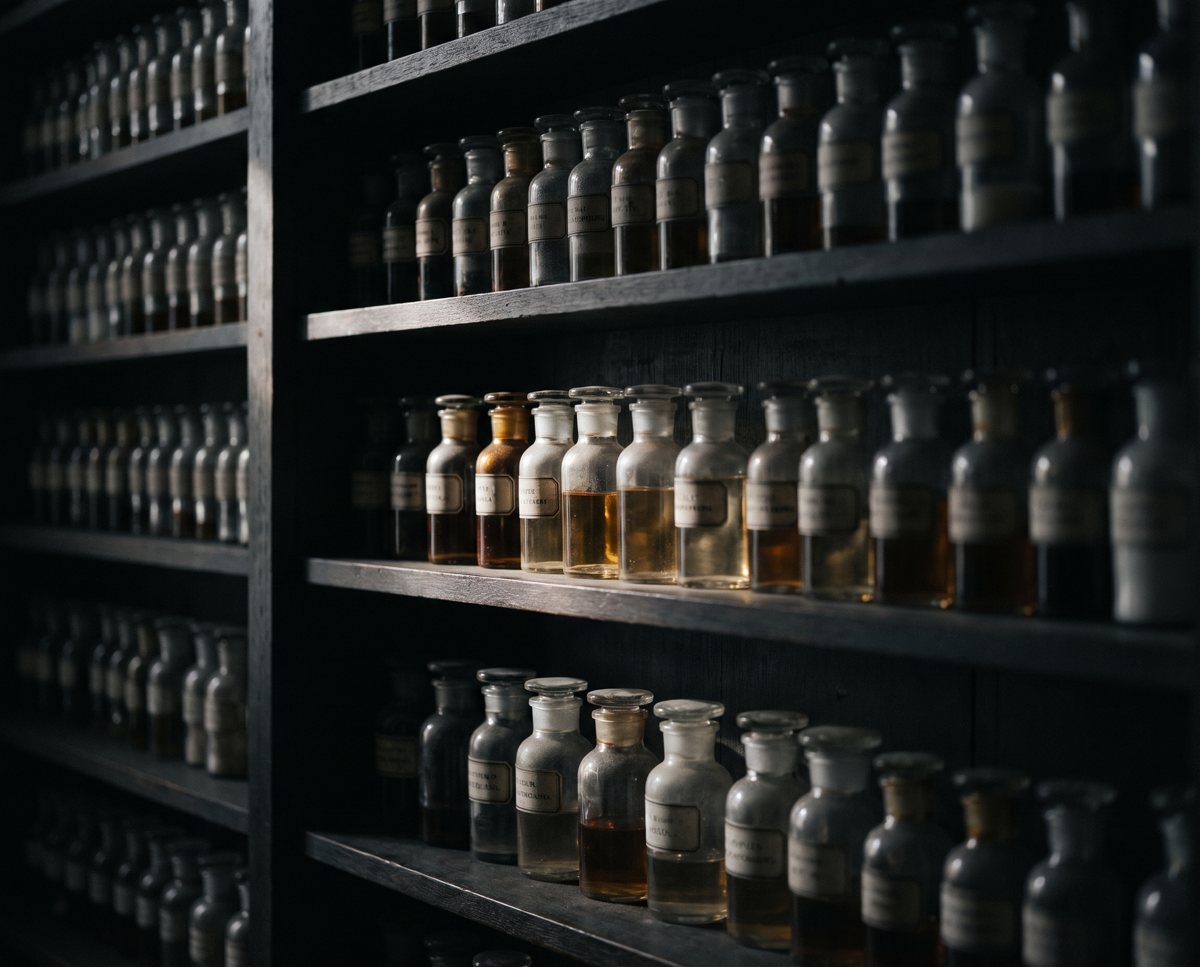
An archive for the most fragile thing people make. In Versailles, smells from the 1880s can still be opened and smelled.
Jana Sterbak. Vanitas: Flesh Dress for an Albino Anorectic.
A dress sewn from raw beef, salted, hung on a mannequin. Each day on view it darkens and shrinks a little more.
Richard Wilson. 20:50.
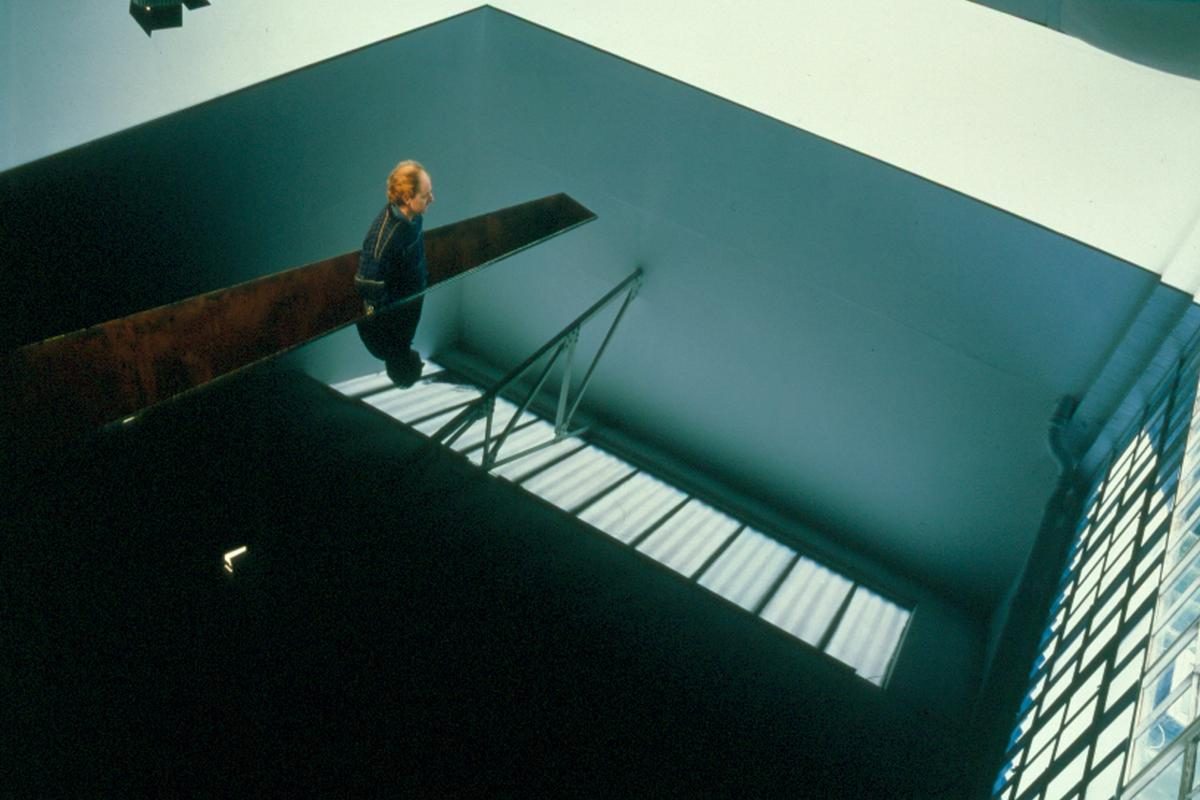
Two hundred gallons of used engine oil, a narrow walkway, a black plane reflecting the whole room. The eye sees a mirror. The nose smells oil.
John Waters. Polyester in Odorama.
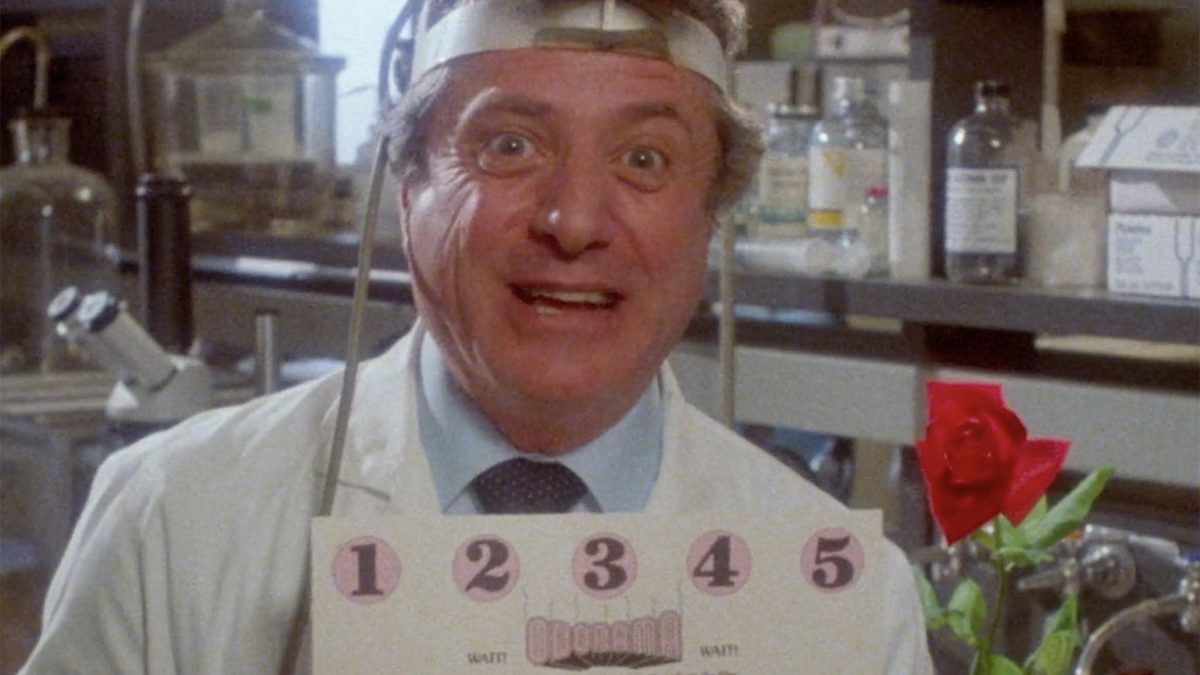
A scratch card, ten numbers, ten smells. A rose beside gasoline, pizza beside dirty shoes. Odorama made audiences smell the very life the film mocks.
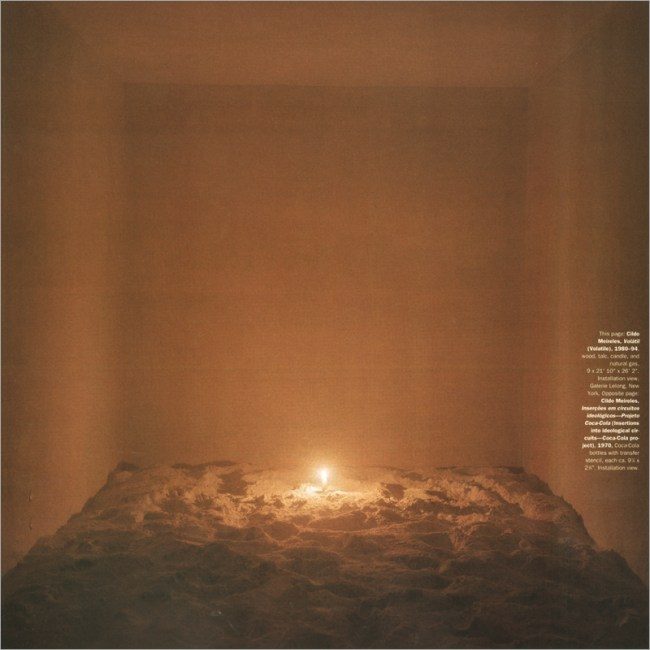
Cildo Meireles. Volátil.
A room filled with talc, a smell of gas and a candle. Nothing explodes. But the visitor's nose is afraid before anything else.
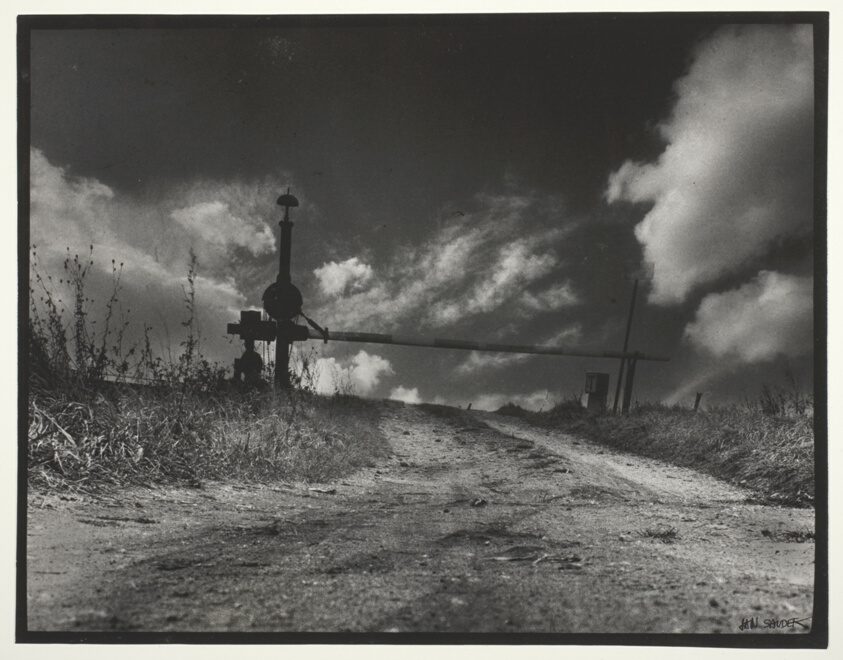
Jan Saudek. My Country in Summertime.
A gelatin silver print has no smell. Its title has two: hot steel in the sun and hay. Saudek lets words do what the image cannot.
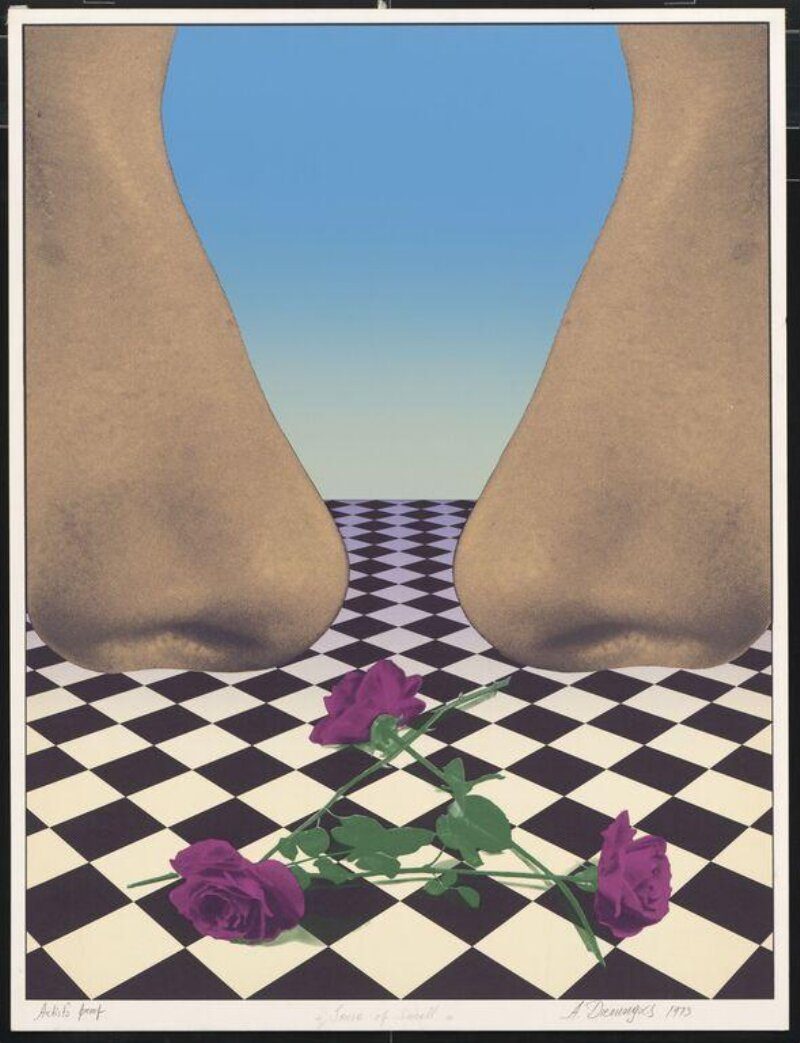
Achilles Droungas. A Sense of Smell.
The screenprint was first called Three Purple Roses. Droungas renamed it A Sense of Smell, and without changing a line, the picture changed its meaning.
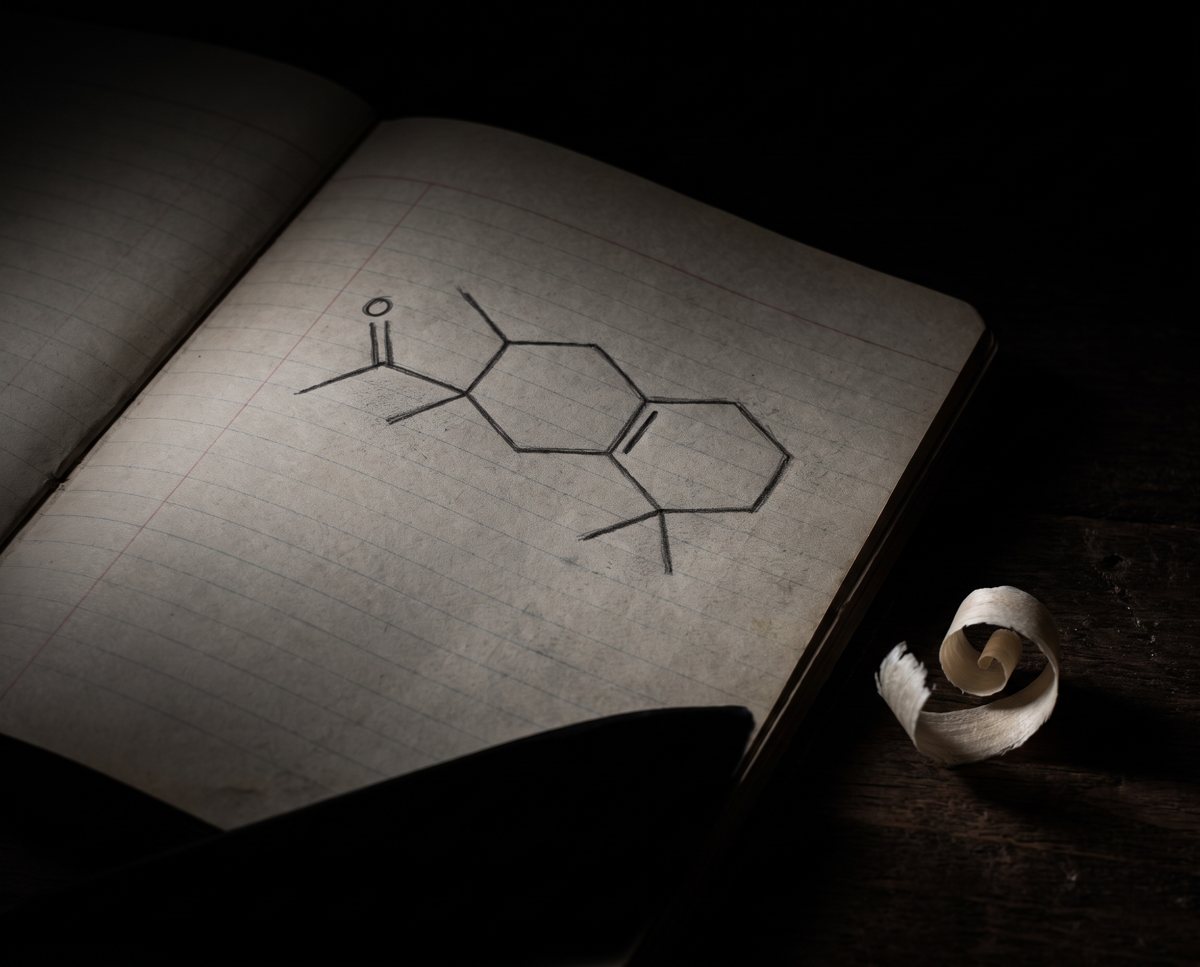
Iso E Super. A smell you barely smell.
A smooth, dry, almost transparent wood. The wearer often smells nothing. The passer by does. The trace shows at a distance.
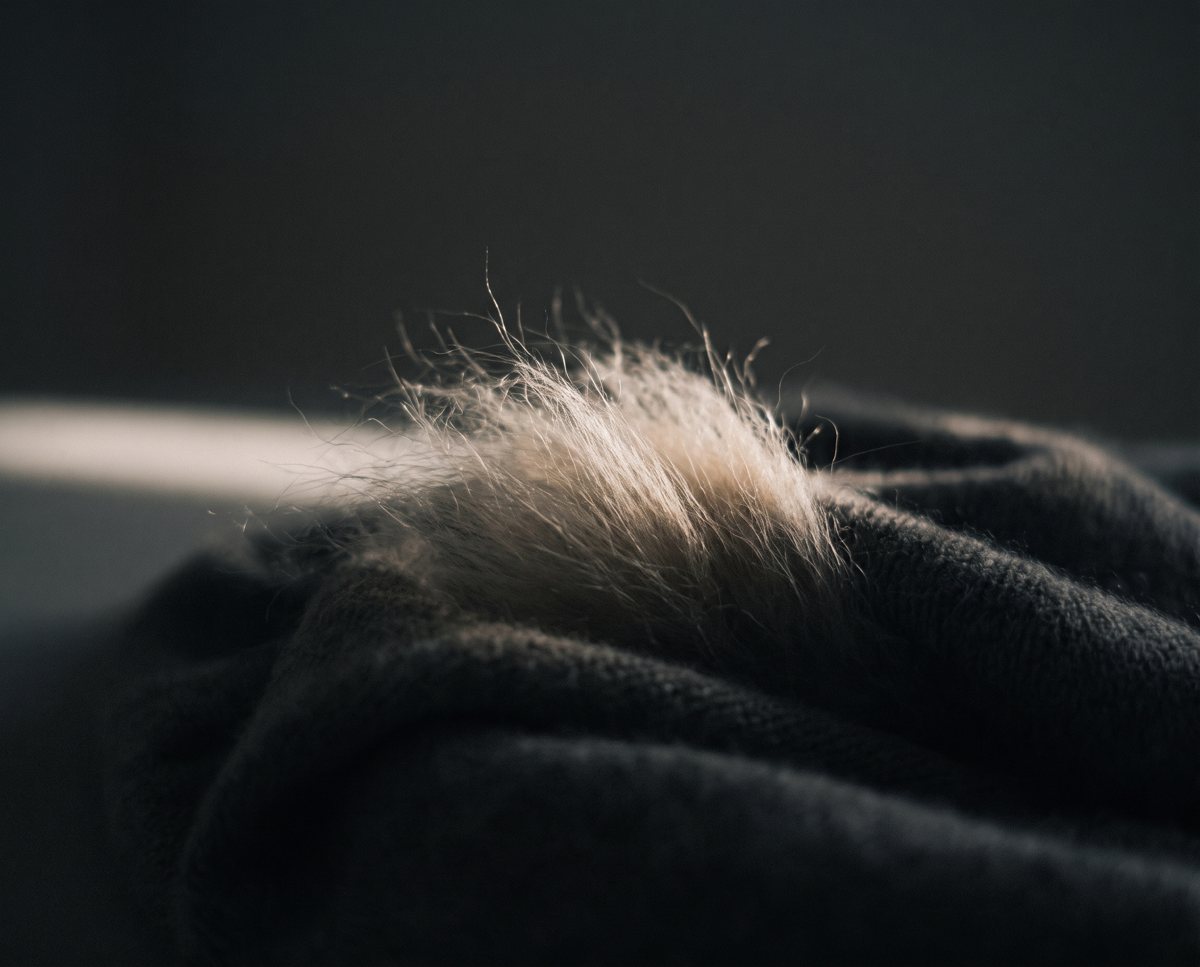
Cashmere. A smell about touch.
A soft wool scarf smells of almost nothing. Yet a smell carries its name. People smell something and think of touching.
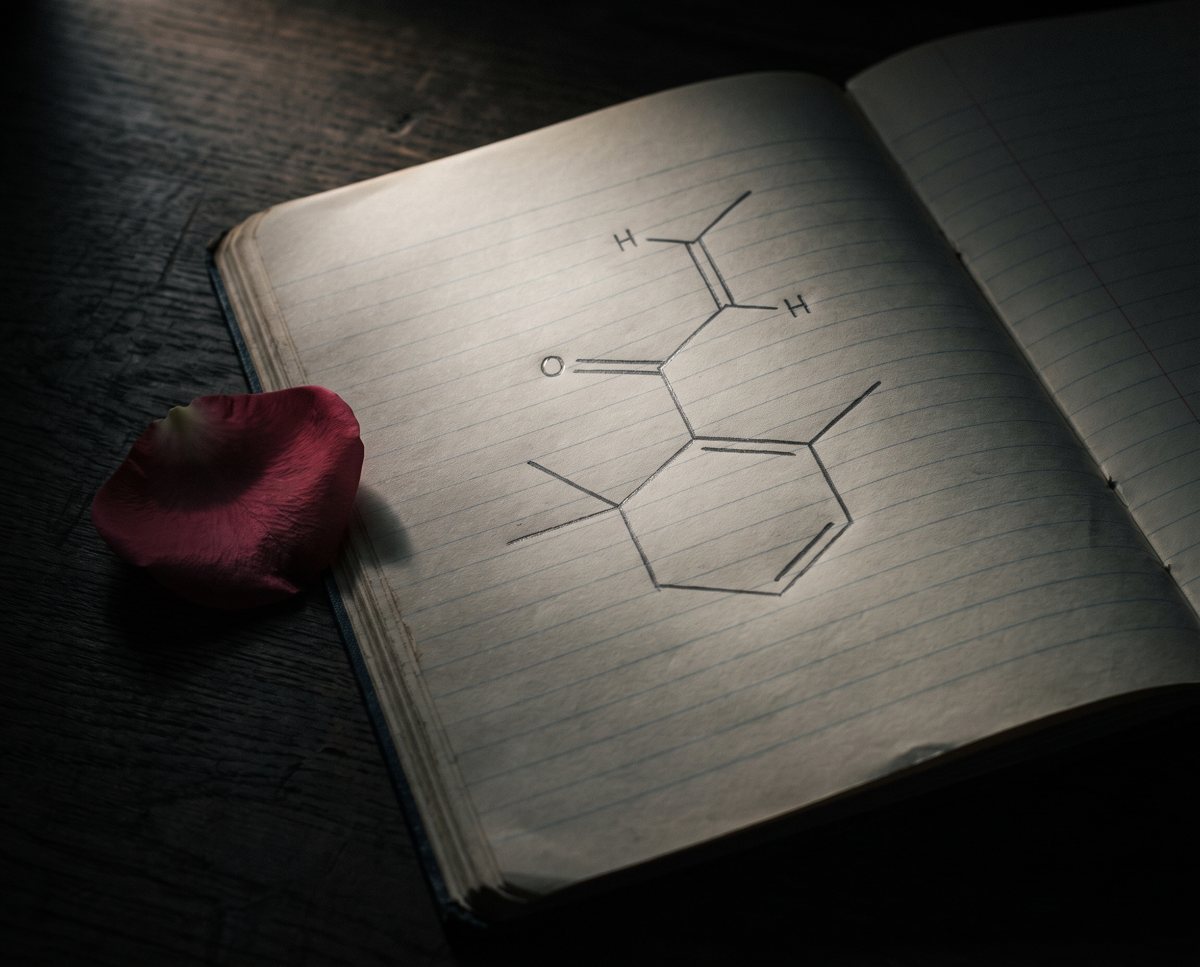
Damascenone. A millionth of a rose.
A nearly invisible molecule in Bulgarian rose oil. Then it turned up again in black tea, in aged spirits, in cooked apples.
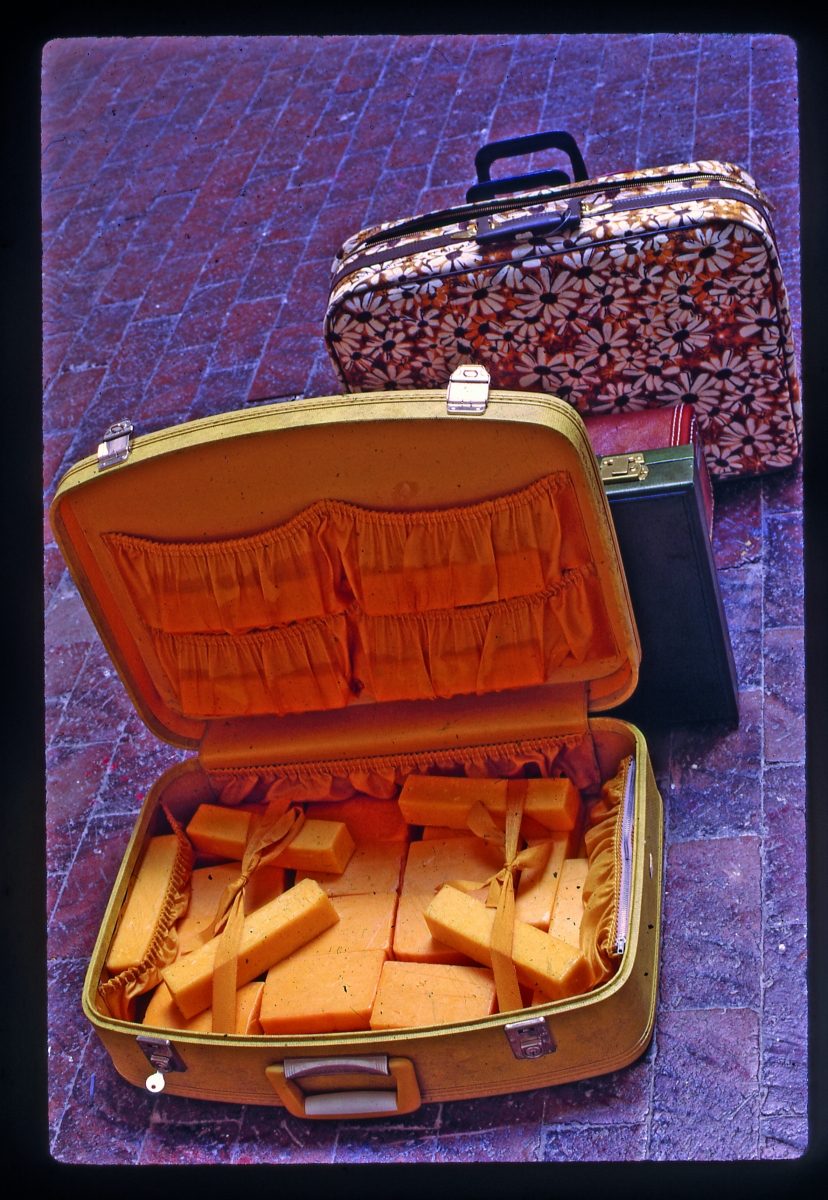
Dieter Roth. Staple Cheese (A Race).
Thirty seven suitcases, each with a different cheese. One spring month. Liquid on the floor, flies in the air, and the gallery stayed open.
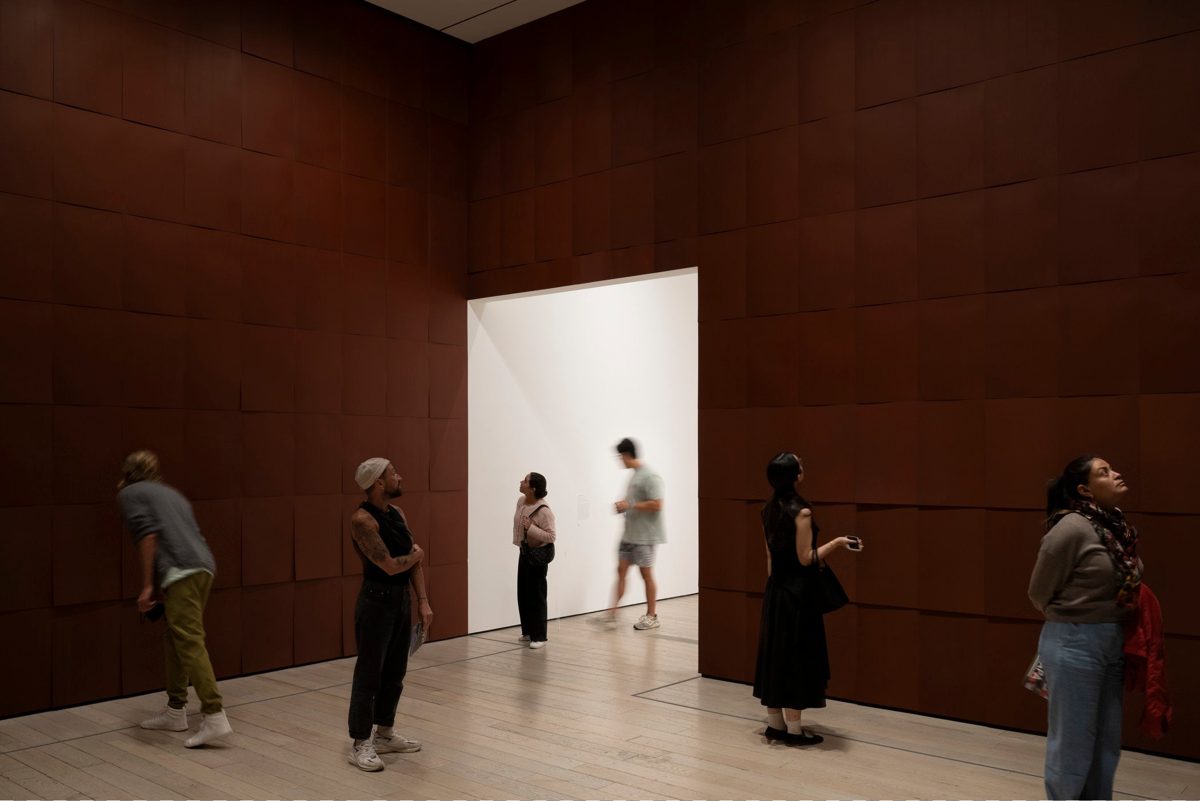
Ed Ruscha. Chocolate Room.
Four walls, 360 sheets, an ink made of chocolate. The room smelled sweet, then softened with the weather.
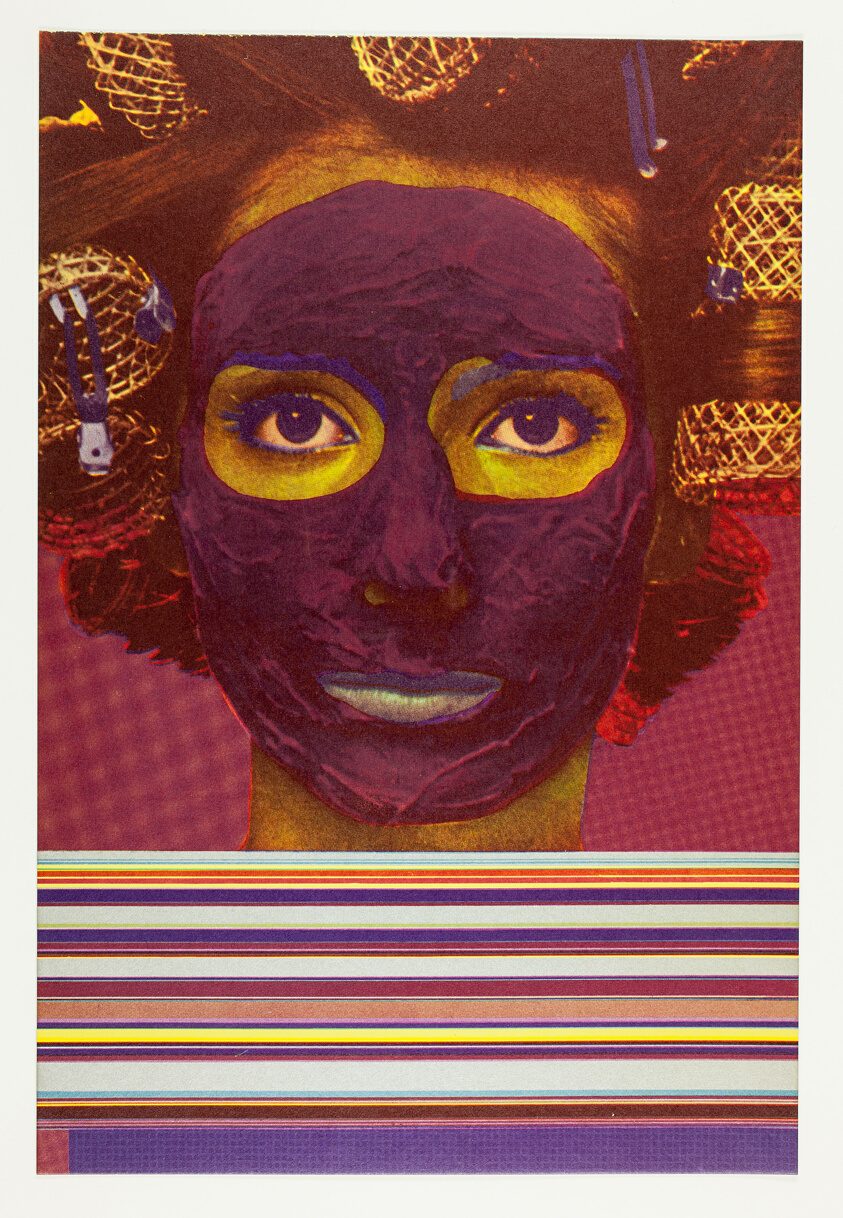
Eduardo Paolozzi. Astute sizing up perfume trends.
A 1970 photolithograph whose title reads like a marketing report heading. Paolozzi sees perfume as part of the media machine.
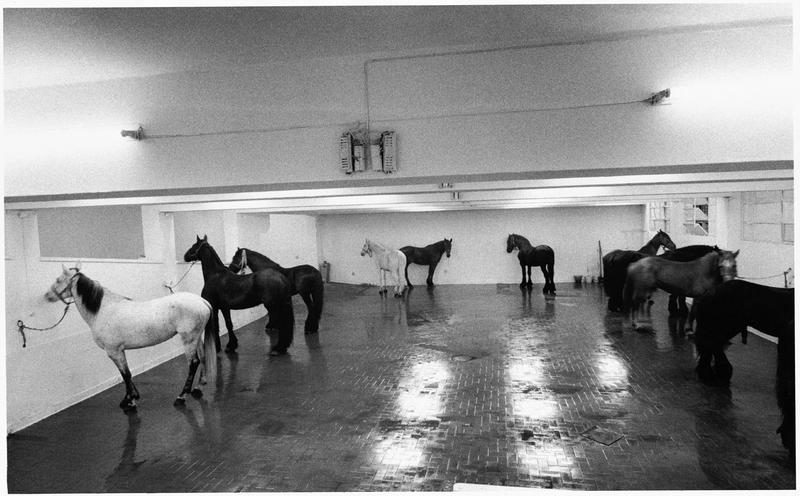
Jannis Kounellis. Untitled (12 Horses).
An old garage in Rome, twelve live horses along the walls like parked cars. Visitors smelled a stable before they saw any art.
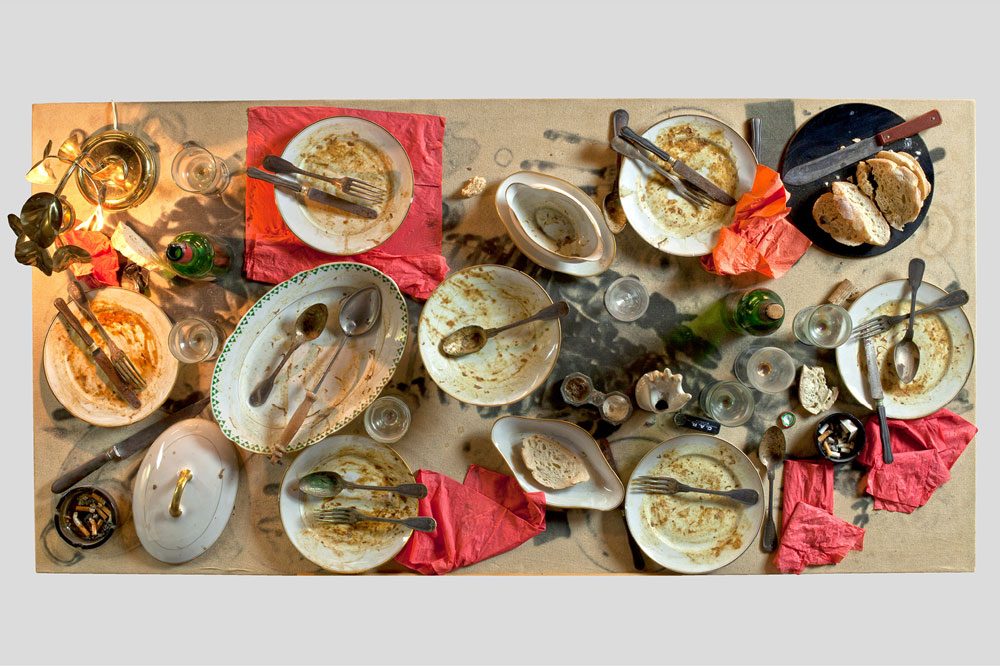
Daniel Spoerri. Restaurant Spoerri.
Dirty plates, half finished wine, a full ashtray. Daniel Spoerri glued them to the tabletop, hung it on the wall, and called it a picture.
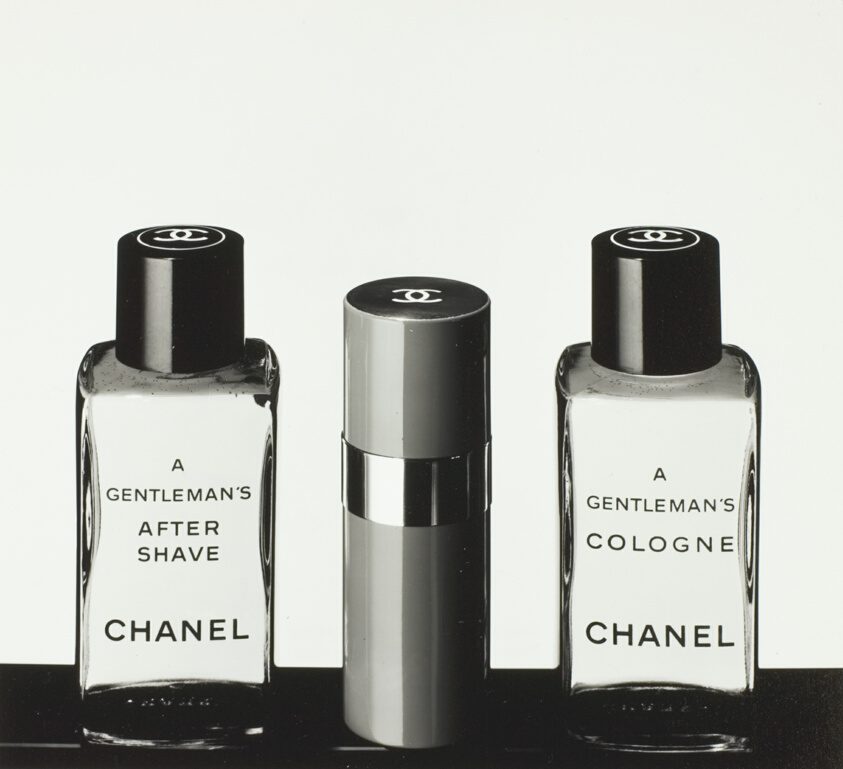
Irving Penn. 3 Chanel Products, New York.
Three Chanel products, one backdrop, one black and white negative. Twenty four years later Penn printed the advertisement again as a work of art.
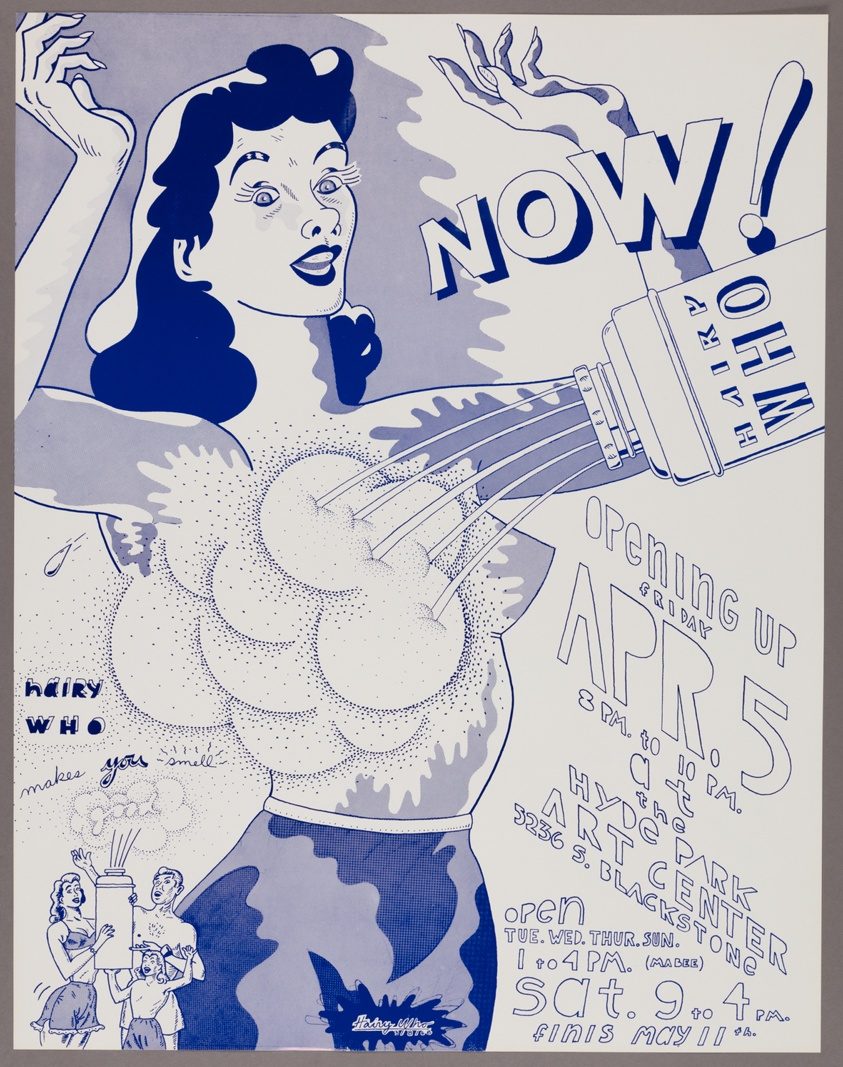
Jim Nutt. Now! Hairy Who Makes You Smell Good.
An exhibition poster that speaks in the voice of a soap box: Now! Hairy Who Makes You Smell Good. No one believes it, and that is the joke.
Lygia Clark. Máscaras sensoriais.
Six fabric hoods. The eyes look through mirror, aluminium, bandage. The nose smells chamomile, rosemary, mint.
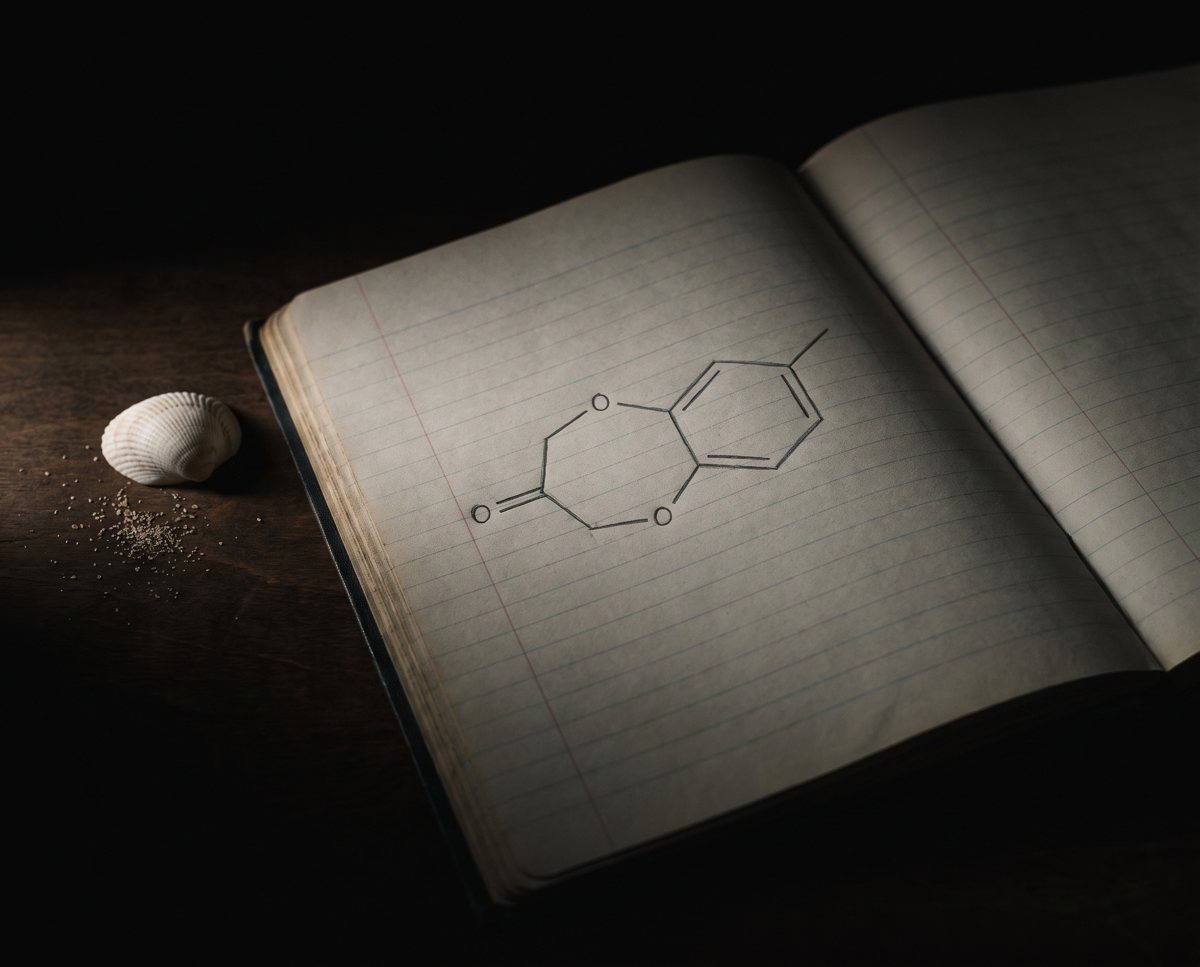
Calone. A sea that is not in the sea.
Watermelon, seashell, salt wind. Calone smells of the sea but never came from it. We recognise a place in a molecule that does not belong to it.
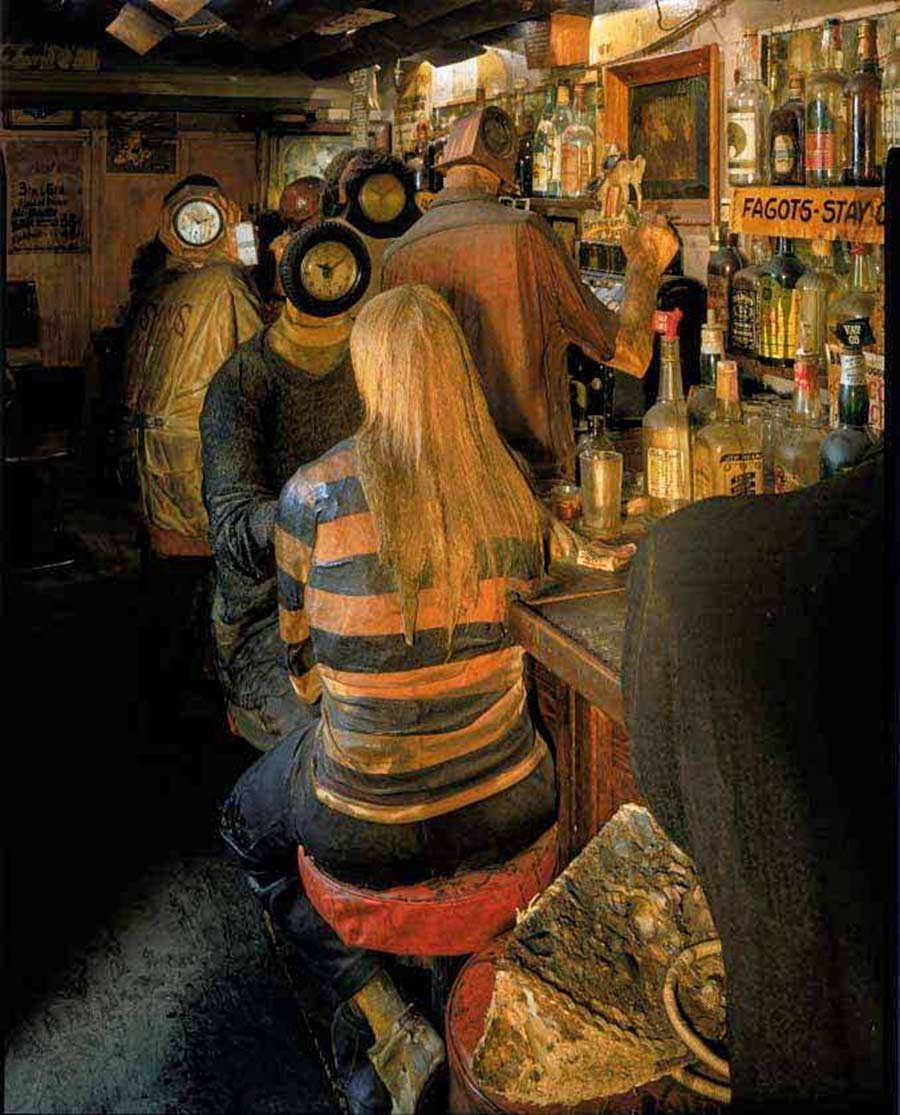
Edward Kienholz. The Beanery.
Kienholz rebuilt his local bar as a room you can enter, with music and smell. The museum keeps the work, and has to keep that unpleasant smell too.
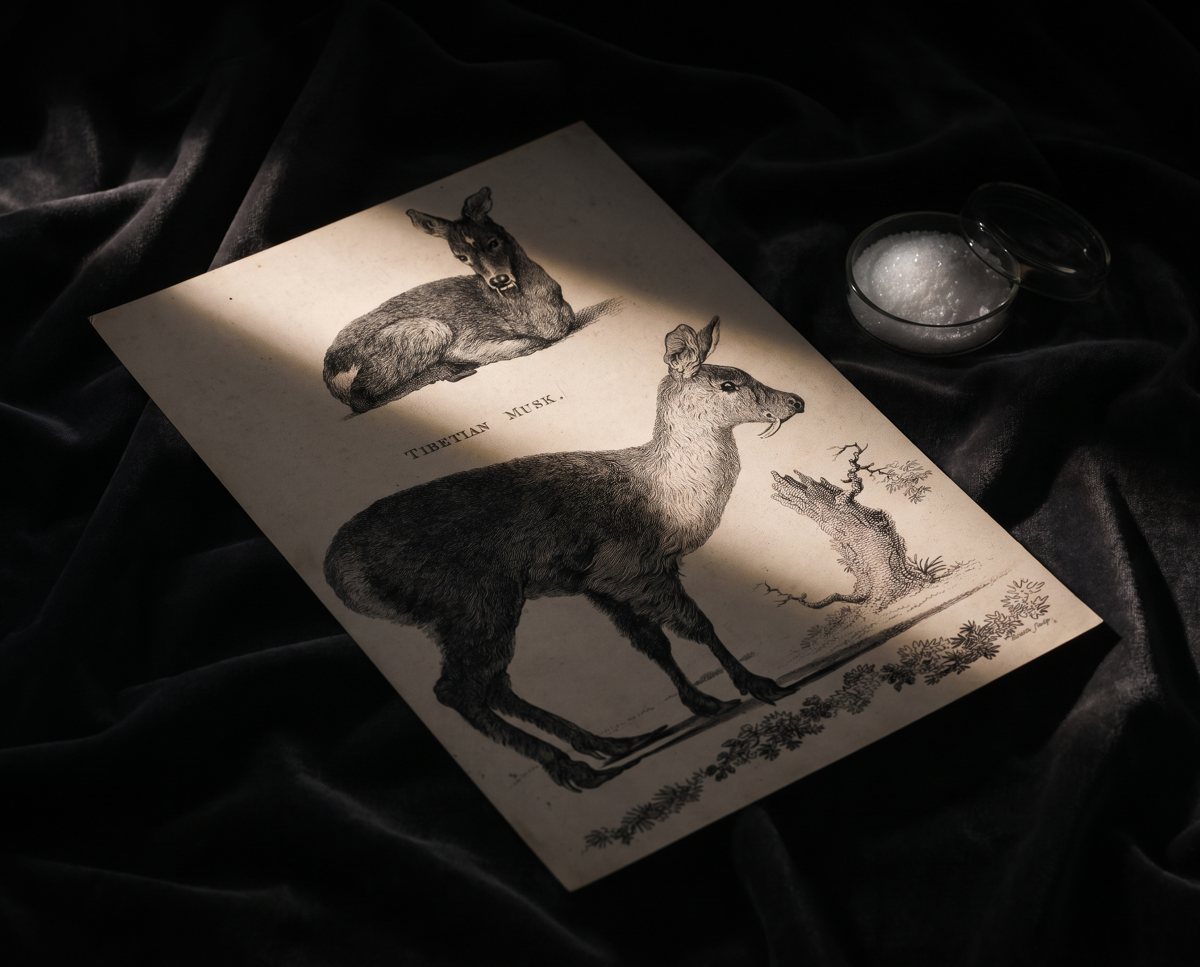
White musk. There is no deer.
A name born from a deer in the mountains. A smell now born in a laboratory. Between the two, only the word musk remains.
Carolee Schneemann. Meat Joy.
In 1964 Carolee Schneemann had performers roll with raw fish, chickens and wet paint. Flesh became material. Smell became part of the work.
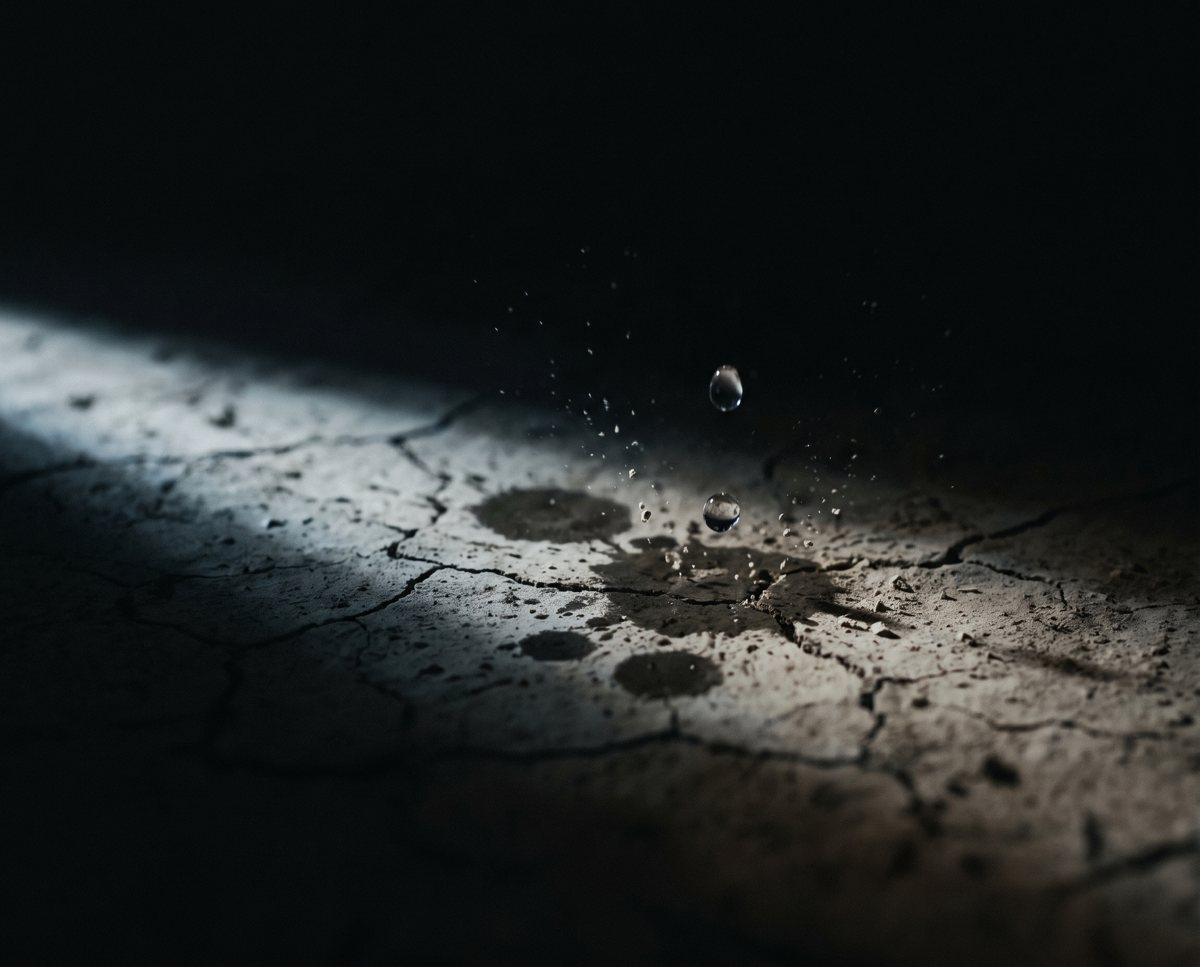
Petrichor. Wet earth before it had a name.
Everyone knows the smell of earth when the first rain falls. Yet it had no name until 1964, and the ground had been preparing it all through the dry season.
Alison Knowles. Proposition #2: Make a Salad.
A three word score. A borrowed pickle barrel for a bowl. Alison Knowles made salad for her audience, and kitchen work became art.
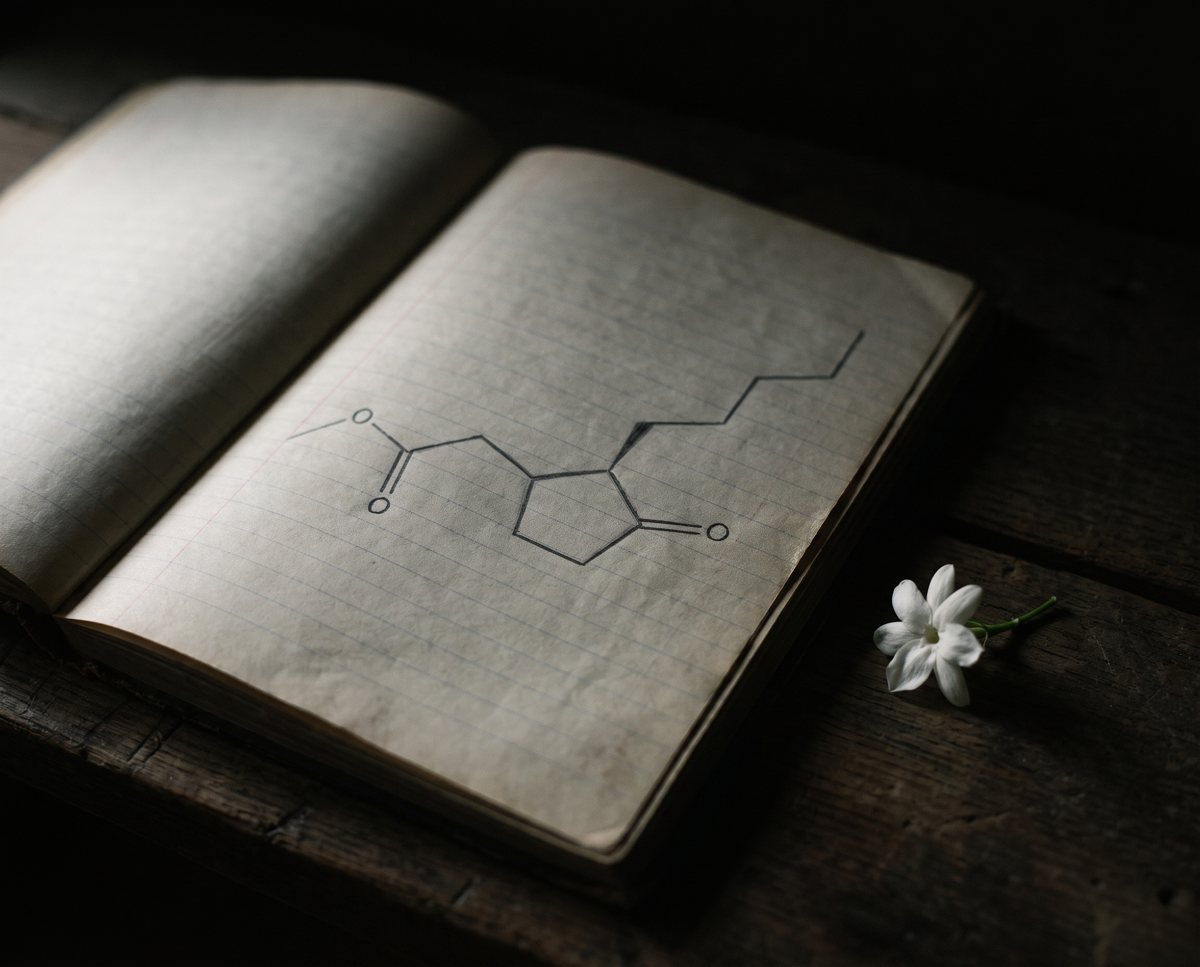
Hedione. Transparent jasmine.
A molecule that smells of jasmine without jasmine's weight. Hedione is more garden air than flower. It makes a room feel wider.
Morton Heilig. Sensorama.
One person in a closed booth rides a motorcycle through New York without leaving the seat. Wind blows, the seat shakes, and the nose smells bus exhaust. Sensorama came decades before virtual reality.
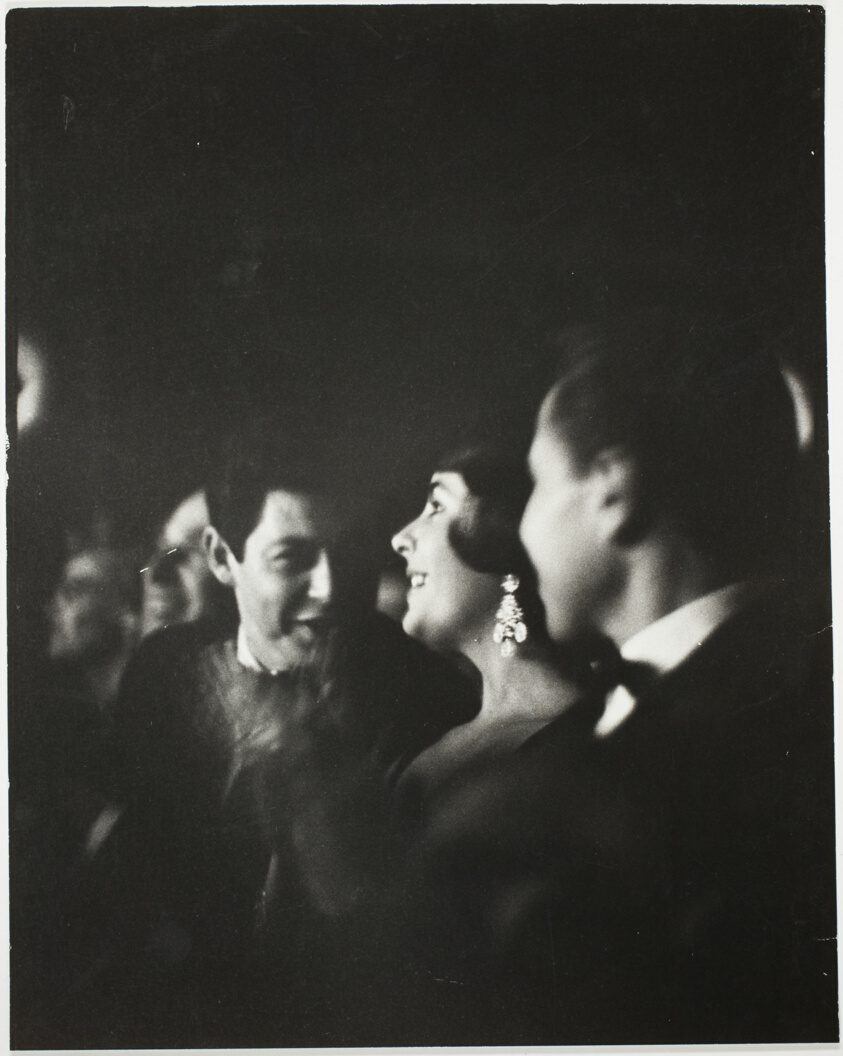
Art Shay. Liz Enjoying Smell-O-Vision with Husband Eddie Fisher, Chicago.
A black and white photograph cannot hold a smell. But it holds the faces of two people trying to look pleased by a machine that pumped odours into a cinema.
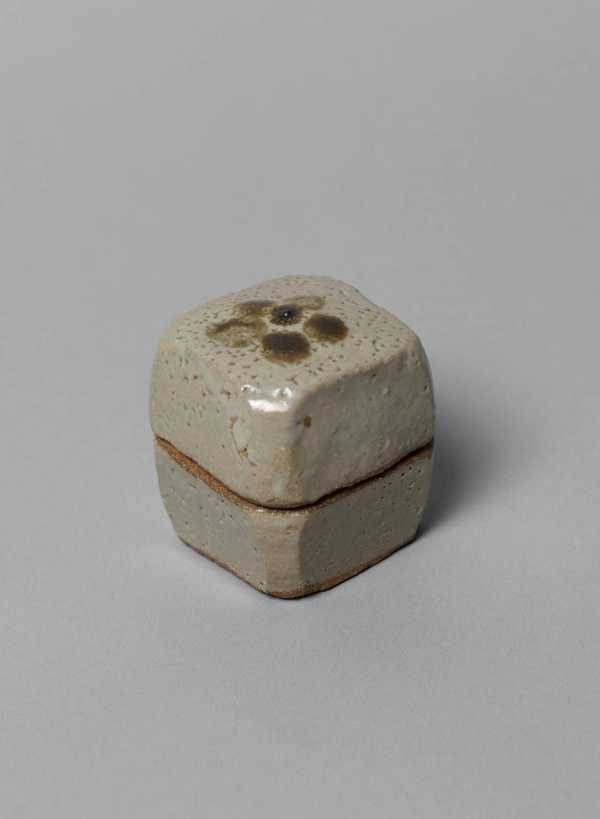
Hamada Shōji. Incense Box.
A small stoneware incense box, kept at Tate beside tea bowls and drinking cups. Hamada made it as an object for use, not as a wonder.
Edmond Roudnitska. Perfume as an art.
Lily of the valley blooms for a few weeks a year. Roudnitska worked on it only in those weeks, in the garden, checking his formula against the real flower.
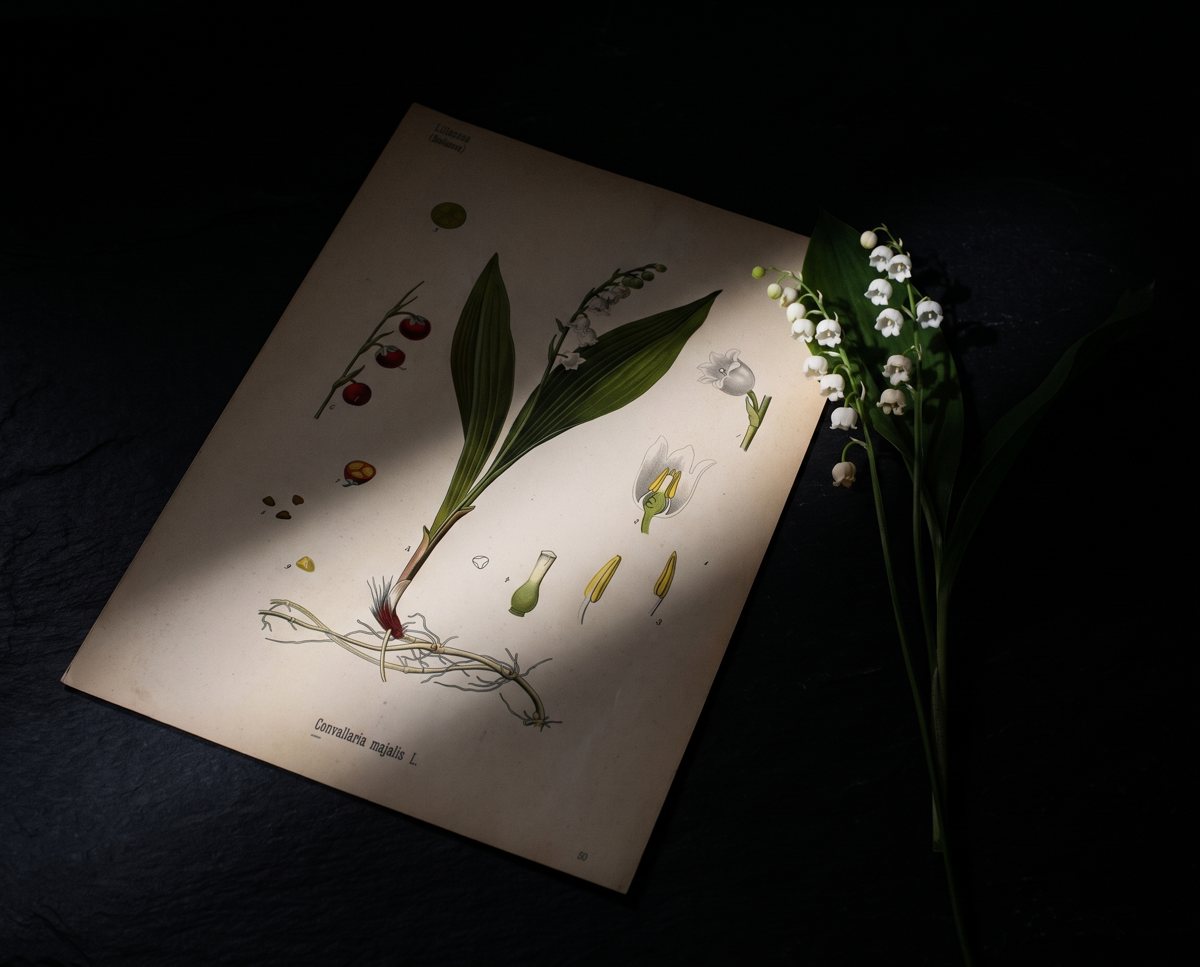
Lily of the valley. A flower that yields nothing.
A small flower with a clear smell that refuses the bottle. Every lily of the valley we have smelled in perfume is a portrait.
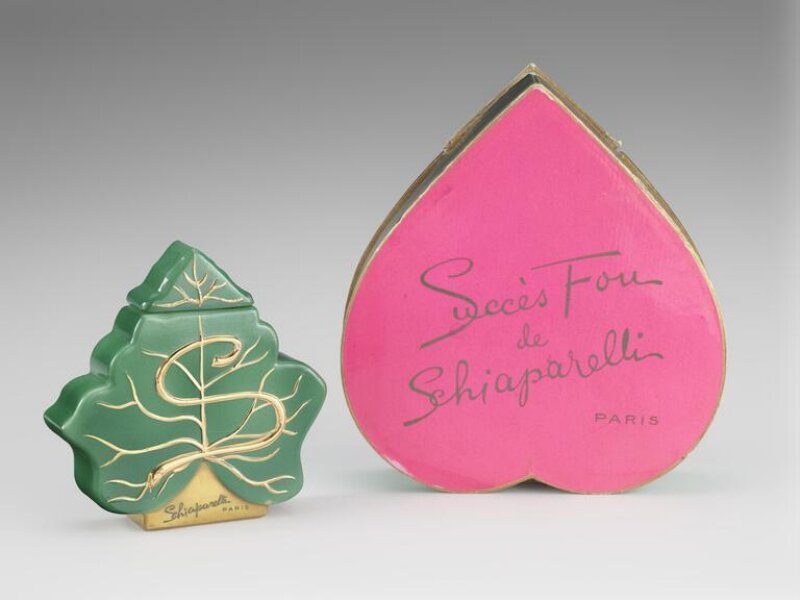
Elsa Schiaparelli. Succès Fou.
A leaf of green glass touched with gold, lying in a card box lined with pink cloth. Before the stopper is opened, the holder already sees a story.
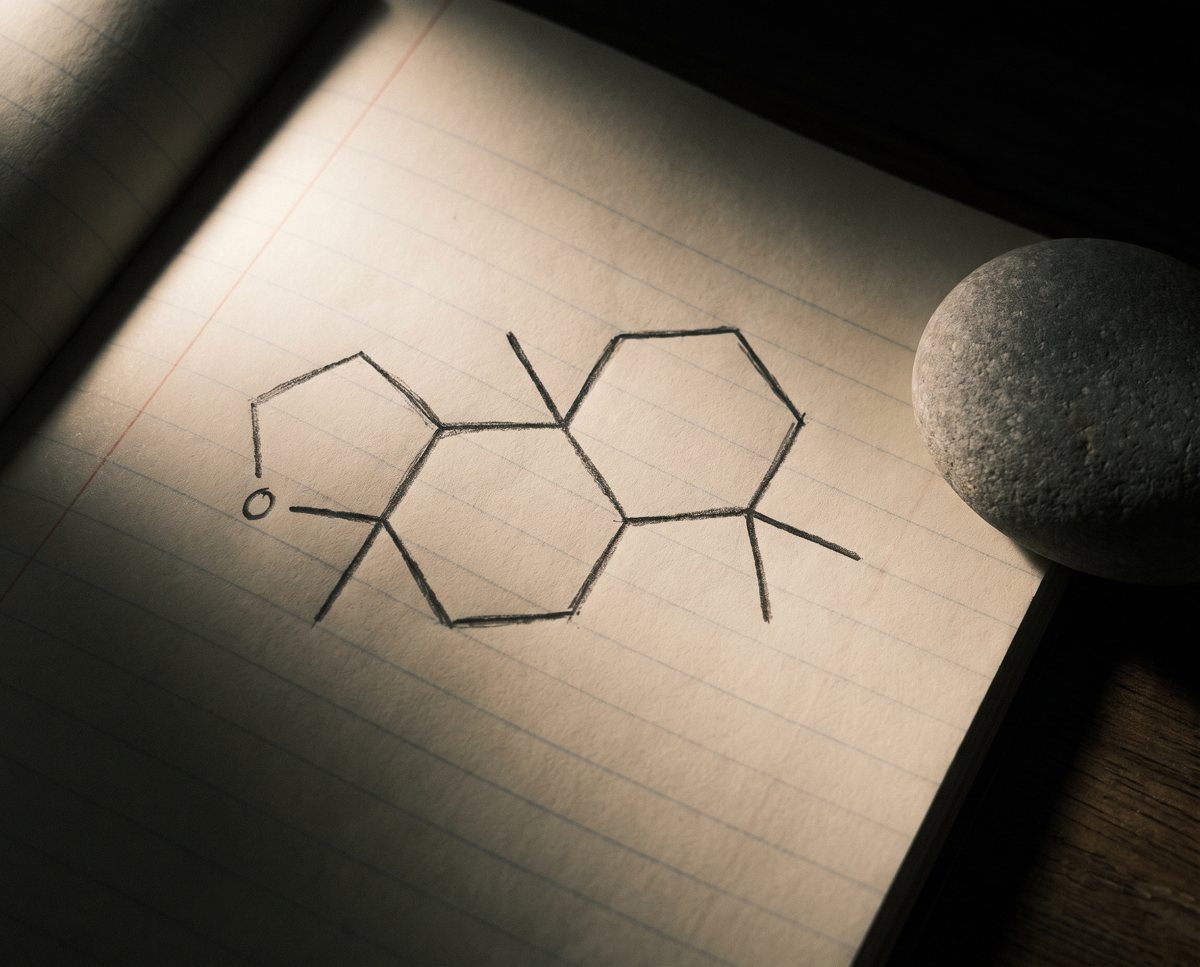
Ambrox. Ambergris without the whale.
Ambergris needs a whale, an ocean and years of drifting. Ambrox needs a field of clary sage and a laboratory.
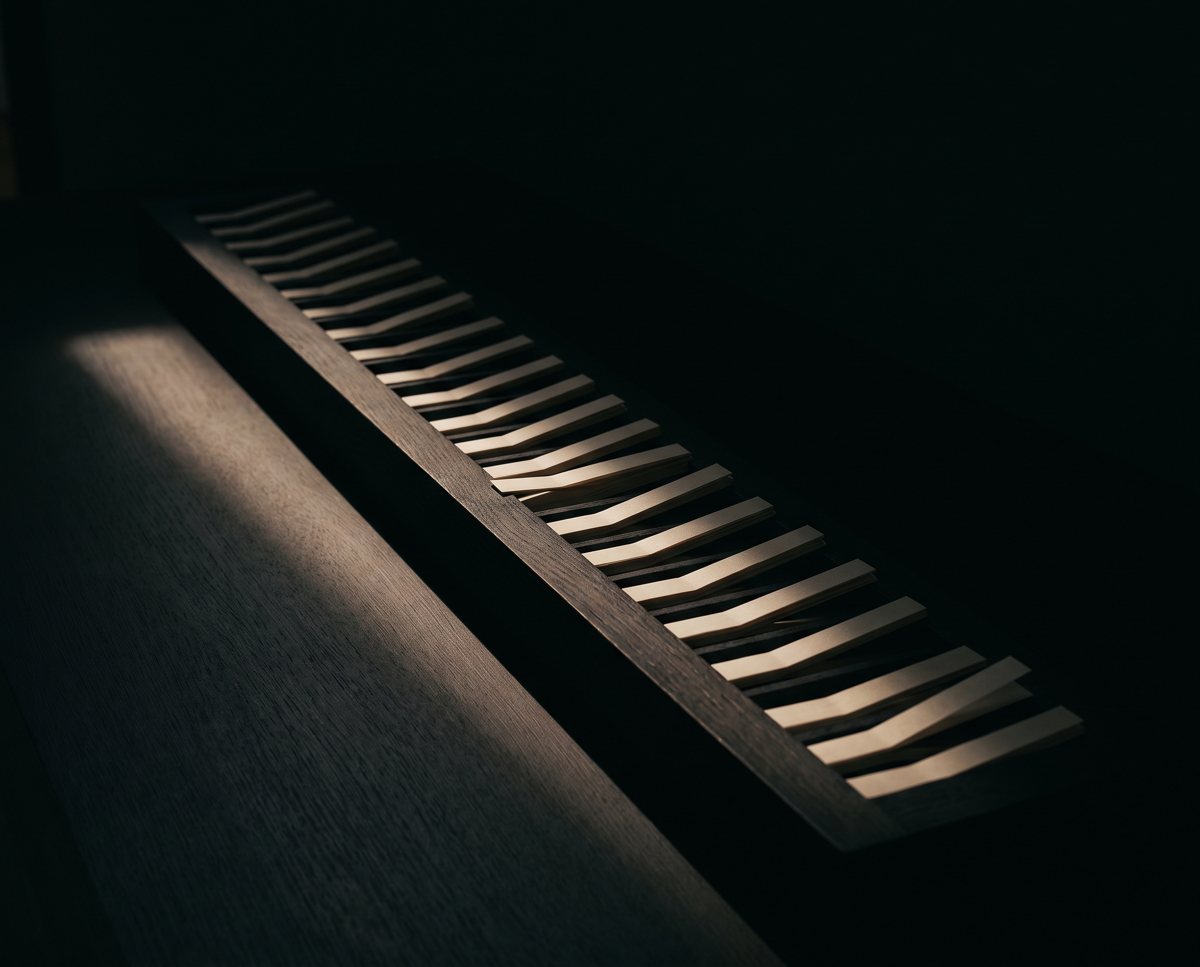
Jean Carles. The man who taught the nose.
A teacher who held that there is no gifted nose, only trained memory. Late in life, that memory worked in place of the nose.
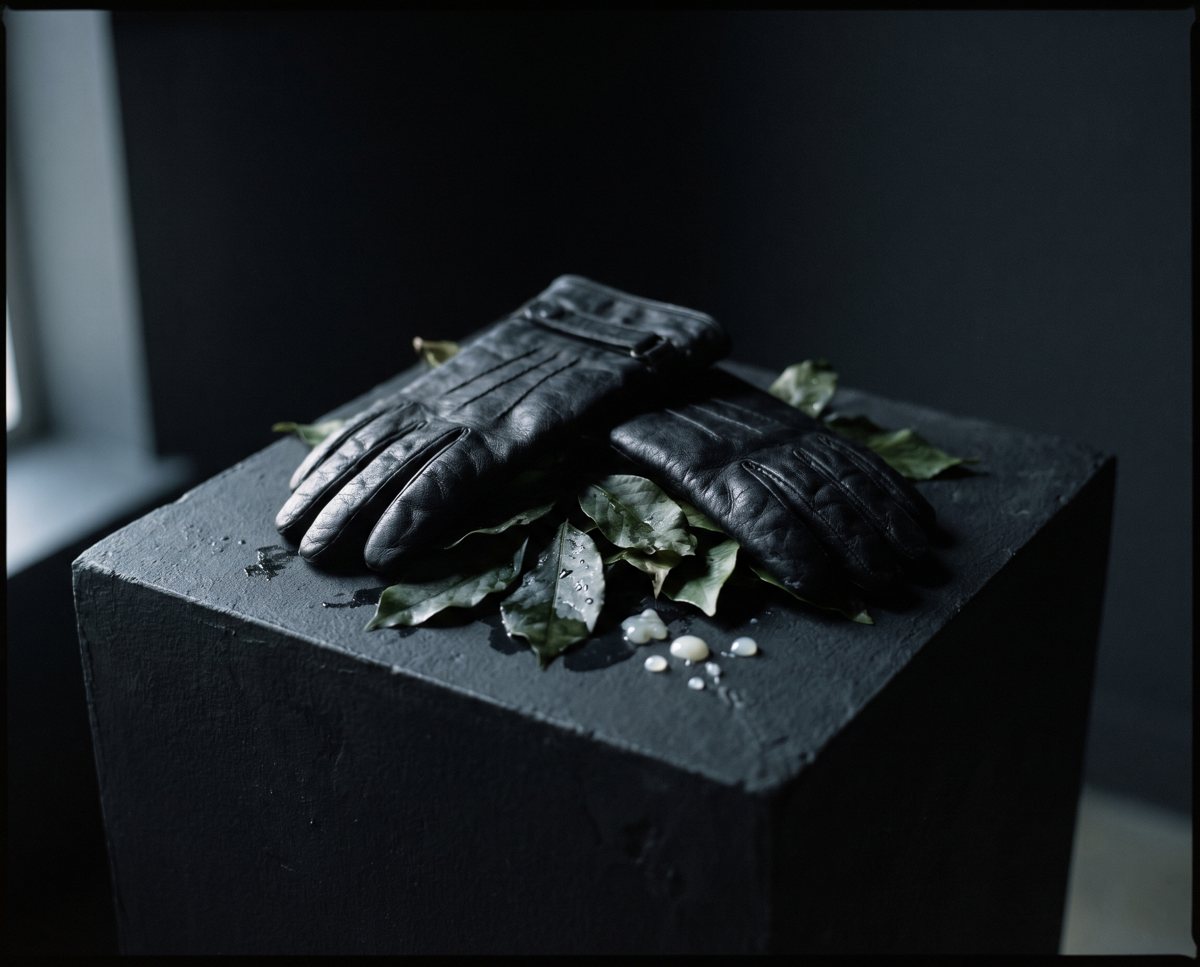
Germaine Cellier. A smell that doesn't ask permission.
A harsh leather, a green, a dense tuberose. Germaine Cellier did not soften things; she let them stand as they were.
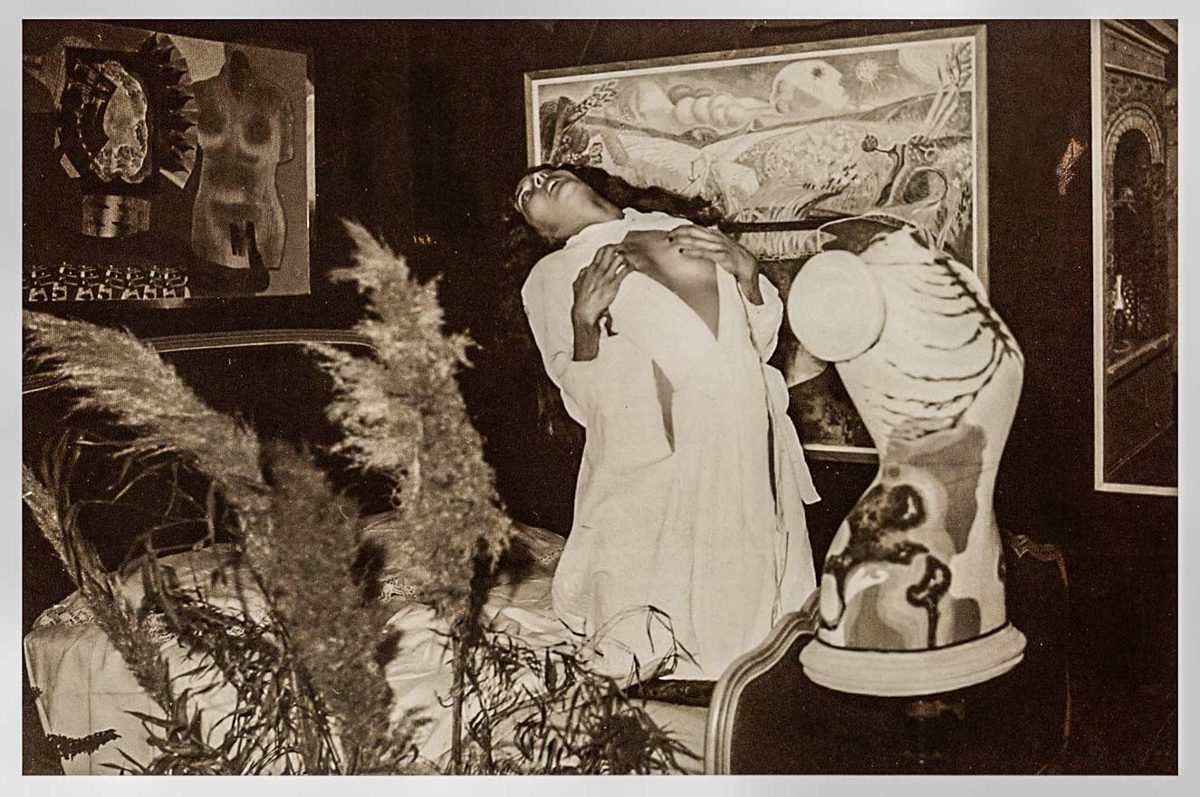
Exposition Internationale du Surréalisme.
Coal sacks overhead, torches instead of ceiling lights, and roasting coffee in the dark. The 1938 Surrealist show was among the first to build a space with smell.
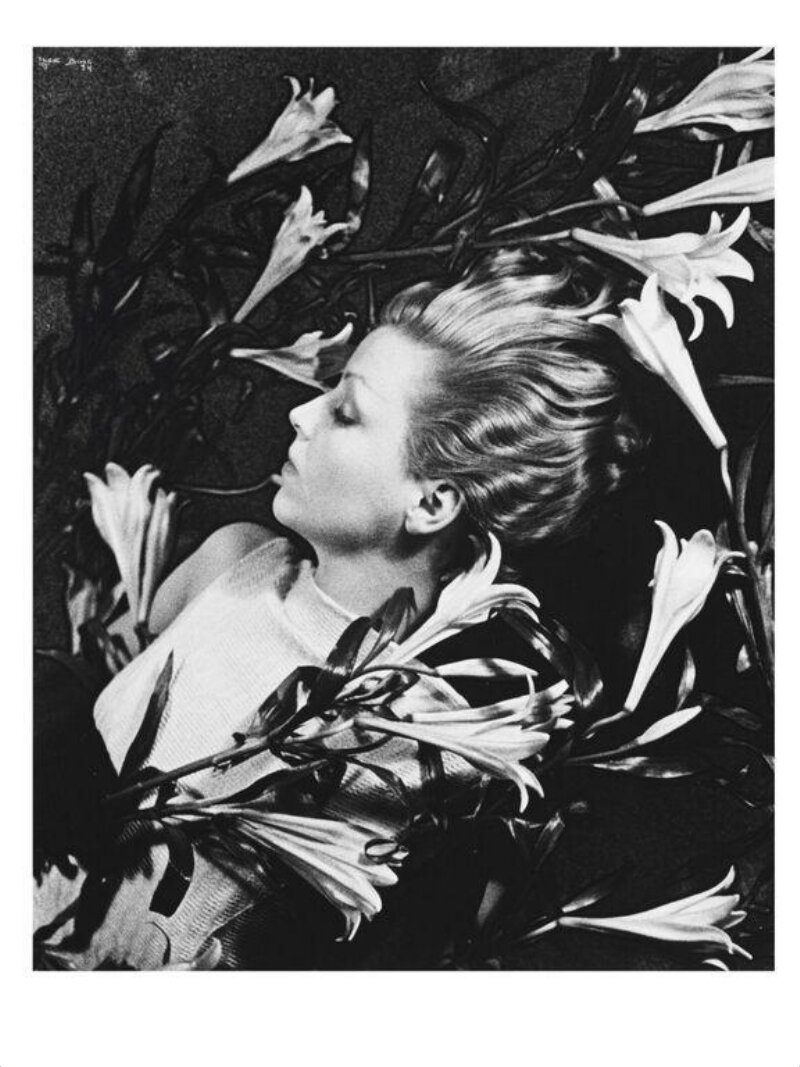
Ilse Bing. Salut de Schiaparelli.
A woman lies among lilies, her outline glowing as if reversed. Ilse Bing advertises a scent with the one thing a photograph has: light.
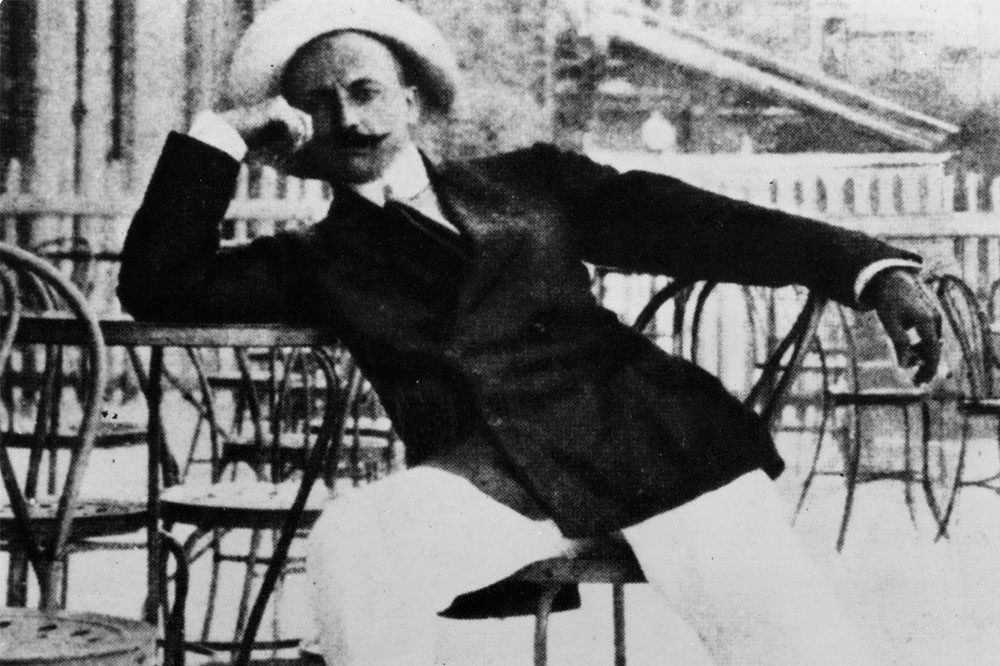
Filippo Tommaso Marinetti and Fillìa. La cucina futurista.
Pasta condemned. Olives eaten with sandpaper and velvet. Salami soaked in coffee and cologne. The Futurists wanted the table to be a laboratory.
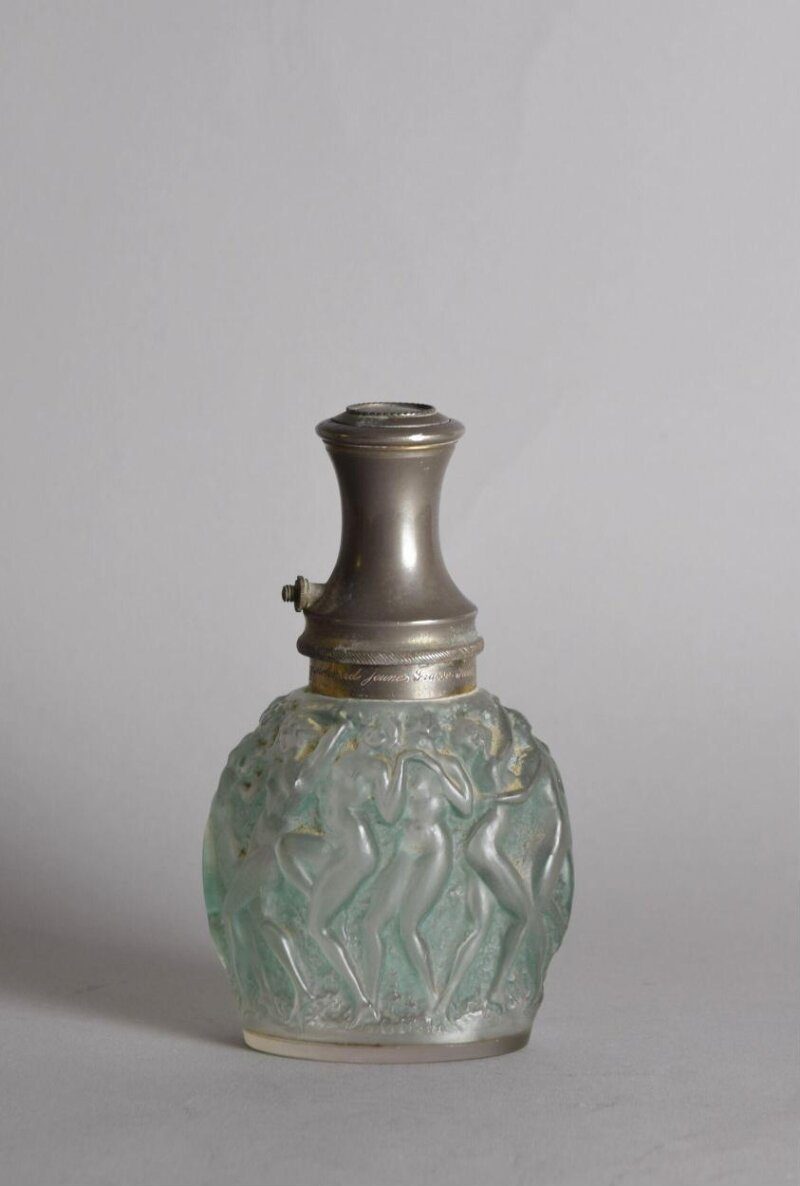
René Lalique for Molinard. Calendal.
A small atomiser 10 cm tall, circled by dancing figures in green enamel. The bottle does not only keep the scent. It sends it into the air.
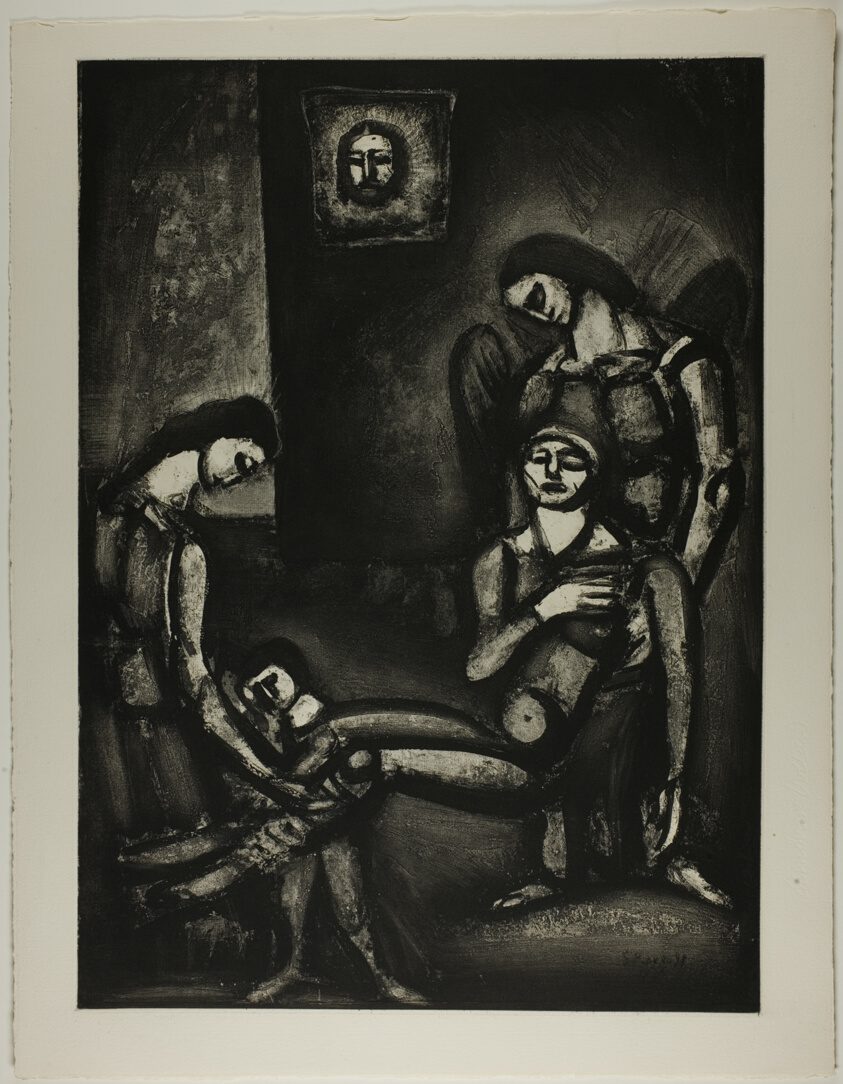
Georges Rouault. Le juste, comme le bois de santal, parfume la hache qui le frappe.
The just man, like sandalwood, perfumes the axe that strikes him. A black and white print borrows scent to speak of forgiveness.
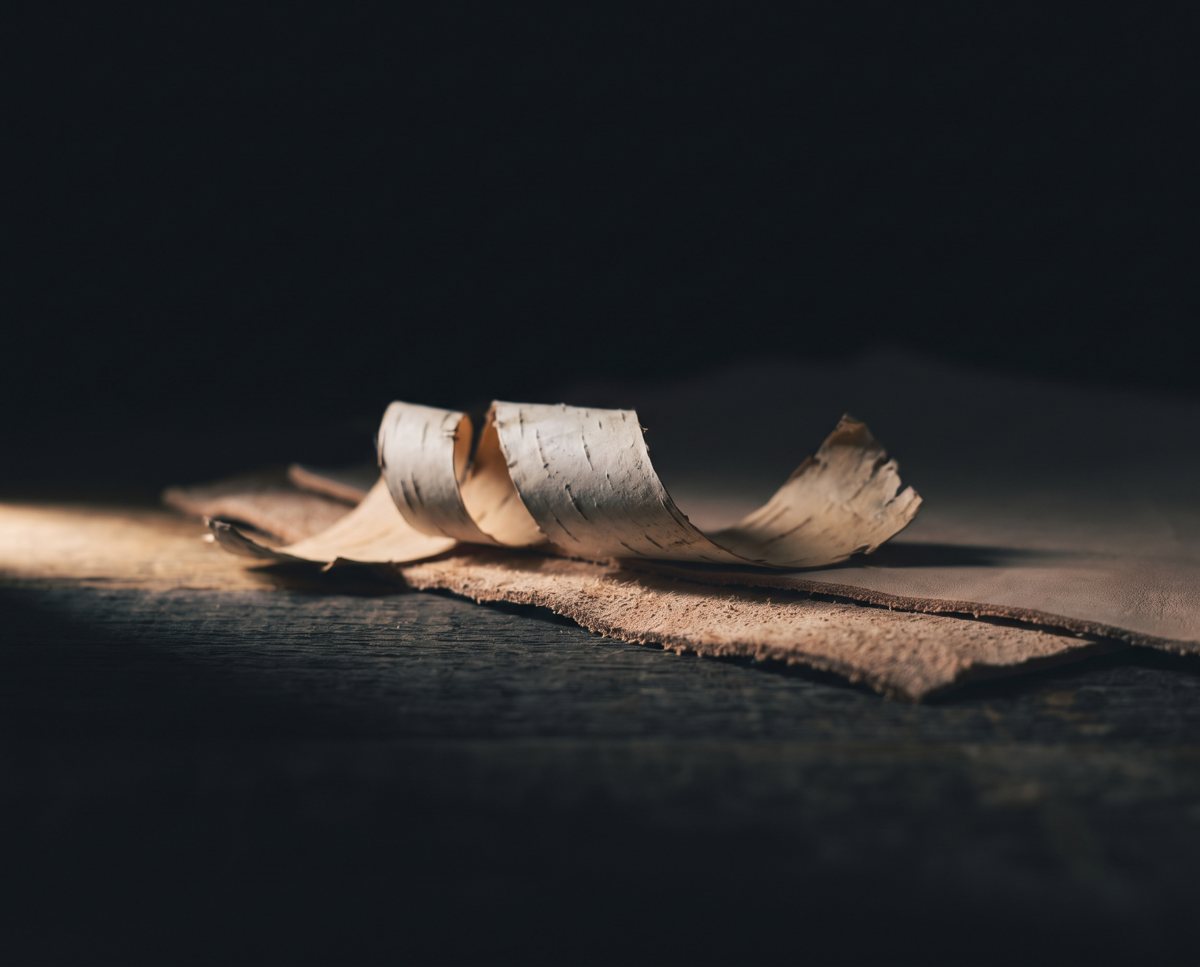
Leather. The smell of a process.
Leather does not smell of the animal. It smells of birch tar, of fire, of what the tanner did to the hide.
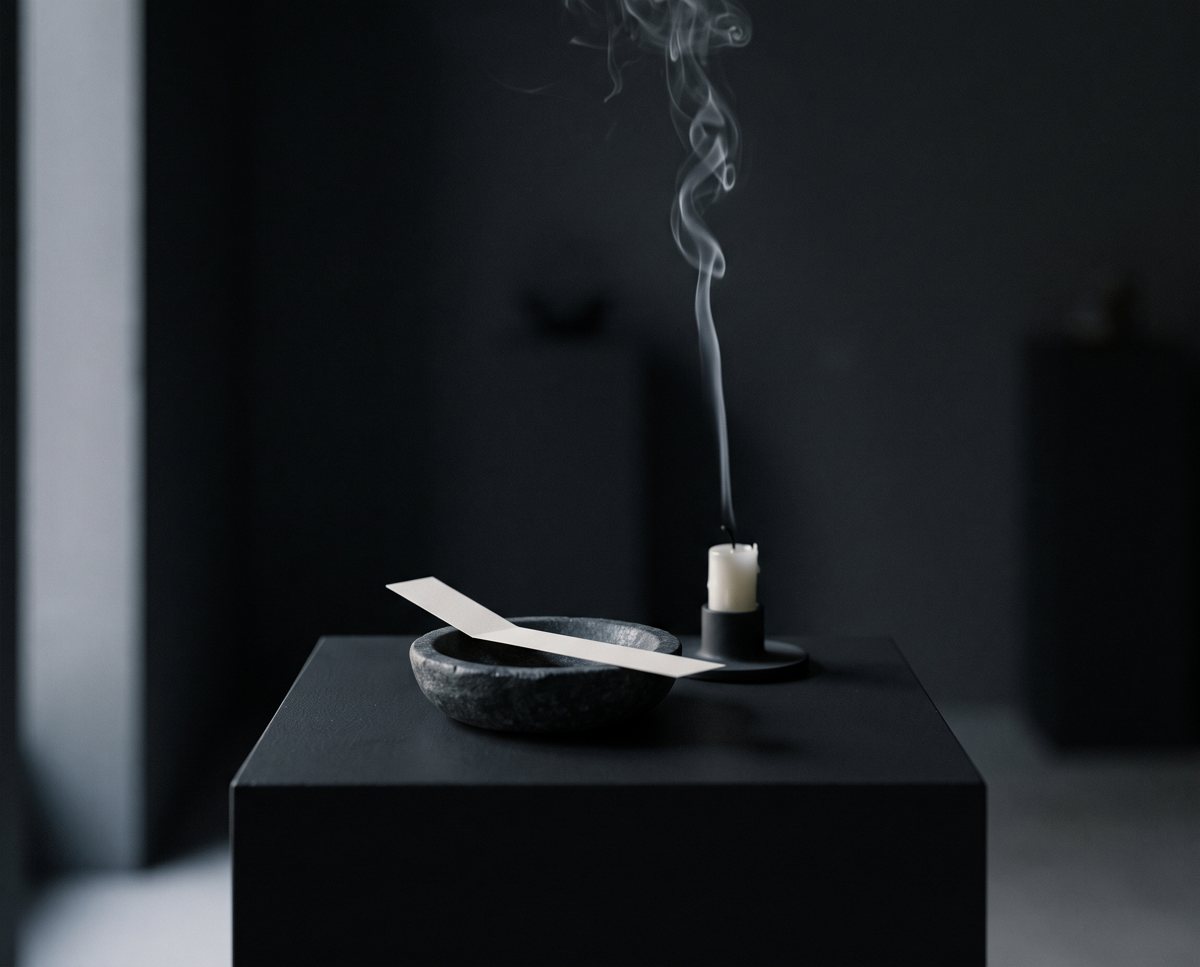
Fatty aldehydes. The smell of clean.
Snuffed candle wax, orange peel, a hot iron on cloth. Fatty aldehydes describe no object. They describe a state: dry, bright, just washed.
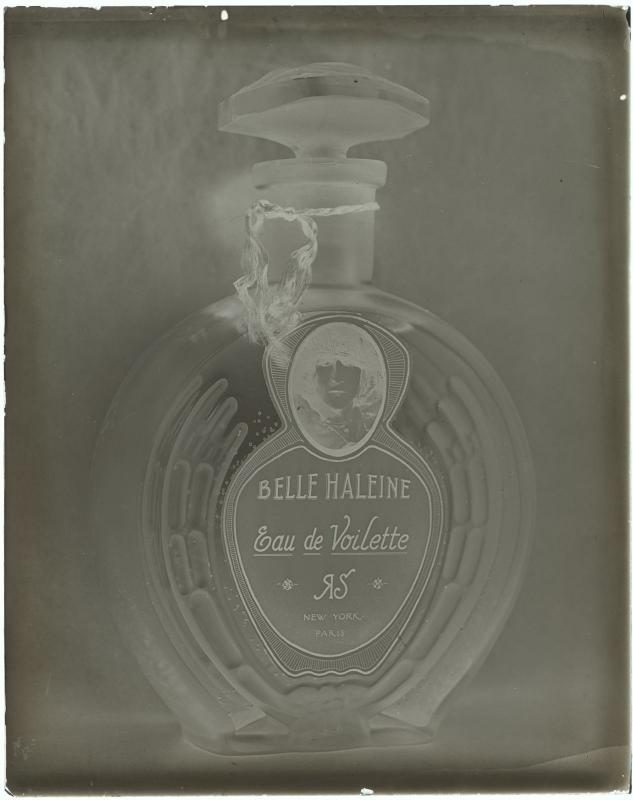
Marcel Duchamp. Belle Haleine, Eau de Voilette.
Duchamp took a shop bought perfume, changed the label, swapped two letters. Violette became voilette, violet became veil. Perfume became a question of identity.
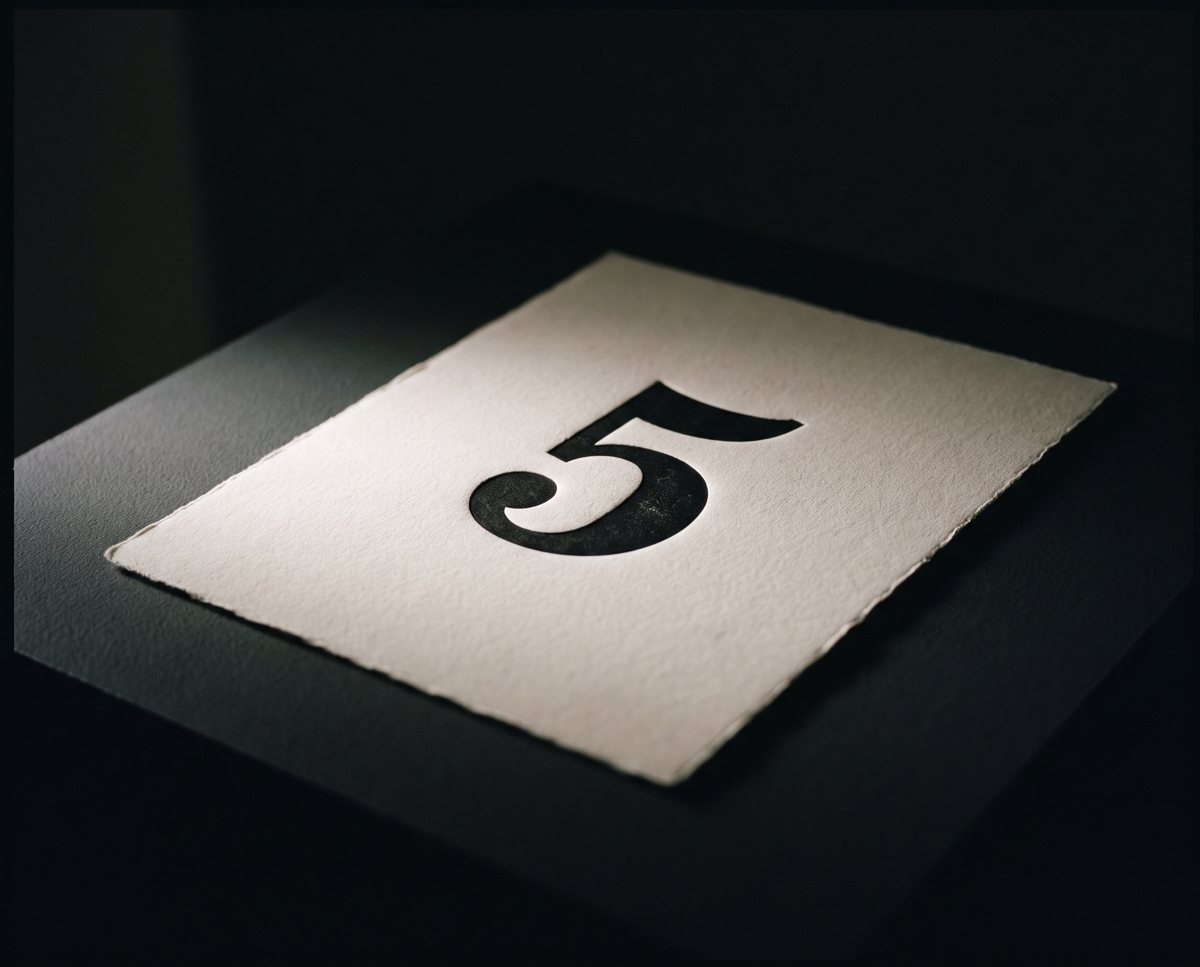
N°5. A number instead of a flower.
A number instead of a flower's name. Aldehydes in place of a copy of flowers. N°5 shares its decade with abstract painting, and it too let go of the flower's outline.
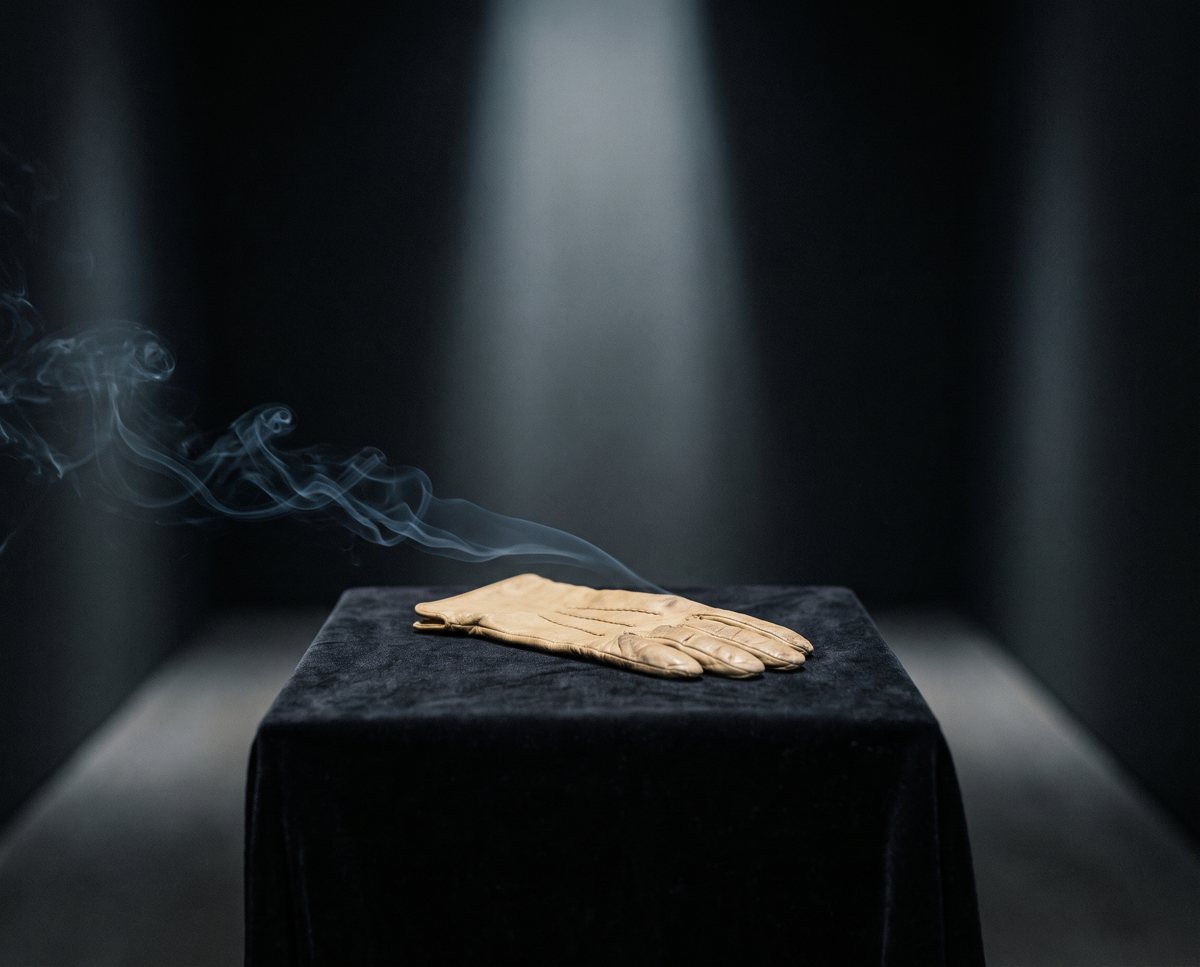
Ernest Daltroff. Smoke on a glove.
In 1919 a small Paris perfume house made a smell of leather and tobacco for women who had just begun to smoke in public.
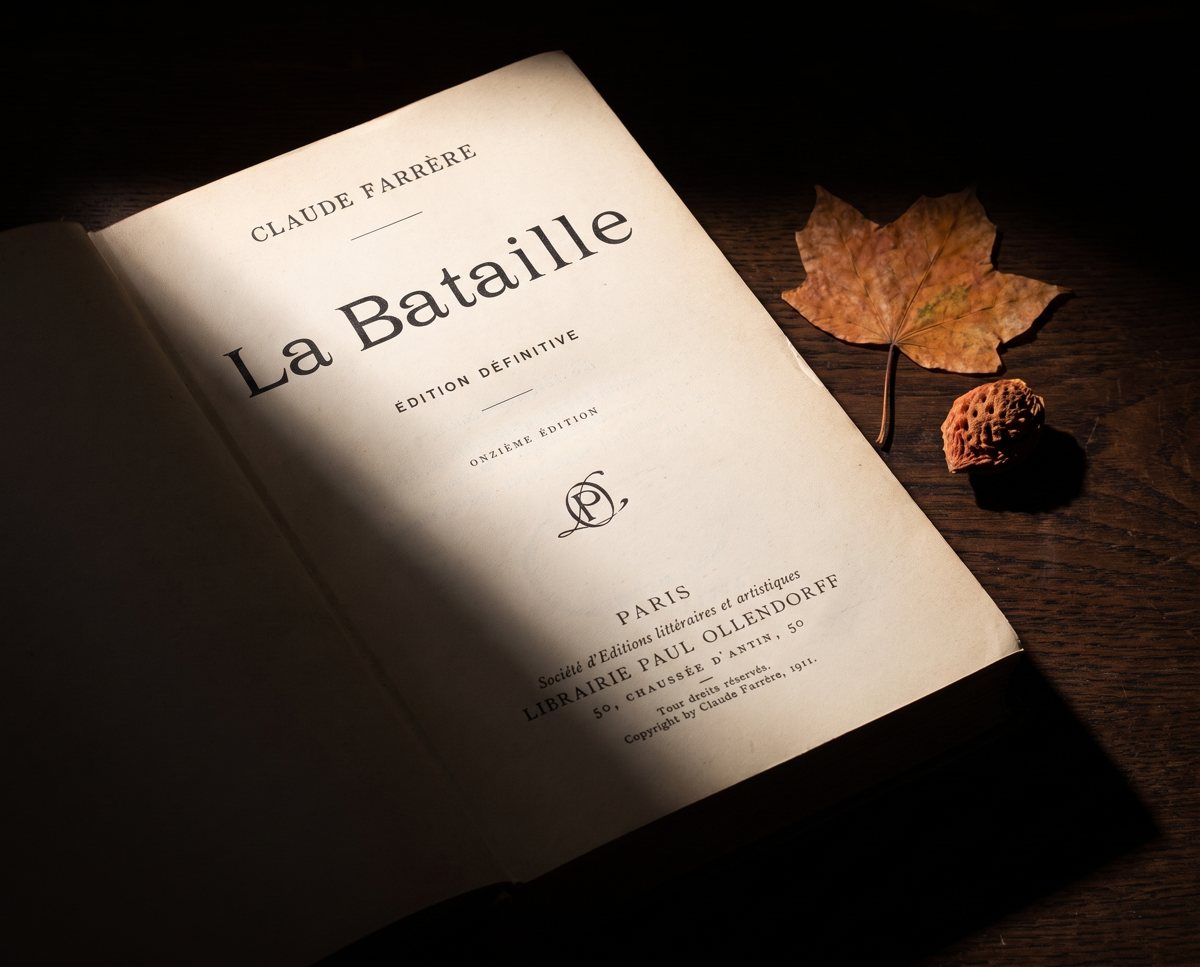
Mitsouko. A name from a novel.
Mitsouko borrows a character's name from a novel, but keeps the object: bitter oakmoss and a ripe peach. The story may be forgotten. The moss and fruit remain.
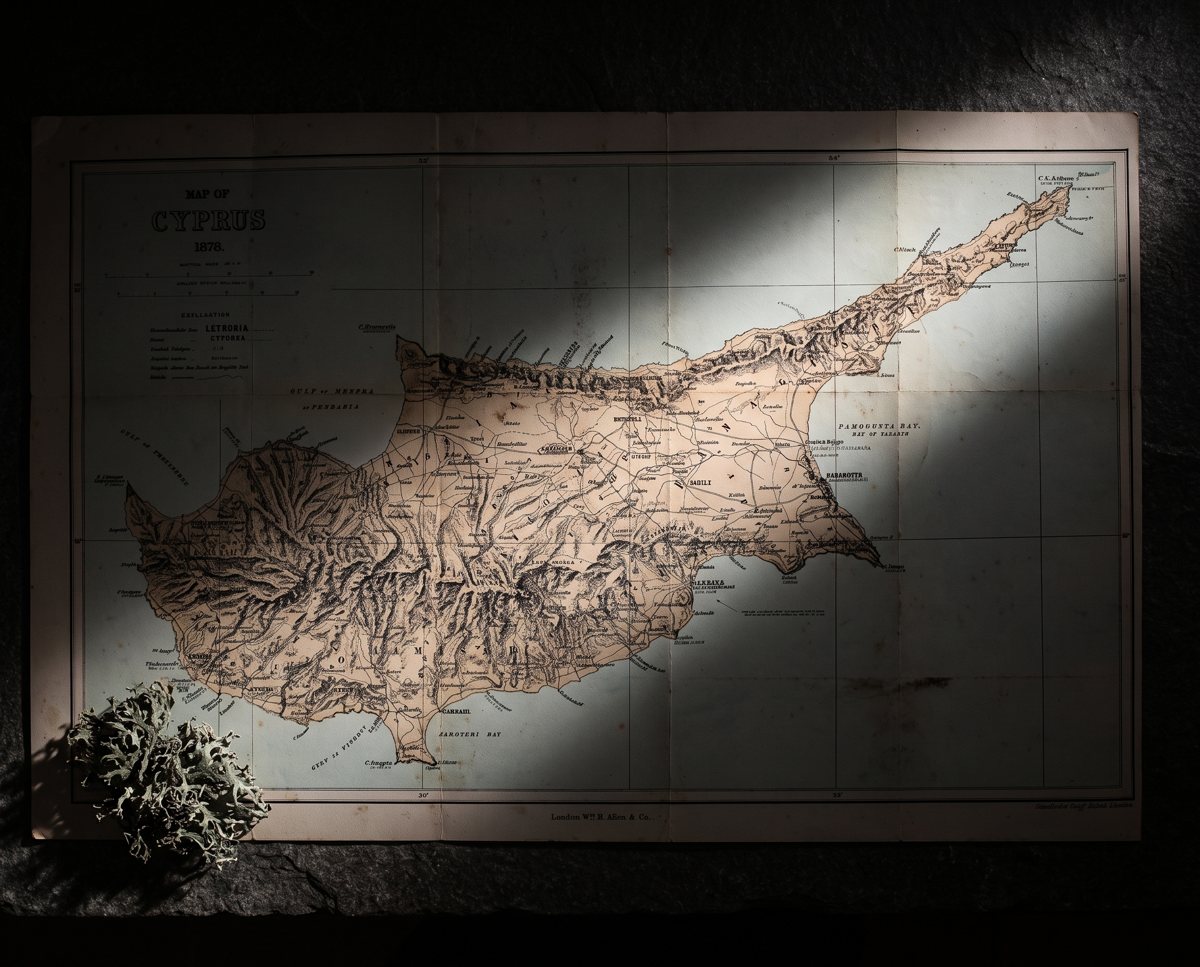
Chypre de Coty. An island in a bottle.
Chypre is French for Cyprus. After 1917 it became the name of a structure: bright peel over bitter moss. The island faded, the moss stayed.
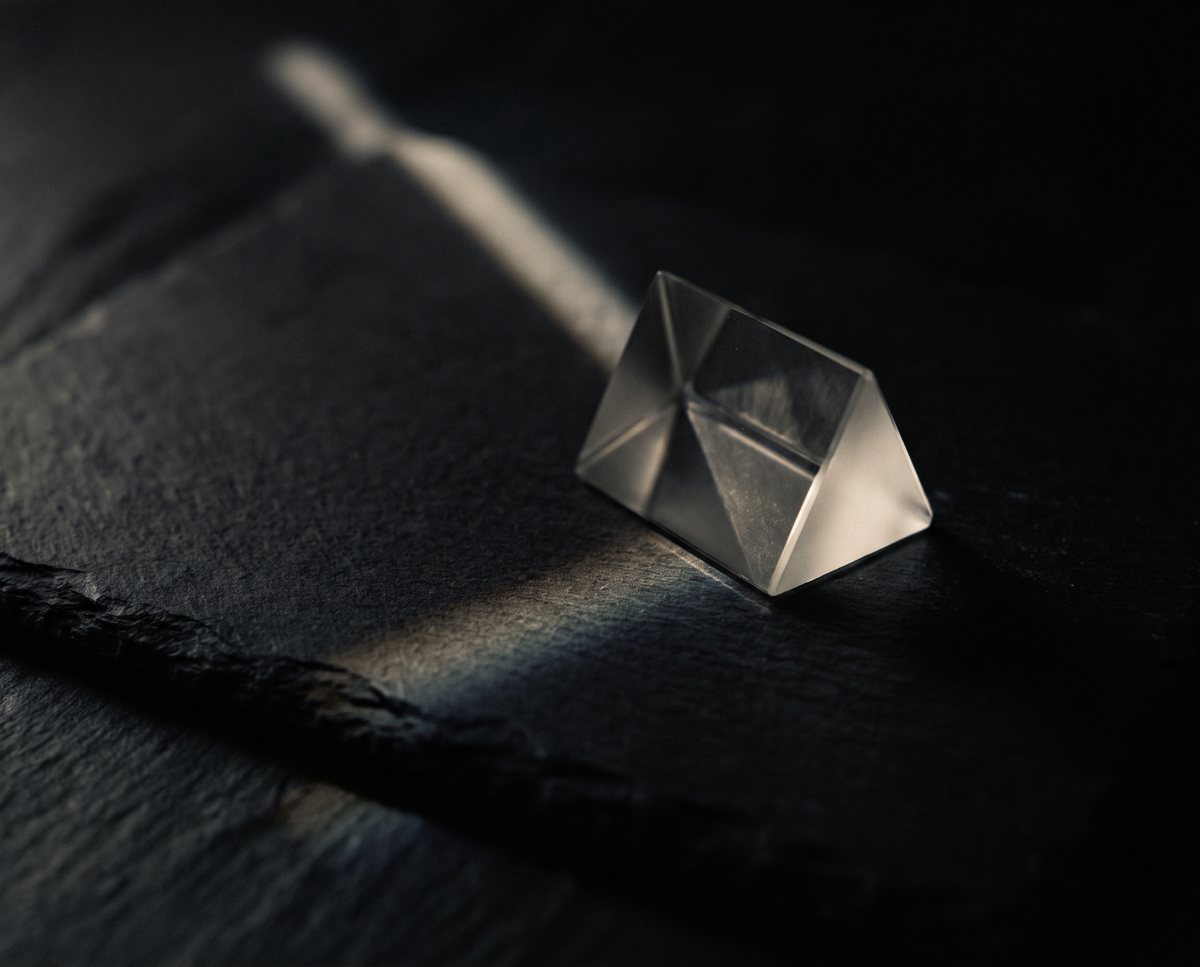
Henning. The prism of a smell.
Six corners, three rectangular faces, two triangles. A Frankfurt psychologist tried to give a shape to something that has none.
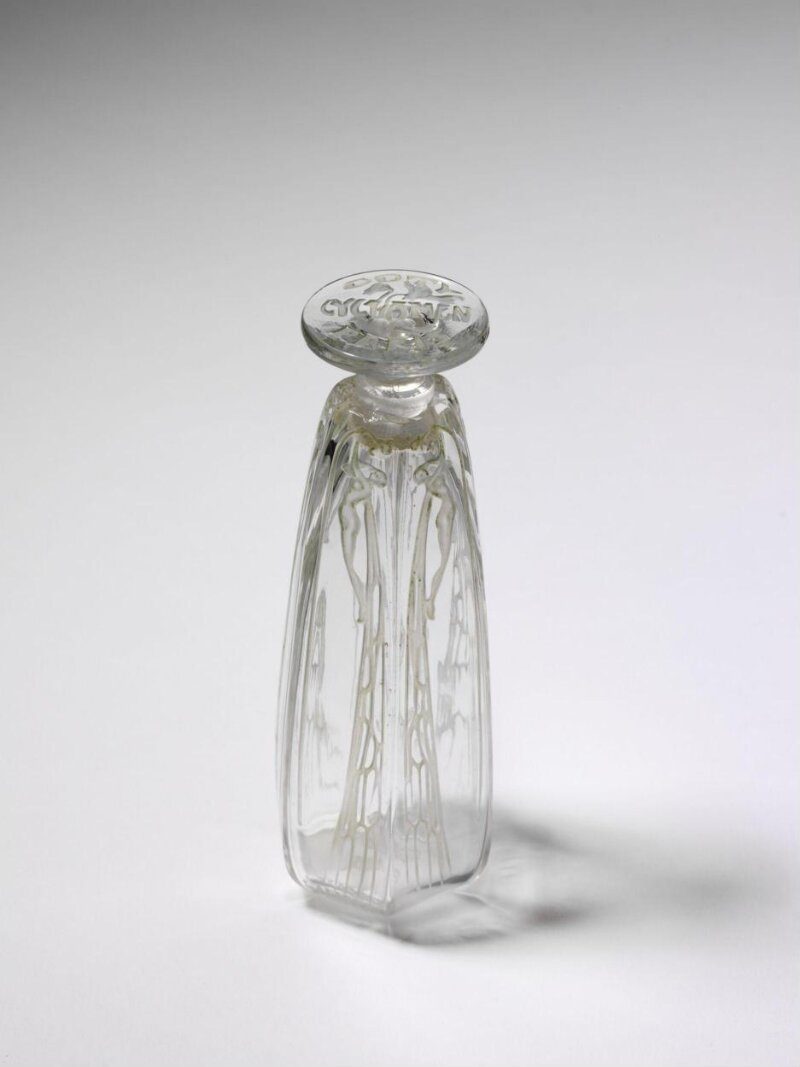
René Lalique for Coty. Cyclamen.
A glass bottle 14 cm tall, the perfumer's name and the glassmaker's name moulded on the same surface. From here on, the bottle no longer stands behind the scent.
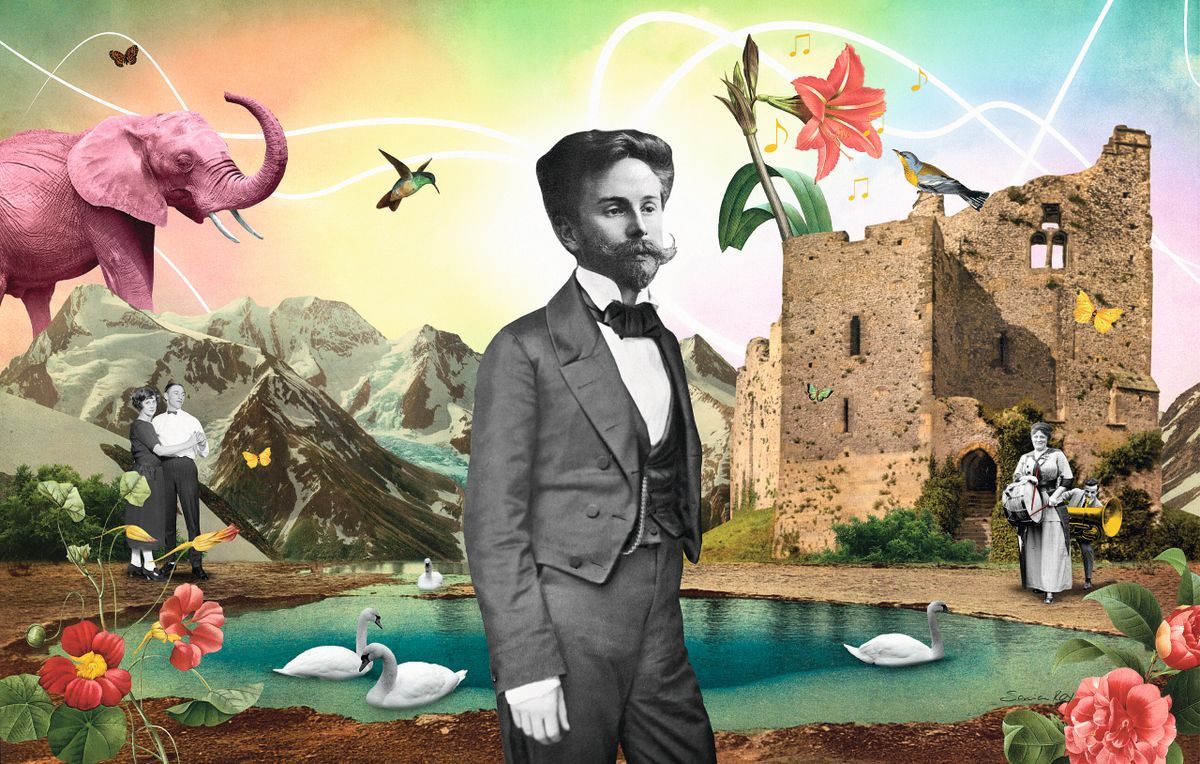
Alexander Scriabin. Mysterium.
Seven days of sound, light, fire and scent at the foot of the Himalayas. Scriabin died in 1915 with Mysterium only a few dozen pages of sketches.
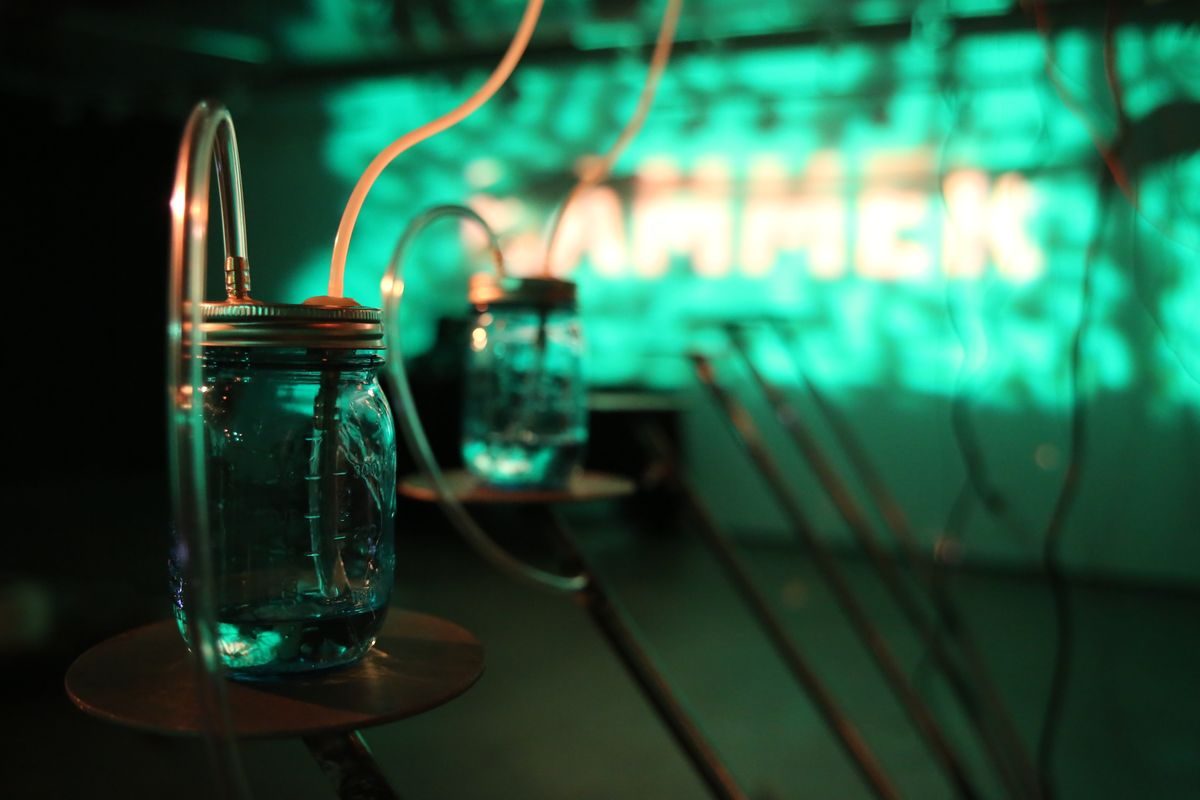
Sadakichi Hartmann. A Trip to Japan in Sixteen Minutes.
A trip to Japan with no ship, only a nose. In 1902 Sadakichi Hartmann tried a concert made of smells, and the audience would not listen.
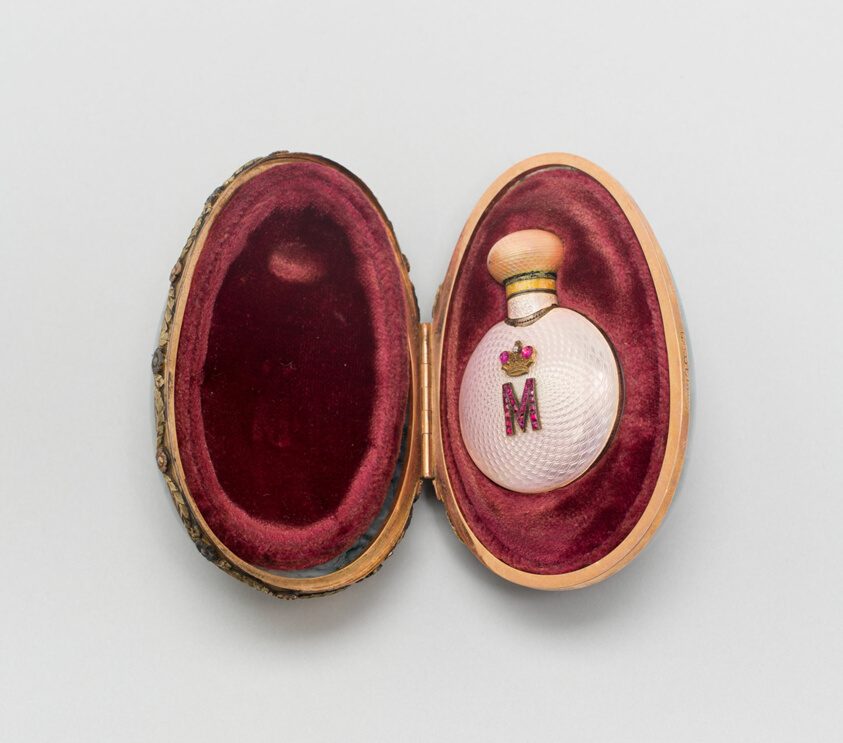
Fabergé. Miniature Easter Egg with Scent Bottle.
A stone egg just over eight centimetres long, with room inside for a scent. Fabergé put perfume into the very shape of Easter.
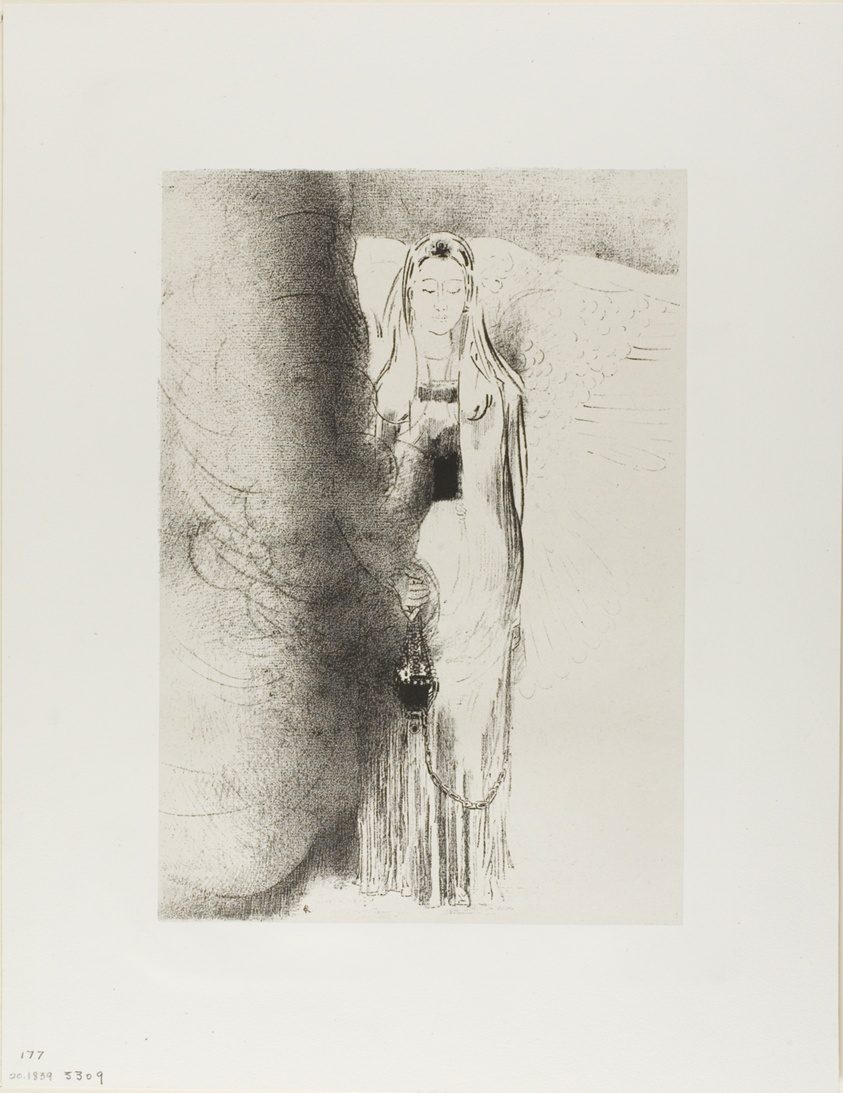
Odilon Redon. Puis l'ange prit l'encensoir.
An angel, a censer, a plume of smoke against black. Redon draws the moment a prayer is about to become fire.
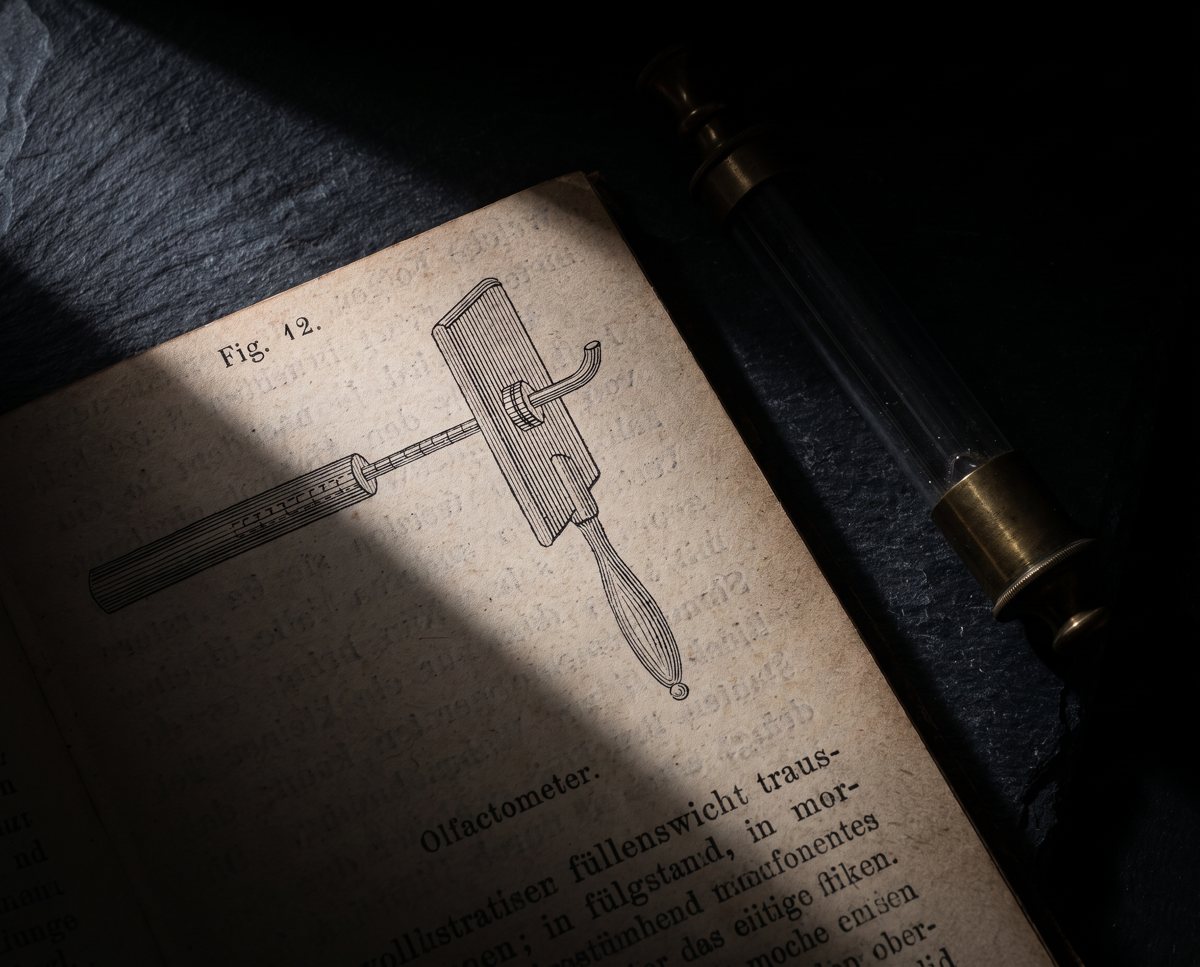
Zwaardemaker. Nine classes and a machine.
A curved glass tube, a scented cylinder, a scale. In Utrecht at the end of the nineteenth century, smell was measured in centimetres.
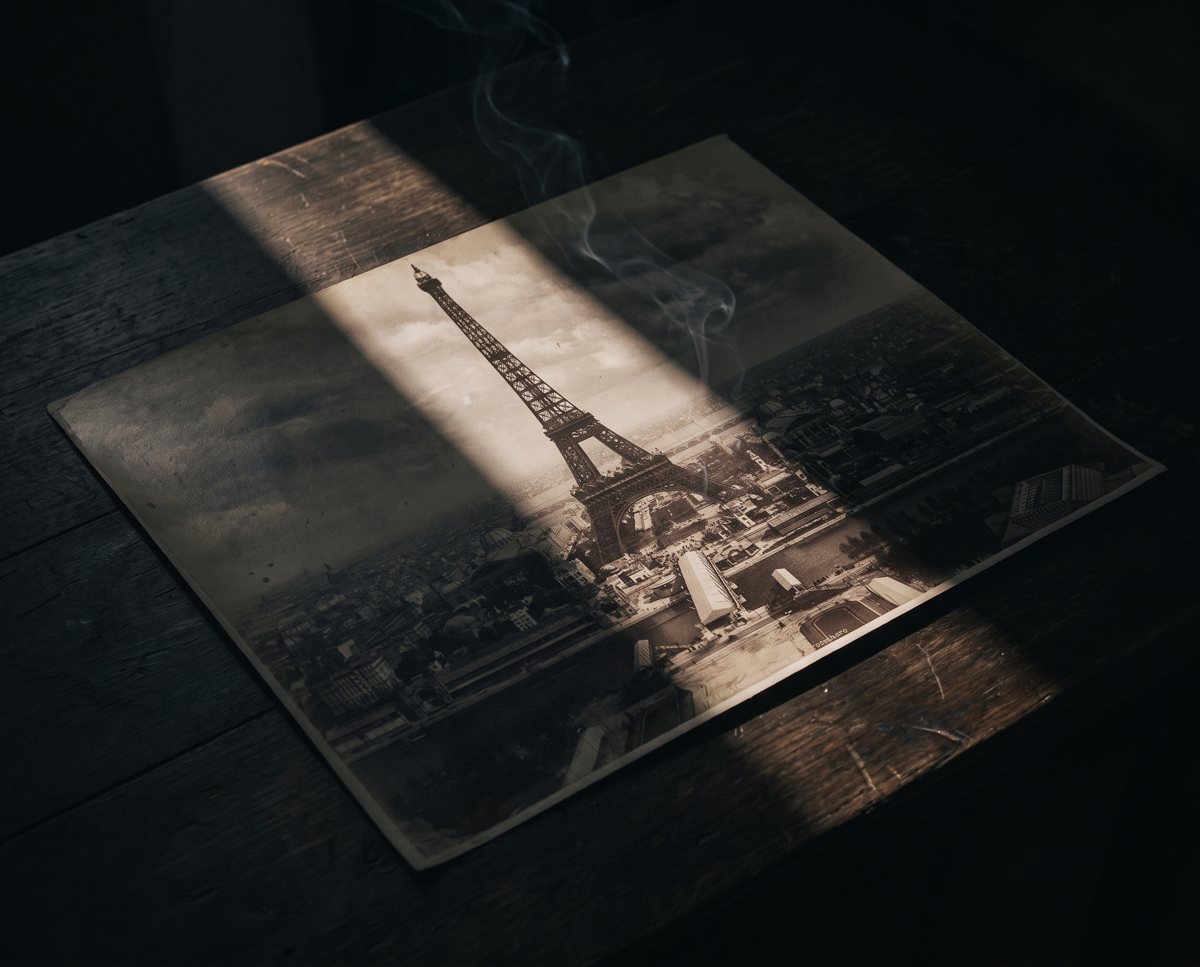
Jicky. A smell that says nothing of flowers.
Jicky imitates no flower. It builds a smell that did not exist in nature, from lavender and the new molecules of the nineteenth century.
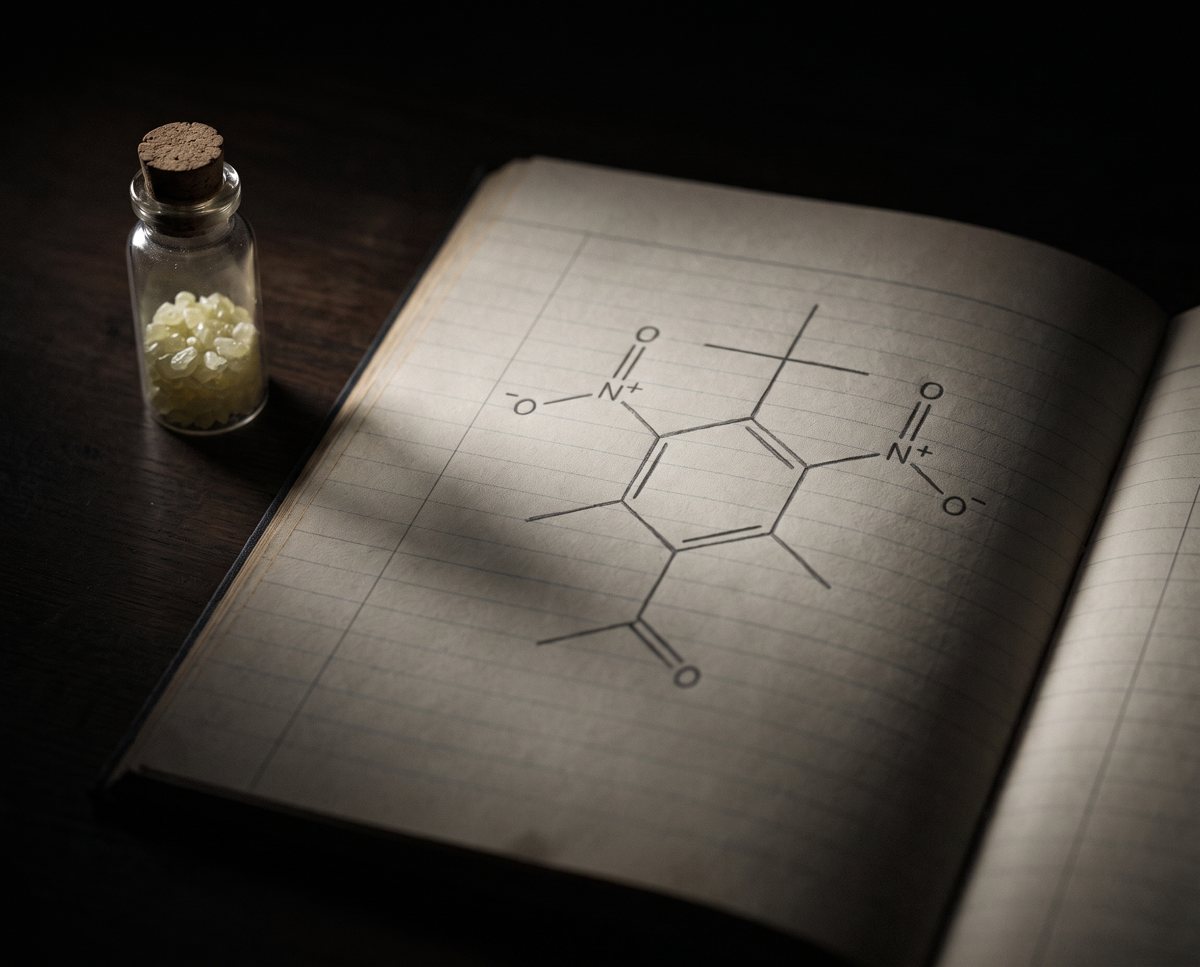
Nitro musks. A discovery and a ban.
A musk born in an explosives lab. It stays a long time in cloth, in water, in bodies. That staying is exactly why it had to leave.
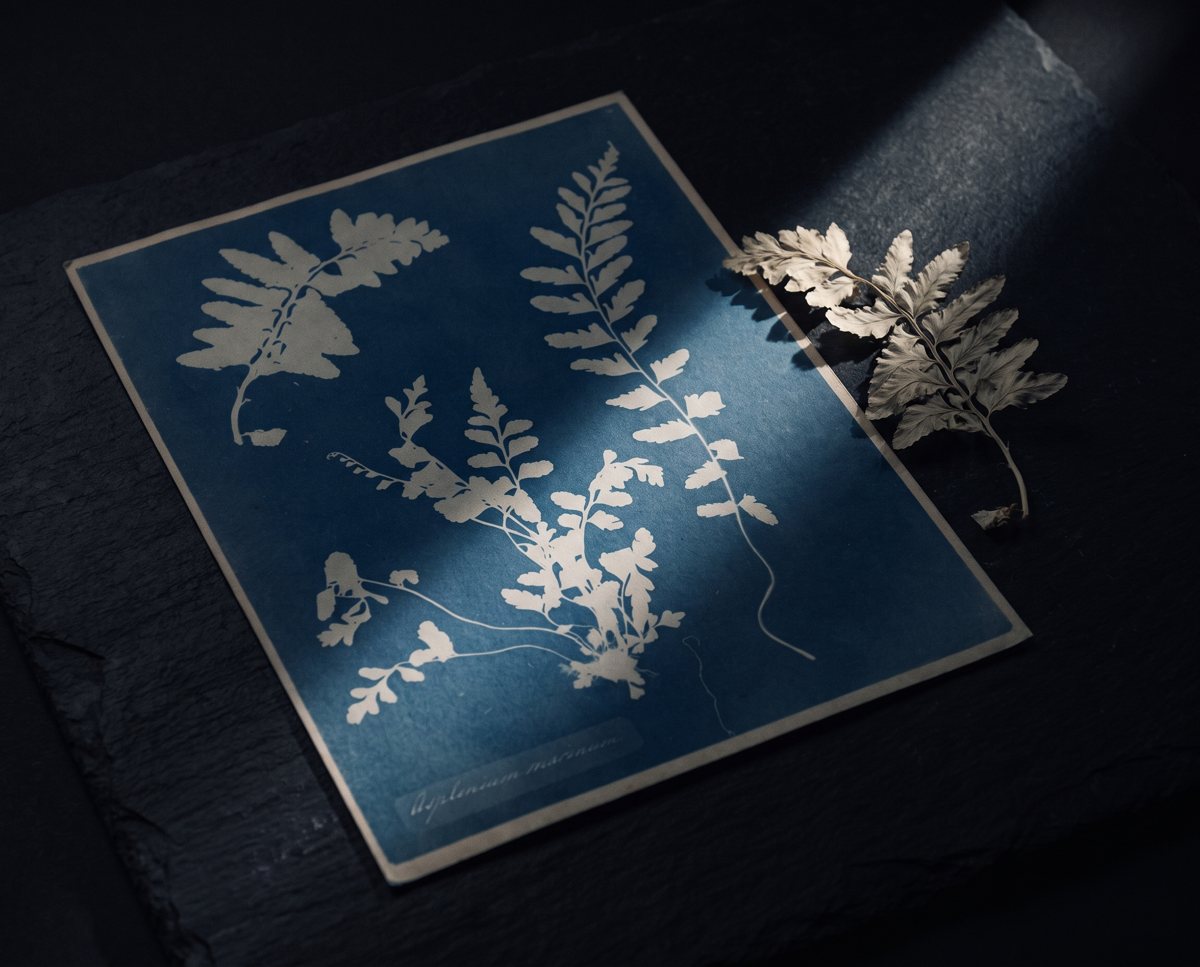
Fougère Royale. A fern with no smell.
Ferns barely smell. Paul Parquet named his bottle after one anyway, and from lavender, oakmoss and coumarin built a forest no one had smelled.
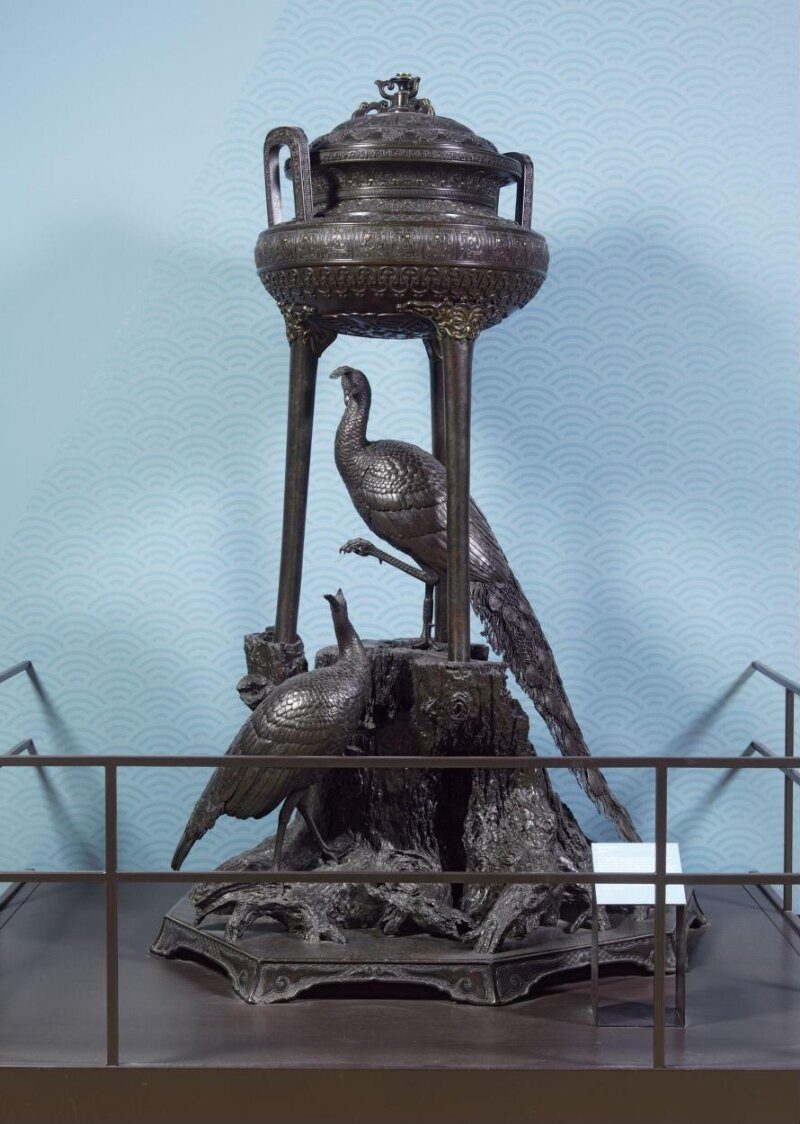
Suzuki Chōkichi. Incense Burner.
A bronze tree stump with roots, a pair of peafowl beside an incense burner. 228.6 cm tall. Made so a nation could be seen in Paris.
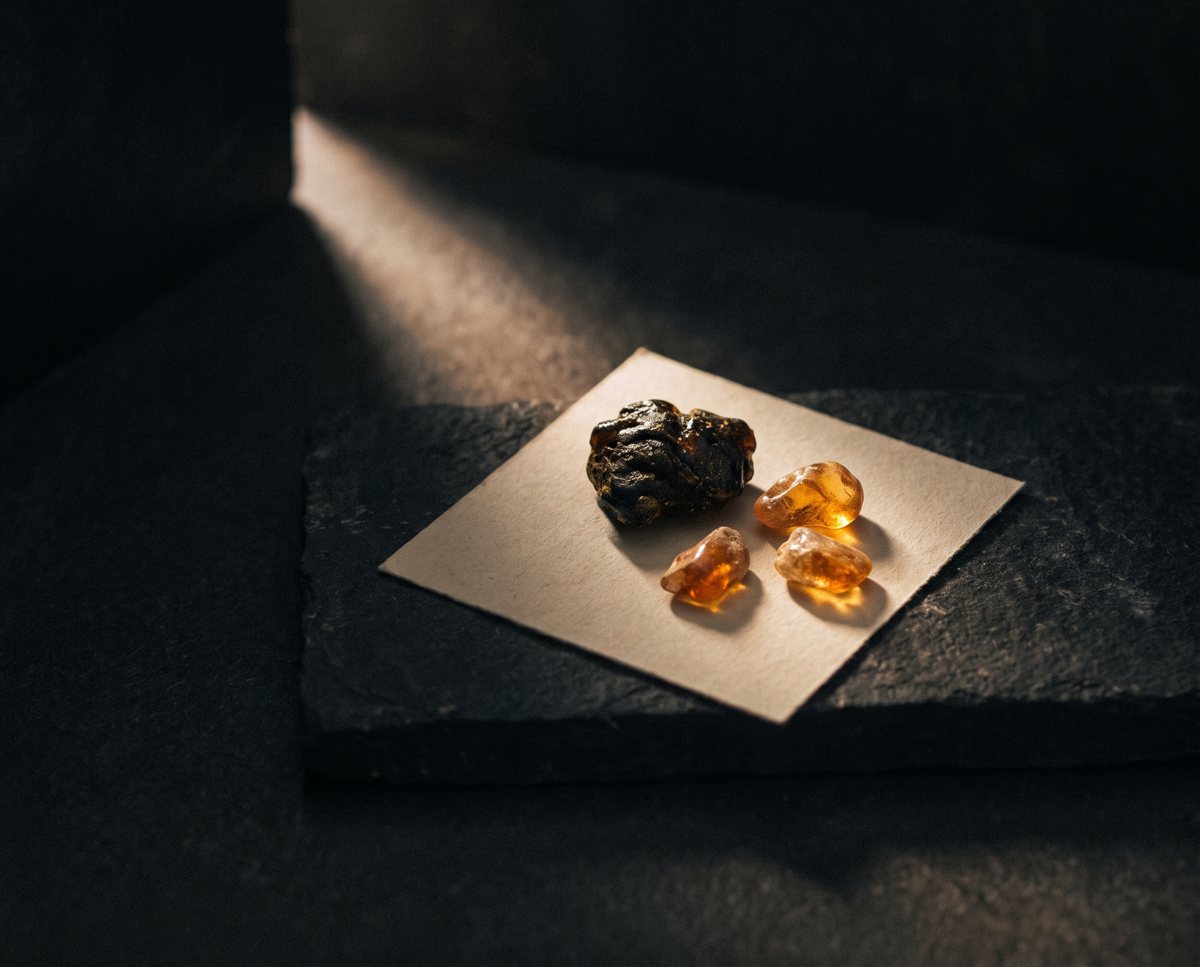
Amber. A smell that doesn't come from amber.
A piece of amber in the hand has almost no smell. The amber we know is built from cistus resin, vanilla and Siam benzoin. The word came first.
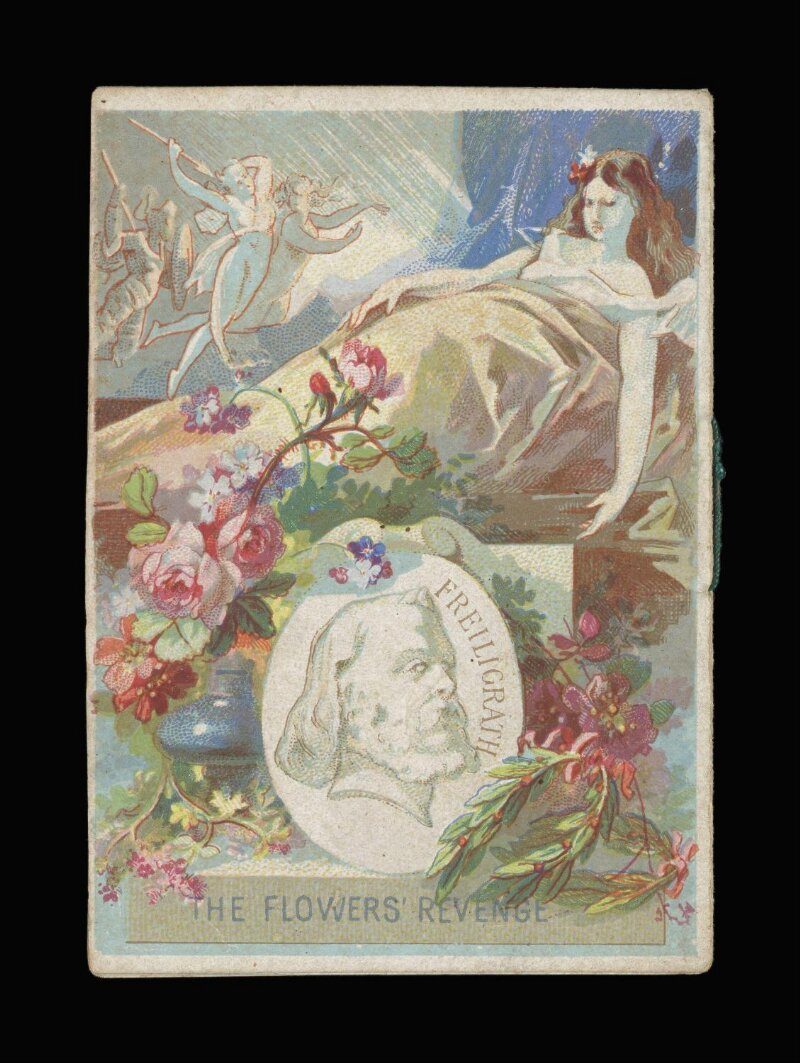
Jules Chéret for Eugène Rimmel. Rimmel almanac.
A nine centimetre almanac with four colour lithograph scenes from European literature. The perfumer Rimmel used images to speak of what cannot be seen.
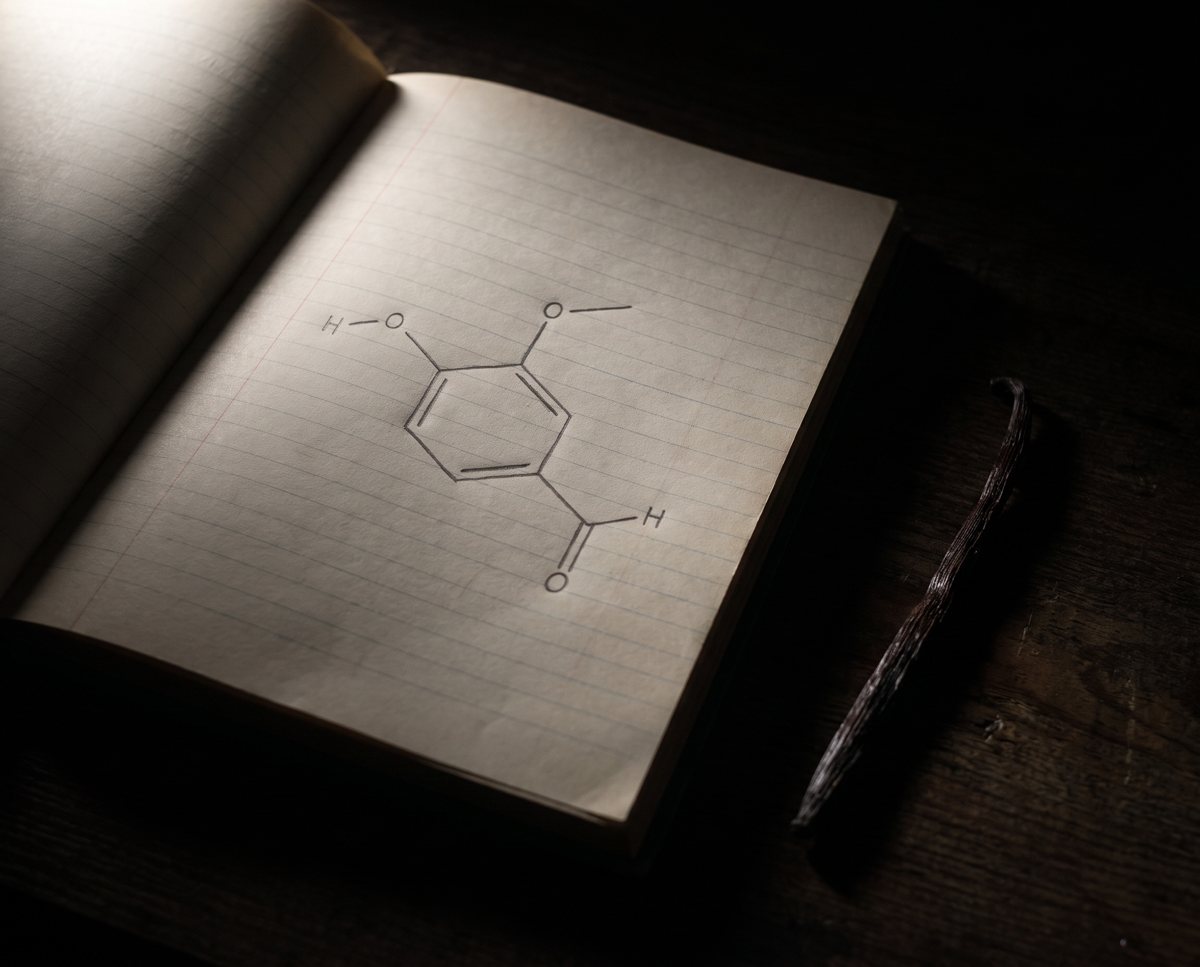
Vanillin. Vanilla without the pod.
A molecule found in vanilla pods, oak barrels, old books. In 1874 it was made from conifers. The smell stayed; the source changed.
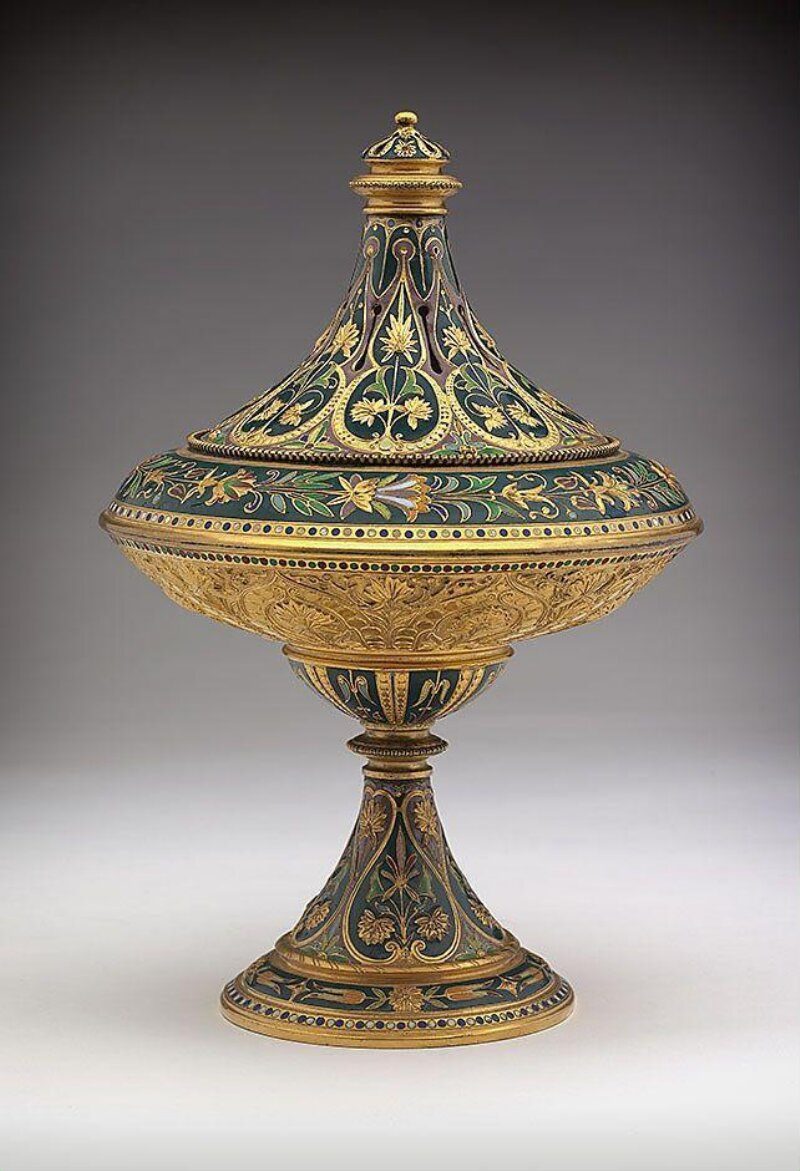
Auguste Adolphe Willms, Elkington & Co. Perfume burner.
Green, red and mauve enamel outside. Raw, nodular copper inside. A Victorian perfume burner that shows how it was made.
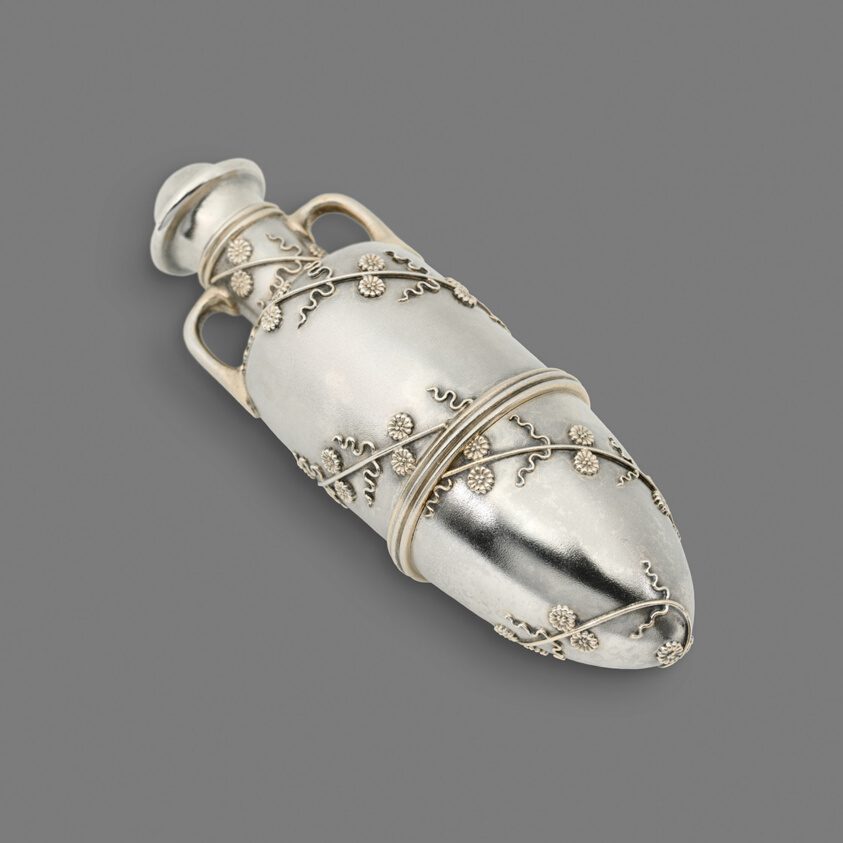
Tiffany & Co. Fern and Daisy Perfume Bottle.
A silver perfume bottle about twelve centimetres long, with ferns and daisies. The garden is made of metal; the scent sits quietly inside.
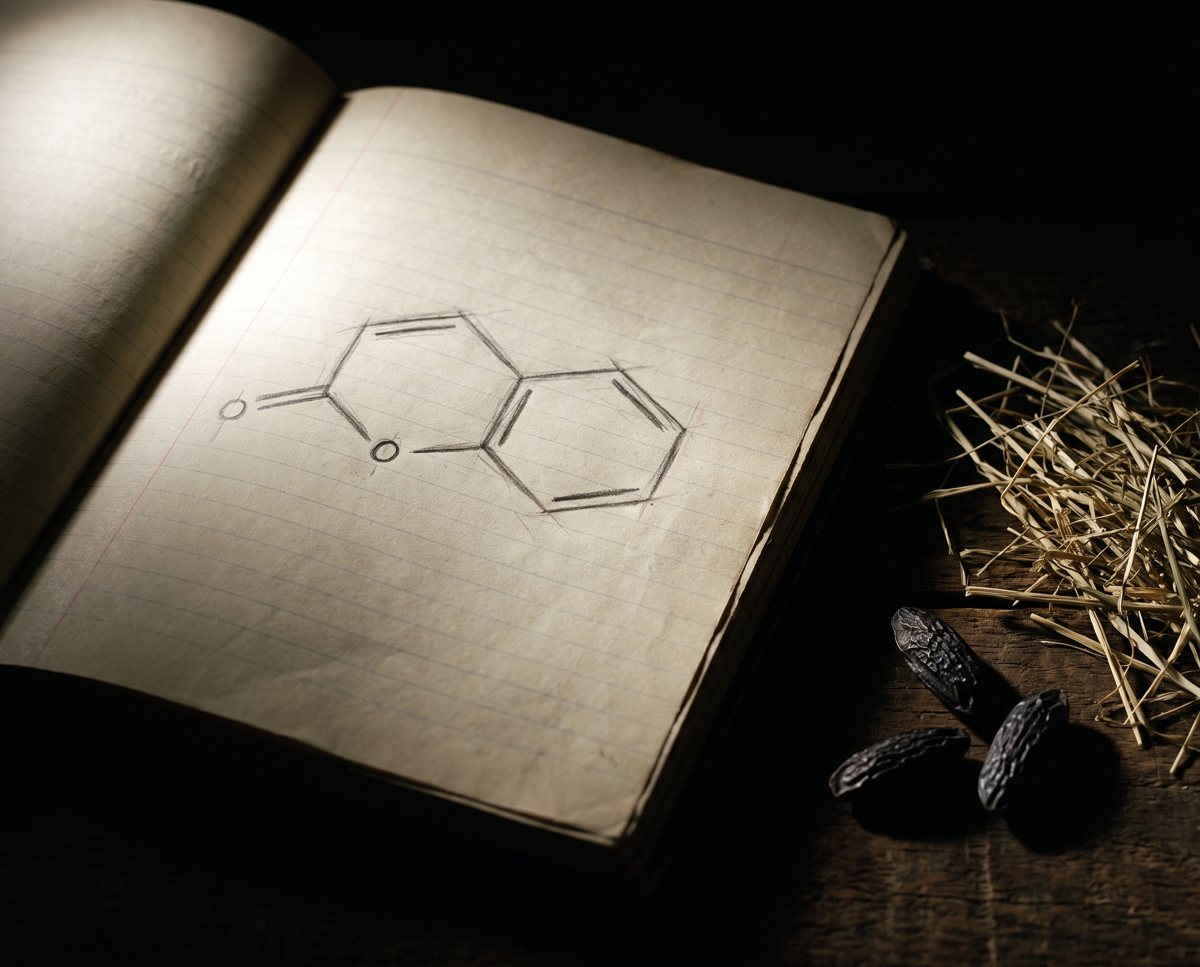
Coumarin. Hay in a test tube.
Hay, tonka, leaves drying in the sun. In 1868 that smell was first made without a field. The grass is dry; the smell remains.
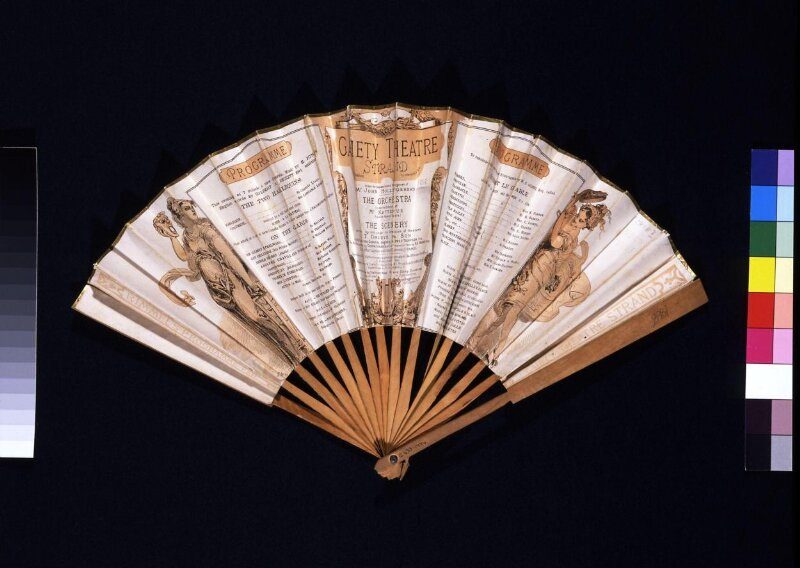
Eugène Rimmel. Rimmel's programme fan.
A paper fan with the programme on the front and a perfume advertisement on the back. That night, the Gaiety's lobbies had scented fountains.
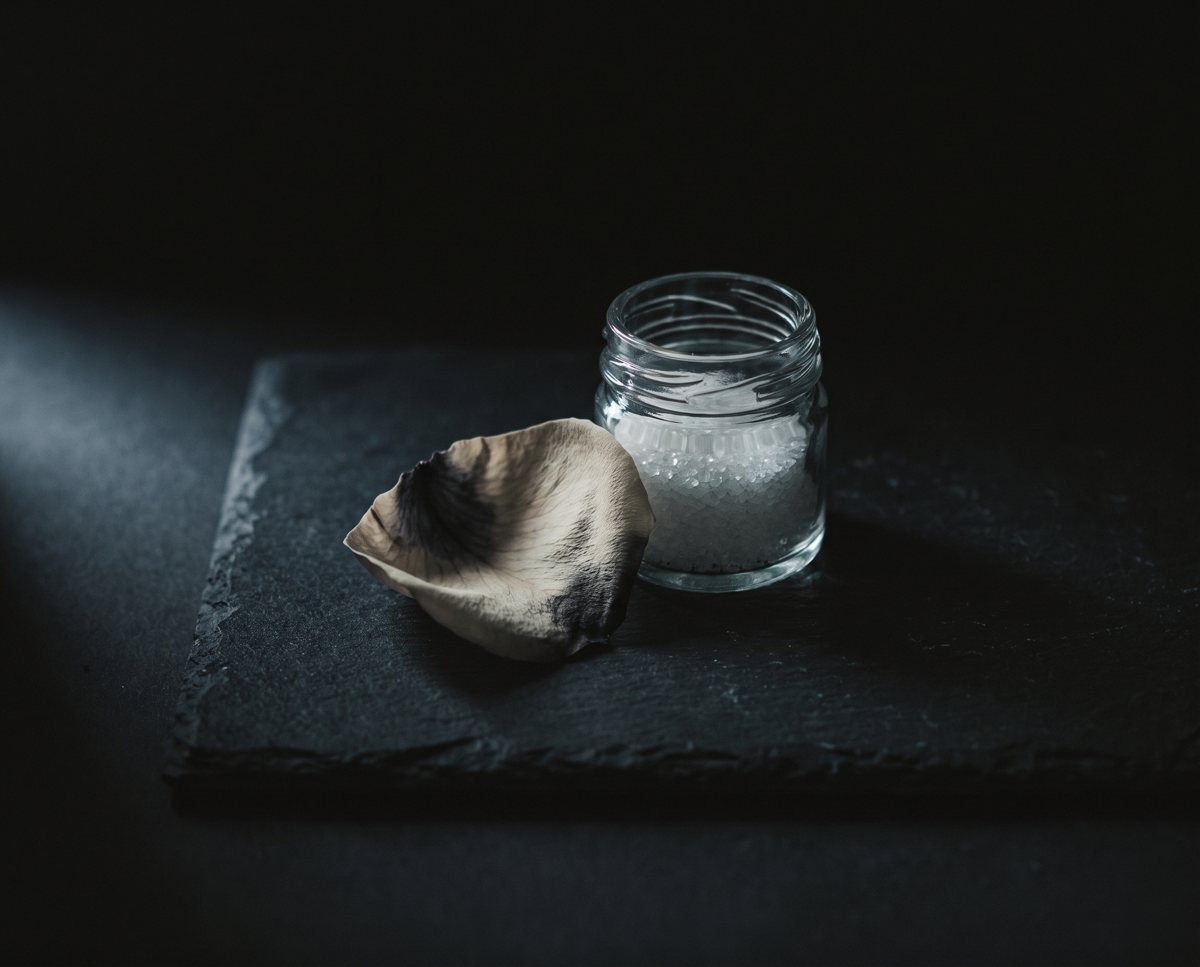
Natural or synthetic. An aesthetic debate.
A petal and a molecule. The natural or synthetic debate is usually pulled towards safety and marketing. Penta reads it as a question about beauty and about objects.
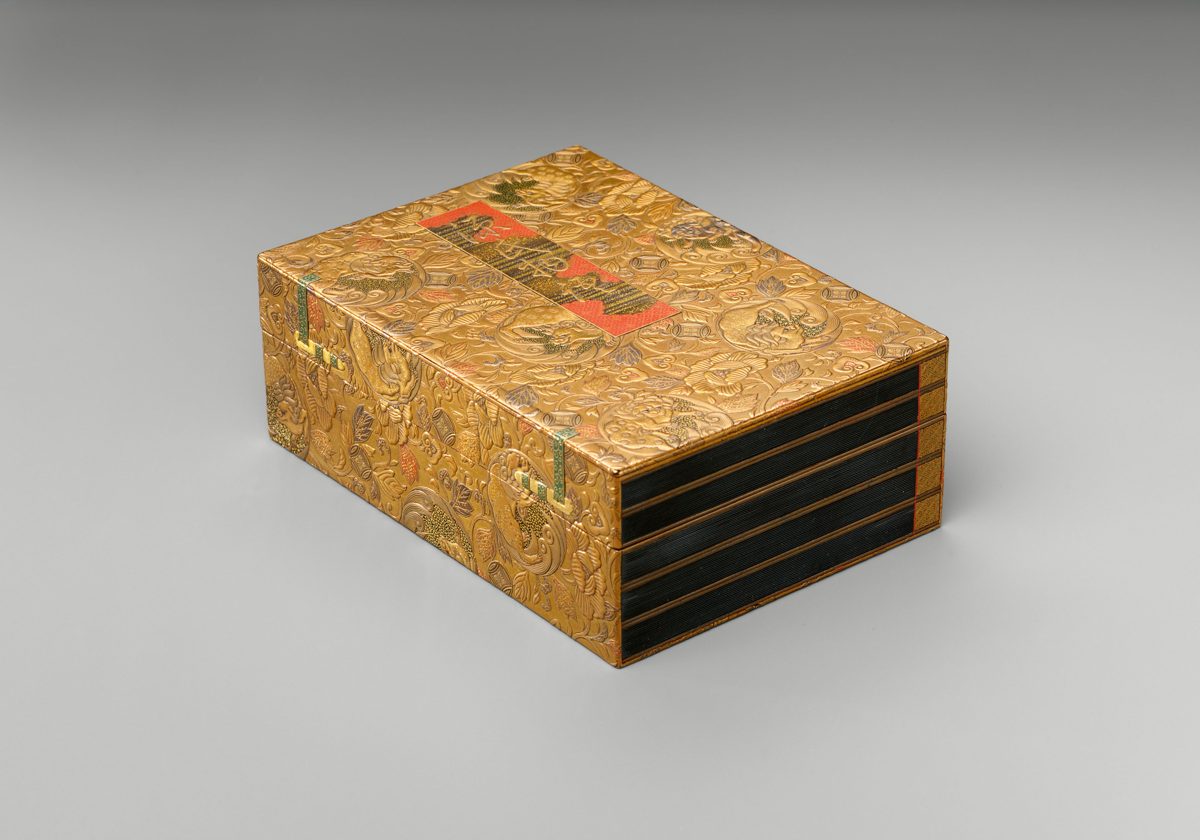
Japan. Incense Box in the Shape of Five Volumes of The Tale of Genji.
A palm sized incense box shaped as five volumes of Genji monogatari bound in brocade. Literature becomes a shell for fragrant wood.
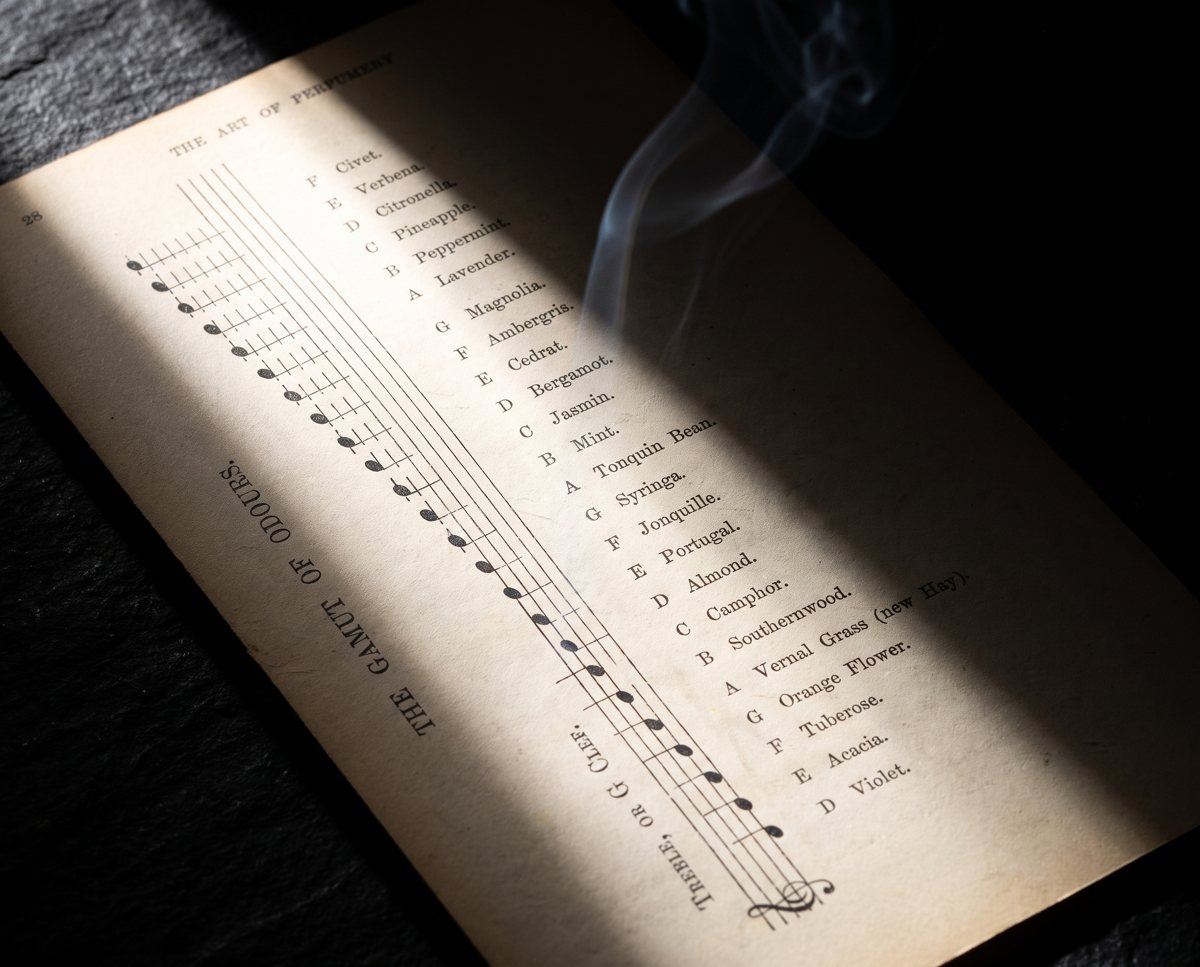
Piesse. The gamut of odours.
Almond, vanilla and heliotrope on one note. Civet at the top. A London perfumer tried to write smell on a musical staff.
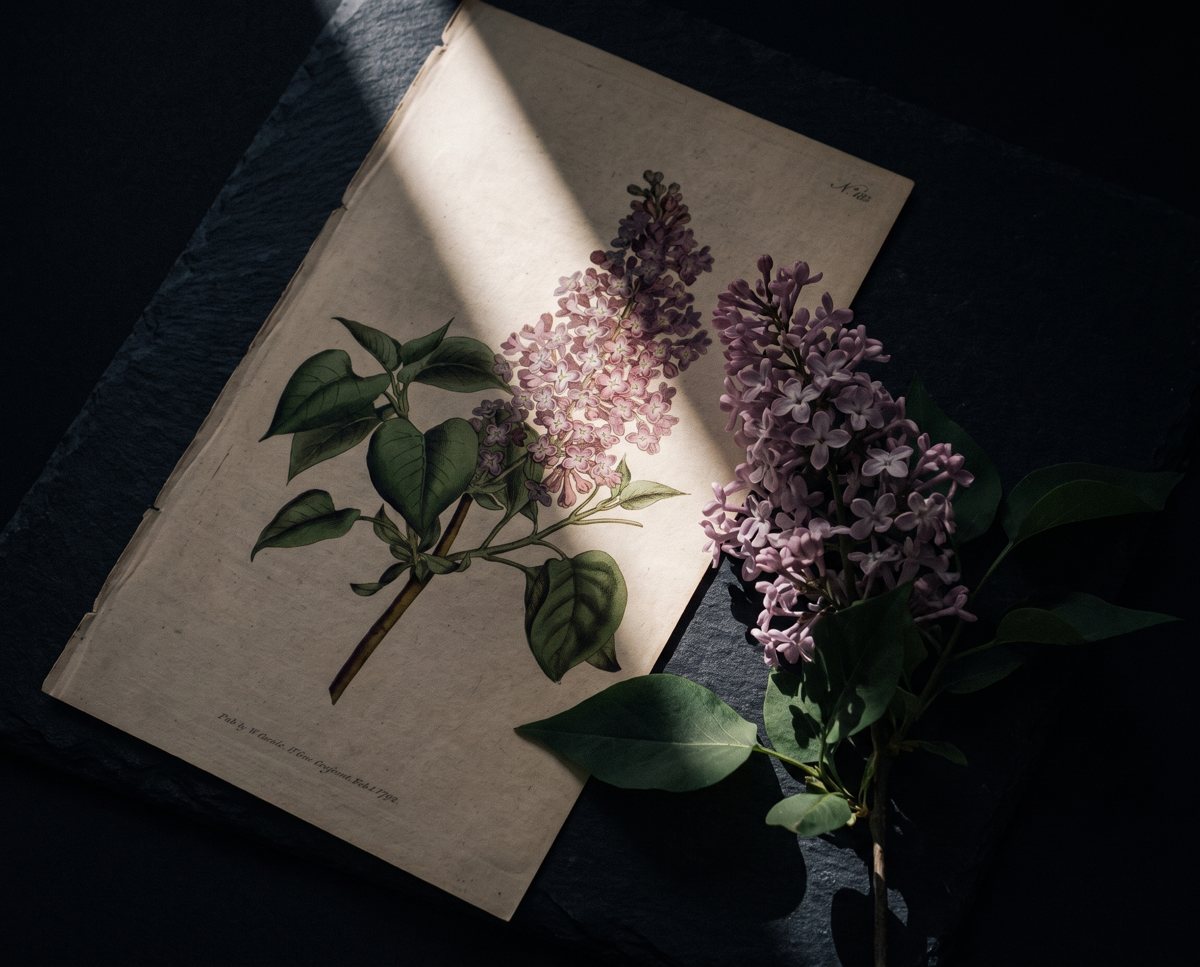
Lilac. A smell that must be rebuilt.
A purple cluster that blooms a few weeks each spring. Everyone remembers its smell, yet in a bottle it is always a portrait from memory.
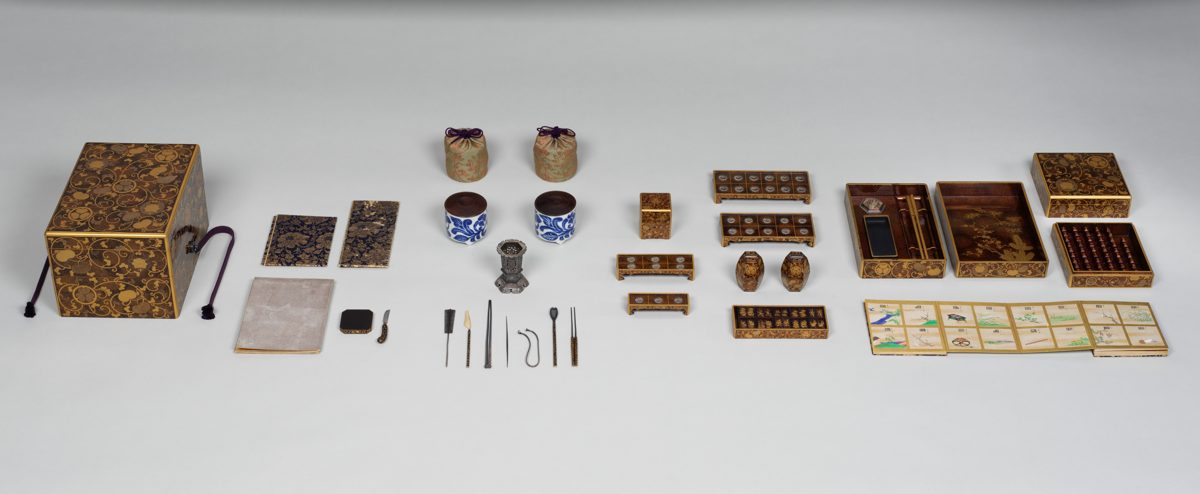
Japan, Edo period. Ten-round incense game set.
A guessing game for the nose, packed in a bride's dowry in 1856. A small object, carrying a large political alliance.
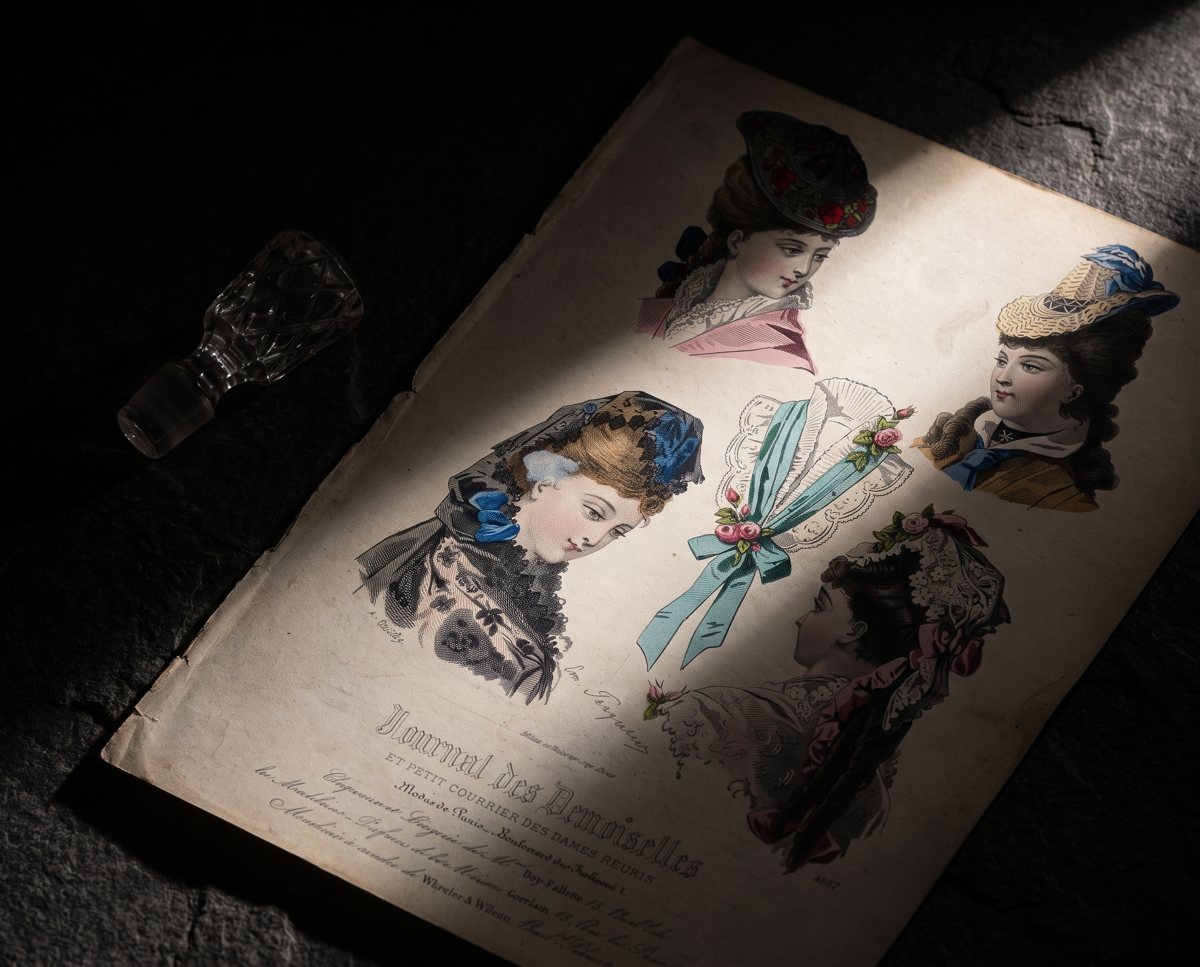
Pierre-François-Pascal Guerlain. A water for an empress.
A light daily water, made for an empress. The empire is long gone. The name Impériale is still on the bottle.
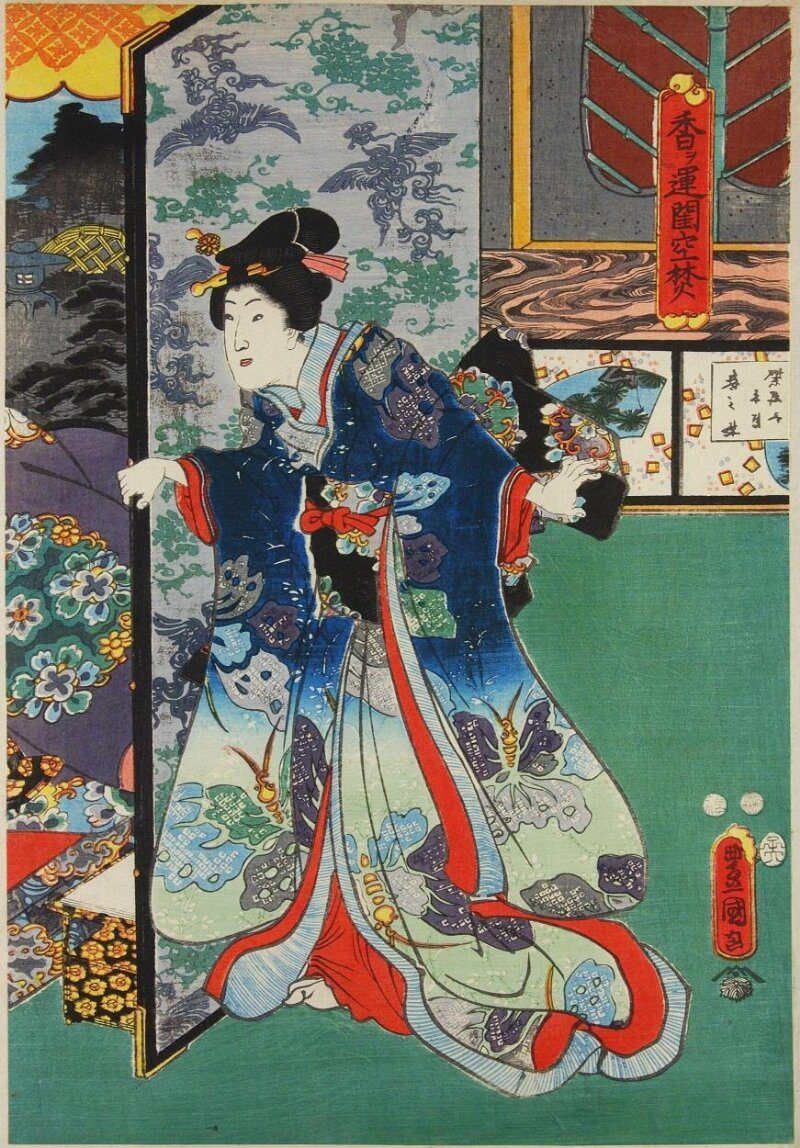
Utagawa Kunisada. Kō o hakobu neya karadaki.
A figure beside a folding screen. The incense is lit, the room is scented. The title says it is all in vain. What remains is one sheet missing two others.
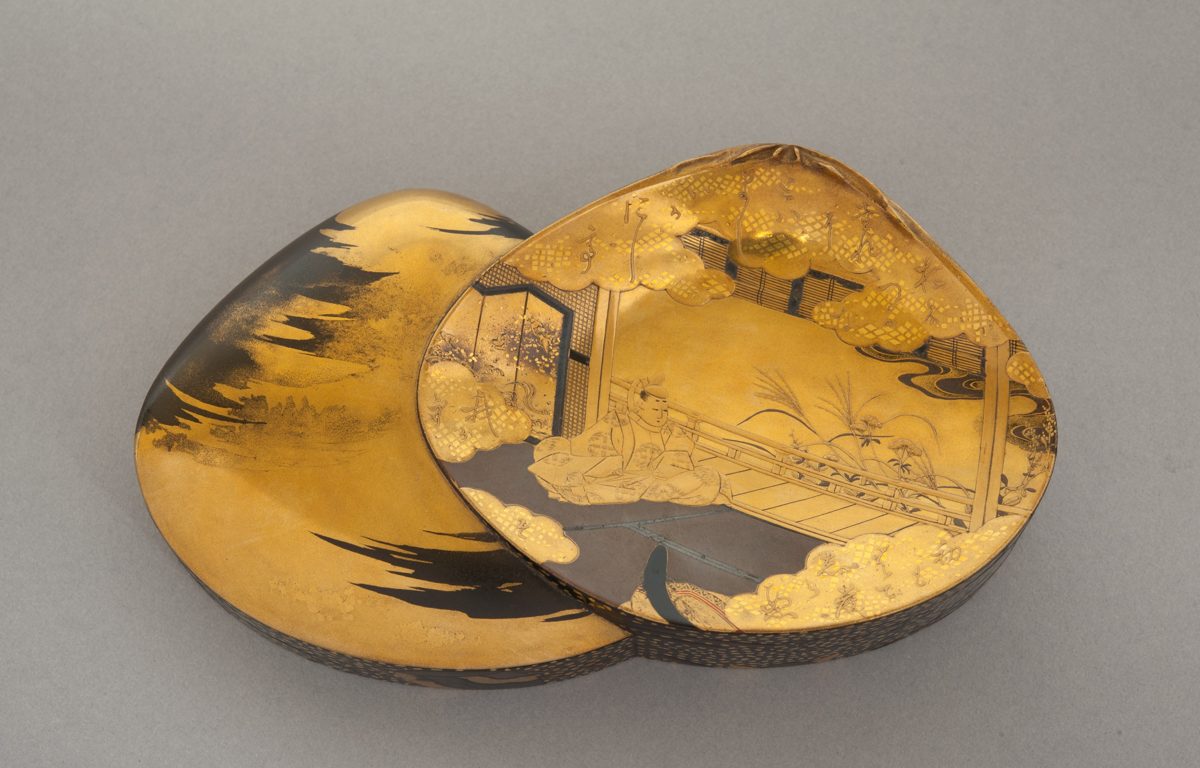
Japan. Incense Box with Scene from The Tale of Genji.
Two lacquer shells fitted together, painted with the Fragrant Prince chapter. An incense box that tells of a man who carried a scent from birth.
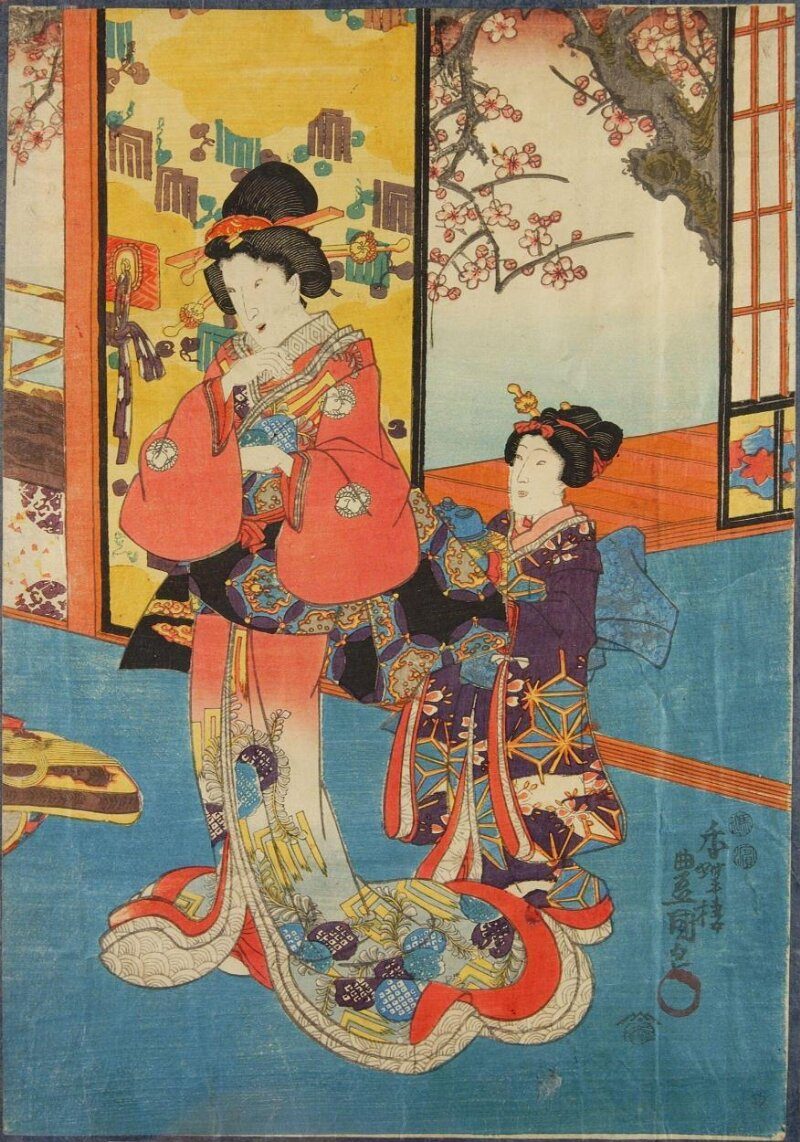
Utagawa Kunisada. Ka ni sasou haru no tsumeoto.
A title like a line of verse: the scent of spring invites the sound of koto picks. Kunisada puts smell and hearing in one frame.
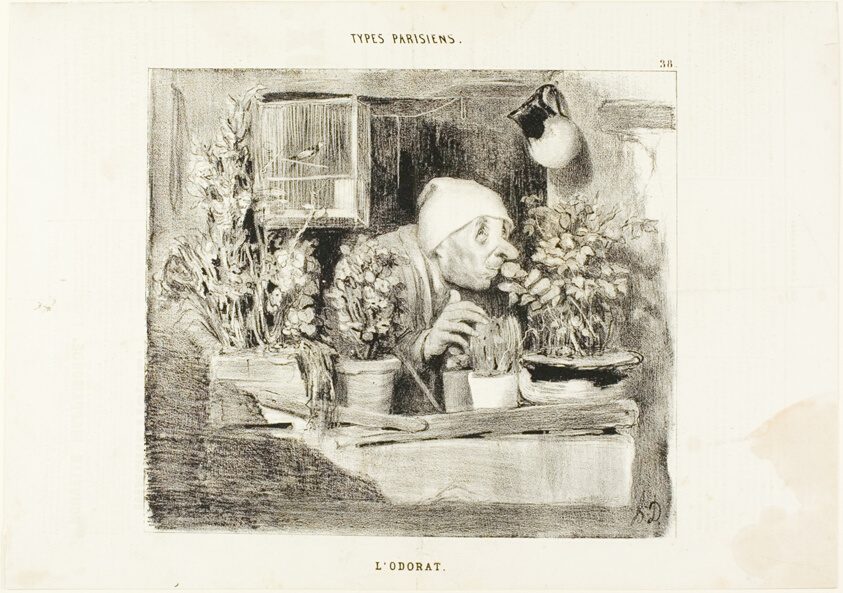
Honoré Daumier. L'Odorat.
A man in a cap, a windowsill, five flowerpots. Daumier draws the sense of smell through the most ordinary scene of Parisian life.
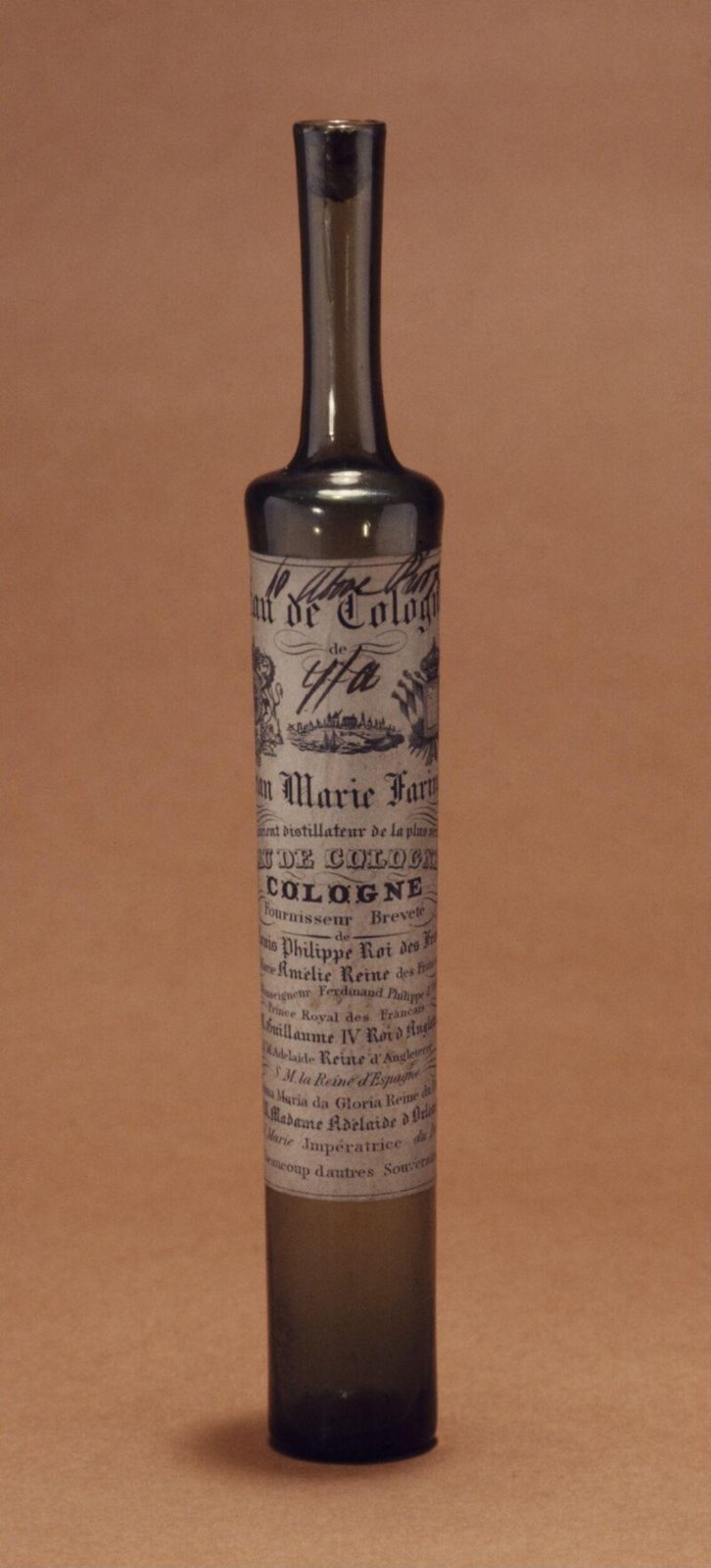
Jean Marie Farina. Eau de Cologne Bottle.
A tall glass bottle, a printed paper label still whole after nearly two centuries. On the label, a claim: this is the truest Eau de Cologne.
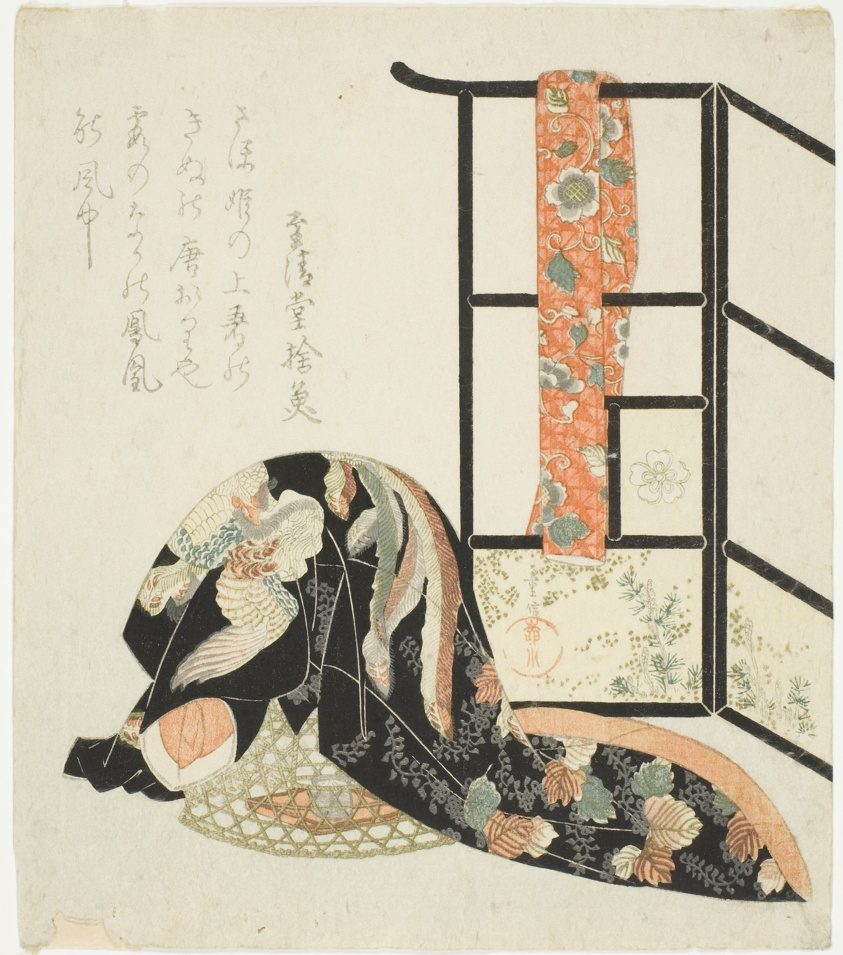
Yanagawa Shigenobu I. Scenting a kimono with incense.
A square woodblock print, a woman, a kimono and the smoke beneath it. The robe is worn after it has passed through scent.
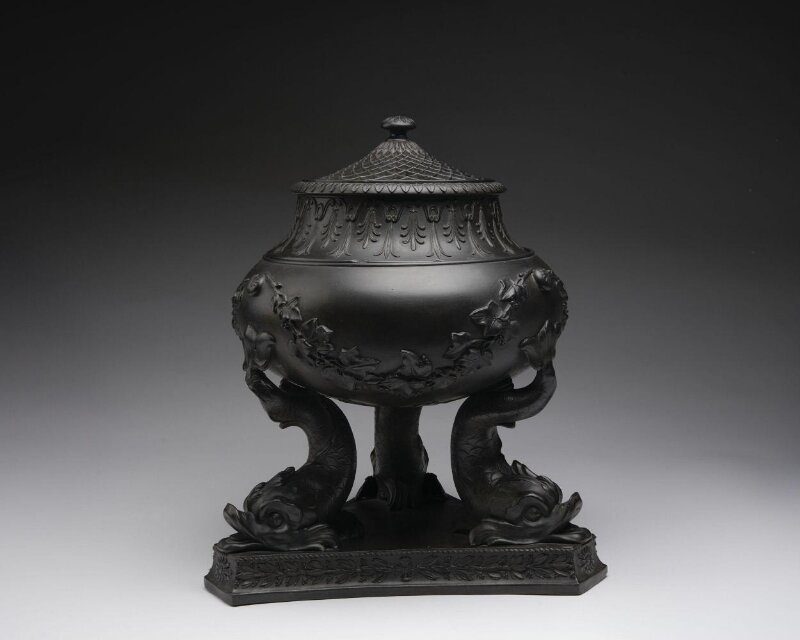
Josiah Wedgwood and Sons. Pastille Burner, Dolphin Tripod.
Three dolphins hold a black bowl. Inside, charcoal and scented oil smoulder to mask stuffy rooms and bad drains. An oil lamp that changed jobs.
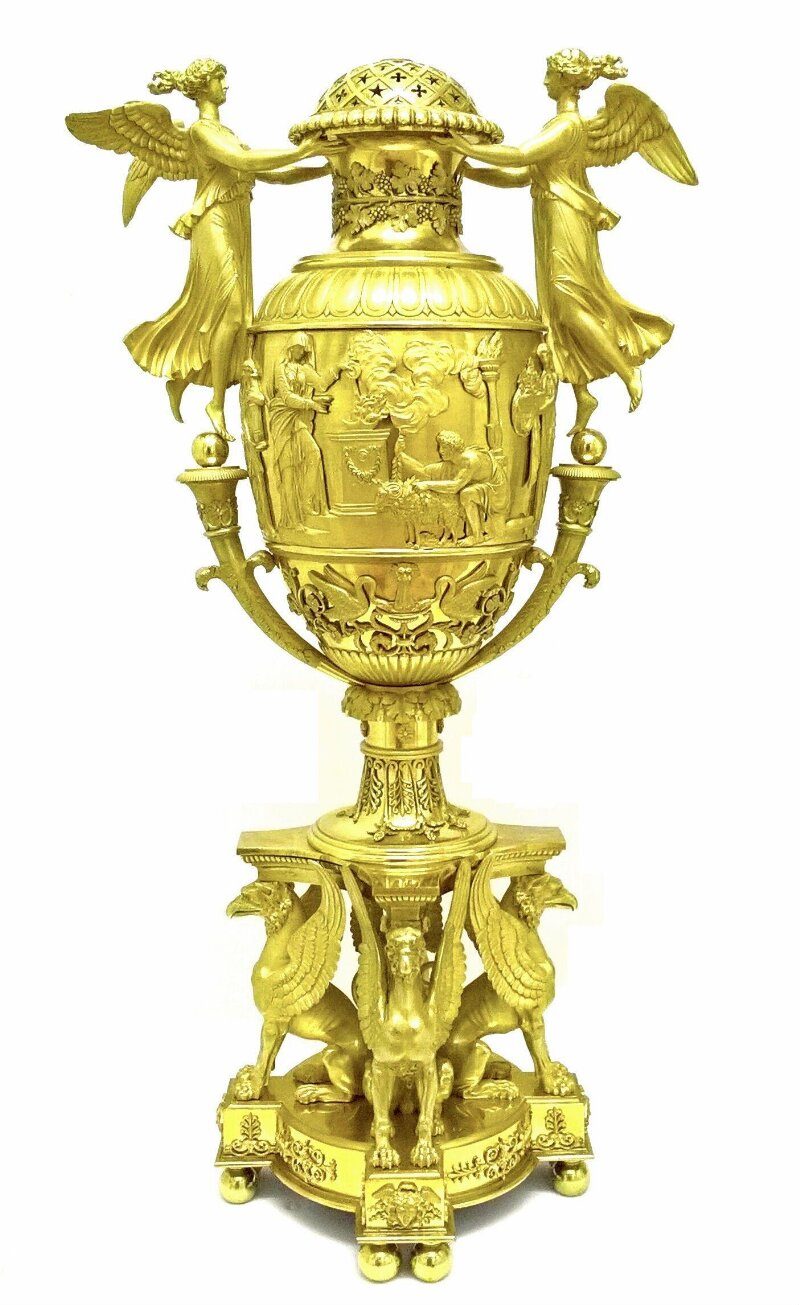
Claude Galle. Perfume burner.
Cast bronze, chased, gilded in two tones. Almost a metre tall. An object made so that smoke could stand in an Empire room.
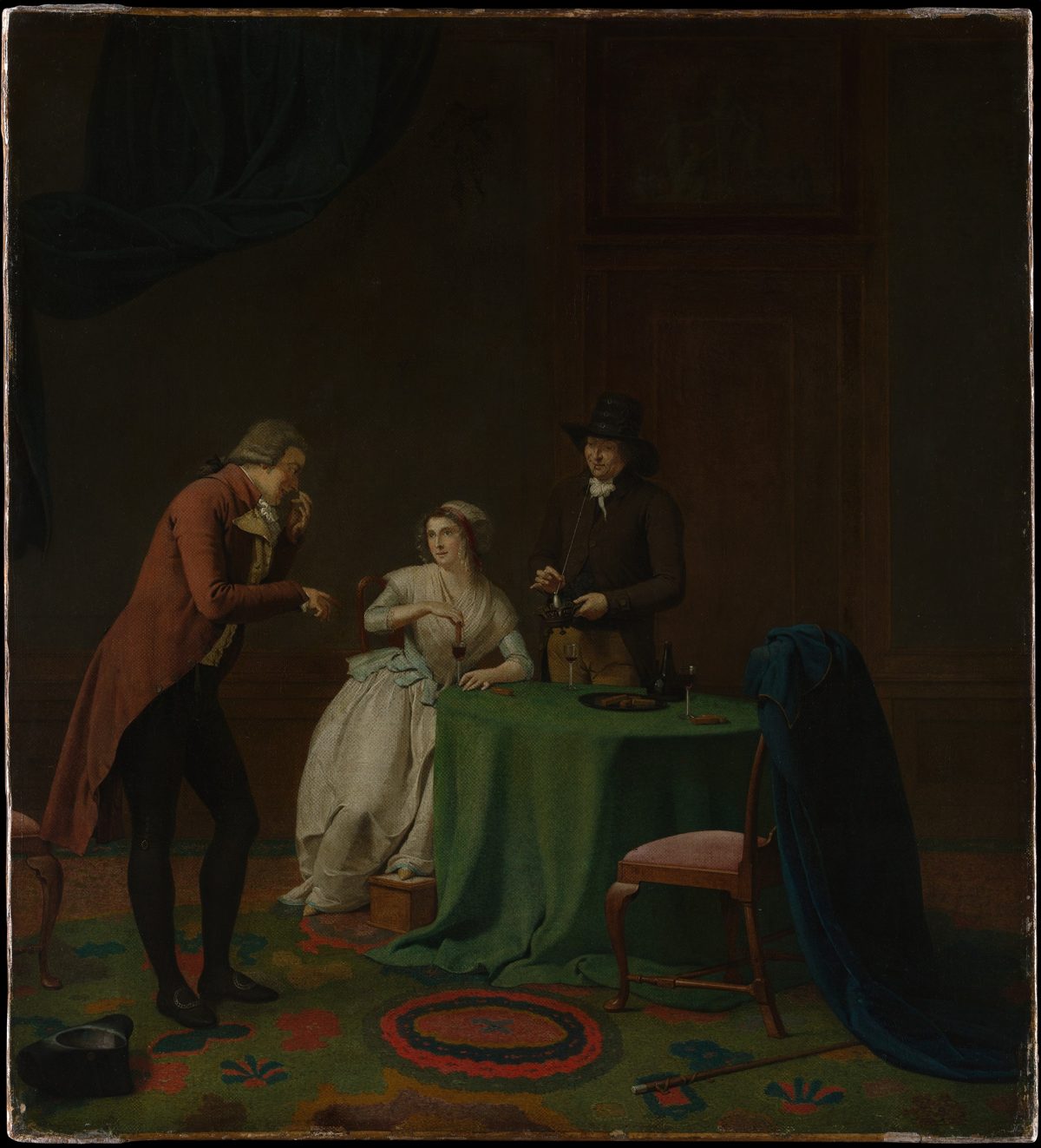
Jan Ekels the Younger. Conversation Piece (The Sense of Smell).
No flowers, no goddess. In Ekels's painting smell is pipe smoke, a glass of wine and three people in a closed room.
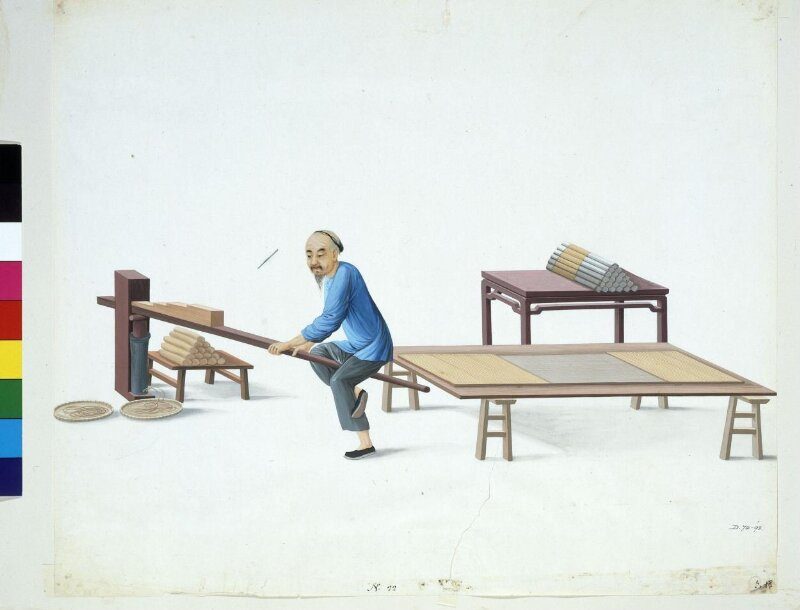
Puqua. Man Making Incense Sticks.
A man in blue sits at the end of a long board. Behind him, two tables piled with incense sticks. Painted for Europeans, it keeps what few ever painted: the man who makes the smoke.
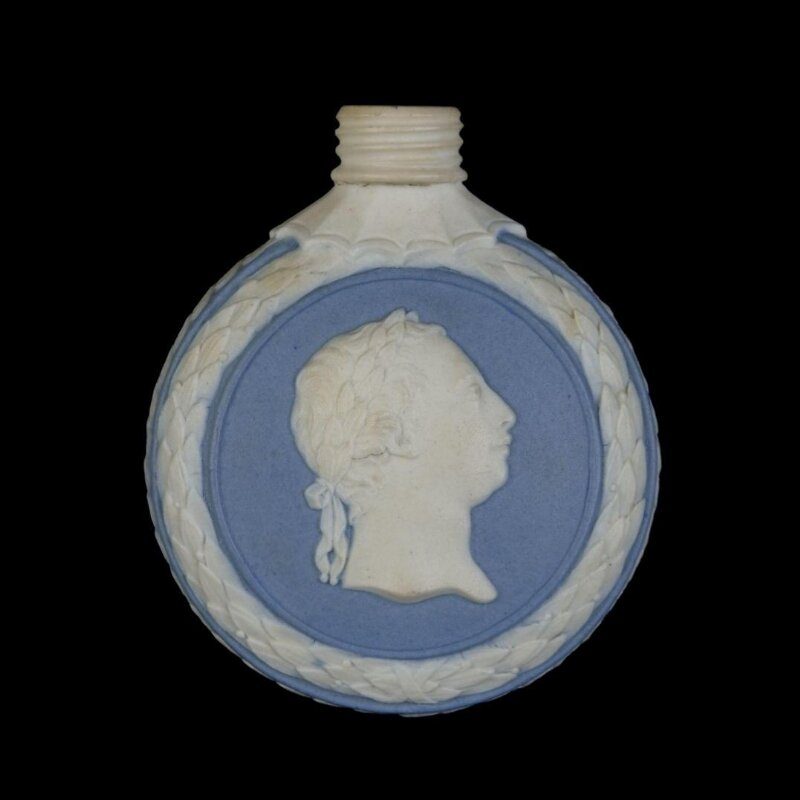
Josiah Wedgwood and Sons. Scent Bottle.
A round blue scent bottle that fits in the palm. Two royal faces in white clay. Inside, a smell no one remembers.
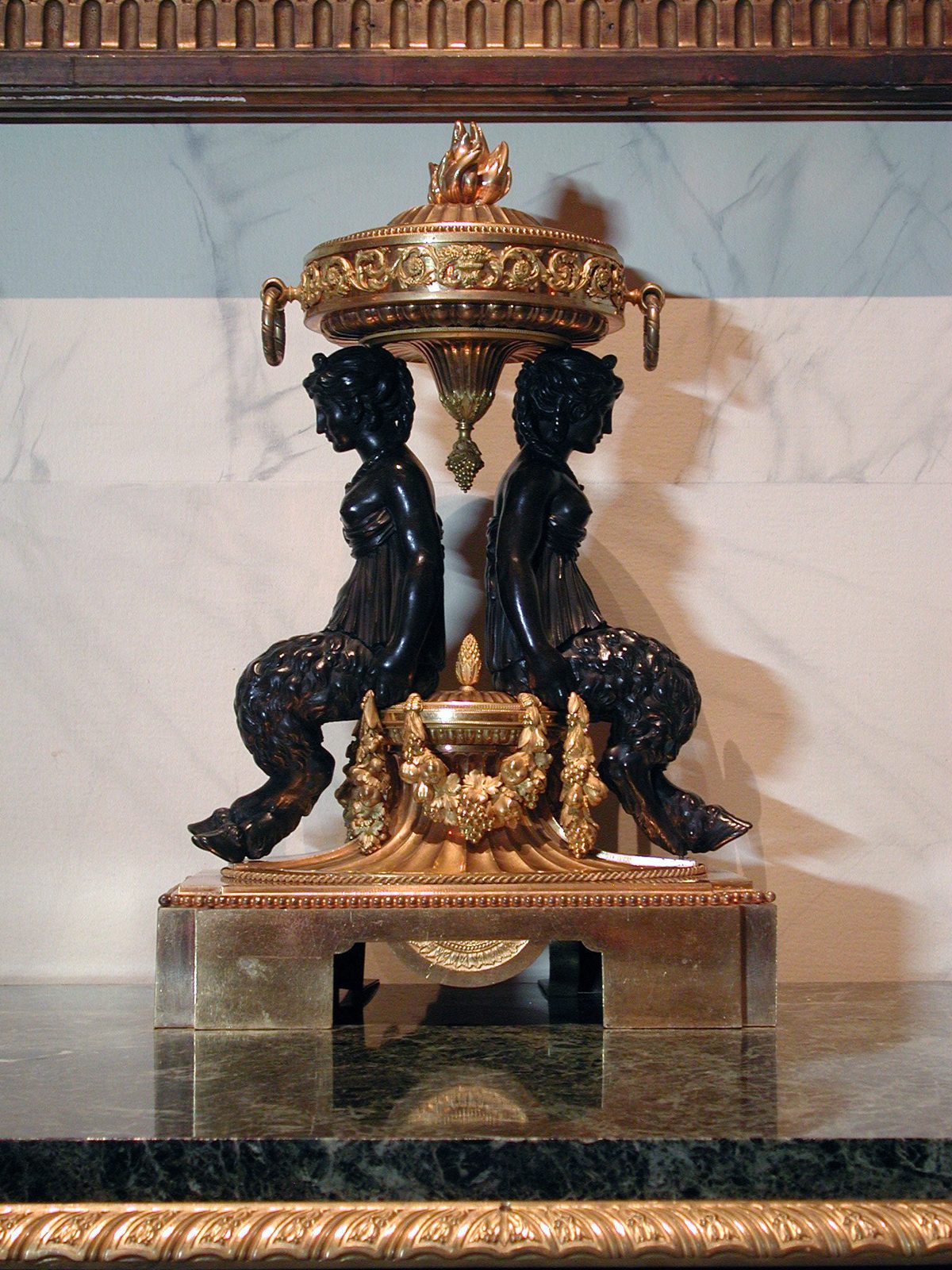
Unknown maker. Pair of perfume burners.
Two bronze burners over half a metre tall, half gold, half dark. Inside, a small flame once warmed pastilles to scent the room.
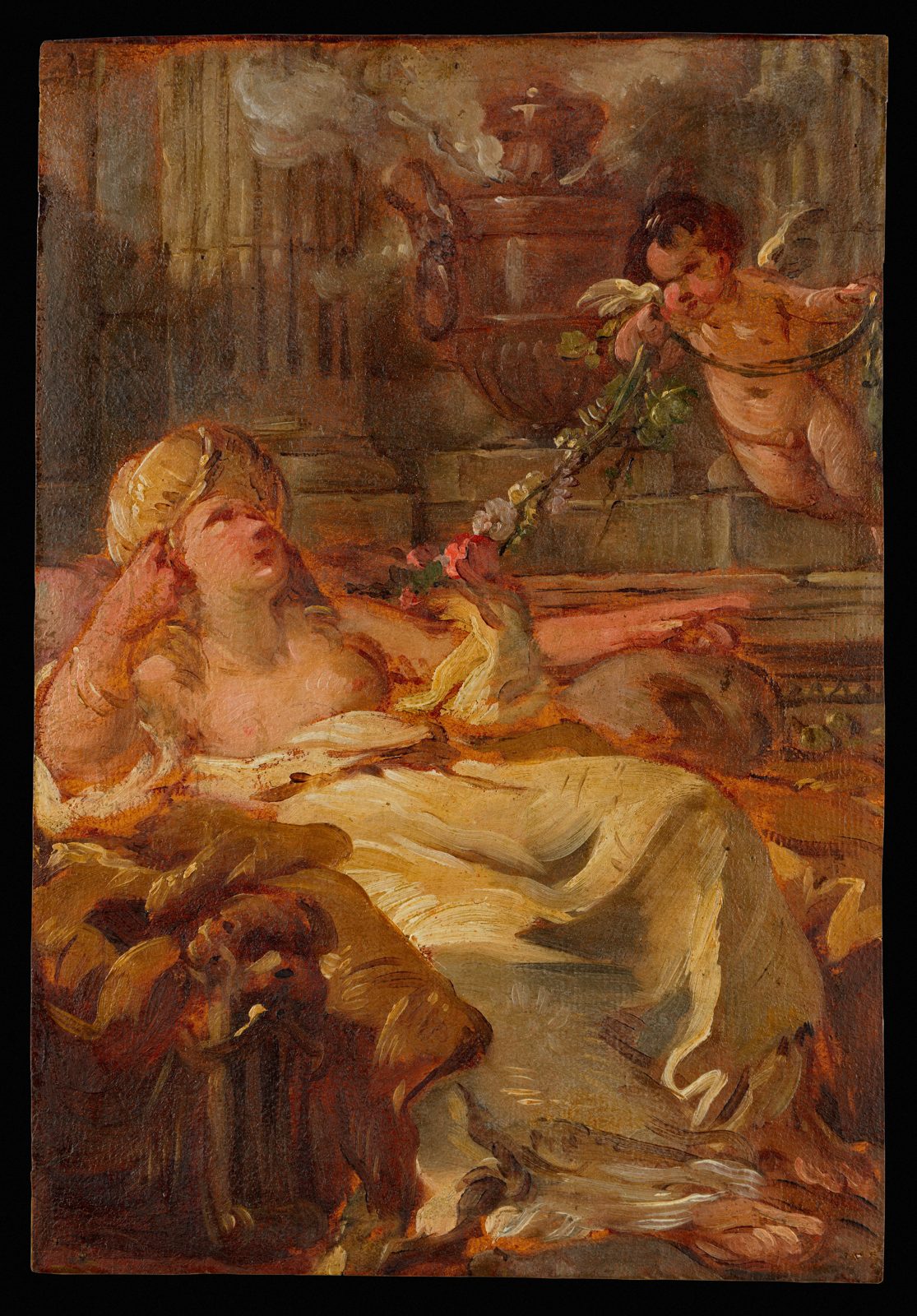
Joseph-Marie Vien. Allegory of Smell.
Vien paints smell with a turban, an incense burner and a garland. The turban points to Asia, where incense once set out for Europe.
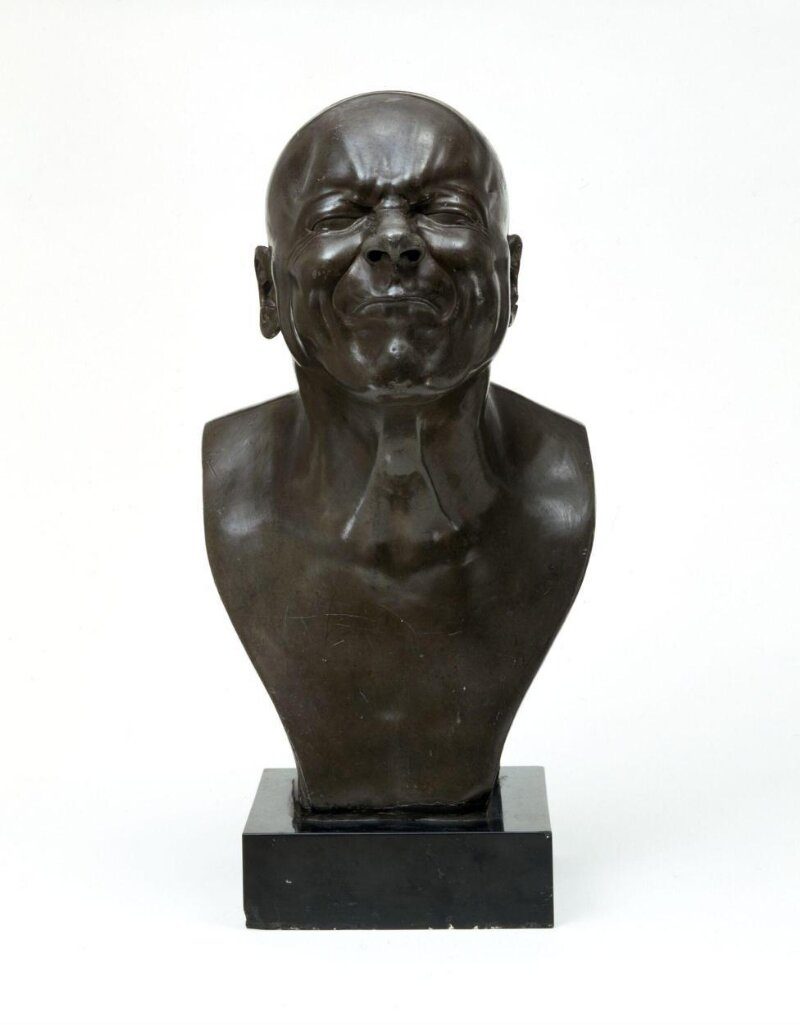
Franz Xaver Messerschmidt. The Strong Smell.
Eyes shut tight, chin raised, lips pressed. A metal face enduring a smell we will never know.
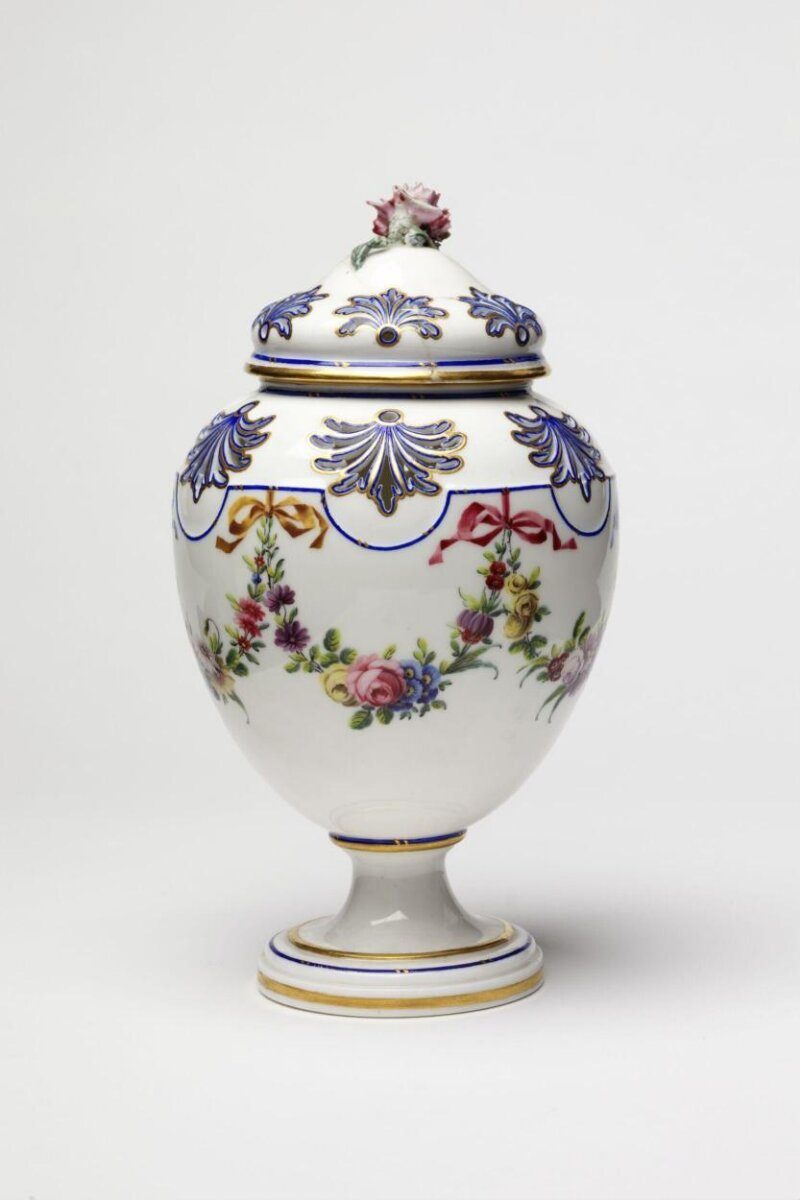
Sèvres, Jean-Claude Duplessis. Pot pourri Pompadour.
A white porcelain vase, pierced at the neck, painted with garlands. The smell leaves through the holes. The garland outside explains it to the nose.
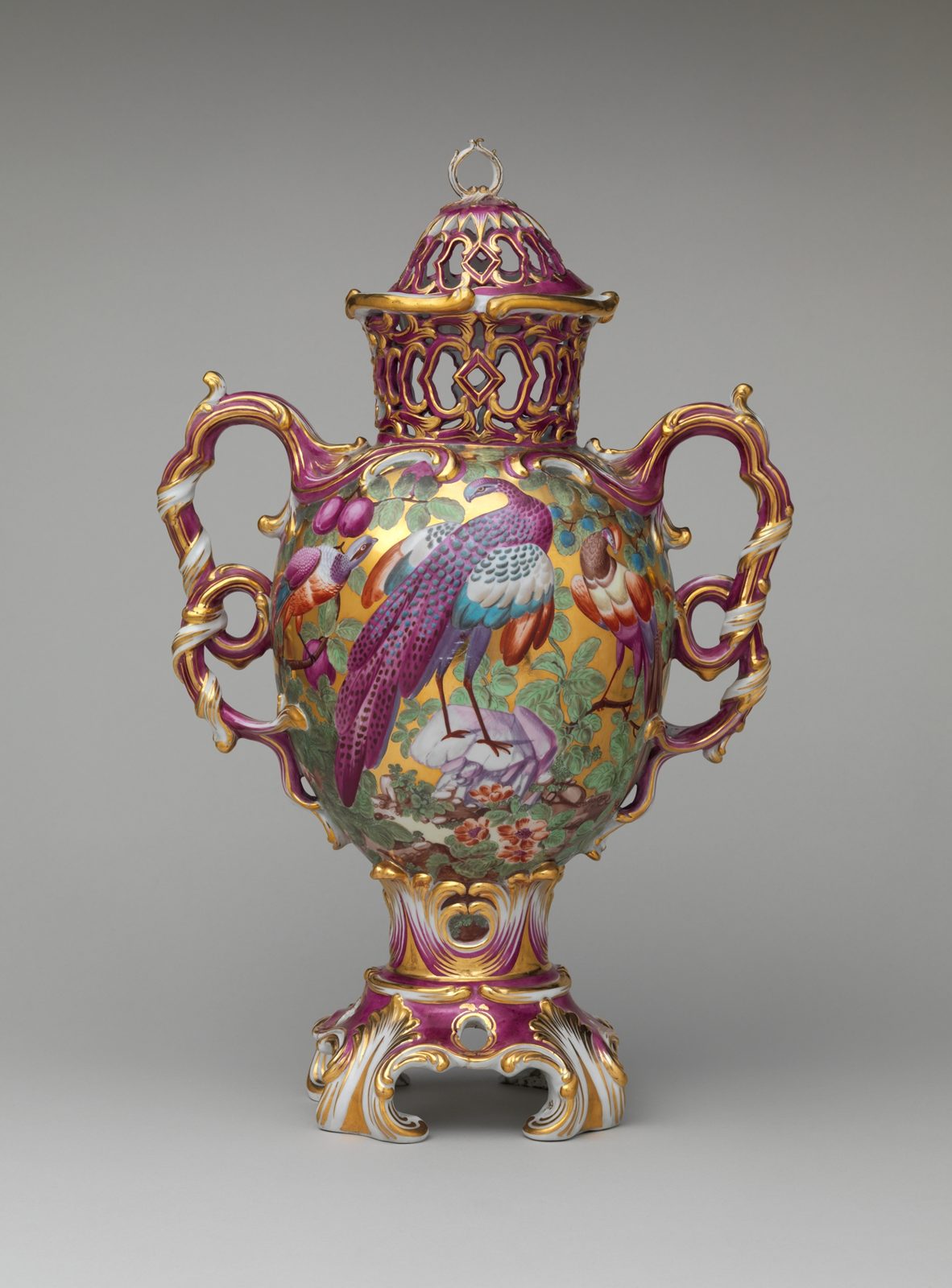
Chelsea Porcelain Manufactory. Perfume vase.
A covered porcelain vase over forty centimetres tall, set on the chimneypiece. Inside, dried petals; around it, a scented room.
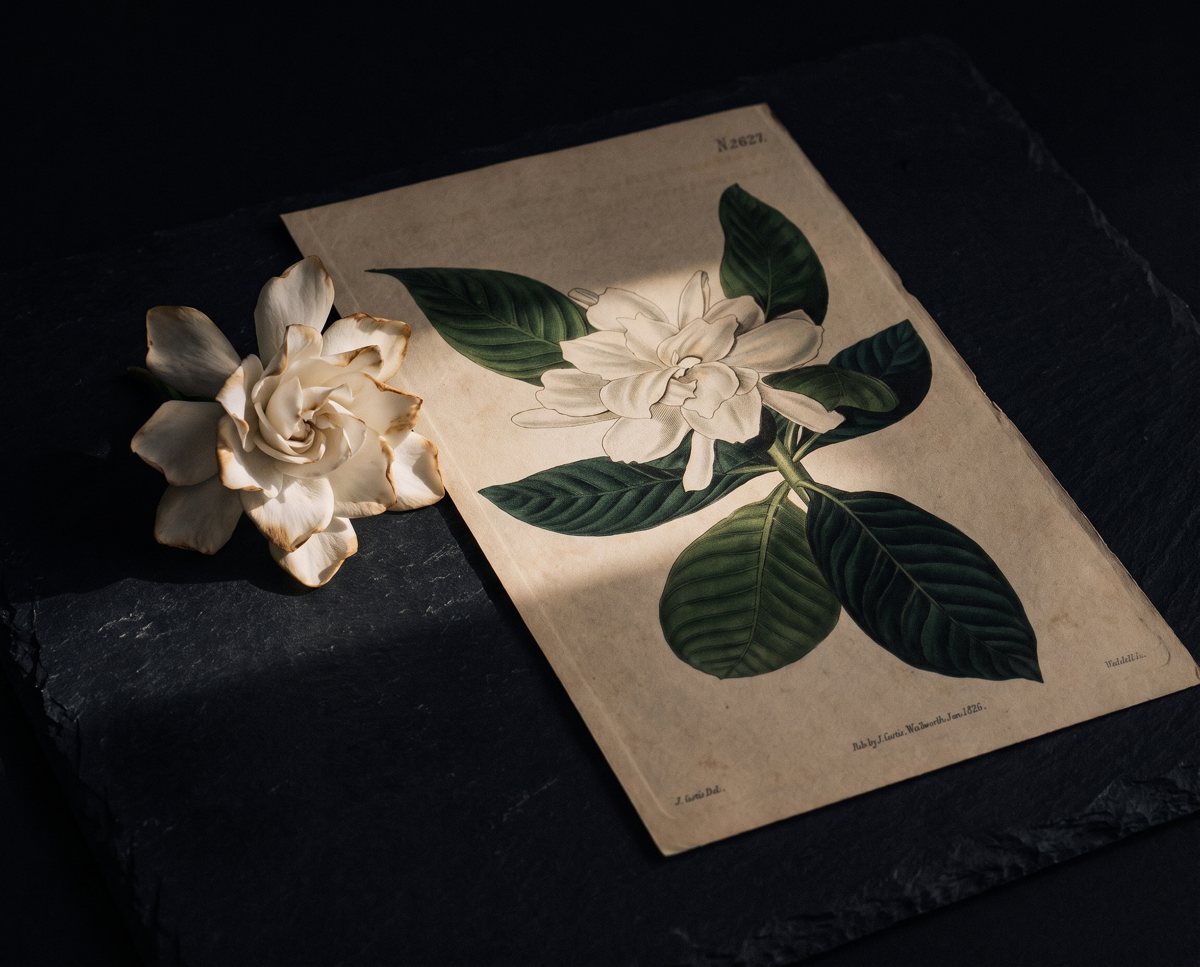
Gardenia. A white flower that cannot be kept.
White in the morning, cream by afternoon, yellow the next day. Gardenia changes faster than we can name it, and its smell is kept only by rebuilding.
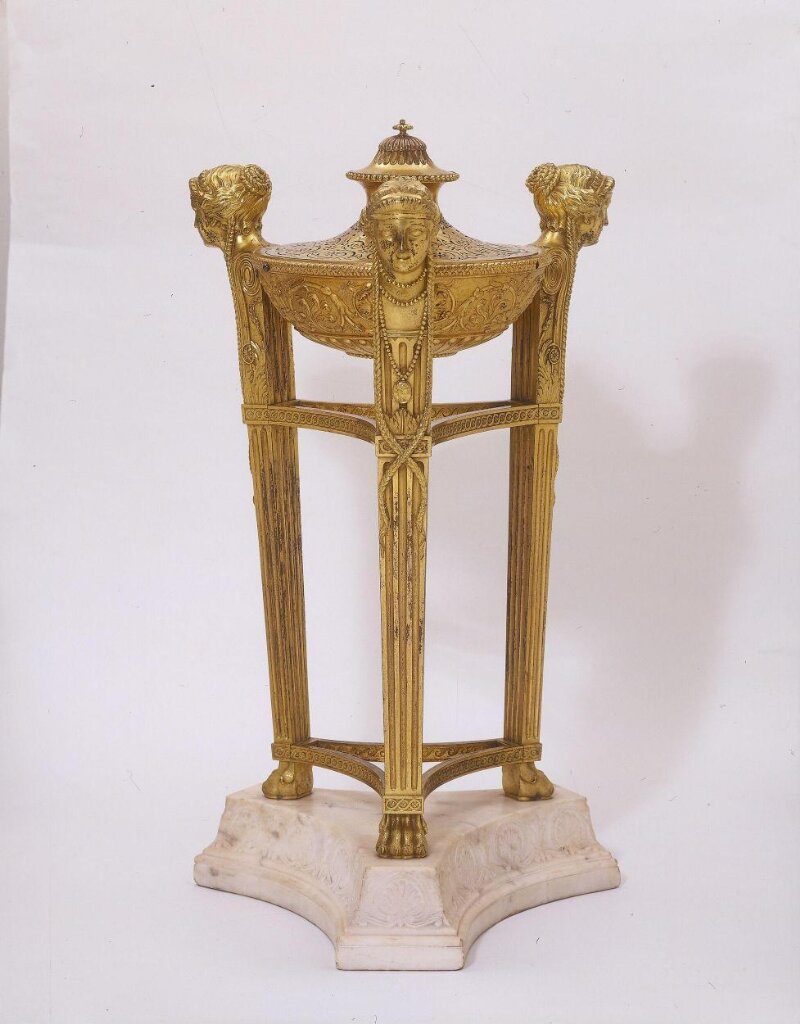
James 'Athenian' Stuart, Diederich Nicolaus Anderson. Perfume Burner.
An architect draws houses, ceilings, doors. Then he draws the object that scents the room. Its form comes from the Greek sacrificial tripod.
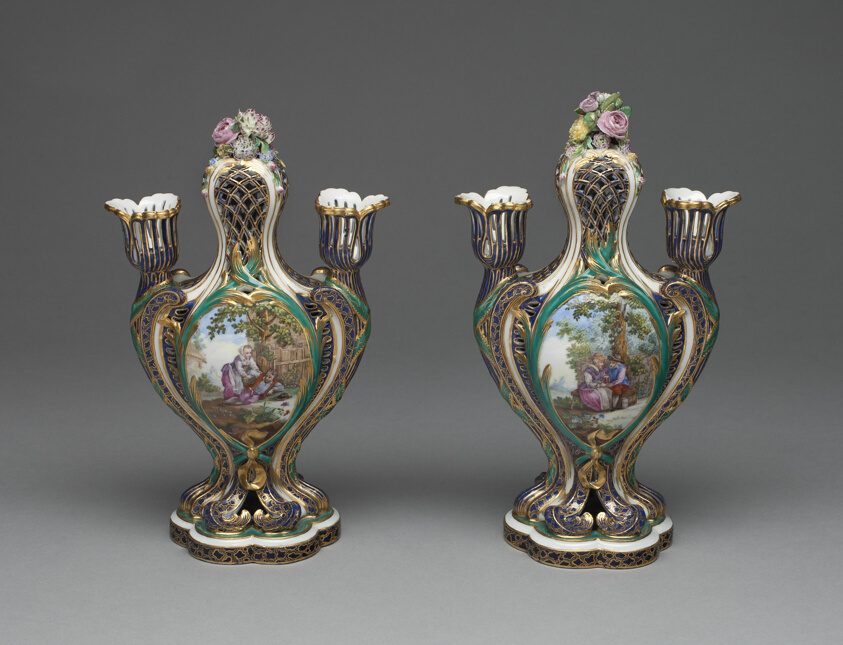
Sèvres, Jean-Claude Duplessis. Pair of Vases (Pots Pourris à Bobèches).
Two porcelain vases that hold candles. Dried flowers or pastilles sit in the foot. Scent rises through the piercings, and the porcelain flowers on top seem to breathe.
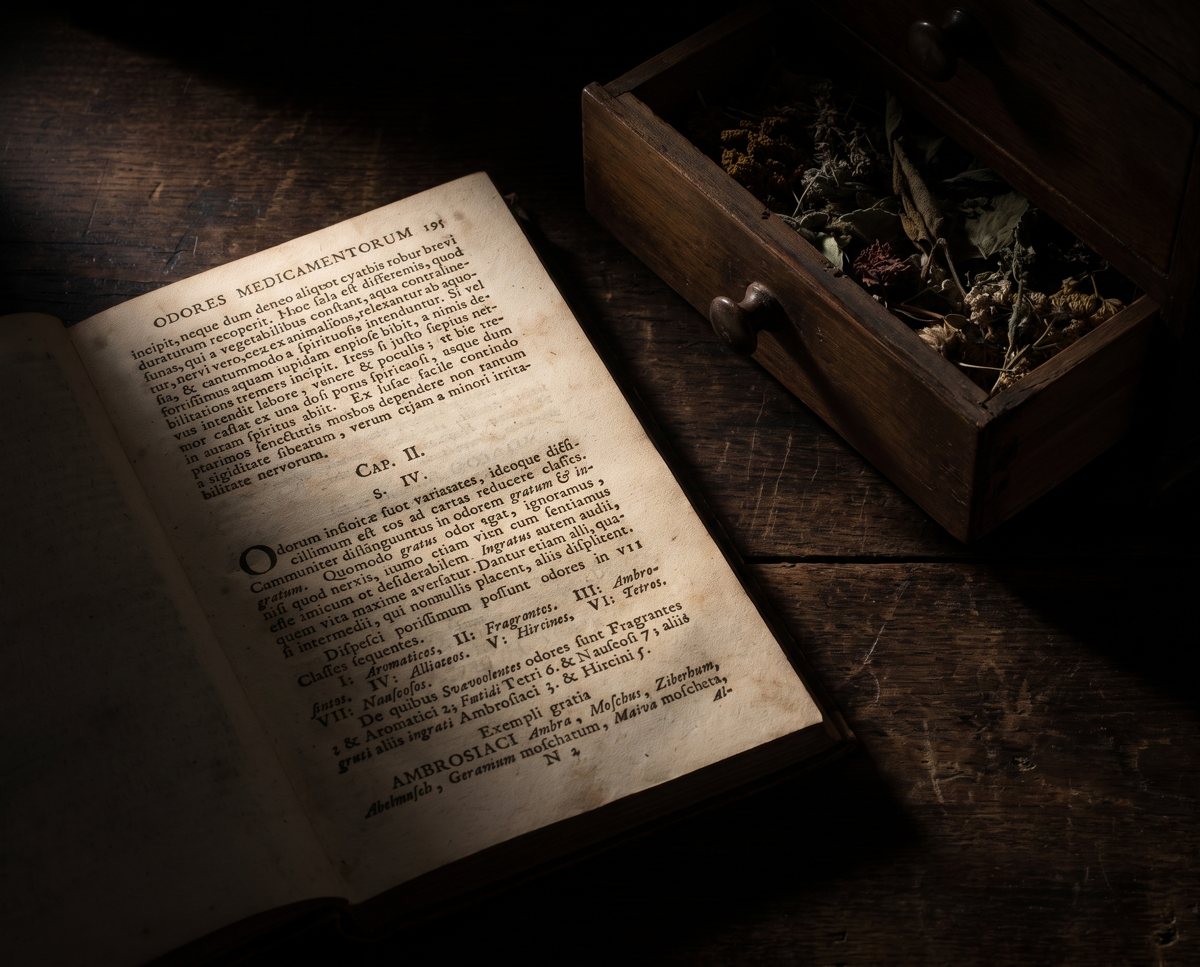
Linnaeus. Seven classes of a classifier.
The man who named the plants also tried to name smells. Seven classes, from fragrant to nauseous, in a sixteen page Uppsala dissertation.
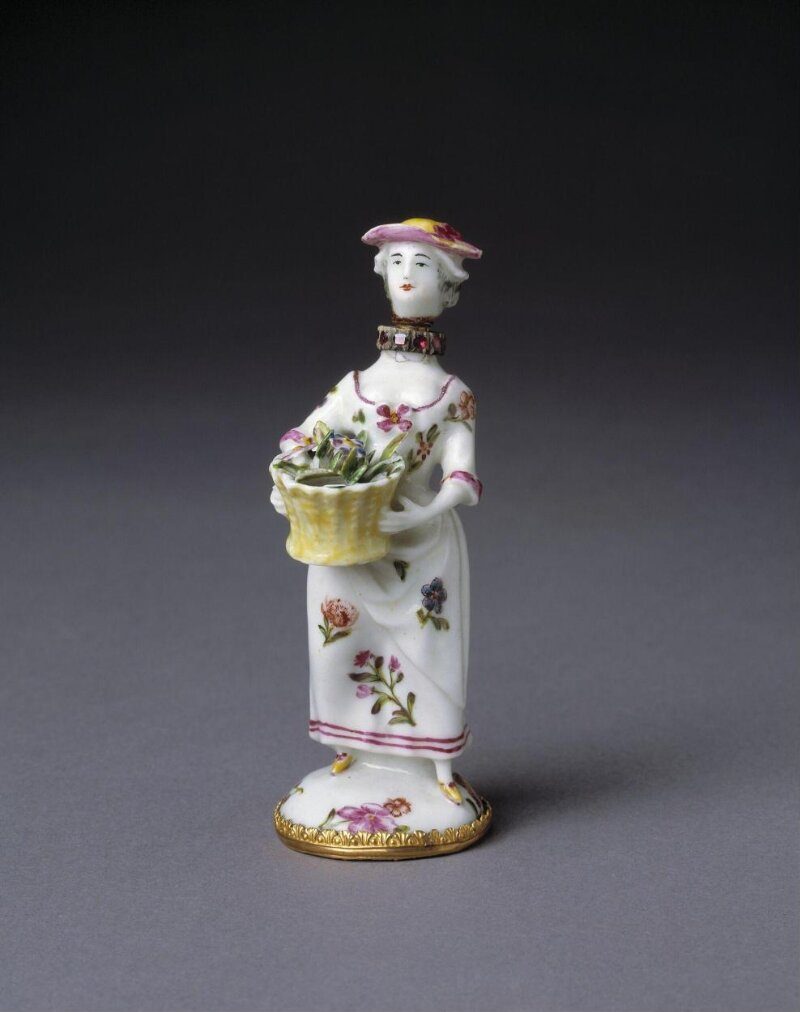
Charles Gouyn. Scent Bottle.
A porcelain girl holding a basket of flowers, under 9 cm tall, fitted with gilt metal set with stones. Inside, a little scented water. People then called such things toys.
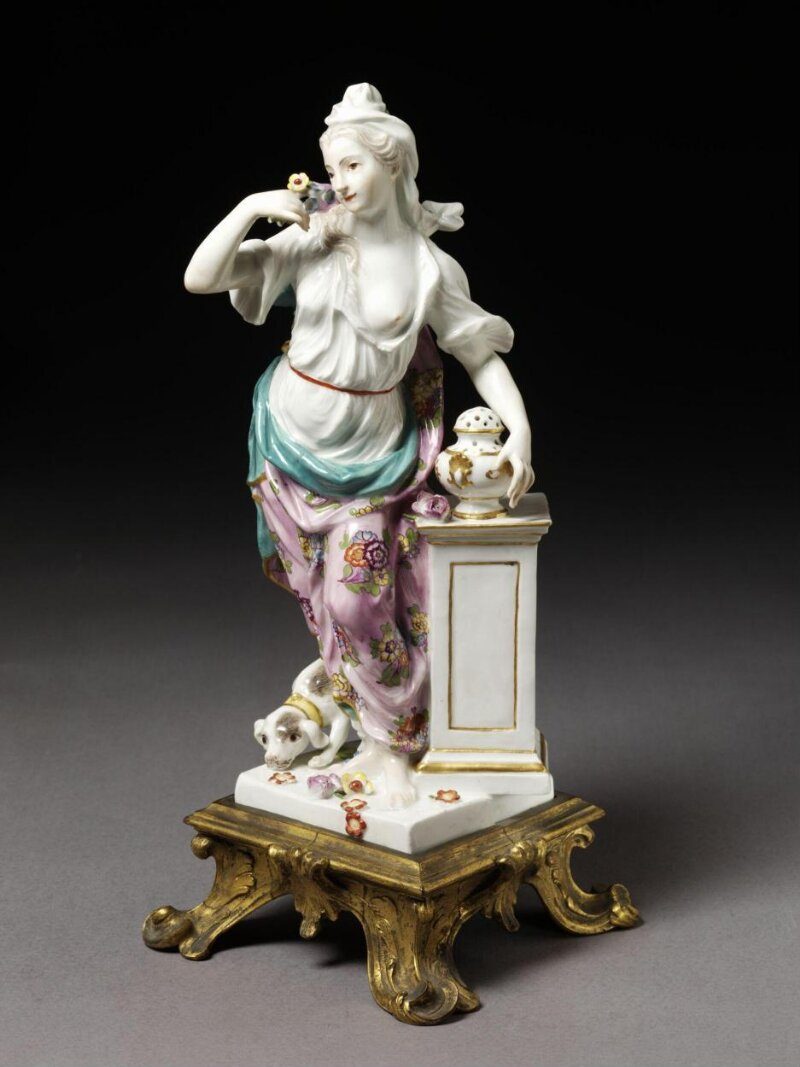
Eberlein and Kändler (Meissen). Smell.
Flowers at the nose, a burner under the hand, a dog nose down. A 28 cm porcelain figure gathers three ways of smelling in one place.
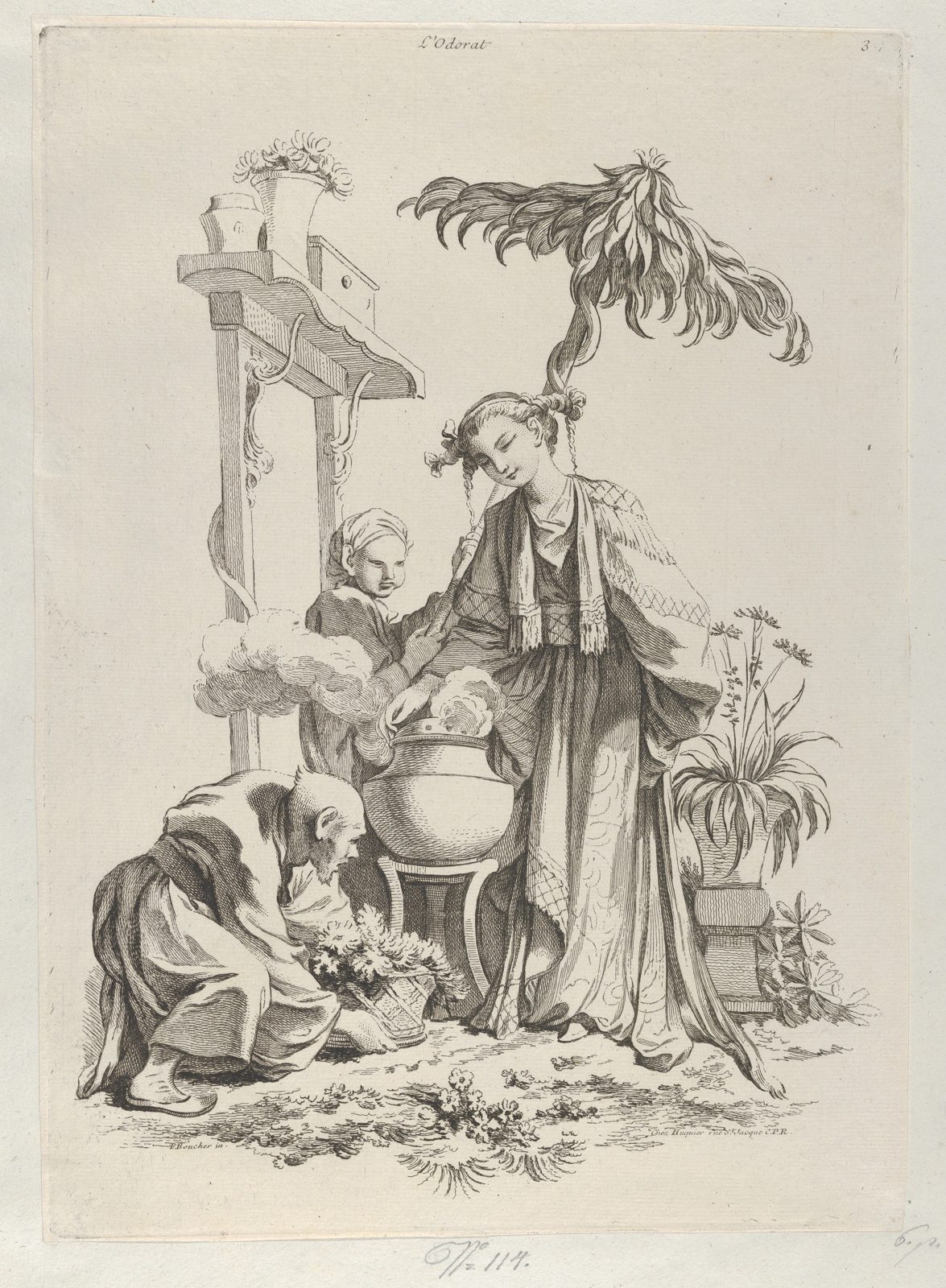
François Boucher. Smell.
A young woman, a smoking vessel, an old man offering flowers. Boucher drew smell in a China he never visited.
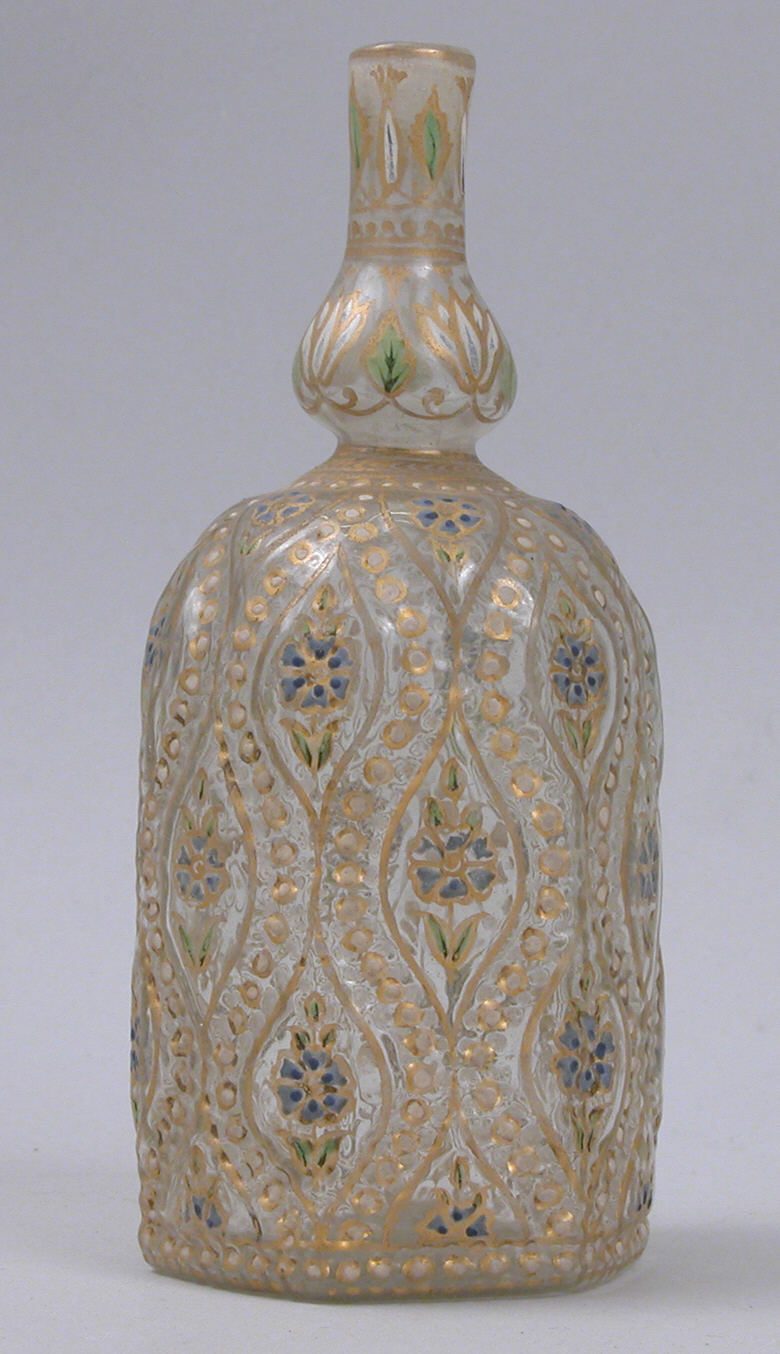
Northern India. Perfume Sprinkler.
A small glass bottle painted with lotus and flowers, once filled with rosewater for festive days. The flowers outside speak for the scent inside.
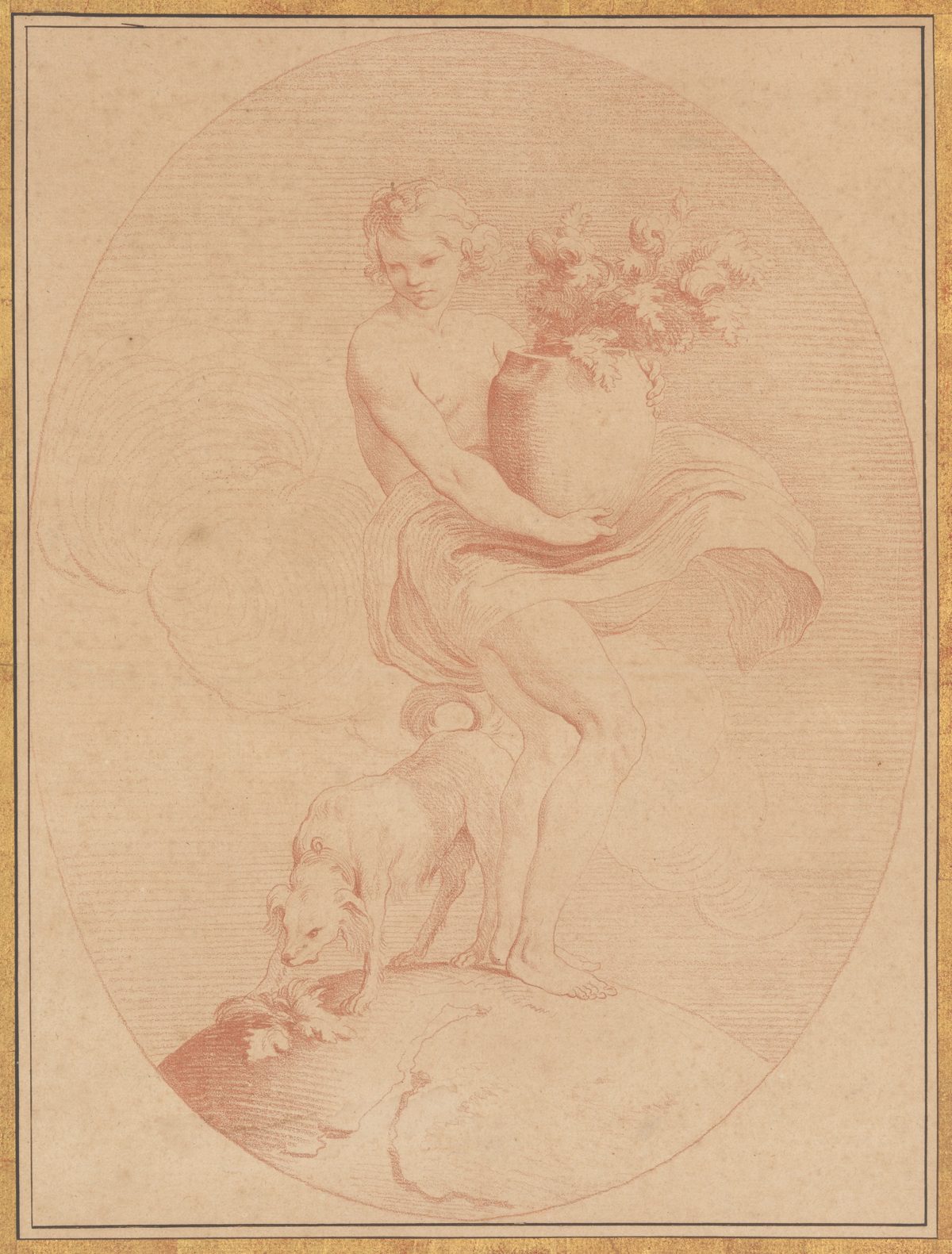
Edme Bouchardon. The Sense of Smell.
A red chalk drawing no hand touched directly. It is the chalk left behind after a sheet was pressed, and its subject is smell.
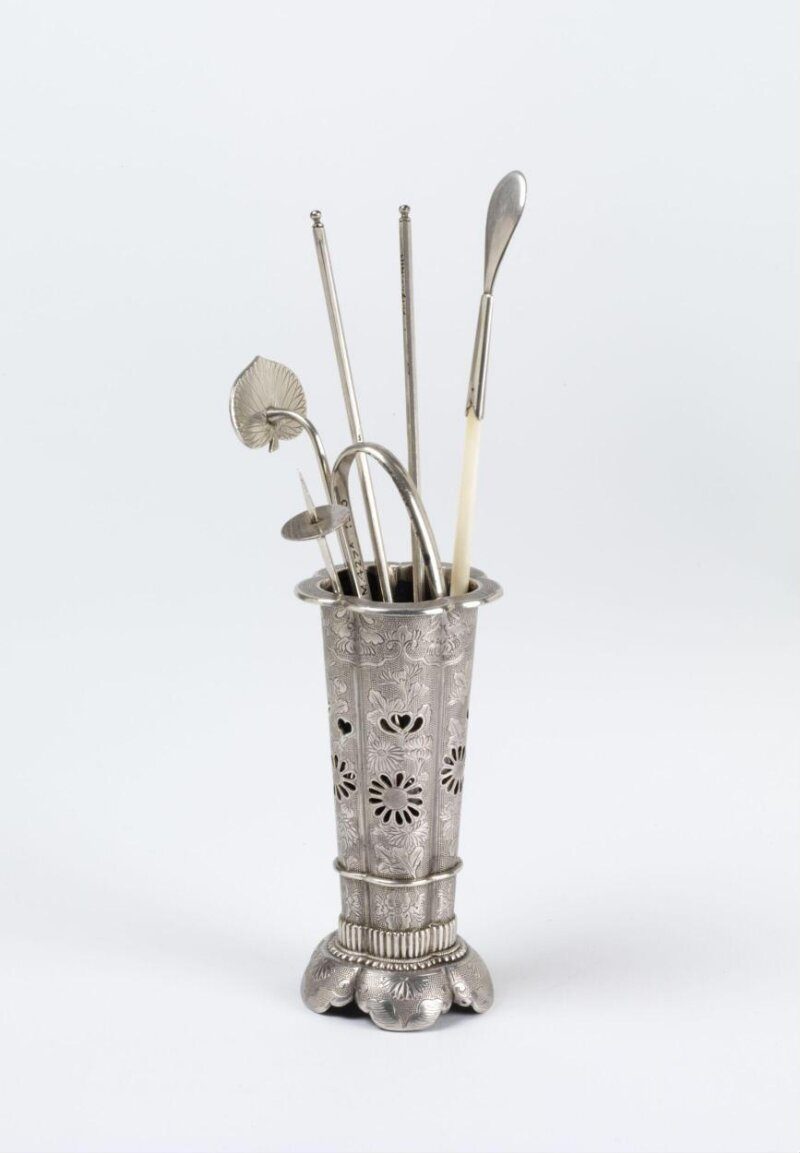
Tomoharu. Set of incense utensils.
Seven small silver pieces in a pierced silver holder. Each keeps one gesture of the incense ritual. The hand steps back, the smell of wood steps forward.
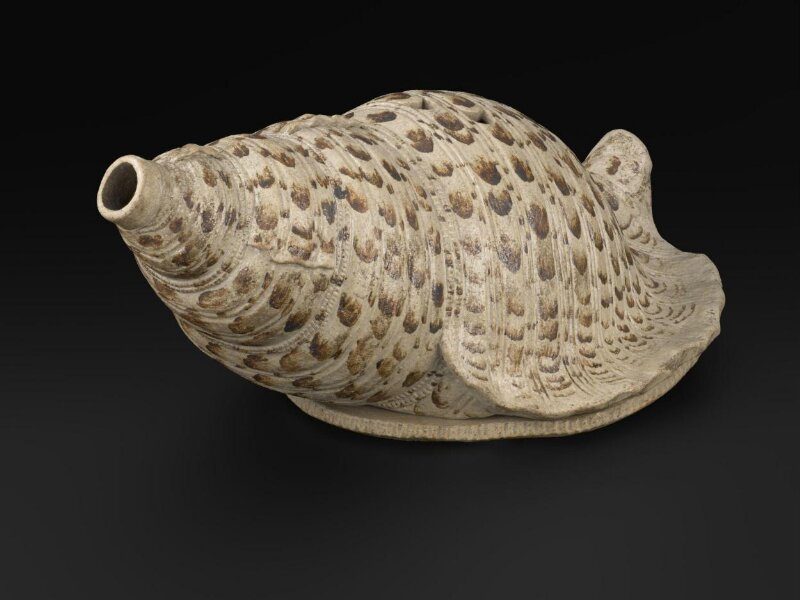
Nonomura Ninsei. Incense Burner.
A conch trumpet in stoneware, clear glaze over iron brown speckles. It is not for blowing. It lets incense smoke pass where breath once passed.
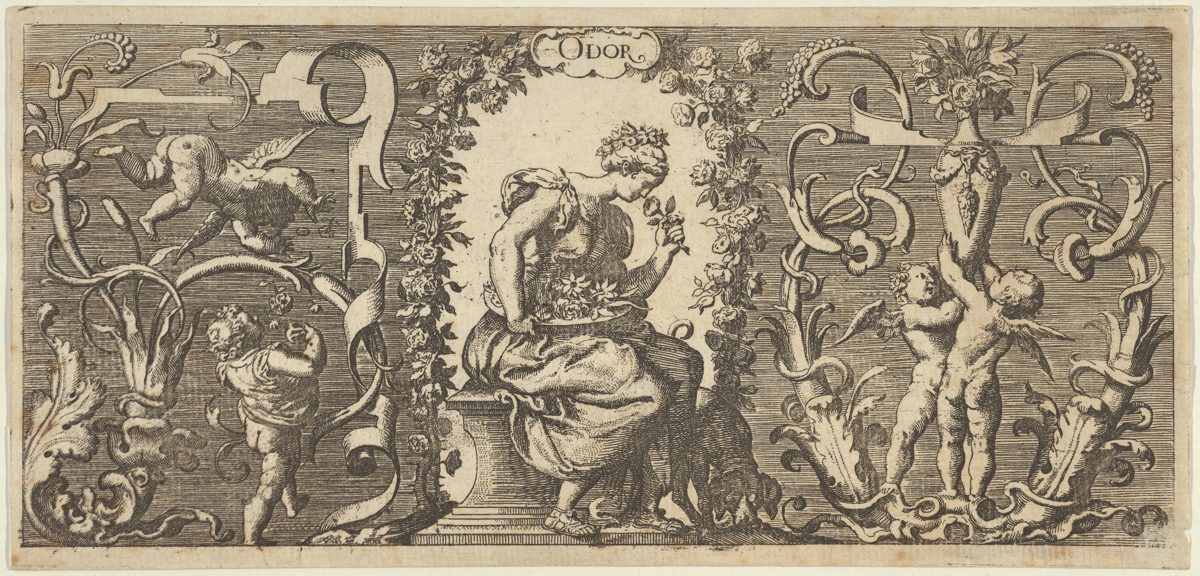
Franz Cleyn. Smell (Odor).
A strip of paper two hands wide. In the middle, a woman crowned with flowers lifts a blossom to her face. Around her, a whole ornamental garden.
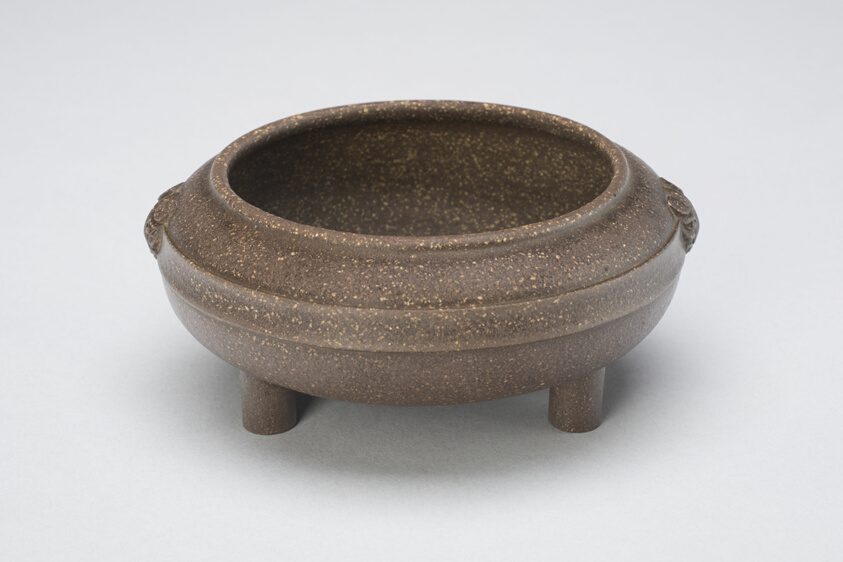
Chen Mingyuan. Tripod Incense Burner.
A zisha clay incense burner 4.8 cm high, by one of the most celebrated Yixing potters of the Qing. Small enough to belong to a single desk.
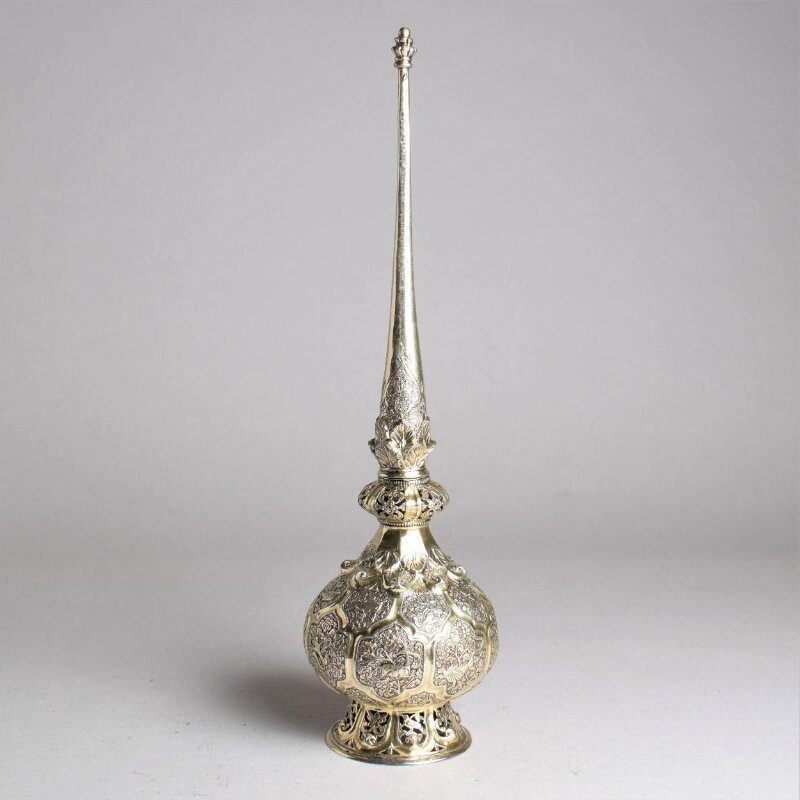
Mughal Empire. Rosewater sprinkler.
A long necked silver vessel for sprinkling rosewater on guests. Made in South Asia, later engraved with an English earl's arms.
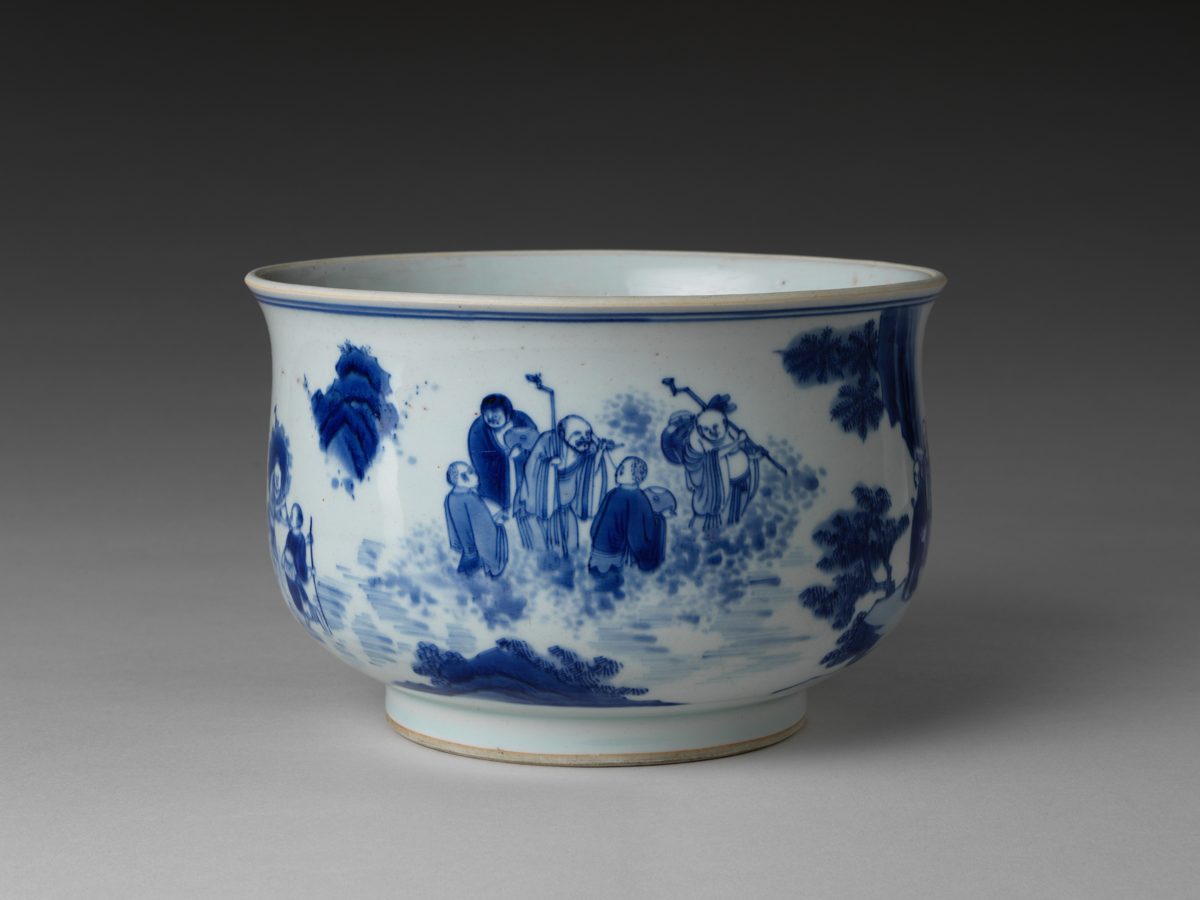
Unknown maker, Jingdezhen. Incense Burner with the Eighteen Luohans.
White porcelain, cobalt blue, eighteen luohans riding tigers, calling dragons, arriving on clouds. Made in 1645, as a dynasty came apart.
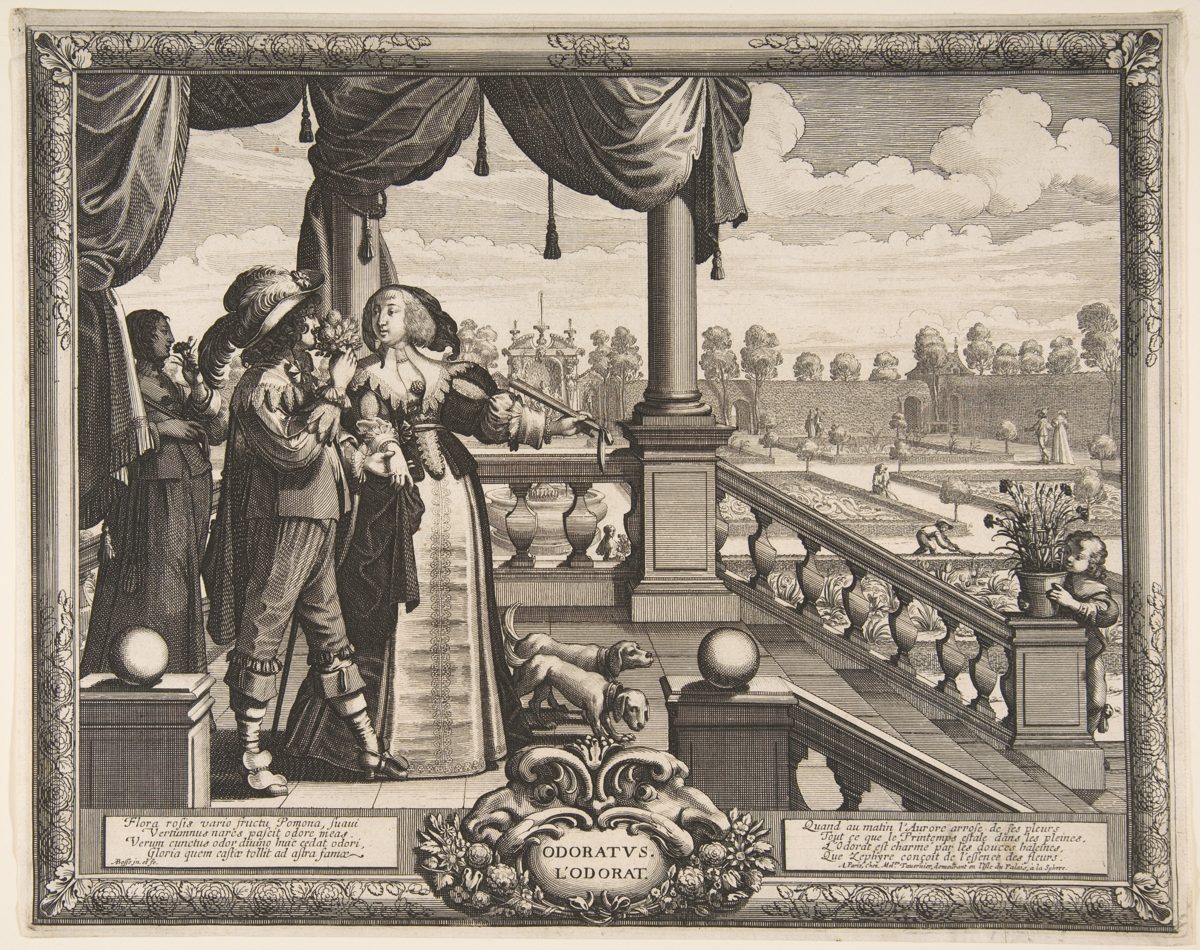
Abraham Bosse. L'Odorat.
No goddess, no myth. Bosse shows smell through a Parisian couple under Louis XIII, a garden, and two dogs sniffing.
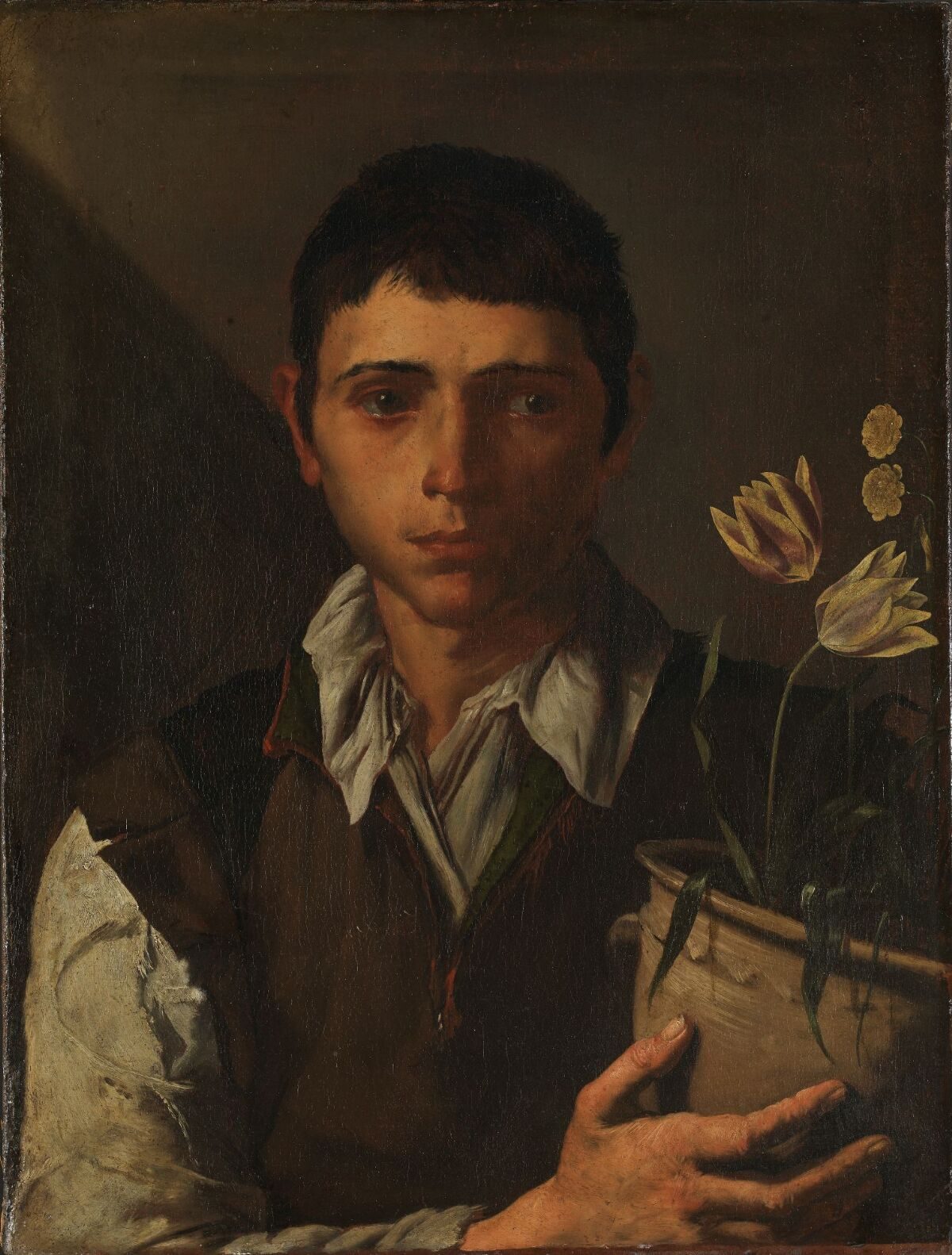
Jusepe de Ribera. Boy with a Pot of Flowers. The Sense of Smell.
The boy does not raise the flowers to his nose. He holds the pot and looks at us. A painting of smell in which no one is smelling.
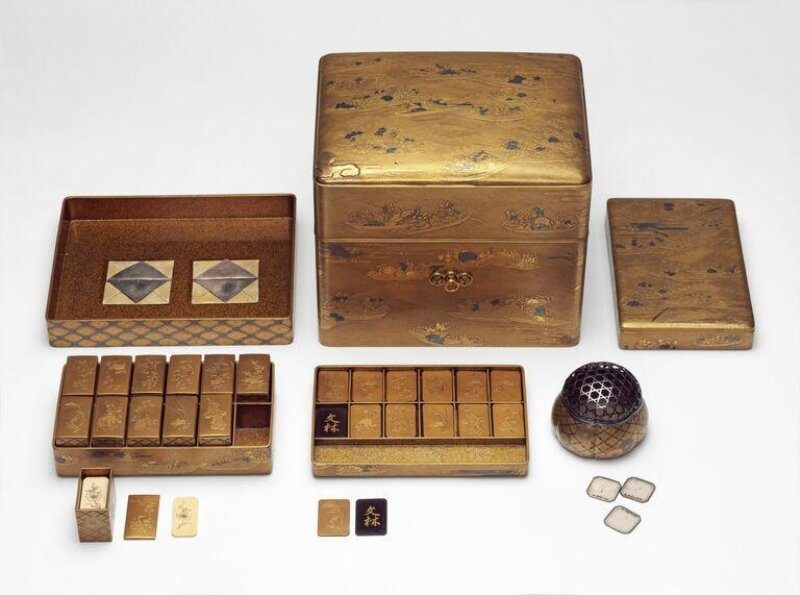
Japan. Incense Game Set.
A lacquer box with 144 ivory tokens, knives, a block, a brazier and an inkstone. All to guess three woods, and record who guessed right.
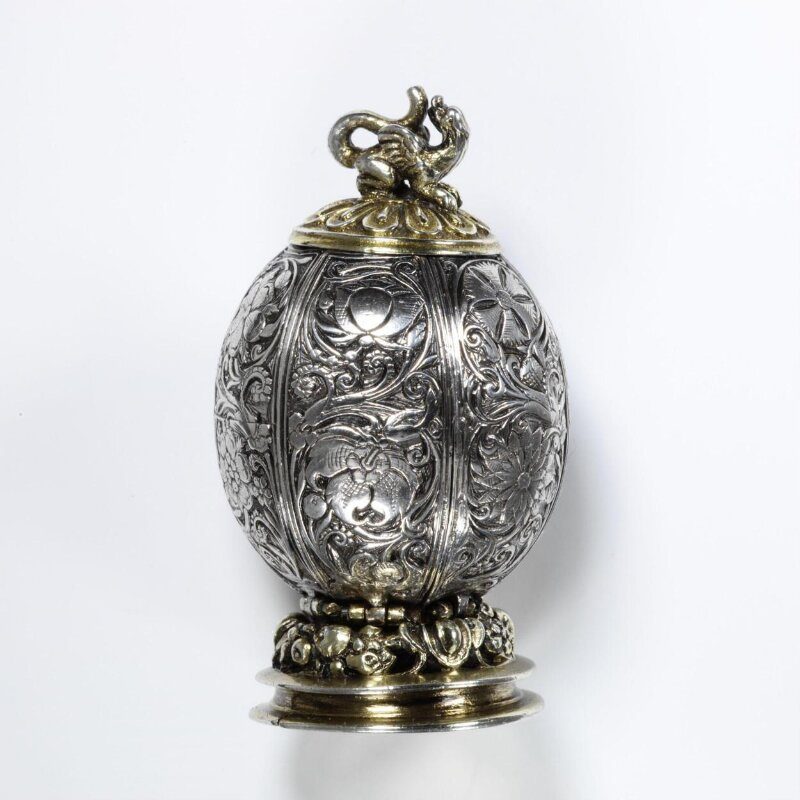
Unknown maker, Europe. Pomander and vinaigrette.
Six numbered chambers, each with a sliding lid, each lid with a scroll for a name. The base unscrews into a vinaigrette. Scent arranged like a small cabinet.
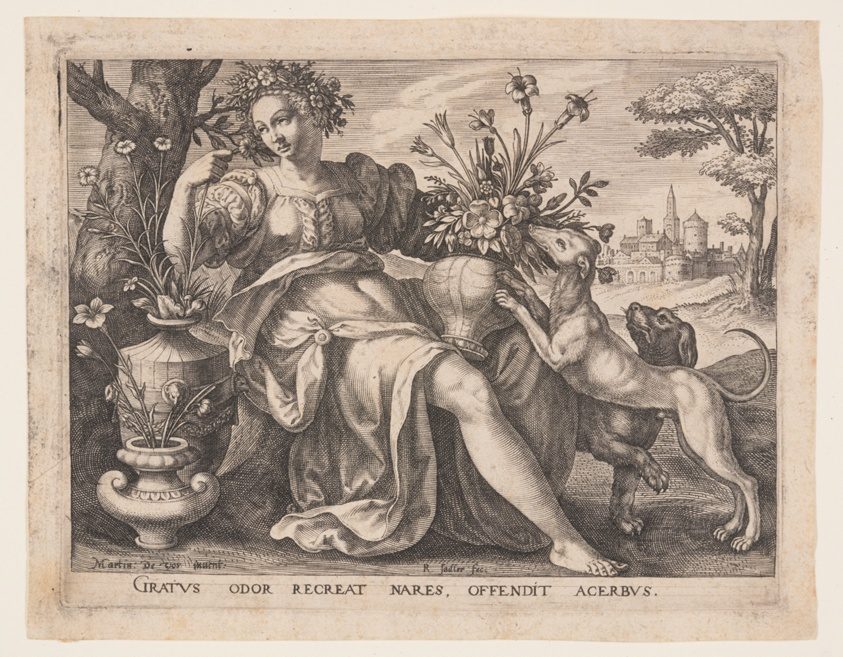
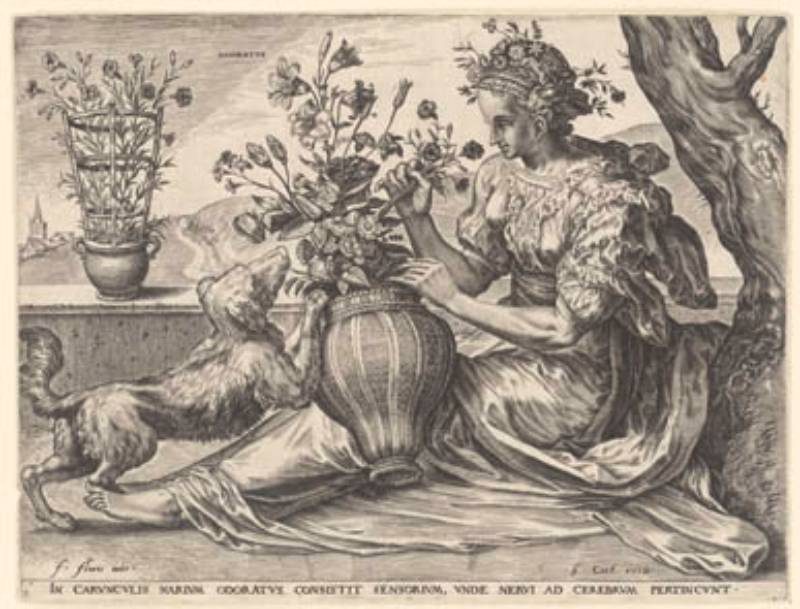
Raphael Sadeler I theo Maarten de Vos. Smell.
A woman under a tree arranges flowers in a vase while two dogs play. On the margin, two names: the man who devised it and the man who engraved it.
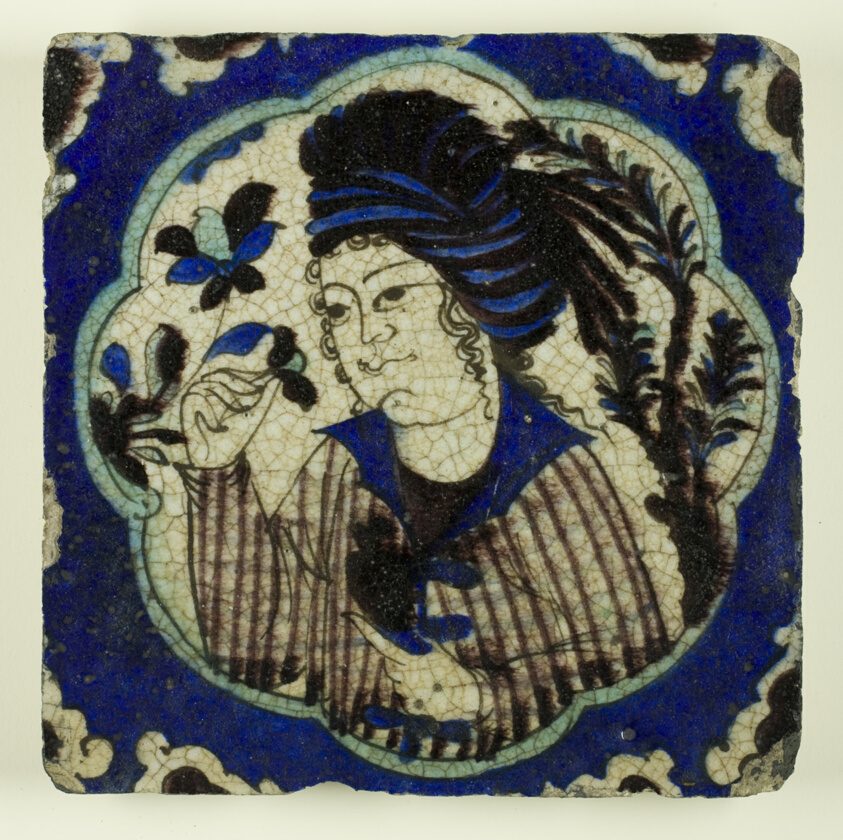
Safavid Iran, Kubachi ware. Tile with a Portrait of a Young Man Inhaling the Perfume of a Flower.
A square tile of 22 cm, three colours under clear glaze, a young man and a flower. A single breath held in ceramic for over four centuries.
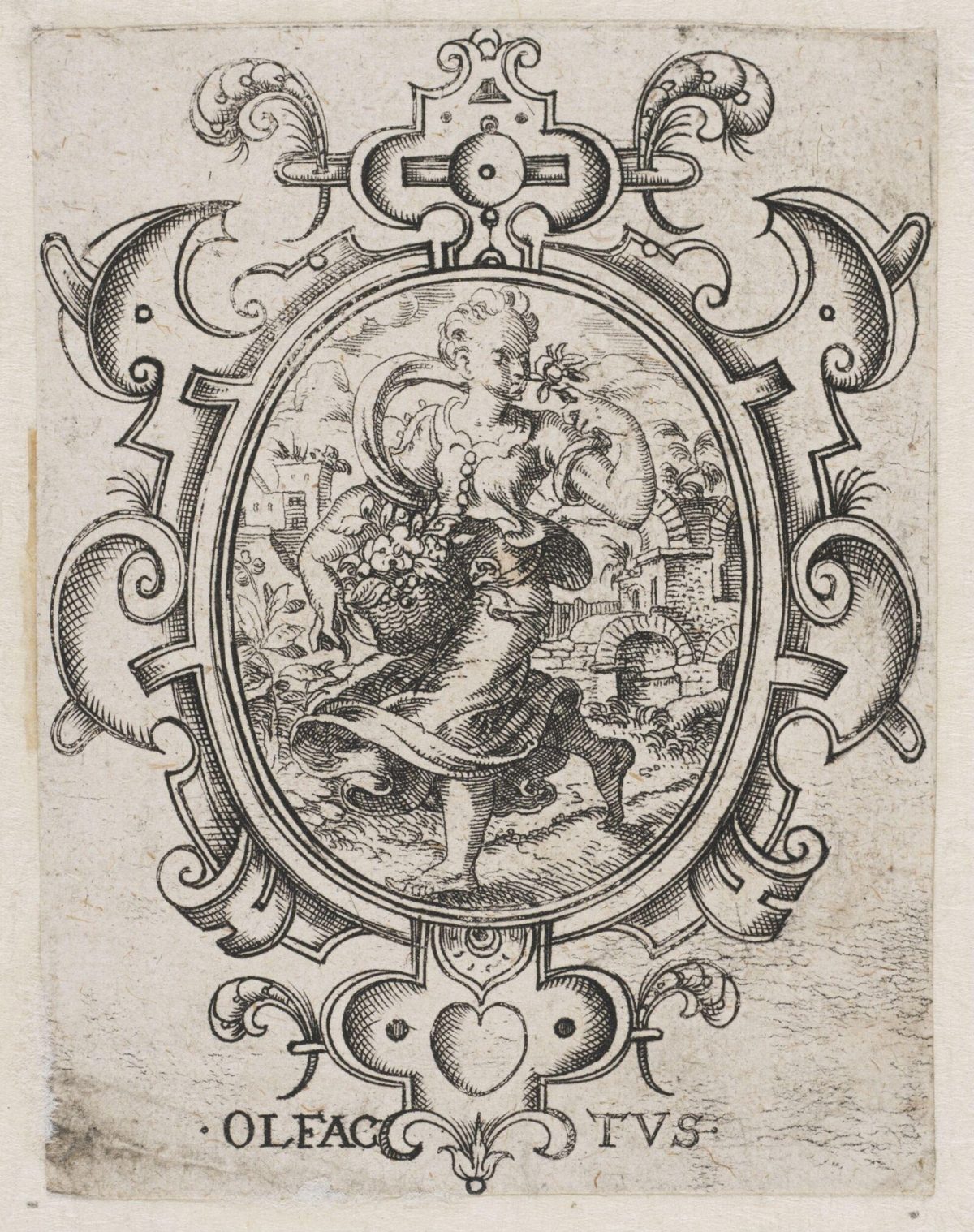
Jost Amman. The Sense of Smell.
A woman strides across a field, a sprig at her nose, a basket of flowers on her arm. Around her, a frame several times larger than the scene.
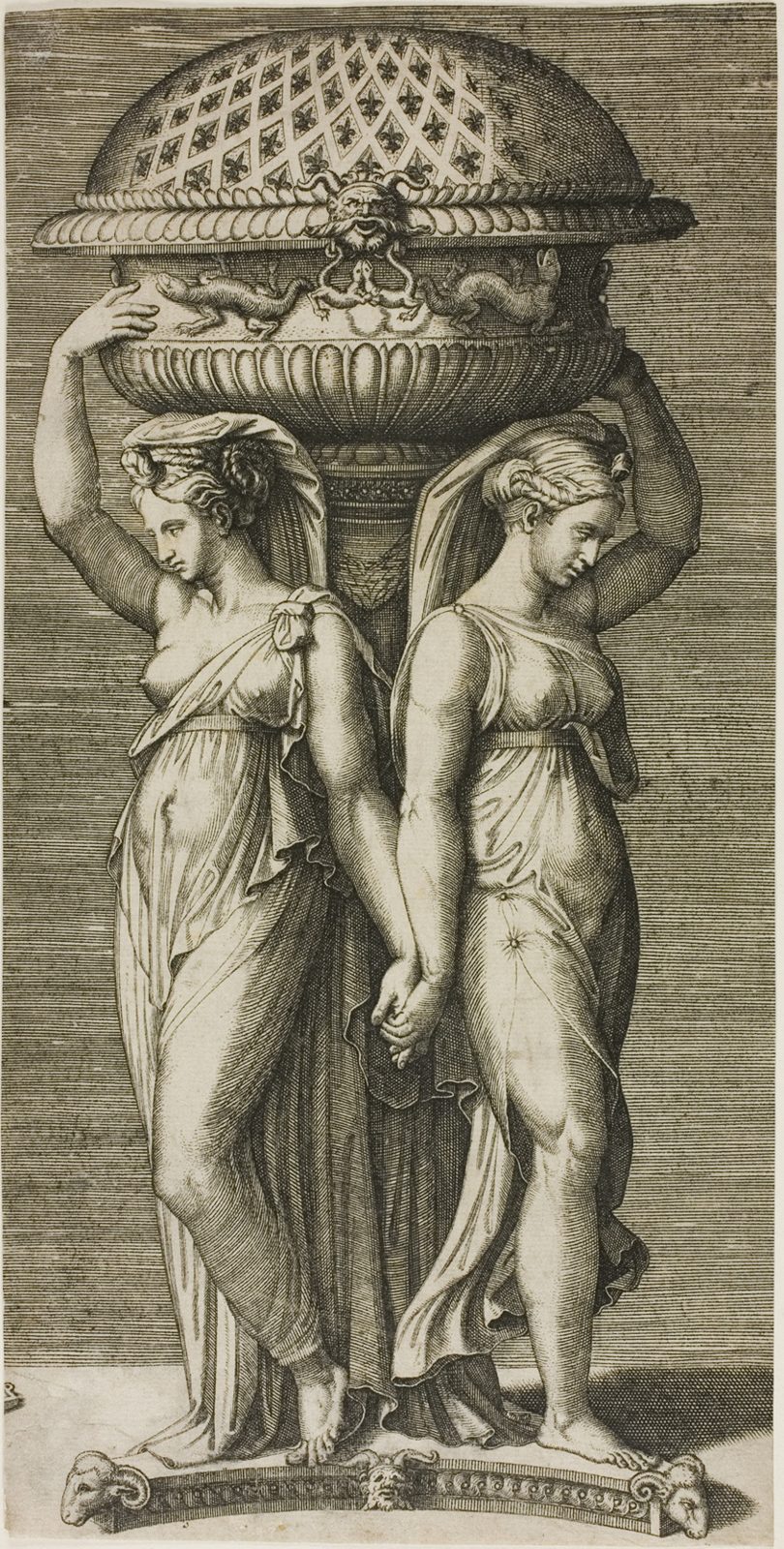
Marcantonio Raimondi, theo Raphael. The Incense Burner.
A great incense burner, two women holding it, the emblems of a king. No smoke. Only the shape of a ritual, on paper.
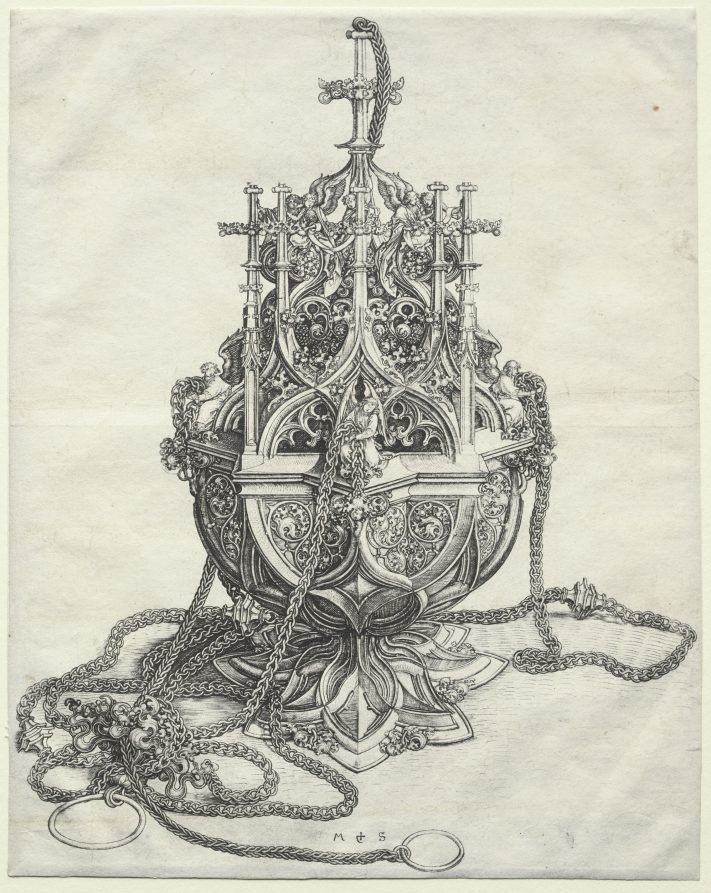
Martin Schongauer. The Censer.
Spires, vaults, angels and pierced openings for smoke. Schongauer engraved a censer the way one would draw a building.
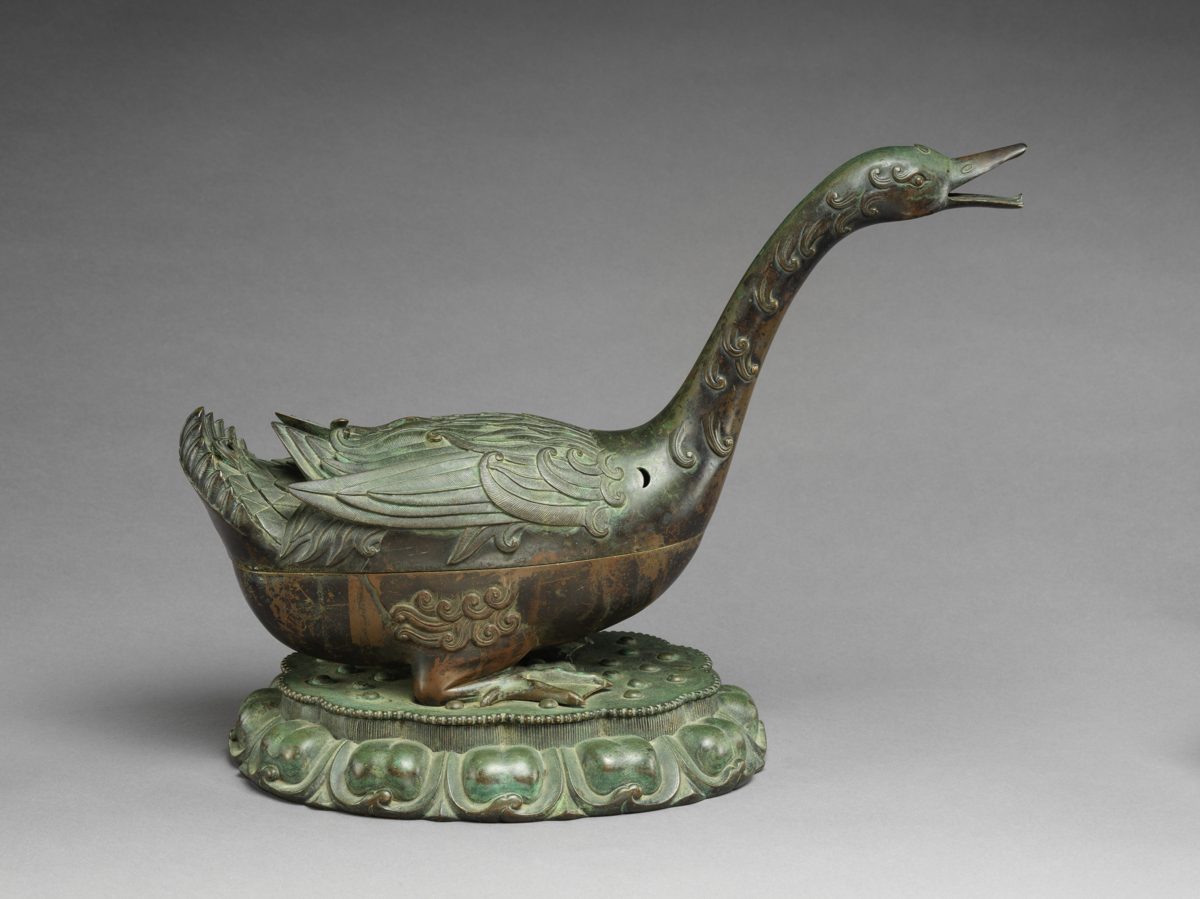
Incense burner in the shape of a goose.
A bronze goose nearly half a metre wide, cast in the early 15th century. It repeats a kind of burner first made more than a thousand years earlier.
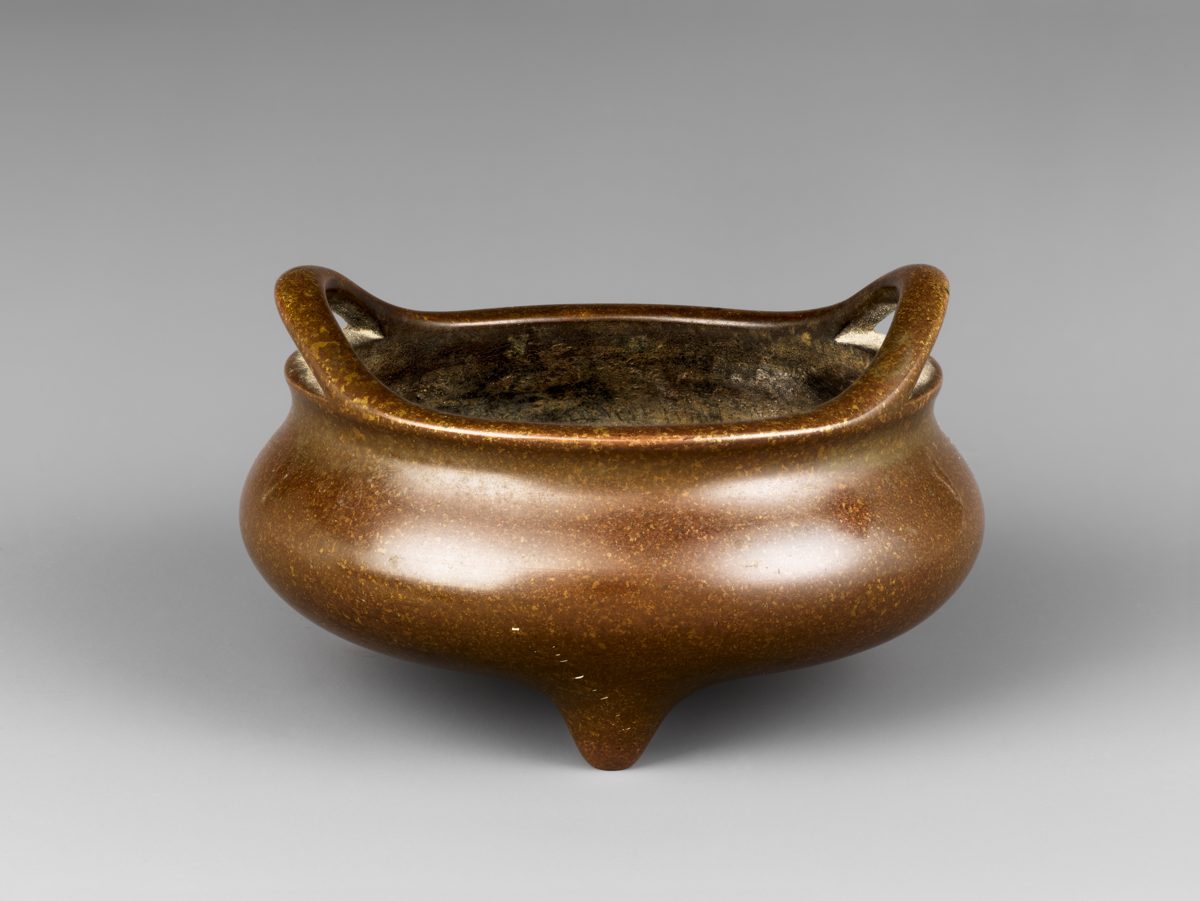
Unknown maker, China or Japan. Incense burner (kōro).
7.6 cm high. Copper alloy. A 15th century reign mark, a period line reading 18th century, two possible homelands. This small burner holds more questions than smoke.
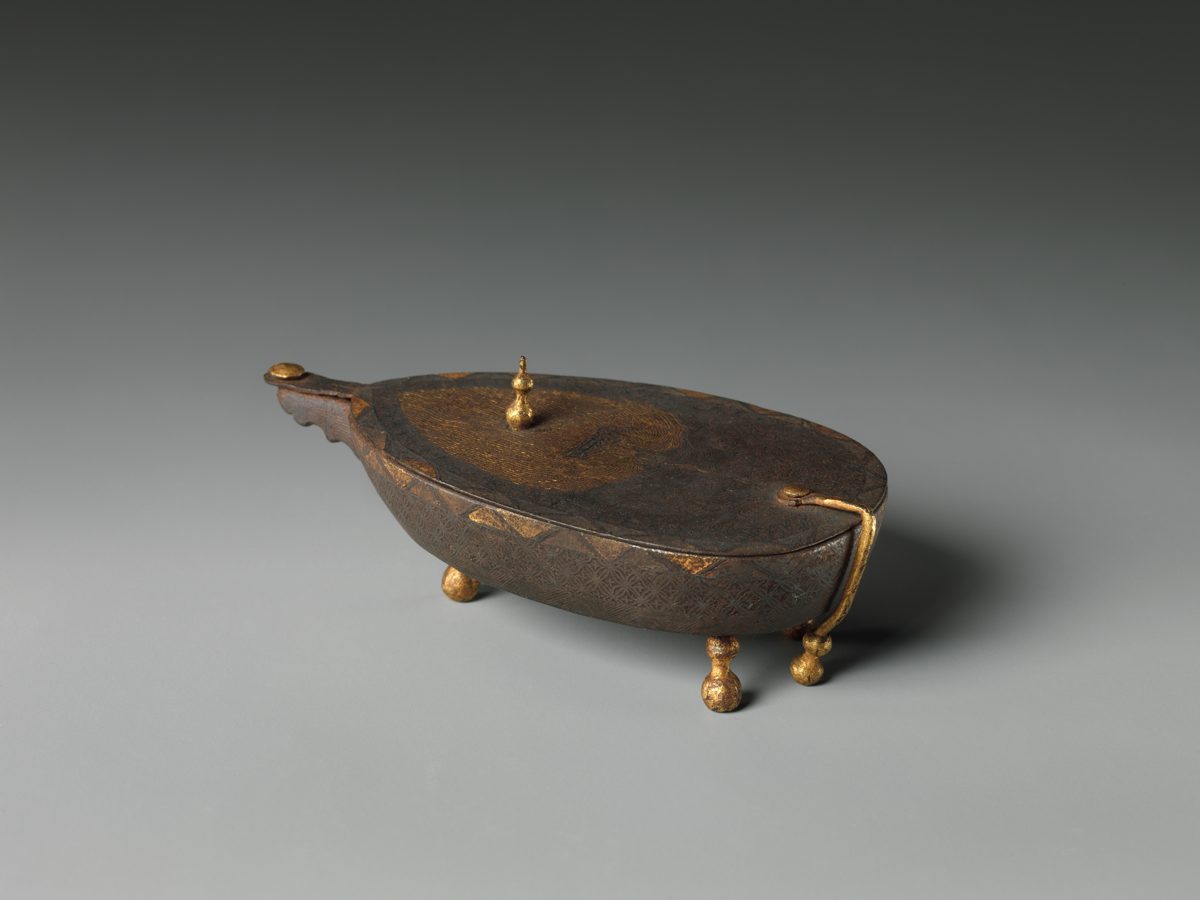
Korea, early Joseon. Incense box.
A small iron box inlaid with gold and silver thread. It burns nothing. It only keeps incense until the time comes to burn it.
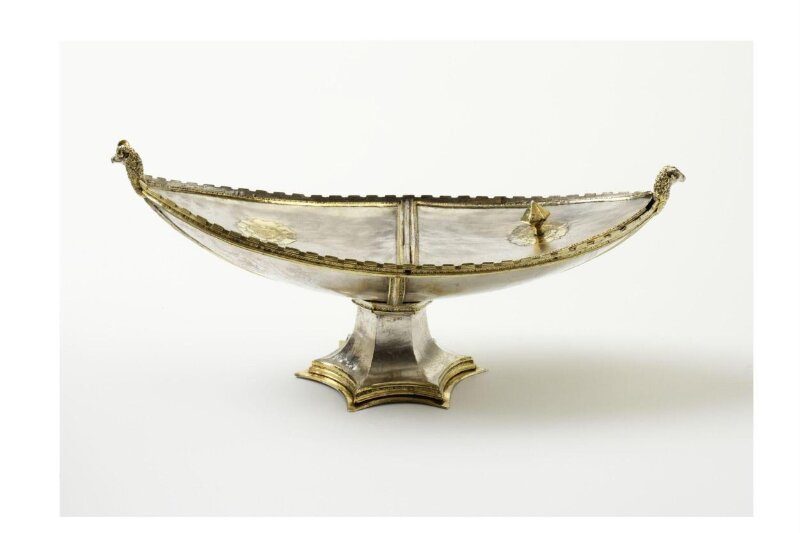
Unknown maker, London or East Anglia. The Ramsey Abbey Incense Boat.
A small silver boat, a ram's head rising from the waves at each end. It held incense for a church, then lay on a lake bed until the lake was drained.
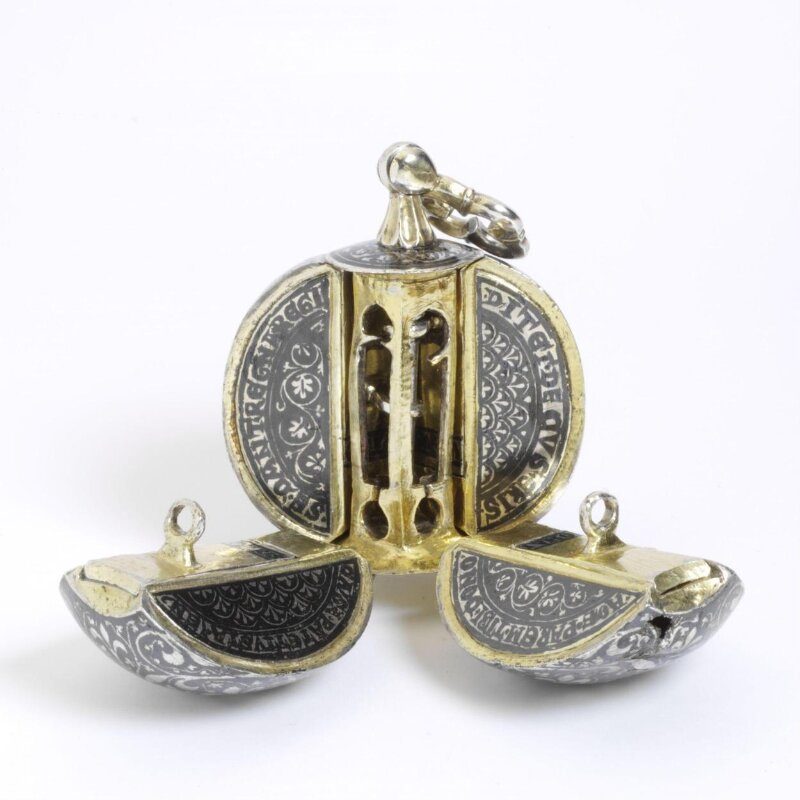
Unknown maker, Italy. Pomander.
Six and a half centimetres, shaped like an apple, opening into four segments. Each bears a name from the story of Paris and the golden apple. Perhaps a love gift.
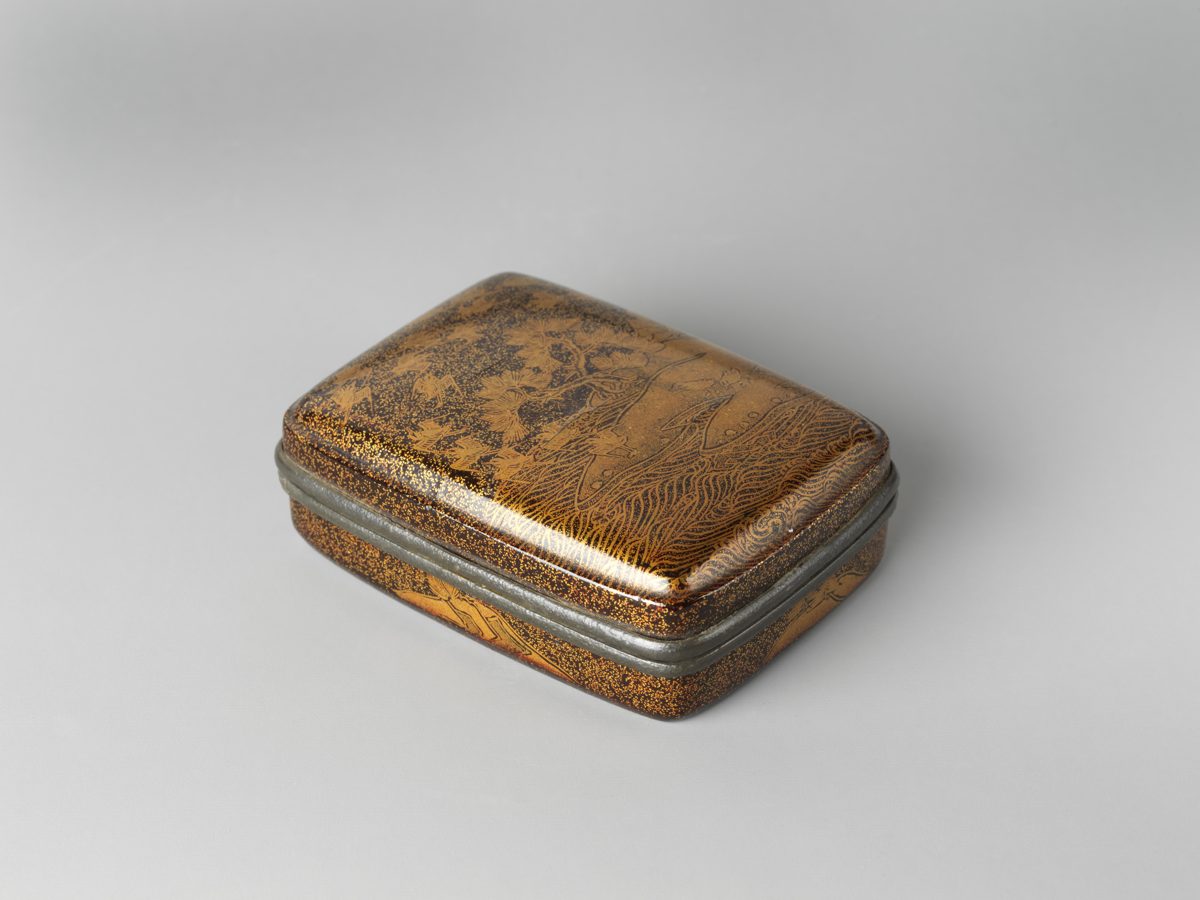
Incense Box (Kogo) with Pines and Plovers.
A lacquer box under ten centimetres long, with pines, plovers and shells. It may have held tooth blackening powder before it held incense.
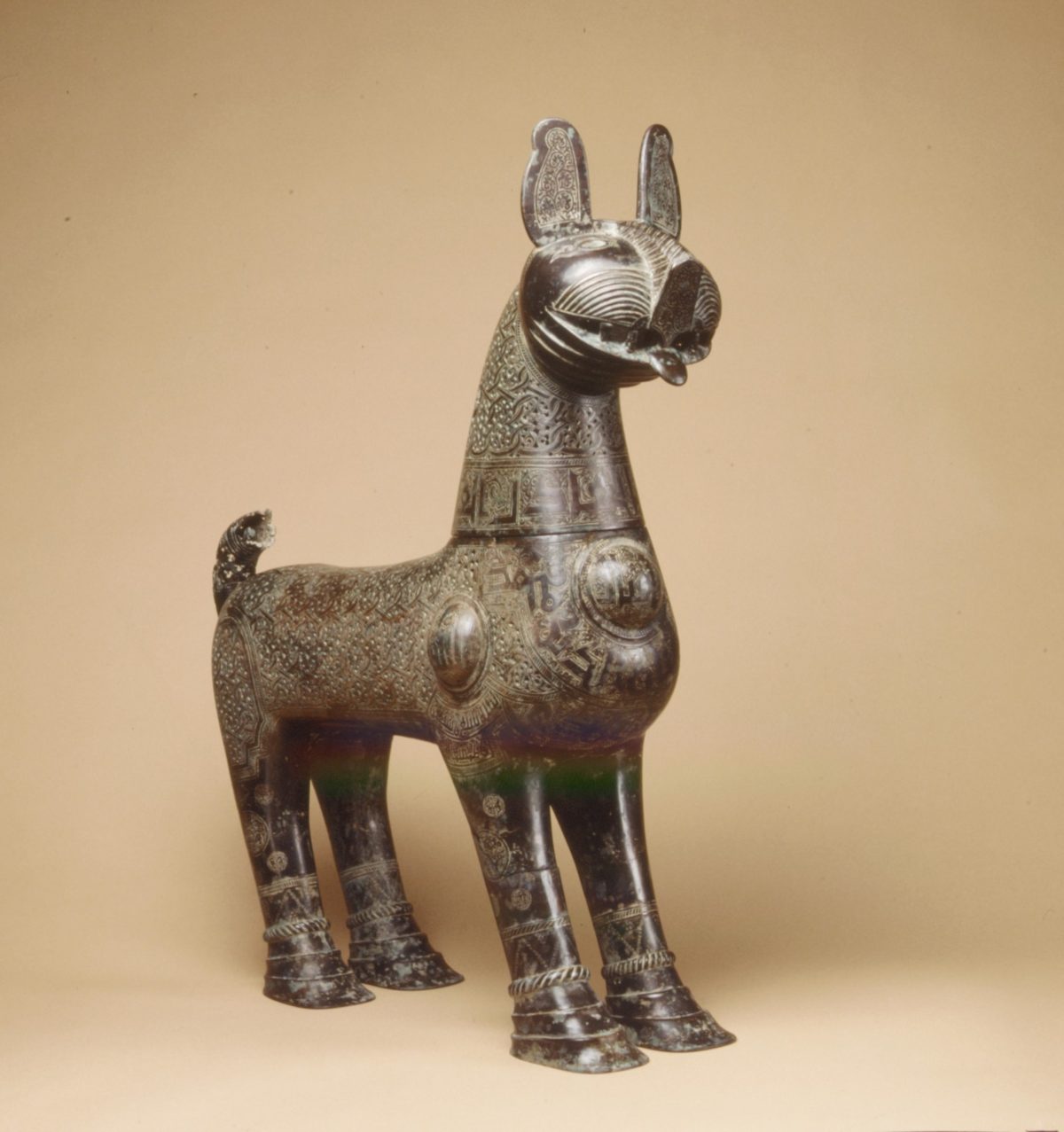
Ja'far ibn Muhammad ibn 'Ali. Incense Burner of Amir Saif al-Dunya wa'l-Din ibn Muhammad al-Mawardi.
A bronze lion, its body pierced, its head removable. Put coal inside and scented smoke leaves from all over it. The body still names its patron, its maker and its year.
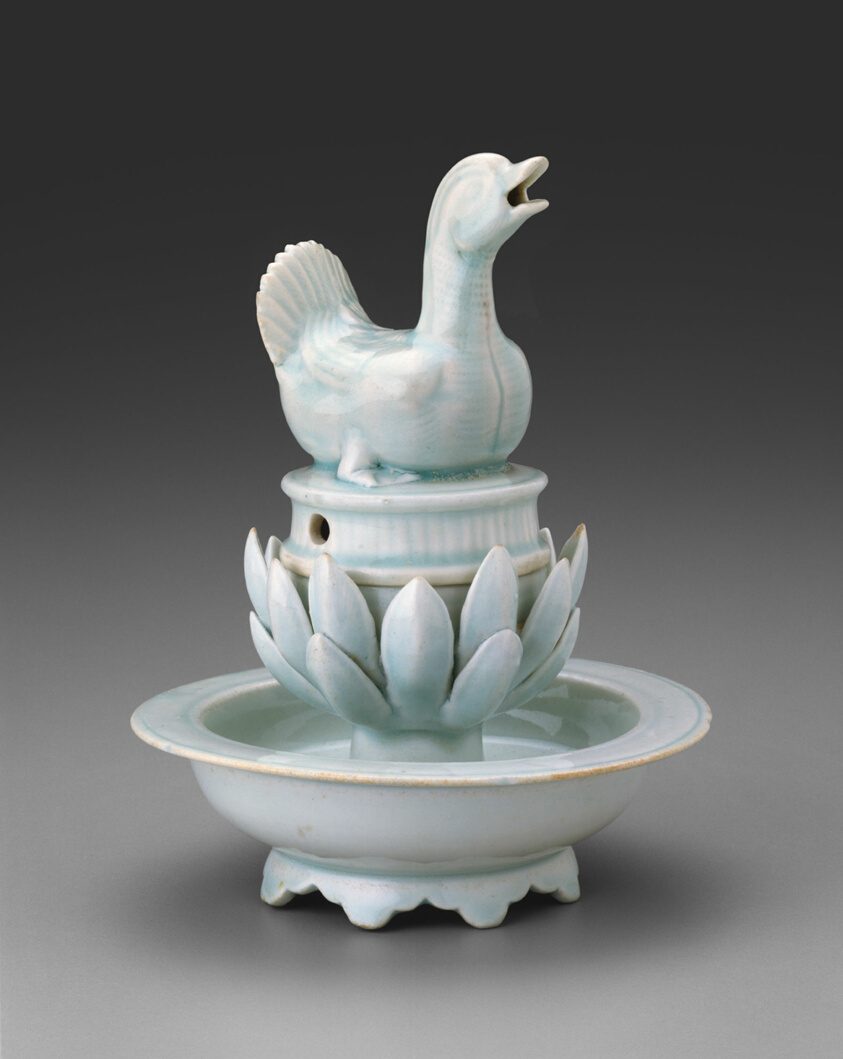
Incense Burner in the Form of a Duck.
A porcelain waterfowl on a lotus. When the incense burns, smoke leaves through its beak, like breath.
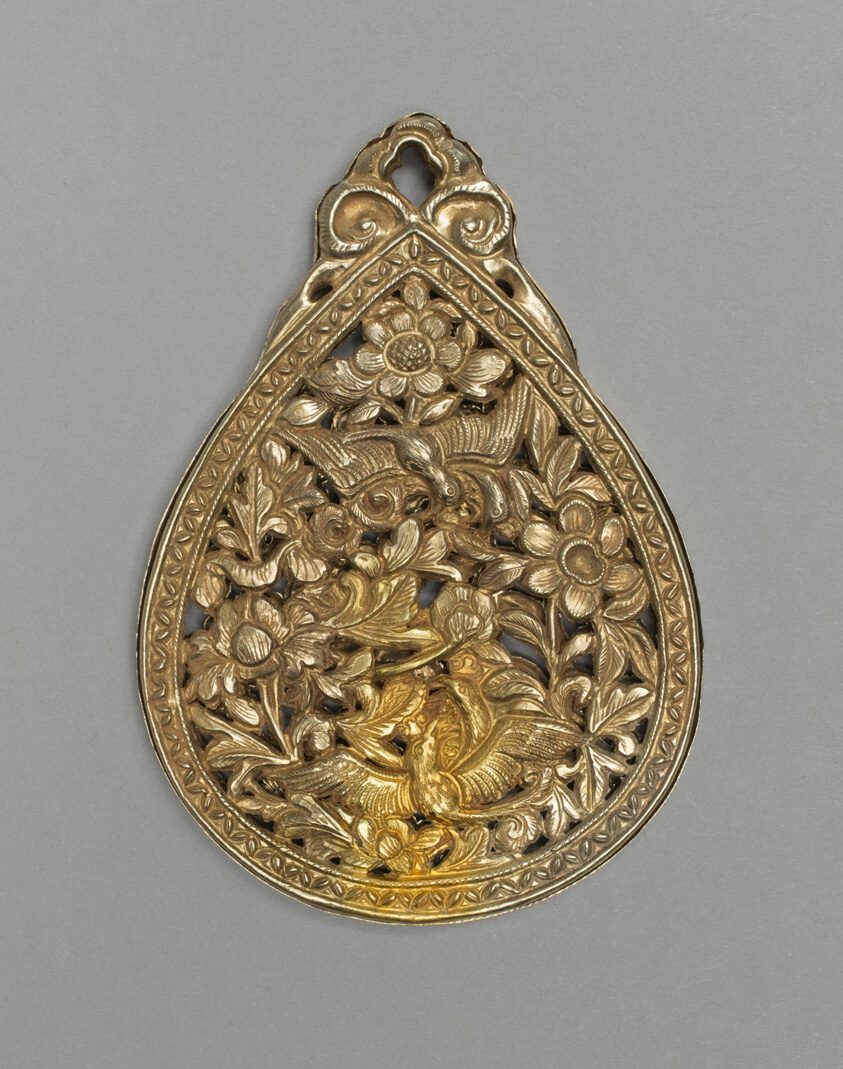
Teardrop-shaped Perfume Container with Birds, Foliage, and Flowers.
A gold scent container under nine centimetres long, flat as a leaf. Here scent does not stay in a room. It goes with a person.
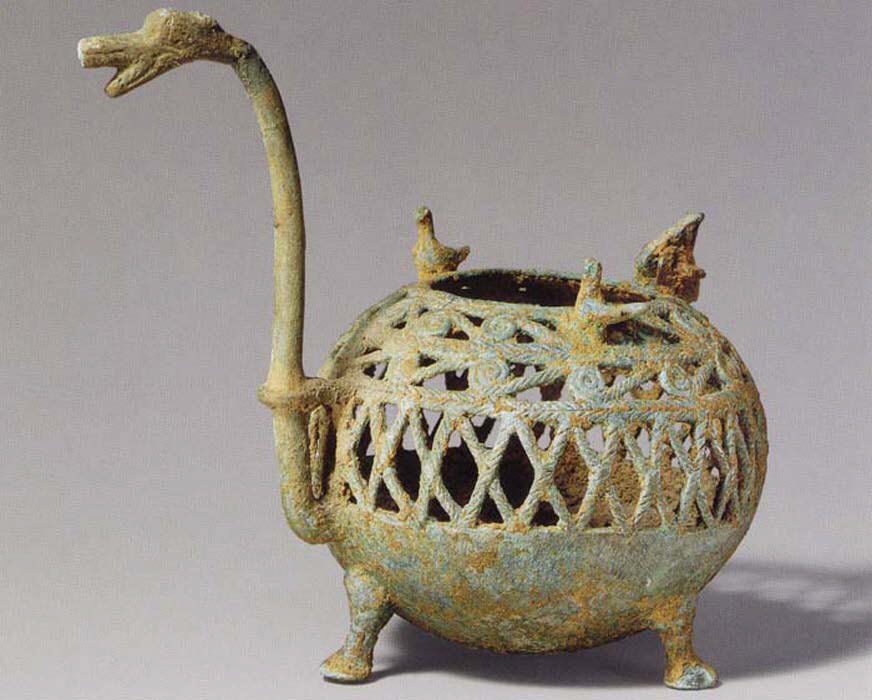
Unknown maker, Vietnam. Incense Burner with Dragon Spout.
15.9 cm high. Bronze. A dragon spout. Three centuries in which to place it. The record says very little, and that gap is worth looking at.
Olfactory Art.
Scent cannot be seen, cannot be kept intact, and no two people smell it alike. Olfactory art takes exactly that as its material.
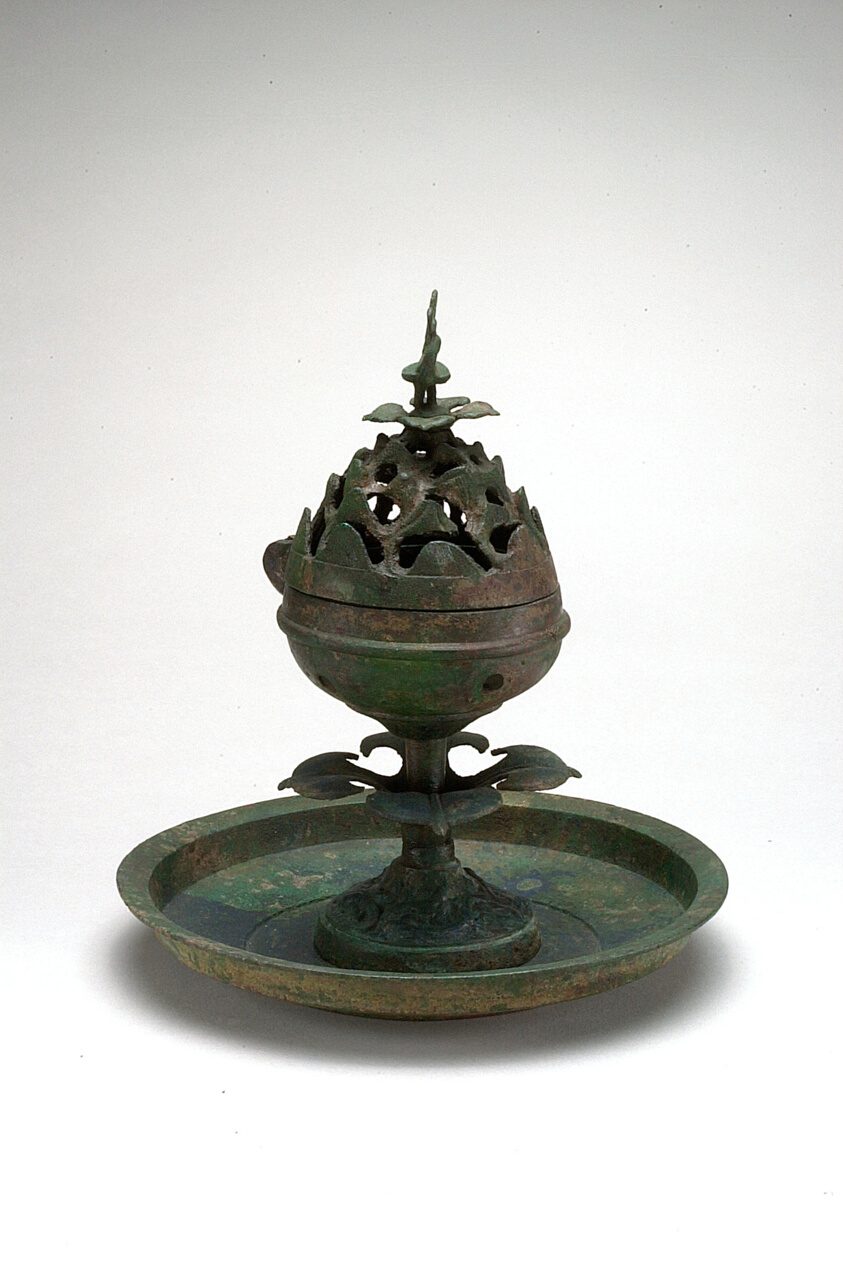
Mountain-Shaped Incense Burner.
A bronze lid shaped like peaks, barely a hand high. When the incense burns, smoke passes through the holes and the mountain has clouds.
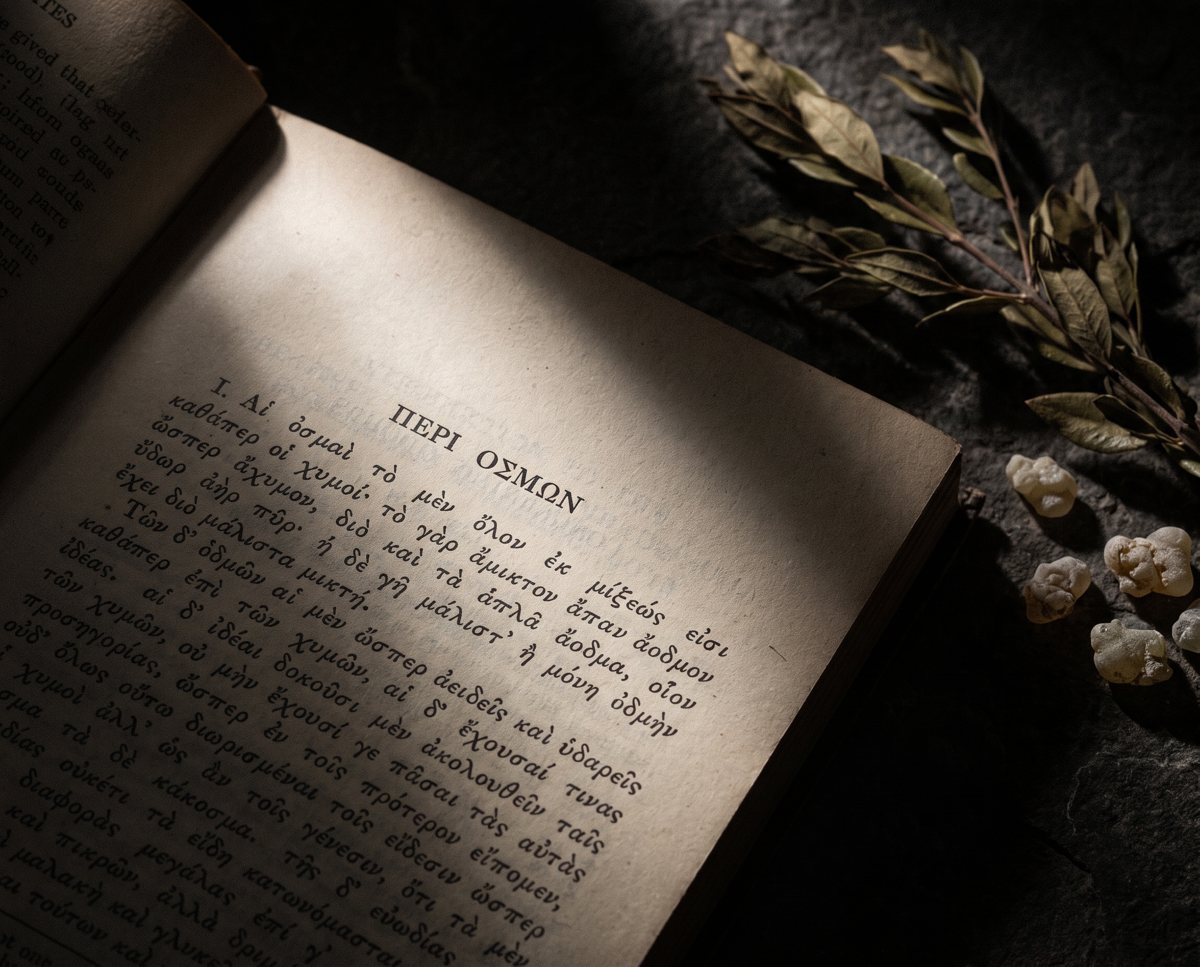
Theophrastus. Smell in Aristotle's garden.
Over two thousand years ago a man in Athens noted that flowers smell from afar while roots must be broken open. He observed first and explained later.
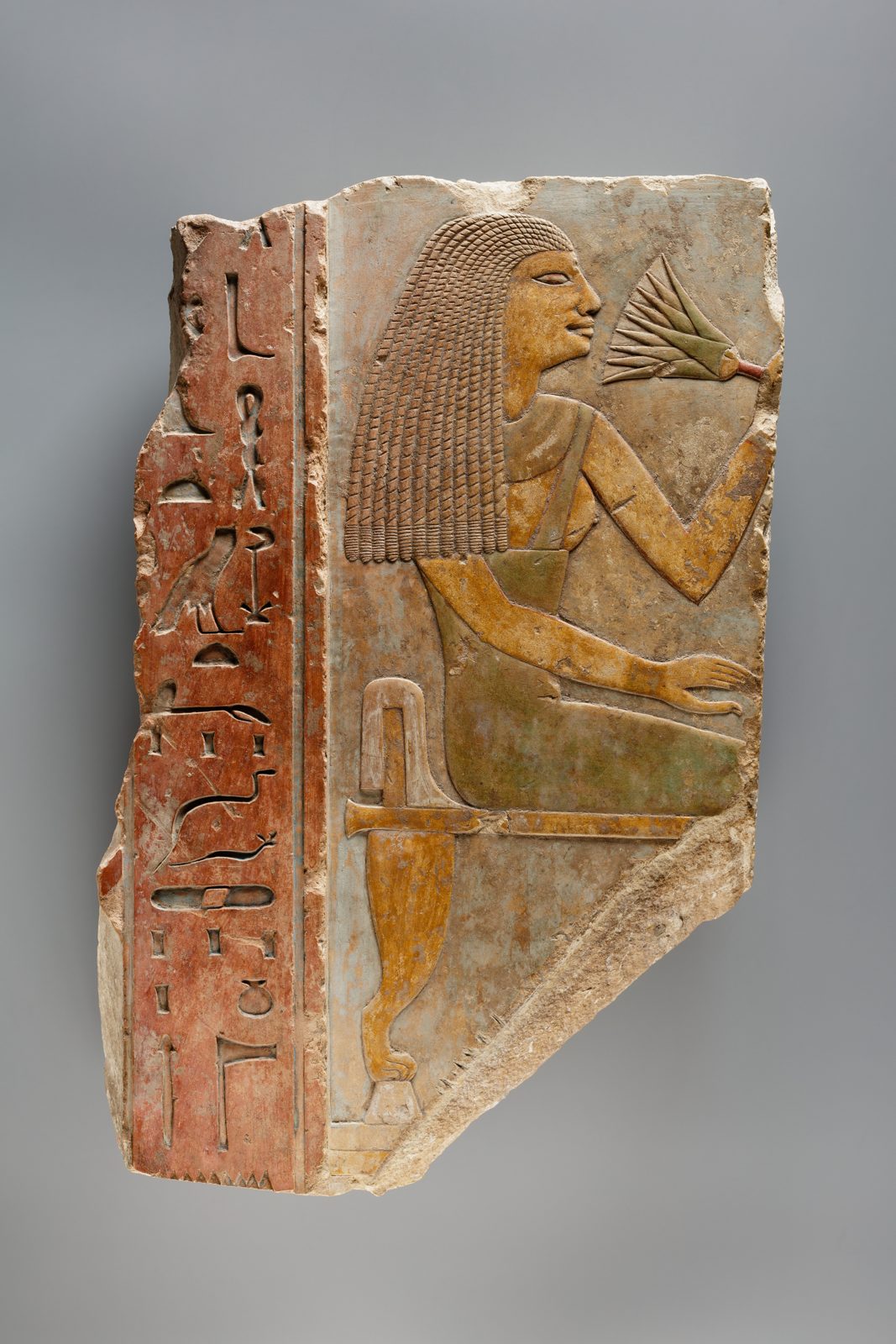
Ancient Egypt. Relief Showing a Seated Woman Smelling the Blossom of a Water Lily.
Long braided hair, a water lily at the nose, a red column of hieroglyphs beside her. A gesture of smelling carved into stone nearly four thousand years ago.